Guide and picks
Why does my air conditioner smell?
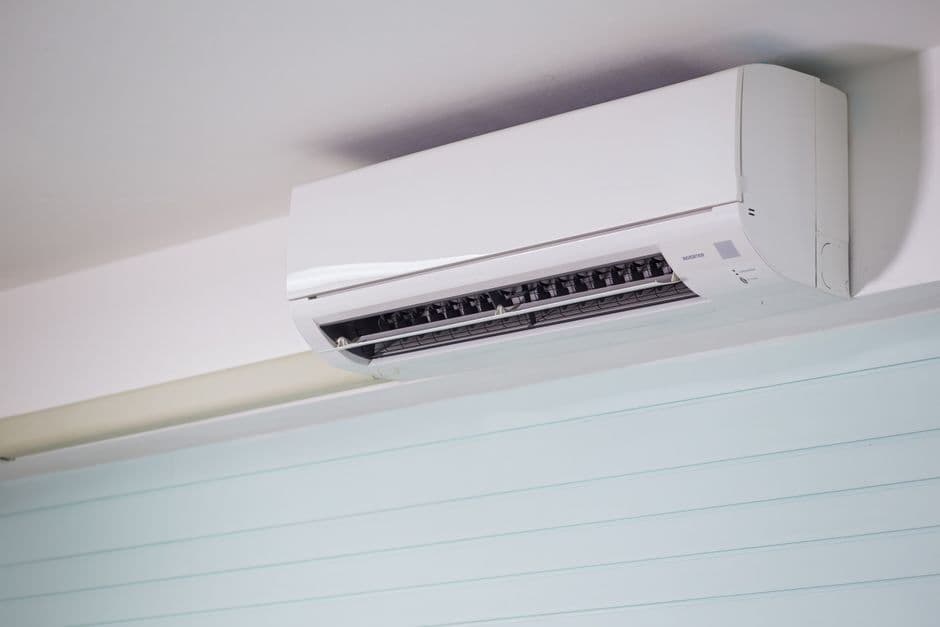
A cooling coil is a cold, wet, dusty surface running all summer. Most air conditioner smells start there, and most of them are fixable.
By Sawyer V. · Published
The short answer
Match the smell before you touch anything. Musty or mildewy is biofilm on a wet evaporator coil and drain pan, the most common cause by a distance, and it is a cleaning job. A burning or acrid electrical smell means unplug it now. A brief hot-dust smell at the first start of the season is normal. Anything like rotten eggs is not your air conditioner — leave and call the gas utility.
Fan & Frost earns a commission when you buy through our links, at no cost to you. It never changes a ranking, and we say so when the right answer is the cheaper unit or nothing at all. Full disclosure · How we pick.
At a glance
The picks, ranked
Tap any row to jump to the full reasoning. Prices are live from Amazon where we have them, and read “check price” where we don’t — never a number we cannot verify today.
| # | Product | Best for | Price |
|---|---|---|---|
| 1 | 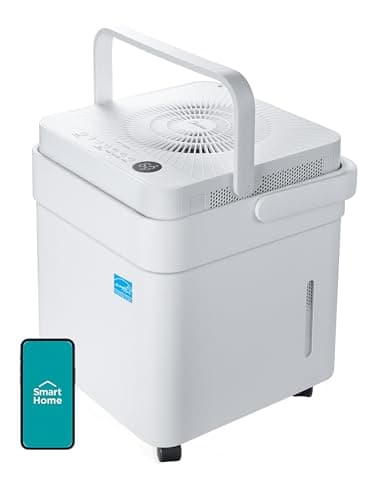 When the room is the source, not the machine Midea Dehumidifier, 20 pints/day 20.16 certified pints a day at 249 kWh a year — it removes the humidity the smell is growing in. | A basement or closed-up room that smells musty whether or not the AC is running | |
| 2 | 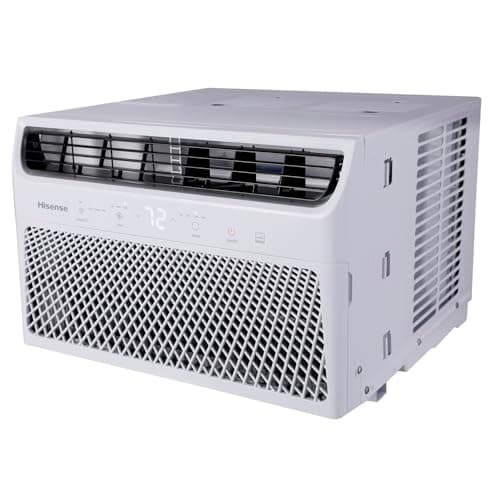 When the chassis is finished Hisense Window Air Conditioner, 8,000 BTU CEER 15 and 400 certified kWh a year — the honest replacement when cleaning stops holding. | An old unit whose pan has corroded through, or one that smells again a week after every clean |
Diagnosis
Six smells, six different problems
| What you smell | Usually | Do |
|---|---|---|
| Musty, mildewy, like a damp basement | Biofilm on the coil and standing water in the pan | Clean the filter, coil and pan |
| Sour, like damp laundry or old socks | The same growth, further along | Deep clean; replace if it returns |
| Hot dust, only for the first few minutes | Dust burning off the motor after months idle | Normal; it should fade |
| Acrid, burning plastic or electrical | Overheating wiring, motor or capacitor | Unplug at once; do not restart |
| Chemical or faintly sweet, with weak cooling | A sealed-system fault | Stop using it; on a window unit this usually means replacement |
| Rotten eggs or sulfur | Natural gas, not the air conditioner | Leave the building and call the gas utility |
This one is not a DIY job
The usual cause
Why a cooling coil grows things
An air conditioner dehumidifies as a side effect of cooling: room air passes over a coil cold enough to condense water out of it, which is why there is a drain at all. The result is a surface that spends every cooling hour wet, cold and in the dark, with a fan pushing household dust across it continuously.
That is an ideal substrate for mold, mildew and bacteria, and the film they form is what you smell. Three details make it worse:
- Water that sits. A pan that does not drain fully, or a unit installed without the slight tilt to the outside, keeps a reservoir going all season — the drainage design is in condensate and drainage.
- A loaded filter. Dust that gets past a clogged or missing filter lands on the wet coil and feeds the growth.
- Short cycles. An oversized unit that runs in brief bursts leaves the coil wet without ever drying it, which is one more argument against buying more capacity than the room needs.
The fix
Clean in this order
Unplug the unit first. Each step is cheaper and easier than the one after it, so work down the list and stop when the smell goes.
- The filter. Wash it, dry it completely, refit it. A filter put back damp is itself a source. Do this monthly in season.
- The evaporator coil — the indoor one behind the filter. A soft brush and a no-rinse coil cleaner, following the fin direction so you do not bend them. The full method is in how to clean a window air conditioner.
- The drain pan and drain path. Clear the channel and the weep hole. This is where the water that fed everything collects, and it is the step people skip.
- The blower wheel, if it is reachable. Dust cakes onto the blades and holds moisture; it is also why a unit gets quieter after a clean.
- The window seal. Gaps around a unit let humid outdoor air in to condense on cold surfaces, which restarts the cycle.
One habit worth adopting afterwards: run the unit on fan only for ten minutes before switching it off for the day. That dries the coil instead of leaving it wet overnight, and it is the single most effective prevention there is. Several units do it automatically; the modes are explained in timers and eco modes.
Not the machine
When the smell is the room
Before deep-cleaning anything, run the test in the first pick above: switch the air conditioner off, shut the window, and come back in an hour. If the room still smells musty, the machine is circulating an existing problem rather than creating one.
Common room-side sources:
- Humidity above about 60%, which lets mold and mildew grow on soft furnishings and in closets regardless of the air conditioner.
- A damp basement below feeding the floor above — see basement dehumidifiers.
- A dry plumbing trap in a rarely used bathroom, which smells of sewer rather than mildew and is fixed by running the tap.
- Something in the chassis. Through-wall and window units occasionally admit a mouse or a bird, and that smell is unmistakable and not biological growth.
Do not
Three things that make it worse
- Pouring bleach into the pan. It corrodes aluminum fins and the pan itself, and on a window unit the pan is the part you least want to lose.
- Fragrance cartridges and odor bombs. They mask the smell for a few days while the growth continues, and they put additional residue on a wet coil.
- Running it harder. A colder set point means a wetter coil for more hours. The smell gets stronger, not weaker.
Prevention
The schedule that keeps it away
- Monthly in season: wash and fully dry the filter.
- Once a year: clean both coils and clear the drain path.
- Every shutdown: ten minutes of fan-only running.
- Every autumn: drain it, dry it, and store it indoors or cover the outdoor half — storing a window air conditioner is where most chassis corrosion is prevented.
Say the unwelcome thing
Do not buy an air conditioner odor spray before you clean the pan.
The products sold for this treat the symptom at the only place you can reach without tools — the face of the coil — while the water that feeds the growth sits in the pan below. The smell returns within days, which is why people buy a second can.
Clear the drain path first; it is free and it is usually the whole problem. If the room itself is damp, a certified 20-pint dehumidifier addresses the cause, and if the smell survives a proper clean, a current certified unit is the honest end of the line.
In full
Every pick, and what is wrong with it
Published specifications only, each linked to the page it came from. Where a manufacturer publishes nothing, the row says so — we do not fill blanks in.
1. When the room is the source, not the machine
Midea Dehumidifier, 20 pints/day
Midea · model MAD20S1QWT
20.16 certified pints a day at 249 kWh a year — it removes the humidity the smell is growing in.
Run the test first: does the room smell musty with the air conditioner switched off and the window shut? If it does, the machine is circulating a smell rather than producing one, and cleaning the coil will not fix it.
Holding a space near 50% relative humidity suppresses mold and mildew at the source. This unit is certified at 20.16 pints a day and 249 kWh a year, about $46 at 18.34¢/kWh.
Give it a permanent drain so it never stops with a full tank, and set a target rather than running it flat out — what to set a dehumidifier to covers the number.
What’s wrong with it
It adds heat to the room it dries, needs a tank emptied or a hose plumbed, and it does nothing for a coil that is already fouled.
Running cost — MAD20S1QWT
| Annual energy use | 249 kWh | ENERGY STAR certified figure |
|---|---|---|
| Annual cost | $46 | 249 × 18.34¢/kWh |
| Per cooling month | $11 | spread over a four-month season |
The annual figure is the certified value from the ENERGY STAR Certified Dehumidifiers dataset, which models a standard cooling season rather than your actual summer. It is more useful than a nameplate wattage here, because a variable-speed compressor spends most of its life well below nameplate.
Rate: 18.34¢/kWh, the US average residential price for June 2026 (EIA Electric Power Monthly, Table 5.3). Yours will differ — swap it in: (watts ÷ 1000) × hours × your rate.
| Water removal | 20.16 pints/day (DOE Appendix X1) |
|---|---|
| Efficiency (IEF) | 1.70 L/kWh |
| Annual energy use | 249 kWh/yr |
| Refrigerant | HFC-32 (GWP 675) |
| Connected | No |
| Noise | Not published in the certified dataset |
| ENERGY STAR | Certified |
Every figure above is from ENERGY STAR Certified Dehumidifiers dataset. Blanks are shown as “not published” rather than filled in.
2. When the chassis is finished
Hisense Window Air Conditioner, 8,000 BTU
Hisense · model AHW0823TW1W
CEER 15 and 400 certified kWh a year — the honest replacement when cleaning stops holding.
There is a point where cleaning is no longer the answer: a drain pan rusted through, insulation inside the chassis that has absorbed years of condensate, or a blower wheel you cannot reach on a sealed unit.
The tell is repetition. If the smell returns within a week or two of a proper clean, the growth is somewhere you cannot get to, and no amount of spray reaches it.
A current certified unit is CEER 15 at 400 kWh a year, about $73 a season at 18.34¢/kWh. What actually ends these machines, and how to tell, is in how long window air conditioners last.
What’s wrong with it
Replacing a unit that only needed a thorough clean is an expensive way to solve a $5 problem — exhaust the cleaning order first.
Running cost — AHW0823TW1W
| Annual energy use | 400 kWh | ENERGY STAR certified figure |
|---|---|---|
| Annual cost | $73 | 400 × 18.34¢/kWh |
| Per cooling month | $18 | spread over a four-month season |
The annual figure is the certified value from the ENERGY STAR Certified Room Air Conditioners dataset, which models a standard cooling season rather than your actual summer. It is more useful than a nameplate wattage here, because a variable-speed compressor spends most of its life well below nameplate.
Rate: 18.34¢/kWh, the US average residential price for June 2026 (EIA Electric Power Monthly, Table 5.3). Yours will differ — swap it in: (watts ÷ 1000) × hours × your rate.
| Cooling capacity | 8,000 BTU/h |
|---|---|
| CEER | 15 |
| Annual energy use | 400 kWh/yr |
| vs federal standard | 38% less energy |
| Dimensions | 13.2 H x 18.5 W x 18.9 D in |
| Weight | 44.5 lb |
| Refrigerant | R-32 |
| Installation | Does not straddle the windowsill |
| Compressor | Variable speed |
| ENERGY STAR | Certified |
Every figure above is from ENERGY STAR Certified Room Air Conditioners dataset. Blanks are shown as “not published” rather than filled in.
Questions people actually ask
Frequently asked
Why does my air conditioner smell musty when I turn it on?
Biofilm on the evaporator coil and standing water in the drain pan. The coil is cold, wet and dusty for every hour the unit cools, which is ideal for mold and mildew. Cleaning the filter, coil and drain path fixes most cases.
Is a smelly air conditioner dangerous?
A musty smell is unpleasant rather than an emergency, though it means growth you should remove. A burning or electrical smell is different — unplug the unit immediately and do not restart it. A rotten-egg smell is a gas leak: leave and call the utility.
Why does my AC smell like a dirty sock?
The same coil and pan growth, further along. It tends to show up on units that cycle in short bursts, because the coil never gets a chance to dry. Running fan-only for ten minutes before shutting down is the most effective prevention. Cleaning it properly.
Will cleaning the filter stop the smell?
Sometimes, and it is always the first step because it takes five minutes. If the smell survives a clean, dry filter, the source is the coil behind it or the water sitting in the pan below it.
Can I pour bleach in the drain pan?
No. Bleach corrodes aluminum fins and the pan, and on a window unit a corroded pan ends the machine. Clear the drain channel and weep hole mechanically, and use a cleaner intended for coils.
My room smells musty even with the AC off. What now?
Then the machine is circulating a smell rather than making one. Check indoor humidity — above roughly 60 percent, mold and mildew grow on furnishings regardless of the air conditioner — and look for a damp basement or a dry plumbing trap. Drying the room instead.
Sources
Where these numbers came from
- ENERGY STAR Certified Room Air Conditioners dataset — CEER 15 and 400 kWh/yr for the replacement unit referenced here
- ENERGY STAR Certified Dehumidifiers dataset — 20.16 pints/day per DOE Appendix X1, IEF 1.70 L/kWh and 249 kWh/yr for the dehumidifier referenced here
- EIA Electric Power Monthly, Table 5.3 — average residential electricity price
Read next
Where to go from here
Back to Air Conditioners, or read how we pick.