The picks
Best high-velocity fans
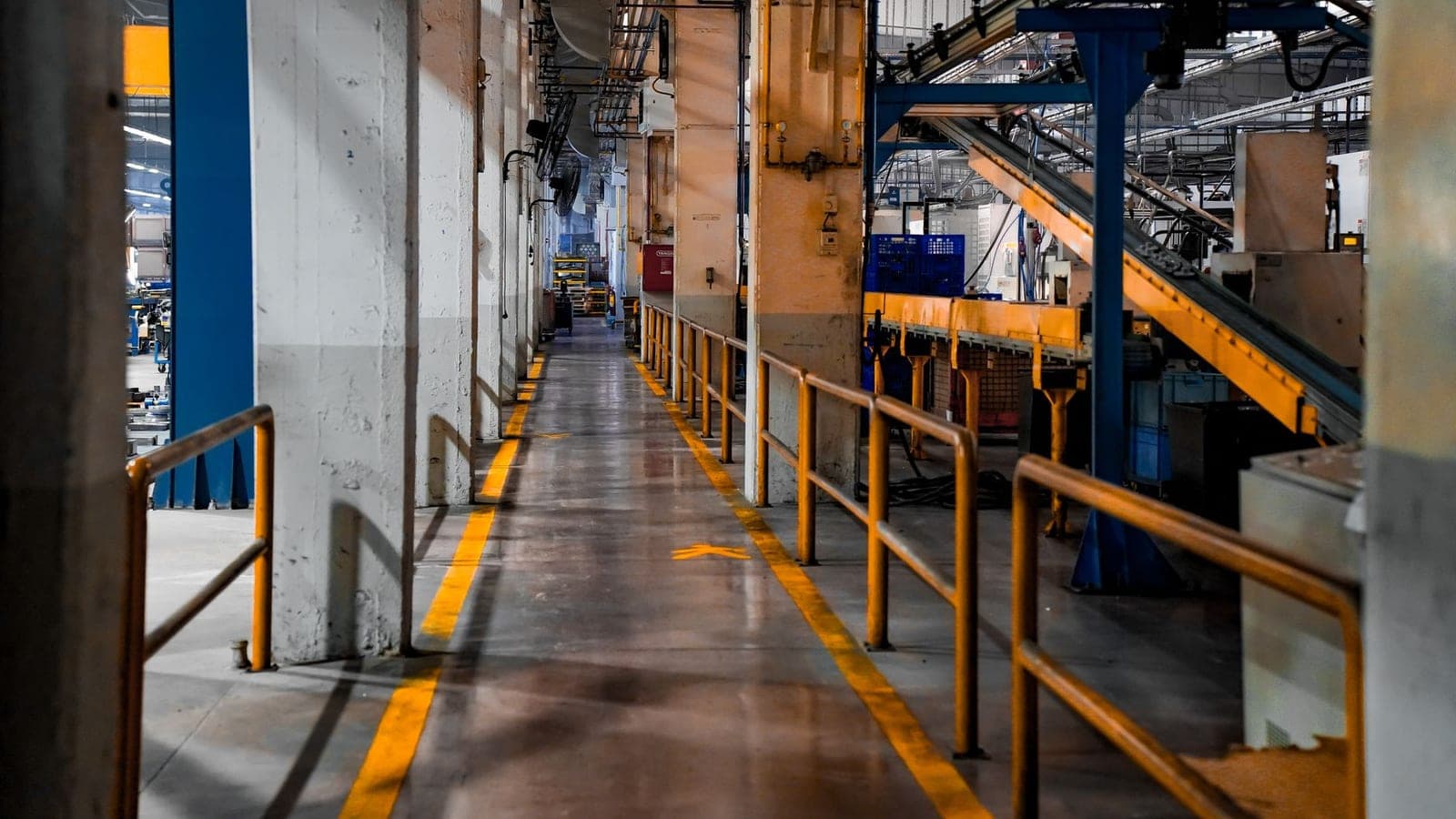
These move air hard, and the physics of why that costs so much is the reason they belong in a workshop rather than a living room.
By Sawyer V. · Published
The short answer
High-velocity fans exist for drying, ventilating and shifting air through obstructions — not for making a person comfortable. The Lasko U15720 draws 160 to 178 W and the Cyclone S18931 reaches 1,200 feet per minute. Against that, a DC tower fan produces enough airflow for comfort on 2.9 W. Velocity is expensive because drag rises steeply with speed, so fast air costs far more than slow air.
Fan & Frost earns a commission when you buy through our links, at no cost to you. It never changes a ranking, and we say so when the right answer is the cheaper unit or nothing at all. Full disclosure · How we pick.
At a glance
The picks, ranked
Tap any row to jump to the full reasoning. Prices are live from Amazon where we have them, and read “check price” where we don’t — never a number we cannot verify today.
| # | Product | Best for | Price |
|---|---|---|---|
| 1 | 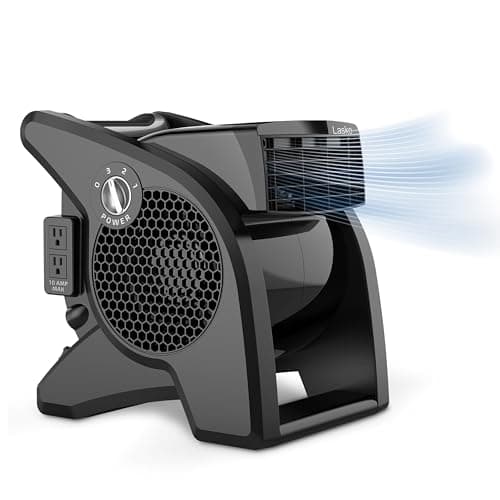 Most force, most features Lasko Max Performance 15" Air Mover 160 to 178 W with a pivoting head and two 120 V accessory outlets — a genuine jobsite tool. | Drying a room, a workshop, or moving air through a doorway | |
| 2 | 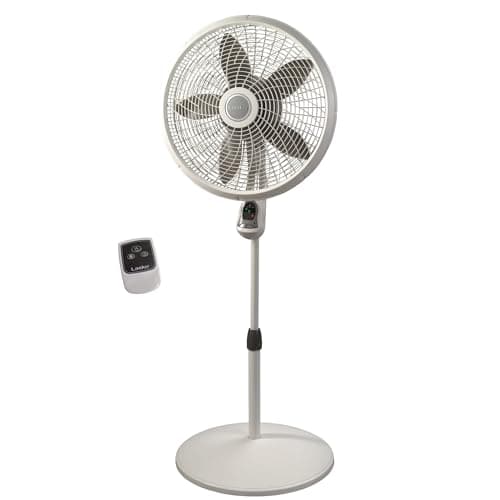 Highest published air speed Lasko Cyclone 18" Pedestal Fan Up to 1,200 feet per minute on an 18-inch pedestal adjustable from 38 to 54.5 inches. | Reaching across a large space, or lifting air to height | |
| 3 |  Most air, rather than fastest air Lasko Wind Curve 42" Tower Fan 720 CFM published — the highest airflow figure on this site, and the only fan here that states one. | A large room where volume matters more than force | |
| — | 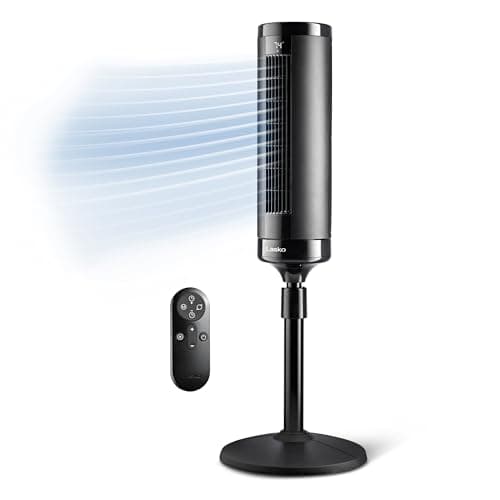 What comfort actually costs Lasko EcoQuiet 42" DC Tower Fan 2.9 W on low at 23 dBA. About one-sixtieth the power of an air mover, and better for sitting in front of. | Cooling a person — which is not what high-velocity fans are for |
High-velocity, air mover, floor blower, utility fan — the same category under several names, and one that is bought for the wrong job more often than almost anything else on this site.
The physics
Why fast air is expensive
Aerodynamic drag rises steeply with speed. Moving a given volume of air twice as fast takes far more than twice the power.
That single relationship explains the whole efficiency landscape on this site:
- Large slow discs are cheap. A certified 84-inch ceiling fan reaches 422.2 CFM per watt because it moves a lot of air very slowly.
- Small fast blades are expensive. A 42-inch ceiling fan manages 242.3 CFM per watt for the same reason in reverse.
- High-velocity fans are the extreme end. They deliberately accelerate a modest volume to high speed through a narrow outlet, which is the least efficient thing you can do with a fan motor.
So 178 W is not poor engineering. It is what the job costs, and the job is worth doing sometimes.
The data problem
Almost nothing is published
| Fan | Power | Airflow | dBA |
|---|---|---|---|
| Lasko U15720 air mover | 160 – 178 W | not published | not published |
| Lasko S18931 Cyclone | not published | 1,200 ft/min | not published |
| Lasko 2554 pedestal | not published | 720 CFM | not published |
| Lasko B20801 box fan | 73 – 102 W | not published | not published |
| Lasko T42710 tower (for contrast) | 2.9 – 19 W | not published | 23 – 46 |
Manufacturer product pages. There is no certification program for portable fans, so nothing here is independently tested.
Not one fan in this category publishes both power and airflow, so efficiency cannot be calculated for any of them. That is worth knowing before comparing on marketing language.
Note also that feet per minute and CFM are different things. Air speed tells you how fast the air moves at the outlet; CFM tells you how much of it there is. A narrow outlet can produce high velocity with modest volume.
This one is not a DIY job
The jobs that genuinely need velocity.
Drying. Carpet, a screed, plaster, a bathroom after a leak. Evaporation is driven by air speed at the wet surface, so this is exactly what the format is for.
Pushing air through an obstruction. Through a doorway, along a corridor, into a space with poor natural flow. A comfort fan dissipates before it gets there.
Ventilating a workshop or garage where the air needs to actually move rather than be stirred. The workshop case.
Cooling several people who are working, at distance, where a comfort fan cannot reach.
What it is not for is one person sitting still in a living room.
Noise
The specification nobody states
No high-velocity fan we hold data for publishes a dBA figure, which in this category is a conspicuous absence — because they are loud, and everybody knows it.
High tip speed produces noise, and the same physics that makes velocity expensive makes it loud. A fan accelerating air through a narrow outlet is generating turbulence, and turbulence is sound.
For comparison, the fans that do publish figures on this site run from 23 dBA for a DC tower fan on low to 65 dBA for a large evaporative cooler. Where an air mover sits is not stated by anyone.
What the published figures do and do not tell you.
Buying
If you do need one
- Look for a pivoting head. Being able to aim from floor level to ceiling is the difference between a drying tool and a floor fan.
- Check the cord length. These get used where sockets are scarce, and 9.5 feet against 6 matters on a jobsite.
- Accessory outlets are genuinely useful in a workshop and genuinely unwanted in a house with small children. Why.
- Weight and handle. These get moved constantly, and 12.55 lb with a handle is a different object from 9 lb on a pedestal.
- Do not expect published data. Buy on features and build, because the numbers are not there to buy on.
Say the unwelcome thing
Do not buy a high-velocity fan to cool a room.
It is the most common mismatch in this category, and it fails on both comfort and cost.
Felt cooling depends on air moving across skin, and that effect saturates well below the speeds these fans produce. Past a certain point you are not cooler, just buffeted — papers move, hair moves, conversation gets harder.
And it costs 178 W against 2.9 W for a DC tower fan on low. Over an eight-hour evening that is 26¢ against 0.4¢, for a result most people would rate as worse.
Buy one to dry a room, ventilate a workshop or push air through a doorway. For sitting in front of, a comfort fan is better in every respect including the one you would expect it to lose on.
In full
Every pick, and what is wrong with it
Published specifications only, each linked to the page it came from. Where a manufacturer publishes nothing, the row says so — we do not fill blanks in.
1. Most force, most features
Lasko Max Performance 15" Air Mover
Lasko · model U15720
160 to 178 W with a pivoting head and two 120 V accessory outlets — a genuine jobsite tool.
160 to 178 W — about 26¢ for an eight-hour session. That is the price of velocity, and it is the whole story of this category.
The features are jobsite features: a pivoting head that aims from floor level to ceiling, two 120 V accessory outlets so it can daisy-chain, and a 9.5 ft cord.
12.55 lb and 14.5 inches tall, which is compact for the output.
The gap: no published CFM. Lasko states power and not airflow, so its efficiency cannot be calculated or compared — which is true of most of this category.
What’s wrong with it
178 W is more power than every other fan on this site combined at low speed, and Lasko publishes no CFM figure.
Running cost — U15720
| Nameplate power | 160 W – 178 W | manufacturer's published figure |
|---|---|---|
| Energy, 8-hour night | 1.42 kWh | 178 ÷ 1000 × 8 |
| Cost per hour | 3.3¢ | at 18.34¢/kWh |
| Cost per 8-hour night | 26¢ | on the highest speed |
| Cost per 30 nights | $7.83 | 42.7 kWh |
| Same month, lowest speed | $7.04 | at 160 W |
Rate: 18.34¢/kWh, the US average residential price for June 2026 (EIA Electric Power Monthly, Table 5.3). Yours will differ — swap it in: (watts ÷ 1000) × hours × your rate.
| Power | 160 W - 178 W (1.35-1.53 A at 120 V) |
|---|---|
| Speeds | 3 |
| Dimensions | 14.5 H x 14.0 D x 11.5 W in |
| Weight | 12.55 lb |
| Extras | Two 120 V accessory outlets, 9.5 ft cord, pivoting head |
| Air delivery (CFM) | Not published |
| Warranty | 1 year |
Every figure above is from Lasko product page, U15720. Blanks are shown as “not published” rather than filled in.
2. Highest published air speed
Lasko Cyclone 18" Pedestal Fan
Lasko · model S18931
Up to 1,200 feet per minute on an 18-inch pedestal adjustable from 38 to 54.5 inches.
1,200 feet per minute is the published air velocity — roughly 13.6 miles per hour — and velocity rather than volume is what this format sells.
The 38 to 54.5 inch adjustable height is more useful than it sounds. A high-velocity stream launched at floor level hits furniture within a few feet; launched at head height it has a clear run.
9.0 lb and three speeds.
The honest gap is total: no published wattage, no published CFM. Air speed alone tells you how fast the air moves and nothing about how much of it there is, or what it costs.
What’s wrong with it
Lasko publishes no wattage and no CFM at all, so nothing about its efficiency can be established.
Running cost
Lasko does not publish a wattage for the S18931, so we cannot calculate what it costs to run. We are not going to estimate one. If Lasko publishes a nameplate figure, this block will show the arithmetic.
| Power | Not published (120 V stated, no wattage) |
|---|---|
| Air velocity | Up to 1,200 ft per minute |
| Speeds | 3 |
| Height | 38 - 54.5 in, adjustable |
| Weight | 9.0 lb |
| Air delivery (CFM) | Not published |
| Warranty | 1 year |
Every figure above is from Lasko product page, S18931. Blanks are shown as “not published” rather than filled in.
3. Most air, rather than fastest air
Lasko Wind Curve 42" Tower Fan
Lasko · model 2554
720 CFM published — the highest airflow figure on this site, and the only fan here that states one.
Worth separating from the fans above, because volume and velocity are different specifications and people conflate them.
720 CFM is a lot of air. It arrives spread out and relatively slow, which is what you want for comfort in a large room and not what you want for drying a carpet.
A high-velocity fan moving less total air faster will dry something better; this will make more people comfortable.
It is also the only fan on this page that publishes an airflow figure at all — though no wattage and no dBA. Full pedestal comparison.
What’s wrong with it
No published wattage or dBA, and it is a comfort fan rather than a tool — less force, more spread.
Running cost — 2554
| Nameplate power | 37 W – 49 W | manufacturer's published figure |
|---|---|---|
| Energy, 8-hour night | 0.39 kWh | 49 ÷ 1000 × 8 |
| Cost per hour | 0.9¢ | at 18.34¢/kWh |
| Cost per 8-hour night | 7.2¢ | on the highest speed |
| Cost per 30 nights | $2.16 | 11.8 kWh |
| Same month, lowest speed | $1.63 | at 37 W |
Rate: 18.34¢/kWh, the US average residential price for June 2026 (EIA Electric Power Monthly, Table 5.3). Yours will differ — swap it in: (watts ÷ 1000) × hours × your rate.
| Power | 37 W - 49 W (0.4 A at 120 V) |
|---|---|
| Air delivery | 720 CFM |
| Speeds | 3 |
| Height | 42.5 in |
| Footprint | 13 x 13 in |
| Weight | 10.62 lb |
| Timer | 7.5-hour auto-off |
| Noise | Not published |
| Warranty | 1 year |
Every figure above is from Lasko product page, 2554. Blanks are shown as “not published” rather than filled in.
Skip this one
Lasko EcoQuiet 42" DC Tower Fan
Lasko · model T42710
2.9 W on low at 23 dBA. About one-sixtieth the power of an air mover, and better for sitting in front of.
Listed as a skip against the brief, and it shows why the brief matters.
2.9 W against 178 W. Roughly one-sixtieth the power, and for a person sitting three feet away the felt cooling is comparable — because felt cooling depends on air moving over skin, and it saturates well below the speeds an air mover produces.
0.4¢ for an eight-hour night against 26¢.
23 dBA and twelve speeds, both published. High- velocity fans publish neither.
What’s wrong with it
It will not dry a carpet, clear a workshop or push air through a doorway. It is not trying to.
Running cost — T42710
| Nameplate power | 2.9 W – 19 W | manufacturer's published figure |
|---|---|---|
| Energy, 8-hour night | 0.15 kWh | 19 ÷ 1000 × 8 |
| Cost per hour | 0.3¢ | at 18.34¢/kWh |
| Cost per 8-hour night | 2.8¢ | on the highest speed |
| Cost per 30 nights | 84¢ | 4.6 kWh |
| Same month, lowest speed | 13¢ | at 2.9 W |
Rate: 18.34¢/kWh, the US average residential price for June 2026 (EIA Electric Power Monthly, Table 5.3). Yours will differ — swap it in: (watts ÷ 1000) × hours × your rate.
| Power | 2.9 W - 19 W (0.06-0.303 A at 120 V) |
|---|---|
| Noise | 23 dBA low, 46 dBA high |
| Speeds | 12 |
| Height | 41.6 in |
| Footprint | 12.8 x 12.8 in |
| Weight | 7.8 lb |
| Timer | 8 hours |
| Air delivery (CFM) | Not published |
| Warranty | 2 years |
Every figure above is from Lasko product page, T42710. Blanks are shown as “not published” rather than filled in.
We are not linking a buy button for this one. If you want to look at it anyway, it is easy enough to find — but we would rather send you to something that fits your room.
Questions people actually ask
Frequently asked
What is a high-velocity fan for?
Drying, ventilating and pushing air through obstructions — a carpet after a leak, a workshop, air down a corridor. Evaporation is driven by air speed at the wet surface, which is exactly what the format produces.
Why do high-velocity fans use so much power?
Aerodynamic drag rises steeply with speed, so moving air twice as fast takes far more than twice the power. These fans deliberately accelerate a modest volume through a narrow outlet, which is the least efficient thing a fan motor can do.
Is a high-velocity fan good for cooling a room?
No. Felt cooling depends on air moving over skin and it saturates well below the speeds these produce — past that point you are buffeted rather than cooler, at 178 watts against 2.9 for a comfort fan. How fans cool you.
What is the difference between CFM and feet per minute?
CFM is how much air moves; feet per minute is how fast it moves at the outlet. A narrow outlet can produce high velocity with modest volume, so the two figures answer different questions and are not interchangeable.
How loud are high-velocity fans?
Nobody publishes a figure. Not one fan in this category we hold data for states a dBA rating — a conspicuous gap, since high tip speed generates turbulence and turbulence is noise.
What should I look for in a high-velocity fan?
A pivoting head so it can aim from floor to ceiling, cord length since sockets are often scarce where they are used, weight and handle for moving it, and build quality — because the performance numbers you would normally compare are not published.
Sources
Where these numbers came from
- Lasko U15720 product page — 160-178 W, pivoting head, two 120 V outlets, 9.5 ft cord, 12.55 lb
- Lasko S18931 Cyclone product page — up to 1,200 ft/min, 38-54.5 in adjustable, 9.0 lb
- ENERGY STAR Certified Ceiling Fans dataset — the CFM per watt figures used for the span comparison
- EIA Electric Power Monthly, Table 5.3 — electricity rate
Read next
Where to go from here
Back to Fans, or read how we pick.