Guide and picks
Cooling a sunroom
It is the hardest room in the house to cool, because the feature you bought it for is the problem.
By Sawyer V. · Published
The short answer
Deal with the glass first. A sunroom is defined by glazing, and solar gain through it dwarfs every other heat input — no cooling appliance offsets it economically. Then move the air, because sunrooms stratify severely: a ceiling fan on 1.5 to 6.0 watts destratifies a tall glazed space for almost nothing. Cool last, and size it high — standard square-footage rules badly under-read a room made of windows.
Fan & Frost earns a commission when you buy through our links, at no cost to you. It never changes a ranking, and we say so when the right answer is the cheaper unit or nothing at all. Full disclosure · How we pick.
At a glance
The picks, ranked
Tap any row to jump to the full reasoning. Prices are live from Amazon where we have them, and read “check price” where we don’t — never a number we cannot verify today.
| # | Product | Best for | Price |
|---|---|---|---|
| 1 | 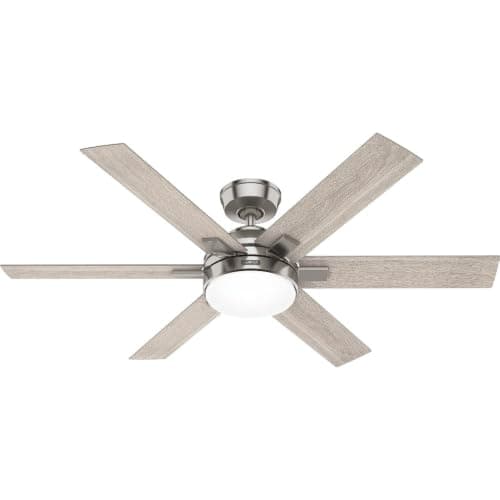 Best fan for a sunroom Hunter Georgetown 52" Ceiling Fan 326.3 CFM per watt on 20.6 W, rated for indoor and outdoor use — which matters in a humid, condensation-prone space. | A glazed room that stratifies badly and may get damp | |
| 2 | The evaporative case, in a dry climate Honeywell CL25AE Indoor Evaporative Cooler 764 CFM on 235 W at 52 to 60 dBA — and a sunroom is the one indoor space where evaporative cooling genuinely suits. | A dry-climate sunroom with a door or window that stays open | |
| 3 | 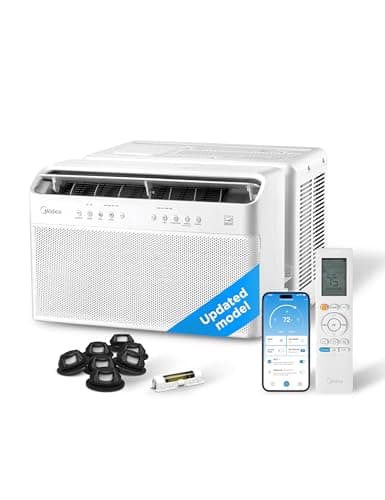 If it needs real cooling Midea U-Shaped Window Air Conditioner, 8,000 BTU 8,000 BTU at CEER 15 and 400 kWh a year, with the compressor outside a closed window. | A sunroom used as a room rather than a seasonal space | |
| — | The default that disappoints here Whynter ARC-14S Dual Hose Portable Air Conditioner 1,300 W and 9,500 BTU SACC, fighting a solar load that no portable is sized for. | A sunroom with no usable window opening — reluctantly |
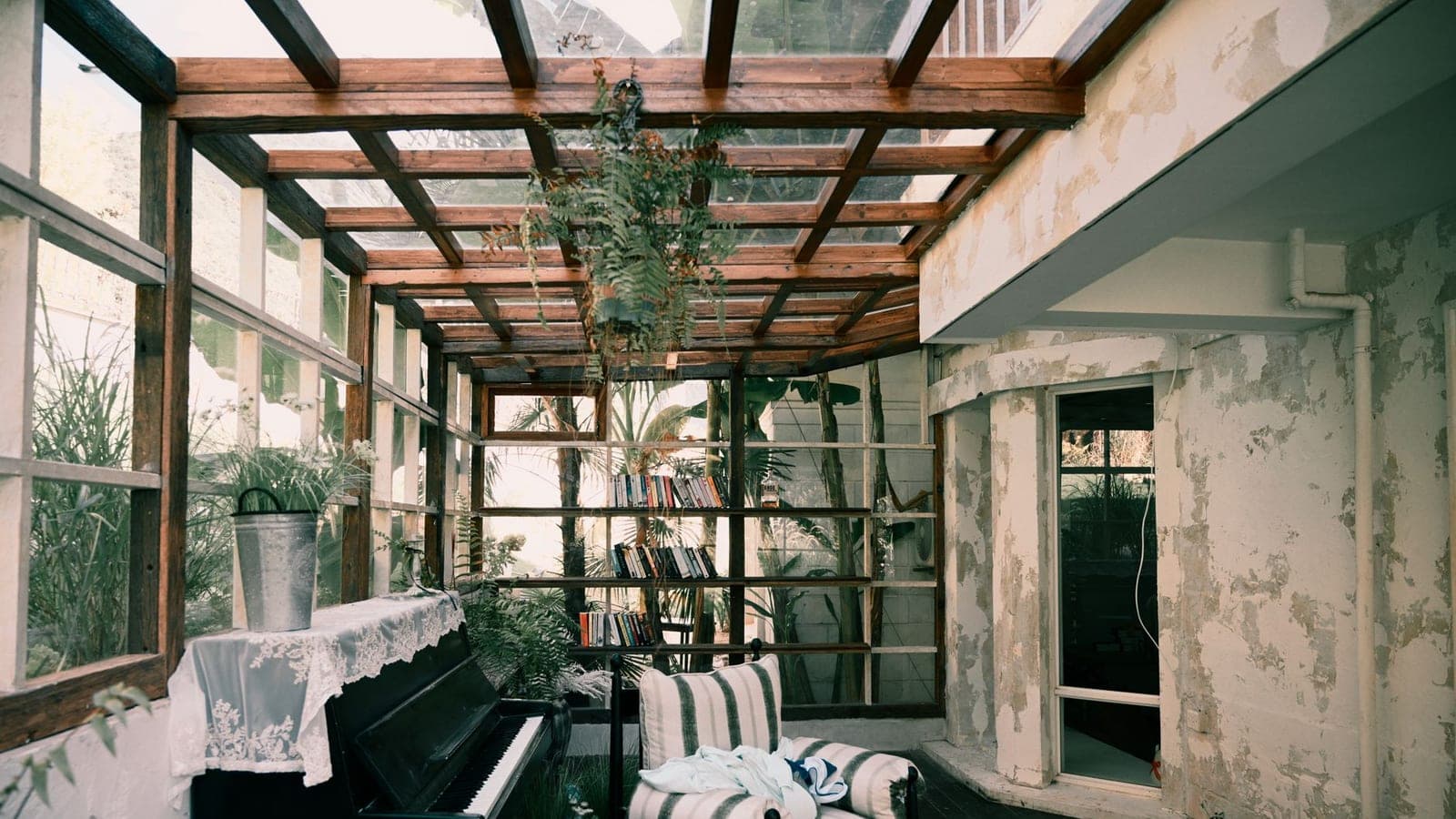
A sunroom is a room built out of glass, and glass is the single largest route for heat into a building. The feature is the problem, which is why this is the hardest room on the site to cool and the one where the usual advice fails.
First, and by a long way
The glass is the whole problem
In a normal room, solar gain through windows is one heat input among several. In a sunroom it is nearly all of them — walls, roof and windows are frequently the same material.
That has an uncomfortable implication: no cooling appliance is a good answer on its own. You would be paying, continuously, to remove heat arriving continuously through a surface designed to admit it.
The measures that actually work, in order of effect:
- External shading beats internal shading, substantially. An awning, a pergola, an external blind or a tree stops solar energy before it passes the glass. An internal blind stops it after it is already inside, where much of the heat stays.
- Shade the roof first if it is glazed. A glass or polycarbonate roof faces the sun at its highest and most intense. Roof-mounted external shading does more than anything applied to the walls.
- Internal blinds still help, especially light-colored or reflective ones, and they are the practical option where external shading is impossible.
- Solar control film on existing glazing is the permanent version. It reduces solar gain year-round, which is a trade-off if you value the winter warmth.
None of this is a cooling product, which is why it gets skipped. It is also where nearly all the available improvement is.
Second
Sunrooms stratify badly
Warm air rises, and a sunroom generates warm air at the top — often under a glazed or lean-to roof with substantial height.
The result is severe stratification: an uncomfortably hot layer near the roof and a cooler zone at seating level that is nonetheless being radiated at from above. Moving that air is unusually effective here, because there is unusually much of it to move.
A ceiling fan in a sunroom does two jobs across the year:
- Summer, counter-clockwise: airflow across you, which makes the room feel several degrees cooler without changing the air temperature.
- Winter, clockwise and slow: pulls air up and pushes the warm layer under the roof back down. In a glazed room that layer is large and it is heat you already paid for. The winter method.
At 1.5 to 6.0 watts on low across certified fans, this is close to free in both directions.
Third
Ventilation, on a schedule
Sunrooms usually have plenty of openings, which makes cross-ventilation easy and timing critical.
| When | What to do |
|---|---|
| Overnight and early morning | Open everything, run a fan, purge the heat |
| Mid-morning, once outdoor exceeds indoor | Shut it, shade it, keep the fan running |
| Afternoon | Stay shut and shaded — this is when the damage happens |
| Evening, once outdoor drops below indoor | Open up again, cross-ventilate |
High-level vents matter more here than in other rooms. The hot layer is at the top, so an opening at the top lets it leave by itself — the stack effect doing the work for nothing. Placement for cross-ventilation.
This one is not a DIY job
Standard sizing rules under-read a sunroom badly. Square-footage tables assume a room with insulated walls, a roof, and a normal proportion of glazing. A sunroom breaks every one of those assumptions.
ENERGY STAR’s own guidance says to increase capacity for a very sunny room. A sunroom is the extreme case of that adjustment, and the published percentage is not calibrated for a room that is mostly glass.
Do the shading first, then size. An externally shaded sunroom is a substantially different thermal problem from an unshaded one, and sizing before shading means buying capacity you will not need.
If the room is genuinely part of the house year-round and the glazing cannot take a window unit, this is one of the stronger cases for a mini-split — it also heats, and sunrooms are as unusable in January as they are in July.
Order
In sequence
Shade the glass, roof first. Externally if at all possible. This is where most of the improvement lives and it costs nothing to run.
Ventilate on a schedule, purging overnight and shutting before the outdoor temperature overtakes the indoor.
Add a ceiling fan for airflow in summer and destratification in winter, at 1.5 W on low.
Evaporative cooling if your climate is dry and the doors stay open — sunrooms are the one indoor space where that fits.
Then cooling, sized generously, and only if the room is used as a room rather than seasonally.
Say the unwelcome thing
Do not buy cooling for an unshaded sunroom.
It is the most expensive mistake available in this category, and it is the most common one.
An unshaded glazed room in afternoon sun is taking on a continuous, large heat load through nearly its whole surface area. A cooling appliance runs flat out against it, does not win, and costs $1.43 an evening for a portable while doing so.
The same room with external shading over the roof and the sun-facing glass is a different building. The load falls dramatically, the fan becomes adequate on many days, and any cooling you do add can be smaller and will actually keep up.
Shade first, always. Then reassess — you may find you do not need to buy anything else.
In full
Every pick, and what is wrong with it
Published specifications only, each linked to the page it came from. Where a manufacturer publishes nothing, the row says so — we do not fill blanks in.
1. Best fan for a sunroom
Hunter Georgetown 52" Ceiling Fan
Hunter · model 52" Georgetown
326.3 CFM per watt on 20.6 W, rated for indoor and outdoor use — which matters in a humid, condensation-prone space.
The indoor and outdoor rating is the reason this is the sunroom pick rather than a conventional indoor fan. Sunrooms run humid, condense on the glass, and frequently sit at the boundary between conditioned and unconditioned space.
326.3 CFM per watt on 20.6 W, and 1.5 W on low — about 0.2¢ for an eight-hour day. Low speed is what a sunroom mostly needs, because the job is overturning a stratified layer rather than ventilating.
52 inches suits most sunrooms. If yours has a vaulted or lean-to roof, go larger — span does more work as ceiling height rises.
One caveat we will not skip: the certified data does not record damp versus wet listing. Confirm it before you buy.
What’s wrong with it
The certified dataset records indoor/outdoor rating but not damp versus wet listing, so confirm that with the manufacturer.
Running cost — 52" Georgetown
| Nameplate power | 1.5 W – 20.6 W | manufacturer's published figure |
|---|---|---|
| Energy, 8-hour night | 0.16 kWh | 20.6 ÷ 1000 × 8 |
| Cost per hour | 0.4¢ | at 18.34¢/kWh |
| Cost per 8-hour night | 3.0¢ | on the highest speed |
| Cost per 30 nights | 91¢ | 4.9 kWh |
| Same month, lowest speed | 6.6¢ | at 1.5 W |
Rate: 18.34¢/kWh, the US average residential price for June 2026 (EIA Electric Power Monthly, Table 5.3). Yours will differ — swap it in: (watts ÷ 1000) × hours × your rate.
| Blade span | 52 in |
|---|---|
| Efficiency | 326.3 CFM per watt |
| Power, high speed | 20.6 W |
| Power, low speed | 1.5 W |
| Type | Rated for indoor and outdoor use |
| ENERGY STAR | Certified |
Every figure above is from ENERGY STAR Certified Ceiling Fans dataset. Blanks are shown as “not published” rather than filled in.
2. The evaporative case, in a dry climate
Honeywell CL25AE Indoor Evaporative Cooler
Honeywell · model CL25AE
764 CFM on 235 W at 52 to 60 dBA — and a sunroom is the one indoor space where evaporative cooling genuinely suits.
Evaporative cooling needs an air path — dry air in, humidified air out — which is why it fails in most sealed rooms. A sunroom usually has doors and vents that stay open, so it is the one indoor space where the requirement is naturally met.
764 CFM on 235 W, about 26¢ for a six-hour session, and 52 to 60 dBA — the quietest published figure in the category.
25.4 lb and a 6.6 gallon tank with a 7.5 hour timer: light enough to carry to a tap, sized for a session rather than continuous running.
The condition is real, though. Check your humidity first — in damp air this makes a condensation-prone room worse.
What’s wrong with it
Only in dry air. In a humid climate it adds moisture to a room that is already condensing on its own glass.
Running cost — CL25AE
| Nameplate power | 235 W | manufacturer's published figure |
|---|---|---|
| Energy, 8-hour night | 1.88 kWh | 235 ÷ 1000 × 8 |
| Cost per hour | 4.3¢ | at 18.34¢/kWh |
| Cost per 8-hour night | 34¢ | on the highest speed |
| Cost per 30 nights | $10 | 56.4 kWh |
Rate: 18.34¢/kWh, the US average residential price for June 2026 (EIA Electric Power Monthly, Table 5.3). Yours will differ — swap it in: (watts ÷ 1000) × hours × your rate.
| Air delivery | 764 CFM |
|---|---|
| Power | 235 W |
| Water tank | 6.6 gallons |
| Air throw | 33 ft |
| Noise | 52-60 dBA |
| Speeds | 3, oscillating louvers |
| Timer | Up to 7.5 hours |
| Dimensions | 18.9 x 14.6 x 33.3 in |
| Weight | 25.4 lb |
| Manufacturer coverage claim | 466 sq ft |
| Warranty | 1 year |
Every figure above is from Honeywell Air Comfort product page, CL25AE. Blanks are shown as “not published” rather than filled in.
3. If it needs real cooling
Midea U-Shaped Window Air Conditioner, 8,000 BTU
Midea · model MAW08V1QWT-S
8,000 BTU at CEER 15 and 400 kWh a year, with the compressor outside a closed window.
If the sunroom is genuinely part of the house rather than a summer space, cooling becomes reasonable — after the glass has been dealt with.
400 kWh a year at CEER 15, about $73 for a season, with a variable-speed compressor that modulates rather than cycling. That matters here because sunroom load swings hugely with cloud cover.
The U-shape puts the compressor outside a closed window, which is the quiet option and also seals better than a conventional unit propping a sash open.
The practical obstacle is that sunrooms frequently have fixed, casement or sliding glazing rather than a vertical sash. That case is covered here.
What’s wrong with it
It needs a vertical sash window, which many sunrooms do not have — and 53.2 lb over a sill is a two-person job.
Running cost — MAW08V1QWT-S
| Annual energy use | 400 kWh | ENERGY STAR certified figure |
|---|---|---|
| Annual cost | $73 | 400 × 18.34¢/kWh |
| Per cooling month | $18 | spread over a four-month season |
The annual figure is the certified value from the ENERGY STAR Certified Room Air Conditioners dataset, which models a standard cooling season rather than your actual summer. It is more useful than a nameplate wattage here, because a variable-speed compressor spends most of its life well below nameplate.
Rate: 18.34¢/kWh, the US average residential price for June 2026 (EIA Electric Power Monthly, Table 5.3). Yours will differ — swap it in: (watts ÷ 1000) × hours × your rate.
| Cooling capacity | 8,000 BTU/h |
|---|---|
| CEER | 15 |
| Annual energy use | 400 kWh/yr |
| vs federal standard | 38% less energy |
| Dimensions | 13.5 H x 19.2 W x 22.0 D in |
| Weight | 53.2 lb |
| Refrigerant | R-32 |
| Installation | U-shape; sash closes through the middle of the unit |
| Compressor | Variable speed |
| ENERGY STAR | Certified |
Every figure above is from ENERGY STAR Certified Room Air Conditioners dataset. Blanks are shown as “not published” rather than filled in.
Skip this one
Whynter ARC-14S Dual Hose Portable Air Conditioner
Whynter · model ARC-14S
1,300 W and 9,500 BTU SACC, fighting a solar load that no portable is sized for.
Portables end up in sunrooms because the glazing rarely takes a window unit, and it is the worst possible pairing of format and room.
9,500 BTU SACC from a 14,000 BTU headline — a 32.1% haircut — on 1,300 W, about $1.43 for a six-hour session.
Against that, a sunroom in afternoon sun is taking on a continuous, large solar load through every surface. The machine runs constantly and does not win, and people conclude it is faulty. It usually is not.
If a portable is genuinely the only option, shade the glass first and accept that you are managing the room rather than conditioning it.
What’s wrong with it
A sunroom's heat gain is continuous and large. A portable is the least capable format taking on the hardest room.
Running cost — ARC-14S
| Nameplate power | 1300 W | manufacturer's published figure |
|---|---|---|
| Energy, 8-hour night | 10.40 kWh | 1300 ÷ 1000 × 8 |
| Cost per hour | 24¢ | at 18.34¢/kWh |
| Cost per 8-hour night | $1.91 | on the highest speed |
| Cost per 30 nights | $57 | 312.0 kWh |
Rate: 18.34¢/kWh, the US average residential price for June 2026 (EIA Electric Power Monthly, Table 5.3). Yours will differ — swap it in: (watts ÷ 1000) × hours × your rate.
| Marketing capacity | 14,000 BTU (ASHRAE-128) |
|---|---|
| DOE-rated capacity | 9,500 BTU SACC |
| Hoses | Dual |
| Power | 1,300 W / 11.6 A at 115 V |
| Noise | Under 51 dBA low, under 56 dBA high |
| Dehumidification | 71 pints/day |
| Refrigerant | R-32 |
| Dimensions | 16 W x 19 D x 35.5 H in |
| Weight | 73 lb |
| Manufacturer coverage claim | 500 sq ft |
| Warranty | 1 year unit, 3 years compressor |
Every figure above is from Whynter product page, ARC-14S. Blanks are shown as “not published” rather than filled in.
We are not linking a buy button for this one. If you want to look at it anyway, it is easy enough to find — but we would rather send you to something that fits your room.
Questions people actually ask
Frequently asked
How do you cool a sunroom?
Shade the glass first, external shading over the roof for preference, because solar gain through glazing dwarfs every other heat input. Then ventilate on a schedule, add a ceiling fan for airflow and destratification, and only then consider cooling.
Why is my sunroom so hot?
Because it is built from the thing that heats it. Glass is the largest route for solar energy into a building, and a sunroom has glazing where a normal room has insulated walls and a roof — so the heat input is continuous across almost its whole surface.
What size air conditioner for a sunroom?
Larger than square-footage tables suggest, because those assume insulated walls and a normal proportion of glazing. Do the shading first, then size — an externally shaded sunroom is a substantially different thermal problem from an unshaded one. Sizing method.
Do ceiling fans help in a sunroom?
More than in most rooms, because sunrooms stratify severely — a large hot layer collects under a glazed or lean-to roof. A fan moves it in summer for airflow and reverses in winter to push that warm layer back down, at 1.5 to 6.0 watts on low.
Can I use an evaporative cooler in a sunroom?
In a dry climate, yes — and it is the one indoor space where the technology naturally suits, because evaporative cooling needs an air path and sunrooms usually have doors and vents that stay open. In humid air it makes a condensation-prone room worse.
Is internal or external shading better for a sunroom?
External, substantially. An awning, pergola or external blind stops solar energy before it passes the glass; an internal blind stops it after it is already inside, where much of the heat stays in the room regardless.
Sources
Where these numbers came from
- ENERGY STAR Certified Ceiling Fans dataset — CFM per watt, wattage by speed, indoor/outdoor classification
- ENERGY STAR room air conditioner sizing guidance — capacity adjustment for very sunny rooms
- Honeywell CL25AE product page — 764 CFM, 235 W, 52-60 dBA, 6.6 gal tank
- EIA Electric Power Monthly, Table 5.3 — electricity rate
Read next
Where to go from here
Back to Room Cooling, or read how we pick.