Guide and picks
Does putting ice in front of a fan work?
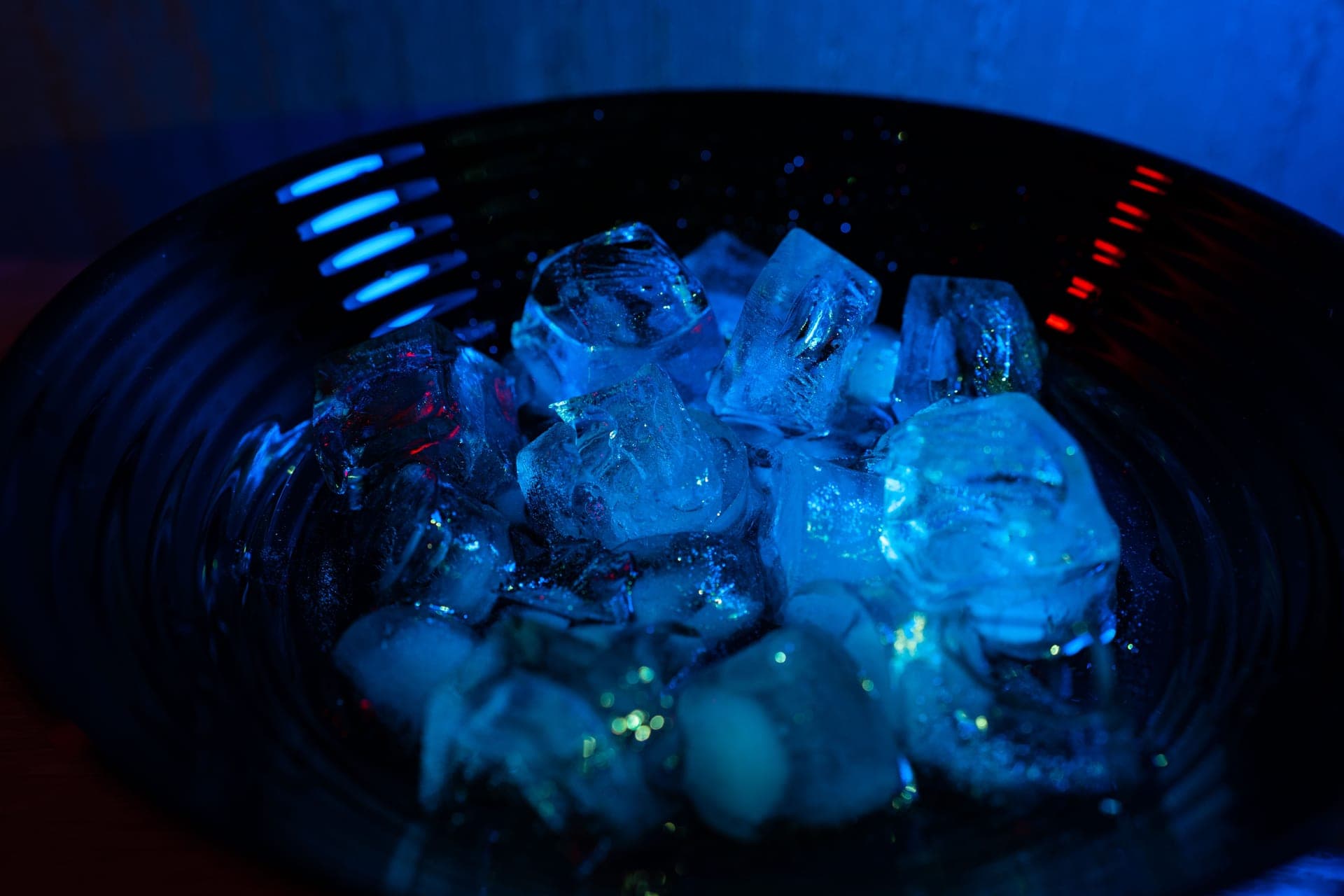
It genuinely cools the air for a while. The problem is how little cooling is in a bowl of ice, and where that ice came from.
By Sawyer V. · Published
The short answer
Briefly, and not by much. Melting ice absorbs about 144 BTU per pound, so a five-pound bag holds roughly 720 BTU of cooling — about seven minutes of a small air conditioner, once. And if you froze it at home, the freezer put more heat into the house than the ice removes, because both its coils are indoors.
Fan & Frost earns a commission when you buy through our links, at no cost to you. It never changes a ranking, and we say so when the right answer is the cheaper unit or nothing at all. Full disclosure · How we pick.
At a glance
The picks, ranked
Tap any row to jump to the full reasoning. Prices are live from Amazon where we have them, and read “check price” where we don’t — never a number we cannot verify today.
| # | Product | Best for | Price |
|---|---|---|---|
| 1 | 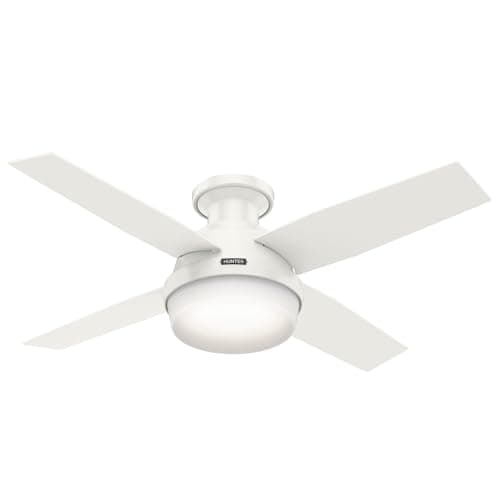 What actually works Hunter Martindale 44" Ceiling Fan 1.1 W on low at 304.5 CFM per watt — the lowest low-speed draw of any certified fan we hold data for. | Any room where you want cooling that does not run out | |
| 2 | 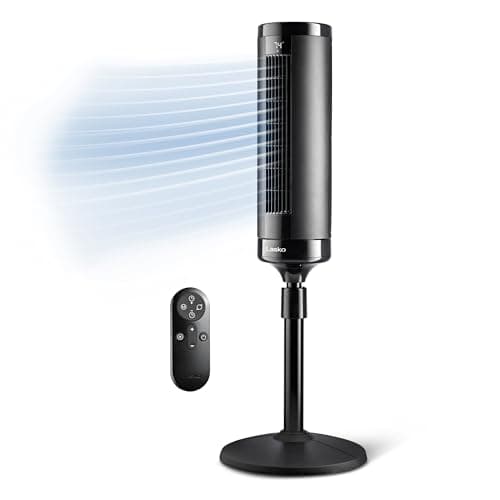 Best without an electrician Lasko EcoQuiet 42" DC Tower Fan 2.9 W on the lowest of 12 speeds at 23 dBA — the portable answer that does not involve a bowl of water. | A room with no fan-rated ceiling box, or a rental | |
| 3 | If the room is genuinely too hot Midea Window Air Conditioner, 6,000 BTU CEER 16 and 281.3 kWh a year — it delivers a bowl of ice worth of cooling roughly every seven minutes, indefinitely. | A room where air movement is not enough | |
| — | The ice trick done properly Honeywell CL25AE Indoor Evaporative Cooler 764 CFM on 235 W — an evaporative cooler is the engineered version of blowing air over water, and it has the same limitation. | A dry climate with a window open — not a humid one |
The ice-in-front-of-a-fan trick is one of the most searched cooling questions there is, and the honest answer has three parts: it works, it barely works, and your freezer probably canceled it.
Part one
It does genuinely cool the air
Give the trick its due. Air passing over ice loses heat to it, so the air arriving at you really is cooler than the air in the room. This is not a myth in the way that some cooling folklore is.
Two mechanisms are at work:
- Sensible cooling. Warm air contacts a cold surface and gives up heat.
- Latent cooling. Melt water evaporates into the airstream, which absorbs a great deal more heat than simple contact. This is the same effect an evaporative cooler is built around.
So people who say they feel a difference are not imagining it. The question is how much difference, and for how long.
Part two
There is very little cooling in a bowl of ice
Melting ice absorbs about 144 BTU per pound — the latent heat of fusion of water, a physical constant. That number makes the comparison easy.
| Source | Cooling delivered | How long it lasts |
|---|---|---|
| 1 lb of ice, fully melted | about 144 BTU | once |
| 5 lb bag of ice, fully melted | about 720 BTU | once |
| 20 lb of ice, fully melted | about 2,880 BTU | once |
| 6,000 BTU air conditioner | 6,000 BTU per hour | indefinitely |
| 12,000 BTU air conditioner | 12,000 BTU per hour | indefinitely |
A five-pound bag of ice is worth about seven minutes of a small air conditioner. Twenty pounds — which is a lot of ice to have standing in your bedroom — is worth under half an hour.
And that assumes every bit of it melts into the airstream. In practice a fan blows past a bowl rather than through it, so a large share of the ice melts into the water at the bottom without ever contacting the moving air.
Part three
Your freezer already put that heat in the room
This is the part nobody mentions, and it is the one that settles the question for home-made ice.
A freezer is a refrigeration cycle, exactly like an air conditioner — and like a dehumidifier, both of its coils are inside your house. The cold one is in the cabinet; the hot one is the grille at the back or underneath.
So freezing a tray of water:
- removes heat from the water in the cabinet, and
- dumps that heat plus the compressor’s own energy into your kitchen.
The net effect on the house is warming. Then you carry the ice into the bedroom and get back less cooling than the kitchen gained — because no refrigeration cycle is 100% efficient and the compressor’s electricity all became heat too.
Home-made ice in front of a fan is a net heater for the house. It moves a little cooling from the kitchen to the bedroom and loses some on the way.
Bought ice is different — the freezing happened in someone else’s building. It is still only 144 BTU a pound.
The humidity
And it makes the room damper
The latent part of the effect — melt water evaporating — is where most of the cooling comes from, and it has a cost.
Your body sheds heat by evaporating sweat, and that needs air with spare capacity to absorb moisture. Adding water vapor to the room reduces that capacity, which makes the same temperature feel warmer.
In a dry climate this trade is worth making — it is the whole basis of evaporative cooling. In a humid one you are giving up sweat evaporation to gain a small amount of air cooling, which is a poor deal and frequently a net loss in comfort.
It also puts water on the floor, which in a bedroom overnight is its own problem.
This one is not a DIY job
Water and electrical appliances are a genuine hazard. A bowl of melting ice in front of a running fan produces condensation on the outside of the bowl and melt water that can be knocked over, and fans are not sealed appliances.
Never place liquid above or immediately upwind of a fan motor, and never do this with a fan on the floor of a room where someone will walk at night.
If you are trying to cool someone who is unwell or elderly, that is a medical matter rather than a household-tips one. Heat illness is serious and this page is a physics explanation, not health advice.
During a power outage, dry ice is sometimes suggested for cooling. It sublimates into carbon dioxide and is genuinely dangerous in an enclosed room.
When it is reasonable
The narrow case for doing it anyway
We are not going to pretend there is never a reason.
- A power outage, where the freezer is off anyway, the ice already exists, and there is no alternative — what else to do.
- A dry climate, where added humidity is a benefit rather than a cost.
- Cooling one person for twenty minutes, sitting directly in front of it, when that is genuinely all you need.
- Bought ice, which at least does not carry the freezer penalty.
Outside those, a fan on its own does most of the work for none of the mess, and anything that needs real cooling needs real cooling.
Say the unwelcome thing
Do not make ice at home to cool a room with.
The trick works, briefly, and home-made ice makes it self-defeating.
A freezer is a refrigeration cycle with both coils inside your house. Freezing water removes heat from the cabinet and dumps that heat, plus everything the compressor drew, into your kitchen. Carrying the ice to another room moves a little cooling and loses some of it on the way — the house ends up warmer.
Even setting that aside, the quantities are small. 144 BTU per pound means a five-pound bag holds about 720 BTU, which a 6,000 BTU air conditioner produces every seven minutes.
Use a fan properly instead: 1.1 W on low or 2.9 W and 12 speeds. If the room is genuinely too hot, 281.3 kWh a year does a bag of ice every seven minutes, indefinitely.
In full
Every pick, and what is wrong with it
Published specifications only, each linked to the page it came from. Where a manufacturer publishes nothing, the row says so — we do not fill blanks in.
1. What actually works
Hunter Martindale 44" Ceiling Fan
Hunter · model 44in Martindale
1.1 W on low at 304.5 CFM per watt — the lowest low-speed draw of any certified fan we hold data for.
The honest answer to the impulse behind the ice trick: you want to feel cooler, cheaply, right now.
1.1 W on low is 0.2¢ for an eight-hour night and about 15¢ for a whole summer at 18.34¢/kWh. It does not melt, and it does not need refilling at 2 a.m.
304.5 CFM per watt, certified, with 0.4 W standby.
A fan makes you feel several degrees cooler by speeding the evaporation of sweat — the whole mechanism. Ice in front of it does not improve that; if anything the added humidity works against it.
What’s wrong with it
It lowers no temperature at all, and it only helps people in the airflow.
Running cost — 44in Martindale
| Nameplate power | 1.1 W – 10.1 W | manufacturer's published figure |
|---|---|---|
| Energy, 8-hour night | 0.08 kWh | 10.1 ÷ 1000 × 8 |
| Cost per hour | 0.2¢ | at 18.34¢/kWh |
| Cost per 8-hour night | 1.5¢ | on the highest speed |
| Cost per 30 nights | 44¢ | 2.4 kWh |
| Same month, lowest speed | 4.8¢ | at 1.1 W |
Rate: 18.34¢/kWh, the US average residential price for June 2026 (EIA Electric Power Monthly, Table 5.3). Yours will differ — swap it in: (watts ÷ 1000) × hours × your rate.
| Blade span | 44 in |
|---|---|
| Efficiency | 304.5 CFM per watt |
| Power, high speed | 10.1 W |
| Power, low speed | 1.1 W |
| Standby power | 0.4 W |
| Type | Indoor, fan only |
| Warranty | 3 years, components |
| ENERGY STAR | Certified |
Every figure above is from ENERGY STAR Certified Ceiling Fans dataset. Blanks are shown as “not published” rather than filled in.
2. Best without an electrician
Lasko EcoQuiet 42" DC Tower Fan
Lasko · model T42710
2.9 W on the lowest of 12 speeds at 23 dBA — the portable answer that does not involve a bowl of water.
The ice trick is usually attempted with a portable fan, so this is the fair comparison.
2.9 W on low is 0.4¢ for an eight-hour night. Twelve speeds means you can find the setting that is just enough rather than choosing between three.
23 dBA on low, 46 dBA on high with an 8-hour timer. Treat the dBA as indicative — portable fan noise figures are not certified.
The practical advantage over ice is simply that it keeps working. No melt water on the floor, no refilling, no humidity added to a room that may not want it.
What’s wrong with it
23 dBA is a manufacturer figure, not a certified one, and Lasko publishes no CFM.
Running cost — T42710
| Nameplate power | 2.9 W – 19 W | manufacturer's published figure |
|---|---|---|
| Energy, 8-hour night | 0.15 kWh | 19 ÷ 1000 × 8 |
| Cost per hour | 0.3¢ | at 18.34¢/kWh |
| Cost per 8-hour night | 2.8¢ | on the highest speed |
| Cost per 30 nights | 84¢ | 4.6 kWh |
| Same month, lowest speed | 13¢ | at 2.9 W |
Rate: 18.34¢/kWh, the US average residential price for June 2026 (EIA Electric Power Monthly, Table 5.3). Yours will differ — swap it in: (watts ÷ 1000) × hours × your rate.
| Power | 2.9 W - 19 W (0.06-0.303 A at 120 V) |
|---|---|
| Noise | 23 dBA low, 46 dBA high |
| Speeds | 12 |
| Height | 41.6 in |
| Footprint | 12.8 x 12.8 in |
| Weight | 7.8 lb |
| Timer | 8 hours |
| Air delivery (CFM) | Not published |
| Warranty | 2 years |
Every figure above is from Lasko product page, T42710. Blanks are shown as “not published” rather than filled in.
3. If the room is genuinely too hot
Midea Window Air Conditioner, 6,000 BTU
Midea · model MAW06S1KWT-A
CEER 16 and 281.3 kWh a year — it delivers a bowl of ice worth of cooling roughly every seven minutes, indefinitely.
The comparison that puts the ice trick in proportion.
A five-pound bag of ice holds about 720 BTU of cooling. This unit delivers 6,000 BTU per hour— so it produces the entire bag’s worth roughly every seven minutes, for as long as you leave it on.
281.3 kWh a year, about $52 for a season at 18.34¢/kWh— the lowest of any certified room air conditioner.
CEER 16, Most Efficient certified, 31.6 lb with no support bracket required. It also removes moisture rather than adding it.
What’s wrong with it
It needs a window, and it is a hundred times a fan's running cost.
Running cost — MAW06S1KWT-A
| Annual energy use | 281.3 kWh | ENERGY STAR certified figure |
|---|---|---|
| Annual cost | $52 | 281.3 × 18.34¢/kWh |
| Per cooling month | $13 | spread over a four-month season |
The annual figure is the certified value from the ENERGY STAR Certified Room Air Conditioners dataset, which models a standard cooling season rather than your actual summer. It is more useful than a nameplate wattage here, because a variable-speed compressor spends most of its life well below nameplate.
Rate: 18.34¢/kWh, the US average residential price for June 2026 (EIA Electric Power Monthly, Table 5.3). Yours will differ — swap it in: (watts ÷ 1000) × hours × your rate.
| Cooling capacity | 6,000 BTU/h |
|---|---|
| CEER | 16 |
| Annual energy use | 281.3 kWh/yr |
| vs federal standard | 45% less energy |
| Dimensions | 12.1 H x 16.0 W x 13.3 D in |
| Weight | 31.6 lb |
| Installation | Does not straddle the windowsill |
| Support bracket | Not required |
| Compressor | Variable speed |
| Refrigerant | R-32 |
| ENERGY STAR | Certified, and on the Most Efficient list |
Every figure above is from ENERGY STAR Certified Room Air Conditioners dataset. Blanks are shown as “not published” rather than filled in.
Skip this one
Honeywell CL25AE Indoor Evaporative Cooler
Honeywell · model CL25AE
764 CFM on 235 W — an evaporative cooler is the engineered version of blowing air over water, and it has the same limitation.
Worth knowing that the ice trick has a proper industrial cousin, and that it fails for the same underlying reason.
An evaporative cooler blows air over wetted pads continuously. It does not run out, it has a water supply, and the pads present far more surface area than a bowl of ice cubes.
764 CFM on 235 W with a 6.6 gallon tank and a published 52 to 60 dBA.
But it still works by adding moisture to the air, so it only cools where the air has capacity to absorb it. Above roughly 60% relative humidity it does very little — exactly the limitation the ice trick has.
What’s wrong with it
It adds humidity by design, so it needs dry air and an open window to work at all.
Running cost — CL25AE
| Nameplate power | 235 W | manufacturer's published figure |
|---|---|---|
| Energy, 8-hour night | 1.88 kWh | 235 ÷ 1000 × 8 |
| Cost per hour | 4.3¢ | at 18.34¢/kWh |
| Cost per 8-hour night | 34¢ | on the highest speed |
| Cost per 30 nights | $10 | 56.4 kWh |
Rate: 18.34¢/kWh, the US average residential price for June 2026 (EIA Electric Power Monthly, Table 5.3). Yours will differ — swap it in: (watts ÷ 1000) × hours × your rate.
| Air delivery | 764 CFM |
|---|---|
| Power | 235 W |
| Water tank | 6.6 gallons |
| Air throw | 33 ft |
| Noise | 52-60 dBA |
| Speeds | 3, oscillating louvers |
| Timer | Up to 7.5 hours |
| Dimensions | 18.9 x 14.6 x 33.3 in |
| Weight | 25.4 lb |
| Manufacturer coverage claim | 466 sq ft |
| Warranty | 1 year |
Every figure above is from Honeywell Air Comfort product page, CL25AE. Blanks are shown as “not published” rather than filled in.
We are not linking a buy button for this one. If you want to look at it anyway, it is easy enough to find — but we would rather send you to something that fits your room.
Questions people actually ask
Frequently asked
Does putting ice in front of a fan actually cool a room?
It cools the air passing over the ice, briefly. But melting ice absorbs about 144 BTU per pound, so a five-pound bag holds roughly 720 BTU — about seven minutes of a small air conditioner, once.
Why is home-made ice a bad idea for cooling?
Because a freezer is a refrigeration cycle with both coils inside your house. Freezing water removes heat from the cabinet and dumps that heat, plus the compressor's own energy, into your kitchen. The house ends up warmer, not cooler.
How much cooling is in a bag of ice?
About 144 BTU per pound, so roughly 720 BTU in a five-pound bag and 2,880 BTU in twenty pounds. A 6,000 BTU air conditioner delivers 6,000 BTU every hour, indefinitely.
Does ice in front of a fan make the room humid?
Yes, and that is where most of the cooling comes from — melt water evaporating into the airstream. In a dry climate that trade is worth making. In a humid one you are reducing the air's capacity to absorb your sweat, which makes the same temperature feel warmer. Why that matters.
Is an evaporative cooler just a better version of this?
Essentially yes — it blows air over wetted pads continuously with a water supply and far more surface area. It has the same limitation: it works by adding moisture, so above roughly 60% relative humidity it does very little.
When is the ice trick reasonable?
During a power outage where the ice already exists and the freezer is off anyway, in a dry climate where added humidity helps, or to cool one person sitting directly in front of it for twenty minutes. Bought ice at least avoids the freezer penalty. Cooling without power.
Sources
Where these numbers came from
- ENERGY STAR Certified Ceiling Fans dataset — CFM per watt, low-speed and standby wattage
- ENERGY STAR Certified Room Air Conditioners dataset — capacity, CEER and annual kWh
- Lasko T42710 product page — 2.9-19 W, 23 dBA low, 12 speeds
- EIA Electric Power Monthly, Table 5.3 — average residential electricity price
Read next
Where to go from here
Back to Fans, or read how we pick.