Head to head
Central air vs window units
The honest answer depends on how many rooms you actually cool, and most households cool fewer than they think.
By Sawyer V. · Published
The short answer
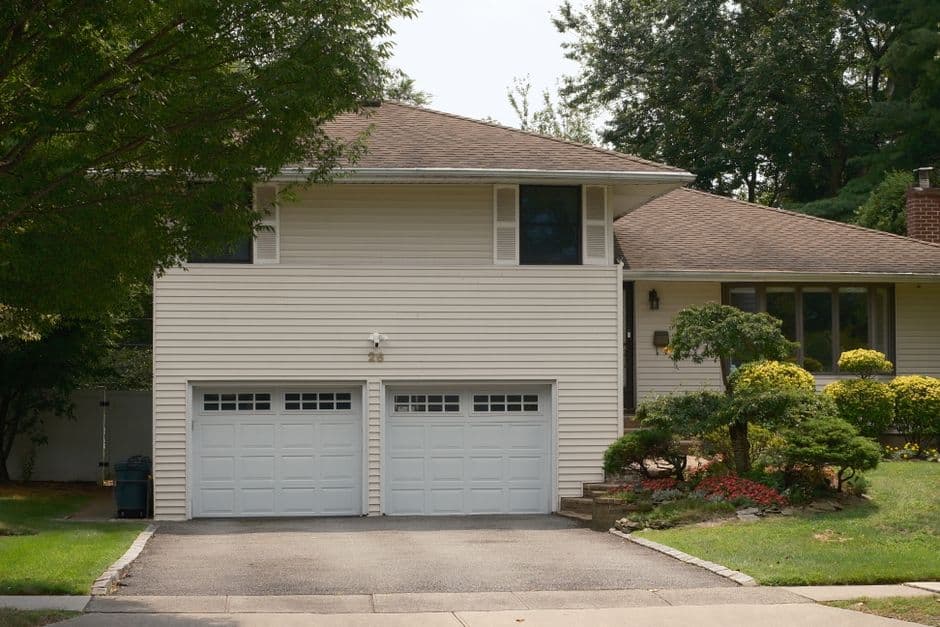
Under three rooms, room units usually win. A certified 10,300 BTU window unit uses 525.5 kWh a season — about $96 at 18.34¢/kWh — and cools only the room it is in. Central air conditions the whole house whenever it runs, including rooms nobody is using. Beyond three or four rooms, or when ducts already exist, whole-home cooling takes over.
Fan & Frost earns a commission when you buy through our links, at no cost to you. It never changes a ranking, and we say so when the right answer is the cheaper unit or nothing at all. Full disclosure · How we pick.
At a glance
The picks, ranked
Tap any row to jump to the full reasoning. Prices are live from Amazon where we have them, and read “check price” where we don’t — never a number we cannot verify today.
| # | Product | Best for | Price |
|---|---|---|---|
| 1 | 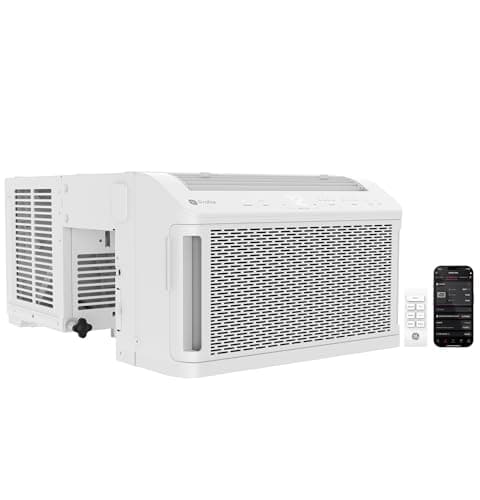 The room-unit case GE Profile ClearView Smart Window Air Conditioner, 10,300 BTU CEER 14.7 and 525.5 certified kWh a year, cooling one room properly and nothing else at all. | One to three rooms, a house with no ducts, or a budget that rules out a system | |
| 2 | The whole-home case, without ducts Hisense Mini-Split Heat Pump, 9,000 BTU SEER2 32.0 and EER2 18.35 per head, with heating included — whole-home performance without cutting ducts into an old house. | A house with no ductwork that needs more than three rooms cooled |
The real question
How many rooms do you actually cool?
Central air conditions the whole envelope. That is its strength in a house where people move between rooms all day, and its weakness in a house where two bedrooms need to be comfortable at night and the rest can look after itself.
Count the rooms honestly, then read across:
| Rooms cooled | Ducts already there? | Usually the answer |
|---|---|---|
| One | Either | Window or U-shaped unit |
| Two to three | No | Window units, or one mini-split |
| Two to three | Yes | Central, if the system is healthy |
| Four or more | No | Multi-head ductless |
| Four or more | Yes | Central air |
| Whole house, humid climate | Either | Whole-home system plus dehumidification |
This one is not a DIY job
Where room units win
Four advantages that survive scrutiny
- You cool what you use. A house with central air typically conditions every room it serves. Two window units cool two rooms and nothing else, which is why the certified per-unit figures above stay small.
- No duct losses. Air traveling through ducts in an unconditioned attic loses capacity on the way. A room unit has no distribution system to lose anything in.
- Failure is contained. One unit failing is one warm room, not a whole house waiting on a service call in August.
- It moves. Renters, short leases and houses you are not sure about all favor equipment that leaves with you — see cooling for renters.
Where whole-home wins
And four where it does not
- Many rooms, all in use. Past three or four units the per-room approach stops being tidy, cheap or quiet.
- Humidity control across the house. A whole-home system dehumidifies as it cools everywhere, which in the Southeast is most of the comfort — see why humidity makes heat worse.
- Windows stay windows. No unit in the opening, no curtain problem, nothing to take out in October.
- Noise is outside. The compressor lives in the garden rather than in the bedroom wall.
The middle path
Ductless changed this comparison
The old version of this decision was “room units or ducts.” In a house without existing ductwork that is no longer the choice, because multi-head ductless systems deliver whole-home coverage at efficiencies no ducted system matches, with per-room control that central air cannot offer.
The trade is capital and permanence: an installer, an outdoor unit and a penetration per head. Whether that pays is the subject of is a mini-split worth it, and the head-to-head with room units is in mini-split versus window air conditioner.
Say the unwelcome thing
Do not install central air to fix two hot bedrooms.
It is the most expensive possible answer to a two-room problem, and it conditions the whole house to solve it. Where the ducts do not already exist, the installation also means soffits, chases and lost ceiling height in rooms that were fine.
Count the rooms, then buy for that number. Two rooms: a certified window unit apiece. Four or more with no ducts: a ductless system at SEER2 32.0. Ducts already in place and working: central air is the one case where it is straightforwardly the right machine.
In full
Every pick, and what is wrong with it
Published specifications only, each linked to the page it came from. Where a manufacturer publishes nothing, the row says so — we do not fill blanks in.
1. The room-unit case
GE Profile ClearView Smart Window Air Conditioner, 10,300 BTU
GE Profile · model PHNT10CC
CEER 14.7 and 525.5 certified kWh a year, cooling one room properly and nothing else at all.
A window unit is whole-home cooling’s opposite: it conditions exactly the space it is pointed at. In a house where two bedrooms and a living room get used in summer, that is not a limitation, it is the entire saving.
Certified at CEER 14.7 and 525.5 kWh a year, this 10,300 BTU unit costs about $96 a season at 18.34¢/kWh. Two of them, in the two rooms that matter, still land near $193.
It is also the only option that installs itself in an afternoon, moves house with you, and fails one room at a time rather than all of them.
What’s wrong with it
One unit per room, a window given up in each, noise in the room rather than outside, and no help at all for hallways and stairs.
Running cost — PHNT10CC
| Annual energy use | 525.5 kWh | ENERGY STAR certified figure |
|---|---|---|
| Annual cost | $96 | 525.5 × 18.34¢/kWh |
| Per cooling month | $24 | spread over a four-month season |
The annual figure is the certified value from the GE Appliances product page, PHNT10CC, with certified figures filed as PHNT10CCH1 in the ENERGY STAR Room Air Conditioners dataset, which models a standard cooling season rather than your actual summer. It is more useful than a nameplate wattage here, because a variable-speed compressor spends most of its life well below nameplate.
Rate: 18.34¢/kWh, the US average residential price for June 2026 (EIA Electric Power Monthly, Table 5.3). Yours will differ — swap it in: (watts ÷ 1000) × hours × your rate.
| Cooling capacity | 10,300 BTU/h |
|---|---|
| CEER | 14.7 |
| Annual energy use | 525.5 kWh/yr |
| vs federal standard | 35% less energy |
| Coverage claim | Up to 450 sq ft |
| Smart control | Built-in Wi-Fi via SmartHQ; Alexa, Google Assistant, IFTTT, Nest and Sonos |
| Condensate | Built-in pump |
| Dimensions | 12.8 H x 19.7 W x 28.0 D in |
| Weight | 80.0 lb |
| Refrigerant | R-32 |
| Installation | Straddles the windowsill |
| Support bracket | Required |
| Compressor | Variable speed |
| Noise | Not published as a dBA figure |
| ENERGY STAR | Certified; NOT on the Most Efficient list |
Every figure above is from GE Appliances product page, PHNT10CC, with certified figures filed as PHNT10CCH1 in the ENERGY STAR Room Air Conditioners dataset. Blanks are shown as “not published” rather than filled in.
2. The whole-home case, without ducts
Hisense Mini-Split Heat Pump, 9,000 BTU
Hisense · model AO-09U3T25P
SEER2 32.0 and EER2 18.35 per head, with heating included — whole-home performance without cutting ducts into an old house.
If the reason you are considering central air is “more than a couple of rooms,” the modern answer in a house with no ducts is usually a multi-head ductless system rather than a new duct network.
SEER2 32.0 and EER2 18.35 put it far above any window unit on efficiency, and HSPF2 11.80 means it heats too, which no window unit without a heat mode will do.
You control each head separately, so unused rooms genuinely stay off — the one real advantage room units hold over a ducted system, recovered in a system you only install once.
What’s wrong with it
Professional installation, an outdoor unit, a wall penetration per head, and a cost that only makes sense if you own the house.
Running cost
Hisense does not publish a wattage for the AO-09U3T25P, so we cannot calculate what it costs to run. We are not going to estimate one. If Hisense publishes a nameplate figure, this block will show the arithmetic.
| Cooling capacity | 9,000 BTU/h |
|---|---|
| SEER2 | 32.0 |
| EER2 | 18.35 |
| HSPF2 | 11.80 |
| COP at 5 degrees F | 2.25 |
| Cold climate | Yes |
| Refrigerant | R-454B (GWP 470) |
| ENERGY STAR | Certified, and on the Most Efficient list |
| Noise | Not published in the certified dataset |
Every figure above is from ENERGY STAR Certified Mini-Split Heat Pumps dataset. Blanks are shown as “not published” rather than filled in.
Questions people actually ask
Frequently asked
Is central air cheaper to run than window units?
Per unit of cooling delivered, often yes; per household, frequently no. Central air conditions the whole house whenever it runs, while two certified window units cool two rooms — 525.5 kWh a year each on the unit compared here — and nothing else.
How many window units equal central air?
There is no equivalence, because they do different things: one unit per room you want cooled, against a system that cools everything at once. Past three or four rooms the per-room approach stops being cheaper, quieter or tidier.
Is central air worth it if I only use two rooms?
Rarely. The capital cost is high, the system conditions rooms you are not using, and installing ducts in a house that has none is disruptive. Two room units or one mini-split will almost always cost less to buy and to run.
What about a house with no ductwork?
A multi-head ductless system is usually the better whole-home answer — SEER2 figures above 30 are available, each head is controlled separately, and no ducts have to be cut into the structure. Mini-splits, ranked.
Do window units make sense in a humid climate?
They cool and dehumidify the room they serve, but only that room. In a humid climate the rest of the house stays damp, which is why whole-home cooling plus dedicated dehumidification is the usual answer there. Whole-house dehumidifiers.
Sources
Where these numbers came from
- ENERGY STAR Certified Room Air Conditioners dataset — CEER 14.7 and 525.5 kWh/yr for the 10,300 BTU window unit compared here
- ENERGY STAR Certified Air Source Heat Pumps dataset — SEER2 32.0, EER2 18.35 and HSPF2 11.80 for the ductless system compared here
- EIA Electric Power Monthly, Table 5.3 — average residential electricity price
Read next
Where to go from here
Back to Guides & Calculators, or read how we pick.