Guide and picks
Cooling a room for someone vulnerable to heat
The people most at risk from heat are frequently the ones least able to tell you they are in trouble, which changes what a good setup looks like.
By Sawyer V. · Published
The short answer
Prepare one cool room before the forecast, not during it. Older adults, infants and people on some medications sweat less efficiently and feel thirsty later, so the usual warning signs arrive late. Set up a low, shaded room with reliable cooling, and know the limit: above roughly 95°F a fan alone stops cooling a person and begins adding heat.
Fan & Frost earns a commission when you buy through our links, at no cost to you. It never changes a ranking, and we say so when the right answer is the cheaper unit or nothing at all. Full disclosure · How we pick.

At a glance
The picks, ranked
Tap any row to jump to the full reasoning. Prices are live from Amazon where we have them, and read “check price” where we don’t — never a number we cannot verify today.
| # | Product | Best for | Price |
|---|---|---|---|
| 1 | Most reliable cooling Midea Window Heat Pump Air Conditioner, 9,500 BTU CEER 17.6 and 404.8 kWh a year with reverse-cycle heating — the most efficient certified room unit, so running it continuously is affordable. | The one room that has to stay cool whatever the weather does | |
| 2 | 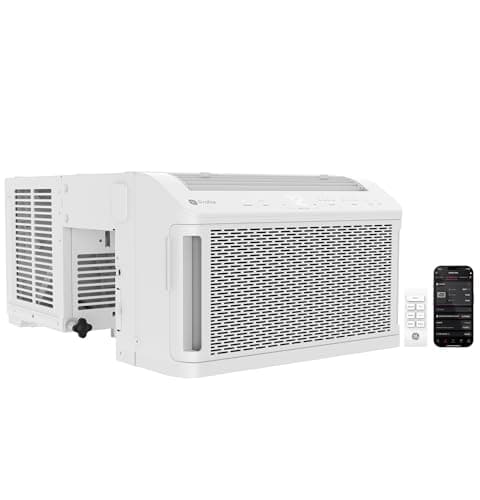 Easiest to install GE Profile ClearView Window Air Conditioner, 8,000 BTU CEER 16 and 375 kWh a year at 46.2 lb — the practical compromise between efficiency and something one or two people can actually fit. | A bedroom, where nobody can handle a 129 lb unit | |
| 3 | 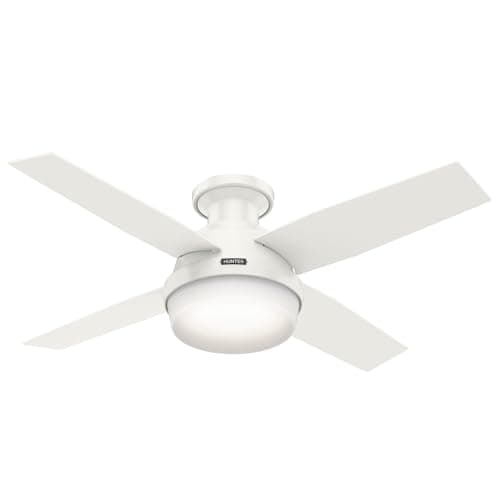 Best supplement Hunter Martindale 44" Ceiling Fan 1.1 W on low at 304.5 CFM per watt — cheap enough to run continuously, with the caveat that it is a supplement rather than a plan. | Moving air in the cool room, within the temperature limits | |
| — | Not for this household Honeywell CL25AE Indoor Evaporative Cooler 764 CFM on 235 W, but it works by adding humidity — which is exactly what a heat-vulnerable person does not need. | A dry climate, and not as anybody's primary protection |
Most of this site is about comfort. This page is not, quite. It is about households where someone is at genuine risk in a heat wave, and where the setup needs to work without anyone having to notice that it is time to act.
We are not clinicians and nothing here is medical advice. What follows is about the equipment and the room.
Who
Who is at greater risk, and why the warning signs arrive late
Heat risk is not evenly distributed, and the mechanism is worth understanding because it explains why “they would say if they were too hot” is not reliable.
- Older adults sweat less efficiently and register thirst later, so the two things a body uses to manage heat both work less well and both give less warning.
- Infants and young children have a high surface area relative to their mass, cannot move themselves out of a hot room, and cannot say what is wrong — cooling a nursery safely.
- People on medications that affect sweating, circulation or fluid balance. This covers a wide range of very common prescriptions. A pharmacist or doctor can tell you whether it applies.
- People with heart, lung or kidney conditions, for whom the cardiovascular load of managing heat is itself a risk.
- People with limited mobility, who cannot move to a cooler room, adjust clothing, or get themselves a drink.
- Anyone living alone whose deterioration nobody would notice for a day.
Set up early
Prepare the room before the forecast
The single most useful thing on this page: do this work in spring, not during the event. Stock is available, installers are available, and nobody is making decisions in the heat.
- Choose one room and commit to it. Low in the building, on the shaded side, small, with a door that closes. A ground-floor room beats an upstairs one substantially — why upstairs stays hot.
- Fit cooling that does not depend on the weather. A compressor works at any outdoor humidity. Evaporative cooling and night ventilation do not.
- Shade that room’s window from outside. Free, permanent, and it reduces the load the unit has to carry — shading and film.
- Make the controls usable. Large buttons, a simple remote kept in one place, and ideally an app so a family member can check and adjust it remotely — what app control is actually good for.
- Put a thermometer in the room. A cheap one with a big display. “It feels alright” is exactly the judgement that fails in the people this page is about.
- Agree a check-in plan. Someone phones or visits daily during a heat warning. This is the measure that has saved the most lives and it costs nothing.
This one is not a DIY job
Set the unit to a temperature and leave it there. The instinct to switch cooling off to save money is strong and it is the most common failure in exactly these households. Running an efficient unit costs about $74 a year at 18.34¢/kWh under the standard duty cycle. If cost is a genuine barrier, many utilities and local authorities run assistance programs — that is a better route than rationing.
The fan limit
Where a fan stops being enough
This is the most important technical point on the page, and it is not widely known.
A fan does two things at once. It speeds the evaporation of sweat, which cools. And it moves air across skin, which transfers heat by convection in whichever direction the temperature difference runs.
Below skin temperature, air moving over you carries heat away. Above roughly 95°F, it delivers heat, the way a convection oven does. In high humidity the crossover comes lower, because sweat cannot evaporate efficiently to offset it.
For someone who sweats less efficiently to begin with, that crossover arrives sooner and matters more. The practical rules:
- Below the crossover, a fan is genuinely useful and costs almost nothing to run.
- Near or above it, do not aim a fan directly at a still person. Use it to circulate air in the room instead.
- Keep skin damp with a cool wet cloth so evaporation continues — this is what makes a fan work again.
- A fan is never the whole plan for someone at risk. It is a supplement to a room that is actually being cooled.
Humidity
Humidity is half the problem
The same air temperature is considerably more dangerous at high humidity, because evaporation is how a body sheds heat and humid air will not accept the moisture.
This is why an air conditioner does more than its temperature reading suggests: it removes water as well as heat. It is also why a dehumidifier can improve a cool but clammy room meaningfully — how humidity changes what a temperature means and what to set a dehumidifier to.
One caution: a dehumidifier warms the room it is drying, because both its coils are indoors. In a room that is already too hot it is the wrong machine on its own — which to use when.
Power
Have a plan for losing power
Heat waves and grid strain arrive together, and an outage removes every compressor in the house at once. For a household that depends on cooling, that is the scenario to have thought about in advance.
- Know where the nearest cooling center is — a library, a community center, a shopping center — and how the person would get there.
- Keep a battery fan charged, within the temperature limits above. A certified tool-platform fan runs up to 16 hours on one pack.
- Close the house immediately and retreat to the coolest room. The cool already in the building is the resource — cooling during an outage.
- Never run a generator indoors or in a garage. Carbon monoxide is colorless, odorless and lethal.
Say the unwelcome thing
Know the signs that mean stop reading and call for help.
Heat stroke is a medical emergency. The signs are confusion or unusual behavior, a very high body temperature, skin that has stopped sweating, rapid breathing or pulse, collapse, or loss of consciousness.
If you see those, call emergency services immediately. While waiting, move the person somewhere cooler, remove excess clothing, and cool the skin with water or cool cloths. Do not give fluids to anyone who is confused or not fully conscious.
Earlier warning signs — heavy sweating, weakness, dizziness, headache, nausea, muscle cramps — mean act now: move them to the cool room, cool them down, and get medical advice. In the people this page is about, those earlier signs may be brief or absent, which is why the room is set up in advance and why somebody checks in daily.
In full
Every pick, and what is wrong with it
Published specifications only, each linked to the page it came from. Where a manufacturer publishes nothing, the row says so — we do not fill blanks in.
1. Most reliable cooling
Midea Window Heat Pump Air Conditioner, 9,500 BTU
Midea · model MAH09B1AGR
CEER 17.6 and 404.8 kWh a year with reverse-cycle heating — the most efficient certified room unit, so running it continuously is affordable.
When the requirement is “this room must be cool” rather than “this room should be more comfortable”, a compressor is the only thing that delivers it regardless of outdoor conditions.
CEER 17.6 and 404.8 kWh a year — about $74 at 18.34¢/kWh, the highest certified efficiency of all 505 certified room air conditioners and 80% under the federal standard.
That efficiency matters more here than anywhere, because the realistic alternative to running it is someone deciding they cannot afford to. Cost is a safety variable in this context.
Reverse-cycle heating covers winter in the same box, which suits a household where extreme cold is the other risk. 129 lb and it straddles the sill — no bracket needed, but plan the lift — installing safely.
What’s wrong with it
129 lb, which makes installation a planned job rather than an afternoon.
Running cost — MAH09B1AGR
| Annual energy use | 404.8 kWh | ENERGY STAR certified figure |
|---|---|---|
| Annual cost | $74 | 404.8 × 18.34¢/kWh |
| Per cooling month | $19 | spread over a four-month season |
The annual figure is the certified value from the ENERGY STAR Certified Room Air Conditioners dataset, which models a standard cooling season rather than your actual summer. It is more useful than a nameplate wattage here, because a variable-speed compressor spends most of its life well below nameplate.
Rate: 18.34¢/kWh, the US average residential price for June 2026 (EIA Electric Power Monthly, Table 5.3). Yours will differ — swap it in: (watts ÷ 1000) × hours × your rate.
| Cooling capacity | 9,500 BTU/h |
|---|---|
| Heating mode | Yes, reverse cycle |
| CEER | 17.6 |
| Annual energy use | 404.8 kWh/yr |
| vs federal standard | 80% less energy |
| Dimensions | 20.9 H x 25.0 W x 41.2 D in |
| Weight | 129.0 lb |
| Installation | Straddles the windowsill (saddle style) |
| Support bracket | Not required |
| Compressor | Variable speed |
| Refrigerant | R-32 |
| ENERGY STAR | Certified, and on the Most Efficient list |
Every figure above is from ENERGY STAR Certified Room Air Conditioners dataset. Blanks are shown as “not published” rather than filled in.
2. Easiest to install
GE Profile ClearView Window Air Conditioner, 8,000 BTU
GE Profile · model PWJV08W
CEER 16 and 375 kWh a year at 46.2 lb — the practical compromise between efficiency and something one or two people can actually fit.
Weight is a genuine constraint in many of the households this page is for, and a unit that never gets installed protects nobody.
46.2 lb in an 18.6-inch-wide body that does not straddle the sill, which is a normal two-person install rather than a specialist one.
CEER 16 and 375 kWh a year, about $69 at 18.34¢/kWh, Most Efficient certified, 47% under the federal standard.
A support bracket is required. Do not skip it on a unit that will live in the window all summer — brackets, and when they are not optional.
What’s wrong with it
It requires a support bracket, and 8,000 BTU is one room only.
Running cost — PWJV08W
| Annual energy use | 375 kWh | ENERGY STAR certified figure |
|---|---|---|
| Annual cost | $69 | 375 × 18.34¢/kWh |
| Per cooling month | $17 | spread over a four-month season |
The annual figure is the certified value from the ENERGY STAR Certified Room Air Conditioners dataset, which models a standard cooling season rather than your actual summer. It is more useful than a nameplate wattage here, because a variable-speed compressor spends most of its life well below nameplate.
Rate: 18.34¢/kWh, the US average residential price for June 2026 (EIA Electric Power Monthly, Table 5.3). Yours will differ — swap it in: (watts ÷ 1000) × hours × your rate.
| Cooling capacity | 8,000 BTU/h |
|---|---|
| CEER | 16 |
| Annual energy use | 375 kWh/yr |
| vs federal standard | 47% less energy |
| Dimensions | 12.6 H x 18.6 W x 15.3 D in |
| Weight | 46.2 lb |
| Refrigerant | R-32 |
| Installation | Does not straddle the windowsill |
| Compressor | Variable speed |
| ENERGY STAR | Certified, and on the Most Efficient list |
Every figure above is from ENERGY STAR Certified Room Air Conditioners dataset. Blanks are shown as “not published” rather than filled in.
3. Best supplement
Hunter Martindale 44" Ceiling Fan
Hunter · model 44in Martindale
1.1 W on low at 304.5 CFM per watt — cheap enough to run continuously, with the caveat that it is a supplement rather than a plan.
Useful, cheap and widely misunderstood. A fan is genuinely helpful within a temperature range and genuinely unhelpful outside it.
1.1 W on low is 0.2¢ for an eight-hour night at 18.34¢/kWh and about 15¢ for a month of continuous running, which removes cost as a reason to switch it off.
304.5 CFM per watt, certified, Most Efficient at a 44-inch span, with 0.4 W standby.
The limit is the important part. A fan cools by evaporating sweat and warms by convection. Above roughly 95°F, and lower in high humidity, the convective gain outruns the evaporative loss — the mechanism in full.
What’s wrong with it
Above about 95°F it adds heat rather than removing it, which is the point at which it stops being appropriate.
Running cost — 44in Martindale
| Nameplate power | 1.1 W – 10.1 W | manufacturer's published figure |
|---|---|---|
| Energy, 8-hour night | 0.08 kWh | 10.1 ÷ 1000 × 8 |
| Cost per hour | 0.2¢ | at 18.34¢/kWh |
| Cost per 8-hour night | 1.5¢ | on the highest speed |
| Cost per 30 nights | 44¢ | 2.4 kWh |
| Same month, lowest speed | 4.8¢ | at 1.1 W |
Rate: 18.34¢/kWh, the US average residential price for June 2026 (EIA Electric Power Monthly, Table 5.3). Yours will differ — swap it in: (watts ÷ 1000) × hours × your rate.
| Blade span | 44 in |
|---|---|
| Efficiency | 304.5 CFM per watt |
| Power, high speed | 10.1 W |
| Power, low speed | 1.1 W |
| Standby power | 0.4 W |
| Type | Indoor, fan only |
| Warranty | 3 years, components |
| ENERGY STAR | Certified |
Every figure above is from ENERGY STAR Certified Ceiling Fans dataset. Blanks are shown as “not published” rather than filled in.
Skip this one
Honeywell CL25AE Indoor Evaporative Cooler
Honeywell · model CL25AE
764 CFM on 235 W, but it works by adding humidity — which is exactly what a heat-vulnerable person does not need.
Flagged for a reason specific to this page rather than a general objection to the category.
An evaporative cooler works by adding moisture to the air. Higher humidity makes sweat evaporate more slowly, which is precisely the mechanism a heat-vulnerable person is already struggling with.
More fundamentally, its effectiveness varies with the weather. Above roughly 60% relative humidity it does very little. A cooling measure that works on some days and not others is not a safety measure.
764 CFM on 235 W makes it an excellent and cheap machine in a dry climate for ordinary comfort — where it does and does not work. It is just the wrong thing to rely on here.
What’s wrong with it
Its output depends on the weather, which makes it unsuitable as a safety measure.
Running cost — CL25AE
| Nameplate power | 235 W | manufacturer's published figure |
|---|---|---|
| Energy, 8-hour night | 1.88 kWh | 235 ÷ 1000 × 8 |
| Cost per hour | 4.3¢ | at 18.34¢/kWh |
| Cost per 8-hour night | 34¢ | on the highest speed |
| Cost per 30 nights | $10 | 56.4 kWh |
Rate: 18.34¢/kWh, the US average residential price for June 2026 (EIA Electric Power Monthly, Table 5.3). Yours will differ — swap it in: (watts ÷ 1000) × hours × your rate.
| Air delivery | 764 CFM |
|---|---|
| Power | 235 W |
| Water tank | 6.6 gallons |
| Air throw | 33 ft |
| Noise | 52-60 dBA |
| Speeds | 3, oscillating louvers |
| Timer | Up to 7.5 hours |
| Dimensions | 18.9 x 14.6 x 33.3 in |
| Weight | 25.4 lb |
| Manufacturer coverage claim | 466 sq ft |
| Warranty | 1 year |
Every figure above is from Honeywell Air Comfort product page, CL25AE. Blanks are shown as “not published” rather than filled in.
We are not linking a buy button for this one. If you want to look at it anyway, it is easy enough to find — but we would rather send you to something that fits your room.
Questions people actually ask
Frequently asked
What temperature is dangerous for an elderly person indoors?
There is no single number, because humidity, medication, mobility and health all change it — which is why a prepared cool room and a daily check-in matter more than a threshold. The signs of trouble, not the thermometer, are what to act on.
Why do older adults overheat more easily?
Two of the body's main heat-management mechanisms work less well: sweating becomes less efficient, and the sensation of thirst registers later. Both also give less warning, which is why 'they would say if they were too hot' is not reliable.
Is a fan enough for someone vulnerable to heat?
Only within limits, and never as the whole plan. A fan cools by evaporating sweat and warms by convection — above roughly 95°F, and lower in high humidity, it delivers more heat than it removes. Someone who sweats less efficiently hits that crossover sooner. How a fan cools you.
What should I set up before a heat wave?
One room, chosen and prepared in spring: low in the building, on the shaded side, with a door that closes, cooling that does not depend on outdoor humidity, external shading on the window, simple controls, a large-display thermometer, and an agreed daily check-in.
Are evaporative coolers suitable for a heat-vulnerable household?
Not as primary protection. They cool by adding moisture to the air, which slows the sweat evaporation a vulnerable person is already struggling with, and their effectiveness varies with outdoor humidity. A measure that works on some days and not others is not a safety measure.
What are the signs of heat stroke?
Confusion or unusual behavior, very high body temperature, skin that has stopped sweating, rapid breathing or pulse, collapse or loss of consciousness. Call emergency services immediately, move the person somewhere cooler and cool the skin with water while you wait.
Sources
Where these numbers came from
- ENERGY STAR Certified Room Air Conditioners dataset — CEER, annual kWh, weight and bracket requirement for every unit cited
- ENERGY STAR Certified Ceiling Fans dataset — certified low-speed wattage, CFM per watt and standby power for the fan cited
- Honeywell CL25AE product page — 764 CFM, 235 W, 6.6 gallon tank
- EIA Electric Power Monthly, Table 5.3 — average residential electricity price
Read next
Where to go from here
Back to Room Cooling, or read how we pick.