Head to head
Air circulator vs regular fan
The two formats are engineered for opposite jobs, and the specification that separates them is the one nobody prints.
By Sawyer V. · Published
The short answer
Aim is the difference, not power. A circulator throws a concentrated column of air far enough to reach a wall and set the whole room turning over; a conventional fan spreads a wide, gentle breeze at whoever is in front of it. Buy a circulator to mix a room’s air, a regular fan to feel air on your skin. Neither publishes the airflow figures that would let you compare them directly.
Fan & Frost earns a commission when you buy through our links, at no cost to you. It never changes a ranking, and we say so when the right answer is the cheaper unit or nothing at all. Full disclosure · How we pick.

At a glance
The picks, ranked
Tap any row to jump to the full reasoning. Prices are live from Amazon where we have them, and read “check price” where we don’t — never a number we cannot verify today.
| # | Product | Best for | Price |
|---|---|---|---|
| 1 | 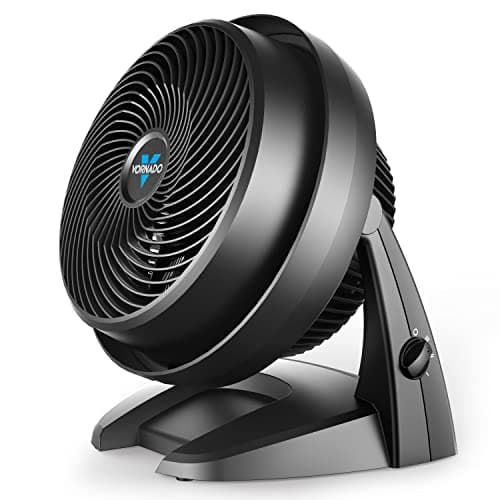 The circulator case Vornado 630 Medium Air Circulator A deep, shrouded housing built to throw air across a room rather than at a person, with a five-year warranty behind it. | Evening out a room where one corner is always warmer | |
| 2 | 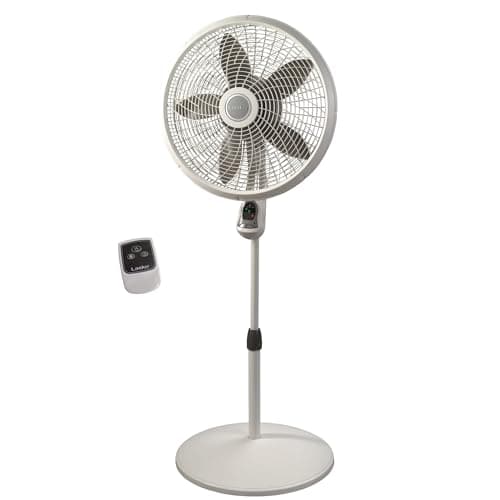 The regular fan case Lasko Cyclone 18" Pedestal Fan An adjustable-height pedestal with a wide oscillating sweep — the format that puts moving air on people rather than on walls. | Sitting in front of it, in the room you are actually using |
The engineering
Two different jobs, two different shapes
Every fan trades between volume of air moved and distance it stays coherent. A wide, open blade in a shallow guard moves a lot of air a short way. A smaller blade in a deep shroud moves less air much further.
- Circulator: deep housing, shaped outlet, concentrated column, designed to bounce off a surface and set up room-scale circulation. Pointed at a person it feels harsh.
- Conventional fan: shallow guard, open blade, wide spread, designed to be aimed at people. Pointed at a wall, most of the effect disappears within a few feet.
This one is not a DIY job
The missing data
Why you cannot settle this with specs
The specification that would decide it — how far the air actually carries, often marketed as “throw” — has no standard test and no certified dataset. Manufacturers state distances in feet with no method attached, and those numbers are not comparable between brands.
It gets worse: neither of the fans compared here publishes CFM or wattage. That is not an oversight on our part, it is the state of the category, and it is why our circulator page leads on what is documented rather than on airflow tables.
Two categories do publish, and they are the useful reference points:
- Ceiling fans file certified CFM per watt — median 191.0 in the 52 to 60-inch band across 1,447 US records.
- Window fans publish manufacturer CFM and watts, which is how our box fan comparison gets a CFM-per-watt figure at all.
Which one
Match the format to the problem
| The problem | Buy |
|---|---|
| I am hot while sitting at a desk | Regular fan |
| One corner of the room is always warmer | Circulator |
| The upstairs landing is stagnant | Circulator |
| I want a breeze while I sleep | Regular fan |
| Air conditioning does not reach the far end | Circulator |
| The room is stratified, warm at the ceiling | Circulator |
| Several people in one living room | Regular fan, oscillating |
| Drying paint, laundry or a damp floor | Neither: an air mover |
The last row matters because it is the third format people confuse with these two. A high-velocity air mover is built for drying and ventilation, not comfort, and it is covered in high velocity fans.
Using a circulator
The part people get wrong
- Aim it at a surface, not a person. The far wall, or the ceiling if the room is stratified. The room does the distributing.
- Put it low and point it up in a room that is warm at the ceiling, or high and point it down in one that is cold at the floor.
- Leave it on a low speed. Circulation is a steady-state effect; blasting the room for ten minutes does less than a low setting running for an hour.
- Use it with, not instead of, cooling. Moving conditioned air into the corners it never reaches is where this format earns its keep — the same logic as where to put a fan.
Say the unwelcome thing
Do not buy a circulator to sit in front of.
The column that makes a circulator good at mixing a room makes it unpleasant at close range: a narrow, hard stream on one part of your body rather than a breeze across it. People buy one on the strength of its reputation and then run it on low a foot from a desk, where a cheaper fan would be more comfortable.
Buy the circulator for the room and the pedestal fan for the person. If the actual problem is one hot corner, a shrouded circulator aimed at the far wall solves something no amount of oscillating breeze will.
In full
Every pick, and what is wrong with it
Published specifications only, each linked to the page it came from. Where a manufacturer publishes nothing, the row says so — we do not fill blanks in.
1. The circulator case
Vornado 630 Medium Air Circulator
Vornado · model 630
A deep, shrouded housing built to throw air across a room rather than at a person, with a five-year warranty behind it.
A circulator is a different machine behind the grille. The blade sits inside a deep shroud, the housing shapes the air into a column, and the whole design exists to keep that column coherent over distance instead of letting it spread out and stall a few feet from the fan.
Used as designed, you point it at a wall or the ceiling rather than at yourself. The column hits the surface, spreads, and drags the rest of the room’s air into a slow circulation. That is what fixes a room with a hot corner, a stagnant upstairs landing or a stratified vaulted space.
Vornado publishes no CFM and no wattage for it, which is normal in this category and worth knowing before you shop on numbers. What they do publish is a five-year warranty, against one year on most conventional fans — the clearest signal available about how the two are built.
What’s wrong with it
No published airflow or wattage, a concentrated blast that is unpleasant pointed straight at you, and it costs more than a plain fan of the same size.
Running cost
Vornado does not publish a wattage for the 630, so we cannot calculate what it costs to run. We are not going to estimate one. If Vornado publishes a nameplate figure, this block will show the arithmetic.
| Power | Not published |
|---|---|
| Airflow reach | Moves air up to 70 ft |
| Speeds | 3 |
| Air delivery (CFM) | Not published |
| Dimensions | Not published |
| Weight | Not published |
| Warranty | 5 years |
Every figure above is from Vornado product page, 630. Blanks are shown as “not published” rather than filled in.
2. The regular fan case
Lasko Cyclone 18" Pedestal Fan
Lasko · model S18931
An adjustable-height pedestal with a wide oscillating sweep — the format that puts moving air on people rather than on walls.
A conventional pedestal or table fan is optimized for the opposite behavior: a broad, soft stream, spread across an oscillating arc, delivered at seated or standing height.
For the job most people actually have — feeling cooler while sitting, working or sleeping — that is the better geometry. A wide sweep at moderate speed reaches more of the room’s occupants than a narrow column aimed at one wall, and it does it at a lower cost.
Lasko publishes no wattage for this model either, beyond the 120 V supply, so the running cost has to come from a plug-in meter rather than a spec sheet. Its warranty is one year.
What’s wrong with it
The airflow spreads out and stalls within a few feet, so it does nothing for a room's overall air distribution, and nothing about it is published either.
Running cost
Lasko does not publish a wattage for the S18931, so we cannot calculate what it costs to run. We are not going to estimate one. If Lasko publishes a nameplate figure, this block will show the arithmetic.
| Power | Not published (120 V stated, no wattage) |
|---|---|
| Air velocity | Up to 1,200 ft per minute |
| Speeds | 3 |
| Height | 38 - 54.5 in, adjustable |
| Weight | 9.0 lb |
| Air delivery (CFM) | Not published |
| Warranty | 1 year |
Every figure above is from Lasko product page, S18931. Blanks are shown as “not published” rather than filled in.
Questions people actually ask
Frequently asked
What is the difference between an air circulator and a fan?
Geometry and intent. A circulator uses a deep shroud to throw a concentrated column of air far enough to hit a wall and set the room's air turning over. A conventional fan spreads a wide, soft breeze aimed at people a few feet away.
Is an air circulator better than a regular fan?
For evening out a room's temperature, yes. For feeling cooler while you sit in front of it, no — the concentrated column is less comfortable than a wide oscillating sweep, and it costs more.
How many CFM does an air circulator move?
Most do not publish a figure, including the models compared here, and there is no certification program for the category. Any throw distance quoted in feet comes with no standard test behind it, so those numbers are not comparable between brands. Air circulators, ranked.
Where should you point an air circulator?
At a surface rather than at yourself — the far wall in a room with a warm corner, or the ceiling in a room that is stratified. The column bounces, spreads and drags the rest of the room's air into circulation.
Do air circulators use less electricity?
There is no way to tell from published data, because neither format reliably publishes wattage. If running cost matters, measure with a plug-in energy meter; for reference, certified ceiling fans move far more air per watt than any portable fan. Fan running costs.
Sources
Where these numbers came from
Read next
Where to go from here
Back to Fans, or read how we pick.