Guide and picks
How to winterize an evaporative cooler
A cooler put away wet spends eight months as a sealed, dark, damp box. Everything wrong with it in June was decided the day you stored it.
By Sawyer V. · Published
The short answer
Drain everything, clean it, dry it completely, then store it dry and covered. The order matters: drain the tank, pull and inspect the media, clean the tank and pump, then run the fan with the pump off for long enough that the whole machine is genuinely dry rather than damp. Standing water left in a tank over winter is the origin of essentially every spring smell, and any water left in a pump can freeze and crack it.
Fan & Frost earns a commission when you buy through our links, at no cost to you. It never changes a ranking, and we say so when the right answer is the cheaper unit or nothing at all. Full disclosure · How we pick.

At a glance
The picks, ranked
Tap any row to jump to the full reasoning. Prices are live from Amazon where we have them, and read “check price” where we don’t — never a number we cannot verify today.
| # | Product | Best for | Price |
|---|---|---|---|
| 1 | 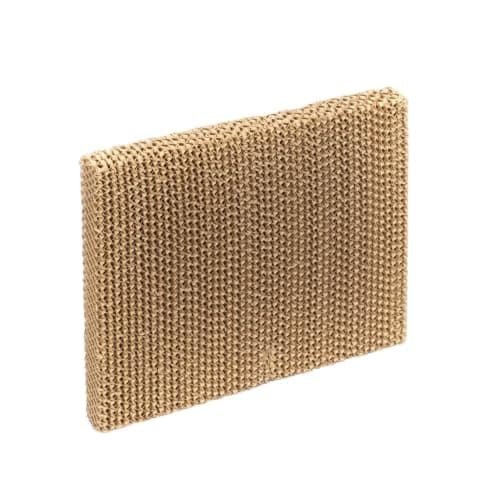 Decide this in autumn, not spring Hessaire CP370 Media Pad Set 21 x 23 inch replacement media for the 3,100 CFM Hessaire chassis — MC37, M150 and MFC3600. | Anyone whose media looked marginal at the end of the season | |
| 2 | Easiest to winterize Honeywell CL25AE Indoor Evaporative Cooler 25.4 lb and a 6.6 gallon tank — light enough to carry outside, tip out and rinse properly. | A single-room cooler you would rather not wrestle with in October | |
| 3 | Most to drain, best media to keep Honeywell CO60PM Indoor/Outdoor Evaporative Cooler 15.9 gallons to empty, and triple-sided honeycomb media that survives being rinsed and dried. | A large cooler where the media is worth preserving properly | |
| — | 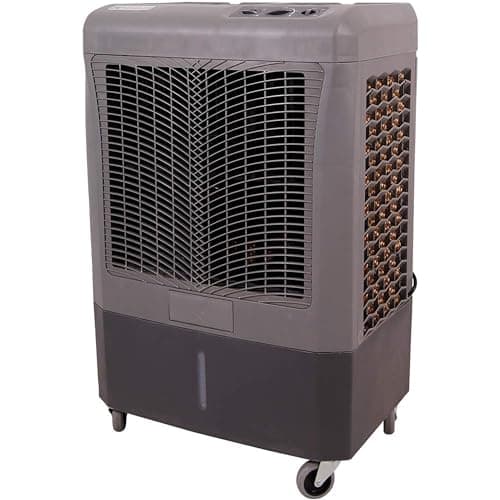 The one most likely to be left outside Hessaire MC37M Mobile Evaporative Cooler 3,100 CFM on 250 W with a 10.3 gallon tank and continuous hookup, on castors in a garage that probably freezes. | A workshop machine — which is exactly why it needs this most |
Almost every complaint about an evaporative cooler in spring — the smell, the pump that will not prime, the pad that wets in a stripe — was created the previous autumn, by putting the machine away wet.
Why it matters
Eight months as a sealed damp box
A working evaporative cooler is a tank of standing water feeding a permanently wet pad. That is fine while it is running, because airflow and use keep things moving.
Shut it down without draining and drying, and it becomes a warm-then-cold, dark, sealed, damp environment for two thirds of the year. Three things happen in it:
- Biological growth. Standing water plus a damp organic substrate is the origin of the smell people notice on the first hot day. It cannot be rinsed out once established in the media.
- Mineral scale. Water left to evaporate slowly in a closed tank leaves everything dissolved in it behind, concentrated, onto the pump inlet and the distributor holes.
- Freeze damage. Water trapped in a pump or a distributor line expands when it freezes. A cracked pump housing is the most common winter casualty and it is invisible until you switch on.
All three are prevented by the same hour of work.
The procedure
Step by step
- Run the fan with the pump off for fifteen to twenty minutes. Do this before anything else, while the machine is still assembled. Airflow through wet media dries it far better than air will once it is sitting in a corner.
- Unplug it and disconnect any continuous water supply. Drain the supply line too if it runs anywhere that freezes.
- Drain the tank completely. Use the drain plug, and tip the unit if it is light enough. A 6.6 gallon tank you can carry out; a 15.9 gallon tank you drain in place.
- Remove the media and inspect it. This is when you decide about replacement, with the evidence in front of you and time to order a part. What to look for.
- Lift out the pump and clear it. Rinse the inlet screen, brush off scale, and — critically — make sure no water remains inside it. Invert it and shake it. This is the freeze-damage step.
- Flush and clear the distributor, and leave it detached and empty rather than full of water.
- Scrub the tank with warm water and a mild detergent, or dilute white vinegar for mineral film. Rinse and drain again.
- Rinse rigid media from the clean side outward, so debris leaves the way it came in. Do not bother with aspen fiber — it compacts when handled wet.
- Dry everything genuinely dry. In air, in sun if you have it, for as long as it takes. Damp is not dry, and this is the step that decides how June goes.
- Reassemble loosely, or store components separately, and cover with something breathable.
This one is not a DIY job
Do not seal it in plastic. It looks like the careful option and it is the opposite. Any residual moisture cannot leave, so it condenses on the coldest surfaces in the bag and stays against them all winter.
A breathable cover, a sheet, or the original box with the flaps open — the goal is keeping dust off, not sealing air out.
Store it off a concrete floor. Concrete wicks moisture. A pallet, a shelf or a piece of timber is enough.
If it must stay outdoors, a fitted cover that sheds water and breathes is the minimum. Drain it more thoroughly than you think you need to, and accept that outdoor storage shortens the life of the media and the pump regardless.
Freezing
The pump is what freezing kills
Water expands as it freezes, and a submersible pump is a sealed plastic housing full of water with an impeller in it. If it is stored with water inside in an unheated garage, expansion can crack the housing.
The failure is invisible. The pump looks fine, sits in the tank all winter, and either fails to prime or leaks internally on the first run of the season — which presents as a pad that wets in a stripe, or one that does not wet at all.
Invert the pump, shake it out, and store it dry and separately. Thirty seconds, and it removes the most likely winter casualty on the machine.
Same logic for the distributor tube and any hose. Anything that can hold a slug of water should be emptied and left open at both ends.
Spring
Starting up again
A properly winterized cooler starts up in ten minutes.
- Refit the media — new if you decided that in autumn, cleaned if not.
- Refit the pump and distributor, and check the distributor holes are clear before you fill anything.
- Fill with clean water and run the pump for two minutes with the fan off. Watch the media face: it should darken evenly, edge to edge.
- If it wets in a stripe, the distributor is still partly blocked. If it does not wet at all, the pump did not survive the winter.
The full cleaning procedure covers both diagnoses in more detail.
Say the unwelcome thing
Do not put it away without deciding about the media.
The commonest version of this mistake is storing a cooler with a pad you already suspect is finished, intending to deal with it in spring.
Two things go wrong. A crusted, biologically active pad spends the winter in contact with the tank and the housing, so it contaminates parts that would otherwise have been fine. And you discover you need a part on the first hot day of the year, with the machine in pieces.
You have the machine open in October with a full season’s evidence in front of you. Decide then. If the media is crusted, collapsed, smells musty, or no longer wets evenly, order the replacement now and fit it in spring.
In full
Every pick, and what is wrong with it
Published specifications only, each linked to the page it came from. Where a manufacturer publishes nothing, the row says so — we do not fill blanks in.
1. Decide this in autumn, not spring
Hessaire CP370 Media Pad Set
Hessaire · model CP370
21 x 23 inch replacement media for the 3,100 CFM Hessaire chassis — MC37, M150 and MFC3600.
The pad decision belongs to the shutdown, not to the startup, and that is the most useful scheduling point on this page.
You have the machine open, the media out, and a season’s evidence in front of you. In June you will have a hot week, no part, and a cooler in pieces.
21 x 23 inches, fitting the MC37, M150 and MFC3600. Measure yours before ordering — a pad that is close but not exact leaves a bypass gap, and air will simply go around it.
No published replacement interval, so the decision is by inspection: here is what to look for.
What’s wrong with it
Hessaire publishes no replacement interval, so there is no guidance on whether you are due.
Running cost
Hessaire does not publish a wattage for the CP370, so we cannot calculate what it costs to run. We are not going to estimate one. If Hessaire publishes a nameplate figure, this block will show the arithmetic.
| Fits | MC37, M150 and MFC3600 (3,100 CFM) coolers |
|---|---|
| Pad size | 21 x 23 in |
| Type | Replacement media pad set |
| Replacement interval | Not published by the manufacturer |
Every figure above is from Hessaire parts page, CP370 media pad set. Blanks are shown as “not published” rather than filled in.
2. Easiest to winterize
Honeywell CL25AE Indoor Evaporative Cooler
Honeywell · model CL25AE
25.4 lb and a 6.6 gallon tank — light enough to carry outside, tip out and rinse properly.
Winterizing difficulty is almost entirely a function of weight and tank size, and this is the small end of both.
25.4 lb and 6.6 gallons: you pick it up, carry it outside, tip it, and rinse it with a hose. Every step below gets easier when you can work on the machine outdoors rather than sponging out a tank in place.
52 to 60 dBA is the quietest published figure in the category, and 18.9 x 14.6 x 33.3 inches means it stores on a shelf rather than taking floor space.
The trade is efficiency: 235 W for 764 CFM against 220 W for 2,697 on the larger Honeywell.
What’s wrong with it
235 W to move 764 CFM is the worst air-per-watt of the coolers here, which is the cost of the small size.
Running cost — CL25AE
| Nameplate power | 235 W | manufacturer's published figure |
|---|---|---|
| Energy, 8-hour night | 1.88 kWh | 235 ÷ 1000 × 8 |
| Cost per hour | 4.3¢ | at 18.34¢/kWh |
| Cost per 8-hour night | 34¢ | on the highest speed |
| Cost per 30 nights | $10 | 56.4 kWh |
Rate: 18.34¢/kWh, the US average residential price for June 2026 (EIA Electric Power Monthly, Table 5.3). Yours will differ — swap it in: (watts ÷ 1000) × hours × your rate.
| Air delivery | 764 CFM |
|---|---|
| Power | 235 W |
| Water tank | 6.6 gallons |
| Air throw | 33 ft |
| Noise | 52-60 dBA |
| Speeds | 3, oscillating louvers |
| Timer | Up to 7.5 hours |
| Dimensions | 18.9 x 14.6 x 33.3 in |
| Weight | 25.4 lb |
| Manufacturer coverage claim | 466 sq ft |
| Warranty | 1 year |
Every figure above is from Honeywell Air Comfort product page, CL25AE. Blanks are shown as “not published” rather than filled in.
3. Most to drain, best media to keep
Honeywell CO60PM Indoor/Outdoor Evaporative Cooler
Honeywell · model CO60PM
15.9 gallons to empty, and triple-sided honeycomb media that survives being rinsed and dried.
The largest tank here, which makes the drain step a genuine job rather than a tipping motion. Use the drain plug; do not plan on lifting it.
In its favor at shutdown: triple-sided honeycomb media. Rigid media is designed to be rinsed and dried, so it survives a proper winterizing and goes back in the spring intact. Aspen fiber pads compact when handled wet and are usually a replace-not-clean proposition.
2,697 CFM on 220 W, and the continuous hookup is the other thing to deal with in autumn: disconnect it, and drain the supply line so nothing freezes in it.
What’s wrong with it
15.9 gallons is over 130 lb of water when full — you are draining this one where it stands.
Running cost — CO60PM
| Nameplate power | 220 W | manufacturer's published figure |
|---|---|---|
| Energy, 8-hour night | 1.76 kWh | 220 ÷ 1000 × 8 |
| Cost per hour | 4.0¢ | at 18.34¢/kWh |
| Cost per 8-hour night | 32¢ | on the highest speed |
| Cost per 30 nights | $9.68 | 52.8 kWh |
Rate: 18.34¢/kWh, the US average residential price for June 2026 (EIA Electric Power Monthly, Table 5.3). Yours will differ — swap it in: (watts ÷ 1000) × hours × your rate.
| Air delivery | 2,697 CFM |
|---|---|
| Power | 220 W |
| Water tank | 15.9 gallons, continuous hookup |
| Air throw | 30 ft |
| Noise | 61-65 dBA |
| Speeds | 3, with oscillation |
| Pads | Triple-sided honeycomb |
| Dimensions | 27.6 W x 18.3 D x 40 H in |
| Weight | 39.2 lb |
| Manufacturer coverage claim | 1,643 sq ft |
| Warranty | 1 year |
Every figure above is from Honeywell Air Comfort product page, CO60PM. Blanks are shown as “not published” rather than filled in.
Skip this one
Hessaire MC37M Mobile Evaporative Cooler
Hessaire · model MC37M
3,100 CFM on 250 W with a 10.3 gallon tank and continuous hookup, on castors in a garage that probably freezes.
Listed as a caution because of where these live rather than anything about the machine. It is the most efficient cooler we hold data for at 3,100 CFM on 250 W.
It is also on castors in a garage or workshop, which is precisely the space people do not think of as needing winterizing — and precisely the space that drops below freezing.
Water left in a pump can freeze and crack the housing. The pump is the single most likely component to be killed by skipping this, and it is not visible until the machine is switched on in June.
10.3 gallons and a continuous hookup to disconnect and drain. Forty pounds, so it does move if you make it.
What’s wrong with it
It is a shop machine, so it tends to get left where it stands — and an unheated garage is where the freeze damage happens.
Running cost — MC37M
| Nameplate power | 250 W | manufacturer's published figure |
|---|---|---|
| Energy, 8-hour night | 2.00 kWh | 250 ÷ 1000 × 8 |
| Cost per hour | 4.6¢ | at 18.34¢/kWh |
| Cost per 8-hour night | 37¢ | on the highest speed |
| Cost per 30 nights | $11 | 60.0 kWh |
Rate: 18.34¢/kWh, the US average residential price for June 2026 (EIA Electric Power Monthly, Table 5.3). Yours will differ — swap it in: (watts ÷ 1000) × hours × your rate.
| Air delivery | 3,100 CFM |
|---|---|
| Power | 250 W / 2.4 A |
| Water tank | 10.3 gallons, continuous hookup capable |
| Dimensions | 24 L x 16 W x 38 H in |
| Weight | 40 lb |
| Pads | Industrial-grade cooling pads |
| Coverage claim | Not published on the product page |
Every figure above is from Hessaire product page, MC37M. Blanks are shown as “not published” rather than filled in.
We are not linking a buy button for this one. If you want to look at it anyway, it is easy enough to find — but we would rather send you to something that fits your room.
Questions people actually ask
Frequently asked
How do you winterize an evaporative cooler?
Run the fan with the pump off for fifteen to twenty minutes first, then unplug it, disconnect any water supply, drain the tank, remove and inspect the media, clear the pump and distributor of all water, scrub the tank, dry everything completely, and store it dry and covered.
Why does my swamp cooler smell in spring?
It was stored wet. Standing water in the tank and a damp pad spend the off-season as a sealed, dark, humid environment, which is where the biological growth comes from. Drying the media with the fan before shutdown prevents most of it.
Can freezing damage an evaporative cooler?
Yes, and the pump is the usual casualty. It is a sealed housing full of water, and water expands when it freezes, so a pump stored wet in an unheated garage can crack. Invert it, shake it out, and store it dry and separately.
Should I replace the pads before or after winter?
Decide in autumn, with the machine open and a season's evidence in front of you. A finished pad stored in place contaminates the tank and housing all winter, and discovering you need a part on the first hot day is the worse outcome. When a pad is finished.
Can I store an evaporative cooler in a plastic bag?
No. Any residual moisture cannot escape, so it condenses on the coldest surfaces inside and stays there all winter. Use a breathable cover or the original box with the flaps open — the goal is keeping dust off, not sealing air out.
Can I leave an evaporative cooler outside over winter?
It is not ideal. If it must stay out, drain it far more thoroughly than you think necessary, empty the pump and any hose completely, and use a fitted cover that sheds water while still breathing. Expect shorter media and pump life regardless.
Sources
Where these numbers came from
- Hessaire MC37M product page — 3,100 CFM, 250 W, 10.3 gal tank, continuous hookup
- Hessaire CP370 media pad set — 21 x 23 in, fitment, no published replacement interval
- Honeywell CO60PM product page — 15.9 gal tank, triple-sided honeycomb media
- Honeywell CL25AE product page — 6.6 gal tank, 25.4 lb, 52-60 dBA
Read next
Where to go from here
Back to Evaporative Coolers, or read how we pick.