Head to head
Bathroom exhaust fan vs dehumidifier
Both end up with a drier room. One of them sends the water outdoors and the other pours it down your sink.
By Sawyer V. · Published
The short answer
Ventilate at the source; dehumidify what ventilation cannot reach. If the moisture arrives in bursts from a known place — a shower, a dryer, cooking — an extract fan removes it before it spreads, for the price of running a light bulb. If the moisture seeps in continuously from ground, walls or outdoor air, a dehumidifier is the only thing that works, at 249 kWh a year for a compact certified unit.
Fan & Frost earns a commission when you buy through our links, at no cost to you. It never changes a ranking, and we say so when the right answer is the cheaper unit or nothing at all. Full disclosure · How we pick.

At a glance
The picks, ranked
Tap any row to jump to the full reasoning. Prices are live from Amazon where we have them, and read “check price” where we don’t — never a number we cannot verify today.
| # | Product | Best for | Price |
|---|---|---|---|
| 1 | 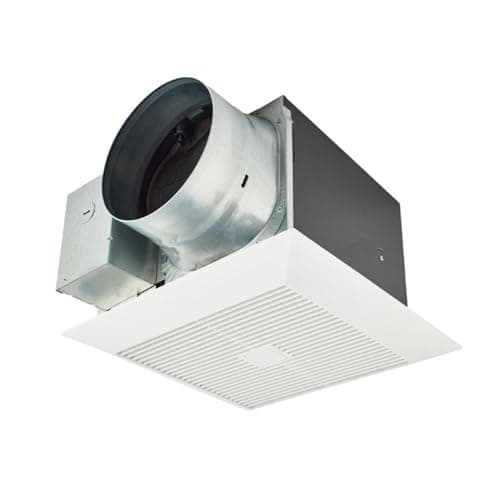 The ventilation case Panasonic WhisperGreen Select FV-0511VK3 Ventilation Fan 0.1 sones at a selectable 50, 80 or 110 CFM — it removes the humid air itself rather than processing it. | A bathroom, laundry or kitchen where the moisture has a source and a schedule | |
| 2 | 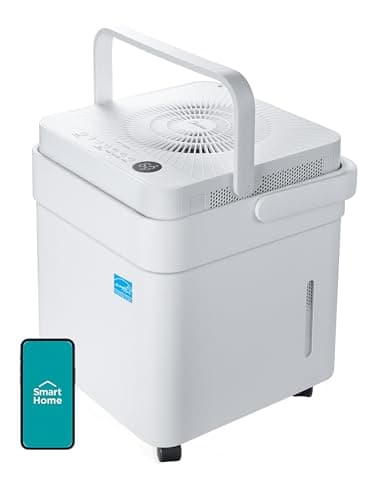 The dehumidifier case Midea Dehumidifier, 20 pints/day 20.16 certified pints a day at 249 kWh a year — it works on air that has nowhere to be exhausted to. | A basement, crawl space or closed room where damp arrives continuously |
The rule
Source or seep
One question settles most cases: does the moisture have an event, or is it always there?
- An event — a shower, a bath, a dryer load, a pan of pasta. The moisture is concentrated in one room, at a known time, and it can be thrown outside before it spreads. Ventilate.
- Always there — a basement that smells musty in July, a crawl space at 75% relative humidity, a closet on an exterior wall. There is no burst to catch. Dehumidify.
This one is not a DIY job
Cost
What each one costs to hold a room dry
The extract fan wins on running cost by an order of magnitude, because it does not process the water — it relocates the air. A certified ventilating fan running an hour a day is a few cents a month, against $46 a year for the compact dehumidifier and $94 for a 50-pint unit.
That is not an argument for buying the fan when the room needs the dehumidifier. It is an argument for making sure the cheap machine is doing its job before adding the expensive one — the method is in how long a dehumidifier should run, where a unit that never cycles is usually fighting a moisture source that ventilation or repair should have handled.
Where it flips
Three cases that go against the rule
- A humid climate in summer. Extracting from a basement pulls in outdoor air that is wetter than what you removed. Here the dehumidifier wins even though the moisture has a source.
- A bathroom with no exterior wall or duct path. If there is nowhere to duct to, a small dehumidifier is a legitimate stopgap — and the proper fix is in bathroom fans without a window.
- Winter condensation on windows. This is warm moist indoor air meeting cold glass. Ventilation helps, dehumidification helps, and the durable fix is reducing indoor moisture generation and improving the glazing.
Together
The sensible whole-house setup
Most damp houses end up with both, doing different jobs: quiet humidity-sensing extract fans in the bathrooms and laundry, and one dehumidifier holding the basement near 50%. That combination handles bursts at the source and seepage everywhere else.
Two things make it work. Size the fan to the room rather than buying the loudest one — the certified field is here — and give the dehumidifier a permanent drain so it never stops with a full tank, as in continuous drainage.
Say the unwelcome thing
Do not buy a dehumidifier for a bathroom that lacks a working fan.
A shower puts out a burst of moisture with a known source and a perfectly good exit. Asking a dehumidifier to condense that back out of the air, in a small room, costs several times what removing it would have, and it does nothing about the steam hitting the ceiling in the meantime.
Fit or fix the extract fan first. 0.1 sones at 50 to 110 CFM is quiet enough to leave running, which is the property that actually keeps a bathroom dry. Save the dehumidifier for the basement, where there is nothing to extract.
In full
Every pick, and what is wrong with it
Published specifications only, each linked to the page it came from. Where a manufacturer publishes nothing, the row says so — we do not fill blanks in.
1. The ventilation case
Panasonic WhisperGreen Select FV-0511VK3 Ventilation Fan
Panasonic · model FV-0511VK3
0.1 sones at a selectable 50, 80 or 110 CFM — it removes the humid air itself rather than processing it.
An extract fan does not dry anything. It throws the humid air outside and lets drier air take its place, which is a far cheaper way to deal with a shower’s worth of steam than condensing it back out of the room.
0.1 sones is the certified noise figure, and it is the reason this fan gets used: an inaudible fan gets left running, and a fan that gets left running is the one that keeps the room dry. Ventilating fans are the one home-air category with a mandatory noise rating in the ENERGY STAR dataset.
Selectable 50, 80 or 110 CFM lets it be matched to the room rather than oversized, and it runs on a fraction of a dehumidifier’s power.
What’s wrong with it
It only works where the moisture is, it needs a duct to outside, and in humid weather the replacement air it pulls in is itself damp.
Running cost
Panasonic does not publish a wattage for the FV-0511VK3, so we cannot calculate what it costs to run. We are not going to estimate one. If Panasonic publishes a nameplate figure, this block will show the arithmetic.
| Noise | 0.1 sones |
|---|---|
| Air delivery, high | 110 CFM at 0.25 in w.g. |
| Air delivery, medium | 80 CFM |
| Air delivery, low | 50 CFM |
| Efficacy, high | 16.7 CFM per watt |
| Efficacy, medium | 18.4 CFM per watt |
| Efficacy, low | 14.7 CFM per watt |
| Duct size | 6 in diameter |
| Speeds | 3 or more |
| Lighting | None |
| Power | Not published in the certified dataset |
| ENERGY STAR | Certified, and on the Most Efficient list |
Every figure above is from ENERGY STAR Certified Ventilating Fans dataset. Blanks are shown as “not published” rather than filled in.
2. The dehumidifier case
Midea Dehumidifier, 20 pints/day
Midea · model MAD20S1QWT
20.16 certified pints a day at 249 kWh a year — it works on air that has nowhere to be exhausted to.
A dehumidifier is the answer when there is no source to extract at. Ground moisture through a slab, damp masonry, or humid outdoor air infiltrating a closed-up basement all produce a room that is continuously wet rather than occasionally steamy.
Certified at 20.16 pints a day and 249 kWh a year — about $46 at 18.34¢/kWh — it holds a set humidity rather than clearing a burst of steam.
It is also the right machine when ventilating would make things worse: in a humid climate, exhausting a basement pulls in outdoor air at a higher dew point, and the room ends up damper than it started.
What’s wrong with it
It adds heat to the room, needs a tank emptied or a drain plumbed, and uses several times the electricity of an extract fan for the same dryness.
Running cost — MAD20S1QWT
| Annual energy use | 249 kWh | ENERGY STAR certified figure |
|---|---|---|
| Annual cost | $46 | 249 × 18.34¢/kWh |
| Per cooling month | $11 | spread over a four-month season |
The annual figure is the certified value from the ENERGY STAR Certified Dehumidifiers dataset, which models a standard cooling season rather than your actual summer. It is more useful than a nameplate wattage here, because a variable-speed compressor spends most of its life well below nameplate.
Rate: 18.34¢/kWh, the US average residential price for June 2026 (EIA Electric Power Monthly, Table 5.3). Yours will differ — swap it in: (watts ÷ 1000) × hours × your rate.
| Water removal | 20.16 pints/day (DOE Appendix X1) |
|---|---|
| Efficiency (IEF) | 1.70 L/kWh |
| Annual energy use | 249 kWh/yr |
| Refrigerant | HFC-32 (GWP 675) |
| Connected | No |
| Noise | Not published in the certified dataset |
| ENERGY STAR | Certified |
Every figure above is from ENERGY STAR Certified Dehumidifiers dataset. Blanks are shown as “not published” rather than filled in.
Questions people actually ask
Frequently asked
Is an exhaust fan or a dehumidifier better for a bathroom?
An exhaust fan, in almost every case. Shower moisture has a source and a schedule, so removing the humid air is cheaper and faster than condensing the water back out of it. A dehumidifier is the fallback only where no duct to outside exists.
Will a dehumidifier stop bathroom mold?
It helps, but it is treating the symptom. Mold in a bathroom follows repeated high humidity after showers, and the fix that addresses the cause is a fan sized to the room, left running 15 to 20 minutes afterwards. Bathroom fans, ranked.
Should I run a dehumidifier in a basement or just ventilate it?
Dehumidify. Ventilating a basement in summer pulls in outdoor air at a higher dew point, so the room often ends up damper. Basements are the classic case where the moisture seeps rather than arrives in bursts. Basement dehumidifiers.
How much cheaper is an exhaust fan to run?
Roughly an order of magnitude for the same dryness, because it relocates humid air rather than processing it. A certified compact dehumidifier is rated at 249 kWh a year; a ventilating fan running an hour a day is cents a month.
Can you use both in the same house?
That is the normal setup in a damp house: quiet humidity-sensing extract fans in bathrooms and laundry rooms for the bursts, and one dehumidifier holding the basement near 50 percent for the continuous damp.
Sources
Where these numbers came from
- ENERGY STAR Certified Ventilating Fans dataset — 0.1 sones and selectable 50/80/110 CFM for the Panasonic WhisperGreen Select FV-0511VK3
- ENERGY STAR Certified Dehumidifiers dataset — 20.16 pints/day, IEF 1.70 L/kWh and 249 kWh/yr for the compact unit compared here
- EIA Electric Power Monthly, Table 5.3 — average residential electricity price
Read next
Where to go from here
Back to Whole-House Airflow, or read how we pick.