The picks
The best whole-house fans
The most efficient air-moving machine in this entire catalog, and the only category on the site with no certification program behind it at all.
By Sawyer V. · Published
The short answer
A whole-house fan is the most efficient air mover here. On low speed the mid-size unit does 2,361 CFM on 73.9 W — 31.9 CFM per watt, nearly double the 16.7 of the best certified bathroom fan, because it pushes against almost no static pressure. It only works when outdoor air is genuinely cooler than indoor air, and there is no certification program for the category.
Fan & Frost earns a commission when you buy through our links, at no cost to you. It never changes a ranking, and we say so when the right answer is the cheaper unit or nothing at all. Full disclosure · How we pick.

At a glance
The picks, ranked
Tap any row to jump to the full reasoning. Prices are live from Amazon where we have them, and read “check price” where we don’t — never a number we cannot verify today.
| # | Product | Best for | Price |
|---|---|---|---|
| 1 | Best overall QuietCool Stealth Pro X Whole House Fan, 4,280 CFM 4,280 CFM on high, and 2,361 CFM on just 73.9 W — 31.9 CFM per watt, the best efficacy figure on this site. | An average house of roughly 1,400 to 2,100 sq ft | |
| 2 | Best for a smaller home QuietCool Stealth Pro X Whole House Fan, 3,159 CFM 1,980 CFM on 74.6 W low — 26.5 CFM per watt, in a smaller ceiling opening. | A house of roughly 1,000 to 1,600 sq ft | |
| 3 | Best for a large house QuietCool Stealth Pro X Whole House Fan, 6,996 CFM 6,996 CFM on high and 4,308 CFM on 166 W low — 26.0 CFM per watt with the largest airflow here. | A house of roughly 2,300 to 3,500 sq ft | |
| — | 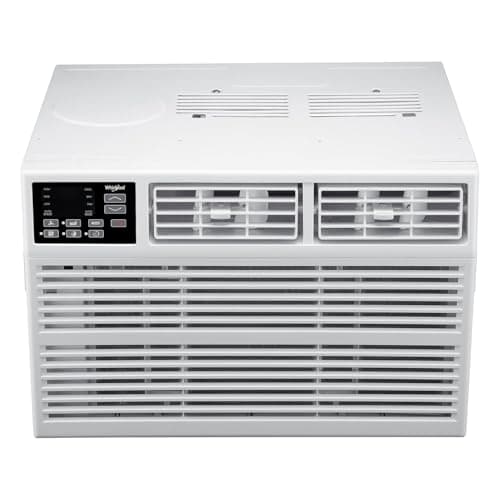 What this replaces, on the right nights Whirlpool Window Air Conditioner, 24,000 BTU 24,000 BTU at 1,417.3 kWh a year. A whole-house fan does nothing on a hot night; this does. | Days when outdoor air is hotter than indoor — which is when a whole-house fan cannot help |
A whole-house fan does not cool air. It replaces the air in your house with outdoor air, and when the outdoor air is cooler that is the cheapest cooling available anywhere.
The finding
The most efficient air mover on this site
We rank ventilating fans on CFM per watt throughout this site, and the certified figures set a familiar range. Whole-house fans are not in that program, so nobody publishes the ratio — but the manufacturers do publish CFM and watts per speed, so we can compute it.
| Category | CFM | Watts | CFM per watt |
|---|---|---|---|
| Whole-house fan, 4.8X on low | 2,361 | 73.9 | 31.9 |
| Whole-house fan, 3.3X on low | 1,980 | 74.6 | 26.5 |
| Whole-house fan, 7.0X on low | 4,308 | 166 | 26.0 |
| Whole-house fan, 4.8X on high | 4,280 | 408 | 10.5 |
| Best certified bathroom fan | 110 | 6.6 | 16.7 |
| Best certified in-line duct fan | 460 | 88 | 5.2 |
31.9 CFM per watt is nearly double the best certified ceiling-mounted ventilating fan and six times the best in-line duct fan.
The reason is static pressure. A bathroom fan is tested pushing against 0.25 inches of water gauge, because it has to force air down a duct. A whole-house fan pushes into an attic through a large opening, against almost nothing. Same physics, wildly different operating point — which is exactly why CFM per watt is only comparable within a category.
Note also how sharply efficacy falls with speed: the same fan runs at 31.9 CFM per watt on low and 10.5 on high. Running these low and long is three times more efficient than running them hard and briefly.
The gap
No certification program covers this category
The ENERGY STAR Certified Ventilating Fans dataset holds 1,140 records in four types: 973 bathroom and utility fans, 92 range hoods, 73 single-port in-line fans and 2 multi-port in-line fans.
There are zero whole-house fans and zero attic fans. The category is not in the program at all.
What follows from that:
- Every CFM figure is a manufacturer claim. Not necessarily wrong, and not independently verified either.
- No sone rating exists. These are marketed heavily on quietness and none of them publishes a tested acoustic figure.
- Coverage claims in square feet are marketing. No test procedure governs them.
- Cross-brand comparison is unreliable in a way it is not for bathroom fans, where 905 units can be ranked on tested data.
We have used the published CFM and watt figures because they are what exists, and we have computed the efficacy ratio ourselves rather than repeating a marketing number.
Conditions
When this works, and when it does nothing
A whole-house fan has one requirement and it is absolute: the outdoor air must be cooler than the indoor air.
- Best case: a climate with a large day-night swing. Hot afternoons, cool evenings. Purge at dusk and the house starts the next day cooler.
- Useless case: a humid climate where nights stay warm. You would be moving hot, damp air through the house and adding moisture that makes it feel worse.
- Bad-air days: wildfire smoke or high pollen. This machine imports outdoor air by design, unfiltered, at thousands of CFM.
- It needs open windows. Running one with the house shut pulls hard against a sealed envelope and moves very little air.
Used on the right nights, it is the single cheapest cooling intervention available. Used on the wrong ones it is worse than nothing. Where the night purge fits in a day.
This one is not a DIY job
Attic ventilation is the part people get wrong. A whole-house fan pushes thousands of CFM into the attic, and that air has to leave. Insufficient attic venting pressurizes the space, throttles the fan, and can push air back into the house through ceiling penetrations.
Manufacturers specify a minimum net free venting area for each model. Meeting it is not optional, and it frequently means adding vents.
Combustion safety is a genuine hazard here. Depressurising a house with an open-flued gas appliance, a water heater or a fireplace can backdraft combustion gases into the living space. If you have any atmospherically vented appliance, this needs a professional assessment before installation.
Installation involves cutting a large ceiling opening, framing it, electrical work and an insulated damper. It belongs to a qualified installer.
Practical
Running one well
- Run it on low. Three times the efficacy of high speed, and the noise difference is larger than the airflow difference.
- Open windows in the rooms you want cooled, not all of them. Fewer openings means faster air movement where you are.
- Start when the crossover happens, not at a fixed hour. Outdoor temperature is the trigger, not the clock.
- Close the house in the morning. The purge is only worth doing if you keep what it delivered.
- Check the winter seal. An insulated damper matters — an uninsulated ceiling opening is a heat loss path for the other six months.
- Do not run it with the air conditioner on. You are paying to cool air and then throwing it into the attic.
Say the unwelcome thing
Do not buy a whole-house fan as an air conditioner replacement.
It is sold that way constantly, and it is only true in specific climates on specific nights.
A whole-house fan cannot make air colder. It replaces indoor air with outdoor air, so its entire value depends on the outdoor air being worth having. In a climate where nights stay warm and humid, it moves hot damp air through your house at thousands of CFM.
It also imports whatever is outside — smoke, pollen, dust — unfiltered, which is a real consideration in some regions and seasons.
Where the day-night swing is large, it is the cheapest cooling available: 2,361 CFM on 73.9 W is 11¢ for a whole night. Treat it as a complement to cooling, not a substitute.
In full
Every pick, and what is wrong with it
Published specifications only, each linked to the page it came from. Where a manufacturer publishes nothing, the row says so — we do not fill blanks in.
1. Best overall
QuietCool Stealth Pro X Whole House Fan, 4,280 CFM
QuietCool · model QC STL PRO-4.8X
4,280 CFM on high, and 2,361 CFM on just 73.9 W — 31.9 CFM per watt, the best efficacy figure on this site.
The size most houses want, and the clearest illustration of why this category exists.
Low speed is the number to look at: 2,361 CFM on 73.9 W. That works out to 31.9 CFM per watt — against 16.7 for the best certified ceiling-mounted ventilating fan and 4.0 to 5.2 for an in-line duct fan.
High speed is 4,280 CFM on 408 W, or 10.5 CFM per watt. Efficacy falls sharply with speed, which is the argument for running these low and long — 11¢ for an eight-hour night on low against 60¢ on high.
ECM motor, three speeds, a 15-year warranty, and a manufacturer coverage claim of 1,427 to 2,140 sq ft.
What’s wrong with it
408 W on high is a real draw, and no noise figure is published as sones or dBA.
Running cost — QC STL PRO-4.8X
| Nameplate power | 73.9 W – 408 W | manufacturer's published figure |
|---|---|---|
| Energy, 8-hour night | 3.26 kWh | 408 ÷ 1000 × 8 |
| Cost per hour | 7.5¢ | at 18.34¢/kWh |
| Cost per 8-hour night | 60¢ | on the highest speed |
| Cost per 30 nights | $18 | 97.9 kWh |
| Same month, lowest speed | $3.25 | at 73.9 W |
Rate: 18.34¢/kWh, the US average residential price for June 2026 (EIA Electric Power Monthly, Table 5.3). Yours will differ — swap it in: (watts ÷ 1000) × hours × your rate.
| Air delivery, high | 4,280 CFM |
|---|---|
| Air delivery, medium | 3,500 CFM |
| Air delivery, low | 2,361 CFM |
| Power, high | 408 W |
| Power, medium | 225 W |
| Power, low | 73.9 W |
| Coverage claim | 1,427 - 2,140 sq ft |
| Motor | ECM |
| Warranty | 15 years |
| Noise | Not published as sones or dBA |
| ENERGY STAR | No program exists for whole-house fans |
Every figure above is from QuietCool Stealth Pro X specification sheet, QC STL PRO-4.8. Blanks are shown as “not published” rather than filled in.
2. Best for a smaller home
QuietCool Stealth Pro X Whole House Fan, 3,159 CFM
QuietCool · model QC STL PRO-3.3X
1,980 CFM on 74.6 W low — 26.5 CFM per watt, in a smaller ceiling opening.
The entry size, and worth understanding what it does and does not save you.
1,980 CFM on 74.6 W on low is 26.5 CFM per watt — still far better than any ducted fan, and notably worse than the larger unit at 31.9.
That is the counter-intuitive part: the bigger fan is more efficient on low speed, because a larger blade moving air slowly beats a smaller one working harder. Its low-speed draw is essentially identical at 73.9 W against 74.6.
3,159 CFM on 264 W on high, coverage claim 1,053 to 1,580 sq ft, ECM motor, 15-year warranty.
Buy this for the smaller ceiling opening and the smaller price, not for lower running cost.
What’s wrong with it
Only two published speeds, and its low-speed draw is the same as the larger unit's.
Running cost — QC STL PRO-3.3X
| Nameplate power | 74.6 W – 264 W | manufacturer's published figure |
|---|---|---|
| Energy, 8-hour night | 2.11 kWh | 264 ÷ 1000 × 8 |
| Cost per hour | 4.8¢ | at 18.34¢/kWh |
| Cost per 8-hour night | 39¢ | on the highest speed |
| Cost per 30 nights | $12 | 63.4 kWh |
| Same month, lowest speed | $3.28 | at 74.6 W |
Rate: 18.34¢/kWh, the US average residential price for June 2026 (EIA Electric Power Monthly, Table 5.3). Yours will differ — swap it in: (watts ÷ 1000) × hours × your rate.
| Air delivery, high | 3,159 CFM |
|---|---|
| Air delivery, low | 1,980 CFM |
| Power, high | 264 W |
| Power, low | 74.6 W |
| Coverage claim | 1,053 - 1,580 sq ft |
| Motor | ECM |
| Warranty | 15 years |
| Noise | Not published as sones or dBA |
| ENERGY STAR | No program exists for whole-house fans |
Every figure above is from QuietCool Stealth Pro X specification sheet, QC STL PRO-3.3. Blanks are shown as “not published” rather than filled in.
3. Best for a large house
QuietCool Stealth Pro X Whole House Fan, 6,996 CFM
QuietCool · model QC STL PRO-7.0X
6,996 CFM on high and 4,308 CFM on 166 W low — 26.0 CFM per watt with the largest airflow here.
The largest of the three, and the one where running it on high genuinely costs something.
6,996 CFM on 725 W is 9.7 CFM per watt — the worst efficacy in this roundup, and about 53¢ for a four-hour purge.
4,308 CFM on 166 W on low is where it belongs: 26.0 CFM per watt, and 24¢ for a full night.
Coverage claim 2,332 to 3,498 sq ft, ECM motor, three speeds, 15-year warranty. Size honestly — the low-speed figures are what you will actually live with, and a bigger fan run gently beats a smaller one run hard.
What’s wrong with it
725 W on high is more than a small evaporative cooler, and it needs a large ceiling opening.
Running cost — QC STL PRO-7.0X
| Nameplate power | 166 W – 725 W | manufacturer's published figure |
|---|---|---|
| Energy, 8-hour night | 5.80 kWh | 725 ÷ 1000 × 8 |
| Cost per hour | 13¢ | at 18.34¢/kWh |
| Cost per 8-hour night | $1.06 | on the highest speed |
| Cost per 30 nights | $32 | 174.0 kWh |
| Same month, lowest speed | $7.31 | at 166 W |
Rate: 18.34¢/kWh, the US average residential price for June 2026 (EIA Electric Power Monthly, Table 5.3). Yours will differ — swap it in: (watts ÷ 1000) × hours × your rate.
| Air delivery, high | 6,996 CFM |
|---|---|
| Air delivery, medium | 5,448 CFM |
| Air delivery, low | 4,308 CFM |
| Power, high | 725 W |
| Power, medium | 319 W |
| Power, low | 166 W |
| Coverage claim | 2,332 - 3,498 sq ft |
| Motor | ECM |
| Warranty | 15 years |
| Noise | Not published as sones or dBA |
| ENERGY STAR | No program exists for whole-house fans |
Every figure above is from QuietCool Stealth Pro X specification sheet, QC STL PRO-7.0. Blanks are shown as “not published” rather than filled in.
Skip this one
Whirlpool Window Air Conditioner, 24,000 BTU
Whirlpool · model WHAW-241IN
24,000 BTU at 1,417.3 kWh a year. A whole-house fan does nothing on a hot night; this does.
Included to be clear about the trade, because whole-house fans get sold as an air conditioner replacement and they are not one.
A whole-house fan can only import air that is already cooler than the air indoors. On a night that stays at 85°F, it moves 4,280 CFM of hot air through your house.
1,417.3 kWh a year — $260 at 18.34¢/kWh — at CEER 12.7, the least efficient certified room unit we hold data for.
The honest framing is that these are complements, not alternatives. Purge with the fan when the outdoor air is worth having; use the compressor when it is not.
What’s wrong with it
It is the least efficient certified room unit, and it is the wrong tool for a cool evening.
Running cost — WHAW-241IN
| Annual energy use | 1417.3 kWh | ENERGY STAR certified figure |
|---|---|---|
| Annual cost | $260 | 1417.3 × 18.34¢/kWh |
| Per cooling month | $65 | spread over a four-month season |
The annual figure is the certified value from the ENERGY STAR Certified Room Air Conditioners dataset, which models a standard cooling season rather than your actual summer. It is more useful than a nameplate wattage here, because a variable-speed compressor spends most of its life well below nameplate.
Rate: 18.34¢/kWh, the US average residential price for June 2026 (EIA Electric Power Monthly, Table 5.3). Yours will differ — swap it in: (watts ÷ 1000) × hours × your rate.
| Cooling capacity | 24,000 BTU/h |
|---|---|
| CEER | 12.7 |
| Annual energy use | 1,417.3 kWh/yr |
| vs federal standard | 35% less energy |
| Dimensions | 20.7 H x 30.0 W x 28.8 D in |
| Weight | 115.7 lb |
| Refrigerant | R-32 |
| Installation | Straddles the window; support bracket territory |
| ENERGY STAR | Certified |
Every figure above is from ENERGY STAR Certified Room Air Conditioners dataset. Blanks are shown as “not published” rather than filled in.
We are not linking a buy button for this one. If you want to look at it anyway, it is easy enough to find — but we would rather send you to something that fits your room.
Questions people actually ask
Frequently asked
How efficient is a whole-house fan?
Extremely, on low speed. A mid-size unit moves 2,361 CFM on 73.9 W — 31.9 CFM per watt, nearly double the best certified bathroom fan at 16.7 and six times the best in-line duct fan. It pushes against almost no static pressure, which is where the advantage comes from.
Should I run a whole-house fan on high or low?
Low, almost always. The same fan runs at 31.9 CFM per watt on low and 10.5 on high — three times the efficacy — and the noise difference is larger than the airflow difference. Run it low and long rather than hard and briefly.
Are whole-house fans ENERGY STAR certified?
No. The certified ventilating fans dataset holds 1,140 records across bathroom and utility fans, range hoods and in-line fans — and zero whole-house or attic fans. Every CFM, watt and coverage figure in this category is a manufacturer claim.
When does a whole-house fan not work?
Whenever outdoor air is not cooler than indoor air. In a humid climate where nights stay warm you would be moving hot, damp air through the house. It also imports smoke and pollen unfiltered, so it should stay off on bad-air days. Fan vs air conditioner.
Do I need extra attic vents for a whole-house fan?
Usually yes. The fan pushes thousands of CFM into the attic and that air has to leave. Insufficient venting pressurizes the attic, throttles the fan, and can push air back into the house. Manufacturers specify a minimum net free venting area per model.
Is a whole-house fan safe with a gas appliance?
It needs professional assessment. Depressurising a house with an open-flued gas appliance, water heater or fireplace can backdraft combustion gases into the living space. That is a safety matter, not a comfort one.
Sources
Where these numbers came from
- QuietCool Stealth Pro X specification sheet, QC STL PRO-4.8 — CFM and watts per speed, coverage
- QuietCool Stealth Pro X specification sheet, QC STL PRO-7.0
- QuietCool Stealth Pro X specification sheet, QC STL PRO-3.3
- QuietCool Stealth Pro X product page — ECM motor, 6,996 CFM maximum, 66.7 W minimum, 15-year warranty
- ENERGY STAR Certified Ventilating Fans dataset — the four certified unit types, none of which is a whole-house fan
- EIA Electric Power Monthly, Table 5.3 — average residential electricity price
Read next
Where to go from here
Back to Whole-House Airflow, or read how we pick.