Head to head
Heat pump vs air conditioner
Mechanically they are the same machine. The difference is a reversing valve and a heating rating, and that heating rating is not what most people assume.
By Sawyer V. · Published
The short answer
A heat pump is an air conditioner, with a reversing valve that lets it move heat inward in winter instead of outward in summer. Same compressor, same coils, same refrigerant. Across 11,494 certified US mini-split heat pump records, the correlation between cooling efficiency (SEER2) and cold-weather heating performance (COP at 5°F) is just 0.11 — so a great cooling rating tells you almost nothing about how it heats.
Fan & Frost earns a commission when you buy through our links, at no cost to you. It never changes a ranking, and we say so when the right answer is the cheaper unit or nothing at all. Full disclosure · How we pick.
At a glance
The picks, ranked
Tap any row to jump to the full reasoning. Prices are live from Amazon where we have them, and read “check price” where we don’t — never a number we cannot verify today.
| # | Product | Best for | Price |
|---|---|---|---|
| 1 | 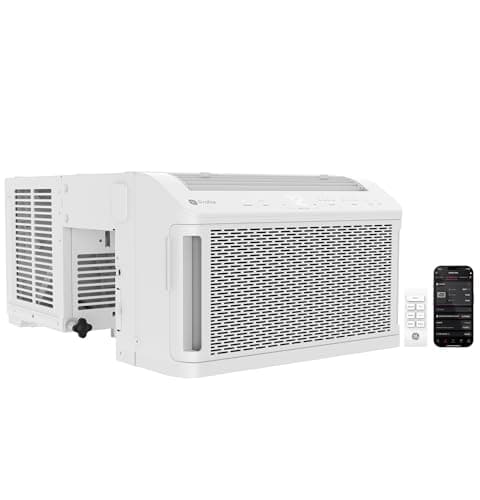 Cooling only, and best at it GE Profile ClearView Window Air Conditioner, 8,000 BTU CEER 16 and 375 kWh a year — the most efficient certified 8,000 BTU room unit, with no heating function at all. | A room that needs cooling and already has heating | |
| 2 | Lowest energy use of anything certified here Midea U-Shaped Window Air Conditioner, 6,000 BTU 298 kWh a year at CEER 15.1 — the lowest annual figure in the certified units we track. | A small room where you want the least consumption available | |
| 3 | The permanent install, without refrigerant work Friedrich Through-the-Wall Air Conditioner, 10,100 BTU 10,100 BTU through the wall at CEER 14.2, on the Most Efficient list, with an existing sleeve. | A room where you want a fixture rather than a seasonal unit | |
| — | The portable heating trap Whynter ARC-14S Dual Hose Portable Air Conditioner 1,300 W and 9,500 BTU SACC. Portable units that also heat exist, and they are the least efficient way to do either. | Neither heating nor cooling, if you have any alternative |
The confusion here is understandable, because the answer is genuinely odd: a heat pump and an air conditioner are the same machine. Not similar — the same.
Mechanism
One reversing valve
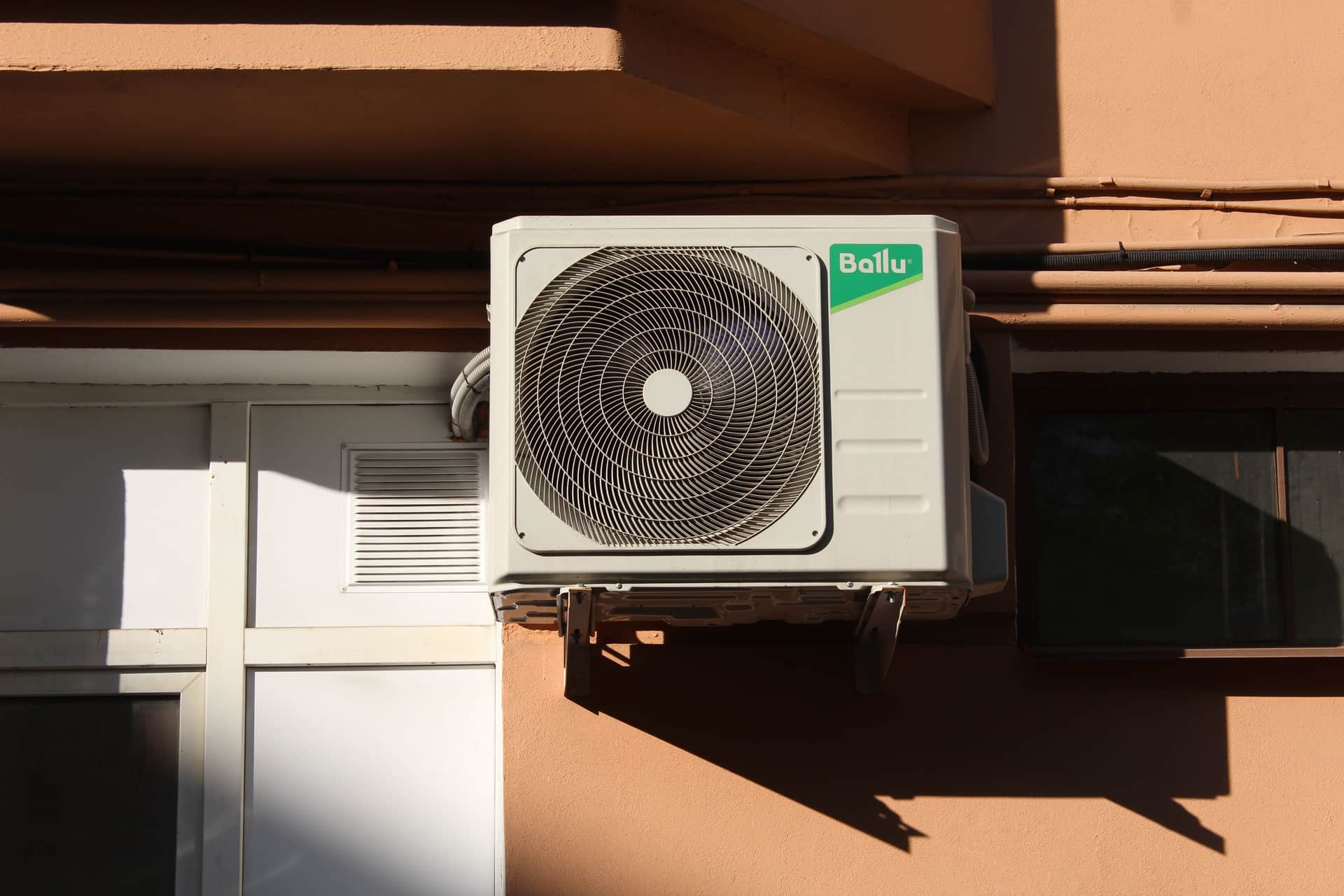
An air conditioner does not create cold. It moves heat from one place to another, using a refrigerant that absorbs heat when it evaporates and releases it when it condenses. Indoor coil absorbs, outdoor coil releases, and the room gets cooler because its heat is now outside.
A heat pump adds one component: a reversing valve that swaps which coil does which job. Run it the other way and the outdoor coil absorbs heat from cold outdoor air while the indoor coil releases it into your room.
The counterintuitive part is that there is usable heat in cold air. Refrigerant boiling at well below freezing will still absorb heat from air at 20°F, and the compressor concentrates it to a useful temperature.
This is why a heat pump beats resistance heating so decisively. Resistance heating converts electricity to heat at best one-for-one. A heat pump moves existing heat, so a watt of electricity delivers several watts of heat — the certified average across the dataset below is about two watts of heat per watt of electricity even at 5°F.
Our analysis
What 11,494 certified records actually show
We pulled the complete ENERGY STAR Certified Mini-Split Heat Pumps dataset and filtered to US-market records. The results contradict the way these products are usually shopped for.
| Metric | What it measures | Range |
|---|---|---|
| SEER2 | Seasonal cooling efficiency | up to 35.1 |
| EER2 | Steady-state cooling efficiency | up to 19.1 |
| HSPF2 | Seasonal heating efficiency | 7.7 – 17.5 |
| COP at 5°F | Heat delivered per watt in a cold snap | 1.3 – 2.89 |
The best unit on each metric is a different machine. The highest SEER2 (35.10) is a Bryant 6,000 BTU model. The highest EER2 (19.10) is a Fujitsu 9,000 BTU. The highest HSPF2 (17.50) is an Arcoaire. The highest COP at 5°F (2.89) is an Airquest 18,000 BTU whose HSPF2 is only 11.00 — slightly above the dataset average.
Then we correlated the metrics across all 11,461 complete records.
| Relationship | Correlation | Reading |
|---|---|---|
| SEER2 vs HSPF2 | 0.45 | Moderate — cooling partly predicts seasonal heating |
| HSPF2 vs COP at 5°F | 0.34 | Weak |
| SEER2 vs COP at 5°F | 0.11 | Essentially none |
Pearson correlation over 11,461 US-market records carrying all three figures, computed by us from the ENERGY STAR Certified Mini-Split Heat Pumps dataset.
A SEER2 rating tells you essentially nothing about how a heat pump performs in a cold snap. At 0.11, knowing a unit’s cooling efficiency gives you almost no information about its COP at 5°F.
Even seasonal heating efficiency is a weak guide to cold-weather behavior, at 0.34. The top five percent of units by HSPF2 average 13.91 HSPF2 but only 2.15 COP at 5°F — while the top five percent by COP at 5°F average 2.44 but just 11.59 HSPF2.
Which means: if cold-weather heating matters to you, read the COP at 5°F figure specifically. No other number on the spec sheet is a reliable proxy for it.
Capacity
Heat pumps lose capacity as it gets colder
Efficiency is only half the story. The other half is how much heat the machine can still deliver when you need the most.
Comparing certified heating capacity at 47°F against 5°F across 11,444 records:
- The median unit retains 86 percent of its 47°F heating capacity at 5°F.
- The bottom tenth retain 68 percent or less.
- The top tenth retain 103 percent or more — modern inverter units can over-speed the compressor in cold weather to hold or exceed rated output.
That spread matters because heating demand rises as capacity falls. A unit sized on its 47°F rating that retains 68 percent at 5°F is a third short precisely on the coldest night of the year.
Encouragingly, 9,961 of 11,494 US-market records — 86.7 percent — carry the ENERGY STAR cold climate designation. The cold-weather-capable field is now the mainstream one, not a niche.
This one is not a DIY job
What this means when you get a quote. A contractor will lead with SEER2, because it is the biggest and most familiar number. If heating is part of why you are buying, ask for three more:
HSPF2, for seasonal heating efficiency. COP at 5°F, for how it behaves in a cold snap. And heating capacity at 5°F alongside the 47°F figure, so you can see how much output it actually keeps.
All four are published in the ENERGY STAR certified dataset for every certified model, so there is no reason for anyone to be vague about them.
Mini-split heat pump installation is licensed work involving refrigerant handling. This page is about reading the specification, not about installing anything.
Decide
Which one you need
An air conditioner if you already have heating you are content with. Adding heat pump capability to a house with a working furnace buys you a second heating system, not a cheaper one, and a certified window unit at 375 kWh a year is a far smaller purchase.
A heat pump if your heating is electric resistance — baseboards, panel heaters, a resistance furnace. This is the strongest case by a distance, because you are replacing roughly one-for-one conversion with something delivering about two units of heat per unit of electricity even at 5°F.
A heat pump if the room has no heating at all — a converted garage, an addition, a finished basement — and you would otherwise buy two machines.
Probably not, if you want it for one room in a house with central heating and a window that takes a unit. The installation is licensed work and frequently costs more than the equipment. That comparison in full.
Say the unwelcome thing
Do not buy on SEER2 if you are buying for heat.
This is the practical conclusion of the analysis above, and it is the single most common mistake in this category.
SEER2 is the number on the front of every brochure. It is a cooling metric. Across 11,461 certified records its correlation with COP at 5°F is 0.11 — statistically almost nothing.
You can buy the highest-SEER2 unit available and find it struggling on the coldest night of the year, because those two behaviors are governed by different design choices and the dataset shows they barely travel together.
If the heating matters, the numbers that matter are HSPF2, COP at 5°F, and heating capacity at 5°F. All three are published. Ask for them.
In full
Every pick, and what is wrong with it
Published specifications only, each linked to the page it came from. Where a manufacturer publishes nothing, the row says so — we do not fill blanks in.
1. Cooling only, and best at it
GE Profile ClearView Window Air Conditioner, 8,000 BTU
GE Profile · model PWJV08W
CEER 16 and 375 kWh a year — the most efficient certified 8,000 BTU room unit, with no heating function at all.
The honest baseline. Most homes already have heating, and in that case a cooling-only unit is not a compromise — it is the right scope.
CEER 16, 375 kWh a year, about $69 for a season, and on the ENERGY STAR Most Efficient list. At 15.3 inches deep and 46.2 lb it is also the easiest certified unit in its class to install.
The case for a heat pump instead is not efficiency in summer. It is whether you want one machine covering both seasons, and whether the heating you already have is expensive enough to be worth replacing.
What’s wrong with it
Cooling only. If the room is also cold in January, this solves half the problem and you are buying twice.
Running cost — PWJV08W
| Annual energy use | 375 kWh | ENERGY STAR certified figure |
|---|---|---|
| Annual cost | $69 | 375 × 18.34¢/kWh |
| Per cooling month | $17 | spread over a four-month season |
The annual figure is the certified value from the ENERGY STAR Certified Room Air Conditioners dataset, which models a standard cooling season rather than your actual summer. It is more useful than a nameplate wattage here, because a variable-speed compressor spends most of its life well below nameplate.
Rate: 18.34¢/kWh, the US average residential price for June 2026 (EIA Electric Power Monthly, Table 5.3). Yours will differ — swap it in: (watts ÷ 1000) × hours × your rate.
| Cooling capacity | 8,000 BTU/h |
|---|---|
| CEER | 16 |
| Annual energy use | 375 kWh/yr |
| vs federal standard | 47% less energy |
| Dimensions | 12.6 H x 18.6 W x 15.3 D in |
| Weight | 46.2 lb |
| Refrigerant | R-32 |
| Installation | Does not straddle the windowsill |
| Compressor | Variable speed |
| ENERGY STAR | Certified, and on the Most Efficient list |
Every figure above is from ENERGY STAR Certified Room Air Conditioners dataset. Blanks are shown as “not published” rather than filled in.
2. Lowest energy use of anything certified here
Midea U-Shaped Window Air Conditioner, 6,000 BTU
Midea · model MAW06V1QWT
298 kWh a year at CEER 15.1 — the lowest annual figure in the certified units we track.
298 kWh a year — about $55 for an entire cooling season. That is the lowest annual energy figure among the certified room air conditioners on this site.
The U-shape puts the compressor outside a closed window, and the variable-speed compressor modulates rather than cycling. Both matter for noise, and neither is available in any portable.
Included here because it frames the heat pump question properly: when a cooling-only unit costs this little to run, the argument for a heat pump has to be made on the heating side alone.
What’s wrong with it
6,000 BTU covers a small room only, and like every window unit it is cooling-only.
Running cost — MAW06V1QWT
| Annual energy use | 298 kWh | ENERGY STAR certified figure |
|---|---|---|
| Annual cost | $55 | 298 × 18.34¢/kWh |
| Per cooling month | $14 | spread over a four-month season |
The annual figure is the certified value from the ENERGY STAR Certified Room Air Conditioners dataset, which models a standard cooling season rather than your actual summer. It is more useful than a nameplate wattage here, because a variable-speed compressor spends most of its life well below nameplate.
Rate: 18.34¢/kWh, the US average residential price for June 2026 (EIA Electric Power Monthly, Table 5.3). Yours will differ — swap it in: (watts ÷ 1000) × hours × your rate.
| Cooling capacity | 6,000 BTU/h |
|---|---|
| CEER | 15.1 |
| Annual energy use | 298 kWh/yr |
| vs federal standard | 37% less energy |
| Dimensions | 13.5 H x 19.2 W x 22.0 D in |
| Weight | 53.1 lb |
| Refrigerant | R-32 |
| Installation | U-shape; sash closes through the middle of the unit |
| Compressor | Variable speed |
| ENERGY STAR | Certified, and on the Most Efficient list |
Every figure above is from ENERGY STAR Certified Room Air Conditioners dataset. Blanks are shown as “not published” rather than filled in.
3. The permanent install, without refrigerant work
Friedrich Through-the-Wall Air Conditioner, 10,100 BTU
Friedrich · model WCVT10B10B
10,100 BTU through the wall at CEER 14.2, on the Most Efficient list, with an existing sleeve.
People considering a heat pump usually want two things: heating and cooling from one machine, and something permanent rather than a unit they store each October.
This delivers the second without the first, and without any refrigerant handling — which is the barrier that makes a mini-split heat pump a contractor job.
533.5 kWh a year, about $98. CEER 14.2 is honestly below a good window unit; the sleeve restricts airflow to the condenser.
What’s wrong with it
CEER 14.2 is below a good window unit, because the closed sleeve restricts condenser airflow. And it needs a sleeve already there.
Running cost — WCVT10B10B
| Annual energy use | 533.5 kWh | ENERGY STAR certified figure |
|---|---|---|
| Annual cost | $98 | 533.5 × 18.34¢/kWh |
| Per cooling month | $24 | spread over a four-month season |
The annual figure is the certified value from the ENERGY STAR Certified Room Air Conditioners dataset, which models a standard cooling season rather than your actual summer. It is more useful than a nameplate wattage here, because a variable-speed compressor spends most of its life well below nameplate.
Rate: 18.34¢/kWh, the US average residential price for June 2026 (EIA Electric Power Monthly, Table 5.3). Yours will differ — swap it in: (watts ÷ 1000) × hours × your rate.
| Cooling capacity | 10,100 BTU/h |
|---|---|
| CEER | 14.2 |
| Annual energy use | 533.5 kWh/yr |
| Weight | 110.0 lb |
| Refrigerant | R-32 |
| Installation | Through the wall (existing sleeve required) |
| Compressor | Variable speed |
| ENERGY STAR | Certified, and on the Most Efficient list |
Every figure above is from ENERGY STAR Certified Room Air Conditioners dataset. Blanks are shown as “not published” rather than filled in.
Skip this one
Whynter ARC-14S Dual Hose Portable Air Conditioner
Whynter · model ARC-14S
1,300 W and 9,500 BTU SACC. Portable units that also heat exist, and they are the least efficient way to do either.
Portable air conditioners with a heating mode are marketed as the cheap way to get heat pump versatility. They are not.
1,300 W, and a 14,000 BTU headline that is DOE-rated at 9,500 BTU SACC once duct heat and infiltration are counted — a 32.1 percent haircut. Why that gap exists.
And critically: ENERGY STAR does not certify portable air conditioners at all. A mini-split heat pump comes with a certified SEER2, EER2, HSPF2 and COP at 5°F. A portable comes with a manufacturer’s claim and nothing else.
Many portable “heat” modes are resistance heating rather than a reversed refrigeration cycle, which is the opposite of the efficiency argument for a heat pump. Check which you are buying.
What’s wrong with it
No certification program covers portables, so no heating or cooling figure on one is independently verified.
Running cost — ARC-14S
| Nameplate power | 1300 W | manufacturer's published figure |
|---|---|---|
| Energy, 8-hour night | 10.40 kWh | 1300 ÷ 1000 × 8 |
| Cost per hour | 24¢ | at 18.34¢/kWh |
| Cost per 8-hour night | $1.91 | on the highest speed |
| Cost per 30 nights | $57 | 312.0 kWh |
Rate: 18.34¢/kWh, the US average residential price for June 2026 (EIA Electric Power Monthly, Table 5.3). Yours will differ — swap it in: (watts ÷ 1000) × hours × your rate.
| Marketing capacity | 14,000 BTU (ASHRAE-128) |
|---|---|
| DOE-rated capacity | 9,500 BTU SACC |
| Hoses | Dual |
| Power | 1,300 W / 11.6 A at 115 V |
| Noise | Under 51 dBA low, under 56 dBA high |
| Dehumidification | 71 pints/day |
| Refrigerant | R-32 |
| Dimensions | 16 W x 19 D x 35.5 H in |
| Weight | 73 lb |
| Manufacturer coverage claim | 500 sq ft |
| Warranty | 1 year unit, 3 years compressor |
Every figure above is from Whynter product page, ARC-14S. Blanks are shown as “not published” rather than filled in.
We are not linking a buy button for this one. If you want to look at it anyway, it is easy enough to find — but we would rather send you to something that fits your room.
Questions people actually ask
Frequently asked
Is a heat pump the same as an air conditioner?
Mechanically, yes. A heat pump is an air conditioner with a reversing valve that swaps which coil absorbs heat and which releases it, so the same compressor and coils can move heat inward in winter and outward in summer.
Does a high SEER2 rating mean a heat pump heats well?
No. Across 11,461 certified US records, the correlation between SEER2 and COP at 5°F is 0.11 — essentially none. A great cooling rating tells you almost nothing about cold-weather heating, so read the COP at 5°F figure specifically.
What is COP at 5°F and why does it matter?
It is the coefficient of performance in a cold snap — units of heat delivered per unit of electricity at 5°F. Certified units range from 1.3 to 2.89, with an average around 2.0, so even in severe cold a heat pump typically delivers about twice the heat that resistance heating would from the same electricity.
Do heat pumps lose capacity in cold weather?
Most do. Across 11,444 certified records the median unit retains 86 percent of its 47°F heating capacity at 5°F, the bottom tenth retain 68 percent or less, and the top tenth retain 103 percent or more because inverter compressors can over-speed in cold conditions.
When is a heat pump worth it over an air conditioner?
Strongest case: your heating is electric resistance, where you would replace roughly one-for-one conversion with about two units of heat per unit of electricity. Also strong when a room has no heating at all and you would otherwise buy two machines.
Are portable air conditioners with a heat mode worth buying?
Rarely. There is no ENERGY STAR program for portables, so nothing about them is independently verified, and many portable heat modes are resistance heating rather than a reversed refrigeration cycle — which removes the entire efficiency argument for a heat pump.
Sources
Where these numbers came from
Read next
Where to go from here
Back to Guides & Calculators, or read how we pick.