Guide and picks
How to cool a room with no windows
Heat does not disappear; it moves. Without a window you have three genuine options and one very heavily marketed non-option, and it is worth knowing which is which before you spend anything.
By Sawyer V. · Published
The short answer
You have three real choices: duct a portable unit through a drop ceiling, wall vent or into an adjacent room; install through the wall or a mini-split (licensed work); or accept you can only move air, with a fan and by attacking the heat sources. Anything sold as a “ventless air conditioner” is an evaporative cooler or a fan.
Fan & Frost earns a commission when you buy through our links, at no cost to you. It never changes a ranking, and we say so when the right answer is the cheaper unit or nothing at all. Full disclosure · How we pick.

At a glance
The picks, ranked
Tap any row to jump to the full reasoning. Prices are live from Amazon where we have them, and read “check price” where we don’t — never a number we cannot verify today.
| # | Product | Best for | Price |
|---|---|---|---|
| 1 | If you can duct it somewhere Whynter ARC-14S Dual Hose Portable Air Conditioner Dual hose is what makes ducting into an adjacent space viable — it does not depressurize the room it sits in. | A windowless room with a drop ceiling, wall vent or adjacent space | |
| 2 | 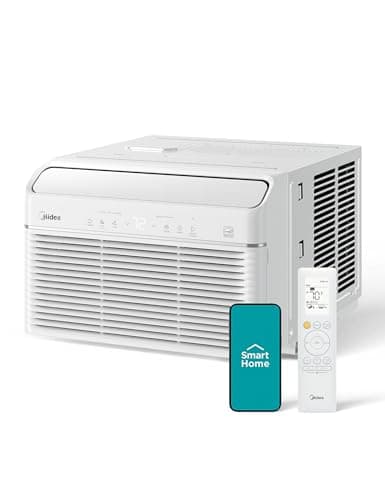 The permanent fix Midea Through-the-Wall Air Conditioner, 8,000 BTU A through-the-wall unit puts the hot side outside where it belongs, with certified efficiency a portable cannot match. | A room you own with an exterior wall | |
| 3 | 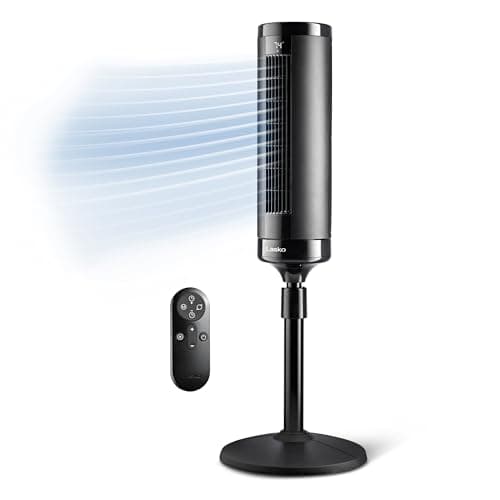 If you cannot vent at all Lasko EcoQuiet 42" DC Tower Fan It will not lower the temperature, but at 19 W it makes the room noticeably more bearable for whoever is in it. | An interior room where nothing can be ducted |
Every cooling method that lowers a room’s temperature works the same way: it takes heat from the air and puts it somewhere else. The “somewhere else” is the whole problem. A window is the usual answer, and without one you need a different route or a different expectation.
Say the unwelcome thing
There is no such thing as a ventless air conditioner.
This is the most heavily marketed non-product in home cooling, and it is aimed precisely at people searching for this page.
A refrigeration cycle moves heat from a cold side to a hot side. Both sides are in your room. With no duct, all the heat it removes goes straight back into the air, plus the compressor’s own electrical losses. The net effect of running a genuinely ventless refrigeration unit in a sealed room is slightly warmer air.
Products sold under that name are one of two honest things. Either an evaporative cooler, which cools real air but only where the air is dry, adds humidity, and needs an open window to work — which you do not have. Or a fan with a water tank, which is a fan.
Both can be worth owning. Neither is an air conditioner, and neither will make a sealed interior room colder.
Option one
Find a route you did not think you had
Before accepting that the room cannot be vented, check for these. A surprising number of “windowless” rooms have one:
- A drop ceiling. Lift a tile. If there is a plenum with a route to the rest of the building, a portable can exhaust into it. Common in basements and converted offices.
- An existing wall vent or old extractor opening. Bathrooms and utility rooms often have one, and portable AC hose adapters are widely available in standard duct sizes.
- A dryer vent. If the room shares a wall with a laundry area, the vent is already a hole to outside.
- A door to a genuinely large or ventilated space. Ducting into a big open basement or a garage moves the heat out of the room you occupy. It is a partial answer, but a real one.
- A ceiling hatch to an attic. Possible, but be careful: dumping warm humid air into an attic can cause condensation problems, and that is worth asking a professional about before you try it.
If you find one, a dual-hose portable becomes viable. Size it from SACC rather than the box BTU, because in a room with restricted airflow the difference matters more than usual.
Option two
Put the hot side outside permanently
If the room has an exterior wall and you own the property, the real fix is a through-the-wall unit or a mini-split. Both put the condenser outside, which is the entire thing a windowless room is missing.
A mini-split is the better version: only refrigerant lines pass through the wall, the compressor sits outside, and the indoor head is very quiet. Efficiency is high and nothing occupies floor space. The cost is installation, which typically exceeds the equipment price.
This one is not a DIY job
Both of these are licensed-professional work. A through-the-wall install means cutting a structural opening and fitting a sleeve; a mini-split additionally involves refrigerant handling, which in the United States is legally restricted to certified technicians. We are not going to walk you through either, and a website is the wrong place to learn structural cutting or electrical work.
What this page can tell you is what to ask for and roughly what the scope is, so the quote makes sense when it arrives.
Option three
Accept the constraint and attack the heat instead
If nothing can be ducted and nothing can be installed, the room’s temperature is going to track the building’s. What you can still do is reduce what is heating it and make the air feel cooler.
- Find the heat sources and remove them. This matters far more in a windowless room than anywhere else, because there is no route out. A gaming PC under load is 300–500 W of pure heat. A few halogen downlights are another 200 W. Networking gear, a small fridge, a laser printer — in a sealed room, every watt consumed becomes heat that stays. Switching to LED lighting and moving one machine can be worth several degrees.
- Move air through the doorway. A fan in the door pointing out of the room, exchanging with cooler air from the rest of the house, does more than a fan pointed at you. If the adjacent space is air conditioned, this is genuinely effective and costs almost nothing.
- Then a fan for the person. At 19 W it makes the room bearable for whoever is in it. The quietest options are here.
- Check whether the room is actually sealed. Interior rooms often have a supply vent from central HVAC and no return, so air comes in and cannot leave. Undercutting the door or fitting a transfer grille can fix a room that felt hopeless.
Related
If the room does have a window after all
Everything gets easier. A window unit is cheaper to buy, cheaper to run and quieter than any portable, and a window fan costing 31 W may solve the whole problem once the outside air drops below the inside air.
And if the room is windowless and upstairs, read the upstairs page first — the cause is often attic heat radiating down, which is fixable at the source rather than in the room.
In full
Every pick, and what is wrong with it
Published specifications only, each linked to the page it came from. Where a manufacturer publishes nothing, the row says so — we do not fill blanks in.
1. If you can duct it somewhere
Whynter ARC-14S Dual Hose Portable Air Conditioner
Whynter · model ARC-14S
Dual hose is what makes ducting into an adjacent space viable — it does not depressurize the room it sits in.
If there is any route out — a drop ceiling above a removable tile, an existing wall vent, a door to a much larger space, a dryer vent you can adapt — a portable becomes possible, and the dual-hose configuration is what makes it work properly.
A single-hose unit blows room air outside and leaves the room at negative pressure, so hot air infiltrates in to replace it. In a room whose only opening is the door you came through, that infiltration comes from the rest of the house. A dual-hose unit draws condenser air from wherever the intake duct sits instead, so the room stays pressure-neutral.
Whynter publishes its power draw — 1,300 W — so we can tell you it costs about $1.91 an eight-hour night and roughly $57 a month of them at 18.34¢/kWh. Most portables in this class publish nothing.
Ducting into an adjacent interior room is a partial solution, not a full one. You are moving heat from the small room into the bigger one, not out of the building. If that adjacent space is large, well ventilated, or itself air conditioned, it can work well. If it is a hallway, you are heating your hallway.
What’s wrong with it
9,500 BTU SACC against a 14,000 BTU headline, and 1,300 W. It also needs somewhere for the exhaust to genuinely go, which is the entire problem you are trying to solve.
Running cost — ARC-14S
| Nameplate power | 1300 W | manufacturer's published figure |
|---|---|---|
| Energy, 8-hour night | 10.40 kWh | 1300 ÷ 1000 × 8 |
| Cost per hour | 24¢ | at 18.34¢/kWh |
| Cost per 8-hour night | $1.91 | on the highest speed |
| Cost per 30 nights | $57 | 312.0 kWh |
Rate: 18.34¢/kWh, the US average residential price for June 2026 (EIA Electric Power Monthly, Table 5.3). Yours will differ — swap it in: (watts ÷ 1000) × hours × your rate.
| Marketing capacity | 14,000 BTU (ASHRAE-128) |
|---|---|
| DOE-rated capacity | 9,500 BTU SACC |
| Hoses | Dual |
| Power | 1,300 W / 11.6 A at 115 V |
| Noise | Under 51 dBA low, under 56 dBA high |
| Dehumidification | 71 pints/day |
| Refrigerant | R-32 |
| Dimensions | 16 W x 19 D x 35.5 H in |
| Weight | 73 lb |
| Manufacturer coverage claim | 500 sq ft |
| Warranty | 1 year unit, 3 years compressor |
Every figure above is from Whynter product page, ARC-14S. Blanks are shown as “not published” rather than filled in.
2. The permanent fix
Midea Through-the-Wall Air Conditioner, 8,000 BTU
Midea · model MAT08R1FWTK
A through-the-wall unit puts the hot side outside where it belongs, with certified efficiency a portable cannot match.
If the windowless room has an exterior wall and you own the building, this is the answer that actually solves the problem rather than relocating it. 8,000 BTU, ENERGY STAR certified at CEER 14.1, 425.5 kWh a year, and on the Most Efficient list for its class.
The efficiency is a little below a comparable window unit — 14.1 against 16 for the GE Profile — because a wall sleeve constrains airflow around the condenser more than an open window does. It is still in a completely different league from any portable, and the hot side is genuinely outside.
Note this requires an existing or newly built sleeve. The unit does not simply push through drywall.
What’s wrong with it
It needs an exterior wall and a sleeve, which means cutting an opening. That is licensed work, and CEER 14.1 is lower than a comparable window unit because the sleeve restricts airflow.
Running cost — MAT08R1FWTK
| Annual energy use | 425.5 kWh | ENERGY STAR certified figure |
|---|---|---|
| Annual cost | $78 | 425.5 × 18.34¢/kWh |
| Per cooling month | $20 | spread over a four-month season |
The annual figure is the certified value from the ENERGY STAR Certified Room Air Conditioners dataset, which models a standard cooling season rather than your actual summer. It is more useful than a nameplate wattage here, because a variable-speed compressor spends most of its life well below nameplate.
Rate: 18.34¢/kWh, the US average residential price for June 2026 (EIA Electric Power Monthly, Table 5.3). Yours will differ — swap it in: (watts ÷ 1000) × hours × your rate.
| Cooling capacity | 8,000 BTU/h |
|---|---|
| CEER | 14.1 |
| Annual energy use | 425.5 kWh/yr |
| Refrigerant | R-32 |
| Installation | Through the wall (existing sleeve required) |
| Compressor | Variable speed |
| ENERGY STAR | Certified, and on the Most Efficient list |
Every figure above is from ENERGY STAR Certified Room Air Conditioners dataset. Blanks are shown as “not published” rather than filled in.
3. If you cannot vent at all
Lasko EcoQuiet 42" DC Tower Fan
Lasko · model T42710
It will not lower the temperature, but at 19 W it makes the room noticeably more bearable for whoever is in it.
When there is genuinely no route out, this is the honest answer, and it is worth being clear about what it does. A fan does not cool the room. It moves air across your skin, which speeds evaporation and strips away the warm layer sitting against you, and that is worth several degrees of perceived temperature.
Two things make this particular fan the right one for a small enclosed space. It draws 2.9 to 19 W, so it adds almost nothing to the room’s heat load — which matters more than usual when the room has nowhere to shed heat. And it is 23 dBA on low, a published figure, which in a small hard-walled interior room is the difference between a fan you keep running and one you switch off.
About 84¢ for a month of eight-hour nights at full power.
What’s wrong with it
It adds a small amount of heat rather than removing any, and it only helps a person actually sitting in the airstream. If nobody is in the room, it is doing nothing at all.
Running cost — T42710
| Nameplate power | 2.9 W – 19 W | manufacturer's published figure |
|---|---|---|
| Energy, 8-hour night | 0.15 kWh | 19 ÷ 1000 × 8 |
| Cost per hour | 0.3¢ | at 18.34¢/kWh |
| Cost per 8-hour night | 2.8¢ | on the highest speed |
| Cost per 30 nights | 84¢ | 4.6 kWh |
| Same month, lowest speed | 13¢ | at 2.9 W |
Rate: 18.34¢/kWh, the US average residential price for June 2026 (EIA Electric Power Monthly, Table 5.3). Yours will differ — swap it in: (watts ÷ 1000) × hours × your rate.
| Power | 2.9 W - 19 W (0.06-0.303 A at 120 V) |
|---|---|
| Noise | 23 dBA low, 46 dBA high |
| Speeds | 12 |
| Height | 41.6 in |
| Footprint | 12.8 x 12.8 in |
| Weight | 7.8 lb |
| Timer | 8 hours |
| Air delivery (CFM) | Not published |
| Warranty | 2 years |
Every figure above is from Lasko product page, T42710. Blanks are shown as “not published” rather than filled in.
Questions people actually ask
Frequently asked
How do I cool a room with no windows?
Three real options: duct a portable air conditioner through a drop ceiling, an existing wall vent or into a much larger adjacent space; install a through-the-wall unit or mini-split if the room has an exterior wall; or accept that you can only move air, and reduce the heat sources inside the room instead.
Do ventless portable air conditioners actually work?
Not as air conditioners. A refrigeration cycle has to reject its heat somewhere, and with no duct that somewhere is the room you are in — so the net effect is slightly warmer air. Products sold that way are evaporative coolers, which need dry air and an open window, or fans.
Can I vent a portable air conditioner into another room?
You can, and it is a partial solution rather than a full one — you are moving heat from the small room into the larger one, not out of the building. It works well if the adjacent space is large, well ventilated, or itself air conditioned. Venting into a small hallway just heats the hallway.
Will a fan cool a windowless room?
It will not lower the temperature — a fan's motor adds a little heat — but it makes the room feel several degrees cooler for anyone sitting in the airstream. A better trick in a windowless room is to point a fan out through the doorway to exchange air with a cooler part of the house.
Can I vent a portable air conditioner into the attic?
Physically possible through a ceiling hatch, but ask a professional first. Dumping warm humid air into an attic can cause condensation and moisture damage, and attic ventilation varies enormously between buildings. It is not a decision to make from a web page.
What is the best air conditioner for a room with no window?
A through-the-wall unit or a mini-split, if the room has an exterior wall and you own the property — both put the hot side genuinely outside. If it must be temporary, a dual-hose portable ducted through whatever opening you can find. A single-hose unit is a poor choice here because it depressurizes the room.
Sources
Where these numbers came from
Read next
Where to go from here
Back to Air Conditioners, or read how we pick.