Guide and picks
Evaporative cooler pads: types, replacement and the interval nobody publishes
The pad is the entire cooling mechanism. It is also the only consumable, and not one manufacturer we checked will tell you how often to replace it.
By Sawyer V. · Published
The short answer
An evaporative cooler pad is the machine — the fan only moves air across it. Two media types dominate: aspen fiber, cheap and short-lived, and rigid honeycomb media, more expensive and far more durable. We could not find a single manufacturer that publishes a replacement interval, so judge by inspection: replace when the pad is crusted with mineral scale, collapsed, or no longer wets evenly across its full face.
Fan & Frost earns a commission when you buy through our links, at no cost to you. It never changes a ranking, and we say so when the right answer is the cheaper unit or nothing at all. Full disclosure · How we pick.
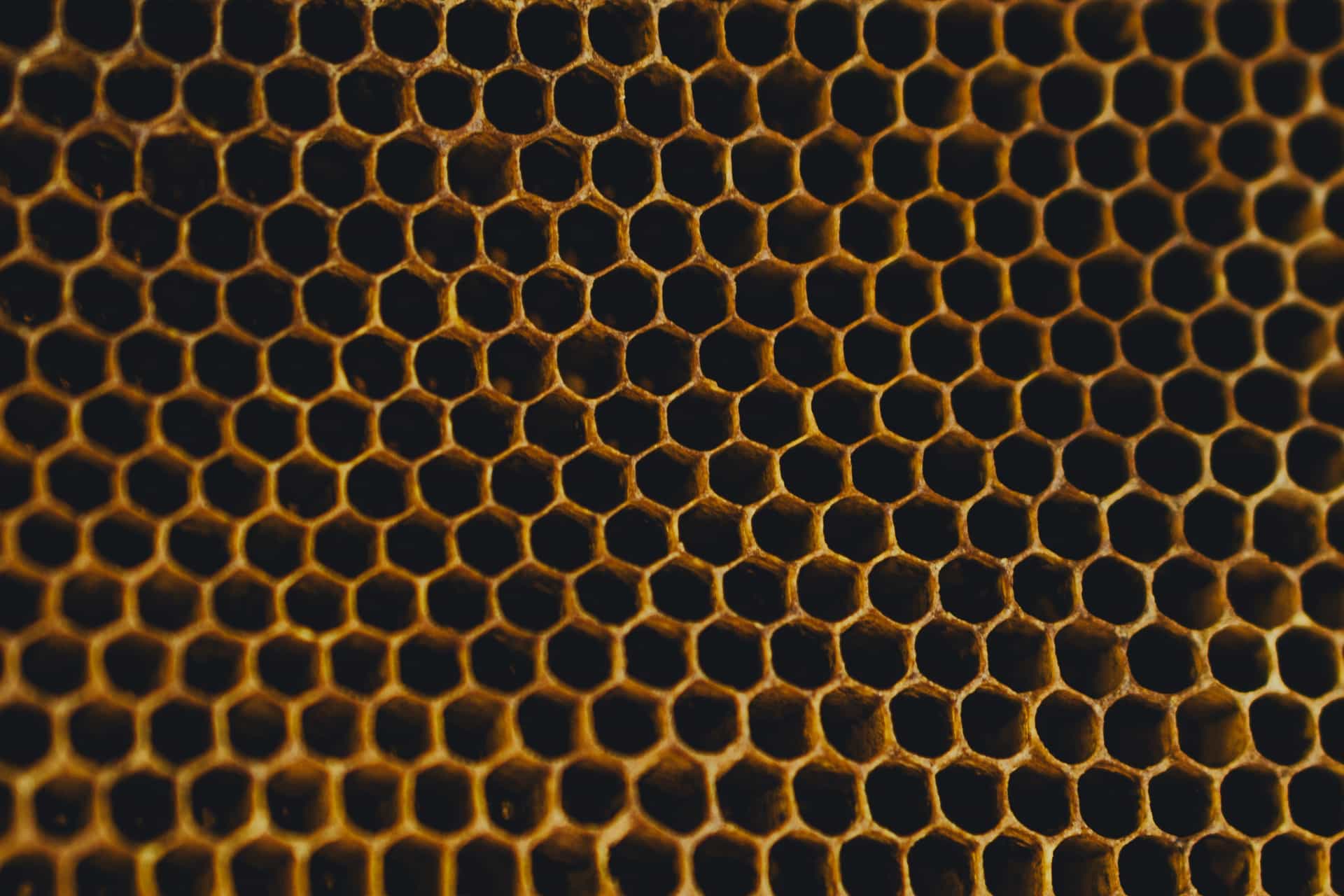
At a glance
The picks, ranked
Tap any row to jump to the full reasoning. Prices are live from Amazon where we have them, and read “check price” where we don’t — never a number we cannot verify today.
| # | Product | Best for | Price |
|---|---|---|---|
| 1 | 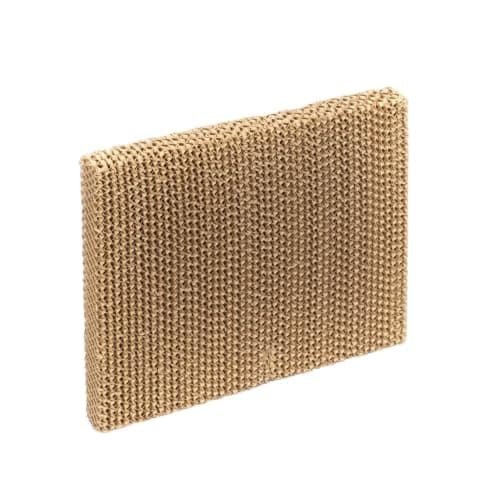 The replacement set to know the size of Hessaire CP370 Media Pad Set 21 x 23 inch media pads, sold as a set, for the 3,100 CFM Hessaire chassis — the one common cooler whose part number is easy to pin down. | Anyone running a Hessaire MC37, M150 or MFC3600 | |
| 2 | Best pad architecture on a complete unit Honeywell CO60PM Indoor/Outdoor Evaporative Cooler Triple-sided honeycomb media, 2,697 CFM, 220 W — three faces of rigid media rather than one. | Buying the cooler and the pad problem together | |
| 3 | Smallest pad area worth having Honeywell CL25AE Indoor Evaporative Cooler 764 CFM, 235 W, 52-60 dBA — small enough that pad maintenance is a five-minute job rather than a project. | A single room where a 3,100 CFM machine is absurd | |
| — | 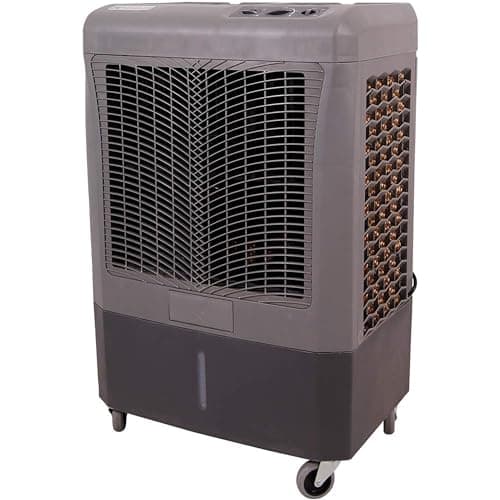 The chassis, if you want the pads to be the cheap part Hessaire MC37M Mobile Evaporative Cooler 3,100 CFM on 250 W with a 10.3 gallon tank — but Hessaire does not publish a coverage claim, and we would not want them to. | A garage or workshop on a continuous water hookup |
Everything an evaporative cooler does happens at the pad. Water wets the media, the fan pulls dry air through it, the water evaporates, and evaporation takes heat out of the air. The fan is a fan. The pad is the cooling.
Which makes it odd how little manufacturers say about them.
The two types
Aspen fiber against rigid media
Almost every pad you will encounter is one of two things.
| Aspen fiber | Rigid honeycomb media | |
|---|---|---|
| What it is | Loose wood-wool fiber in a mesh envelope | Corrugated cellulose bonded into a rigid block |
| Thickness | Thin — typically an inch or so | Thick — several inches of flow path |
| Cost per pad | Low | Several times higher |
| Rinsable | Not really — it collapses when handled wet | Yes, and designed to be |
| Service life | A season, often less in hard water | Years, with rinsing |
| Failure mode | Compacts, channels, then rots | Scales up until water stops spreading |
| Found on | Older and budget window coolers | Most current portable units |
The mechanism behind the difference is contact time. A thin aspen pad gives air about an inch of wetted path; a rigid media block gives it several inches of corrugated channel. More contact between dry air and wet surface means more evaporation, which means more cooling from the same fan.
That is why the current portable coolers all use rigid media, and why the triple-sided honeycomb design is worth paying attention to: it is three faces of it instead of one.
The gap
Nobody publishes a replacement interval
We went looking for a manufacturer-stated pad life so we could tell you how often to budget for one. We did not find it.
Hessaire’s own parts page for the CP370 media set lists the fitment — MC37, M150, MFC3600 — and the pad size, 21 by 23 inches. It states no replacement interval at all. Neither Honeywell product page we checked gives one for its media either.
This is not necessarily evasion. Pad life genuinely depends on variables the manufacturer cannot know: how hard your water is, how many hours a day the pump runs, whether the unit is stored wet, and whether the pad gets a dry-out cycle at the end of each run. A number would be a guess with a warranty attached to it.
But it does mean the only honest guidance is an inspection test, not a calendar.
The test
How to tell a pad is finished
Run the pump for a couple of minutes with the fan off, then look at the pad face. You are checking four things.
- Does it wet evenly, edge to edge? This is the main test. A healthy pad darkens uniformly across its whole face. A finished one has dry patches, or a wet stripe under the distributor and dry media either side. Air takes the dry path, because it is the path of least resistance, and unwetted media does no cooling whatsoever.
- Is there white or gray crust on the surface? That is mineral scale from evaporated water. A light film is normal and rinses. A hard crust that does not come off has closed the pores, and the pad is done.
- Has it lost its shape? Aspen compacts and channels. Rigid media delaminates or sags at the bottom edge where it stays wettest. Either way, air is now going around rather than through.
- Does it smell? A musty pad is biological growth in media that has been repeatedly wetted and never dried. No amount of rinsing reliably fixes that, and it is the one failure mode where you are breathing the consequence.
This one is not a DIY job
Hard water is what actually kills pads. Evaporative cooling works by evaporating water and leaving everything dissolved in it behind — in the pad. The harder your water, the faster the media scales up.
Two habits extend pad life more than any product will:
Run the fan without the pump for the last ten to fifteen minutes of every session. That dries the media before it sits, which addresses both the biological growth and, to a degree, the scale.
Drain the tank when you are done for more than a day. Standing water in a warm tank is the origin of most cooler smells, and it concentrates minerals every hour it sits.
Buying
Getting the right part
Pads are model-specific, and generic listings are the trap here. Before ordering:
- Find the part number, not the cooler name. The Hessaire set is CP370, and it covers three different cooler models. The relationship between cooler model and pad part number is not one to one.
- Measure the old pad if you can. 21 by 23 inches for the CP370. A pad that is close but not exact leaves a bypass gap, and a bypass gap is worse than a tired pad — the air simply goes around.
- Check whether yours is a set or a single. Multi-sided units need every face replaced together, or the new media takes the water and the old media stays dry.
Say the unwelcome thing
Do not buy replacement pads for a cooler you should not be running.
Before you spend on media, confirm the machine suits your climate at all. An evaporative cooler works by adding moisture to air, and in humid conditions it adds humidity without meaningfully lowering temperature — a new pad makes that worse, not better, because a fresher pad evaporates more.
If your cooler has been disappointing rather than declining, the pad is probably not the problem. Check the humidity question first, and if the answer is that you are in the wrong climate for one, the comparison against an air conditioner is here.
Next
Once the pad is sorted
A new pad in a scaled tank with a clogged distributor will not wet evenly for long. Pad replacement and a full clean are the same job, done together. The cleaning procedure is here.
And if you are still choosing a cooler, our comparison ranks them on published CFM and watts rather than on the square-footage claims, which are calculated rather than measured.
In full
Every pick, and what is wrong with it
Published specifications only, each linked to the page it came from. Where a manufacturer publishes nothing, the row says so — we do not fill blanks in.
1. The replacement set to know the size of
Hessaire CP370 Media Pad Set
Hessaire · model CP370
21 x 23 inch media pads, sold as a set, for the 3,100 CFM Hessaire chassis — the one common cooler whose part number is easy to pin down.
We are highlighting this one because it is the rare case where the part is unambiguous. 21 x 23 inches, sold as a set, fitting the MC37, M150 and MFC3600 — all the 3,100 CFM Hessaire chassis.
That specificity matters more than it sounds. The most common mistake in this category is buying “evaporative cooler pads” generically and finding they are two inches short on one axis, at which point air bypasses the media entirely and the cooler stops cooling.
Check the size against your own cooler before you order. If you own the Hessaire MC37M, this is the set.
What’s wrong with it
Hessaire does not publish a replacement interval for it, so there is no manufacturer guidance on when you have got your money's worth.
Running cost
Hessaire does not publish a wattage for the CP370, so we cannot calculate what it costs to run. We are not going to estimate one. If Hessaire publishes a nameplate figure, this block will show the arithmetic.
| Fits | MC37, M150 and MFC3600 (3,100 CFM) coolers |
|---|---|
| Pad size | 21 x 23 in |
| Type | Replacement media pad set |
| Replacement interval | Not published by the manufacturer |
Every figure above is from Hessaire parts page, CP370 media pad set. Blanks are shown as “not published” rather than filled in.
2. Best pad architecture on a complete unit
Honeywell CO60PM Indoor/Outdoor Evaporative Cooler
Honeywell · model CO60PM
Triple-sided honeycomb media, 2,697 CFM, 220 W — three faces of rigid media rather than one.
If you have not bought a cooler yet, the pad architecture is worth choosing on, because it is the difference between a consumable you replace annually and one you rinse.
Triple-sided honeycomb means rigid media on three faces of the intake rather than a single wrapped pad. More media area for a given cabinet, more even wetting, and rigid media tolerates rinsing in a way aspen fiber does not.
2,697 CFM on 220 W, and 61–65 dBA, which is loud — this is a patio and garage machine, not a bedroom one. The full comparison is here.
What’s wrong with it
Honeywell publishes a 1,643 sq ft coverage claim we would not rely on, and the warranty is one year.
Running cost — CO60PM
| Nameplate power | 220 W | manufacturer's published figure |
|---|---|---|
| Energy, 8-hour night | 1.76 kWh | 220 ÷ 1000 × 8 |
| Cost per hour | 4.0¢ | at 18.34¢/kWh |
| Cost per 8-hour night | 32¢ | on the highest speed |
| Cost per 30 nights | $9.68 | 52.8 kWh |
Rate: 18.34¢/kWh, the US average residential price for June 2026 (EIA Electric Power Monthly, Table 5.3). Yours will differ — swap it in: (watts ÷ 1000) × hours × your rate.
| Air delivery | 2,697 CFM |
|---|---|
| Power | 220 W |
| Water tank | 15.9 gallons, continuous hookup |
| Air throw | 30 ft |
| Noise | 61-65 dBA |
| Speeds | 3, with oscillation |
| Pads | Triple-sided honeycomb |
| Dimensions | 27.6 W x 18.3 D x 40 H in |
| Weight | 39.2 lb |
| Manufacturer coverage claim | 1,643 sq ft |
| Warranty | 1 year |
Every figure above is from Honeywell Air Comfort product page, CO60PM. Blanks are shown as “not published” rather than filled in.
3. Smallest pad area worth having
Honeywell CL25AE Indoor Evaporative Cooler
Honeywell · model CL25AE
764 CFM, 235 W, 52-60 dBA — small enough that pad maintenance is a five-minute job rather than a project.
Worth noting on a pad page for one reason: pad maintenance scales with pad size, and this is the smallest unit here.
The trade is visible in the specs. 764 CFM on 235 W against the CO60PM’s 2,697 CFM on 220 W. You are paying more watts per unit of air for a smaller, quieter, easier-to-service machine.
52–60 dBA is the quietest published figure of the three, and 25.4 lb means you can carry it to a hose to rinse the pad rather than working on it where it stands.
What’s wrong with it
235 W to move 764 CFM is poor against the larger units, which move three to four times the air on the same power.
Running cost — CL25AE
| Nameplate power | 235 W | manufacturer's published figure |
|---|---|---|
| Energy, 8-hour night | 1.88 kWh | 235 ÷ 1000 × 8 |
| Cost per hour | 4.3¢ | at 18.34¢/kWh |
| Cost per 8-hour night | 34¢ | on the highest speed |
| Cost per 30 nights | $10 | 56.4 kWh |
Rate: 18.34¢/kWh, the US average residential price for June 2026 (EIA Electric Power Monthly, Table 5.3). Yours will differ — swap it in: (watts ÷ 1000) × hours × your rate.
| Air delivery | 764 CFM |
|---|---|
| Power | 235 W |
| Water tank | 6.6 gallons |
| Air throw | 33 ft |
| Noise | 52-60 dBA |
| Speeds | 3, oscillating louvers |
| Timer | Up to 7.5 hours |
| Dimensions | 18.9 x 14.6 x 33.3 in |
| Weight | 25.4 lb |
| Manufacturer coverage claim | 466 sq ft |
| Warranty | 1 year |
Every figure above is from Honeywell Air Comfort product page, CL25AE. Blanks are shown as “not published” rather than filled in.
Skip this one
Hessaire MC37M Mobile Evaporative Cooler
Hessaire · model MC37M
3,100 CFM on 250 W with a 10.3 gallon tank — but Hessaire does not publish a coverage claim, and we would not want them to.
The reason this appears on a pad page is that it is the unit the CP370 pad set fits, and it is the most common chassis in that class.
3,100 CFM on 250 W is genuinely efficient air movement. The 10.3 gallon tank with a continuous hookup option is the right design for a machine that will otherwise need refilling through the day.
Note what Hessaire does not publish: a coverage claim, or a noise rating. We treat the missing coverage claim as a point in their favor — the coverage claims that do exist follow a formula rather than a measurement.
What’s wrong with it
Listed here as the pad host rather than a recommendation on its own. It is a shop machine: loud, 40 lb, and no published noise figure at all.
Running cost — MC37M
| Nameplate power | 250 W | manufacturer's published figure |
|---|---|---|
| Energy, 8-hour night | 2.00 kWh | 250 ÷ 1000 × 8 |
| Cost per hour | 4.6¢ | at 18.34¢/kWh |
| Cost per 8-hour night | 37¢ | on the highest speed |
| Cost per 30 nights | $11 | 60.0 kWh |
Rate: 18.34¢/kWh, the US average residential price for June 2026 (EIA Electric Power Monthly, Table 5.3). Yours will differ — swap it in: (watts ÷ 1000) × hours × your rate.
| Air delivery | 3,100 CFM |
|---|---|
| Power | 250 W / 2.4 A |
| Water tank | 10.3 gallons, continuous hookup capable |
| Dimensions | 24 L x 16 W x 38 H in |
| Weight | 40 lb |
| Pads | Industrial-grade cooling pads |
| Coverage claim | Not published on the product page |
Every figure above is from Hessaire product page, MC37M. Blanks are shown as “not published” rather than filled in.
We are not linking a buy button for this one. If you want to look at it anyway, it is easy enough to find — but we would rather send you to something that fits your room.
Questions people actually ask
Frequently asked
How often should evaporative cooler pads be replaced?
No manufacturer we checked publishes an interval — not Hessaire for the CP370 media set, and not Honeywell for its units. Judge by inspection instead: replace when the pad no longer wets evenly across its full face, has hard mineral crust, has collapsed or delaminated, or smells musty.
What is the difference between aspen and rigid media pads?
Aspen is loose wood-wool fiber in a thin envelope — cheap, not rinsable, and usually good for a season. Rigid honeycomb media is corrugated cellulose bonded into a thick block that gives air several inches of wetted flow path instead of one, rinses clean, and lasts years.
Can you clean evaporative cooler pads instead of replacing them?
Rigid honeycomb media, yes — it is designed to be rinsed, and a light mineral film comes off. Aspen fiber, largely no; it compacts and channels when handled wet. In both cases, hard crust that will not rinse away means the pores are closed and the pad is finished.
What size are Hessaire MC37 cooler pads?
The CP370 media pad set is 21 by 23 inches and fits the MC37, M150 and MFC3600 — all the 3,100 CFM Hessaire chassis. Measure your existing pad before ordering, because a pad that is close but not exact leaves a bypass gap that air will go around.
Why does my cooler pad only get wet in one place?
The water distributor is partly blocked with mineral scale, so it is delivering water to one part of the pad only. Air then takes the dry path because it offers less resistance, and the cooler barely cools. Clean the distributor and pump before assuming the pad itself is at fault.
How do you make evaporative cooler pads last longer?
Run the fan without the pump for the last ten to fifteen minutes of each session so the media dries before it sits, and drain the tank whenever the cooler will be idle more than a day. Standing water concentrates minerals and is the origin of most cooler smells.
Sources
Where these numbers came from
Read next
Where to go from here
Back to Evaporative Coolers, or read how we pick.