Head to head
Attic fan vs whole-house fan
They sound like the same product and they are not even trying to do the same job. One ventilates a roof space; the other replaces the air you are sitting in.
By Sawyer V. · Published
The short answer
An attic fan exhausts hot air out of your attic to reduce heat conducted down through the ceiling. A whole-house fan sits in the ceiling and pulls cool outdoor air through open windows, across you, and out through the attic. Only the whole-house fan cools the room you are in, and only when the outdoor air is actually cooler. The attic fan cools a space you do not occupy.
Fan & Frost earns a commission when you buy through our links, at no cost to you. It never changes a ranking, and we say so when the right answer is the cheaper unit or nothing at all. Full disclosure · How we pick.

At a glance
The picks, ranked
Tap any row to jump to the full reasoning. Prices are live from Amazon where we have them, and read “check price” where we don’t — never a number we cannot verify today.
| # | Product | Best for | Price |
|---|---|---|---|
| 1 | 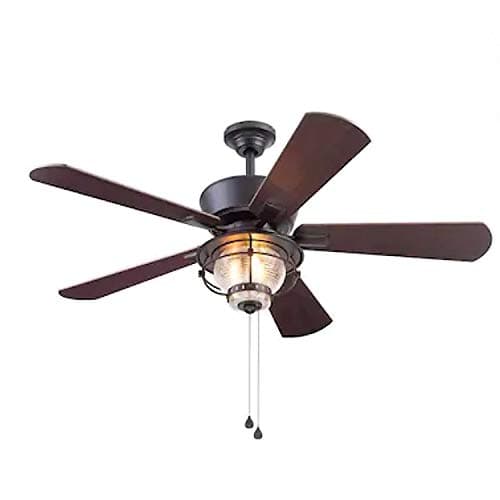 The cheapest air movement on the site Harbor Breeze Cando 84" Ceiling Fan 422.2 CFM per watt, on 30.6 W at high speed — the most efficient certified fan at an 84-inch span. | Anyone weighing either fan against a much simpler option | |
| 2 | 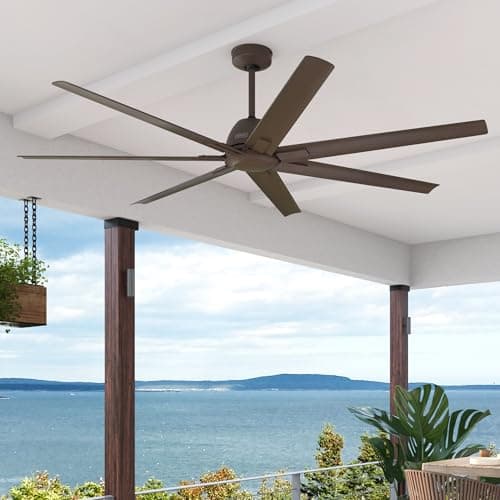 Outdoor-rated, for the porch the whole-house fan pulls through Hunter Lakeway 72" Ceiling Fan 329.1 CFM per watt on 31.0 W, and rated for indoor and outdoor use so it can live where the air comes in. | A covered porch or patio you open the house to in the evening | |
| 3 | 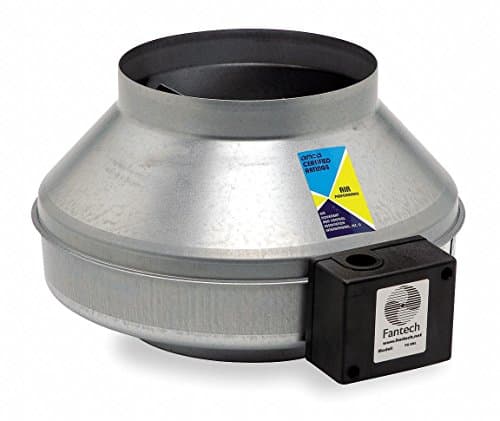 What ducted air movement actually costs Fantech FG 8 Series In-Line Fan 390 CFM through an 8-inch duct at 4.0 CFM per watt — the honest price of moving air through a pipe. | A specific ducted exhaust run, not general cooling | |
| — | 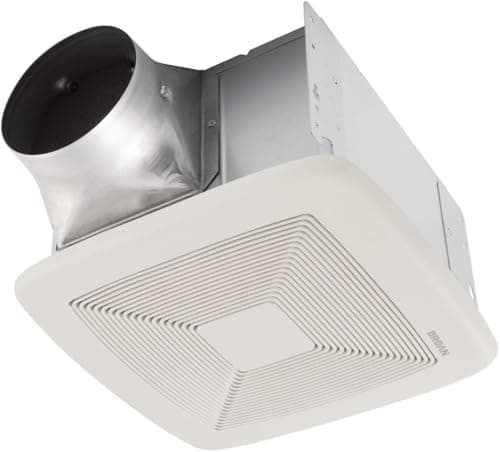 Not an attic fan, whatever anyone tells you Broan-NuTone Premium Ventilation Fan 154.4 CFM at 1.4 sones and 14.2 CFM per watt — an excellent bathroom fan, and no substitute for either option here. | A bathroom or utility room, and nothing else on this page |
The names are close enough that the two get sold interchangeably, and they are not interchangeable at all. They are mounted in different places, move air in different directions, and solve different problems.
Mechanism
Where each one sits, and which way the air goes
An attic fan — a powered attic ventilator — mounts in the roof deck or a gable end. It exhausts hot air out of the attic, and replacement air is drawn in through the soffit vents. The living space below is not part of the air path. The intended benefit is indirect: a cooler attic conducts less heat down through the ceiling.
A whole-house fan mounts in the ceiling of the top floor, between the living space and the attic. It pulls air out of the house, pushes it into the attic, and it leaves through the roof vents. Replacement air comes in through the windows you have opened. You are directly in the air path, and you feel it as a breeze.
| Attic fan | Whole-house fan | |
|---|---|---|
| Mounted in | Roof deck or gable end | Top-floor ceiling |
| Air drawn from | The attic, via soffit vents | The house, via open windows |
| Air exhausted to | Outdoors | The attic, then outdoors |
| Cools | The attic | The rooms you are in |
| You feel it | No | Yes — directly, as moving air |
| Needs windows open | No | Yes, and it is non-negotiable |
| Works when it is hot outside | Yes | No — it imports outdoor air |
| Best time to run | Daytime heat | Evening and night, once outdoor air is cooler |
| Works with AC running | In principle | No — you would be exhausting cooled air |
The row that decides most of this is the second-to-last one. A whole-house fan is a night-time machine. If your hot hours and your cool outdoor air never overlap — if it is 88 degrees at midnight in your climate — it has nothing to work with, and no amount of capacity changes that.
The number that reframes both
Ducted air movement is expensive air movement
Both of these are, mechanically, ventilating fans: a motor pushing air through a restricted opening. ENERGY STAR certifies that class of product and publishes efficacy in CFM per watt. It also certifies ceiling fans, and publishes the same unit.
Put the two datasets side by side and the spread is startling.
| Certified product | CFM per watt | Class |
|---|---|---|
| Harbor Breeze Cando, 84 in | 422.2 | Ceiling fan |
| Visual Comfort Kingston, 72 in | 385.0 | Ceiling fan |
| Hunter Lakeway, 72 in | 329.1 | Ceiling fan |
| Broan-NuTone Premium 150 | 14.2 | Ventilating fan, ducted |
| Panasonic WhisperGreen Select | 13.7 | Ventilating fan, ducted |
| Fantech FG 8 in-line | 4.0 | Ventilating fan, in-line |
Ceiling fan figures from the ENERGY STAR Certified Ceiling Fans dataset; ventilating fan figures from the Certified Ventilating Fans dataset.
These are not measured the same way, and that is the point. Ventilating fans are rated pushing against 0.25 inches of water gauge of static pressure — a duct, a damper, a roof cap. Ceiling fans are rated in free air. The gap between 4 and 422 is largely the cost of making air go through something.
Which is the honest frame for both products on this page. Powered roof ventilation is a real technique with real applications. It is not a cheap way to feel cooler, because pushing air through a building envelope never is.
This one is not a DIY job
The depressurization problem with powered attic ventilators. An attic fan pulls air out of the attic and expects soffit vents to supply the replacement. If the soffit vents are undersized, blocked by insulation, or painted shut — which is extremely common — the fan takes its replacement air from wherever it can.
The next easiest path is through the ceiling below: recessed light cans, the attic hatch, plumbing and wiring penetrations. That air is conditioned air you paid to cool, and replacing it means pulling hot outdoor air in through the house envelope.
In that failure mode the attic fan increases your cooling load rather than reducing it, and you would never know from inside the house.
Before fitting one, have the soffit net free vent area assessed against the fan’s airflow, and have the ceiling plane air-sealed. Both are contractor work, and both cost more than the fan.
Choose
Which, if either
Whole-house fan if your nights genuinely cool off, you can open windows safely, and the top floor is where you spend the evening. It is the only one of the two you will feel. It also needs adequate attic exhaust vent area to push into, or it stalls against its own back pressure.
Attic fan if you have a documented attic heat problem, verified soffit intake capacity, and an air-sealed ceiling plane. Those three conditions together are less common than the product’s marketing implies.
Neither, and a ceiling fan instead, if what you actually want is to be more comfortable this week. At 422.2 CFM per watt and 4.5¢ an evening, it is a fraction of the cost and none of the roof work.
The economics of a whole-house fan get their own page — this one is about which of the two you are actually being sold.
Say the unwelcome thing
Do not fit either one to fix a single hot room.
Both of these are building-scale interventions. They involve cutting into a roof or a ceiling, they interact with your attic ventilation and your ceiling air-sealing, and neither is reversible in an afternoon.
If the complaint is one room — the upstairs bedroom, the office over the garage, the west-facing lounge — the cause is local and so is the fix. Solar gain through glazing, an undersized supply register, a blocked return, or simply a room the ductwork was never balanced for.
Start with the room, not the roof. A whole-house fan that runs three weeks a year is an expensive way to discover the problem was a curtain.
In full
Every pick, and what is wrong with it
Published specifications only, each linked to the page it came from. Where a manufacturer publishes nothing, the row says so — we do not fill blanks in.
1. The cheapest air movement on the site
Harbor Breeze Cando 84" Ceiling Fan
Harbor Breeze · model 84" Cando
422.2 CFM per watt, on 30.6 W at high speed — the most efficient certified fan at an 84-inch span.
Before either roof-mounted option, understand what this number means. 422.2 CFM per watt. On 30.6 W at high speed — roughly 4.5¢ for an eight-hour evening.
Certified ducted ventilating fans, which is the technology class both attic and whole-house fans belong to, run 4.0 to 14.2 CFM per watt. That is not a small gap. Pushing air through ductwork and roof penetrations is expensive; stirring air in an open room is nearly free.
It does not do the same job. But it does the job most people actually want — feeling cooler — for a fraction of the power and none of the installation.
What’s wrong with it
An 84-inch span needs the ceiling height and the room to carry it, and it does nothing about attic heat or air exchange.
Running cost — 84" Cando
| Nameplate power | 6 W – 30.6 W | manufacturer's published figure |
|---|---|---|
| Energy, 8-hour night | 0.24 kWh | 30.6 ÷ 1000 × 8 |
| Cost per hour | 0.6¢ | at 18.34¢/kWh |
| Cost per 8-hour night | 4.5¢ | on the highest speed |
| Cost per 30 nights | $1.35 | 7.3 kWh |
| Same month, lowest speed | 26¢ | at 6 W |
Rate: 18.34¢/kWh, the US average residential price for June 2026 (EIA Electric Power Monthly, Table 5.3). Yours will differ — swap it in: (watts ÷ 1000) × hours × your rate.
| Blade span | 84 in |
|---|---|
| Efficiency | 422.2 CFM per watt |
| Power, high speed | 30.6 W |
| Power, low speed | 6.0 W |
| Type | Outdoor ceiling fan |
| ENERGY STAR | Certified |
Every figure above is from ENERGY STAR Certified Ceiling Fans dataset. Blanks are shown as “not published” rather than filled in.
2. Outdoor-rated, for the porch the whole-house fan pulls through
Hunter Lakeway 72" Ceiling Fan
Hunter · model 72" Lakeway
329.1 CFM per watt on 31.0 W, and rated for indoor and outdoor use so it can live where the air comes in.
A whole-house fan only works with windows open, which means part of your comfort problem moves to wherever that air is coming from.
329.1 CFM per watt on 31.0 W, and 2.3 W on low — about 0.3¢ for an eight-hour night. Rated for indoor and outdoor use, so a covered porch is fair game.
The pairing is genuinely sensible: a whole-house fan does the air exchange, a ceiling fan handles the felt temperature. More outdoor-rated options here.
What’s wrong with it
31.0 W at high speed for less air per watt than the 84-inch Cando — you pay a little for the smaller span and the outdoor rating.
Running cost — 72" Lakeway
| Nameplate power | 2.3 W – 31 W | manufacturer's published figure |
|---|---|---|
| Energy, 8-hour night | 0.25 kWh | 31 ÷ 1000 × 8 |
| Cost per hour | 0.6¢ | at 18.34¢/kWh |
| Cost per 8-hour night | 4.5¢ | on the highest speed |
| Cost per 30 nights | $1.36 | 7.4 kWh |
| Same month, lowest speed | 10¢ | at 2.3 W |
Rate: 18.34¢/kWh, the US average residential price for June 2026 (EIA Electric Power Monthly, Table 5.3). Yours will differ — swap it in: (watts ÷ 1000) × hours × your rate.
| Blade span | 72 in |
|---|---|
| Efficiency | 329.1 CFM per watt |
| Power, high speed | 31.0 W |
| Power, low speed | 2.3 W |
| Type | Rated for indoor and outdoor use |
| ENERGY STAR | Certified |
Every figure above is from ENERGY STAR Certified Ceiling Fans dataset. Blanks are shown as “not published” rather than filled in.
3. What ducted air movement actually costs
Fantech FG 8 Series In-Line Fan
Fantech · model FG 8 Series
390 CFM through an 8-inch duct at 4.0 CFM per watt — the honest price of moving air through a pipe.
Included as a reference point rather than a cooling recommendation, because it makes the physics visible.
390 CFM at 4.0 CFM per watt. An in-line fan mounted in the duct run, certified under the same ENERGY STAR ventilating fan program that governs the fans people put in roofs.
Compare that to 422.2 CFM per watt for an open-air ceiling fan. The difference is static pressure — ventilating fans are rated pushing against 0.25 inches of water gauge, a ceiling fan against nothing at all. Ducts and roof penetrations cost energy, and that cost is the reason to be skeptical of any powered roof ventilation sold as a cooling upgrade.
What’s wrong with it
4.0 CFM per watt is roughly a hundredth of what an open-air ceiling fan achieves, and it publishes no sone rating at all.
Running cost
Fantech does not publish a wattage for the FG 8 Series, so we cannot calculate what it costs to run. We are not going to estimate one. If Fantech publishes a nameplate figure, this block will show the arithmetic.
| Air delivery | 390 CFM |
|---|---|
| Efficacy | 4.0 CFM per watt |
| Duct size | 8 in diameter |
| Unit type | In-line (single-port), mounted in the duct run |
| Noise (sones) | Not published for in-line units |
| ENERGY STAR | Certified |
Every figure above is from ENERGY STAR Certified Ventilating Fans dataset. Blanks are shown as “not published” rather than filled in.
Skip this one
Broan-NuTone Premium Ventilation Fan
Broan-NuTone · model PREMIUM series
154.4 CFM at 1.4 sones and 14.2 CFM per watt — an excellent bathroom fan, and no substitute for either option here.
This is a genuinely good product being listed as a warning. At 14.2 CFM per watt it is the most efficient certified ventilating fan we have data for, and 1.4 sones is quiet.
It is also 154.4 CFM through a 6-inch duct. A whole-house fan is sized to exchange the air volume of an entire house several times an hour; an attic fan is sized against attic net free vent area. Neither job is within an order of magnitude of this.
If your actual problem is a hot upstairs bathroom, this is the right product. If your problem is a hot upstairs generally, start here.
What’s wrong with it
A 6-inch duct and 154 CFM will not ventilate an attic or exchange a house's air. Listed because people buy these for the wrong job.
Running cost
Broan-NuTone does not publish a wattage for the PREMIUM series, so we cannot calculate what it costs to run. We are not going to estimate one. If Broan-NuTone publishes a nameplate figure, this block will show the arithmetic.
| Air delivery | 154.4 CFM at 0.25 in w.g. |
|---|---|
| Efficacy | 14.2 CFM per watt |
| Noise | 1.4 sones |
| Duct size | 6 in diameter |
| Unit type | Ceiling-mounted, bathroom/utility room |
| Power | Not published in the certified dataset |
| ENERGY STAR | Certified |
Every figure above is from ENERGY STAR Certified Ventilating Fans dataset. Blanks are shown as “not published” rather than filled in.
We are not linking a buy button for this one. If you want to look at it anyway, it is easy enough to find — but we would rather send you to something that fits your room.
Questions people actually ask
Frequently asked
What is the difference between an attic fan and a whole-house fan?
An attic fan mounts in the roof or gable and exhausts attic air outdoors, cooling a space you do not occupy. A whole-house fan mounts in the top-floor ceiling and pulls outdoor air through open windows, across you, and out via the attic — so you feel it directly.
Does a whole-house fan work if it is hot outside?
No. It cools by importing outdoor air, so it only helps once the outdoor temperature has dropped below the indoor temperature — typically evening and overnight. In a climate that stays hot after dark, it has nothing to work with.
Can an attic fan increase your cooling bill?
Yes, if the soffit intake vents are undersized or blocked. The fan then draws replacement air through the ceiling below — recessed lights, the attic hatch, wiring penetrations — which is conditioned air you paid to cool, pulling hot outdoor air in behind it.
Can you run a whole-house fan with the air conditioner on?
No. The fan exhausts indoor air and replaces it with outdoor air, so running both means paying to cool air you are immediately throwing into the attic. They are alternatives for different parts of the day, not partners.
Is a ceiling fan cheaper than either?
By a wide margin. Certified ceiling fans reach 422.2 CFM per watt against 4.0 to 14.2 for certified ducted ventilating fans — the class both roof-mounted options belong to. The difference is static pressure: pushing air through ducts and roof caps costs energy that open-air stirring does not. Ceiling fans, ranked.
Do whole-house fans need attic vents?
Yes, and it is the most commonly missed requirement. The fan pushes house air into the attic, and that air has to get out through roof or gable vents. Insufficient exhaust vent area means the fan works against its own back pressure and moves far less air than its rating.
Sources
Where these numbers came from
Read next
Where to go from here
Back to Whole-House Airflow, or read how we pick.