Head to head
Bladeless vs bladed fans
Every bladeless fan has blades. They are in the base, and knowing that reframes what you are actually choosing between.
By Sawyer V. · Published
The short answer
There is no such thing as a bladeless fan. The impeller sits in the base and drives air through a ring where it entrains surrounding air. The genuine advantages are safety around small hands, easier cleaning, and a smoother air stream. The genuine disadvantage is data: Dyson publishes no CFM and no dBA, so a bladeless fan cannot be compared numerically with anything on this site.
Fan & Frost earns a commission when you buy through our links, at no cost to you. It never changes a ranking, and we say so when the right answer is the cheaper unit or nothing at all. Full disclosure · How we pick.

At a glance
The picks, ranked
Tap any row to jump to the full reasoning. Prices are live from Amazon where we have them, and read “check price” where we don’t — never a number we cannot verify today.
| # | Product | Best for | Price |
|---|---|---|---|
| 1 | 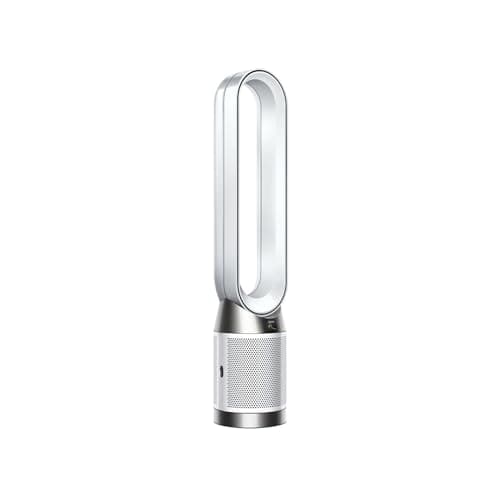 The bladeless case Dyson Purifier Cool TP07 40 W maximum with HEPA and activated carbon filtration, and no exposed moving parts at any reachable height. | A room where filtration and safety matter more than published numbers | |
| 2 | 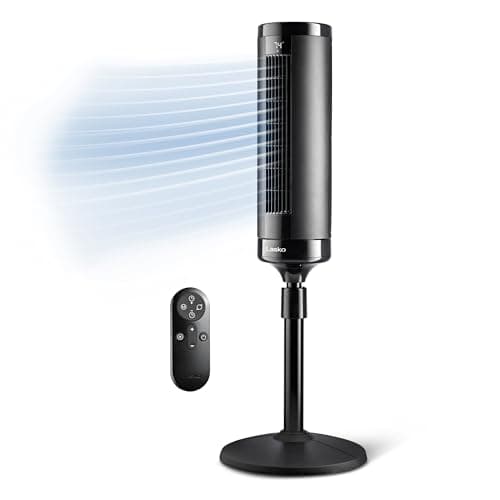 The bladed answer to the same brief Lasko EcoQuiet 42" DC Tower Fan 2.9 W on low at 23 dBA with twelve speeds — enclosed impeller, fine grille, and every figure stated. | A room where you want the same enclosed shape with published numbers | |
| 3 | 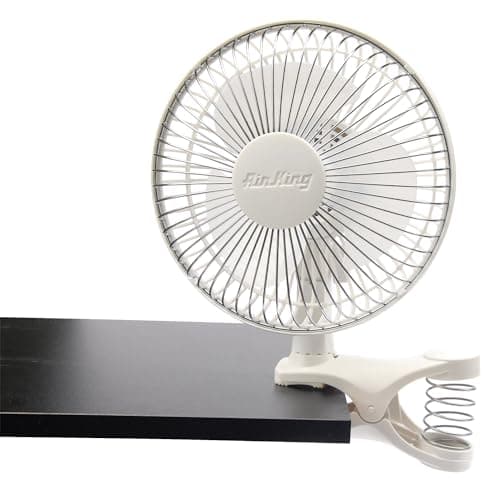 Fully bladed, fully documented Air King 6" Commercial Grade Clip-On Fan 34 to 37 dBA, 9 to 12 W, up to 190 CFM — the most completely specified fan on this page. | Anyone who wants numbers to compare rather than a shape | |
| — | 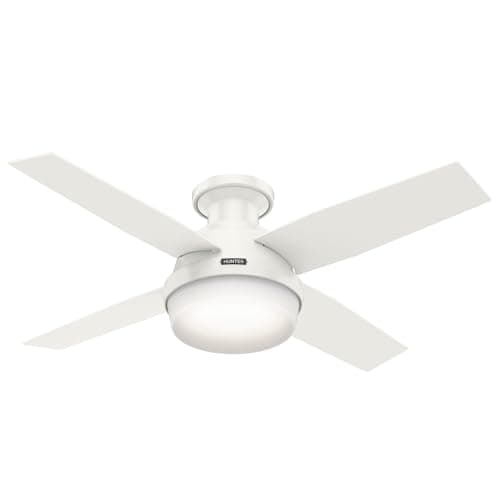 The safest format of all Hunter Martindale 44" Ceiling Fan 1.1 W on low at 304.5 CFM per watt — blades seven feet up, certified figures, and nothing on the floor. | A room you own, where nothing should be reachable |
The name is a marketing term rather than a description, and understanding the actual mechanism makes the comparison much easier to reason about.
How it works
The blades are in the base
A bladeless fan has an impeller — a bladed rotor — hidden in its pedestal. It draws air in through vents at the bottom and pushes it up into a hollow ring.
The ring has a narrow slot around its inner edge. Air exits through that slot at speed and travels along a curved profile, which draws surrounding room air along with it. That entrained air is the majority of what you feel.
So the honest description is “fan with the blades somewhere you cannot touch them”, which is a real engineering choice with real consequences — just not the one the name suggests.
What it buys
Three genuine advantages
- Nothing exposed at reachable height. The impeller is in the base behind vents, so there is no guard for small fingers to probe. This is the real reason people buy them, and it is legitimate.
- Much easier to clean. A conventional fan requires removing a guard to reach blades that collect felted dust — and dust on blades is what costs airflow. A ring wipes with a cloth in seconds.
- A smoother stream. A conventional fan produces pulses as each blade passes; entrained air arrives more evenly. Some people find that noticeably more pleasant, particularly close up.
What it costs
And the trade
| Bladeless | Bladed | |
|---|---|---|
| Exposed blades | None | Behind a guard or grille |
| Cleaning | Wipe the ring | Remove guard, clean blades |
| Published CFM | No | Sometimes |
| Published dBA | No | Often |
| Published wattage | Yes — 40 W max | Usually |
| Filtration option | Yes, on some models | Rare |
| Price | Substantially higher | Wide range |
The rows that matter most on a site built from published data are the middle two.
Dyson publishes airflow in gallons per second, a unit nothing else in this category uses, so it cannot be set against any CFM figure on this site. And it publishes no dBA rating at all.
That is not unique — plenty of bladed fans publish neither either — but it means a bladeless fan cannot be evaluated against the alternatives on the two specifications that usually decide a fan purchase.
This one is not a DIY job
An enclosed tower fan achieves most of the safety benefit. The impeller sits behind a fine vertical grille with openings far too small for fingers, and there is no visible blade.
If the reason you are considering bladeless is a small child, a tower fan is worth comparing directly — it gets you the enclosed format at 2.9 W on low with a published 23 dBA figure.
A ceiling fan removes the hazard entirely. Nothing on the floor, no cord, blades seven feet up, and certified performance figures. Where installation is possible it is the strongest answer to the question bladeless fans are asked.
Bladeless remains the right choice if you want filtration and airflow in one object, or if the cleaning convenience genuinely matters to you.
Filtration
The feature that is actually distinctive
The strongest argument for a bladeless fan is not the missing blades. It is that the format lends itself to building a HEPA and carbon filter into the base, giving you air cleaning and airflow in one object.
Worth being precise about what that does. Filtration removes particles and some gases from air already in the room. It does not exchange air, so it does nothing about carbon dioxide — which is what makes a closed room feel stuffy.
And it does not cool. No fan lowers air temperature; a filtering fan simply makes the air it moves cleaner.
If clean air is the goal, that comparison is here, and how cooling and air quality interact is here.
Say the unwelcome thing
Do not buy bladeless expecting more airflow or less noise.
Both are common assumptions and neither is supported by anything published.
Airflow: Dyson states it in gallons per second, which no other manufacturer uses and which cannot be compared to a CFM figure. There is no published basis for believing a bladeless fan moves more or less air than a conventional one.
Noise: no dBA figure is published at all. A bladeless fan does avoid the per-blade pulsing of a conventional fan, but it is accelerating air through a narrow slot, which generates its own turbulence noise.
Buy bladeless for the safety, the cleaning, or the filtration — those are real. For airflow or quiet, buy something that publishes the number: 23 dBA on low or a certified 304.5 CFM per watt.
In full
Every pick, and what is wrong with it
Published specifications only, each linked to the page it came from. Where a manufacturer publishes nothing, the row says so — we do not fill blanks in.
1. The bladeless case
Dyson Purifier Cool TP07
Dyson · model TP07
40 W maximum with HEPA and activated carbon filtration, and no exposed moving parts at any reachable height.
40 W maximum input power and under 0.5 W standby. Those are published and useful.
The HEPA and activated carbon filtration is the real differentiator, and it is a separate function from the fan — it cleans recirculated air rather than doing anything about temperature.
The safety case is genuine: no exposed blade at any height a child can reach, and the ring is easy to wipe.
The gaps are the problem. Dyson states airflow in gallons per second, which is not comparable to CFM, and publishes no dBA figure at all. Neither dimensions nor weight appear on the accessible specification sheet.
What’s wrong with it
No published CFM, no published dBA, and no published dimensions or weight on the accessible spec sheet.
Running cost — TP07
| Nameplate power | 40 W | manufacturer's published figure |
|---|---|---|
| Energy, 8-hour night | 0.32 kWh | 40 ÷ 1000 × 8 |
| Cost per hour | 0.7¢ | at 18.34¢/kWh |
| Cost per 8-hour night | 5.9¢ | on the highest speed |
| Cost per 30 nights | $1.76 | 9.6 kWh |
Rate: 18.34¢/kWh, the US average residential price for June 2026 (EIA Electric Power Monthly, Table 5.3). Yours will differ — swap it in: (watts ÷ 1000) × hours × your rate.
| Maximum input power | 40 W |
|---|---|
| Standby power | Under 0.5 W |
| Air delivery (CFM) | Not published — Dyson states airflow in gallons per second, which is not comparable to a CFM figure |
| Noise (dBA) | Not published |
| Dimensions | Not published on the accessible spec sheet |
| Weight | Not published on the accessible spec sheet |
| Filter | HEPA and activated carbon (purifier function) |
Every figure above is from Dyson Purifier Cool TP07 technical specification (dyson.com). Blanks are shown as “not published” rather than filled in.
2. The bladed answer to the same brief
Lasko EcoQuiet 42" DC Tower Fan
Lasko · model T42710
2.9 W on low at 23 dBA with twelve speeds — enclosed impeller, fine grille, and every figure stated.
Worth putting side by side, because a tower fan solves most of what people buy bladeless for.
The impeller is enclosed behind a fine vertical grille with openings far too small for fingers. On the safety question specifically, the practical difference between this and a bladeless fan is small.
2.9 W on low — 0.4¢ for an eight-hour night, against 40 W maximum for the Dyson. And 23 dBA, which the bladeless option does not state.
What it does not do is filter. If clean air is the actual goal, that is a different purchase.
What’s wrong with it
No filtration at all, and no published CFM either — the airflow figure is missing here too.
Running cost — T42710
| Nameplate power | 2.9 W – 19 W | manufacturer's published figure |
|---|---|---|
| Energy, 8-hour night | 0.15 kWh | 19 ÷ 1000 × 8 |
| Cost per hour | 0.3¢ | at 18.34¢/kWh |
| Cost per 8-hour night | 2.8¢ | on the highest speed |
| Cost per 30 nights | 84¢ | 4.6 kWh |
| Same month, lowest speed | 13¢ | at 2.9 W |
Rate: 18.34¢/kWh, the US average residential price for June 2026 (EIA Electric Power Monthly, Table 5.3). Yours will differ — swap it in: (watts ÷ 1000) × hours × your rate.
| Power | 2.9 W - 19 W (0.06-0.303 A at 120 V) |
|---|---|
| Noise | 23 dBA low, 46 dBA high |
| Speeds | 12 |
| Height | 41.6 in |
| Footprint | 12.8 x 12.8 in |
| Weight | 7.8 lb |
| Timer | 8 hours |
| Air delivery (CFM) | Not published |
| Warranty | 2 years |
Every figure above is from Lasko product page, T42710. Blanks are shown as “not published” rather than filled in.
3. Fully bladed, fully documented
Air King 6" Commercial Grade Clip-On Fan
Air King · model 9145
34 to 37 dBA, 9 to 12 W, up to 190 CFM — the most completely specified fan on this page.
The opposite end of the documentation spectrum, and it makes the comparison possible.
190 CFM, 9 to 12 W, 34 to 37 dBA — airflow, power and noise all published. That is enough to calculate roughly 16 to 21 CFM per watt and to know what it sounds like before you buy.
None of that is available for a bladeless fan.
The trade is the guard. This is a conventional caged fan with a visible blade, ETL listed and OSHA compliant — a workplace specification rather than a nursery one. Where that matters.
What’s wrong with it
An exposed metal guard with visible blades, which is exactly the format bladeless fans exist to avoid.
Running cost — 9145
| Nameplate power | 9 W – 12 W | manufacturer's published figure |
|---|---|---|
| Energy, 8-hour night | 0.10 kWh | 12 ÷ 1000 × 8 |
| Cost per hour | 0.2¢ | at 18.34¢/kWh |
| Cost per 8-hour night | 1.8¢ | on the highest speed |
| Cost per 30 nights | 53¢ | 2.9 kWh |
| Same month, lowest speed | 40¢ | at 9 W |
Rate: 18.34¢/kWh, the US average residential price for June 2026 (EIA Electric Power Monthly, Table 5.3). Yours will differ — swap it in: (watts ÷ 1000) × hours × your rate.
| Power | 9 W - 12 W (0.1-0.2 A at 120 V) |
|---|---|
| Air delivery | Up to 190 CFM |
| Noise | 34 dBA low, 37 dBA high |
| Speeds | 2 |
| Mounting | Spring-loaded clip, non-marking |
| Dimensions | 10.38 H x 6.25 L x 8.13 W in |
| Weight | 2.22 lb |
| Cord | 6 ft, 3-conductor |
| Listing | ETL listed, OSHA compliant |
| Warranty | 1 year |
Every figure above is from Air King product page, 9145 (via Lasko). Blanks are shown as “not published” rather than filled in.
Skip this one
Hunter Martindale 44" Ceiling Fan
Hunter · model 44in Martindale
1.1 W on low at 304.5 CFM per watt — blades seven feet up, certified figures, and nothing on the floor.
Listed as a skip because it is a different format, and included because it beats both sides of this comparison on the safety point they are arguing about.
Blades seven feet or more above the floor, no cord in the room, nothing to tip over. Bladeless fans exist to remove a hazard that a ceiling fan removes more completely.
1.1 W on low and 304.5 CFM per watt certified — and unlike either fan above, both the airflow and the power are independently verified.
0.2¢ for a twelve-hour night.
What’s wrong with it
It is an electrical installation, cannot be aimed, and does not filter anything.
Running cost — 44in Martindale
| Nameplate power | 1.1 W – 10.1 W | manufacturer's published figure |
|---|---|---|
| Energy, 8-hour night | 0.08 kWh | 10.1 ÷ 1000 × 8 |
| Cost per hour | 0.2¢ | at 18.34¢/kWh |
| Cost per 8-hour night | 1.5¢ | on the highest speed |
| Cost per 30 nights | 44¢ | 2.4 kWh |
| Same month, lowest speed | 4.8¢ | at 1.1 W |
Rate: 18.34¢/kWh, the US average residential price for June 2026 (EIA Electric Power Monthly, Table 5.3). Yours will differ — swap it in: (watts ÷ 1000) × hours × your rate.
| Blade span | 44 in |
|---|---|
| Efficiency | 304.5 CFM per watt |
| Power, high speed | 10.1 W |
| Power, low speed | 1.1 W |
| Standby power | 0.4 W |
| Type | Indoor, fan only |
| Warranty | 3 years, components |
| ENERGY STAR | Certified |
Every figure above is from ENERGY STAR Certified Ceiling Fans dataset. Blanks are shown as “not published” rather than filled in.
We are not linking a buy button for this one. If you want to look at it anyway, it is easy enough to find — but we would rather send you to something that fits your room.
Questions people actually ask
Frequently asked
Are bladeless fans really bladeless?
No. The impeller sits in the base and drives air up into a hollow ring, where it exits through a narrow slot and entrains surrounding room air. The blades are simply somewhere you cannot touch them.
Are bladeless fans safer?
For small hands, yes — there is no exposed guard to probe at reachable height. An enclosed tower fan achieves most of the same benefit, and a ceiling fan removes the hazard entirely by putting the blades seven feet up.
Do bladeless fans move more air?
There is no published basis for saying either way. Dyson states airflow in gallons per second, a unit no other manufacturer uses, so it cannot be compared against any CFM figure in this category.
Are bladeless fans quieter?
Nobody publishes a figure. They avoid the per-blade pulsing of a conventional fan, but they accelerate air through a narrow slot, which generates its own turbulence noise. No dBA rating is available to settle it. What noise figures exist.
Are bladeless fans easier to clean?
Considerably, and it is one of the genuine advantages. A conventional fan needs its guard removed to reach blades that collect felted dust — which is what costs airflow — where a ring wipes with a cloth.
Should I buy a bladeless fan?
If you want filtration and airflow in one object, or the cleaning and safety genuinely matter to you, yes. If you are choosing on airflow, noise or running cost, buy something that publishes those numbers.
Sources
Where these numbers came from
- Dyson Purifier Cool TP07 technical specification — 40 W maximum, under 0.5 W standby, HEPA and carbon filtration, airflow stated in gallons per second
- Lasko T42710 EcoQuiet product page — 2.9-19 W, 23-46 dBA, 12 speeds
- Air King 9145 product page — 190 CFM, 9-12 W, 34-37 dBA
- ENERGY STAR Certified Ceiling Fans dataset — certified CFM per watt and wattage
Read next
Where to go from here
Back to Fans, or read how we pick.