Guide and picks
How to cool a house in a heat wave
The mistake is treating day three like day one. Heat accumulates in the building, and the strategy has to change with it.
By Sawyer V. · Published
The short answer
Stop trying to cool the whole house and win one room. In a multi-day heat wave the structure itself never sheds its heat overnight, so whole-house cooling falls further behind each day. Shade every window, purge with outdoor air only while it is genuinely cooler outside, concentrate cooling in one low, shaded room, and move air over people rather than through the house.
Fan & Frost earns a commission when you buy through our links, at no cost to you. It never changes a ranking, and we say so when the right answer is the cheaper unit or nothing at all. Full disclosure · How we pick.
At a glance
The picks, ranked
Tap any row to jump to the full reasoning. Prices are live from Amazon where we have them, and read “check price” where we don’t — never a number we cannot verify today.
| # | Product | Best for | Price |
|---|---|---|---|
| 1 | 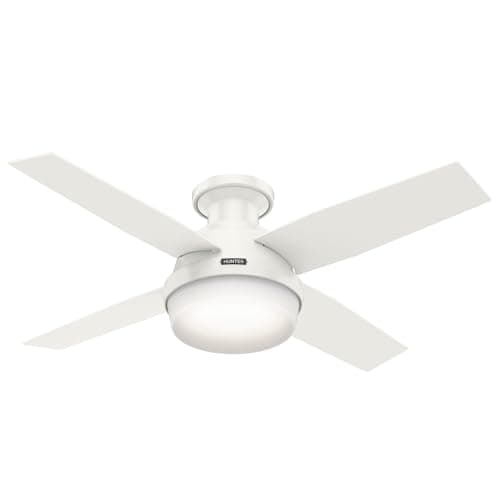 Cheapest thing that helps Hunter Martindale 44" Ceiling Fan 1.1 W on low at 304.5 CFM per watt — the effect you can run continuously for days without thinking about the bill. | The room you have decided to win | |
| 2 | Best overnight purge QuietCool Stealth Pro X Whole House Fan, 6,996 CFM 6,996 CFM on high, and 25.9 CFM per watt on low against 9.7 on high — the way to empty the house of heat in the few hours that are cooler outside. | A house where nights genuinely drop below indoor temperature | |
| 3 | 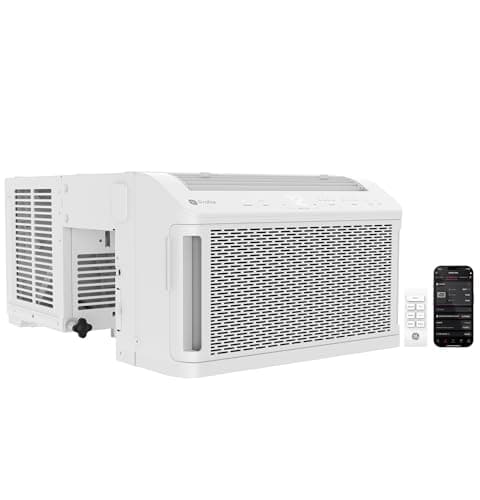 Best room to retreat to GE Profile ClearView Window Air Conditioner, 8,000 BTU CEER 16 and 375 kWh a year — enough capacity for a bedroom, at the efficiency that makes running it for a week bearable. | The one room you are going to keep genuinely cool | |
| — | Wrong tool in a humid heat wave Honeywell CL25AE Indoor Evaporative Cooler 764 CFM on 235 W, and it works by adding moisture to the air — which in a humid heat wave is the opposite of what the room needs. | A dry-climate heat wave only — not a humid one |
A hot day and a heat wave are different problems, and most cooling advice is written for the first one. On a single hot day the house starts cool, warms up, and recovers overnight. In a heat wave it does not recover, and by day three you are fighting a building that is hot all the way through.
Why it differs
The building itself becomes the problem
Everything solid in your house — framing, plaster, floors, furniture, the slab — holds heat. On a normal night that stored heat bleeds out to cooler outdoor air and the house resets.
When overnight lows stay high, that reset does not happen. Each morning starts warmer than the last. The thermal mass that was helping you on day one is working against you by day three, radiating heat into rooms even with the sun off them.
Two things follow, and both are counterintuitive:
- Whole-house cooling gets harder each day, not easier, because the structure is now a heat source rather than a heat sink.
- Concentrating on one room gets easier each day, relatively speaking, because a single closed room is a far smaller volume to hold against a losing battle.
That is the strategic shift. Stop defending the whole perimeter and hold one room properly — cooling a house against cooling a room.
Order
The order to do things in
Sequence matters, because the free measures multiply the effect of the expensive ones.
- Shade every window the sun reaches, from outside if you can. Solar gain is the largest single heat input in most houses. An external shade stops the heat before it enters; an internal blind stops it after it has already arrived — shading and film compared.
- Close the house while it is hotter outside than in. Every open door is a partial air exchange in the wrong direction.
- Purge overnight, but only if the outdoor air is genuinely cooler. Check the forecast low rather than guessing. Open up when outdoor temperature crosses below indoor, close at first light — the night purge in detail.
- Kill indoor heat sources. The oven, the tumble dryer, the dishwasher’s heated dry, incandescent lamps, a gaming PC. Cook outside or cold if you can — the kitchen is the worst room.
- Pick the retreat room. Low, shaded, small, with a door that closes. A ground-floor or basement room on the north side beats a large bright one every time — why basements hold.
- Move air over people, not through the house. A fan pointed at a person does more than a fan pointed at a hallway.
- Deal with humidity separately if it is high. At high humidity the same air temperature feels significantly worse and sweat evaporates poorly — a dehumidifier is doing a different job from a fan.
This one is not a DIY job
Do not open windows during the day because “fresh air” feels like it should help. If it is 98°F outside and 84°F inside, an open window is a heater. The instinct to open up is strong and it is wrong in exactly the hours it feels most necessary.
Above 95
Where a fan stops being the answer
This is the most important safety point on the page and it is widely not known.
A fan cools you by evaporating sweat. It also moves air across your skin by convection. Below skin temperature, air moving over you carries heat away. Above it, air moving over you delivers heat, the way a convection oven does.
Around 95°F the convective gain starts to outrun the evaporative loss, and in very humid conditions the crossover comes lower still, because sweat cannot evaporate efficiently. Past that point a fan pointed at a person is adding to their heat load.
The practical rules in that situation: use the fan to move air around a room rather than directly at a still person, keep skin wet with a damp cloth so evaporation continues, and treat the fan as a supplement to actual cooling rather than a substitute — the full mechanism.
People
Who is actually at risk
Heat waves stop being a comfort problem for some people well before they do for others. Plan for this before the forecast, not during.
- Older adults, who sweat less efficiently and often feel less thirsty.
- Infants and young children, who cannot move themselves or say what is wrong — cooling a nursery safely.
- Anyone on medication that affects sweating or fluid balance, or with a heart or lung condition.
- People working or exercising in the heat, including in a garage or workshop.
- Pets, which cannot sweat and cannot open a door — keeping animals cool.
Heat stroke is a medical emergency. Confusion, stopping sweating, a very high body temperature or loss of consciousness means call emergency services immediately — not a fan, not a cold shower, a phone call. A cooling center, a library or a shopping center beats anything on this page if the house is losing.
Multi-day
What changes on day three
If the heat wave is a long one, a few things shift:
- Your unit will run more or less continuously. That is normal and not a fault, provided the room is holding. If the room is not holding, the unit is undersized for these conditions rather than broken — how to tell the difference.
- Filters matter more than usual. A clogged filter costs you capacity precisely when you have none to spare, and it takes ten minutes to deal with — cleaning a window unit.
- Grid strain and outages become a live risk. Have a plan that does not depend on mains power — cooling during an outage.
- Raise the setpoint rather than abandoning it. 78°F with a fan is achievable and sustainable; 68°F is neither — what to set it to.
Say the unwelcome thing
Do not panic-buy a portable air conditioner mid heat wave.
It is the most common heat-wave purchase and the one most likely to disappoint. A single-hose portable exhausts conditioned room air and pulls hot outdoor air in to replace it, which is exactly the wrong behavior when outdoor air is 100°F.
Stock is also worst and prices highest during the event itself, and a badly sealed window kit — which is what you get when installing in a hurry — undoes much of what the machine does.
If you need something today, the things that work immediately are shade, closing the house, and air movement. A certified fan at 1.1 W on low costs almost nothing to run for a week. Buy the air conditioner in October, correctly sized, at a sensible price — the off-season checklist.
In full
Every pick, and what is wrong with it
Published specifications only, each linked to the page it came from. Where a manufacturer publishes nothing, the row says so — we do not fill blanks in.
1. Cheapest thing that helps
Hunter Martindale 44" Ceiling Fan
Hunter · model 44in Martindale
1.1 W on low at 304.5 CFM per watt — the effect you can run continuously for days without thinking about the bill.
In a heat wave the useful question about a fan is not how much air it moves but whether you can afford to leave it on for a week.
1.1 W on low is 0.2¢ for an eight-hour night and about 3.4¢ for a solid week running around the clock at 18.34¢/kWh.
304.5 CFM per watt, certified, Most Efficient at a 44-inch span, with 0.4 W standby.
The important caveat, and it is a safety one: above roughly 95°F a fan stops cooling you. Moving air hotter than skin adds heat by convection faster than it removes it by evaporation. In extreme heat a fan alone is not a cooling strategy.
What’s wrong with it
It lowers no temperature, and above about 95°F moving air stops helping and starts hurting.
Running cost — 44in Martindale
| Nameplate power | 1.1 W – 10.1 W | manufacturer's published figure |
|---|---|---|
| Energy, 8-hour night | 0.08 kWh | 10.1 ÷ 1000 × 8 |
| Cost per hour | 0.2¢ | at 18.34¢/kWh |
| Cost per 8-hour night | 1.5¢ | on the highest speed |
| Cost per 30 nights | 44¢ | 2.4 kWh |
| Same month, lowest speed | 4.8¢ | at 1.1 W |
Rate: 18.34¢/kWh, the US average residential price for June 2026 (EIA Electric Power Monthly, Table 5.3). Yours will differ — swap it in: (watts ÷ 1000) × hours × your rate.
| Blade span | 44 in |
|---|---|
| Efficiency | 304.5 CFM per watt |
| Power, high speed | 10.1 W |
| Power, low speed | 1.1 W |
| Standby power | 0.4 W |
| Type | Indoor, fan only |
| Warranty | 3 years, components |
| ENERGY STAR | Certified |
Every figure above is from ENERGY STAR Certified Ceiling Fans dataset. Blanks are shown as “not published” rather than filled in.
2. Best overnight purge
QuietCool Stealth Pro X Whole House Fan, 6,996 CFM
QuietCool · model QC STL PRO-7.0X
6,996 CFM on high, and 25.9 CFM per watt on low against 9.7 on high — the way to empty the house of heat in the few hours that are cooler outside.
The night purge is the single highest-leverage move in a heat wave, and a whole-house fan does it at a scale open windows cannot.
6,996 CFM on high exchanges the air in a typical house in minutes rather than hours, pulling cool night air through every open window and pushing hot attic air out.
Run it on low. Our arithmetic on the published figures gives 25.9 CFM per watt on low against 9.7 on high — 4,308 CFM on 166 W against 6,996 CFM on 725 W. Low for longer beats high for less — the full cost breakdown.
The honest limit: if overnight lows stay above your indoor temperature, this makes things worse, not better. Check the actual forecast low before opening anything.
What’s wrong with it
It only works if the outdoor air is actually cooler, which in a severe heat wave it may not be.
Running cost — QC STL PRO-7.0X
| Nameplate power | 166 W – 725 W | manufacturer's published figure |
|---|---|---|
| Energy, 8-hour night | 5.80 kWh | 725 ÷ 1000 × 8 |
| Cost per hour | 13¢ | at 18.34¢/kWh |
| Cost per 8-hour night | $1.06 | on the highest speed |
| Cost per 30 nights | $32 | 174.0 kWh |
| Same month, lowest speed | $7.31 | at 166 W |
Rate: 18.34¢/kWh, the US average residential price for June 2026 (EIA Electric Power Monthly, Table 5.3). Yours will differ — swap it in: (watts ÷ 1000) × hours × your rate.
| Air delivery, high | 6,996 CFM |
|---|---|
| Air delivery, medium | 5,448 CFM |
| Air delivery, low | 4,308 CFM |
| Power, high | 725 W |
| Power, medium | 319 W |
| Power, low | 166 W |
| Coverage claim | 2,332 - 3,498 sq ft |
| Motor | ECM |
| Warranty | 15 years |
| Noise | Not published as sones or dBA |
| ENERGY STAR | No program exists for whole-house fans |
Every figure above is from QuietCool Stealth Pro X specification sheet, QC STL PRO-7.0. Blanks are shown as “not published” rather than filled in.
3. Best room to retreat to
GE Profile ClearView Window Air Conditioner, 8,000 BTU
GE Profile · model PWJV08W
CEER 16 and 375 kWh a year — enough capacity for a bedroom, at the efficiency that makes running it for a week bearable.
The retreat room is the plan that actually works over several days, and this is the shape of machine it needs.
CEER 16 and 375 kWh a year, Most Efficient certified, 47% under the federal standard. Over a week of near-continuous running that efficiency is the difference between a noticeable bill and an alarming one.
46.2 lb, and it does not straddle the sill. A support bracket is required.
Size it for the room, not for the heat wave. An oversized unit cycles and leaves the room clammy; a correctly sized one simply runs for longer, which is what you want — sizing, properly.
What’s wrong with it
8,000 BTU is one room, and in extreme heat a unit at its capacity limit will simply run continuously.
Running cost — PWJV08W
| Annual energy use | 375 kWh | ENERGY STAR certified figure |
|---|---|---|
| Annual cost | $69 | 375 × 18.34¢/kWh |
| Per cooling month | $17 | spread over a four-month season |
The annual figure is the certified value from the ENERGY STAR Certified Room Air Conditioners dataset, which models a standard cooling season rather than your actual summer. It is more useful than a nameplate wattage here, because a variable-speed compressor spends most of its life well below nameplate.
Rate: 18.34¢/kWh, the US average residential price for June 2026 (EIA Electric Power Monthly, Table 5.3). Yours will differ — swap it in: (watts ÷ 1000) × hours × your rate.
| Cooling capacity | 8,000 BTU/h |
|---|---|
| CEER | 16 |
| Annual energy use | 375 kWh/yr |
| vs federal standard | 47% less energy |
| Dimensions | 12.6 H x 18.6 W x 15.3 D in |
| Weight | 46.2 lb |
| Refrigerant | R-32 |
| Installation | Does not straddle the windowsill |
| Compressor | Variable speed |
| ENERGY STAR | Certified, and on the Most Efficient list |
Every figure above is from ENERGY STAR Certified Room Air Conditioners dataset. Blanks are shown as “not published” rather than filled in.
Skip this one
Honeywell CL25AE Indoor Evaporative Cooler
Honeywell · model CL25AE
764 CFM on 235 W, and it works by adding moisture to the air — which in a humid heat wave is the opposite of what the room needs.
Included because evaporative coolers get bought in a panic during heat waves, in climates where they cannot work.
764 CFM on 235 W with a 6.6 gallon tank and a published 52 to 60 dBA. In Phoenix in July this is an excellent machine, at 34¢ for an eight-hour night against $1.91 for a portable air conditioner.
It cools by evaporating water into the air. That requires air with capacity to absorb it. Above roughly 60% relative humidity there is very little capacity left.
It also needs a window open to exhaust the humidified air, which in a heat wave means deliberately letting hot outdoor air in. In a humid heat wave, a dehumidifier does more for comfort — why humidity is the variable that matters.
What’s wrong with it
Above roughly 60% relative humidity it does very little, and it needs a window open to work at all.
Running cost — CL25AE
| Nameplate power | 235 W | manufacturer's published figure |
|---|---|---|
| Energy, 8-hour night | 1.88 kWh | 235 ÷ 1000 × 8 |
| Cost per hour | 4.3¢ | at 18.34¢/kWh |
| Cost per 8-hour night | 34¢ | on the highest speed |
| Cost per 30 nights | $10 | 56.4 kWh |
Rate: 18.34¢/kWh, the US average residential price for June 2026 (EIA Electric Power Monthly, Table 5.3). Yours will differ — swap it in: (watts ÷ 1000) × hours × your rate.
| Air delivery | 764 CFM |
|---|---|
| Power | 235 W |
| Water tank | 6.6 gallons |
| Air throw | 33 ft |
| Noise | 52-60 dBA |
| Speeds | 3, oscillating louvers |
| Timer | Up to 7.5 hours |
| Dimensions | 18.9 x 14.6 x 33.3 in |
| Weight | 25.4 lb |
| Manufacturer coverage claim | 466 sq ft |
| Warranty | 1 year |
Every figure above is from Honeywell Air Comfort product page, CL25AE. Blanks are shown as “not published” rather than filled in.
We are not linking a buy button for this one. If you want to look at it anyway, it is easy enough to find — but we would rather send you to something that fits your room.
Questions people actually ask
Frequently asked
How do you cool a house during a heat wave?
Stop trying to cool all of it. Shade every window from outside, close the house while it is hotter out than in, purge overnight only when outdoor air is genuinely cooler, kill indoor heat sources, then concentrate cooling in one low, shaded room with a door that closes.
Why does my house get hotter each day of a heat wave?
Because the structure itself never sheds its stored heat. On a normal night, framing, plaster and floors bleed heat to cooler outdoor air and the house resets. When overnight lows stay high, that reset does not happen and each morning starts warmer.
Do fans help in extreme heat?
Up to a point. A fan cools you by evaporating sweat, but it also moves air across your skin by convection. Above roughly 95°F the convective gain outruns the evaporative loss and a fan pointed at a still person adds to their heat load.
Should I open the windows during a heat wave?
Only when it is genuinely cooler outside than in — check the forecast low rather than guessing. Opening up during the hot part of the day feels like doing something and spends your remaining cool immediately. The night purge.
Is it normal for my air conditioner to run constantly in a heat wave?
Yes, provided the room is still holding its temperature. Continuous running at the capacity limit is expected behavior, not a fault. If the room is not holding, the unit is undersized for these conditions rather than broken.
When is heat an emergency rather than a discomfort?
Confusion, stopping sweating, a very high body temperature or loss of consciousness are signs of heat stroke, which is a medical emergency — call emergency services immediately. Older adults, infants, people on certain medications and pets are at risk sooner than others.
Sources
Where these numbers came from
- ENERGY STAR Certified Ceiling Fans dataset — certified low-speed wattage and CFM per watt for the fan cited
- ENERGY STAR Certified Room Air Conditioners dataset — CEER and annual kWh for the window unit cited
- QuietCool Stealth Pro X specification sheet — published CFM and wattage at each speed, from which the CFM-per-watt figures are our arithmetic
- Honeywell CL25AE product page — 764 CFM, 235 W, 6.6 gallon tank, 52 to 60 dBA
- EIA Electric Power Monthly, Table 5.3 — average residential electricity price
Read next
Where to go from here
Back to Guides & Calculators, or read how we pick.