Guide and picks
How to lower your cooling bill
Ranked by how much each one actually saves, using certified numbers rather than the usual list of twenty tips of unknown value.
By Sawyer V. · Published
The short answer
In order of what they actually save: run the cheap machine instead of the expensive one (a ceiling fan is 1.1 W against a portable AC’s 1,300); shade the glass and ventilate on a schedule, which costs nothing; size correctly — capacity moves annual consumption by hundreds of kWh, far more than a rating does; and clean and seal what you own, since every certified figure assumes a clean, sealed machine.
Fan & Frost earns a commission when you buy through our links, at no cost to you. It never changes a ranking, and we say so when the right answer is the cheaper unit or nothing at all. Full disclosure · How we pick.

At a glance
The picks, ranked
Tap any row to jump to the full reasoning. Prices are live from Amazon where we have them, and read “check price” where we don’t — never a number we cannot verify today.
| # | Product | Best for | Price |
|---|---|---|---|
| 1 | 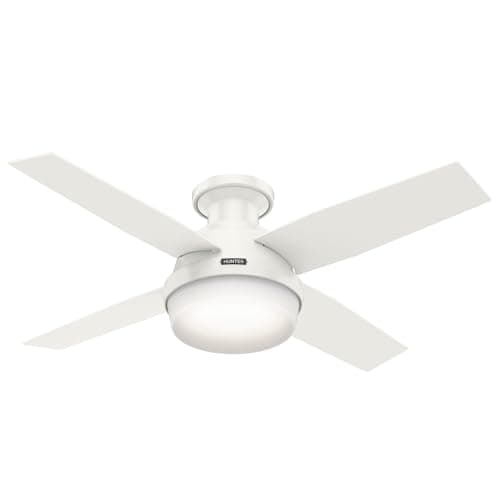 Biggest single saving available Hunter Martindale 44" Ceiling Fan 1.1 W on low and 10.1 W on high at 304.5 CFM per watt — the cheapest thing to run on this site. | Any room you own, on the days a fan is genuinely enough | |
| 2 | Lowest certified annual consumption Midea Window Air Conditioner, 6,000 BTU 281.3 kWh a year at CEER 16 — the lowest annual figure of any certified room air conditioner. | A small room, sized honestly rather than rounded up | |
| 3 | The free-cooling machine Lasko Twin Window Fan with Remote Up to 560 CFM on 22 to 31 W with a thermostat — it lowers the air temperature without a compressor. | Overnight air exchange once outdoor air drops below indoor | |
| — | The biggest line on the bill Whynter ARC-14S Dual Hose Portable Air Conditioner 1,300 W and 9,500 BTU SACC from a 14,000 BTU headline. Running it eight hours a day for a season is the largest cooling cost here. | A room with no usable window — and it is worth confirming that first |
Most advice on this topic is a list of twenty tips of unknown and unstated value. This one is ranked by how much each thing actually saves, using certified figures at 18.34¢/kWh.
Rank one
Run the cheap machine instead of the expensive one
This dwarfs everything else, because the spread between the options is not a few percent.
| Machine | Power | 8 hours | 90 days at 8 h |
|---|---|---|---|
| Ceiling fan, low | 1.1 W | 0.2¢ | 15¢ |
| Tower fan, low | 2.9 W | 0.4¢ | 38¢ |
| Ceiling fan, high | 13.9 W | 2.0¢ | $1.84 |
| Window fan | 31 W | 4.5¢ | $4.09 |
| Tower fan, high | 52 W | 7.6¢ | $6.87 |
| Box fan, high | 102 W | 15¢ | $13 |
| Evaporative cooler | 220 W | 32¢ | $29 |
| Portable air conditioner | 1300 W | $1.91 | $172 |
Ceiling fan wattage certified; others from manufacturer pages. Certified room air conditioners are rated in annual kWh instead — 281.3 to 843.8 kWh a year across the units on this site, or $52 to $155 for a season.
Roughly 1,180 times between the top and bottom rows. No efficiency tweak competes with simply using the fan on the days a fan is enough.
The practical version: put a fan in the room and leave the air conditioner off until the fan is genuinely not coping. The full running-cost league table.
Rank two
The free measures, which are larger than they sound
These cost nothing and reduce the load your machine is working against, which reduces its run time directly.
- Shade the glass before the sun arrives. Solar gain through windows is usually the largest single heat input in a room. External shading beats internal, because it stops the energy before it passes the glass. Closing a blind at 3pm is far less useful than closing it at 10am.
- Ventilate on the right schedule. Shut everything while outdoor air is warmer than indoor; open up once it drops below, typically a couple of hours after sunset. Getting this backwards actively imports heat.
- Turn off what is heating the room. Essentially all the power drawn by a computer, a monitor or a games console becomes heat in the room. A desk drawing 300 W is a 300 W heater running while you work. The office case.
- Extract at the source. A ducted range hood removes cooking heat and moisture before they reach the room, for a fraction of a cent an hour. Removing them afterward with an air conditioner costs far more. The kitchen case.
- Close the door on rooms you are not using, and stop cooling them.
Rank three
Size correctly, which matters more than CEER
People chase efficiency ratings within a capacity band and ignore the band, which is backwards.
| Certified unit | Capacity | kWh/yr | Season |
|---|---|---|---|
| Midea MAW06S1KWT-A | 6,000 BTU | 281.3 | $52 |
| GE Profile PWJV08W | 8,000 BTU | 375 | $69 |
| Midea MAW12V1QWT | 12,000 BTU | 600 | $110 |
| Brothers 102387 | 18,000 BTU | 843.8 | $155 |
ENERGY STAR Certified Room Air Conditioners dataset. All four are on the Most Efficient list.
$103 a season separates the top and bottom of that table — and all four are Most Efficient units. The variable is capacity, not efficiency rating.
So the saving is in buying the capacity your room needs rather than rounding up. And oversizing costs you twice: more consumption, plus short cycling that removes less moisture and leaves the room clammy. Why that happens.
This one is not a DIY job
Every certified figure assumes a clean, well-sealed machine. The 375 kWh a year on our top pick was measured under laboratory conditions with a clean filter, a clean coil and no air leaking around the unit.
Yours has a filter that has been in since May and side curtains that have loosened over a season. Closing that gap is free, and it is the only saving on this page you can make without buying or changing anything.
Filter, every two to four weeks in season. Blocked filters starve the coil of airflow, which cuts capacity and extends run time.
Both coils, once a year. The outdoor condenser is the one people never do, and a fouled one raises compressor load directly.
The seal, whenever you look at it. The gap between the two sashes above a window unit is the biggest leak in a typical install and the one most often missed. The full procedure.
Rank five
Settings that actually matter
- Use the fan setting, not the coldest setting. Air movement plus a moderate setpoint feels better than a low setpoint with still air, and costs a fraction as much.
- Do not set the thermostat lower to cool faster. It does not cool faster; it cools to a lower final temperature and runs longer to get there.
- Run bathroom and range fans on medium, not high. Our analysis of 351 certified multi-speed bathroom fans found 71.8% move air more efficiently below full speed, with a median gain of 23.9%. The full finding.
- Use the low speed on a DC fan. The spread is large — 2.9 W against 19 W on the same tower fan — and low is usually enough overnight.
Say the unwelcome thing
Do not buy an efficiency upgrade before checking your usage pattern.
Replacing a certified 8,000 BTU unit with a fractionally more efficient one saves a small amount. Changing which machine you reach for saves an order of magnitude more.
Look at where the hours actually go first. A portable air conditioner running eight hours a day at 1,300 W is $172 a season; a ceiling fan on low for the same hours is 15¢.
If some of those hours could be fan hours — and in most climates most of them could — that is the saving. It requires no purchase at all if you already own a fan.
In full
Every pick, and what is wrong with it
Published specifications only, each linked to the page it came from. Where a manufacturer publishes nothing, the row says so — we do not fill blanks in.
1. Biggest single saving available
Hunter Martindale 44" Ceiling Fan
Hunter · model 44in Martindale
1.1 W on low and 10.1 W on high at 304.5 CFM per watt — the cheapest thing to run on this site.
1.1 watts. Twelve hours costs 0.2¢. A whole 90-day season at twelve hours a day costs 22¢.
Set that against a certified 8,000 BTU window unit at 375 kWh a year — $69 — and the arithmetic makes itself. Every day the fan is enough is a day of air conditioning you did not buy.
304.5 CFM per watt certified, the best small-fan efficiency in our data, and 10.1 W on high is the lowest high-speed draw of any certified fan here.
What’s wrong with it
It does not lower the air temperature, so on the hottest days it supplements cooling rather than replacing it.
Running cost — 44in Martindale
| Nameplate power | 1.1 W – 10.1 W | manufacturer's published figure |
|---|---|---|
| Energy, 8-hour night | 0.08 kWh | 10.1 ÷ 1000 × 8 |
| Cost per hour | 0.2¢ | at 18.34¢/kWh |
| Cost per 8-hour night | 1.5¢ | on the highest speed |
| Cost per 30 nights | 44¢ | 2.4 kWh |
| Same month, lowest speed | 4.8¢ | at 1.1 W |
Rate: 18.34¢/kWh, the US average residential price for June 2026 (EIA Electric Power Monthly, Table 5.3). Yours will differ — swap it in: (watts ÷ 1000) × hours × your rate.
| Blade span | 44 in |
|---|---|
| Efficiency | 304.5 CFM per watt |
| Power, high speed | 10.1 W |
| Power, low speed | 1.1 W |
| Standby power | 0.4 W |
| Type | Indoor, fan only |
| Warranty | 3 years, components |
| ENERGY STAR | Certified |
Every figure above is from ENERGY STAR Certified Ceiling Fans dataset. Blanks are shown as “not published” rather than filled in.
2. Lowest certified annual consumption
Midea Window Air Conditioner, 6,000 BTU
Midea · model MAW06S1KWT-A
281.3 kWh a year at CEER 16 — the lowest annual figure of any certified room air conditioner.
281.3 kWh a year, about $52 for a cooling season, and 45% below the federal standard.
The saving here is mostly sizing rather than efficiency. The largest certified unit on this site uses 843.8 kWh a year, or $155 — a difference of $103 a season, driven almost entirely by capacity.
Which is the practical point: buying the right capacity saves far more than chasing the highest CEER within a capacity.
31.6 lb, variable-speed, Most Efficient listed. Size from the room.
What’s wrong with it
6,000 BTU covers a small room only, and buying it for a large one guarantees constant running and disappointment.
Running cost — MAW06S1KWT-A
| Annual energy use | 281.3 kWh | ENERGY STAR certified figure |
|---|---|---|
| Annual cost | $52 | 281.3 × 18.34¢/kWh |
| Per cooling month | $13 | spread over a four-month season |
The annual figure is the certified value from the ENERGY STAR Certified Room Air Conditioners dataset, which models a standard cooling season rather than your actual summer. It is more useful than a nameplate wattage here, because a variable-speed compressor spends most of its life well below nameplate.
Rate: 18.34¢/kWh, the US average residential price for June 2026 (EIA Electric Power Monthly, Table 5.3). Yours will differ — swap it in: (watts ÷ 1000) × hours × your rate.
| Cooling capacity | 6,000 BTU/h |
|---|---|
| CEER | 16 |
| Annual energy use | 281.3 kWh/yr |
| vs federal standard | 45% less energy |
| Dimensions | 12.1 H x 16.0 W x 13.3 D in |
| Weight | 31.6 lb |
| Installation | Does not straddle the windowsill |
| Support bracket | Not required |
| Compressor | Variable speed |
| Refrigerant | R-32 |
| ENERGY STAR | Certified, and on the Most Efficient list |
Every figure above is from ENERGY STAR Certified Room Air Conditioners dataset. Blanks are shown as “not published” rather than filled in.
3. The free-cooling machine
Lasko Twin Window Fan with Remote
Lasko · model W09550
Up to 560 CFM on 22 to 31 W with a thermostat — it lowers the air temperature without a compressor.
The cheapest way to genuinely lower the air temperature rather than just make you feel cooler.
22 to 31 W — 4.5¢ for an eight-hour night, or $4.09 across a 90-day season. A certified 8,000 BTU window unit uses $69 for the same season, and needs a compressor to do it.
Two independent motors let one window intake and exhaust at once, and the adjustable thermostat shuts it off when the room is cool enough — which is what makes unattended overnight use practical.
Up to 560 CFM published, which is more than most of this category states at all. Window fan comparison.
What’s wrong with it
It only works while the outdoor air is cooler, and it fits 24 to 32 inch windows and nothing else.
Running cost — W09550
| Nameplate power | 22 W – 31 W | manufacturer's published figure |
|---|---|---|
| Energy, 8-hour night | 0.25 kWh | 31 ÷ 1000 × 8 |
| Cost per hour | 0.6¢ | at 18.34¢/kWh |
| Cost per 8-hour night | 4.5¢ | on the highest speed |
| Cost per 30 nights | $1.36 | 7.4 kWh |
| Same month, lowest speed | 97¢ | at 22 W |
Rate: 18.34¢/kWh, the US average residential price for June 2026 (EIA Electric Power Monthly, Table 5.3). Yours will differ — swap it in: (watts ÷ 1000) × hours × your rate.
| Power | 22 W - 31 W at 120 V |
|---|---|
| Air delivery | Up to 560 CFM |
| Window fit | 24 - 32 in wide |
| Modes | Intake, exhaust or exchange (independent motors) |
| Thermostat | Adjustable |
| Speeds | 3 |
| Dimensions | 12.9 H x 24.0 W x 4.9 D in |
| Weight | 8.0 lb |
| Warranty | 1 year |
Every figure above is from Lasko product page, W09550. Blanks are shown as “not published” rather than filled in.
Skip this one
Whynter ARC-14S Dual Hose Portable Air Conditioner
Whynter · model ARC-14S
1,300 W and 9,500 BTU SACC from a 14,000 BTU headline. Running it eight hours a day for a season is the largest cooling cost here.
If your bill is high and you own one of these, this is where to look first.
1,300 W — $1.91 for an eight-hour day, or $172 across a 90-day season at eight hours a day.
Against a certified window unit at 375 kWh a year, or $69 for the whole season. That is not a marginal difference; it is a different order of magnitude.
And the capacity is smaller than the box: 9,500 BTU SACC from a 14,000 BTU headline, a 32.1% haircut.
If a window unit will fit, switching is the single largest saving available on this page. The comparison.
What’s wrong with it
No certification program covers portables, so there is no verified efficiency figure to compare against anything.
Running cost — ARC-14S
| Nameplate power | 1300 W | manufacturer's published figure |
|---|---|---|
| Energy, 8-hour night | 10.40 kWh | 1300 ÷ 1000 × 8 |
| Cost per hour | 24¢ | at 18.34¢/kWh |
| Cost per 8-hour night | $1.91 | on the highest speed |
| Cost per 30 nights | $57 | 312.0 kWh |
Rate: 18.34¢/kWh, the US average residential price for June 2026 (EIA Electric Power Monthly, Table 5.3). Yours will differ — swap it in: (watts ÷ 1000) × hours × your rate.
| Marketing capacity | 14,000 BTU (ASHRAE-128) |
|---|---|
| DOE-rated capacity | 9,500 BTU SACC |
| Hoses | Dual |
| Power | 1,300 W / 11.6 A at 115 V |
| Noise | Under 51 dBA low, under 56 dBA high |
| Dehumidification | 71 pints/day |
| Refrigerant | R-32 |
| Dimensions | 16 W x 19 D x 35.5 H in |
| Weight | 73 lb |
| Manufacturer coverage claim | 500 sq ft |
| Warranty | 1 year unit, 3 years compressor |
Every figure above is from Whynter product page, ARC-14S. Blanks are shown as “not published” rather than filled in.
We are not linking a buy button for this one. If you want to look at it anyway, it is easy enough to find — but we would rather send you to something that fits your room.
Questions people actually ask
Frequently asked
What is the single biggest way to lower a cooling bill?
Use the cheap machine on the days it is enough. A certified ceiling fan on low draws 1.1 watts against a portable air conditioner's 1,300 — roughly 1,180 times the difference. No efficiency tweak competes with changing which machine runs.
Does buying a more efficient air conditioner save much?
Less than sizing correctly does. Across certified units on this site, annual consumption runs 281.3 to 843.8 kWh — and all of them are Most Efficient listed. The variable driving that spread is capacity, not efficiency rating. Sizing method.
Does cleaning an air conditioner actually lower the bill?
Yes, because every certified figure was measured on a clean, sealed machine under laboratory conditions. A blocked filter starves the coil of airflow, cutting capacity and extending run time, and a fouled outdoor condenser raises compressor load directly.
Should I set the thermostat lower to cool the room faster?
No. An air conditioner does not cool faster at a lower setpoint — it simply cools to a lower final temperature and runs longer getting there. Use a moderate setpoint with a fan running instead.
When should I open the windows to save money?
Only once outdoor air is cooler than indoor, typically a couple of hours after sunset. Opening up during the afternoon actively imports heat. A window fan at 22 to 31 watts genuinely lowers air temperature without a compressor.
Is running a fan on low actually worth it?
On a DC motor fan, substantially — 2.9 watts on low against 19 on high for the same machine. Low is usually enough overnight, and certified ceiling fans draw 1.1 to 6.0 watts at their lowest setting.
Sources
Where these numbers came from
- ENERGY STAR Certified Room Air Conditioners dataset — annual kWh and CEER across capacity bands
- ENERGY STAR Certified Ceiling Fans dataset — wattage at high and low speed
- ENERGY STAR Certified Ventilating Fans dataset — the multi-speed efficacy analysis
- EIA Electric Power Monthly, Table 5.3 — average residential electricity price
Read next
Where to go from here
Back to Guides & Calculators, or read how we pick.