Guide and picks
Does closing vents in unused rooms save money?
The logic is sound and the plumbing is not. A ducted system does not respond the way a garden hose does.
By Sawyer V. · Published
The short answer
No, on a ducted system. Closing supply registers does not reduce what the system produces — it raises pressure in the ducts, which pushes more air out through leaks into unconditioned space and can starve the coil of airflow. The instinct is right; the method is wrong. Close doors, not vents, and cool the room you occupy with a 281.3 kWh a year unit of its own.
Fan & Frost earns a commission when you buy through our links, at no cost to you. It never changes a ranking, and we say so when the right answer is the cheaper unit or nothing at all. Full disclosure · How we pick.

At a glance
The picks, ranked
Tap any row to jump to the full reasoning. Prices are live from Amazon where we have them, and read “check price” where we don’t — never a number we cannot verify today.
| # | Product | Best for | Price |
|---|---|---|---|
| 1 | 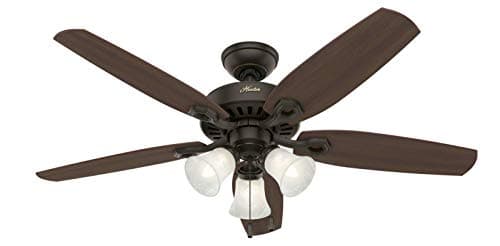 Best first move Hunter Vespucci 52" Ceiling Fan 366.7 CFM per watt at 1.8 W on low — it lets you raise the thermostat instead of fighting the ducts. | Making a warm room comfortable without changing the system | |
| 2 | The honest per-room fix Midea Window Air Conditioner, 6,000 BTU 281.3 kWh a year at CEER 16 — genuine zoning, without touching the ductwork. | Cooling one room hard while the system runs high or off | |
| 3 | 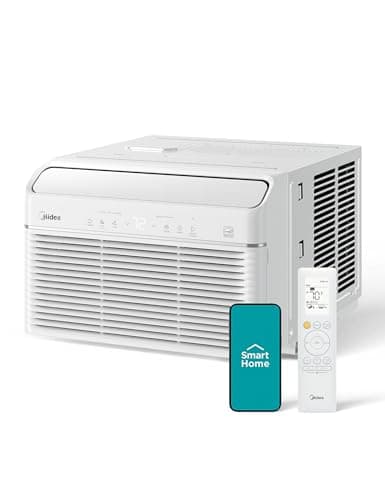 For a room the ducts underserve Midea Through-the-Wall Air Conditioner, 8,000 BTU 425.5 kWh a year at CEER 14.1, Most Efficient, into an existing wall sleeve. | The room at the end of the run that never gets enough air | |
| — | 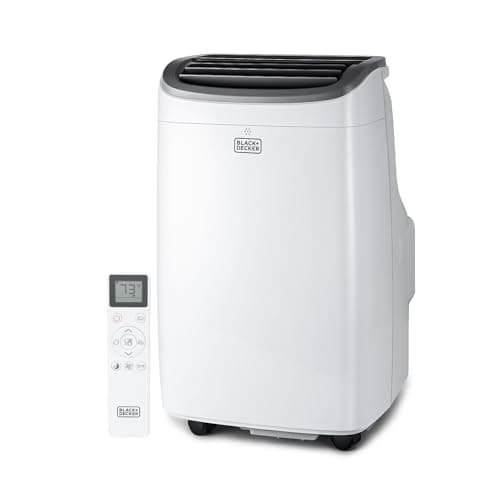 Makes the same mistake worse BLACK+DECKER BPACT08WT Portable Air Conditioner Single hose, 4,000 BTU DOE-rated — it depressurizes the room, which is exactly what leaky ducts do not need. | A small sealed room in a house with no ducts |
It is one of the most reasonable-sounding ideas in home cooling, and it is wrong for a reason that is not obvious.
The intuition
Why everyone thinks this works
The mental model is a garden hose with several outlets. Close some, and the water goes to the ones still open. Nothing is wasted.
A ducted cooling system does not behave that way, because a blower is not a tap. It is a fan working against the resistance of the duct network, and when you increase that resistance, the system does not redirect the air — it moves less air overall, at higher pressure.
What actually happens
Three things, none of them what you wanted
- Duct pressure rises. The blower is now pushing the same air through fewer openings. Pressure in the supply ducts goes up across the whole network.
- Leakage increases. Ducts leak — at joints, at boots, at the plenum. Higher pressure pushes more air out of every one of those leaks. If the ducts run through a loft, a crawl space or a garage, that conditioned air is now cooling somewhere you do not live.
- Airflow across the coil falls. The evaporator coil is designed for a certain airflow. Starve it and its temperature drops, which reduces capacity and, in the worst case, freezes the coil — at which point it stops cooling entirely.
The net effect is a system doing less useful cooling while running longer to try to reach the setpoint. Whatever you saved by not cooling the spare bedroom, you lost through the loft.
The exception
Closing doors is a completely different thing
This is worth separating, because the two get conflated and only one of them is a mistake.
- Closing a register changes the pressure inside a pressurized duct network. That is the problem.
- Closing a door reduces the volume of air a room unit has to cool. There is no duct network involved and no pressure to raise.
So if you are cooling a bedroom with a window unit, close the door — it is one of the most effective free things available. If you are running a ducted system, closing an interior door can itself cause pressure imbalance if that room has a supply but no return path, which is a smaller version of the same problem.
Interior rooms are where those return-path questions become most visible.
This one is not a DIY job
Real zoning exists and it is not a DIY retrofit. Ducted systems can be zoned properly, with motorised dampers, zone controls and a bypass or variable-speed arrangement that keeps airflow across the coil within its design range.
That is what closing vents is a bad imitation of. It is engineered as a system, and it belongs to a qualified HVAC contractor.
If rooms in your home are consistently too warm or too cool, the diagnosis is usually duct condition, duct sizing, or a missing return path — all of which are worth having measured rather than worked around.
Never close more than a small fraction of your registers, and if the coil has ever frozen, stop and have the system looked at.
What to do instead
Five things that do save money
- Raise the setpoint and add air movement. A ceiling fan at 1.8 W buys back the comfort of a degree or two for 0.3¢ an evening.
- Seal the ducts, do not pressurize them. If leakage is the mechanism that makes vent-closing backfire, then fixing the leakage is the thing worth spending on.
- Give one problem room its own machine. Genuine per-room control, at 281.3 to 425.5 kWh a year, without touching the ducted system.
- Reduce the load. Shading and sealing cut the run time of everything you own.
- Schedule it. When you run it moves the bill more than which registers are open.
Say the unwelcome thing
Do not close vents to make one room colder.
It is the version of this idea that fails fastest. Closing three registers to push more air at the fourth does not send more air there — it raises pressure across the whole network and sends more air out of the leaks.
Meanwhile the coil is getting less airflow than it was designed for, so the system delivers less cooling everywhere including the room you were trying to help.
If one room needs more cooling than the ducts give it, give that room its own source. 281.3 kWh a year in a window or 425.5 kWh through an existing wall sleeve, and leave the registers alone.
In full
Every pick, and what is wrong with it
Published specifications only, each linked to the page it came from. Where a manufacturer publishes nothing, the row says so — we do not fill blanks in.
1. Best first move
Hunter Vespucci 52" Ceiling Fan
Hunter · model Vespucci
366.7 CFM per watt at 1.8 W on low — it lets you raise the thermostat instead of fighting the ducts.
The reason this is the first pick on a page about ductwork: it attacks the same goal from the other end.
Every degree you can raise the thermostat is run time you do not pay for, across the whole system. Air movement buys back the comfort that degree cost — and it does it per room, which is what people were trying to achieve by closing vents.
1.8 W on low, or 0.3¢ for eight hours. 366.7 CFM per watt, certified, with 0.8 W standby.
No light kit, which is why the efficiency is where it is. What a light kit costs you.
What’s wrong with it
It changes no temperature, and it only helps rooms with someone in them.
Running cost — Vespucci
| Nameplate power | 1.8 W – 13.9 W | manufacturer's published figure |
|---|---|---|
| Energy, 8-hour night | 0.11 kWh | 13.9 ÷ 1000 × 8 |
| Cost per hour | 0.3¢ | at 18.34¢/kWh |
| Cost per 8-hour night | 2.0¢ | on the highest speed |
| Cost per 30 nights | 61¢ | 3.3 kWh |
| Same month, lowest speed | 7.9¢ | at 1.8 W |
Rate: 18.34¢/kWh, the US average residential price for June 2026 (EIA Electric Power Monthly, Table 5.3). Yours will differ — swap it in: (watts ÷ 1000) × hours × your rate.
| Blade span | 52 in |
|---|---|
| Efficiency | 366.7 CFM per watt |
| Power, high speed | 13.9 W |
| Power, low speed | 1.8 W |
| Standby power | 0.8 W |
| Type | Indoor, fan only (no light kit) |
| Warranty | 3 years, components |
| ENERGY STAR | Certified |
Every figure above is from ENERGY STAR Certified Ceiling Fans dataset. Blanks are shown as “not published” rather than filled in.
2. The honest per-room fix
Midea Window Air Conditioner, 6,000 BTU
Midea · model MAW06S1KWT-A
281.3 kWh a year at CEER 16 — genuine zoning, without touching the ductwork.
What closing vents was actually trying to buy: cooling in one room and not the others. This delivers it, properly.
281.3 kWh a year, $52 for a season, at CEER 16 and on the Most Efficient list.
The strategy it enables is the point. Set the ducted system high enough to keep the house from getting away, and cool the one room you are in with this. That is real zoning — the scope decision in full.
31.6 lb, no support bracket required, variable speed.
What’s wrong with it
It is a second machine and a window installation, which is what people were trying to avoid.
Running cost — MAW06S1KWT-A
| Annual energy use | 281.3 kWh | ENERGY STAR certified figure |
|---|---|---|
| Annual cost | $52 | 281.3 × 18.34¢/kWh |
| Per cooling month | $13 | spread over a four-month season |
The annual figure is the certified value from the ENERGY STAR Certified Room Air Conditioners dataset, which models a standard cooling season rather than your actual summer. It is more useful than a nameplate wattage here, because a variable-speed compressor spends most of its life well below nameplate.
Rate: 18.34¢/kWh, the US average residential price for June 2026 (EIA Electric Power Monthly, Table 5.3). Yours will differ — swap it in: (watts ÷ 1000) × hours × your rate.
| Cooling capacity | 6,000 BTU/h |
|---|---|
| CEER | 16 |
| Annual energy use | 281.3 kWh/yr |
| vs federal standard | 45% less energy |
| Dimensions | 12.1 H x 16.0 W x 13.3 D in |
| Weight | 31.6 lb |
| Installation | Does not straddle the windowsill |
| Support bracket | Not required |
| Compressor | Variable speed |
| Refrigerant | R-32 |
| ENERGY STAR | Certified, and on the Most Efficient list |
Every figure above is from ENERGY STAR Certified Room Air Conditioners dataset. Blanks are shown as “not published” rather than filled in.
3. For a room the ducts underserve
Midea Through-the-Wall Air Conditioner, 8,000 BTU
Midea · model MAT08R1FWTK
425.5 kWh a year at CEER 14.1, Most Efficient, into an existing wall sleeve.
Most ducted systems have one room that never quite works — usually the furthest from the air handler, or above a garage, or with the longest duct run.
Closing vents elsewhere is the intuitive fix for that room and it makes the whole system worse. Giving that one room its own machine fixes it without touching anything else.
425.5 kWh a year, $78 for a season, at CEER 14.1 — on the Most Efficient list, which through-the-wall units reach at lower CEER than window units because they are rated as a separate class.
An existing sleeve is required. What that installation involves.
What’s wrong with it
It needs an existing sleeve. Cutting a new one is a construction job.
Running cost — MAT08R1FWTK
| Annual energy use | 425.5 kWh | ENERGY STAR certified figure |
|---|---|---|
| Annual cost | $78 | 425.5 × 18.34¢/kWh |
| Per cooling month | $20 | spread over a four-month season |
The annual figure is the certified value from the ENERGY STAR Certified Room Air Conditioners dataset, which models a standard cooling season rather than your actual summer. It is more useful than a nameplate wattage here, because a variable-speed compressor spends most of its life well below nameplate.
Rate: 18.34¢/kWh, the US average residential price for June 2026 (EIA Electric Power Monthly, Table 5.3). Yours will differ — swap it in: (watts ÷ 1000) × hours × your rate.
| Cooling capacity | 8,000 BTU/h |
|---|---|
| CEER | 14.1 |
| Annual energy use | 425.5 kWh/yr |
| Refrigerant | R-32 |
| Installation | Through the wall (existing sleeve required) |
| Compressor | Variable speed |
| ENERGY STAR | Certified, and on the Most Efficient list |
Every figure above is from ENERGY STAR Certified Room Air Conditioners dataset. Blanks are shown as “not published” rather than filled in.
Skip this one
BLACK+DECKER BPACT08WT Portable Air Conditioner
BLACK+DECKER · model BPACT08WT
Single hose, 4,000 BTU DOE-rated — it depressurizes the room, which is exactly what leaky ducts do not need.
The other common attempt to fix one room in a ducted house, and it interacts badly with the same underlying problem.
A single-hose portable blows room air outside and lowers the pressure in the room. Make-up air comes in through whatever leaks exist — and in a house with ducts running through a loft or crawl space, some of that path is hot.
You end up with two pressure problems fighting each other, in a house that already had duct leakage.
4,000 BTU DOE-rated against 8,000 ASHRAE on the box, and no published wattage. Why the hose count matters.
What’s wrong with it
In a house with ducts in unconditioned space, a single-hose unit pulls air through the leaks.
Running cost
BLACK+DECKER does not publish a wattage for the BPACT08WT, so we cannot calculate what it costs to run. We are not going to estimate one. If BLACK+DECKER publishes a nameplate figure, this block will show the arithmetic.
| Manufacturer capacity | 4,000 BTU (8,000 BTU ASHRAE) |
|---|---|
| Hoses | Single |
| Refrigerant | R-410A |
| Dimensions | 15.3 W x 14.0 D x 25.0 H in |
| Weight | 52.9 lb |
| Power | Not published by the manufacturer |
| Noise | Not published |
| Coverage claim | Not published by the manufacturer |
| Warranty | 1 year parts and labor, 5 years compressor |
Every figure above is from BLACK+DECKER product page, BPACT08WT. Blanks are shown as “not published” rather than filled in.
We are not linking a buy button for this one. If you want to look at it anyway, it is easy enough to find — but we would rather send you to something that fits your room.
Questions people actually ask
Frequently asked
Does closing vents in unused rooms save money?
No, on a ducted system. It does not reduce what the system produces — it raises pressure in the ducts, which pushes more air out of every leak and reduces airflow across the coil. You lose more through the leaks than you save by not cooling the room.
Why doesn't closing a vent redirect the air to other rooms?
Because a blower is not a tap. It is a fan working against duct resistance, and increasing that resistance makes it move less air overall at higher pressure rather than the same air through fewer outlets.
Is closing a door the same as closing a vent?
No, and the distinction matters. Closing a door on a room cooled by its own window unit reduces the volume that unit has to cool, with no duct pressure involved — it is one of the most effective free things you can do.
Can closing vents damage my air conditioner?
It can. Reduced airflow across the evaporator coil lowers its temperature, which cuts capacity and in the worst case freezes the coil, at which point it stops cooling. If your coil has ever frozen, have the system looked at.
What is the right way to cool only some rooms?
Proper zoning with motorised dampers and zone controls, which is an engineered system and an HVAC contractor's job — or give one problem room its own machine, at 281.3 to 425.5 kWh a year, and leave the ducts alone. House vs room.
One room in my house is always too warm. What should I do?
Diagnose rather than compensate. It is usually duct condition, duct sizing, or a missing return path, all of which can be measured. Closing vents elsewhere makes it worse, not better.
Sources
Where these numbers came from
- ENERGY STAR Certified Room Air Conditioners dataset — CEER, annual kWh, Most Efficient flag
- ENERGY STAR Certified Ceiling Fans dataset — CFM per watt, high and low wattage, standby
- BLACK+DECKER BPACT08WT product page — DOE and ASHRAE capacity, single hose
- EIA Electric Power Monthly, Table 5.3 — average residential electricity price
Read next
Where to go from here
Back to Guides & Calculators, or read how we pick.