Guide and picks
How much electricity does a fan use?
Between about 2 and 180 watts for almost anything you'd call a fan. Here is what that is in dollars, and the formula so you can price whatever you already own.
By Sawyer V. · Published
The short answer
A ceiling fan on low draws under 2 W; a good DC tower fan runs 2.9–19 W; an AC tower fan 37–49 W; a 20-inch box fan 73–102 W. At 18.34¢/kWh, eight hours a night for a month costs about 84¢ for the DC tower and $4.49 for the box fan. Fans are cheap. The formula is below.
Fan & Frost earns a commission when you buy through our links, at no cost to you. It never changes a ranking, and we say so when the right answer is the cheaper unit or nothing at all. Full disclosure · How we pick.
At a glance
The picks, ranked
Tap any row to jump to the full reasoning. Prices are live from Amazon where we have them, and read “check price” where we don’t — never a number we cannot verify today.
| # | Product | Best for | Price |
|---|---|---|---|
| 1 | 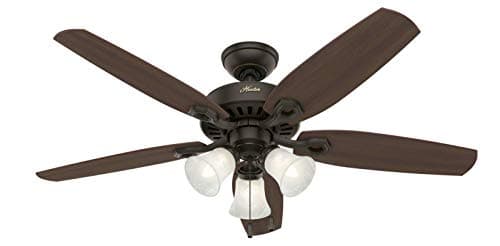 Cheapest to run of anything here Hunter Vespucci 52" Ceiling Fan 1.8 W on low — about 7.9¢ for a month of nights, and a certified 366.7 CFM per watt. | A room you own with a mountable ceiling | |
| 2 | 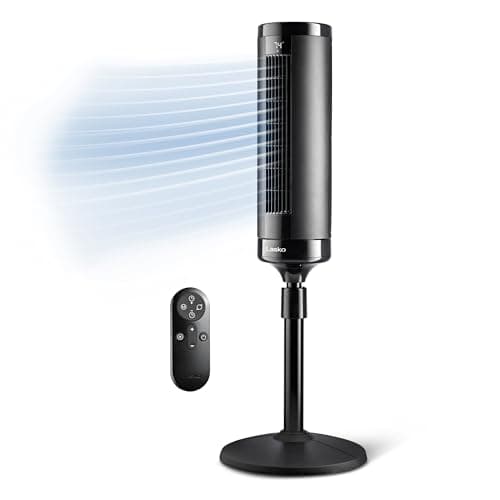 Cheapest portable fan Lasko EcoQuiet 42" DC Tower Fan 2.9 W on low and 19 W flat out — 84¢ a month at full power, with 23 dBA published. | A bedroom, or anywhere you cannot install a ceiling fan | |
| 3 | The 31 watts that actually lowers the temperature Lasko Twin Window Fan with Remote The only fan on this page whose watts buy you a temperature change rather than a sensation. | A window, once the outdoor air is cooler than indoor | |
| — | 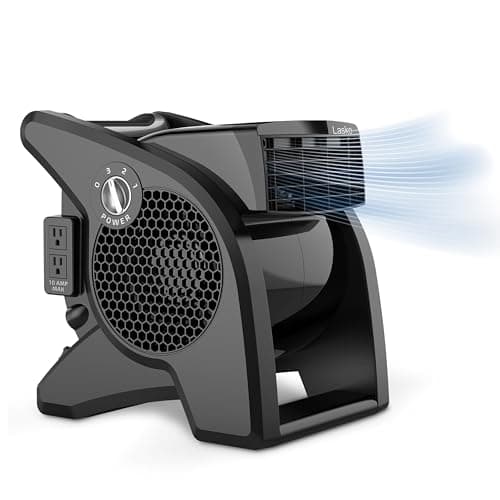 The one to skip indoors Lasko Max Performance 15" Air Mover 178 W — $7.83 a month, roughly nine times the DC tower fan for a narrower, louder airstream. | A workshop, where 178 W is buying you something |
Fans are the cheapest cooling you can run, by a wide margin, and most people significantly overestimate what they cost. The confusion is understandable: a fan and an air conditioner both plug into the wall and both make a room more bearable, so it is reasonable to assume they are in the same ballpark. They are not in the same order of magnitude.
The formula
The arithmetic, once
Every figure on this page — and every cost figure on this site — comes from one calculation:
(watts ÷ 1000) × hours × your rate per kWh
We use 18.34¢/kWh, the US average residential price for June 2026 from the EIA’s Electric Power Monthly. Your rate is on your bill and is probably not the national average — rates vary by more than a factor of two across the US, which is exactly why we print the formula rather than only the answer.
Worked once, slowly, so the table below is obvious: a 49 W fan for 8 hours is 49 ÷ 1000 × 8 = 0.392 kWh. At 18.34¢/kWh that is $0.072 — about seven cents a night. Thirty nights: $2.16.
The table
Watts to dollars
Find your fan’s wattage on its nameplate — usually a sticker on the base or the back of the motor housing — or in its manual, and read across. The last column is continuous 24/7 running for a month, which is what people actually do with a bedroom fan in August.
| Watts | Per hour | Per 8-hour night | 30 nights | Running 24/7, a month |
|---|---|---|---|---|
| 2 W | 0.0¢ | 0.3¢ | 8.8¢ | 27¢ |
| 5 W | 0.1¢ | 0.7¢ | 22¢ | 67¢ |
| 10 W | 0.2¢ | 1.5¢ | 44¢ | $1.34 |
| 15 W | 0.3¢ | 2.2¢ | 66¢ | $2.01 |
| 20 W | 0.4¢ | 2.9¢ | 88¢ | $2.68 |
| 30 W | 0.6¢ | 4.4¢ | $1.32 | $4.02 |
| 50 W | 0.9¢ | 7.3¢ | $2.20 | $6.69 |
| 75 W | 1.4¢ | 11¢ | $3.30 | $10 |
| 100 W | 1.8¢ | 15¢ | $4.40 | $13 |
| 150 W | 2.8¢ | 22¢ | $6.60 | $20 |
| 250 W | 4.6¢ | 37¢ | $11 | $33 |
| 500 W | 9.2¢ | 73¢ | $22 | $67 |
| 750 W | 14¢ | $1.10 | $33 | $100 |
| 1000 W | 18¢ | $1.47 | $44 | $134 |
| 1300 W | 24¢ | $1.91 | $57 | $174 |
| 1500 W | 28¢ | $2.20 | $66 | $201 |
At 18.34¢/kWh. Find your device’s wattage on its nameplate or in its manual, then read across.
Real fans
Eight actual fans, with published wattages
Every wattage below is from the manufacturer’s own specification page. Where a manufacturer publishes nothing, that is stated, because it happens more than you would expect and it is worth knowing before you buy.
| Fan | Published watts | 8-hr night | 30 nights |
|---|---|---|---|
| Hunter Vespucci 52" ceiling fan, low | 1.8 W | 0.3¢ | 7.9¢ |
| Hunter Vespucci 52" ceiling fan, high | 13.9 W | 2.0¢ | 61¢ |
| Lasko EcoQuiet T42710 DC tower, low | 2.9 W | 0.4¢ | 13¢ |
| Lasko EcoQuiet T42710 DC tower, high | 19 W | 2.8¢ | 84¢ |
| Lasko W09550 twin window fan, high | 31 W | 4.5¢ | $1.36 |
| Lasko A12107 12" table fan, high | 32 W | 4.7¢ | $1.41 |
| Lasko 2554 Wind Curve tower, high | 49 W | 7.2¢ | $2.16 |
| Lasko B20801 20" box fan, high | 102 W | 15¢ | $4.49 |
| Lasko U15720 15" air mover, high | 178 W | 26¢ | $7.83 |
Wattages from Lasko and ENERGY STAR certified ceiling fan data; costs are our arithmetic at 18.34¢/kWh. Sources below.
The spread is the interesting part. A ceiling fan on low costs about 7.9¢ to run for a month of nights. A 20-inch box fan on high costs $4.49. Both are trivial next to an air conditioner, but the ceiling fan is roughly fifty times cheaper than the box fan for a comparable amount of perceived comfort in a bedroom — which is why a ceiling fan is the cheapest cooling that exists if you have somewhere to hang one.
The DC-motor comparison is the other one worth noticing. Lasko’s EcoQuiet DC tower draws 19 W flat out; its AC-motor Wind Curve tower draws 49 W. Same brand, same form factor, same job — and 84¢ against $2.16 over a month. Over a couple of summers the DC motor pays for the price difference, and it is also 23 dBA on low against a figure Lasko does not publish for the AC unit. More on that on the quiet-fans page.
The comparison that matters
Fan versus air conditioner
| Device | Watts | 30 × 8-hr nights |
|---|---|---|
| Ceiling fan, low | 1.8 W | 7.9¢ |
| DC tower fan, high | 19 W | 84¢ |
| Box fan, high | 102 W | $4.49 |
| Evaporative cooler (Honeywell CO60PM) | 220 W | $9.68 |
| Portable AC (Whynter ARC-14S) | 1300 W | $57 |
The portable air conditioner costs roughly 68 times what the DC tower fan costs, for the same eight hours.
But — and this is the part a cost table cannot tell you — they are not doing the same job. A fan moves air across your skin, which speeds evaporation and makes you feel several degrees cooler. It does not remove any heat from the room; its motor adds a small amount. An air conditioner genuinely lowers the temperature and removes humidity. On a 95°F night with a 78°F indoor temperature, a fan is the answer. At 88°F indoors, no fan will make a bedroom sleepable and the extra $57 is what sleeping costs.
The honest framing is: use the fan first, and reach for the compressor only when the fan is genuinely not enough. Most people in most climates need the compressor for a smaller fraction of the summer than they think.
Two traps
Two things that quietly cost more than they should
Standby power on anything with a remote
The certified ceiling fan data publishes standby wattage separately, and it is a real number: 0.8 W for the Hunter Vespucci, 1.2 W for a 72-inch Kingston. That is $1.93 a year for a fan that is switched off, and it never stops. Trivial per fan, but it is also more than the Vespucci costs to actually run on low for a month of nights — which is a genuinely odd fact about modern fans.
Wattage nobody publishes
Vornado publishes how far its circulators throw air — 70 feet for the 630, 80 for the 683DC — and publishes no wattage and no CFM for either. That means no honest running cost for a Vornado exists in public, and we will not invent one. If you own one and want to know, a $15 plug-in energy meter will tell you in about a minute, and we would genuinely like to hear the number.
Next
Where to go from here
- Ceiling fans ranked on certified CFM per watt — the cheapest thing on this page, ranked properly.
- The quietest fans, by published dBA — the DC-motor units that also cost least to run.
- What a portable AC actually costs — the other end of this table, worked through.
- Cooling a room with no AC at all — where a fan is the whole strategy.
In full
Every pick, and what is wrong with it
Published specifications only, each linked to the page it came from. Where a manufacturer publishes nothing, the row says so — we do not fill blanks in.
1. Cheapest to run of anything here
Hunter Vespucci 52" Ceiling Fan
Hunter · model Vespucci
1.8 W on low — about 7.9¢ for a month of nights, and a certified 366.7 CFM per watt.
The numbers on this page all point one direction. A certified ceiling fan on low draws under two watts, which is roughly one-fiftieth of a box fan for comparable comfort in a bedroom.
The reason is blade diameter, not brand: a 52-inch blade turning slowly displaces far more air per watt than a small impeller spinning fast. Certified figures make this checkable rather than a claim.
What’s wrong with it
Permanent wired installation needing 7 ft of clearance below the blades, so it is not an option in most rentals or in low-ceilinged rooms without a flush mount.
Running cost — Vespucci
| Nameplate power | 1.8 W – 13.9 W | manufacturer's published figure |
|---|---|---|
| Energy, 8-hour night | 0.11 kWh | 13.9 ÷ 1000 × 8 |
| Cost per hour | 0.3¢ | at 18.34¢/kWh |
| Cost per 8-hour night | 2.0¢ | on the highest speed |
| Cost per 30 nights | 61¢ | 3.3 kWh |
| Same month, lowest speed | 7.9¢ | at 1.8 W |
Rate: 18.34¢/kWh, the US average residential price for June 2026 (EIA Electric Power Monthly, Table 5.3). Yours will differ — swap it in: (watts ÷ 1000) × hours × your rate.
| Blade span | 52 in |
|---|---|
| Efficiency | 366.7 CFM per watt |
| Power, high speed | 13.9 W |
| Power, low speed | 1.8 W |
| Standby power | 0.8 W |
| Type | Indoor, fan only (no light kit) |
| Warranty | 3 years, components |
| ENERGY STAR | Certified |
Every figure above is from ENERGY STAR Certified Ceiling Fans dataset. Blanks are shown as “not published” rather than filled in.
2. Cheapest portable fan
Lasko EcoQuiet 42" DC Tower Fan
Lasko · model T42710
2.9 W on low and 19 W flat out — 84¢ a month at full power, with 23 dBA published.
This is the DC-motor half of the comparison that runs through this page. 2.9–19 W against 37–49 W for Lasko’s AC-motor tower of the same size and shape.
Over a month of eight-hour nights at full power that is 84¢ against $2.16 — and the DC unit is also the one that publishes a decibel figure.
What’s wrong with it
Lasko publishes no CFM for it, so we can tell you how cheaply and quietly it runs but not how much air it moves.
Running cost — T42710
| Nameplate power | 2.9 W – 19 W | manufacturer's published figure |
|---|---|---|
| Energy, 8-hour night | 0.15 kWh | 19 ÷ 1000 × 8 |
| Cost per hour | 0.3¢ | at 18.34¢/kWh |
| Cost per 8-hour night | 2.8¢ | on the highest speed |
| Cost per 30 nights | 84¢ | 4.6 kWh |
| Same month, lowest speed | 13¢ | at 2.9 W |
Rate: 18.34¢/kWh, the US average residential price for June 2026 (EIA Electric Power Monthly, Table 5.3). Yours will differ — swap it in: (watts ÷ 1000) × hours × your rate.
| Power | 2.9 W - 19 W (0.06-0.303 A at 120 V) |
|---|---|
| Noise | 23 dBA low, 46 dBA high |
| Speeds | 12 |
| Height | 41.6 in |
| Footprint | 12.8 x 12.8 in |
| Weight | 7.8 lb |
| Timer | 8 hours |
| Air delivery (CFM) | Not published |
| Warranty | 2 years |
Every figure above is from Lasko product page, T42710. Blanks are shown as “not published” rather than filled in.
3. The 31 watts that actually lowers the temperature
Lasko Twin Window Fan with Remote
Lasko · model W09550
The only fan on this page whose watts buy you a temperature change rather than a sensation.
Every other fan here makes a person feel cooler. This one exchanges the room’s air for cooler outdoor air, so the thermometer moves.
22–31 W and up to 560 CFM published — $1.36 for a month of nights, with two independent motors so one window can do intake and exhaust at once.
What’s wrong with it
Useless while it is hotter outside than in, and it fits only windows 24-32 inches wide.
Running cost — W09550
| Nameplate power | 22 W – 31 W | manufacturer's published figure |
|---|---|---|
| Energy, 8-hour night | 0.25 kWh | 31 ÷ 1000 × 8 |
| Cost per hour | 0.6¢ | at 18.34¢/kWh |
| Cost per 8-hour night | 4.5¢ | on the highest speed |
| Cost per 30 nights | $1.36 | 7.4 kWh |
| Same month, lowest speed | 97¢ | at 22 W |
Rate: 18.34¢/kWh, the US average residential price for June 2026 (EIA Electric Power Monthly, Table 5.3). Yours will differ — swap it in: (watts ÷ 1000) × hours × your rate.
| Power | 22 W - 31 W at 120 V |
|---|---|
| Air delivery | Up to 560 CFM |
| Window fit | 24 - 32 in wide |
| Modes | Intake, exhaust or exchange (independent motors) |
| Thermostat | Adjustable |
| Speeds | 3 |
| Dimensions | 12.9 H x 24.0 W x 4.9 D in |
| Weight | 8.0 lb |
| Warranty | 1 year |
Every figure above is from Lasko product page, W09550. Blanks are shown as “not published” rather than filled in.
Skip this one
Lasko Max Performance 15" Air Mover
Lasko · model U15720
178 W — $7.83 a month, roughly nine times the DC tower fan for a narrower, louder airstream.
Included because it is the top of this page’s wattage table and it turns up in fan searches. An air mover concentrates air into a narrow high-velocity jet aimed at a surface.
$7.83 against 13¢ for a DC tower on low. In a living space that is a lot of money for the wrong shape of airflow.
What’s wrong with it
160-178 W with no published CFM. It is engineered to dry a floor, not to make a room comfortable, and it sounds like it.
Running cost — U15720
| Nameplate power | 160 W – 178 W | manufacturer's published figure |
|---|---|---|
| Energy, 8-hour night | 1.42 kWh | 178 ÷ 1000 × 8 |
| Cost per hour | 3.3¢ | at 18.34¢/kWh |
| Cost per 8-hour night | 26¢ | on the highest speed |
| Cost per 30 nights | $7.83 | 42.7 kWh |
| Same month, lowest speed | $7.04 | at 160 W |
Rate: 18.34¢/kWh, the US average residential price for June 2026 (EIA Electric Power Monthly, Table 5.3). Yours will differ — swap it in: (watts ÷ 1000) × hours × your rate.
| Power | 160 W - 178 W (1.35-1.53 A at 120 V) |
|---|---|
| Speeds | 3 |
| Dimensions | 14.5 H x 14.0 D x 11.5 W in |
| Weight | 12.55 lb |
| Extras | Two 120 V accessory outlets, 9.5 ft cord, pivoting head |
| Air delivery (CFM) | Not published |
| Warranty | 1 year |
Every figure above is from Lasko product page, U15720. Blanks are shown as “not published” rather than filled in.
We are not linking a buy button for this one. If you want to look at it anyway, it is easy enough to find — but we would rather send you to something that fits your room.
Questions people actually ask
Frequently asked
How much does it cost to run a fan all night?
At 18.34¢/kWh, a ceiling fan on low costs well under a cent for eight hours, a DC tower fan about 2.8¢, a typical AC-motor tower fan about 7.2¢, and a 20-inch box fan on high about 15¢. Fans are genuinely cheap to run.
How many watts does a fan use?
A ceiling fan on low can be under 2 W. DC-motor tower fans run 3 to 19 W. AC-motor tower fans are typically 37 to 49 W. A 20-inch box fan is 73 to 102 W, and a high-velocity air mover can reach 178 W. All of those are published nameplate figures from the manufacturers.
Is it cheaper to run a fan or an air conditioner?
A fan, by a factor of roughly 68 against a large portable air conditioner. But they do different things: a fan makes you feel cooler by moving air, while an air conditioner actually removes heat and humidity. The fan is not a cheaper air conditioner.
Does leaving a fan on all day waste much electricity?
Continuously for a month, a 50 W fan costs about $6.69 and a 20 W DC fan about $2.68. That is a real number but a small one. Leaving a fan running in an empty room does nothing useful, though — a fan only helps someone standing in the airstream.
Do DC motor fans really use less electricity?
Substantially. Lasko's own figures for two 42-inch tower fans in the same range: the DC-motor EcoQuiet draws up to 19 W, the AC-motor Wind Curve up to 49 W. The DC unit is also quieter, with a published 23 dBA on its lowest speed.
How do I find my fan's wattage?
Check the nameplate sticker, usually on the base or the back of the motor housing, or the specifications in the manual. If the fan lists amps instead, multiply amps by 120 for US mains to get watts. If the manufacturer publishes neither, a plug-in energy meter costs about $15 and settles it.
Sources
Where these numbers came from
- EIA Electric Power Monthly, Table 5.3 — average residential price of electricity
- ENERGY STAR Certified Ceiling Fans dataset — per-speed and standby wattage
- Lasko EcoQuiet T42710 specifications — 2.9 W to 19 W
- Lasko 2554 Wind Curve specifications — 37 W to 49 W
- Lasko B20801 box fan specifications — 73 W to 102 W
- Vornado 630 product page — no wattage or CFM published
Read next
Where to go from here
Back to Guides & Calculators, or read how we pick.