Head to head
Ceiling fan vs air conditioner
One of these changes the temperature and one changes how you feel. The electricity difference between them is a factor of thirty.
By Sawyer V. · Published
The short answer
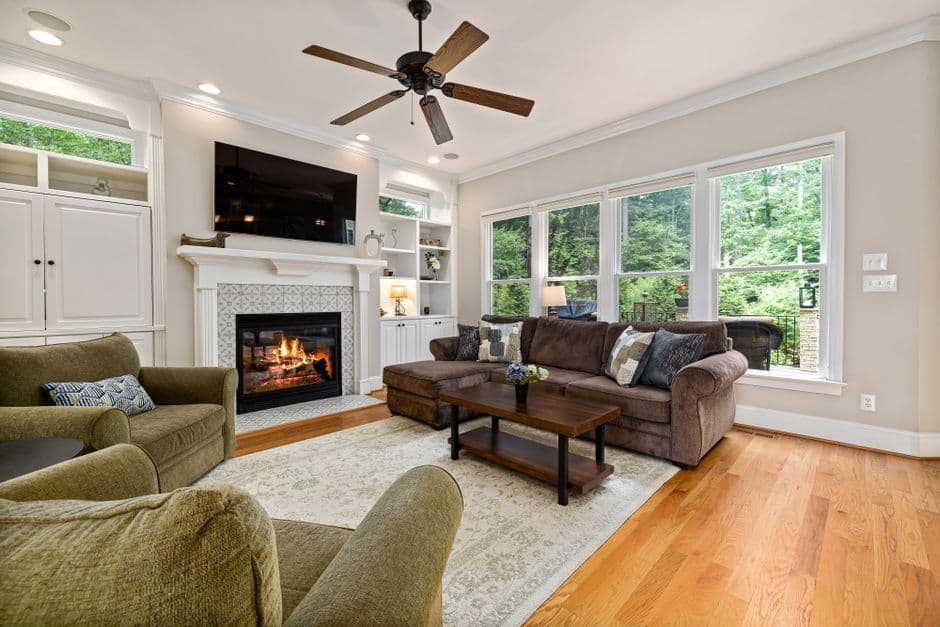
They are not substitutes. A certified 52-inch ceiling fan draws 16.3 W and moves air across skin; a 5,000 BTU window air conditioner is certified at 260.4 kWh a year and removes heat from the room. Below about 85°F in dry air the fan is often enough, and it costs 2.4¢ a night. Above that, or in humid air, only the air conditioner changes anything.
Fan & Frost earns a commission when you buy through our links, at no cost to you. It never changes a ranking, and we say so when the right answer is the cheaper unit or nothing at all. Full disclosure · How we pick.
At a glance
The picks, ranked
Tap any row to jump to the full reasoning. Prices are live from Amazon where we have them, and read “check price” where we don’t — never a number we cannot verify today.
| # | Product | Best for | Price |
|---|---|---|---|
| 1 | 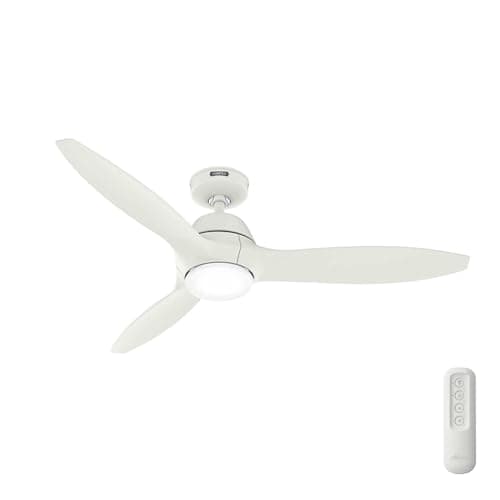 The ceiling fan case Hunter Skyway 52" Ceiling Fan with Light Kit 363.8 CFM per watt at 16.3 W on high — a whole night of air movement for a fraction of a cent. | Anyone in the room, when the air is already tolerable | |
| 2 | 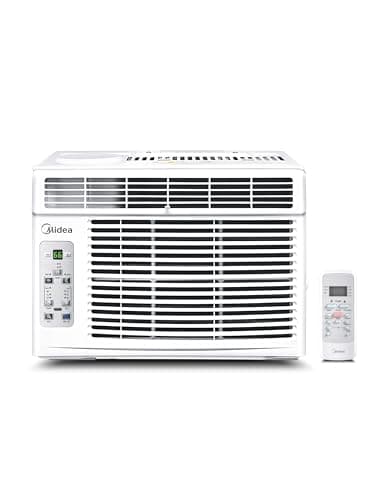 The air conditioner case Midea Window Air Conditioner, 5,000 BTU CEER 14.4 and 260.4 certified kWh a year — it removes heat and water from the room rather than moving air around it. | A room that is genuinely too hot, or humid enough to be unpleasant |
The numbers
Thirty times the power, for a different job
| Ceiling fan | Window AC, 5,000 BTU | |
|---|---|---|
| Certified figure | 363.8 CFM per watt | CEER 14.4 |
| Power in use | 16.3 W on high | roughly 350 W while running |
| Eight hours | 2.4¢ | part of 260.4 kWh/yr |
| Whole season | $2.87 (120 nights) | $48 |
| Lowers room temperature | No | Yes |
| Removes humidity | No | Yes |
| Works on an empty room | No | Yes |
| Needs a window | No | Yes |
The running-power row uses the certified annual figure divided across a season rather than a nameplate wattage, because that is what room air conditioners publish. The method, and every other format on one scale, is in the cheapest cooling to run.
When a fan is enough
The conditions that decide it
Air movement makes a person feel cooler by speeding evaporation from skin. That mechanism has limits that are physical rather than a matter of fan quality.
- Below roughly 85°F with moderate humidity, a ceiling fan is usually enough for a seated or sleeping person.
- In humid air the mechanism weakens, because sweat evaporates more slowly regardless of airflow — the reason is in why humidity makes heat worse.
- Above about 95°F moving air over skin starts delivering heat rather than removing it, which is why fans are not a heat-wave substitute for cooling and why heat-vulnerable households need more than airflow.
This one is not a DIY job
Together
The combination that saves the most
The genuinely useful answer for most houses is both, used deliberately: run the air conditioner at a higher set point and let the fan make up the difference in the rooms people are in.
- Raise the thermostat a couple of degrees rather than chasing a number. The cooling load falls with the temperature difference you are maintaining.
- Run the ceiling fan in occupied rooms only, at a speed that feels like a breeze rather than a wind tunnel.
- Check the direction. Counterclockwise in summer pushes air down; the seasonal switch is covered in ceiling fan direction in summer.
- Turn the fan off when you leave the room. This is the habit that decides whether the combination saves money or just adds 16 W to the bill.
The wider version of this argument, including what a set point change is worth, is in how to lower your cooling bill.
Say the unwelcome thing
Do not buy a ceiling fan expecting it to replace air conditioning.
It is the most common disappointment in this category, and it is not a question of buying a better fan. A ceiling fan moves air; it does not remove heat or water from a room. In a humid climate or above the mid nineties, no amount of airflow substitutes for cooling.
Buy the fan to lower what the air conditioner has to do, not to replace it. 16.3 watts at 363.8 CFM per watt is the cheapest comfort in the house, and a certified 5,000 BTU unit is what actually makes the room cooler.
In full
Every pick, and what is wrong with it
Published specifications only, each linked to the page it came from. Where a manufacturer publishes nothing, the row says so — we do not fill blanks in.
1. The ceiling fan case
Hunter Skyway 52" Ceiling Fan with Light Kit
Hunter · model 52" Skyway (damp-rated)
363.8 CFM per watt at 16.3 W on high — a whole night of air movement for a fraction of a cent.
Ceiling fans are the most efficient air-moving machines in the house, and the certified data shows how far ahead they are. This one files 363.8 CFM per watt on 16.3 W at high speed.
Eight hours costs 2.4¢ at 18.34¢/kWh. A full season of nightly use — say 120 nights — is $2.87. There is no other machine in home cooling that changes how a room feels for that kind of money.
The limit is precise and worth stating plainly: it does not lower the room temperature at all. It moves air, air movement speeds evaporation from skin, and that reads as several degrees cooler while you are in it. Leave the room and the fan is heating it very slightly, because the motor is in there.
What’s wrong with it
No temperature change, no dehumidification, and no effect at all on an empty room — running one for a house nobody is in is pure waste.
Running cost — 52" Skyway (damp-rated)
| Nameplate power | 2.1 W – 16.3 W | manufacturer's published figure |
|---|---|---|
| Energy, 8-hour night | 0.13 kWh | 16.3 ÷ 1000 × 8 |
| Cost per hour | 0.3¢ | at 18.34¢/kWh |
| Cost per 8-hour night | 2.4¢ | on the highest speed |
| Cost per 30 nights | 72¢ | 3.9 kWh |
| Same month, lowest speed | 9.2¢ | at 2.1 W |
Rate: 18.34¢/kWh, the US average residential price for June 2026 (EIA Electric Power Monthly, Table 5.3). Yours will differ — swap it in: (watts ÷ 1000) × hours × your rate.
| Blade span | 52 in |
|---|---|
| Efficiency | 363.8 CFM per watt |
| Power, high speed | 16.3 W |
| Power, low speed | 2.1 W |
| Standby power | 0.4 W |
| Type | Indoor, with light kit; damp-rated |
| Warranty | 3 years, components |
| ENERGY STAR | Certified |
Every figure above is from ENERGY STAR Certified Ceiling Fans dataset. Blanks are shown as “not published” rather than filled in.
2. The air conditioner case
Midea Window Air Conditioner, 5,000 BTU
Midea · model MAW05R1VWWT-T
CEER 14.4 and 260.4 certified kWh a year — it removes heat and water from the room rather than moving air around it.
An air conditioner is a heat pump: it takes heat out of the room air and puts it outside. That is a categorically different job from moving air, and it is the only one of the two that works on an empty room, a humid night or a 95-degree afternoon.
Certified at CEER 14.4 and 260.4 kWh a year, this 5,000 BTU unit costs about $48 for a season at 18.34¢/kWh. That is the certified figure for a whole cooling season, not for continuous running — the unit cycles.
It also removes humidity as a side effect of cooling, which is a large part of why a room with an air conditioner feels different rather than just cooler. A fan cannot do it, and in humid weather it is most of the comfort.
What’s wrong with it
Roughly thirty times the running power of a ceiling fan, it needs a window, and it does nothing for the rooms it is not in.
Running cost — MAW05R1VWWT-T
| Annual energy use | 260.4 kWh | ENERGY STAR certified figure |
|---|---|---|
| Annual cost | $48 | 260.4 × 18.34¢/kWh |
| Per cooling month | $12 | spread over a four-month season |
The annual figure is the certified value from the ENERGY STAR Certified Room Air Conditioners dataset, which models a standard cooling season rather than your actual summer. It is more useful than a nameplate wattage here, because a variable-speed compressor spends most of its life well below nameplate.
Rate: 18.34¢/kWh, the US average residential price for June 2026 (EIA Electric Power Monthly, Table 5.3). Yours will differ — swap it in: (watts ÷ 1000) × hours × your rate.
| Cooling capacity | 5,000 BTU/h |
|---|---|
| CEER | 14.4 |
| Annual energy use | 260.4 kWh/yr |
| vs federal standard | 31% less energy |
| Dimensions | 12.1 H x 16.0 W x 13.3 D in |
| Weight | 30.2 lb |
| Installation | Does not straddle the windowsill |
| Support bracket | Not required |
| Compressor | Variable speed |
| Refrigerant | R-32 |
| ENERGY STAR | Certified (not on the Most Efficient list) |
Every figure above is from ENERGY STAR Certified Room Air Conditioners dataset. Blanks are shown as “not published” rather than filled in.
Questions people actually ask
Frequently asked
Is a ceiling fan cheaper than air conditioning?
Dramatically — a certified 52-inch fan draws 16.3 watts, so an eight-hour night costs a fraction of a cent, against 260.4 certified kWh a year for a 5,000 BTU window unit. They are not doing the same job, so the comparison sets expectations rather than deciding a purchase.
Can a ceiling fan replace an air conditioner?
Only below roughly 85 degrees in air that is not too humid, and only for people actually in the room. A fan does not lower room temperature or remove humidity; it speeds evaporation from skin, which has physical limits. What a fan really does.
Does running a ceiling fan with the AC save money?
Yes, if you raise the thermostat to match. The saving comes from the higher set point, not from the fan itself, so running both at the old set point simply adds the fan's watts to the bill. Lowering the bill properly.
Should I turn off a ceiling fan when I leave the room?
Yes. A fan cools people, not rooms, and its motor adds a small amount of heat. In an empty room it is a very small heater running at your expense.
Which is better for a bedroom, a ceiling fan or an air conditioner?
In a mild climate the fan, for the running cost and the steady sound. Where nights stay above the mid eighties or humidity is high, the air conditioner, because sleep quality depends on the body shedding heat and a fan cannot lower the dew point. Bedroom ceiling fans.
Sources
Where these numbers came from
- ENERGY STAR Certified Ceiling Fans dataset — 363.8 CFM per watt and 16.3 W high-speed input power for the Hunter Skyway 52-inch
- ENERGY STAR Certified Room Air Conditioners dataset — CEER 14.4 and 260.4 kWh/yr for the 5,000 BTU unit compared here
- EIA Electric Power Monthly, Table 5.3 — average residential electricity price
Read next
Where to go from here
Back to Whole-House Airflow, or read how we pick.