Best tower fan
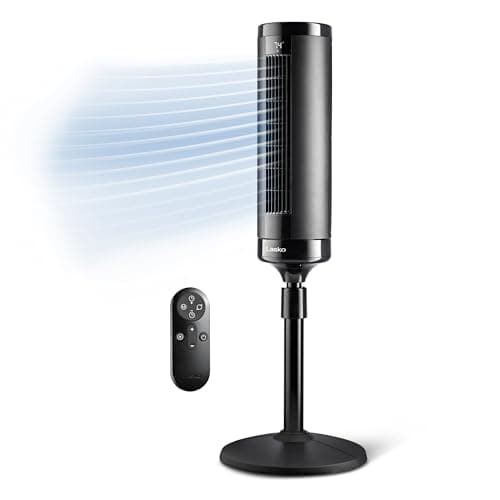
Lasko EcoQuiet 42" DC Tower Fan
Lasko · T42710
23 dBA on low and 19 W flat out, from the only tower fan here that publishes a noise figure at all.
Why, and what’s wrong with it →Cooling matched to the room
Trusted because we show our math, not because we say so. We have not tested a single one of these products — what we do instead is compile the published specifications, compute the running cost at a cited electricity rate, and print every formula so you can check it.

Everyone in this category says they tested twenty units. We have not tested any, and we say so. What we have instead is every published specification traced to the page it came from, the ENERGY STAR certified datasets, and arithmetic you can reproduce with a calculator — the method is published in full.
The picks
The top pick from each of our 80 ranked lists. Prices are live from Amazon where we hold them and read “check price” where we do not — verified October 19, 2026.
Best tower fan
Lasko · T42710
23 dBA on low and 19 W flat out, from the only tower fan here that publishes a noise figure at all.
Why, and what’s wrong with it →Best box fan
Lasko · B20801
A weather-resistant motor and a 2-year warranty on a fan that will spend its life sitting in an open window.
Why, and what’s wrong with it →Best pedestal fan
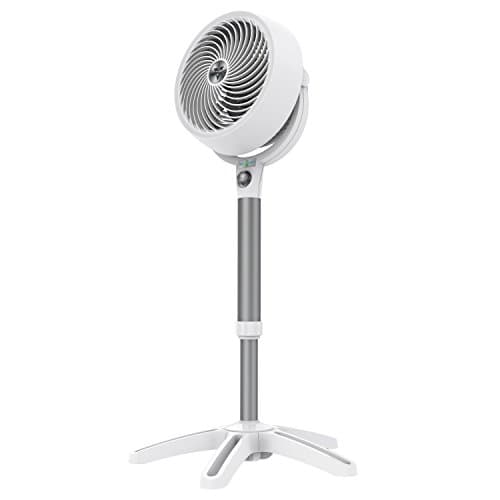
Vornado · 683DC
A published 80 ft airflow reach and a 5-year warranty, which is five times the coverage anyone else here offers.
Why, and what’s wrong with it →Best bladeless fan
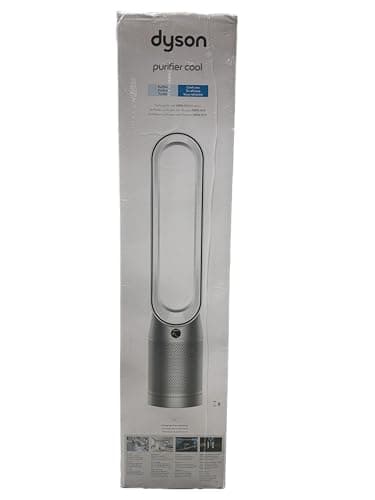
Dyson · TP07
The design is genuinely well executed, and the HEPA purification is a real second function — but the published data does not let you compare it with anything.
Why, and what’s wrong with it →Best floor fan
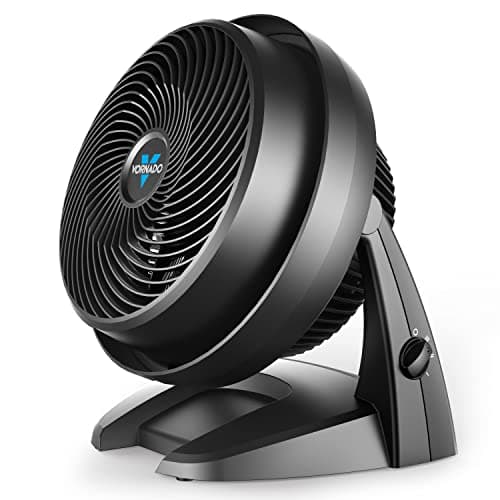
Vornado · 630
A published 70 ft reach and a 5-year warranty — it circulates a room rather than stirring its own corner.
Why, and what’s wrong with it →Best window fan
Lasko · W09550
Two independent motors and a thermostat, at 31 W — the only fan here that can push air both ways through one window.
Why, and what’s wrong with it →Best desk fan
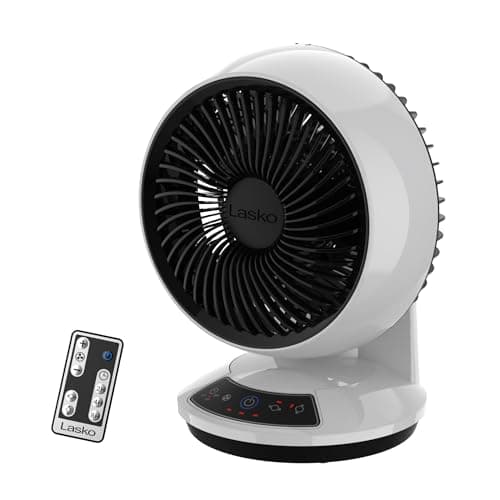
Lasko · A12107
39 dBA and 18 W on low, published, plus a wall-mount option that gets it off the desk entirely.
Why, and what’s wrong with it →Quietest fan
Lasko · T42710
23 dBA on low, published, with twelve speeds so you can actually find the quiet-enough setting.
Why, and what’s wrong with it →Best for a large room
Visual Comfort & Co. · Kingston 72 LED
385.0 CFM per watt — the highest certified figure we found at any size — from a 72-inch span on 27.8 W.
Why, and what’s wrong with it →Best bedroom fan
Lasko · T42710
23 dBA and 2.9 W on low, twelve speeds, and a 12.8-inch square footprint.
Why, and what’s wrong with it →Best misting fan
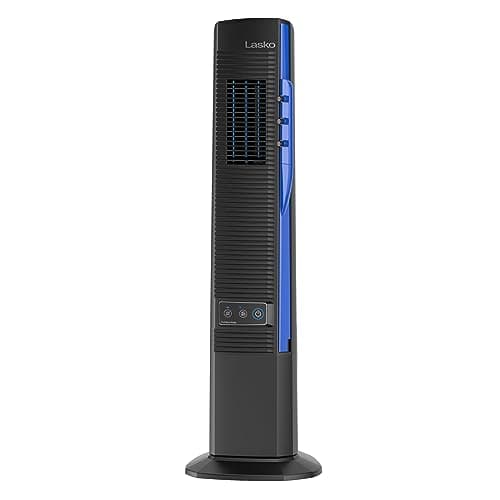
Lasko · YF300
A 42-inch tower puts the mist at standing and seated height rather than at ankle level, and the 10 ft cord reaches where patios actually have outlets.
Why, and what’s wrong with it →Best smart fan
Lasko · T40733
The only fan here that publishes CFM, wattage and dBA together — 460 CFM, 41-52 W, 31.5 dBA low — and adds app and voice control on top.
Why, and what’s wrong with it →Best clip-on fan
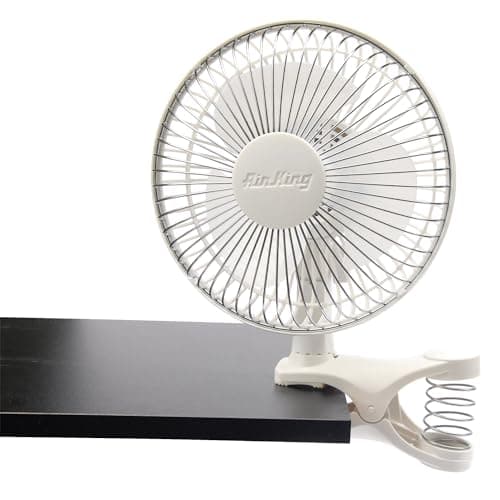
Air King · 9145
190 CFM on 12 W with 34 dBA published — the only clip-on we found that publishes airflow, wattage and noise together.
Why, and what’s wrong with it →Best DC fan
Lasko · T42710
2.9-19 W, twelve speeds and 23 dBA published — the specification sheet is better in every dimension that is published for both.
Why, and what’s wrong with it →Best oscillating fan
Lasko · T42710
23 dBA on low and 2.9 W, with twelve speeds — the quietest and cheapest oscillating fan we hold figures for.
Why, and what’s wrong with it →Best for white noise
Air King · 9145
34 dBA low, 37 dBA high — a three-decibel spread, the narrowest of any fan we hold figures for.
Why, and what’s wrong with it →Best cordless fan
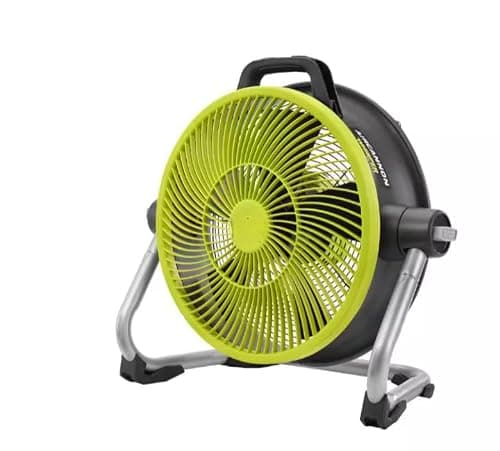
Ryobi · PCL813B
2,300 CFM on high from an 18V battery, with a barrel-plug AC adapter as a second power source.
Why, and what’s wrong with it →Best circulator
Vornado · 630
Vornado states it moves air up to 70 feet, with a five-year warranty — five times the category norm.
Why, and what’s wrong with it →Best high-velocity fan
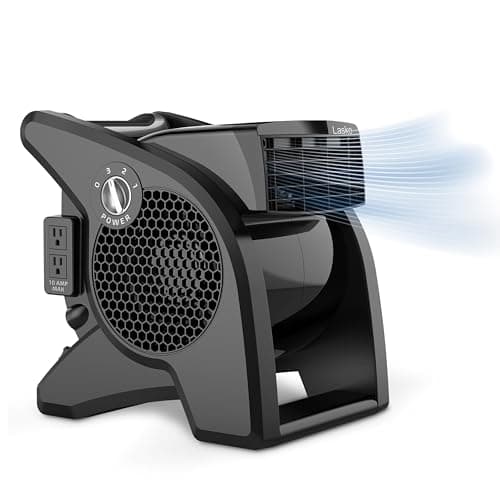
Lasko · U15720
160 to 178 W with a pivoting head and two 120 V accessory outlets — a genuine jobsite tool.
Why, and what’s wrong with it →Best filtering fan
Dyson · TP07
HEPA and activated carbon filtration with 40 W maximum input power and under 0.5 W standby.
Why, and what’s wrong with it →Best wall-mount fan
Lasko · A12107
Wall-mountable at 18 to 32 W with a 50-foot air throw and published 39 to 55 dBA.
Why, and what’s wrong with it →Best window AC
GE Profile · PWJV08W
The best certified efficiency at 8,000 BTU, in the lightest and shallowest body of anything here.
Why, and what’s wrong with it →Best AC brand
GE Profile · PWJV08W
GE files three certified models and all three are Most Efficient at CEER 16 — the only brand here with a perfect record at scale.
Why, and what’s wrong with it →Best portable AC
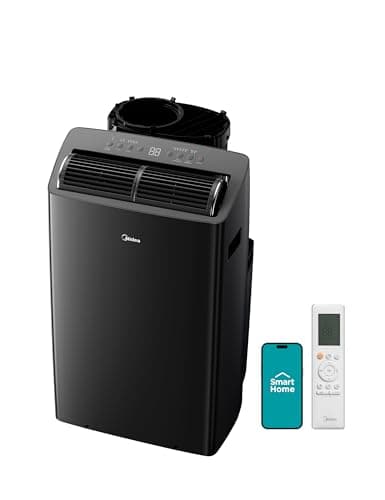
Midea · MAP14S1TBL
The smallest SACC haircut we found and the quietest published figure, which is the combination that matters here.
Why, and what’s wrong with it →Best for a small room
Midea · MAW06V1QWT
6,000 BTU is genuinely the right capacity for a small room, and this uses 298 kWh a year to deliver it.
Why, and what’s wrong with it →Quietest AC
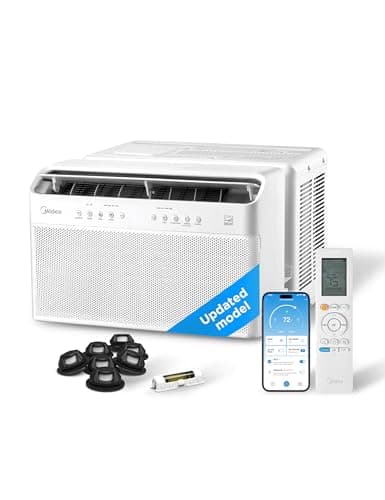
Midea · MAW08V1QWT-S
The U-shape puts the compressor outside a closed window, which beats any amount of sound insulation on a conventional unit.
Why, and what’s wrong with it →Best window pick
GE Profile · PWJV08W
CEER 16 and 375 kWh a year, in the lightest 8,000 BTU body in the certified data.
Why, and what’s wrong with it →Best for renters
Midea · MAW06V1QWT
No bracket, no drilling, nothing protruding — and the window still opens above it.
Why, and what’s wrong with it →Best for a large room
Friedrich · KCVM14B10B
CEER 16.2 is the highest we found at this capacity — 51% below the federal standard, at 652.8 kWh a year.
Why, and what’s wrong with it →Best through-the-wall AC
Friedrich · WCVT10B10B
CEER 14.2 is the highest in the certified through-the-wall data, and it is on the ENERGY STAR Most Efficient list.
Why, and what’s wrong with it →Best window pick
GE Profile · PWJV08W
CEER 16 and 375 kWh a year, installed by you in an afternoon for the price of the unit alone.
Why, and what’s wrong with it →Best heat-pump window unit
Midea · MAH09B1AGR
CEER 17.6 and 404.8 kWh a year at 9,500 BTU — 80% less energy than the federal standard, and the top CEER in the whole dataset.
Why, and what’s wrong with it →Best 5,000 BTU
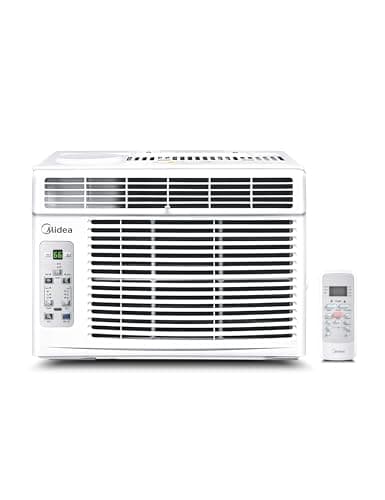
Midea · MAW05R1VWWT-T
CEER 14.4 and 260.4 kWh a year at 30.2 lb — the joint-best certified figure in the sub-6,000 BTU class.
Why, and what’s wrong with it →Best 8,000 BTU
GE Profile · PWJV08W
CEER 16 and 375 kWh a year — the top of the class, and the shallowest at 15.3 inches.
Why, and what’s wrong with it →Best 12,000 BTU
TCL · T12WV4S
CEER 16, 562.5 kWh a year and 51.8 lb — near-top efficiency at less than half the weight of the class leader.
Why, and what’s wrong with it →Best evaporative cooler
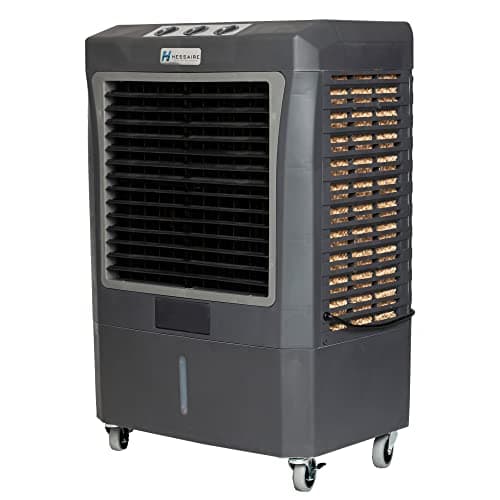
Hessaire · MC37M
3,100 CFM on 250 W is the best airflow-per-watt figure here, from the most complete spec sheet in the category.
Why, and what’s wrong with it →Best dry-climate pick
Hessaire · MC37M
3,100 CFM on 250 W, which is a fifth of a portable AC's draw for real cooling — where the air is dry enough.
Why, and what’s wrong with it →Best for a garage
Hessaire · MC37M
The most airflow per watt here and a tank big enough to last a working day without refilling.
Why, and what’s wrong with it →Best for a patio
Honeywell · CO60PM
A published 30 ft throw with oscillation, the biggest tank here, and every specification stated.
Why, and what’s wrong with it →Best indoor cooler
Honeywell · CL25AE
52 to 60 dBA and 25.4 lb, with a 7.5 hour timer and a 33-foot air throw — the only unit here designed for a room.
Why, and what’s wrong with it →Best for a large space
Hessaire · MC37M
3,100 CFM on 250 W — the best air-per-watt of any evaporative cooler we hold data for, with continuous hookup.
Why, and what’s wrong with it →Best ceiling fan
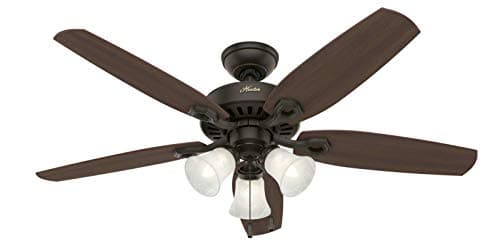
Hunter · Vespucci
366.7 CFM per watt is the best certified efficiency at the size that fits most rooms, and 1.8 W on low is remarkable.
Why, and what’s wrong with it →Best garage exhaust
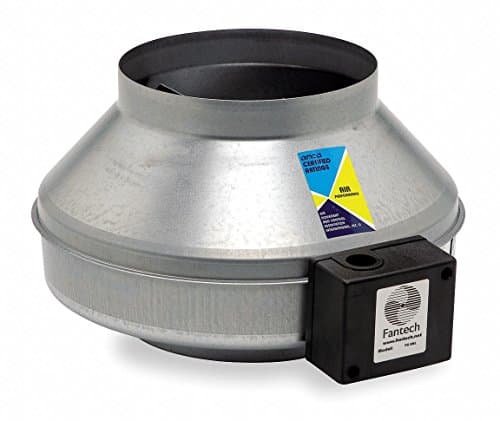
Fantech · FG 8 Series
390 CFM through an 8-inch duct, and the motor sits in the duct run rather than on your ceiling.
Why, and what’s wrong with it →Best outdoor fan
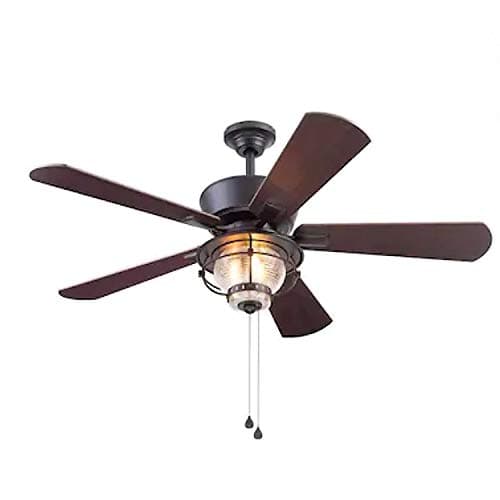
Harbor Breeze · 84" Cando
422.2 CFM per watt on 30.6 W — the highest figure of any outdoor-rated fan in the certified dataset.
Why, and what’s wrong with it →Best small-room fan
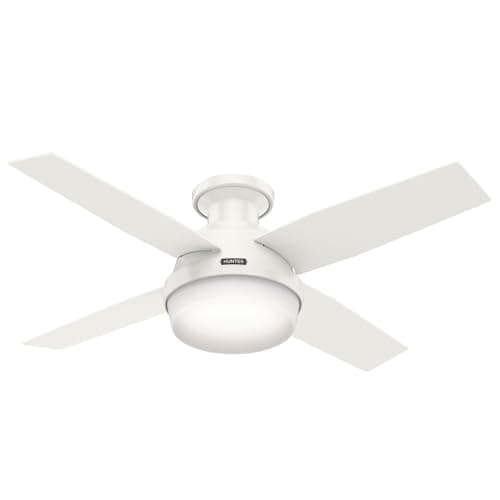
Hunter · 44in Martindale
304.5 CFM per watt on 10.1 W — the most efficient small fan in the certified data we hold, and only 1.1 W on low.
Why, and what’s wrong with it →Best bathroom fan
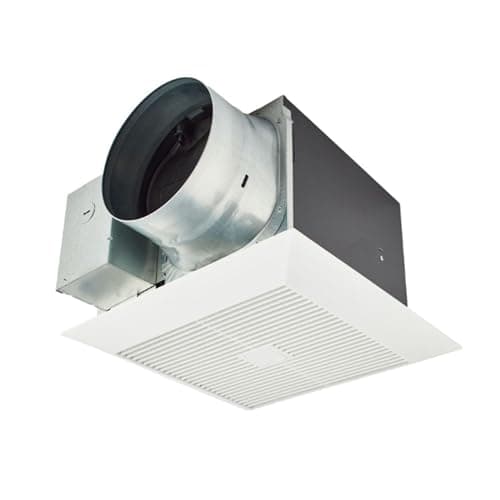
Panasonic · FV-0511VK3
0.1 sones and 16.7 CFM per watt at 110 CFM — joint-highest efficacy in the certified dataset, at the quietest rating it publishes.
Why, and what’s wrong with it →Best in-line fan
Fantech · FG 10 EC
460 CFM at 5.2 CFM per watt — the highest efficacy of any certified in-line fan we hold data for.
Why, and what’s wrong with it →Best big-span fan
Aeratron · AE+2WI60
483.0 CFM per watt on 16.2 W — the highest figure in the entire 1,398-record certified dataset, at 60 inches.
Why, and what’s wrong with it →Best fan with a light
Visual Comfort & Co. · Kingston 72 LED
385.0 CFM per watt on 27.8 W at 72 inches — strong certified fan performance in a fan-and-light fixture.
Why, and what’s wrong with it →Best smart fan
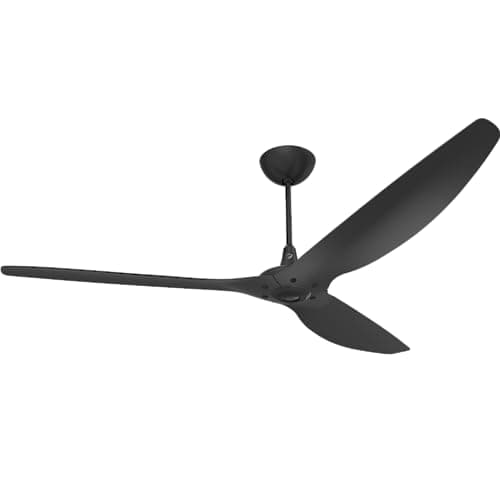
Big Ass Fans · MK-i61-071806
418.0 CFM per watt at 84 inches, connected, with a five-year component warranty — rare in a category where three is standard.
Why, and what’s wrong with it →Best range hood
Best · HBN536212SS
200 CFM at 16.6 CFM per watt — more than three times the category median, and the most airflow here.
Why, and what’s wrong with it →Best whole-house fan
QuietCool · QC STL PRO-4.8X
4,280 CFM on high, and 2,361 CFM on just 73.9 W — 31.9 CFM per watt, the best efficacy figure on this site.
Why, and what’s wrong with it →Best hugger fan
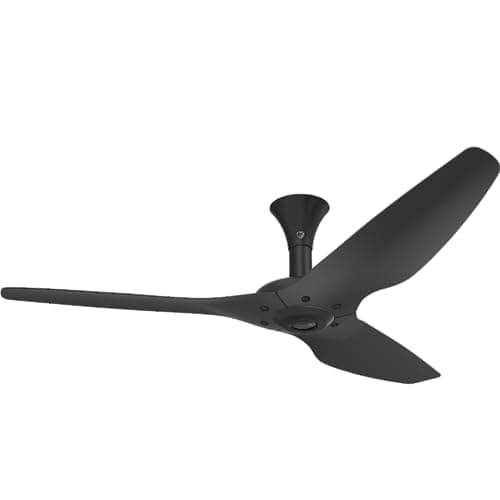
Big Ass Fans · MK-HK4-05240001
339.0 CFM per watt across a 60-inch span at 16.2 W — near the top of the flush-mount field, with a 5-year warranty.
Why, and what’s wrong with it →Best living room fan
Aeratron · AE+2WI60
483.0 CFM per watt at 60 inches — the most efficient certified ceiling fan we hold data for, at 16.2 W on high.
Why, and what’s wrong with it →Best dehumidifier
Vellgoo · TAURUS PRO-RCS50(Y)-N4-3-25
2.24 L/kWh — the highest IEF of any certified portable we hold data for, at 45 pints a day and 444 kWh a year.
Why, and what’s wrong with it →Best fan with a timer
Lasko · T42710
2.9 W on the lowest of 12 speeds with a published 23 dBA and an 8-hour timer — the closest match to how a night actually works.
Why, and what’s wrong with it →Best awkward-window fan
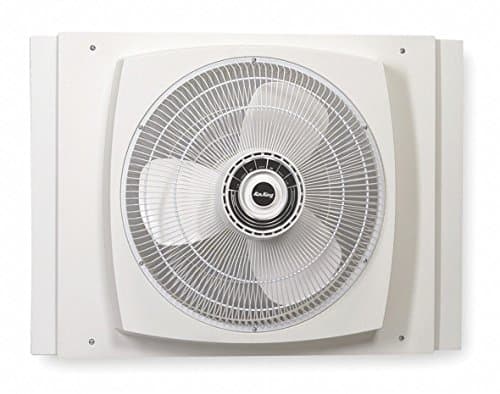
Air King · 9155
2,470 CFM on 90 W at 27.4 CFM per watt — the most efficient window fan we can source specs for, at 15 lb and only 8.25 inches deep.
Why, and what’s wrong with it →Best exhaust fan
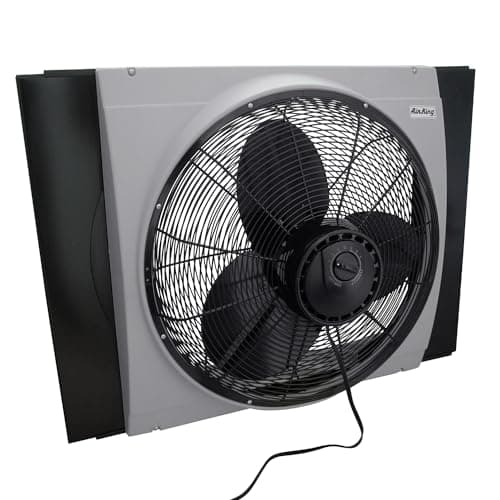
Air King · 9166F
3,560 CFM on high, reversible, and the Storm Guard housing lets the window close behind it — the most air any window fan here moves out.
Why, and what’s wrong with it →Best 10,000 BTU unit
Midea · MAW10V1WWT
CEER 16 and 468.8 kWh a year at 47.2 lb, with no support bracket required — the efficiency ceiling of the class in the lightest practical body.
Why, and what’s wrong with it →Best smart AC
LG · LW6023IVSM
CEER 15.5 and 290.3 kWh a year with LG ThinQ, Alexa and Google Assistant, a 24-hour timer and no support bracket required.
Why, and what’s wrong with it →Best bedroom fan
Aeratron · AE+2WI50
377.0 CFM per watt at 50 inches — the efficiency ceiling of the bedroom span band, at 14.0 W on high and 2.7 W on low.
Why, and what’s wrong with it →Best whole-house dehumidifier
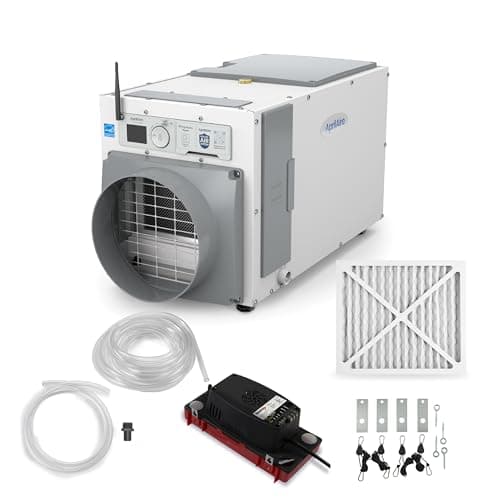
AprilAire · E080W
65 certified pints a day at 2.35 L/kWh and 632 kWh a year, ENERGY STAR Most Efficient, with 10-inch duct collars and a direct drain.
Why, and what’s wrong with it →Best budget window AC
Midea · MAW05R1VWWT-T
CEER 14.4 and 260.4 certified kWh a year — the lowest certified consumption of any unit we track, at the bottom of the market.
Why, and what’s wrong with it →Best for occasional use
Midea · MAW05R1VWWT-T
5,000 BTU at CEER 14.4 in the lightest format that still removes heat — easy to fit, easy to lift out, cheap to own.
Why, and what’s wrong with it →Best AC for a 15-amp circuit
Midea · MAW05R1VWWT-T
5,000 BTU at CEER 14.4 works out near 2.9 A running — the smallest load that still removes real heat.
Why, and what’s wrong with it →Best cooling under $100
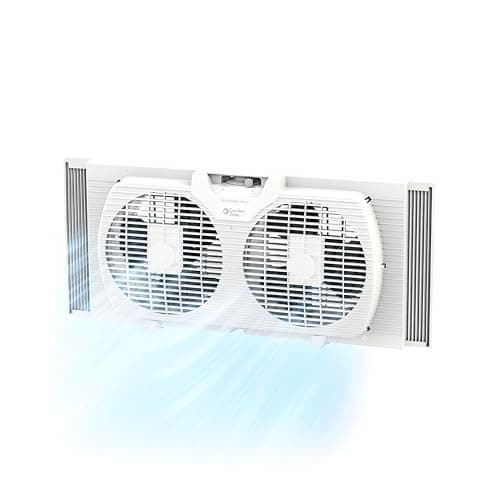
Comfort Zone · CZ319WT
Two 9-inch fans with a reversible airflow control, fitting openings from 22.25 inches wide — the cheapest way to exchange air rather than stir it.
Why, and what’s wrong with it →Most published airflow
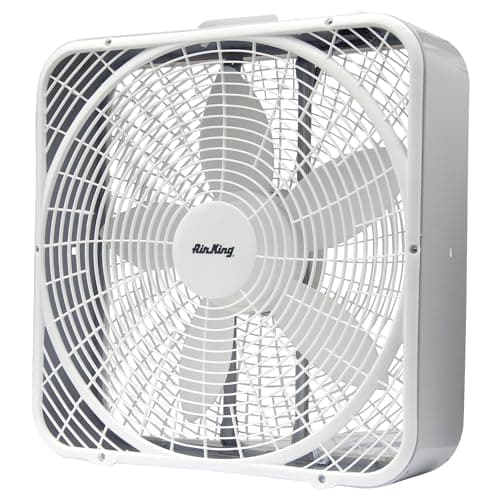
Air King · 9723
2,163 CFM on 105 W, published by the manufacturer with the blade speed and amperage to go with it. Nothing else in the category is even stated.
Why, and what’s wrong with it →Lowest published draw
Air King · 9723
65 W on low for 1,463 CFM — 22.5 CFM per watt, the only box fan efficiency figure that can be calculated from published numbers rather than guessed.
Why, and what’s wrong with it →Most air on a desk
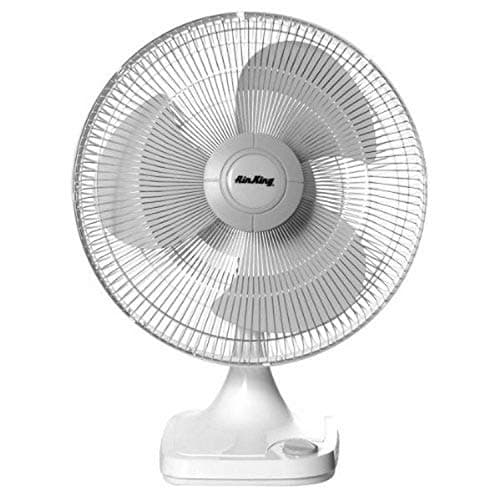
Air King · 9106 (sold at retail as 3151G)
1,710 CFM on 77 W with oscillation — the only desk-sized fan with a published airflow table, and it is four to nine times what a typical desk fan moves.
Why, and what’s wrong with it →Best thermostat window fan
Lasko · W09550
An adjustable thermostat plus two independently reversible motors on 22-31 W — the only window fan here where you set an actual temperature.
Why, and what’s wrong with it →Quietest ceiling fan
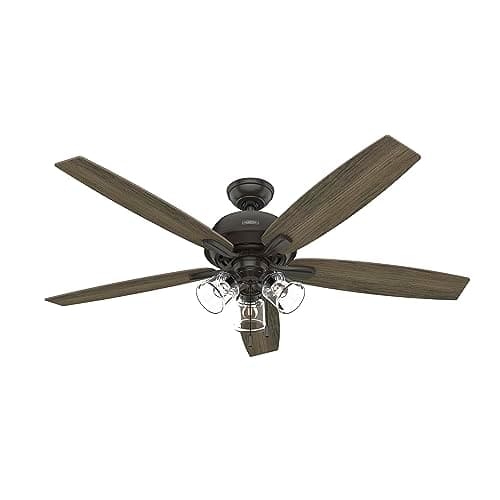
Hunter · 53606
1.0 W on low at a 60-inch span, certified at 413.5 CFM per watt and on the ENERGY STAR Most Efficient list. The least motor work at the setting that matters.
Why, and what’s wrong with it →Best ceiling fan brand
Hunter · 53606
Hunter's best certified fan: 413.5 CFM per watt on 14.3 W, 1.0 W on low, 60 inches, on the Most Efficient list. The range it comes from is the real argument.
Why, and what’s wrong with it →Best drum fan
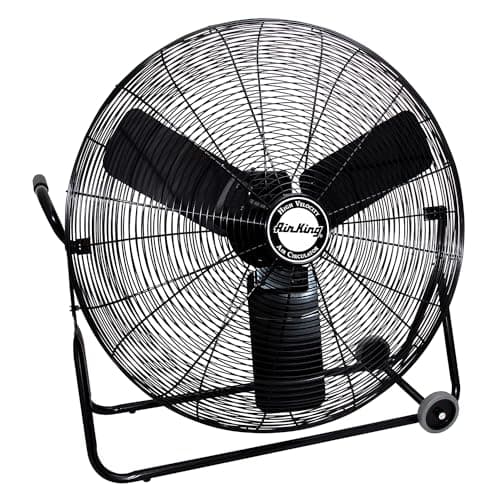
Air King · 9230
7,400 CFM on 255 W, at 29.0 CFM per watt. More air than any portable fan we can source specs for, and the best efficiency on the site outside ceiling fans.
Why, and what’s wrong with it →Best dehumidifier brand
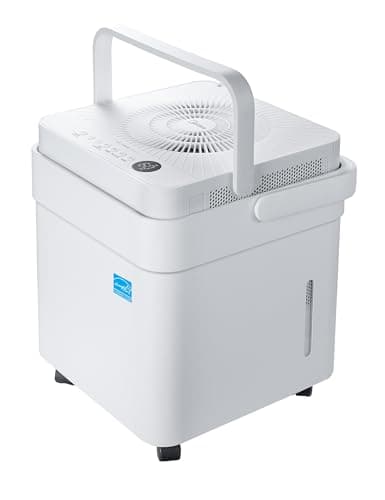
Midea · MDUDMB-50AEN8-BB0F
IEF 2.08 L/kWh across 49 certified models, the only household name above the 2.01 ceiling that 47 other brands share. 49.67 pints a day.
Why, and what’s wrong with it →Best fan brand
Air King · 9723
The only brand here that publishes airflow and wattage on every model we can source — and the numbers are also the best, from 15.8 to 29.0 CFM per watt.
Why, and what’s wrong with it →Best humidity-sensing fan
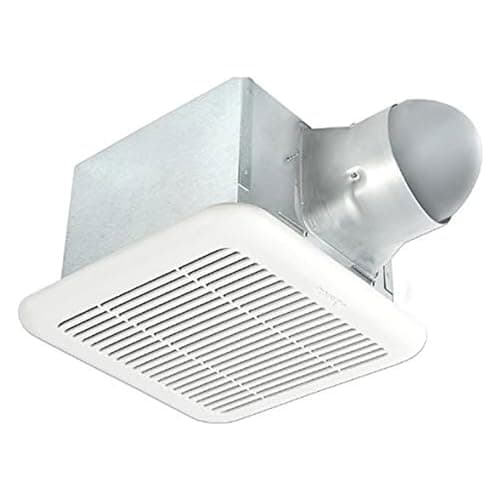
Delta · SIG80-110MH
110 / 60 / 30 CFM, 0.1 sones and 15.3 CFM per watt on a 6-inch duct, with humidity and motion sensing. Certified identically to the non-sensing version of the same fan.
Why, and what’s wrong with it →Best for drying laundry
Midea · MDUDMB-50AEN8-BB0F
49.67 pints a day, about 23.5 liters, at IEF 2.08 L/kWh. The only household-name brand above the certified efficiency ceiling, and the cheapest per liter on this page.
Why, and what’s wrong with it →Best fan for drying laundry
Air King · 9723
2,163 / 1,900 / 1,463 CFM on 105 / 87 / 65 W, at 20.6 CFM per watt. A 20-inch square of moving air is exactly the shape of a clothes airer.
Why, and what’s wrong with it →Best cooling gift
Air King · 9145
190 CFM on 9 to 12 W, and a published 34 dBA on low. The only fan on this page that states a decibel figure, which is the specification a gift actually needs.
Why, and what’s wrong with it →Best hygrometer
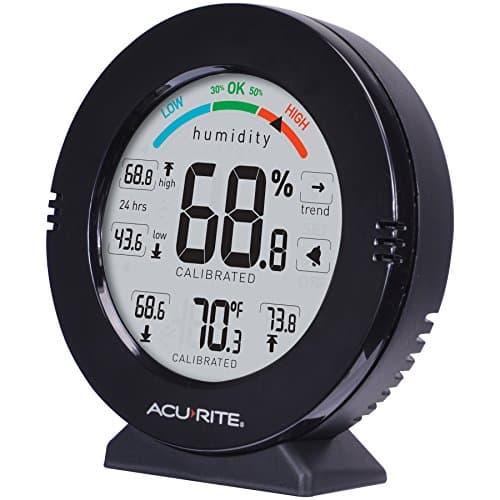
AcuRite · 01080M
±2% RH from 10 to 90%, ±0.5 F, a manual calibration option and 24-hour plus all-time high/low records. The only pick that is both cheap and candid about where its accuracy applies.
Why, and what’s wrong with it →Start from the room, or the product
People arrive at this either knowing they want a tower fan, or knowing only that their bedroom is 84°F. Both routes end at the same hardware; the second usually has a better answer.
58 pages
Tower, box, pedestal, window, desk and circulator fans, sorted by what each actually does to a room.
Start here →
49 pages
Window, portable and through-the-wall units, sized from the ENERGY STAR tables with certified running costs.
Start here →22 pages
Swamp coolers for dry climates, garages and patios, with the humidity rule stated up front.
Start here →
29 pages
Portable and whole-home dehumidifiers ranked on certified IEF and annual kWh, with sizing and the noise figure nobody publishes.
Start here →
46 pages
Ceiling fans ranked on certified CFM per watt, plus attic and whole-house fans and what they really do.
Start here →
33 pages
Bedroom, apartment, upstairs, garage and dorm: what makes each one hot, and the fix that fits.
Start here →35 pages
Sizing tables, cost-per-night arithmetic and the BTU-versus-SACC gap. Every formula shown, not asserted.
Start here →Why this site is different
Every cost on this site is (watts ÷ 1000) × hours × rate, at 18.34¢/kWh from the EIA, with the formula printed next to the answer. A 19 W fan is 84¢ a month of nights; a 1,300 W portable AC is $57.
Not “20 BTU per square foot” but the ENERGY STAR table, with all four of its adjustments — including the +4,000 BTU for a kitchen that almost every calculator omits, and which moves most open-plan rooms a whole capacity band.
All 214 of our ranked lists name a product we recommend against, and why. A list where everything is great is a list nobody should believe — and the skip is usually a popular product bought for the wrong room.
The one table most people need
Measure length by width in feet and read across. Then +10% if the room is very sunny, −10% if heavily shaded, +600 BTU per person beyond two, and +4,000 BTU in a kitchen.
| Room area (sq ft) | Capacity needed (BTU/h) |
|---|---|
| 100 up to 150 | 5,000 |
| 150 up to 250 | 6,000 |
| 250 up to 300 | 7,000 |
| 300 up to 350 | 8,000 |
| 350 up to 400 | 9,000 |
| 400 up to 450 | 10,000 |
| 450 up to 550 | 12,000 |
| 550 up to 700 | 14,000 |
Source: ENERGY STAR, Room Air Conditioners. ENERGY STAR notes the capacities “are calculated based on an 8-foot ceiling.” The full chart, with the adjustments.
The full walkthrough, with four rooms worked start to finish →
Read these first

Guide
Two real 14,000 BTU units are DOE-rated at 12,000 and 9,500. The mechanism, the sources, and which number to size from.
Top pick
Midea Duo Smart Inverter Portable Air Conditioner

Guide
Measure, read the ENERGY STAR table, apply the four adjustments, correct for SACC. The sizing walkthrough, with the official table.
Top pick
Midea U-Shaped Window Air Conditioner, 6,000 BTU

Best window pick
Certified 375 kWh a year versus a portable that can use that in six weeks. The physics, and the four cases where the portable still wins.
Top pick
GE Profile ClearView Window Air Conditioner, 8,000 BTU

Guide
The humidity threshold, why it exists, and a two-minute check on your own climate before you spend anything.
Top pick
Hessaire MC37M Mobile Evaporative Cooler
Latest
How this is funded
When you buy through a link here, Amazon pays us a percentage at no cost to you. There are no sponsored posts, no paid placements and no free products — and commission does not affect a ranking. Our picks skew toward correctly-sized, efficient units, which are frequently the cheaper option and therefore pay us less. On the window AC page we recommend a 6,000 BTU unit costing $55 a year to run and explicitly tell you not to buy the 24,000 BTU unit that would earn us several times as much.