Guide and picks
What is the biggest fan you can buy for a home?
Largest by span, largest by airflow and largest you can carry are three different answers, and only one of them is probably what you want.
By Sawyer V. · Published
The short answer
84 inches is the largest residential ceiling fan span — three ENERGY STAR certified models reach it, including the Big Ass Fans Haiku MK-i61. By air moved the answer is different: a whole-house fan at 6,996 CFM. And the biggest fan you can actually pick up is 20 inches — the box and window fan format has not grown in fifty years, because a sash window has not either.
Fan & Frost earns a commission when you buy through our links, at no cost to you. It never changes a ranking, and we say so when the right answer is the cheaper unit or nothing at all. Full disclosure · How we pick.

At a glance
The picks, ranked
Tap any row to jump to the full reasoning. Prices are live from Amazon where we have them, and read “check price” where we don’t — never a number we cannot verify today.
| # | Product | Best for | Price |
|---|---|---|---|
| 1 | 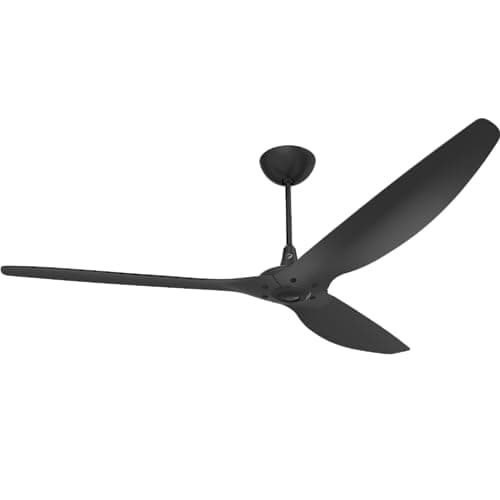 Biggest span you can buy Big Ass Fans Haiku MK-i61 84" Ceiling Fan 84 inches of span on 39.8 W, certified at 418 CFM per watt — the largest blade diameter available in a residential ceiling fan, and among the most efficient at any size. | A great room, a vaulted living space or an open-plan floor of 400 sq ft and up | |
| 2 | Biggest airflow in a house QuietCool Stealth Pro X Whole House Fan, 6,996 CFM 6,996 CFM on 725 W — roughly twice the airflow of the largest window fan and three times the largest box fan, from a single ceiling grille. | A 2,300 to 3,500 sq ft house in a climate where the night air is genuinely cooler | |
| 3 | 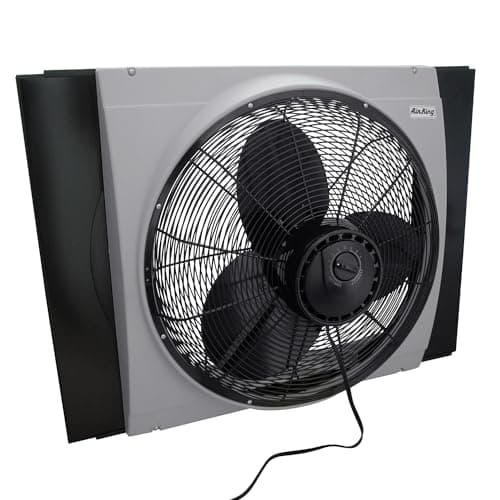 Biggest fan you can put in a window Air King 20" Whole House Window Fan 3,560 CFM on 170 W from a 20-inch blade — the most air published for anything that is not permanently installed. | A large double-hung window, and a house you want to flush out at night | |
| 4 | 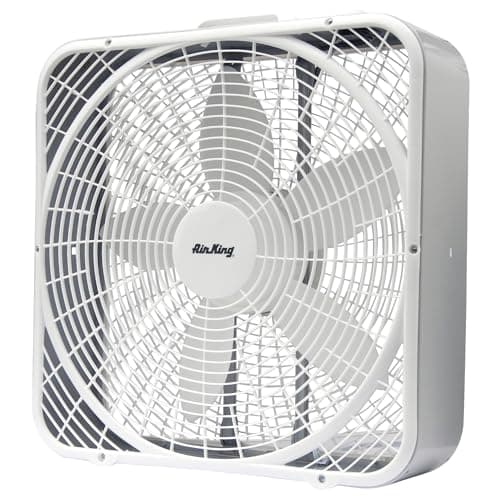 Biggest fan you can carry Air King 9723 20" Commercial Grade Box Fan 2,163 CFM on 105 W from 20 inches and 11.4 lb — the most air published for a fan one person picks up with one hand. | Anywhere. This is the size ceiling for a fan you move from room to room | |
| — |  Tallest, and the one to skip if you meant biggest Lasko Wind Curve 42" Tower Fan 42.5 inches tall and 720 CFM. The tallest fan in the house moves a fifth of what the 20-inch box fan does. | A corner where floor space is the constraint, not a room that needs air |
“Biggest fan” has three answers depending on what you are measuring, and conflating them is how people end up with an 84-inch ceiling fan in a 12 by 14 bedroom.
The ceilings
The size limit in every format
| Format | Largest size | Published airflow | Power |
|---|---|---|---|
| Whole-house fan | 6,996 CFM class | 6,996 CFM | 725 W |
| Ceiling fan | 84 in span | 418 CFM per watt | 39.8 W |
| Window fan | 20 in blade | 3,560 CFM | 170 W |
| Box fan | 20 in blade | 2,163 CFM | 105 W |
| Table fan | 16 in blade | 1,710 CFM | 77 W |
| Air mover | 15 in blade | Not published | 178 W |
| Tower fan | 42.5 in tall | 720 CFM | 49 W |
| Pedestal fan | 18 in blade | Not published | Not published |
Each row is the largest example in our product registry with a published figure. Ceiling fans are certified on CFM per watt rather than absolute airflow, which is why that row reads differently.
Why
Why portable fans stop at 20 inches
It is not a manufacturing limit. It is three constraints that all land in the same place.
- The window. The box fan format exists to sit in a double-hung sash opening. Those are typically 24 to 38 inches wide, so a frame much over 21 inches stops fitting the common case.
- The hand. A 20-inch steel box fan weighs about 11 lb and a 20-inch window fan about 37. Blade area scales with the square of the diameter, so a 24-inch fan would be about 44 per cent heavier for the same construction.
- The socket. A 20-inch commercial box fan draws 0.94 A. Scale the blade and the motor has to scale with it, and the format stops being something you plug into any outlet in the house.
Above that, fans stop being portable and start being installed: a ceiling fan, a whole-house fan, or an attic fan.
This one is not a DIY job
For a large room, two medium fans beat one enormous one. Airflow from a single fan falls away with distance and spreads; two fans placed to push air across the room and back set up a circulation pattern instead of a cone. It is also cheaper and quieter.
Sizing
The size you probably want
The biggest is almost never the right answer, and oversizing a fan has real costs: a ceiling fan too wide for its room wobbles at the clearances it ends up with, and a portable fan too strong for its space gets run permanently on low, which is the setting where AC motors are least efficient.
- Ceiling fans go by room area: roughly 44 inches up to 225 sq ft, 52 inches to 400, and 60 inches and up beyond that. The full span table.
- Portable fans go by air changes, not by blade size. How to work out the CFM a room needs.
- Whole-house fans go by house area and, critically, by attic net free vent area. Undersized venting is the most common installation fault. Intake sizing.
Say the unwelcome thing
Do not buy an 84-inch ceiling fan for a standard room.
A 7-foot span needs at least 18 inches of clearance to every wall and 7 feet of floor clearance, which rules out most rooms with a standard 8-foot ceiling. Fitted into a room that is too small, the fan runs on its lowest setting permanently and the only thing you have bought is a clearance problem.
The span that fits the room, run at a useful speed, moves more usable air than an oversized fan on low.
In full
Every pick, and what is wrong with it
Published specifications only, each linked to the page it came from. Where a manufacturer publishes nothing, the row says so — we do not fill blanks in.
1. Biggest span you can buy
Big Ass Fans Haiku MK-i61 84" Ceiling Fan
Big Ass Fans · model MK-i61-071806
84 inches of span on 39.8 W, certified at 418 CFM per watt — the largest blade diameter available in a residential ceiling fan, and among the most efficient at any size.
84 inches is the top of the residential ceiling fan market, and it is a hard ceiling rather than a soft one: the ENERGY STAR certified dataset has nothing wider.
418.0 CFM per watt on 39.8 W, certified, and on ENERGY STAR’s Most Efficient list. That efficiency at that span is the whole argument for a big fan: a wide blade turning slowly moves a great deal of air for very little power, and it does it without the draught a small fast fan produces.
Running it is close to free. 5.8¢ for an eight-hour evening at 18.34¢/kWh, $1.75 across a month of them.
The number to watch is 2.0 W of standby. A connected fan draws that 8,760 hours a year whether it is running or not, which is $3.21 a year before the blades turn.
Clearance is the constraint nobody checks until the box is open: a 7-foot blade needs 18 inches to the nearest wall on every side and at least 7 feet of floor clearance underneath. Downrod and mounting arithmetic.
What’s wrong with it
84 inches needs real ceiling height and real clearance, 2.0 W of standby draw runs every hour of the year, and in a normal bedroom it is simply the wrong fan.
Running cost — MK-i61-071806
| Nameplate power | 39.8 W | manufacturer's published figure |
|---|---|---|
| Energy, 8-hour night | 0.32 kWh | 39.8 ÷ 1000 × 8 |
| Cost per hour | 0.7¢ | at 18.34¢/kWh |
| Cost per 8-hour night | 5.8¢ | on the highest speed |
| Cost per 30 nights | $1.75 | 9.6 kWh |
Rate: 18.34¢/kWh, the US average residential price for June 2026 (EIA Electric Power Monthly, Table 5.3). Yours will differ — swap it in: (watts ÷ 1000) × hours × your rate.
| Blade span | 84 in |
|---|---|
| Efficiency | 418.0 CFM per watt |
| Power, high speed | 39.8 W |
| Standby power | 2.0 W |
| Connected functionality | Yes |
| Type | Indoor |
| Warranty | 5 years, components |
| ENERGY STAR | Certified, and on the Most Efficient list |
Every figure above is from ENERGY STAR Certified Ceiling Fans dataset. Blanks are shown as “not published” rather than filled in.
2. Biggest airflow in a house
QuietCool Stealth Pro X Whole House Fan, 6,996 CFM
QuietCool · model QC STL PRO-7.0X
6,996 CFM on 725 W — roughly twice the airflow of the largest window fan and three times the largest box fan, from a single ceiling grille.
If the question is which fan moves the most air in a house, no portable fan is in the conversation.
6,996 / 5,448 / 4,308 CFM on 725 / 319 / 166 W. The low setting alone moves more air than the largest window fan on high, on 166 W against 170.
The ECM motor is why the speed range works the way it does: 4,308 CFM on 166 W is 26 CFM per watt, while 6,996 CFM on 725 W is only 9.6. A whole-house fan on low is enormously more efficient than the same fan on high, and most installations should live on low.
24¢ for an eight-hour night on low, against $1.06 on high. The full running-cost arithmetic.
15 years of warranty, and a published coverage claim of 2,332 to 3,498 sq ft. What is not published is noise: no sones, no dBA, from a product line named for being quiet.
What’s wrong with it
It is installed equipment: a hole in the ceiling, attic venting to match, and 725 W on high. QuietCool publishes no sones or dBA figure despite the name.
Running cost — QC STL PRO-7.0X
| Nameplate power | 166 W – 725 W | manufacturer's published figure |
|---|---|---|
| Energy, 8-hour night | 5.80 kWh | 725 ÷ 1000 × 8 |
| Cost per hour | 13¢ | at 18.34¢/kWh |
| Cost per 8-hour night | $1.06 | on the highest speed |
| Cost per 30 nights | $32 | 174.0 kWh |
| Same month, lowest speed | $7.31 | at 166 W |
Rate: 18.34¢/kWh, the US average residential price for June 2026 (EIA Electric Power Monthly, Table 5.3). Yours will differ — swap it in: (watts ÷ 1000) × hours × your rate.
| Air delivery, high | 6,996 CFM |
|---|---|
| Air delivery, medium | 5,448 CFM |
| Air delivery, low | 4,308 CFM |
| Power, high | 725 W |
| Power, medium | 319 W |
| Power, low | 166 W |
| Coverage claim | 2,332 - 3,498 sq ft |
| Motor | ECM |
| Warranty | 15 years |
| Noise | Not published as sones or dBA |
| ENERGY STAR | No program exists for whole-house fans |
Every figure above is from QuietCool Stealth Pro X specification sheet, QC STL PRO-7.0. Blanks are shown as “not published” rather than filled in.
3. Biggest fan you can put in a window
Air King 20" Whole House Window Fan
Air King · model 9166F
3,560 CFM on 170 W from a 20-inch blade — the most air published for anything that is not permanently installed.
3,560 / 3,120 / 2,510 CFM on 170 / 145 / 115 W, at 64 / 57 / 50 dB. Both tables published, which makes this the best-documented large fan on the page.
Twenty inches of blade, same as a box fan, and 65 per cent more air — because the fan is sealed into the opening rather than propped in front of it. Nothing recirculates back around the frame, and Storm Guard lets the sash close behind it.
36.6 lb is the practical limit on what counts as portable. You will install this once and leave it.
17¢ a night on low. This is the cheapest way to get whole-house-fan behaviour without cutting a hole in a ceiling. How the two compare.
What’s wrong with it
36.6 lb, needs an opening 27 to 38 inches wide by 26.25 inches high, and at 64 dB on high it is clearly audible through the house.
Running cost — 9166F
| Nameplate power | 115 W – 170 W | manufacturer's published figure |
|---|---|---|
| Energy, 8-hour night | 1.36 kWh | 170 ÷ 1000 × 8 |
| Cost per hour | 3.1¢ | at 18.34¢/kWh |
| Cost per 8-hour night | 25¢ | on the highest speed |
| Cost per 30 nights | $7.48 | 40.8 kWh |
| Same month, lowest speed | $5.06 | at 115 W |
Rate: 18.34¢/kWh, the US average residential price for June 2026 (EIA Electric Power Monthly, Table 5.3). Yours will differ — swap it in: (watts ÷ 1000) × hours × your rate.
| Air delivery | 3,560 / 3,120 / 2,510 CFM (high / medium / low) |
|---|---|
| Power | 170 / 145 / 115 W (1.4 / 1.2 / 1.0 A) |
| Efficiency | 20.9 CFM per watt on high, 21.8 on low (our arithmetic) |
| Noise | 64 / 57 / 50 dB (high / medium / low) |
| Blade | 20 in |
| Speeds | 3 |
| Window required | 27 - 38 in wide x 26.25 in high |
| Dimensions | 26.75 W x 11.25 D x 26.25 H in |
| Weight | 36.6 lb |
| Storm Guard | Window can close behind the fan |
| Mounting | Hardware included |
| ENERGY STAR | No program exists for window fans |
Every figure above is from Air King whole house window fan product page, models 9155 and 9166F. Blanks are shown as “not published” rather than filled in.
4. Biggest fan you can carry
Air King 9723 20" Commercial Grade Box Fan
Air King · model 9723
2,163 CFM on 105 W from 20 inches and 11.4 lb — the most air published for a fan one person picks up with one hand.
Box fans do not come bigger than 20 inches, and the reason is the window, not the engineering.
The format exists so the fan can sit in a double-hung sash opening with the window closed on top of it. American sash openings are typically 24 to 38 inches wide and 22 to 26 inches high; a 20-inch blade in a 21-inch frame is what fits the smallest of those. A 24-inch box fan would not go in most windows, so nobody makes one.
2,163 / 1,900 / 1,463 CFM on 105 / 87 / 65 W at 1,220 / 1,075 / 855 RPM, and 11.4 lb.
15¢ for an eight-hour run on high. The rest of the box fan ceiling.
What’s wrong with it
20 inches is the end of the format, and no amount of searching will find a 24-inch box fan. Air King publishes no noise figure.
Running cost — 9723
| Nameplate power | 65 W – 105 W | manufacturer's published figure |
|---|---|---|
| Energy, 8-hour night | 0.84 kWh | 105 ÷ 1000 × 8 |
| Cost per hour | 1.9¢ | at 18.34¢/kWh |
| Cost per 8-hour night | 15¢ | on the highest speed |
| Cost per 30 nights | $4.62 | 25.2 kWh |
| Same month, lowest speed | $2.86 | at 65 W |
Rate: 18.34¢/kWh, the US average residential price for June 2026 (EIA Electric Power Monthly, Table 5.3). Yours will differ — swap it in: (watts ÷ 1000) × hours × your rate.
| Air delivery | 2,163 / 1,900 / 1,463 CFM (high / medium / low) |
|---|---|
| Power | 105 / 87 / 65 W (0.94 / 0.72 / 0.56 A) |
| Efficiency | 20.6 CFM per watt on high, 22.5 on low (our arithmetic) |
| Blade speed | 1,220 / 1,075 / 855 RPM |
| Blade | 20 in |
| Speeds | 3 |
| Motor | 1/25 HP, 120 V, 1 phase |
| Dimensions | 21.38 W x 6.38 D x 22.5 H in |
| Weight | 11.4 lb |
| Oscillation | No |
| Noise | Not published |
Every figure above is from Air King commercial box fan product page, model 9723. Blanks are shown as “not published” rather than filled in.
Skip this one
Lasko Wind Curve 42" Tower Fan
Lasko · model 2554
42.5 inches tall and 720 CFM. The tallest fan in the house moves a fifth of what the 20-inch box fan does.
A 42-inch tower fan is the tallest object in most fan aisles, and it is the least air per inch of anything on this page.
720 CFM published on 37 W to 49 W, from a body 42.5 inches tall on a 13 by 13 inch footprint. That is a third of the air of a 20-inch box fan from twice the height.
The reason is intake area. A tower fan uses a long, narrow cross-flow impeller, which gives it a tall, even output curtain and a very small footprint — and a fraction of the swept area of a 20-inch axial blade.
Buy a tower fan because floor space is the constraint and you want an even column of air up a body. Do not buy one because it looks like the biggest fan on the shelf. Box fan versus tower fan, properly.
What’s wrong with it
Height is not size. A tower fan's intake area is a fraction of a bladed fan's, which is why 42 inches of tower produces 720 CFM and 20 inches of blade produces 2,163.
Running cost — 2554
| Nameplate power | 37 W – 49 W | manufacturer's published figure |
|---|---|---|
| Energy, 8-hour night | 0.39 kWh | 49 ÷ 1000 × 8 |
| Cost per hour | 0.9¢ | at 18.34¢/kWh |
| Cost per 8-hour night | 7.2¢ | on the highest speed |
| Cost per 30 nights | $2.16 | 11.8 kWh |
| Same month, lowest speed | $1.63 | at 37 W |
Rate: 18.34¢/kWh, the US average residential price for June 2026 (EIA Electric Power Monthly, Table 5.3). Yours will differ — swap it in: (watts ÷ 1000) × hours × your rate.
| Power | 37 W - 49 W (0.4 A at 120 V) |
|---|---|
| Air delivery | 720 CFM |
| Speeds | 3 |
| Height | 42.5 in |
| Footprint | 13 x 13 in |
| Weight | 10.62 lb |
| Timer | 7.5-hour auto-off |
| Noise | Not published |
| Warranty | 1 year |
Every figure above is from Lasko product page, 2554. Blanks are shown as “not published” rather than filled in.
We are not linking a buy button for this one. If you want to look at it anyway, it is easy enough to find — but we would rather send you to something that fits your room.
Questions people actually ask
Frequently asked
What is the biggest fan you can buy for a house?
An 84-inch ceiling fan is the largest residential fan by span — three ENERGY STAR certified models reach it. By air moved, a whole-house fan is larger still, at a published 6,996 CFM on 725 W. The largest fan you can pick up and carry is 20 inches.
What is the largest box fan made?
20 inches. The format has not grown because it is sized to fit a double-hung sash window, and American sash openings are typically 24 to 38 inches wide. The highest published airflow for a 20-inch box fan is 2,163 CFM on 105 W. The most powerful box fans.
What is the biggest ceiling fan available?
84 inches of blade span. Three certified models reach that size, with efficiencies between 418 and 422 CFM per watt on 30.6 to 39.8 W. An 84-inch fan needs at least 18 inches of clearance to each wall and 7 feet of floor clearance. Big ceiling fans.
What fan moves the most air?
A whole-house fan. The largest residential model in our registry publishes 6,996 CFM on high — roughly twice the airflow of the largest window fan and three times the largest box fan. Its low setting alone, at 4,308 CFM on 166 W, beats every portable fan made.
Is a bigger fan always better?
No. An oversized ceiling fan ends up with too little wall clearance and gets run permanently on its lowest speed, and an oversized portable fan spends its life on low, where AC induction motors are least efficient. Size the fan to the room and run it at a useful speed.
Why is a 42-inch tower fan weaker than a 20-inch box fan?
Intake area. A tower fan uses a narrow cross-flow impeller that produces a tall even curtain of air from a small footprint, and its swept area is a fraction of a 20-inch axial blade's. A 42.5-inch tower publishes 720 CFM; a 20-inch box fan publishes 2,163.
Sources
Where these numbers came from
- ENERGY STAR Certified Ceiling Fans dataset — 84 in span, 418.0 CFM per watt on 39.8 W
- QuietCool Stealth Pro X whole house fan — 6,996/5,448/4,308 CFM on 725/319/166 W
- Air King whole house window fan, 9166F — 3,560/3,120/2,510 CFM on 170/145/115 W
- Air King commercial box fan, 9723 — 2,163/1,900/1,463 CFM on 105/87/65 W
- Lasko Wind Curve 2554 tower fan — 720 CFM on 37-49 W, 42.5 in
- EIA Electric Power Monthly, Table 5.3 — electricity rate
Read next
Where to go from here
Back to Fans, or read how we pick.