Guide and picks
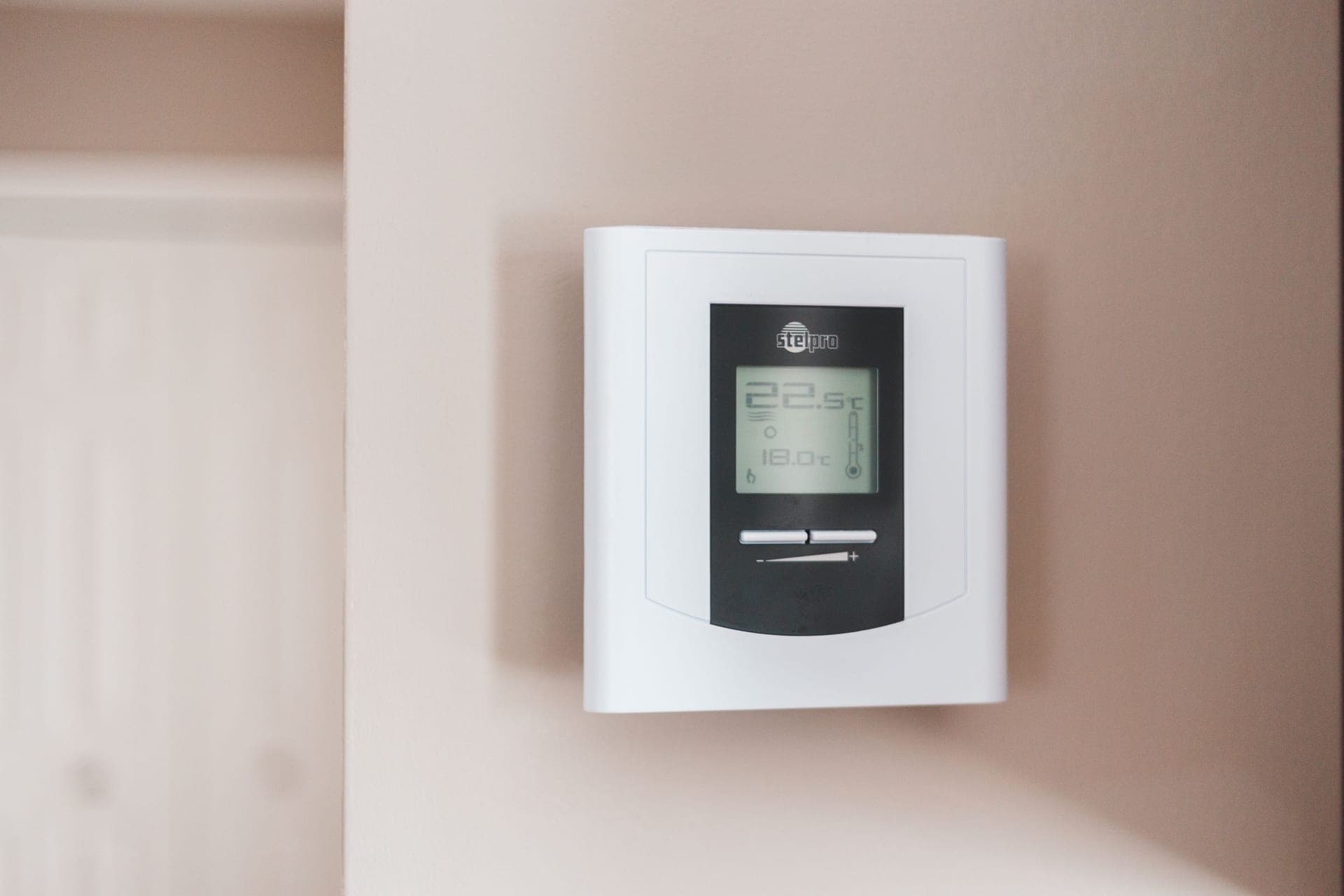
What temperature to set your air conditioner
There is an official answer, a reason it feels too warm, and a very cheap way to make it not feel too warm.
By Sawyer V. · Published
The short answer
78°F while you are home and awake is the US Department of Energy’s recommendation, with a 7 to 10°F setback for the eight hours you are out or asleep. If 78 feels too warm, add a fan rather than lowering the thermostat — a ceiling fan on low runs at around 1 to 3 W, which is a rounding error against a compressor.
Fan & Frost earns a commission when you buy through our links, at no cost to you. It never changes a ranking, and we say so when the right answer is the cheaper unit or nothing at all. Full disclosure · How we pick.
At a glance
The picks, ranked
Tap any row to jump to the full reasoning. Prices are live from Amazon where we have them, and read “check price” where we don’t — never a number we cannot verify today.
| # | Product | Best for | Price |
|---|---|---|---|
| 1 | 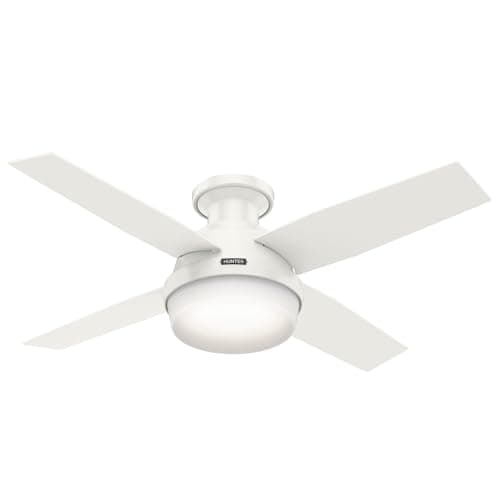 What makes 78°F liveable Hunter Martindale 44" Ceiling Fan 1.1 W on low at 304.5 CFM per watt — the cheapest way to make a higher thermostat setpoint feel comfortable. | A bedroom or study where a fan-rated ceiling box already exists | |
| 2 | 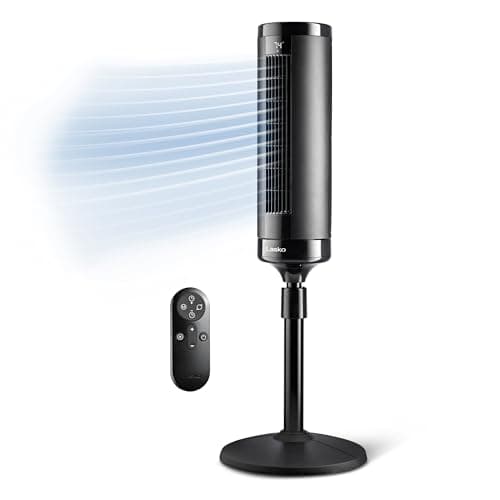 Best without a ceiling box Lasko EcoQuiet 42" DC Tower Fan 2.9 W on the lowest of 12 speeds at a published 23 dBA, with an 8-hour timer that matches a sleep setback. | A rental, or any room with no fan-rated fitting overhead | |
| 3 | 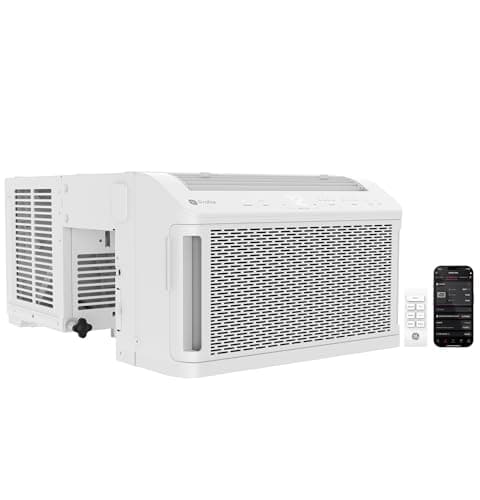 Best unit to set to 78 GE Profile ClearView Window Air Conditioner, 8,000 BTU CEER 16 and 375 kWh a year, Most Efficient certified — the efficiency that makes a setpoint decision worth less. | A bedroom-sized room that needs real cooling, not just air | |
| — | 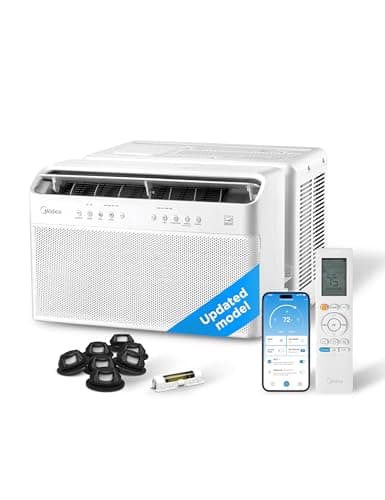 Setpoint cannot fix this Midea U-Shaped Window Air Conditioner, 10,000 BTU (V1) CEER 15 and 500 kWh a year against 468.8 for its own CEER 16 sibling — a gap no thermostat setting recovers. | Illustrating what the thermostat does not control |
“What should I set it to” is one of the most-asked cooling questions, and it has a genuine official answer that most people immediately reject as too warm. Both of those facts are worth taking seriously.
The numbers
The recommended setpoints
The US Department of Energy publishes a specific recommendation for summer, and it is unusually concrete for government guidance.
| When | Setting | Why |
|---|---|---|
| Home and awake | 78°F | The baseline recommendation |
| Out for the day | 7–10°F higher | The setback that does the saving |
| Asleep | 7–10°F higher, or a fan | Your body tolerates more when still |
| House empty for days | Higher still, not off | Humidity control, not comfort |
The setback matters more than the baseline. DOE guidance is that a 7 to 10°F setback for eight hours a day is where the meaningful saving comes from — not from shaving a degree off an occupied-hours setpoint you then find uncomfortable and reverse.
Why
Why a warmer setpoint costs less than you would guess
An air conditioner does not work harder to reach 72 than to reach 78. It works for longer. The rate at which heat leaks into your house is proportional to the difference between inside and outside, so a cooler setpoint both increases that difference and extends the runtime needed to hold it.
That is why the setback is so effective. While the house sits at 85°F with nobody in it, the gap to outdoors is small and heat comes in slowly. The unit is off, and it is also falling behind more slowly than it would at 72.
It is also why the common belief that it is cheaper to leave it running all day is generally wrong for a room unit — when to run it, and when not to.
The fan
Use a fan to buy back the degrees
This is the practical answer to “78 is too warm”, and the arithmetic is extreme enough to be worth spelling out.
| Appliance | Power | Eight hours |
|---|---|---|
| Ceiling fan on low | 1.1 W | 0.2¢ |
| Tower fan on low | 2.9 W | 0.4¢ |
| Ceiling fan on high | 10.1 W | 1.5¢ |
| Portable air conditioner | 1,300 W | $1.91 |
A fan makes a person feel meaningfully cooler without changing the air temperature at all, and the certified low-speed figures above show what that costs. Running a ceiling fan all evening so you can hold 78 instead of 75 is not a close call.
Two caveats that matter. A fan cools people, not rooms, so switch it off when you leave — running one in an empty room adds heat and saves nothing. And in very high humidity the evaporative effect weakens, which is when a dehumidifier does more than a fan — why humidity changes what works.
This one is not a DIY job
Setting the thermostat to 65 does not cool the room faster. A single-stage system runs at one output regardless of the number on the dial, and a variable-speed one is already running hard when the gap is large. All the low setting achieves is that it overshoots and you forget to put it back — if it is genuinely slow, the cause is elsewhere.
Sleep
The overnight setting is a different question
Sleep is the one case where the general guidance and the comfort research pull apart a little. Core body temperature drops as you fall asleep, and a room that resists that makes sleep onset harder.
Most sleep guidance lands in the 60s°F for a bedroom, which is well below the daytime recommendation. That is not a contradiction — it reflects that you are still, covered, and unable to adjust.
The cheap resolution is the same one as before: a fan lets you hold a higher air temperature and still feel cool enough to sleep, and it adds a steady sound that masks the street. Run the air conditioner to get the room down, set an overnight setback, and let the fan carry the last few degrees — the quietest fans for that job and whether leaving one on all night is fine.
Empty house
Do not switch it off entirely for a long absence
Raising the setpoint while you are away is correct. Switching the system off for a week in a humid climate is a different decision, and a worse one.
Without any dehumidification, indoor relative humidity climbs, and sustained high humidity is what causes mold growth and musty smells in soft furnishings. The unit is doing two jobs and only one of them is comfort.
Set it high — well above the occupied setpoint — rather than off, so it still cycles occasionally and pulls moisture out. In a basement or a humid region, a standalone dehumidifier on a humidistat does this job far more cheaply than an air conditioner does — what to set one to.
Say the unwelcome thing
Do not chase degrees before you have checked the size.
If a room will not hold its setpoint, the thermostat is rarely the problem. An undersized unit runs constantly and never arrives; an oversized one arrives too fast, shuts off, and leaves the room cool and clammy because it never ran long enough to dehumidify.
Both feel like a setpoint problem and neither is. Work out the capacity the room actually needs before you decide what number to put on the dial — sizing, properly.
And check the certified efficiency of what you are running. Two 10,000 BTU units in the same product family differ by 31.2 kWh a year before anyone touches a thermostat — CEER 16 is what good looks like.
In full
Every pick, and what is wrong with it
Published specifications only, each linked to the page it came from. Where a manufacturer publishes nothing, the row says so — we do not fill blanks in.
1. What makes 78°F liveable
Hunter Martindale 44" Ceiling Fan
Hunter · model 44in Martindale
1.1 W on low at 304.5 CFM per watt — the cheapest way to make a higher thermostat setpoint feel comfortable.
The whole reason the 78°F recommendation is achievable rather than aspirational.
1.1 W on low. That is 0.2¢ for an eight-hour evening at 18.34¢/kWh and about 15¢ for a whole summer of evenings.
304.5 CFM per watt, certified, with 0.4 W of standby draw. Most Efficient certified at a 44-inch span.
A fan does not lower air temperature. It speeds the evaporation of sweat, which makes a person feel several degrees cooler in the same room — the mechanism, properly explained. That is exactly the effect you need to make 78 feel like 75.
What’s wrong with it
It changes the room temperature not at all, and it only helps people sitting in the airflow.
Running cost — 44in Martindale
| Nameplate power | 1.1 W – 10.1 W | manufacturer's published figure |
|---|---|---|
| Energy, 8-hour night | 0.08 kWh | 10.1 ÷ 1000 × 8 |
| Cost per hour | 0.2¢ | at 18.34¢/kWh |
| Cost per 8-hour night | 1.5¢ | on the highest speed |
| Cost per 30 nights | 44¢ | 2.4 kWh |
| Same month, lowest speed | 4.8¢ | at 1.1 W |
Rate: 18.34¢/kWh, the US average residential price for June 2026 (EIA Electric Power Monthly, Table 5.3). Yours will differ — swap it in: (watts ÷ 1000) × hours × your rate.
| Blade span | 44 in |
|---|---|
| Efficiency | 304.5 CFM per watt |
| Power, high speed | 10.1 W |
| Power, low speed | 1.1 W |
| Standby power | 0.4 W |
| Type | Indoor, fan only |
| Warranty | 3 years, components |
| ENERGY STAR | Certified |
Every figure above is from ENERGY STAR Certified Ceiling Fans dataset. Blanks are shown as “not published” rather than filled in.
2. Best without a ceiling box
Lasko EcoQuiet 42" DC Tower Fan
Lasko · model T42710
2.9 W on the lowest of 12 speeds at a published 23 dBA, with an 8-hour timer that matches a sleep setback.
Most people cannot install a ceiling fan in the room where they need one, and this is the honest substitute.
2.9 W on low is 0.4¢ for an eight-hour night. Twelve speeds matter more than they sound: you can find the setting that is just enough rather than choosing between three.
An 8-hour timer lines up neatly with an overnight setback, so the fan stops when the thermostat comes back down.
23 dBA on low, 46 dBA on high. Treat those as indicative — portable fan noise figures are not certified.
What’s wrong with it
The 23 dBA is a manufacturer figure rather than a certified one, and Lasko publishes no CFM.
Running cost — T42710
| Nameplate power | 2.9 W – 19 W | manufacturer's published figure |
|---|---|---|
| Energy, 8-hour night | 0.15 kWh | 19 ÷ 1000 × 8 |
| Cost per hour | 0.3¢ | at 18.34¢/kWh |
| Cost per 8-hour night | 2.8¢ | on the highest speed |
| Cost per 30 nights | 84¢ | 4.6 kWh |
| Same month, lowest speed | 13¢ | at 2.9 W |
Rate: 18.34¢/kWh, the US average residential price for June 2026 (EIA Electric Power Monthly, Table 5.3). Yours will differ — swap it in: (watts ÷ 1000) × hours × your rate.
| Power | 2.9 W - 19 W (0.06-0.303 A at 120 V) |
|---|---|
| Noise | 23 dBA low, 46 dBA high |
| Speeds | 12 |
| Height | 41.6 in |
| Footprint | 12.8 x 12.8 in |
| Weight | 7.8 lb |
| Timer | 8 hours |
| Air delivery (CFM) | Not published |
| Warranty | 2 years |
Every figure above is from Lasko product page, T42710. Blanks are shown as “not published” rather than filled in.
3. Best unit to set to 78
GE Profile ClearView Window Air Conditioner, 8,000 BTU
GE Profile · model PWJV08W
CEER 16 and 375 kWh a year, Most Efficient certified — the efficiency that makes a setpoint decision worth less.
Worth saying plainly: choosing an efficient unit does more for your bill than fiddling with the setpoint does.
CEER 16 and 375 kWh a year, which is 47% less energy than the federal standard permits for a unit this size.
46.2 lb, with a body that does not straddle the windowsill, so the sash rests above it in the normal way.
A bracket is required. And 8,000 BTU is a room, not a floor — check the size before the setpoint.
What’s wrong with it
It requires a support bracket, and 8,000 BTU is a single-room answer.
Running cost — PWJV08W
| Annual energy use | 375 kWh | ENERGY STAR certified figure |
|---|---|---|
| Annual cost | $69 | 375 × 18.34¢/kWh |
| Per cooling month | $17 | spread over a four-month season |
The annual figure is the certified value from the ENERGY STAR Certified Room Air Conditioners dataset, which models a standard cooling season rather than your actual summer. It is more useful than a nameplate wattage here, because a variable-speed compressor spends most of its life well below nameplate.
Rate: 18.34¢/kWh, the US average residential price for June 2026 (EIA Electric Power Monthly, Table 5.3). Yours will differ — swap it in: (watts ÷ 1000) × hours × your rate.
| Cooling capacity | 8,000 BTU/h |
|---|---|
| CEER | 16 |
| Annual energy use | 375 kWh/yr |
| vs federal standard | 47% less energy |
| Dimensions | 12.6 H x 18.6 W x 15.3 D in |
| Weight | 46.2 lb |
| Refrigerant | R-32 |
| Installation | Does not straddle the windowsill |
| Compressor | Variable speed |
| ENERGY STAR | Certified, and on the Most Efficient list |
Every figure above is from ENERGY STAR Certified Room Air Conditioners dataset. Blanks are shown as “not published” rather than filled in.
Skip this one
Midea U-Shaped Window Air Conditioner, 10,000 BTU (V1)
Midea · model MAW10V1QWT
CEER 15 and 500 kWh a year against 468.8 for its own CEER 16 sibling — a gap no thermostat setting recovers.
Included to keep the setpoint conversation in proportion. This unit is certified, it is an inverter, and it uses 500 kWh a year where its sibling uses 468.8.
That 31.2 kWh gap is baked in before you touch the thermostat. You can claw some of it back by running warmer, but you are starting behind.
38% under the federal standard rather than 47%, no Most Efficient badge, and a one-year warranty against three on the better version of the same shape.
The order of operations is: size it right, buy the efficient variant, then set it sensibly — the CEER 16 version is the same unit done properly.
What’s wrong with it
Every degree you give up on comfort is fighting a deficit built into the machine.
Running cost — MAW10V1QWT
| Annual energy use | 500 kWh | ENERGY STAR certified figure |
|---|---|---|
| Annual cost | $92 | 500 × 18.34¢/kWh |
| Per cooling month | $23 | spread over a four-month season |
The annual figure is the certified value from the Midea product page, MAW10V1QWT, with certified figures from the ENERGY STAR Room Air Conditioners dataset, which models a standard cooling season rather than your actual summer. It is more useful than a nameplate wattage here, because a variable-speed compressor spends most of its life well below nameplate.
Rate: 18.34¢/kWh, the US average residential price for June 2026 (EIA Electric Power Monthly, Table 5.3). Yours will differ — swap it in: (watts ÷ 1000) × hours × your rate.
| Cooling capacity | 10,000 BTU/h DOE |
|---|---|
| CEER | 15 |
| Annual energy use | 500 kWh/yr |
| vs federal standard | 38% less energy |
| Coverage claim | Up to 450 sq ft |
| Noise | As low as 32 dBA |
| Smart control | SmartHome app, Apple Watch, voice assistants |
| Dimensions | 13.5 H x 19.2 W x 22.0 D in |
| Weight | 53.1 lb certified / 54.01 lb published |
| Refrigerant | R-32 |
| Installation | U-shape; straddles the window |
| Support bracket | Required |
| Compressor | Variable speed, up to 35% more efficient (manufacturer claim) |
| Warranty | 1 year |
| ENERGY STAR | Certified; NOT on the Most Efficient list |
Every figure above is from Midea product page, MAW10V1QWT, with certified figures from the ENERGY STAR Room Air Conditioners dataset. Blanks are shown as “not published” rather than filled in.
We are not linking a buy button for this one. If you want to look at it anyway, it is easy enough to find — but we would rather send you to something that fits your room.
Questions people actually ask
Frequently asked
What is the best temperature to set your air conditioner in summer?
The US Department of Energy recommends 78°F while you are home and awake, with a setback of 7 to 10°F for the roughly eight hours a day you are out or asleep. The setback is where most of the saving comes from.
Is 72°F too cold for an air conditioner?
It is not harmful, it is just expensive. Heat leaks into a house in proportion to the indoor-outdoor difference, so a lower setpoint both widens that gap and extends the runtime needed to hold it. A fan lets you sit comfortably several degrees warmer for 1 to 3 W.
Does setting the thermostat lower cool the room faster?
No. A single-stage system runs at one output whatever number is on the dial, and a variable-speed one is already running hard when the gap is large. Setting it to 65 only makes it overshoot, and you will forget to put it back.
What temperature should I set my air conditioner at night?
Lower than the daytime recommendation — most sleep guidance lands in the 60s°F — because core body temperature drops as you fall asleep. The cheap way to get there is a fan, which lets you hold a higher air temperature and still feel cool enough. Quiet fans for sleeping.
Should I turn the air conditioner off when I go on holiday?
Raise it rather than switch it off, especially in a humid climate. Without any dehumidification, indoor humidity climbs and sustained high humidity is what causes mold and musty smells. Set it well above your occupied setpoint so it still cycles occasionally.
How much does a ceiling fan cost to run compared with an air conditioner?
A certified ceiling fan on low draws about 1.1 W — roughly 0.2¢ for an eight-hour evening. A portable air conditioner at 1,300 W costs about $1.91 over the same period. The fan is not a rounding error away; it is a different order of magnitude. Cooling by running cost.
Sources
Where these numbers came from
- US Department of Energy — thermostat setpoint and setback guidance for summer
- ENERGY STAR Certified Ceiling Fans dataset — certified low-speed wattage and CFM per watt for the fan figures cited
- ENERGY STAR Certified Room Air Conditioners dataset — CEER and annual kWh for every unit cited
- Lasko product page, T42710 — 2.9 W to 19 W, 23 to 46 dBA, 12 speeds, 8-hour timer
- Whynter ARC-14S product page — 1,300 W, used for the compressor comparison
- EIA Electric Power Monthly, Table 5.3 — average residential electricity price
Read next
Where to go from here
Back to Guides & Calculators, or read how we pick.