The picks
The best through-the-wall air conditioners with heat, for a room with no usable window
An interior bedroom, a converted garage, an addition with a door and no window: one box in one hole has to do summer and winter. The certified field for that job turns out to contain exactly one model.
By Sawyer V. · Published
The short answer
Of 68 ENERGY STAR certified through-the-wall air conditioners, only two offer heat — and both are the Friedrich WallMaster heat pump. The WHVT14B33B is certified at CEER 12.8 and 837.9 kWh a year, and it fits an existing 27-inch sleeve. It is sold through dealers. The best one you can buy today on Amazon is the ROVSUN 10,000 BTU, at an uncertified CEER 9.6.
Fan & Frost earns a commission when you buy through our links, at no cost to you. It never changes a ranking, and we say so when the right answer is the cheaper unit or nothing at all. Full disclosure · How we pick.
At a glance
The picks, ranked
Tap any row to jump to the full reasoning. Prices are live from Amazon where we have them, and read “check price” where we don’t — never a number we cannot verify today.
| # | Product | Best for | Price |
|---|---|---|---|
| 1 | The only certified one Friedrich WallMaster Through-the-Wall Heat Pump, 14,300 BTU 14,300 BTU of cooling at a certified CEER of 12.8 and 837.9 kWh a year, on ENERGY STAR's Most Efficient list, with heat-pump heating and backup electric heat on 230 V models. | A room with an existing 27-inch through-the-wall sleeve, a 230 V circuit, and a need for real year-round capability rather than a supplemental heater | Not sold on Amazon. Friedrich sells through its own dealers. |
| 2 | 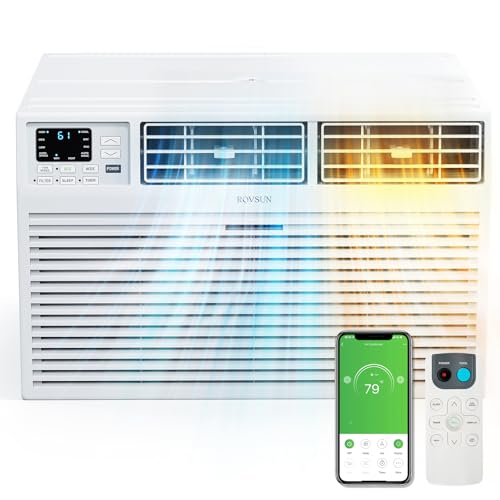 Best you can actually buy today ROVSUN Through-the-Wall Air Conditioner with Heat, 10,000 BTU 10,000 BTU of cooling and 10,600 BTU of electric heat, with the most complete specification table of any buyable unit here: CEER 9.6, EER 9.7, 7.5 maximum amps and full indoor and outdoor decibel figures. | A room up to about 350 sq ft with a standard 25.5-inch sleeve opening and a 230 V supply, where the unit has to arrive this week rather than through a dealer | |
| 3 | 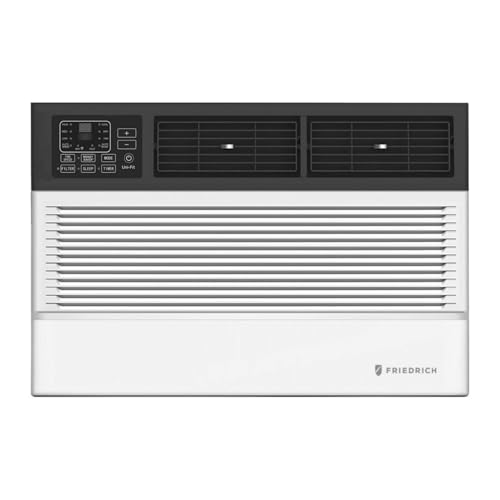 Best for an odd sleeve Friedrich Uni-Fit Smart Through-the-Wall Air Conditioner with Electric Heat, 10,000 BTU 10,000 BTU of cooling and 10,600 BTU of electric heat at 230 V, in Friedrich's universal-fit chassis designed to drop into existing sleeves from 24-1/2 to 27 inches. | A replacement into an existing sleeve between 24-1/2 and 27 inches wide — the range that covers most of the units installed in American walls over the last forty years | |
| 4 | 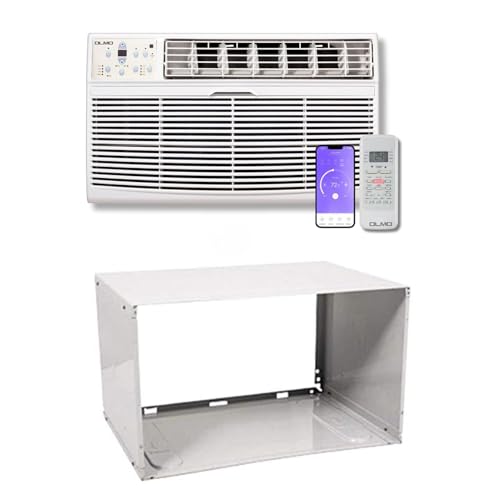 The only one that includes the sleeve OLMO Through-the-Wall AC and Heater with Wall Sleeve, 8,000 BTU 8,000 BTU of cooling with heating, on 115 V rather than 230, with the wall sleeve supplied in the box and R-32 refrigerant. | Cutting a new opening rather than replacing a unit — a garage conversion or an addition with no existing hole, on an ordinary 115 V circuit | |
| — | The one to skip Midea Through-the-Wall Air Conditioner, 10,000 BTU CEER 14.1 and 531.9 kWh a year, ENERGY STAR Most Efficient, on 115 V. The most efficient unit mentioned anywhere on this page, and it does not heat. | A room that needs cooling only — at which point it is one of the best wall units certified, and completely wrong for this page | Not sold on Amazon. Midea sells through its own dealers. |
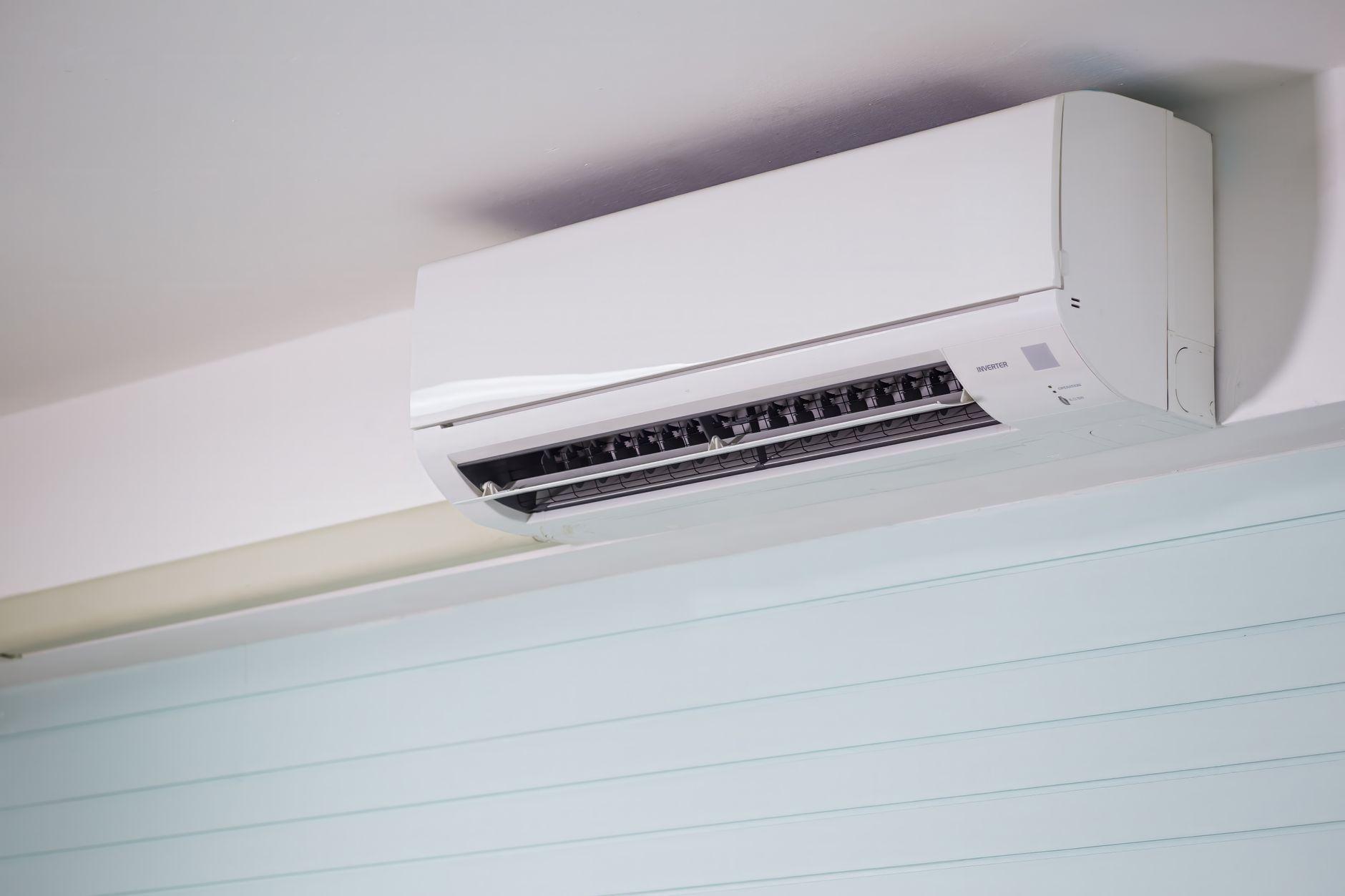
There is a specific room this page is for. It has four walls, a door, and no window you can put a machine in — an interior bedroom, a garage conversion, an in-law suite, an addition built behind the original exterior wall. It needs cooling in July and heat in January, and there is nowhere to put two appliances.
One box through one hole in the wall, doing both. It turns out that is a much rarer product than the search results suggest.
The finding
Two of 68 certified wall units offer heat. Both are the same model.
We read the ENERGY STAR Certified Room Air Conditioners dataset: 608 records, of which 68 are through-the-wall units from Brothers, DuraSTAR, Friedrich, Frigidaire, Midea, PELONIS, Perfect aire, Seasons and Wallmaster.
Exactly two of those 68 have a heating mode: the WHVT14B33A and the WHVT14B33B. They are two trims of the Friedrich WallMaster heat pump.
For comparison, 38 of the 540 certified window units heat — seven percent of the window field against three percent of the wall field, and the window options come from several brands rather than one.
| Unit | Cooling | Heat | CEER | Volts | Sleeve |
|---|---|---|---|---|---|
| Friedrich WHVT14B33B | 14,300 BTU | Heat pump + backup | 12.8 certified | 230 | Fits existing 27 in |
| Friedrich WHVT14B33A | 15,200 BTU | Heat pump + backup | 12.0 certified | 230 | Fits existing 27 in |
| ROVSUN 10,000 BTU | 10,000 BTU | 10,600 BTU resistance | 9.6 claimed | 208 - 230 | 25.5 x 15.25 in, not included |
| Friedrich Uni-Fit 10k heat | 10,000 BTU | 10,600 BTU resistance | Not published | 230 | 24.5 - 27 in |
| OLMO 8,000 BTU | 8,000 BTU | Yes, output not published | Not published | 115 | Included |
| Midea MAT10R1FWTK | 10,000 BTU | None | 14.1 certified | 115 | Not included |
Certified figures from the ENERGY STAR Certified Room Air Conditioners dataset; everything else is the manufacturer’s or the listing’s own. The Friedrich WHVT14B33A row is included for completeness — it is the second of the two certified heat-capable records and is not separately ranked above.
The arithmetic
A heat pump and a resistance heater are not the same purchase
Every unit on this page except the Friedrich heats with an electric resistance element. The Friedrich heats with a heat pump and falls back to resistance when it gets cold. That difference has a number attached and it is worth doing.
Electric resistance heat delivers 3,412 BTU per kilowatt-hour. That is a definition, not a performance figure: all of the electricity becomes heat and none of it can become more. At 18.34¢/kWh, a kilowatt-hour costs 18¢, so resistance heat costs about 18¢ per 3,412 BTU from any brand, in any box, forever.
A heat pump moves heat rather than making it, so it can deliver two to three times as much per kilowatt-hour — while the outdoor temperature allows. Friedrich’s own statement for the WallMaster is that it heats effectively down to 45 degrees F, with backup electric heat below that.
Which means in most American winters, for most of the hours you want heat, the certified heat-pump wall unit is running the same resistance element as the cheap one. That is not an argument against it — it is a far more efficient air conditioner and that is nine months of the year — but it is an argument against expecting heat-pump economics in February. The machines that do keep their heat-pump output when it is genuinely cold.
This one is not a DIY job
If you are cutting a new opening anyway, price a mini-split before you cut this one. A wall unit needs a 26-inch hole, a structural sleeve and a dedicated circuit. A mini-split needs a three-inch hole and an outdoor unit, and the certified field publishes heating capacity down to 5 F with a coefficient of performance attached. Mini-split against a window or wall unit, and what one costs to run.
Before you buy
Measure the sleeve, then measure it again
A through-the-wall air conditioner does not sit in the wall. It sits in a sleeve — a steel or plastic box built into the opening that carries the unit’s weight and seals the hole. Getting the sleeve wrong is the single most common and most expensive mistake in this category.
- Replacing a unit? Measure the existing sleeve’s internal width, height and depth. Friedrich’s WallMaster is specified for existing 27-inch sleeves; its Uni-Fit line covers 24-1/2 to 27 inches; ROVSUN requires 25.5 x 15.25 inches at 16 or 17.5 deep. Those are three different holes.
- Cutting a new one? The sleeve is a purchase and a structural job. The OLMO unit is the only one here that includes it.
- Check the weight. ROVSUN publishes 65.9 lb. That is a two-person lift at chest height into a hole.
- Check the voltage. Everything certified with heat is 230 V. Only the OLMO is 115 V.
The full installation sequence, and the cooling-only units if the heat turns out not to be worth the trade.
Say the unwelcome thing
Do not buy a wall unit with heat as a house's only heating.
Every heating figure on this page is for one room. The largest is 10,600 BTU of resistance heat, which is roughly a three-kilowatt heater — adequate for a bedroom, nowhere near a dwelling. And the heat-pump option stops being a heat pump at 45 F by its maker’s own statement.
Treat these as what they are: a single-room machine that saves you owning two appliances. If the room is the whole dwelling — a cabin, a studio, an ADU — the honest comparison is against a cold-climate mini-split, which publishes its heating capacity at 5 F and its efficiency with it. Cold-climate mini-splits on certified 5-degree output.
In full
Every pick, and what is wrong with it
Published specifications only, each linked to the page it came from. Where a manufacturer publishes nothing, the row says so — we do not fill blanks in.
1. The only certified one
Friedrich WallMaster Through-the-Wall Heat Pump, 14,300 BTU
Friedrich · model WHVT14B33B
14,300 BTU of cooling at a certified CEER of 12.8 and 837.9 kWh a year, on ENERGY STAR's Most Efficient list, with heat-pump heating and backup electric heat on 230 V models.
14,300 BTU/h at 230 V, CEER 12.8, 837.9 kWh a year, ENERGY STAR certified and on the Most Efficient list, in a certified chassis of 26.5 wide x 15.8 high x 21.0 deep inches. The annual-cost block below turns that certified kilowatt-hour figure into money at 18.34¢/kWh.
It is the only certified wall unit with heat, and there is a second trim of the same model — the WHVT14B33A at 15,200 BTU and CEER 12.0. Those two records are the entire certified field for this situation. Everything else certified in the category is cooling only.
Friedrich describes it as “the ONLY perfect fit for existing 27” sleeves, including Fedders A and B (requires a baffle kit)”, which is the single most useful sentence on this page if you are replacing a dead unit rather than cutting a new hole. Chassis dimensions from Friedrich: H 17-1/4 x W 27-1/2 x D 23-1/4 inches.
Now the honest limitation, in Friedrich’s own words: the WallMaster “heats effectively down to 45 degrees”, and “230-volt models have backup electric heat that will activate when outside temperatures are too cold for efficient heat pump operation”. Read that before you plan a winter around it. What a heat pump is and when it stops being one.
What’s wrong with it
Friedrich states the WallMaster heats effectively down to 45 degrees F, below which the backup electric heat takes over — so in a real winter it is a resistance heater most of the time. It is not sold on Amazon, Friedrich publishes no decibel figure, and its per-model spec table is served as an image rather than text.
Running cost — WHVT14B33B
| Annual energy use | 837.9 kWh | ENERGY STAR certified figure |
|---|---|---|
| Annual cost | $154 | 837.9 × 18.34¢/kWh |
| Per cooling month | $38 | spread over a four-month season |
The annual figure is the certified value from the ENERGY STAR Certified Room Air Conditioners dataset, which models a standard cooling season rather than your actual summer. It is more useful than a nameplate wattage here, because a variable-speed compressor spends most of its life well below nameplate.
Rate: 18.34¢/kWh, the US average residential price for June 2026 (EIA Electric Power Monthly, Table 5.3). Yours will differ — swap it in: (watts ÷ 1000) × hours × your rate.
| Cooling capacity | 14,300 BTU/h |
|---|---|
| Heating | Heat pump, with backup electric heat on 230 V models |
| CEER | 12.8 |
| Certified annual energy use | 837.9 kWh/yr |
| ENERGY STAR | Certified, and on the Most Efficient list |
| Voltage | 230 V |
| Chassis | 26.5 W x 15.8 H x 21.0 D in (certified dimensions) |
| Sleeve | Fits existing 27 in sleeves, including Fedders A and B with a baffle kit |
| Heat pump operating limit | Friedrich states the WallMaster heats effectively down to 45 degrees F; below that the backup electric heat does the work |
| Noise | Not published. Friedrich claims only 'as much as 45% quieter' |
Every figure above is from ENERGY STAR Certified Room Air Conditioners dataset. Blanks are shown as “not published” rather than filled in.
Amazon does not carry this model. Friedrich sells it through its own dealers, and we have no affiliate relationship there — so there is no buy button here rather than one that earns us nothing. The figures above are the manufacturer’s published or certified ones, and the source is cited below them.
2. Best you can actually buy today
ROVSUN Through-the-Wall Air Conditioner with Heat, 10,000 BTU
ROVSUN · model G46001011
10,000 BTU of cooling and 10,600 BTU of electric heat, with the most complete specification table of any buyable unit here: CEER 9.6, EER 9.7, 7.5 maximum amps and full indoor and outdoor decibel figures.
10,000 BTU cooling, 10,600 / 8,600 BTU heating, 1,340 W, 208–230 V, CEER 9.6, EER 9.7, maximum current 7.5 A. The specification table is the reason this is the second pick: nobody else buyable publishes this much.
Indoor noise 61 / 59 / 57 dB(A) and outdoor 68 / 66 / 61 dB(A), across high, medium and low. That is a genuinely useful disclosure and it is also a warning: 61 dB(A) is a loud indoor machine, and nothing certified in this category publishes a comparable figure to check it against. What a quiet air conditioner publishes.
Sleeve required: 25.5 inches wide by 15.25 high, 16 or 17.5 deep, and not included. The unit itself is 24.21 x 14.53 x 20.28 inches and 65.9 lb. Measure before buying: a 27-inch Friedrich sleeve and a 25.5-inch opening are different holes.
One figure it publishes that nobody else does, and it is worth thinking about: operating temperature 61 to 88 F. R-32 refrigerant, 3 speeds, 24-hour timer, app and voice control, and a recommended area of 350 sq ft against a maximum cooling area of 450.
What’s wrong with it
CEER 9.6 is well below the certified units' 12.8 to 14.1, so it costs more to run every summer. The heat is electric resistance, not a heat pump. ROVSUN publishes its heating output but no heating input power, so the heating efficiency cannot be calculated. The wall sleeve is not included.
Running cost — G46001011
| Nameplate power | 1340 W | manufacturer's published figure |
|---|---|---|
| Energy, 8-hour night | 10.72 kWh | 1340 ÷ 1000 × 8 |
| Cost per hour | 25¢ | at 18.34¢/kWh |
| Cost per 8-hour night | $1.97 | on the highest speed |
| Cost per 30 nights | $59 | 321.6 kWh |
Rate: 18.34¢/kWh, the US average residential price for June 2026 (EIA Electric Power Monthly, Table 5.3). Yours will differ — swap it in: (watts ÷ 1000) × hours × your rate.
| Cooling capacity | 10,000 BTU/h |
|---|---|
| Heating capacity | 10,600 / 8,600 BTU/h, electric resistance heat |
| Power | 1,340 W, 208 - 230 V, 60 Hz |
| Maximum current | 7.5 A |
| CEER | 9.6 |
| EER | 9.7 |
| ENERGY STAR | Not certified |
| Indoor noise | 61 / 59 / 57 dB(A) high / medium / low |
| Outdoor noise | 68 / 66 / 61 dB(A) high / medium / low |
| Room size | 350 sq ft recommended, 450 sq ft maximum cooling |
| Sleeve required | 25.5 W x 15.25 H x 16 or 17.5 D in. Wall sleeve NOT included |
| Unit | 24.21 W x 14.53 H x 20.28 D in, 65.9 lb |
| Refrigerant | R-32 |
| Operating temperature | 61 - 88 F |
Every figure above is from ROVSUN product page, 10,000 BTU through-the-wall air conditioner with heat (G46001011) — 10,000 BTU cooling, 10,600/8,600 BTU heating, 1,340 W, 208-230 V, CEER 9.6, EER 9.7, 7.5 A maximum, 61/59/57 dB(A) indoor, 25.5 x 15.25 in sleeve. Blanks are shown as “not published” rather than filled in.
3. Best for an odd sleeve
Friedrich Uni-Fit Smart Through-the-Wall Air Conditioner with Electric Heat, 10,000 BTU
Friedrich · model Not stated on the listing (Uni-Fit electric-heat chassis)
10,000 BTU of cooling and 10,600 BTU of electric heat at 230 V, in Friedrich's universal-fit chassis designed to drop into existing sleeves from 24-1/2 to 27 inches.
“A universal fit for existing sleeves from 24 1/2”-27”” is Friedrich’s own claim for the Uni-Fit line, and it is the whole reason the line exists. Replacing a wall unit is usually a sleeve problem rather than a capacity problem.
The family is sold in 8,000 to 14,000 BTU/h cooling-only and 8,000 to 14,000 BTU/h electric-heat versions, and the listing here publishes 10,000 BTU cooling with 10,600 BTU electric heat at 230 V.
What Friedrich does not publish for it is nearly everything else. Its specification table is delivered as an image, so there is no CEER, no amperage, no sound figure and no warranty term in text anywhere on the page. Its only acoustic claim is comparative: “as much as 25% quieter than competitor’s products”, with no baseline named.
That is a real gap and it is the reason this sits third rather than second, behind a cheaper unit from a brand nobody has heard of that publishes its decibels. How we pick.
What’s wrong with it
Friedrich publishes almost nothing per model here: no CEER, no amps, no decibel figure, no warranty term on the Uni-Fit page, and the listing prints no model number at all. Its spec table is an image. You are buying the sleeve compatibility and the brand, not a documented machine.
Running cost
Friedrich does not publish a wattage for the Not stated on the listing (Uni-Fit electric-heat chassis), so we cannot calculate what it costs to run. We are not going to estimate one. If Friedrich publishes a nameplate figure, this block will show the arithmetic.
| Cooling capacity | 10,000 BTU/h |
|---|---|
| Heating capacity | 10,600 BTU/h, electric resistance heat |
| Voltage | 230 V |
| Sleeve | Friedrich states Uni-Fit is a universal fit for existing sleeves from 24-1/2 to 27 in |
| Chassis | Friedrich publishes H 14-1/2 x W 24-4/19 x D 20-7/25 in for the Uni-Fit chassis list (fractions as printed) |
| CEER | Not published |
| Amps | Not published |
| Noise | Not published. Friedrich claims only 'as much as 25% quieter' |
| ENERGY STAR | Not certified in this configuration |
| Warranty | Not published on the Uni-Fit page |
Every figure above is from Friedrich Uni-Fit family page plus the product listing — the family is sold in 8,000-14,000 BTU/h cooling-only and 8,000-14,000 BTU/h electric-heat versions and fits existing 24-1/2 to 27 in sleeves; the listing publishes 10,000 BTU cooling and 10,600 BTU electric heat at 230 V. Friedrich's per-model specification table is served as an image and no model number is printed on the listing. Blanks are shown as “not published” rather than filled in.
4. The only one that includes the sleeve
OLMO Through-the-Wall AC and Heater with Wall Sleeve, 8,000 BTU
OLMO · model Not stated on the listing
8,000 BTU of cooling with heating, on 115 V rather than 230, with the wall sleeve supplied in the box and R-32 refrigerant.
8,000 BTU (0.67 ton), 115 V, cooling and heating, R-32, with the wall sleeve included. Two of those matter more than the rest.
115 V is the practical one. Every other heat-capable unit on this page is 208–230 V, which in an existing room means a new circuit and an electrician. A 115 V unit can sometimes run from a circuit that already exists — though at 8,000 BTU with resistance heat, check the load. The circuit arithmetic.
The included sleeve is the other. Every other unit here needs a sleeve bought separately, and a wall sleeve is neither cheap nor optional — it is the structural box the unit sits in. For a new opening, buying them together removes a sizing mistake.
Against that: we could not find a single published specification from OLMO. Its own domain does not resolve. There is no heating output figure, no efficiency rating, no amp draw and no decibel number. We list it because the 115 V supply and the included sleeve are real, documented-on-the-listing advantages that nothing else here offers.
What’s wrong with it
OLMO publishes no specifications anywhere reachable: olmoindustries.com does not resolve, olmoac.com is a distributor site with no model pages, and the listing gives no heating output, no CEER, no amperage and no noise figure. It is also the smallest capacity here.
Running cost
OLMO does not publish a wattage for the Not stated on the listing, so we cannot calculate what it costs to run. We are not going to estimate one. If OLMO publishes a nameplate figure, this block will show the arithmetic.
| Cooling capacity | 8,000 BTU/h (0.67 ton) |
|---|---|
| Heating | Yes — cooling and heating |
| Voltage | 115 V |
| Wall sleeve | Included |
| Refrigerant | R-32 |
| Smart control | Built-in smart kit, remote included |
| Heating capacity | Not published on the listing |
| CEER or EER | Not published on the listing |
| Amps | Not published on the listing |
| Noise | Not published on the listing |
| ENERGY STAR | Not certified |
Every figure above is from OLMO product listing, 8,000 BTU 115 V through-the-wall AC and heater with wall sleeve — 0.67 ton, R-32, built-in smart kit, sleeve included. olmoindustries.com does not resolve and olmoac.com is a distributor site with no model pages, so no manufacturer specification could be verified. Blanks are shown as “not published” rather than filled in.
Skip this one
Midea Through-the-Wall Air Conditioner, 10,000 BTU
Midea · model MAT10R1FWTK
CEER 14.1 and 531.9 kWh a year, ENERGY STAR Most Efficient, on 115 V. The most efficient unit mentioned anywhere on this page, and it does not heat.
This is not a bad machine. It is one of the best in the certified dataset: 10,000 BTU at CEER 14.1 and 531.9 kWh a year, on 115 V, ENERGY STAR Most Efficient, in a 24.1 x 14.7 x 20.9-inch chassis.
Compare that with the certified heat-capable Friedrich: CEER 12.8 and 837.9 kWh a year. The cooling-only unit is 10 percent more efficient and uses 306 fewer kilowatt-hours a year. That is the cost of asking one box to do both jobs, and it is worth knowing before you pay it.
It is on this page as the thing to not accidentally buy. Search for a through-the-wall air conditioner and the certified, efficient, well-reviewed, cheaper units that fill the results are almost all cooling only — 66 of the 68 certified ones.
If the room has any other heat source, buy this and be happier every summer. Through-the-wall units, cooling only. If it does not, nothing on this list is cheap and you want the next section.
What’s wrong with it
No heat, which is the entire subject of this page. We include it because it is the trap: it is cheaper and far more efficient than anything here, it looks identical in a wall, and in February it does nothing at all.
Running cost — MAT10R1FWTK
| Annual energy use | 531.9 kWh | ENERGY STAR certified figure |
|---|---|---|
| Annual cost | $98 | 531.9 × 18.34¢/kWh |
| Per cooling month | $24 | spread over a four-month season |
The annual figure is the certified value from the ENERGY STAR Certified Room Air Conditioners dataset, which models a standard cooling season rather than your actual summer. It is more useful than a nameplate wattage here, because a variable-speed compressor spends most of its life well below nameplate.
Rate: 18.34¢/kWh, the US average residential price for June 2026 (EIA Electric Power Monthly, Table 5.3). Yours will differ — swap it in: (watts ÷ 1000) × hours × your rate.
| Cooling capacity | 10,000 BTU/h |
|---|---|
| CEER | 14.1 |
| Annual energy use | 531.9 kWh/yr |
| Weight | 56.2 lb |
| Refrigerant | R-32 |
| Installation | Through the wall (existing sleeve required) |
| Compressor | Variable speed |
| ENERGY STAR | Certified, and on the Most Efficient list |
Every figure above is from ENERGY STAR Certified Room Air Conditioners dataset. Blanks are shown as “not published” rather than filled in.
We are not linking a buy button for this one. If you want to look at it anyway, it is easy enough to find — but we would rather send you to something that fits your room.
Questions people actually ask
Frequently asked
What is the best through-the-wall air conditioner with heat?
The Friedrich WallMaster WHVT14B33B, because it is the only certified option: 14,300 BTU at CEER 12.8 and 837.9 kWh a year, on ENERGY STAR's Most Efficient list, fitting an existing 27-inch sleeve. It is dealer-sold. The best one you can buy on Amazon today is the ROVSUN 10,000 BTU, with a full published spec table and an uncertified CEER of 9.6.
Do through-the-wall air conditioners come with heat?
Very few do. Of the 68 through-the-wall units in the ENERGY STAR certified dataset, exactly two have a heating mode — and both are trims of the same Friedrich WallMaster heat pump. Window units are better served: 38 of 540 certified window units heat. Window units that heat.
Is heat-pump heating better than electric heat in a wall unit?
While the weather allows, yes — a heat pump moves heat rather than making it, so it delivers two to three times as much per kilowatt-hour. But Friedrich states that its WallMaster heats effectively down to 45 F and that 230 V models have backup electric heat below that, so in a real winter it is running resistance heat much of the time. Heat pump against air conditioner.
What size sleeve does a through-the-wall air conditioner need?
It varies by model and this is the measurement that matters most. Friedrich specifies its WallMaster for existing 27-inch sleeves (including Fedders A and B with a baffle kit) and its Uni-Fit line for 24-1/2 to 27 inches; ROVSUN requires a 25.5 x 15.25-inch opening at 16 or 17.5 inches deep. Only the OLMO unit includes a sleeve. Installing one.
How much does electric heat in a wall unit cost to run?
Electric resistance heat delivers 3,412 BTU per kilowatt-hour by definition, so the cost per unit of heat is the same from every brand: about 17 cents per 3,412 BTU at the national average rate. Running 10,600 BTU of resistance heat for an hour is roughly three kilowatt-hours. Nothing about the unit's design changes that figure. Where the money goes.
Can a through-the-wall unit with heat run on a normal 115 V circuit?
Only the OLMO 8,000 BTU model here is 115 V. Both certified Friedrich heat pumps and the ROVSUN are 208 to 230 V, which in an existing room means a new circuit. Even at 115 V, a unit with a resistance heater is a substantial load and the circuit should be checked before it is bought. Will the circuit take it?.
Wall unit with heat, or a mini-split?
If the opening already exists, the wall unit is far cheaper and simpler. If you are cutting a new hole, compare them seriously: a mini-split needs a three-inch penetration rather than a 26-inch structural sleeve, and the certified mini-split dataset publishes heating capacity at 5 F with a coefficient of performance — figures no wall unit publishes at all. Cold-climate mini-splits.
Sources
Where these numbers came from
- ENERGY STAR Certified Room Air Conditioners dataset — 608 records, 68 through-the-wall, of which only WHVT14B33A and WHVT14B33B have heating mode; the WHVT14B33B is 14,300 BTU at CEER 12.8 and 837.9 kWh/yr and Most Efficient; 38 of 540 certified window units heat
- Friedrich WallMaster product page — the only perfect fit for existing 27 in sleeves including Fedders A and B with a baffle kit, chassis H 17-1/4 x W 27-1/2 x D 23-1/4 in, heats effectively down to 45 degrees, 230-volt models have backup electric heat
- ROVSUN 10,000 BTU through-the-wall air conditioner with heat (G46001011) — 10,000 BTU cooling, 10,600/8,600 BTU heating, 1,340 W, 208-230 V, CEER 9.6, EER 9.7, 7.5 A maximum, 61/59/57 dB(A) indoor and 68/66/61 outdoor, 25.5 x 15.25 in sleeve, 65.9 lb, R-32, 61-88 F operating
- Friedrich Uni-Fit product page — available in 8,000-14,000 BTU/h cooling only and 8,000-14,000 BTU/h electric heat, a universal fit for existing sleeves from 24-1/2 to 27 in, with the per-model specification table served as an image
- OLMO 8,000 BTU 115 V through-the-wall AC and heater product listing — 0.67 ton, R-32, wall sleeve included; olmoindustries.com does not resolve and olmoac.com carries no model pages
- EIA Electric Power Monthly, Table 5.3 — electricity rate
Read next
Where to go from here
Back to Air Conditioners, or read how we pick.