Guide and picks
Cooling a kitchen
Every other room is cooled against the weather. A kitchen is cooled against itself, and that changes which appliance solves it.
By Sawyer V. · Published
The short answer
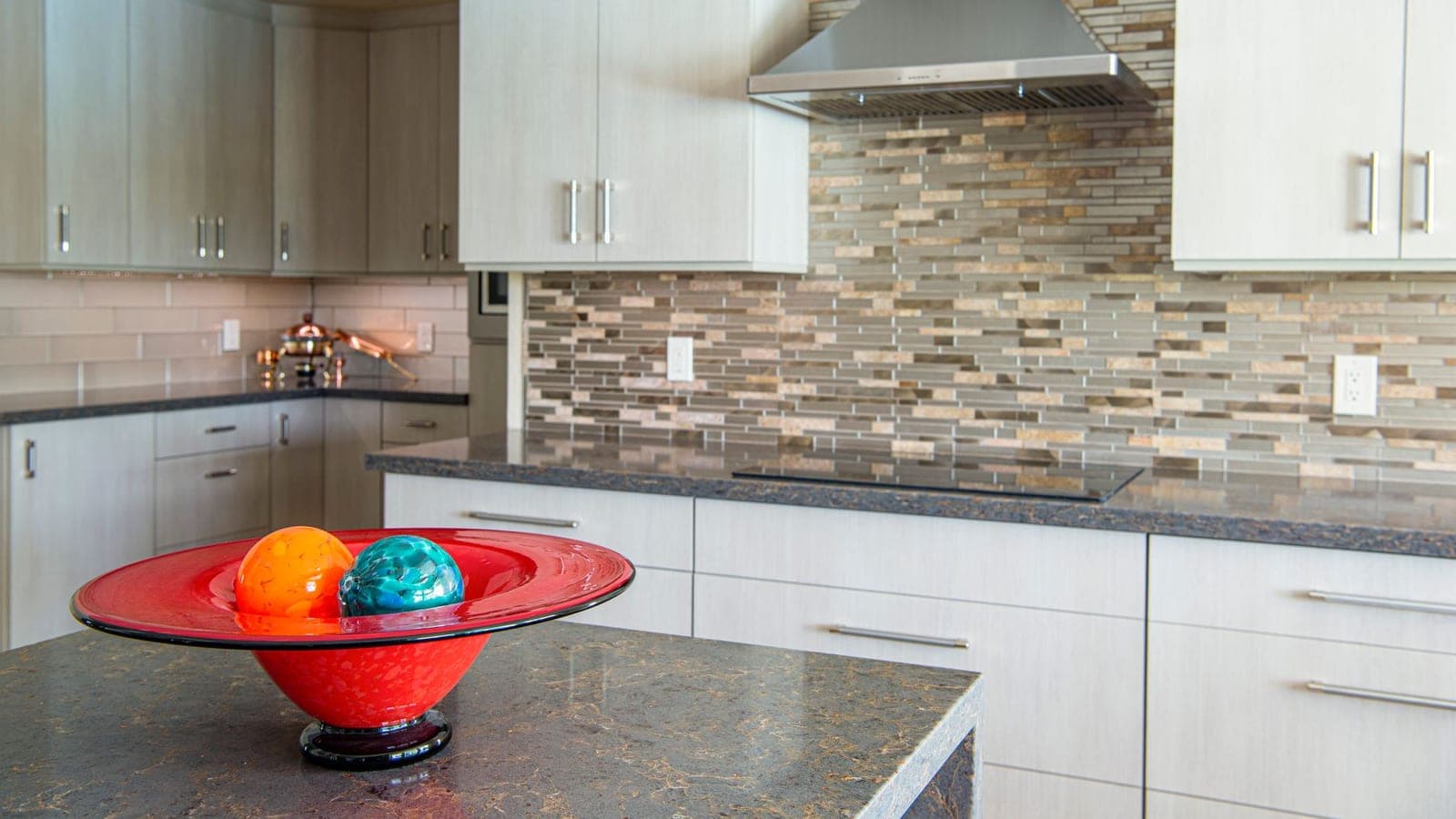
Get the heat out before it reaches the room. A range hood ducted outdoors removes cooking heat, moisture and grease at the source, which no amount of cooling capacity can undo afterward. Certified hoods run 150 to 200 CFM at 5.5 to 16.6 CFM per watt. Then deal with the residual heat: a fan for the person at the stove, and a correctly-sized window unit only if the room is genuinely too warm without cooking.
Fan & Frost earns a commission when you buy through our links, at no cost to you. It never changes a ranking, and we say so when the right answer is the cheaper unit or nothing at all. Full disclosure · How we pick.
At a glance
The picks, ranked
Tap any row to jump to the full reasoning. Prices are live from Amazon where we have them, and read “check price” where we don’t — never a number we cannot verify today.
| # | Product | Best for | Price |
|---|---|---|---|
| 1 | Most efficient certified hood Best HBN536212SS Range Hood 200 CFM at 16.6 CFM per watt — the highest efficacy of any certified range hood we hold data for. | A kitchen where the duct run can take 10 inches | |
| 2 | 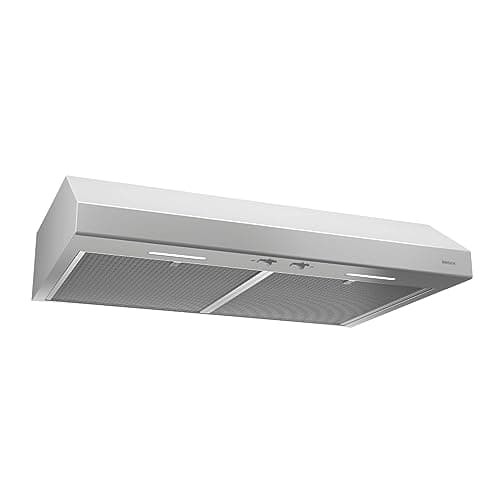 A hood with a plausible noise rating Broan BCSEK124WW Range Hood 150 CFM at 1.5 sones through a 7-inch duct — a figure that matches the category median and reads as real. | A smaller kitchen, or a duct run that will not take 10 inches | |
| 3 | 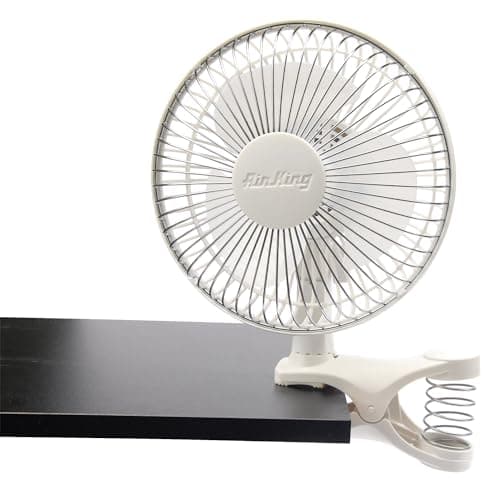 For the person at the stove Air King 6" Commercial Grade Clip-On Fan 34 to 37 dBA on 9 to 12 W, on a clip so it mounts off the worktop entirely. | Personal airflow while cooking, without a floor unit in a kitchen | |
| — | Only if the room is hot without cooking Midea Window Air Conditioner, 6,000 BTU 6,000 BTU at CEER 16 and 281.3 kWh a year — the lowest certified annual figure, and the wrong first purchase here. | A small kitchen that is genuinely too warm as a room |
Every other room on this site is cooled against the outdoor climate. A kitchen is different: it contains appliances that convert energy into heat and steam by design, for an hour or two at a time, at exactly the moment somebody is standing in front of them.
That changes the correct answer. The first move is not cooling.
First principle
Extraction beats cooling
Cooking puts three things into a kitchen: heat, moisture, and grease and combustion products.
A range hood ducted outdoors captures all three in the rising plume, before they disperse into the room. An air conditioner deals with two of them — expensively — after they have already mixed with the room air, and does nothing at all about the third.
The moisture point is the one people underestimate. Boiling water puts a substantial latent load into the air, and removing moisture is the part of an air conditioner’s job that costs the most energy. Venting it outside as steam is close to free by comparison.
So the sequence is: capture at the source, then ventilate, then cool the residual. Reversing it means paying to remove heat you are still making.
The data
Certified range hoods, and one caveat
Range hoods are certified under the same ENERGY STAR ventilating fan program as bathroom and in-line fans, tested at 0.25 inches of water gauge. We hold data for 86 US-market certified hoods.
| Hood | CFM | CFM/W | Sones | Duct |
|---|---|---|---|---|
| Best HBN536212SS | 200 | 16.6 | 0.0 as filed | 10 in |
| Air King ESQZ2308 | 120 | 7.9 | 1.5 | 3.25 x 10 in |
| Broan BCSEK124WW | 150 | 5.5 | 1.5 | 7 in |
| Whirlpool WVW73UC0LS | 132.2 | 4.9 | not published | 6 in |
| Zephyr AK8400BS-ES | 190 | 3.9 | 2.0 | 6 in |
Highest-efficacy certified hood per brand, from the ENERGY STAR Certified Ventilating Fans dataset. Sones median across all 86 US range hood records is 1.5; the range is 0.0 to 2.0.
The caveat we are not going to skip past: eight of the 86 certified range hoods are filed at 0.0 sones. A fan moving 200 CFM produces sound, and a value of exactly zero is not a measurement of anything.
We include the Best hood because its airflow and efficacy figures are useful and there is no reason to doubt them. We would not buy it on the acoustic figure, and neither should you — go and listen to one.
For comparison, the same dataset contains bathroom fans filed at 0.1 sones, which is a small but non-zero and plausible value. More on how sones work.
This one is not a DIY job
A recirculating hood does not cool your kitchen. This is the single most consequential distinction in the category.
A ducted hood sends the captured air outdoors. Heat, moisture and grease all leave the building.
A recirculating hood pulls air through a charcoal filter and returns it to the room. It removes some odor and some grease. It returns all of the heat and all of the moisture, plus the energy the fan motor added.
If your hood vents back into the kitchen, it is not part of the cooling solution and nothing on this page about extraction applies to it.
Gas appliances change the stakes. Combustion produces products that need to leave the building, and adequate ventilation around gas cooking is a safety matter rather than a comfort one. Follow your appliance manual and local code, and get a professional view if you are unsure — that is not a question this page can answer for your kitchen.
Using it
Getting the most from the hood you have
- Switch it on before you start cooking, not when the pan starts smoking. A hood captures a rising plume; it cannot recover heat that has already dispersed into the room.
- Leave it running afterward. Residual heat and moisture keep rising from hot cookware and a hot hob for a good while after the burners are off.
- Use the back burners where you can. They sit further under the capture area on most hoods.
- Clean the grease filters. A loaded filter is the kitchen equivalent of a blocked air conditioner filter — airflow falls and capture falls with it. Most are dishwasher-safe.
- Give it make-up air. Pulling air out of a closed kitchen creates negative pressure that the fan then fights, so it moves far less than its rating. Crack a window on the other side of the room.
Then
Once extraction is sorted
Airflow on the cook, not on the hob. A fan aimed at the stove disrupts the rising plume the hood is trying to capture, and across a gas flame it is worse than that. Place it behind or beside the person, blowing across them.
Shift the timing. The oven is the largest single heat source in most kitchens, and it runs longest. Batch-cooking in the morning, or using a countertop appliance instead of a full oven, does more for a hot kitchen than any fan.
Then, and only then, cooling. If the kitchen is still too warm when nobody is cooking, that is an ordinary room-cooling problem — size a unit from the room rather than from the cooking load, which is intermittent.
Say the unwelcome thing
Do not buy an air conditioner to fix a kitchen with no working extraction.
It is the most expensive way to solve this, and it does not solve all of it.
Cooking generates heat and moisture continuously while you cook. An air conditioner removes them after the fact, and moisture removal is the most energy-intensive part of what it does. You are paying to chase a load you are still producing.
It also does nothing about grease, which is the thing that actually accumulates on your kitchen surfaces, or about combustion products from a gas hob.
A ducted hood at 150 to 200 CFM costs a fraction of a cent an hour to run and removes all three at the source. Cooling is the last step, not the first.
In full
Every pick, and what is wrong with it
Published specifications only, each linked to the page it came from. Where a manufacturer publishes nothing, the row says so — we do not fill blanks in.
1. Most efficient certified hood
Best HBN536212SS Range Hood
Best · model HBN536212SS
200 CFM at 16.6 CFM per watt — the highest efficacy of any certified range hood we hold data for.
16.6 CFM per watt is genuinely exceptional for a range hood. The certified category is not efficient in general — most hoods sit near 5 — so this is roughly three times the typical figure.
200 CFM at 0.25 inches of water gauge, through a 10-inch duct. The large duct is where the efficiency comes from: less resistance means the motor does less work for the same air.
We will flag the number we do not trust. The dataset records this hood at 0.0 sones, and eight range hoods in the certified data carry that value. A moving fan producing literally zero perceived loudness is not physically meaningful, so treat it as a filing artifact rather than a measurement and listen to one before you buy.
What’s wrong with it
It is filed at 0.0 sones, which we do not believe describes a fan you can hear, and it needs a 10-inch duct.
Running cost
Best does not publish a wattage for the HBN536212SS, so we cannot calculate what it costs to run. We are not going to estimate one. If Best publishes a nameplate figure, this block will show the arithmetic.
| Air delivery | 200 CFM at 0.25 in w.g. |
|---|---|
| Efficacy | 16.6 CFM per watt |
| Duct size | 10 in diameter |
| Unit type | Range hood |
| Noise | 0.0 sones as filed in the certified dataset |
| ENERGY STAR | Certified |
Every figure above is from ENERGY STAR Certified Ventilating Fans dataset. Blanks are shown as “not published” rather than filled in.
2. A hood with a plausible noise rating
Broan BCSEK124WW Range Hood
Broan · model BCSEK124WW
150 CFM at 1.5 sones through a 7-inch duct — a figure that matches the category median and reads as real.
1.5 sones is exactly the median of the 86 certified range hoods we hold data for, which is a point in its favor on a page where the top figure is implausible.
Because sones are linear, 1.5 is a real, audible fan — roughly what you would expect standing at a hob. That is the honest state of the category, and a hood you can hear is not a defect.
150 CFM at 5.5 CFM per watt through a 7-inch duct. The efficiency gap against the 10-inch hood is the duct, not the motor — the same pattern that shows up across in-line fans.
What’s wrong with it
5.5 CFM per watt is a third of the Best hood's efficacy, which is what the smaller duct costs.
Running cost
Broan does not publish a wattage for the BCSEK124WW, so we cannot calculate what it costs to run. We are not going to estimate one. If Broan publishes a nameplate figure, this block will show the arithmetic.
| Air delivery | 150 CFM at 0.25 in w.g. |
|---|---|
| Efficacy | 5.5 CFM per watt |
| Duct size | 7 in |
| Unit type | Range hood |
| Noise | 1.5 sones |
| ENERGY STAR | Certified |
Every figure above is from ENERGY STAR Certified Ventilating Fans dataset. Blanks are shown as “not published” rather than filled in.
3. For the person at the stove
Air King 6" Commercial Grade Clip-On Fan
Air King · model 9145
34 to 37 dBA on 9 to 12 W, on a clip so it mounts off the worktop entirely.
Extraction handles the room. It does nothing for the person standing in front of a hot hob, and that is a separate problem with a separate answer.
9 to 12 W — about 0.7¢ for three hours of cooking — and the spring-loaded clip is the reason it suits a kitchen: it mounts on a shelf edge or a rail rather than occupying worktop you need.
ETL listed and OSHA compliant is a commercial specification, and the metal-guard construction suits a greasy environment better than a plastic tower fan.
34 to 37 dBA, a three-decibel spread. Place it to blow across you, not across the hob — see below.
What’s wrong with it
190 CFM is personal airflow. It does nothing for the room, and it should not blow across a gas flame.
Running cost — 9145
| Nameplate power | 9 W – 12 W | manufacturer's published figure |
|---|---|---|
| Energy, 8-hour night | 0.10 kWh | 12 ÷ 1000 × 8 |
| Cost per hour | 0.2¢ | at 18.34¢/kWh |
| Cost per 8-hour night | 1.8¢ | on the highest speed |
| Cost per 30 nights | 53¢ | 2.9 kWh |
| Same month, lowest speed | 40¢ | at 9 W |
Rate: 18.34¢/kWh, the US average residential price for June 2026 (EIA Electric Power Monthly, Table 5.3). Yours will differ — swap it in: (watts ÷ 1000) × hours × your rate.
| Power | 9 W - 12 W (0.1-0.2 A at 120 V) |
|---|---|
| Air delivery | Up to 190 CFM |
| Noise | 34 dBA low, 37 dBA high |
| Speeds | 2 |
| Mounting | Spring-loaded clip, non-marking |
| Dimensions | 10.38 H x 6.25 L x 8.13 W in |
| Weight | 2.22 lb |
| Cord | 6 ft, 3-conductor |
| Listing | ETL listed, OSHA compliant |
| Warranty | 1 year |
Every figure above is from Air King product page, 9145 (via Lasko). Blanks are shown as “not published” rather than filled in.
Skip this one
Midea Window Air Conditioner, 6,000 BTU
Midea · model MAW06S1KWT-A
6,000 BTU at CEER 16 and 281.3 kWh a year — the lowest certified annual figure, and the wrong first purchase here.
Listed as a skip on sequencing rather than on merit. It is an excellent machine — 281.3 kWh a year, about $52 for a season, at CEER 16 and 45% below the federal standard.
The problem is order of operations. Cooking generates heat and moisture continuously while you cook. An air conditioner removes them after they have entered the room; a hood removes them before.
Running an air conditioner against inadequate extraction means paying to chase a load you are still producing — and the moisture load in particular is one air conditioners handle expensively.
Buy this if the kitchen is too warm when nobody is cooking. Otherwise fix the extraction.
What’s wrong with it
Cooling a kitchen while extraction is inadequate means paying to remove heat you are still generating.
Running cost — MAW06S1KWT-A
| Annual energy use | 281.3 kWh | ENERGY STAR certified figure |
|---|---|---|
| Annual cost | $52 | 281.3 × 18.34¢/kWh |
| Per cooling month | $13 | spread over a four-month season |
The annual figure is the certified value from the ENERGY STAR Certified Room Air Conditioners dataset, which models a standard cooling season rather than your actual summer. It is more useful than a nameplate wattage here, because a variable-speed compressor spends most of its life well below nameplate.
Rate: 18.34¢/kWh, the US average residential price for June 2026 (EIA Electric Power Monthly, Table 5.3). Yours will differ — swap it in: (watts ÷ 1000) × hours × your rate.
| Cooling capacity | 6,000 BTU/h |
|---|---|
| CEER | 16 |
| Annual energy use | 281.3 kWh/yr |
| vs federal standard | 45% less energy |
| Dimensions | 12.1 H x 16.0 W x 13.3 D in |
| Weight | 31.6 lb |
| Installation | Does not straddle the windowsill |
| Support bracket | Not required |
| Compressor | Variable speed |
| Refrigerant | R-32 |
| ENERGY STAR | Certified, and on the Most Efficient list |
Every figure above is from ENERGY STAR Certified Room Air Conditioners dataset. Blanks are shown as “not published” rather than filled in.
We are not linking a buy button for this one. If you want to look at it anyway, it is easy enough to find — but we would rather send you to something that fits your room.
Questions people actually ask
Frequently asked
What is the best way to cool a kitchen?
Remove the heat at the source with a range hood ducted outdoors, before it disperses into the room. Cooking produces heat, moisture and grease continuously, and a hood captures all three in the rising plume — an air conditioner deals with two of them expensively, after the fact.
Does a recirculating range hood help cool a kitchen?
No. It pulls air through a charcoal filter and returns it to the room, so it removes some odor and grease but returns all of the heat and all of the moisture, plus the fan motor's own energy. Only a ducted hood removes heat from the building.
How many CFM does a kitchen range hood need?
Certified hoods run 120 to 200 CFM at 0.25 inches of water gauge in the data we hold. Requirements vary with hob type and local code, and gas appliances have ventilation requirements that are a safety matter rather than a comfort one — check your manual and code.
Why do some range hoods claim 0.0 sones?
It appears to be a filing artifact. Eight of the 86 certified US range hoods carry that value, and a fan moving 200 CFM produces sound — zero perceived loudness is not physically meaningful. The category median is 1.5 sones, which is an audible fan.
Should I point a fan at the stove while cooking?
No. A fan aimed at the hob disrupts the rising plume the range hood is trying to capture, so extraction gets worse, and across a gas flame it is worse still. Place the fan behind or beside the cook, blowing across them.
Why does my range hood seem weak?
Usually loaded grease filters or a lack of make-up air. A blocked filter cuts airflow the same way a blocked air conditioner filter does, and pulling air from a sealed kitchen creates negative pressure the fan then fights. Clean the filters and crack a window.
Sources
Where these numbers came from
- ENERGY STAR Certified Ventilating Fans dataset — range hood CFM, CFM per watt, sones and duct size (86 US range hood records analyzed)
- Air King 9145 product page — 34-37 dBA, 9-12 W, 190 CFM, ETL listed
- ENERGY STAR Certified Room Air Conditioners dataset — CEER and annual kWh
- EIA Electric Power Monthly, Table 5.3 — electricity rate
Read next
Where to go from here
Back to Room Cooling, or read how we pick.