Guide and picks
Cooling a west-facing room
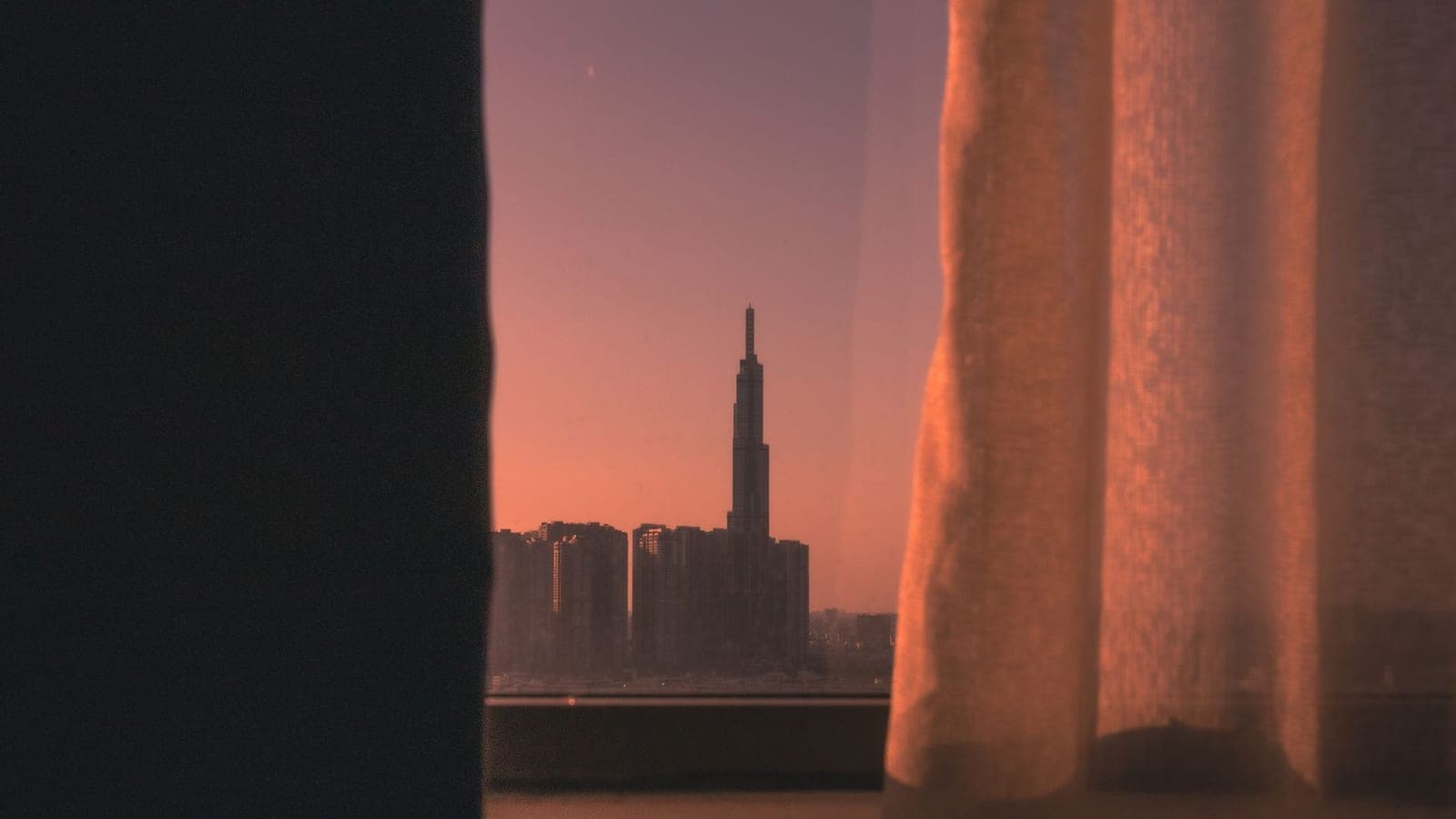
The worst orientation in the house, because the sun arrives at the hour everything else is already hot.
By Sawyer V. · Published
The short answer
West is the hardest orientation because low afternoon sun comes almost straight through the glass at the hour the building and the outdoor air are already at their warmest. ENERGY STAR’s sizing guidance says to increase capacity for a very sunny room — but shading the glass first is free and reduces how much capacity you need. Do the shading, then size, in that order.
Fan & Frost earns a commission when you buy through our links, at no cost to you. It never changes a ranking, and we say so when the right answer is the cheaper unit or nothing at all. Full disclosure · How we pick.
At a glance
The picks, ranked
Tap any row to jump to the full reasoning. Prices are live from Amazon where we have them, and read “check price” where we don’t — never a number we cannot verify today.
| # | Product | Best for | Price |
|---|---|---|---|
| 1 | 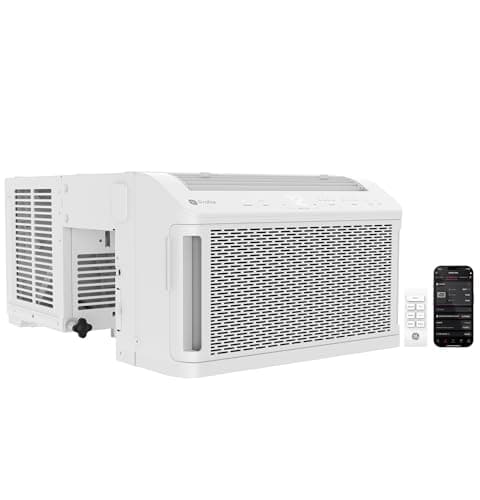 Best efficiency for a room that will run long GE Profile ClearView Window Air Conditioner, 8,000 BTU CEER 16 and 375 kWh a year with a variable-speed compressor — the top of its class, in a room that will use it. | A west-facing bedroom or office that genuinely needs cooling | |
| 2 | 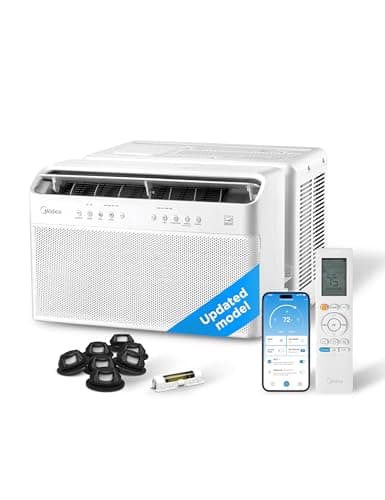 When the room needs the extra capacity Midea U-Shaped Window Air Conditioner, 12,000 BTU 12,000 BTU at CEER 15 and 600 kWh a year, with the compressor outside a closed window. | A large west-facing living room that cannot be shaded well | |
| 3 | 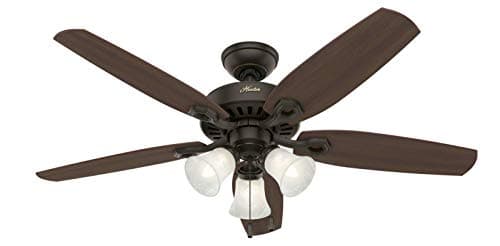 Raises the temperature you can tolerate Hunter Vespucci 52" Ceiling Fan 366.7 CFM per watt on 13.9 W, and 1.8 W on low — airflow that lets you hold a higher setpoint. | Any west-facing room, alongside whatever else you do | |
| — | The format that loses this fight Whynter ARC-14S Dual Hose Portable Air Conditioner 1,300 W and 9,500 BTU SACC, against a continuous solar load that peaks for hours. | A west room with no usable window — reluctantly |
Orientation is the thing nobody chooses and everybody lives with, and west is the difficult one. Understanding why makes the fix obvious.
Why west
Low sun, late in the day
Two things combine, and it is the combination rather than either alone.
The angle. Afternoon sun is low, so it comes at a west window nearly horizontally — straight through the glass and deep into the room, landing on floors, furniture and walls rather than glancing off. A south-facing window at noon takes high-angle sun that a modest overhang can block; a west window in the late afternoon takes it head-on.
The timing. That solar gain arrives at the point in the day when outdoor air temperature is at its peak and the building structure has been absorbing heat since morning. The room is being loaded on top of an already-warm baseline.
A south-facing room gets more total sun across the day and gets it when the building is cooler and the angle is steeper. A west-facing room gets less total and gets it at the worst possible moment.
Which is why a west bedroom is uncomfortable at bedtime, and a west office is unusable from about 3pm. The office case.
First, and free
Shading, and why external beats internal
Solar gain through glass is the largest single heat input in most rooms and overwhelmingly the largest in this one. No cooling appliance offsets it economically, and shading costs nothing to run.
External shading is substantially better than internal. An awning, an external blind, a shutter, a pergola or a tree stops solar energy before it passes the glass. An internal blind stops it after it is already inside, where a large share of the heat stays in the room regardless.
Where external is impossible, internal still helps — particularly light-colored or reflective blinds, and particularly if closed before the sun arrives rather than after.
Solar control film is the permanent option on existing glazing. It reduces gain year-round, which is a trade-off on a west window that is welcome in winter. The detail.
This one is not a DIY job
Timing beats intensity. The single most effective free change in a west-facing room is closing the shading at midday, before the sun reaches the window — not at 4pm when the room is already hot.
Once solar energy is inside, it has been absorbed by floors, walls and furniture. Closing a blind then stops more arriving but does nothing about what is already stored, and that stored heat is what keeps the room warm into the evening.
The same logic applies to ventilation: shut the room before the outdoor temperature overtakes the indoor, and open it again once it drops back — which in a west room is later than elsewhere in the house.
Then
Sizing, with the adjustment applied
ENERGY STAR’s room air conditioner sizing guidance includes an explicit adjustment: increase capacity for a very sunny room, and decrease it for a heavily shaded one.
A west-facing room with unshaded glass is the case the upward adjustment exists for. But there is an order that matters:
- Shade the glass first. A shaded west room is a materially different thermal problem from an unshaded one.
- Then size from the room, applying the sunny-room adjustment against what the room is like after shading.
- Do not round up beyond that. Oversizing produces short cycling, poor dehumidification and a room that is cold and clammy. Why.
Sizing before shading means buying capacity you will not need once the blind is up. The full sizing method.
Also
Three things that help in this room specifically
- Pre-cool before the peak. A west room’s load is predictable to the hour. Bringing the temperature down at 1pm, before the sun arrives, is easier than chasing it at 5pm. Timing.
- Ventilate later than the rest of the house. A west room holds its heat into the evening because the structure absorbed it, so opening up at the same time as an east-facing room is premature.
- Watch the equipment heat. A west-facing office adds a computer load to a solar load, at exactly the same hours. The office case.
Say the unwelcome thing
Do not buy up a capacity class to beat afternoon sun.
It is the intuitive response and it treats the symptom at the most expensive point in the chain.
Stepping from 8,000 to 12,000 BTU takes annual energy from 375 kWh to 600 — about $41 more per season — and gives you a larger, heavier unit that will still be running flat out against unshaded west glass.
External shading on that window costs nothing to run, works every afternoon for years, and reduces the load the unit is fighting rather than adding capacity to fight it.
Shade first, then size. A shaded west room frequently sizes into the class below the one it appeared to need.
In full
Every pick, and what is wrong with it
Published specifications only, each linked to the page it came from. Where a manufacturer publishes nothing, the row says so — we do not fill blanks in.
1. Best efficiency for a room that will run long
GE Profile ClearView Window Air Conditioner, 8,000 BTU
GE Profile · model PWJV08W
CEER 16 and 375 kWh a year with a variable-speed compressor — the top of its class, in a room that will use it.
Efficiency matters more in this room than most, because a west-facing room runs its air conditioner hard for several hours every afternoon rather than intermittently.
375 kWh a year, about $69 for a season, at CEER 16 and 47% below the federal standard.
The variable-speed compressor suits the load shape here: a west room’s demand ramps steadily through the afternoon rather than switching on and off, and a modulating compressor tracks that better than a single-speed one cycling.
At 15.3 inches deep it also leaves more room for a blind or shade inside the reveal.
What’s wrong with it
46.2 lb, and a west window is exactly where you also want a blind, so plan the two together.
Running cost — PWJV08W
| Annual energy use | 375 kWh | ENERGY STAR certified figure |
|---|---|---|
| Annual cost | $69 | 375 × 18.34¢/kWh |
| Per cooling month | $17 | spread over a four-month season |
The annual figure is the certified value from the ENERGY STAR Certified Room Air Conditioners dataset, which models a standard cooling season rather than your actual summer. It is more useful than a nameplate wattage here, because a variable-speed compressor spends most of its life well below nameplate.
Rate: 18.34¢/kWh, the US average residential price for June 2026 (EIA Electric Power Monthly, Table 5.3). Yours will differ — swap it in: (watts ÷ 1000) × hours × your rate.
| Cooling capacity | 8,000 BTU/h |
|---|---|
| CEER | 16 |
| Annual energy use | 375 kWh/yr |
| vs federal standard | 47% less energy |
| Dimensions | 12.6 H x 18.6 W x 15.3 D in |
| Weight | 46.2 lb |
| Refrigerant | R-32 |
| Installation | Does not straddle the windowsill |
| Compressor | Variable speed |
| ENERGY STAR | Certified, and on the Most Efficient list |
Every figure above is from ENERGY STAR Certified Room Air Conditioners dataset. Blanks are shown as “not published” rather than filled in.
2. When the room needs the extra capacity
Midea U-Shaped Window Air Conditioner, 12,000 BTU
Midea · model MAW12V1QWT-S
12,000 BTU at CEER 15 and 600 kWh a year, with the compressor outside a closed window.
ENERGY STAR’s guidance is explicit that a very sunny room needs more capacity, and a large west-facing room with unshaded glass is the case that adjustment exists for.
600 kWh a year, about $110 for a season.
The U-shape has a specific advantage here: it lets the sash close through the machine, so the window genuinely shuts. A conventional unit props the sash open, leaving a full-width gap on the wall taking the most solar load.
Before buying this rather than an 8,000 BTU unit, try the shading — it may move you back down a class.
What’s wrong with it
600 kWh is 60% more than the 8,000 BTU class, and 56.9 lb at 22 inches deep is an awkward install.
Running cost — MAW12V1QWT-S
| Annual energy use | 600 kWh | ENERGY STAR certified figure |
|---|---|---|
| Annual cost | $110 | 600 × 18.34¢/kWh |
| Per cooling month | $28 | spread over a four-month season |
The annual figure is the certified value from the ENERGY STAR Certified Room Air Conditioners dataset, which models a standard cooling season rather than your actual summer. It is more useful than a nameplate wattage here, because a variable-speed compressor spends most of its life well below nameplate.
Rate: 18.34¢/kWh, the US average residential price for June 2026 (EIA Electric Power Monthly, Table 5.3). Yours will differ — swap it in: (watts ÷ 1000) × hours × your rate.
| Cooling capacity | 12,000 BTU/h |
|---|---|
| CEER | 15 |
| Annual energy use | 600 kWh/yr |
| vs federal standard | 38% less energy |
| Dimensions | 13.5 H x 19.2 W x 22.0 D in |
| Weight | 56.9 lb |
| Refrigerant | R-32 |
| Installation | U-shape; sash closes through the middle of the unit |
| Compressor | Variable speed |
| ENERGY STAR | Certified |
Every figure above is from ENERGY STAR Certified Room Air Conditioners dataset. Blanks are shown as “not published” rather than filled in.
3. Raises the temperature you can tolerate
Hunter Vespucci 52" Ceiling Fan
Hunter · model Vespucci
366.7 CFM per watt on 13.9 W, and 1.8 W on low — airflow that lets you hold a higher setpoint.
The cheapest thing on this page, and it works by changing what temperature you find acceptable rather than by changing the temperature.
1.8 W on low and 13.9 W on high, at 366.7 CFM per watt certified. Every degree of setpoint you can give back is compressor time you do not pay for in a room that runs long.
In a west room specifically, run it during the afternoon peak alongside the cooling rather than instead of it.
What’s wrong with it
It does not lower the air temperature at all, so it supplements rather than solves an afternoon solar load.
Running cost — Vespucci
| Nameplate power | 1.8 W – 13.9 W | manufacturer's published figure |
|---|---|---|
| Energy, 8-hour night | 0.11 kWh | 13.9 ÷ 1000 × 8 |
| Cost per hour | 0.3¢ | at 18.34¢/kWh |
| Cost per 8-hour night | 2.0¢ | on the highest speed |
| Cost per 30 nights | 61¢ | 3.3 kWh |
| Same month, lowest speed | 7.9¢ | at 1.8 W |
Rate: 18.34¢/kWh, the US average residential price for June 2026 (EIA Electric Power Monthly, Table 5.3). Yours will differ — swap it in: (watts ÷ 1000) × hours × your rate.
| Blade span | 52 in |
|---|---|
| Efficiency | 366.7 CFM per watt |
| Power, high speed | 13.9 W |
| Power, low speed | 1.8 W |
| Standby power | 0.8 W |
| Type | Indoor, fan only (no light kit) |
| Warranty | 3 years, components |
| ENERGY STAR | Certified |
Every figure above is from ENERGY STAR Certified Ceiling Fans dataset. Blanks are shown as “not published” rather than filled in.
Skip this one
Whynter ARC-14S Dual Hose Portable Air Conditioner
Whynter · model ARC-14S
1,300 W and 9,500 BTU SACC, against a continuous solar load that peaks for hours.
A west-facing room is the hardest test of a cooling appliance, and a portable is the weakest format taking it.
9,500 BTU SACC from a 14,000 BTU headline — a 32.1% haircut — because it exhausts room air and pulls hot outdoor air in to replace it. On a west wall in the afternoon, that infiltrating air is at its hottest.
1,300 W running continuously through the peak hours and still losing is the common experience, and people conclude the unit is faulty. Usually it is not.
If a portable is genuinely the only option, shade the glass first and accept you are managing the room rather than conditioning it.
What’s wrong with it
A portable's capacity is already a third below its headline figure, and this is the room that punishes that most.
Running cost — ARC-14S
| Nameplate power | 1300 W | manufacturer's published figure |
|---|---|---|
| Energy, 8-hour night | 10.40 kWh | 1300 ÷ 1000 × 8 |
| Cost per hour | 24¢ | at 18.34¢/kWh |
| Cost per 8-hour night | $1.91 | on the highest speed |
| Cost per 30 nights | $57 | 312.0 kWh |
Rate: 18.34¢/kWh, the US average residential price for June 2026 (EIA Electric Power Monthly, Table 5.3). Yours will differ — swap it in: (watts ÷ 1000) × hours × your rate.
| Marketing capacity | 14,000 BTU (ASHRAE-128) |
|---|---|
| DOE-rated capacity | 9,500 BTU SACC |
| Hoses | Dual |
| Power | 1,300 W / 11.6 A at 115 V |
| Noise | Under 51 dBA low, under 56 dBA high |
| Dehumidification | 71 pints/day |
| Refrigerant | R-32 |
| Dimensions | 16 W x 19 D x 35.5 H in |
| Weight | 73 lb |
| Manufacturer coverage claim | 500 sq ft |
| Warranty | 1 year unit, 3 years compressor |
Every figure above is from Whynter product page, ARC-14S. Blanks are shown as “not published” rather than filled in.
We are not linking a buy button for this one. If you want to look at it anyway, it is easy enough to find — but we would rather send you to something that fits your room.
Questions people actually ask
Frequently asked
Why is a west-facing room so hot?
Two things combine. Afternoon sun is low, so it comes nearly horizontally through the glass and deep into the room. And it arrives when outdoor temperature is at its peak and the building has been absorbing heat since morning.
Is a west-facing room worse than a south-facing one?
Usually, yes. A south window takes more total sun but at a steeper angle a modest overhang can block, and earlier in the day when the building is cooler. West gets less total sun at the worst possible hour and at the worst angle.
What size air conditioner for a west-facing room?
ENERGY STAR's guidance says to increase capacity for a very sunny room — but shade the glass first, then size against what the room is like afterward. A shaded west room frequently sizes into the class below the one it appeared to need. Sizing method.
When should I close the blinds in a west-facing room?
At midday, before the sun reaches the window — not at 4pm when the room is already hot. Once solar energy is inside it has been absorbed by floors and furniture, and closing a blind then does nothing about what is already stored.
Is external or internal shading better?
External, substantially. An awning, external blind or shutter stops solar energy before it passes the glass; an internal blind stops it after it is already inside, where much of the heat stays in the room regardless.
Why is my west-facing room still hot in the evening?
The structure absorbed the afternoon gain and is releasing it. That is also why a west room should be ventilated later than the rest of the house — opening it at the same time as an east-facing room is premature.
Sources
Where these numbers came from
- ENERGY STAR room air conditioner sizing guidance and capacity adjustments for sunny and shaded rooms
- ENERGY STAR Certified Room Air Conditioners dataset — CEER and annual kWh
- ENERGY STAR Certified Ceiling Fans dataset — CFM per watt and wattage by speed
- EIA Electric Power Monthly, Table 5.3 — electricity rate
Read next
Where to go from here
Back to Room Cooling, or read how we pick.