The picks
The best dehumidifier brands, judged on certified data
Whirlpool, GE, LG, Frigidaire, Honeywell, Bosch, TCL, Danby and forty more all peak at the same number. That is not a coincidence, and it changes how you should shop.
By Sawyer V. · Published
The short answer
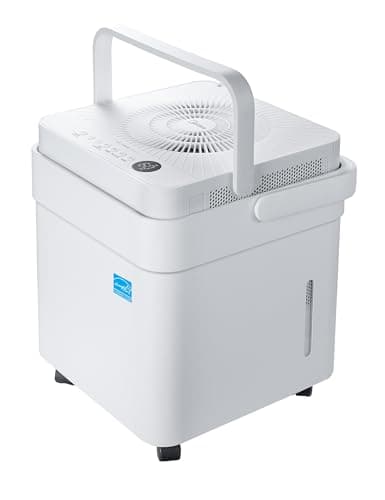
Midea is the only household-name brand whose certified efficiency clears the industry ceiling — IEF 2.08 L/kWh across 49 certified models, where 47 other brands all top out at exactly 2.01: Whirlpool, GE, LG, Frigidaire, Honeywell, Bosch, Friedrich, Danby, Hisense, TCL, BLACK+DECKER and more than a dozen other names you would recognize. If you can duct a unit, AprilAire at 2.35 beats every portable ever certified.
Fan & Frost earns a commission when you buy through our links, at no cost to you. It never changes a ranking, and we say so when the right answer is the cheaper unit or nothing at all. Full disclosure · How we pick.
At a glance
The picks, ranked
Tap any row to jump to the full reasoning. Prices are live from Amazon where we have them, and read “check price” where we don’t — never a number we cannot verify today.
| # | Product | Best for | Price |
|---|---|---|---|
| 1 | Best brand overall Midea Dehumidifier, 50 pints/day IEF 2.08 L/kWh across 49 certified models, the only household name above the 2.01 ceiling that 47 other brands share. 49.67 pints a day. | Almost any basement or damp floor — the one mainstream brand whose numbers are genuinely better | |
| 2 | 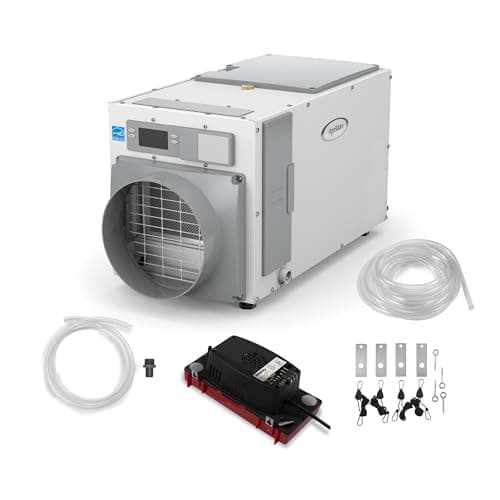 Best brand if you can duct it Aprilaire E080 Whole-Home Dehumidifier, 65 pints/day IEF 2.35 L/kWh and on the Most Efficient list — higher than every one of the 535 certified portables, including the best online-native specialist. | A whole house, a basement you want handled permanently, or a crawl space with ductwork | |
| 3 | 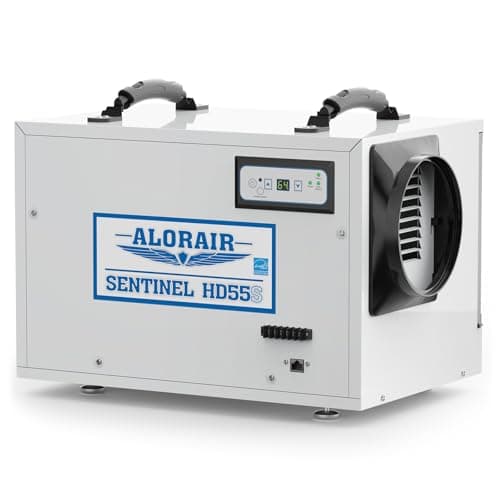 Best specialist brand AlorAir Sentinel HD55S Crawl Space Dehumidifier A brand that builds only for this job: ductable inlet and outlet, gravity drain, 120 pints a day at saturation, and six years of warranty. | A crawl space or an unheated basement, where a consumer portable will ice up and give up | |
| 4 | 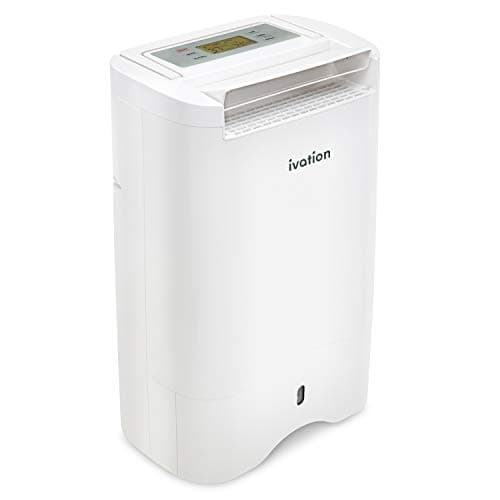 Best brand for a cold room Ivation 19-Pint Desiccant Dehumidifier A desiccant rotor instead of a compressor, rated down to 33 degrees F — the one brand here that works in a space the rest cannot. | An unheated garage, a boat or a closet below about 65 degrees, where every compressor unit on this page fails | |
| — | 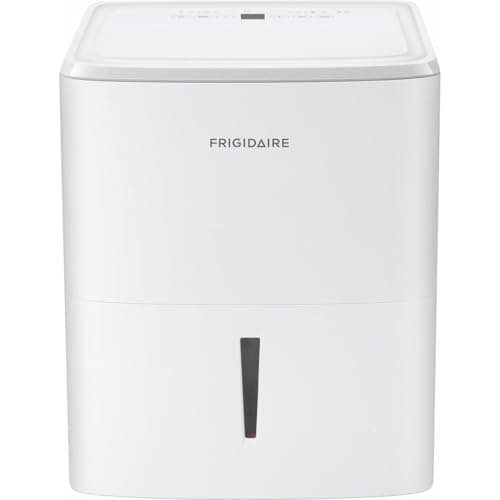 The one to skip if you are paying for the name Frigidaire Dehumidifier, 35 pints/day IEF 2.01 — exactly the ceiling that 47 brands share. A perfectly competent unit, and the clearest illustration that a household badge buys nothing here. | A medium room, if it is genuinely cheaper than the alternatives on the day you buy |
Dehumidifiers are one of the few appliance categories where the brand question has a documented answer. ENERGY STAR certifies them on a common federal test procedure, publishes every record, and does not care what the badge on the cabinet says. We pulled the whole dataset — 559 certified records, 535 portable and 24 whole-home — and grouped it by brand.
The result is more striking than in any other category we have looked at.
Criteria
How these are judged, in order
- Certified IEF, per brand, best and worst. Integrated energy factor — litres of water removed per kilowatt-hour — is what dehumidifiers are actually rated on, as opposed to the pint number everyone shops by, which is capacity. We take each brand's whole certified range rather than its best model, because a brand that is good once and bad four times is not a good brand.
- Whether the capacity figure is the federal one. DOE Appendix X1 is the comparable measurement. A pint figure quoted at a warmer, wetter condition is a bigger number for the same machine, and several makers print it.
- Form-factor coverage. Who actually makes a crawl-space unit, a ducted whole-home unit or a desiccant unit. This turns out to matter far more than efficiency, because the wrong form factor fails completely rather than inefficiently.
- Warranty. Published, and a real brand-level difference on a machine that runs unattended for years.
- What they publish at all. Several units on this page publish no wattage. An absent figure is information, and we show it as absent rather than filling it in.
We have tested none of these. Every figure is from the federal certified dataset or the manufacturer's own page, with our arithmetic marked as ours. How we pick.
The finding
Forty-seven brands stop at exactly 2.01
Across the 535 certified portable dehumidifiers, IEF runs from 1.70 to 2.24 with a median of 2.01. That median is not a coincidence of averaging. Grouped by brand, 47 separate brands have a best-certified figure of exactly 2.01, and more than twenty of them are names you would recognize in a store.
| Brand | Best IEF | Worst IEF | Certified models |
|---|---|---|---|
| Vellgoo | 2.24 | 1.75 | 5 |
| Aeocky | 2.21 | 1.75 | 8 |
| Waykar | 2.20 | 1.70 | 37 |
| Midea | 2.08 | 1.70 | 49 |
| AlorAir | 2.08 | 1.90 | 3 |
| Frigidaire | 2.01 | 1.70 | 6 |
| Hisense | 2.01 | 1.70 | 27 |
| TCL | 2.01 | 1.70 | 16 |
| Honeywell | 2.01 | 1.75 | 8 |
| BLACK+DECKER | 2.01 | 1.70 | 5 |
| Whirlpool | 2.01 | 1.85 | 4 |
| LG | 2.01 | 1.71 | 3 |
| GE | 2.01 | 1.70 | 3 |
| Danby | 2.01 | 1.70 | 3 |
From the ENERGY STAR Certified Dehumidifiers dataset, portable units only, grouped by brand name. Brands shown are those with three or more certified models; the 2.01 group continues for 37 more brands.
Read the "worst" column as well. Almost every brand here — including Midea and Waykar — also sells a model at or near 1.70, the floor of the whole field. A brand name does not even guarantee you the brand's own good figure.
The evidence
Thirteen brands with identical numbers
If the 2.01 ceiling were only a coincidence of engineering convergence, the rest of the dataset would still look varied. It does not.
Thirteen brands — CONCETTA, DUMOS, edx, Gianna, IULULU, JIOABL, KMFurnila, NEWBULIG, OLIXIS, SMUG, SUMELL, Sweetcrispy and ZUNMOS — each certify exactly three models, with an identical best figure of 2.04 and an identical worst of 1.89. That is one chassis wearing thirteen labels.
The dataset is blunter still in places. Two certification entries list their brand as "Yoau; Shinco; UHOME" (27 models) and "Waykar; KESNOS; YAUFEY; Fehom" (16 models) — four brand names sharing one filing, declared on the certificate itself.
This is the same pattern we documented in room air conditioners, where 58 per cent of certified units share every published specification with a differently-branded unit. The window AC version of this finding.
The inversion
Form factor beats brand, by a lot
The largest efficiency difference in this category is not between brands. It is between classes.
| Class | Records | Worst | Median | Best |
|---|---|---|---|---|
| Portable | 535 | 1.70 | 2.01 | 2.24 |
| Whole-home, ducted | 24 | 2.22 | 2.35 | 3.26 |
IEF in litres per kWh, from the ENERGY STAR Certified Dehumidifiers dataset.
The worst whole-home unit certified (2.22) is within a rounding error of the best portable ever certified (2.24). Every ducted unit in the dataset beats every mainstream portable. So if ducting is physically possible, the class decision dominates the brand decision completely — and it is the opposite of room air conditioners, where efficiency falls at the top of the size range.
This one is not a DIY job
Look up the exact model number in the certified dataset before you buy. It is public, free and searchable, and it is the only place the IEF of the specific unit you are holding is published. Almost every brand in this category sells both a 2.0-something machine and a 1.70 one, so the badge cannot tell you which is in the box.
What brand buys
The three things brand genuinely decides
- Whether they make your form factor at all. This is the real brand question. AlorAir builds crawl-space machines with ductable inlets and gravity drains; AprilAire builds ducted whole-home units; Ivation builds desiccant units that work below 65°F. None of the 47 ceiling brands makes a desiccant dehumidifier, because no ENERGY STAR program covers them.
- Warranty. Six years from AlorAir against the one to two years typical of consumer portables. On a machine running unattended in a crawl space, that is worth more than 0.07 of IEF.
- Whether they publish anything beyond the pint number. Two of the five units on this page publish no wattage at all. The certified dataset also records no noise rating for any of the 559 models and no minimum operating temperature — the specification that decides whether a unit works in a cold garage. Any decibel figure on a listing is the maker's own, with no common test behind it.
Buying
How to actually choose
- Decide the form factor first. Cold room, desiccant. Crawl space, a crawl-space machine. Whole house with ducts, ducted. Everything else, a portable. This removes most of the catalogue before brand is relevant.
- Then size on the DOE figure, not the marketing one. A unit sold as 80 pint can measure 65 federally. How to size one.
- Then pick the highest certified IEF at that capacity, looking up the exact model rather than trusting the brand.
- Buy bigger than feels necessary. Capacity and efficiency move together here, so a larger unit is usually cheaper per litre removed and holds a steadier humidity.
- Ignore the badge. On the evidence above it is the weakest signal available in this category.
Say the unwelcome thing
Do not pay a premium for a household name in this category.
Forty-seven brands share an identical best-certified efficiency of 2.01, including most of the names on a big-box shelf. Thirteen more share identical figures across exactly three models each. The federal test is the same for everyone and the results are public, so a premium for familiarity buys familiarity and nothing measurable.
The other thing not to do is treat a dehumidifier as a fix for water. It manages humidity; it does not stop a grade problem, a failed damp-proof course or a leaking downpipe, and running one against active ingress is a permanent electricity bill.
In full
Every pick, and what is wrong with it
Published specifications only, each linked to the page it came from. Where a manufacturer publishes nothing, the row says so — we do not fill blanks in.
1. Best brand overall
Midea Dehumidifier, 50 pints/day
Midea · model MDUDMB-50AEN8-BB0F
IEF 2.08 L/kWh across 49 certified models, the only household name above the 2.01 ceiling that 47 other brands share. 49.67 pints a day.
IEF 2.08 L/kWh at the top of its range, across 49 certified models — more certified dehumidifiers than any other brand in the dataset. On a field where 47 recognizable brands stop dead at 2.01, that is the only mainstream name that clears it.
This specific unit removes 49.67 pints a day on DOE Appendix X1 and certifies at 515 kWh a year, or about $94 at 18.34¢/kWh. It runs HFC-32 refrigerant.
Why the brand matters here and not elsewhere: Midea manufactures for a large part of this market, and our analysis of the room air conditioner field found the same pattern — much of what sells under other labels is Midea engineering. When the company puts its own name on a unit, it keeps the better figure for itself.
The honest caveat is the spread. Midea's certified range runs 2.08 down to 1.70, and 1.70 is the worst figure in the entire portable field. Buying "a Midea" is not the decision; buying the right Midea is. The 20-pint against the 50-pint shows the gap inside one line.
What’s wrong with it
Midea's own range runs all the way down to 1.70 — the floor of the entire certified field — so the badge alone guarantees nothing. You still have to pick the model.
Running cost — MDUDMB-50AEN8-BB0F
| Annual energy use | 515 kWh | ENERGY STAR certified figure |
|---|---|---|
| Annual cost | $94 | 515 × 18.34¢/kWh |
| Per cooling month | $24 | spread over a four-month season |
The annual figure is the certified value from the ENERGY STAR Certified Dehumidifiers dataset, which models a standard cooling season rather than your actual summer. It is more useful than a nameplate wattage here, because a variable-speed compressor spends most of its life well below nameplate.
Rate: 18.34¢/kWh, the US average residential price for June 2026 (EIA Electric Power Monthly, Table 5.3). Yours will differ — swap it in: (watts ÷ 1000) × hours × your rate.
| Water removal | 49.67 pints/day (DOE Appendix X1) |
|---|---|
| Efficiency (IEF) | 2.08 L/kWh |
| Annual energy use | 515 kWh/yr |
| Refrigerant | HFC-32 (GWP 675) |
| Connected | No |
| Noise | Not published in the certified dataset |
| ENERGY STAR | Certified |
Every figure above is from ENERGY STAR Certified Dehumidifiers dataset. Blanks are shown as “not published” rather than filled in.
2. Best brand if you can duct it
Aprilaire E080 Whole-Home Dehumidifier, 65 pints/day
Aprilaire · model E080
IEF 2.35 L/kWh and on the Most Efficient list — higher than every one of the 535 certified portables, including the best online-native specialist.
IEF 2.35 L/kWh, certified, and on the ENERGY STAR Most Efficient list. Put that against the portable field: 535 certified units running 1.70 to 2.24. The worst whole-home unit in the dataset (2.22) is close to the best portable ever certified (2.24), and the median whole-home figure is 2.35 against 2.01 for portables.
65.00 pints a day on DOE Appendix X1 at 632 kWh a year, about $116 annually. It installs ducted or free-standing, which is the flexibility that matters in a basement with no ductwork to tie into.
This is the clearest brand-level signal in the category, and it is not really about AprilAire — it is about form factor. Capacity and efficiency move together in dehumidifiers, so the ducted class simply operates in a better part of the curve.
Two honest flags. AprilAire markets this as an 80-pint unit while the federal measurement is 65, so size against 65. And at this price you are buying a permanent fixture; the Wi-Fi version adds nothing measurable to the drying.
What’s wrong with it
An order of magnitude more money than a portable, it is an installed appliance rather than something you carry in, and AprilAire markets it as 80 pint where DOE measures 65.
Running cost — E080
| Annual energy use | 632 kWh | ENERGY STAR certified figure |
|---|---|---|
| Annual cost | $116 | 632 × 18.34¢/kWh |
| Per cooling month | $29 | spread over a four-month season |
The annual figure is the certified value from the ENERGY STAR Certified Dehumidifiers dataset, which models a standard cooling season rather than your actual summer. It is more useful than a nameplate wattage here, because a variable-speed compressor spends most of its life well below nameplate.
Rate: 18.34¢/kWh, the US average residential price for June 2026 (EIA Electric Power Monthly, Table 5.3). Yours will differ — swap it in: (watts ÷ 1000) × hours × your rate.
| Water removal | 65.00 pints/day (DOE Appendix X1) |
|---|---|
| Efficiency (IEF) | 2.35 L/kWh |
| Annual energy use | 632 kWh/yr |
| Unit type | Whole-home (ducted or free-standing install) |
| Noise | Not published in the certified dataset |
| ENERGY STAR | Certified, and on the Most Efficient list |
Every figure above is from ENERGY STAR Certified Dehumidifiers dataset. Blanks are shown as “not published” rather than filled in.
3. Best specialist brand
AlorAir Sentinel HD55S Crawl Space Dehumidifier
AlorAir · model Sentinel HD55S
A brand that builds only for this job: ductable inlet and outlet, gravity drain, 120 pints a day at saturation, and six years of warranty.
AlorAir is the one brand here that makes nothing else. 120 pints a day at saturation and 55 at AHAM, covering up to 1,300 sq ft, with a ductable inlet and outlet and a gravity drain hose — the three features a crawl space actually needs and that almost no consumer portable has.
Six years of limited warranty is the longest on this page by a wide margin, and on a machine that will sit in a crawl space running unattended for years, that is the specification that earns the premium.
Its certified brandmates do well: AlorAir’s three certified portable models reach IEF 2.08, tying Midea at the top of the mainstream field.
But be clear about what is not published for this unit. It is not in the certified dehumidifier dataset, and AlorAir publishes no IEF and no wattage for it. That is a real gap: you cannot work out its running cost, and we will not estimate one. You are buying it for the ducting, the drain and the warranty, not for a number.
What’s wrong with it
This specific unit is not in the certified dataset and publishes no IEF or wattage at all, so its efficiency cannot be compared with anything on this page.
Running cost
AlorAir does not publish a wattage for the Sentinel HD55S, so we cannot calculate what it costs to run. We are not going to estimate one. If AlorAir publishes a nameplate figure, this block will show the arithmetic.
| Water removal | 120 pints/day at saturation, 55 pints/day at AHAM |
|---|---|
| Coverage | Up to 1,300 sq ft |
| Drain | Gravity drain hose |
| Ducting | Ductable inlet and outlet |
| Dimensions | 19.2 W x 12.2 D x 13.3 H in |
| Warranty | 6 years limited |
| ENERGY STAR | Not in the certified dehumidifier dataset |
| Efficiency (IEF) | Not published |
| Power | Not published on the product page |
Every figure above is from AlorAir product page, Sentinel HD55S (white). Blanks are shown as “not published” rather than filled in.
4. Best brand for a cold room
Ivation 19-Pint Desiccant Dehumidifier
Ivation · model IVADDH09
A desiccant rotor instead of a compressor, rated down to 33 degrees F — the one brand here that works in a space the rest cannot.
Every other unit on this page is a compressor dehumidifier, and every one of them has the same blind spot: below roughly 65°F a compressor coil ices over and the machine spends its time defrosting rather than drying.
Ivation’s answer is a desiccant rotor and a published operating range of 33°F to 104°F. In an unheated garage in October that is the difference between a dehumidifier and an ornament. The full mechanism comparison.
19 pints a day at 68°F and 60% RH, covering up to 410 sq ft, with a removable reservoir and a continuous drain option.
The data caveat is unavoidable and worth stating plainly: no ENERGY STAR program covers desiccant dehumidifiers at all. There is no IEF, no annual kWh, no certified capacity, and the 19-pint figure is measured at the manufacturer’s own condition rather than the federal one. Desiccant units are also generally thirstier per litre than compressors at room temperature — this is a tool for cold rooms, not an efficiency play.
What’s wrong with it
No ENERGY STAR program covers desiccant units, so there is no IEF, no annual kWh and no certified capacity. Its 19-pint figure is a manufacturer condition, not DOE Appendix X1.
Running cost
Ivation does not publish a wattage for the IVADDH09, so we cannot calculate what it costs to run. We are not going to estimate one. If Ivation publishes a nameplate figure, this block will show the arithmetic.
| Water removal | 19 pints/day at 68 F and 60% RH (manufacturer condition, not DOE Appendix X1) |
|---|---|
| Coverage | Up to 410 sq ft |
| Operating range | 33 F to 104 F |
| Drying element | Desiccant rotor, no compressor |
| Drain | Removable reservoir plus continuous drain hose |
| Speeds | 2 |
| Controls | LCD, timer, sleep mode, outlet swing |
| ENERGY STAR | No program covers desiccant dehumidifiers |
| Efficiency (IEF) | Not published |
| Power | Not published |
Every figure above is from Ivation product page, 19-pint small-area desiccant dehumidifier. Blanks are shown as “not published” rather than filled in.
Skip this one
Frigidaire Dehumidifier, 35 pints/day
Frigidaire · model FHDD3534Y1
IEF 2.01 — exactly the ceiling that 47 brands share. A perfectly competent unit, and the clearest illustration that a household badge buys nothing here.
Nothing is wrong with this machine, and that is the point. 35.85 pints a day on DOE Appendix X1, 379 kWh a year (about $70), on R-32 refrigerant. It is certified, it works, and Frigidaire will honor it.
Its certified efficiency is IEF 2.01 — exactly the figure 47 other brands stop at. Frigidaire is not being out-engineered by Whirlpool or GE or LG or Honeywell, because all of those stop at 2.01 too. They are, to a very close approximation, the same machines.
The comparison that decides it: 49.67 pints a day at 2.08 against 35.85 pints a day at 2.01, for roughly similar money at the prices we checked. That is 39 per cent more water removed, more cheaply per litre, from the one mainstream brand that clears the ceiling.
Buy this if on the day you shop it is clearly the cheaper unit and 35 pints is genuinely the capacity your room needs. Do not buy it because the badge is familiar — on this page that is precisely what the badge does not buy.
What’s wrong with it
35.85 pints a day at the ceiling efficiency, where the Midea Cube at a similar price removes 49.67 pints a day at 2.08. You are paying comparable money for 39 per cent less water.
Running cost — FHDD3534Y1
| Annual energy use | 379 kWh | ENERGY STAR certified figure |
|---|---|---|
| Annual cost | $70 | 379 × 18.34¢/kWh |
| Per cooling month | $17 | spread over a four-month season |
The annual figure is the certified value from the ENERGY STAR Certified Dehumidifiers dataset, which models a standard cooling season rather than your actual summer. It is more useful than a nameplate wattage here, because a variable-speed compressor spends most of its life well below nameplate.
Rate: 18.34¢/kWh, the US average residential price for June 2026 (EIA Electric Power Monthly, Table 5.3). Yours will differ — swap it in: (watts ÷ 1000) × hours × your rate.
| Water removal | 35.85 pints/day (DOE Appendix X1) |
|---|---|
| Efficiency (IEF) | 2.01 L/kWh |
| Annual energy use | 379 kWh/yr |
| Refrigerant | R-32 (GWP 675) |
| Connected | No |
| Noise | Not published in the certified dataset |
| ENERGY STAR | Certified |
Every figure above is from ENERGY STAR Certified Dehumidifiers dataset. Blanks are shown as “not published” rather than filled in.
We are not linking a buy button for this one. If you want to look at it anyway, it is easy enough to find — but we would rather send you to something that fits your room.
Questions people actually ask
Frequently asked
What is the best dehumidifier brand?
Midea, if you want a mainstream brand: it is the only household name whose certified efficiency clears the industry ceiling, at IEF 2.08 L/kWh across 49 certified models. If you can duct a unit, AprilAire at 2.35 beats every one of the 535 certified portables. For a crawl space, AlorAir builds for that job specifically.
Does dehumidifier brand matter?
Less than almost any other appliance category. Forty-seven brands — including Whirlpool, GE, LG, Frigidaire, Honeywell, Bosch, Danby, Hisense, TCL and BLACK+DECKER — all top out at exactly IEF 2.01 in the certified dataset. What brand does decide is whether they make your form factor at all, warranty length, and whether they publish anything beyond the pint number.
Why do so many dehumidifier brands have the same efficiency?
Because many are the same machines. Thirteen brands each certify exactly three models with an identical best figure of 2.04 and worst of 1.89, and two certification entries list four brand names on a single filing — 'Yoau; Shinco; UHOME' and 'Waykar; KESNOS; YAUFEY; Fehom'. White-labeling is declared on the certificates themselves.
Are expensive dehumidifiers more efficient?
Within the portable class, barely — the whole field spans 1.70 to 2.24 L/kWh. Across classes, yes and decisively: the worst ducted whole-home unit certified (2.22) is within a rounding error of the best portable ever certified (2.24), and whole-home units median 2.35 against 2.01. The form factor matters far more than the price or the badge. Whole-house dehumidifiers.
What is IEF on a dehumidifier?
Integrated energy factor — litres of water removed per kilowatt-hour. It is what dehumidifiers are actually rated on, unlike the pint number, which is capacity. Across 535 certified portables IEF runs 1.70 to 2.24 with a median of 2.01; ducted whole-home units run 2.22 to 3.26. Sizing and IEF.
Which dehumidifier brand is quietest?
Nobody can tell you, and no brand publishes a comparable figure. The certified dataset records capacity, IEF, annual kWh, refrigerant and connectivity for all 559 models and contains no acoustic field at all, so every decibel claim on a listing is the manufacturer's own with no common test procedure behind it. What is known about noise.
Sources
Where these numbers came from
- ENERGY STAR Certified Dehumidifiers dataset — all 559 records, brand-grouped IEF, capacity and annual kWh
- ENERGY STAR Most Efficient — dehumidifiers
- AlorAir Sentinel HD55S — 120 pints at saturation, ductable, 6-year warranty
- Ivation 19-pint desiccant dehumidifier — 33 to 104 F operating range
- EIA Electric Power Monthly, Table 5.3 — electricity rate
Read next
Where to go from here
Back to Dehumidifiers, or read how we pick.