Guide and picks
How to stop condensation on windows
Wiping it is not a fix, and neither is opening a window in January. There are exactly two things that stop it, and one of them is cheap enough to measure in cents per liter.
By Sawyer V. · Published
The short answer
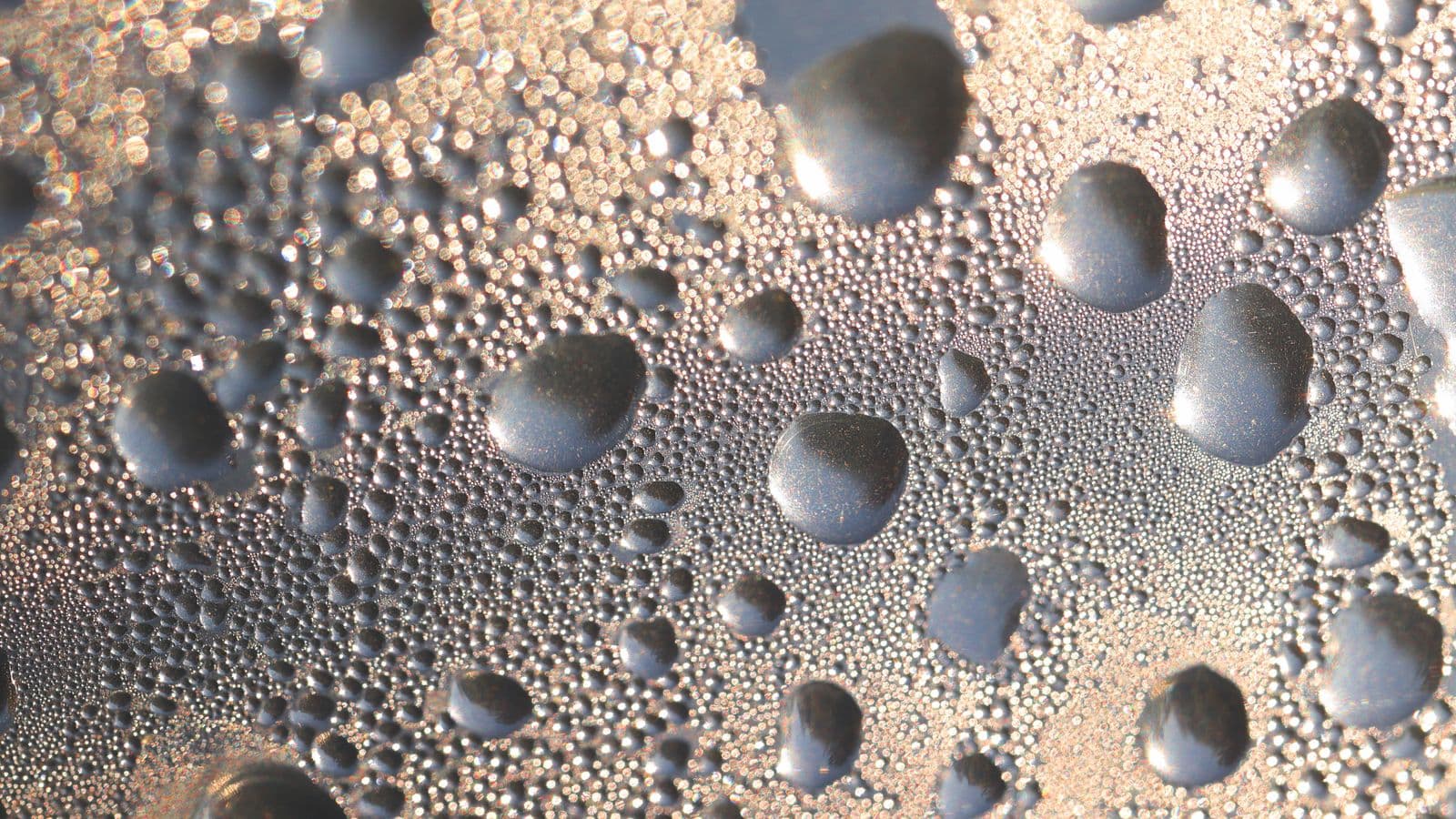
Water on the inside of the glass means the glass is colder than the dew point of the room’s air. Only two things change that: warm the glass, or dry the air. The EPA publishes the target for drying it — “below 60 percent (ideally between 30 and 50 percent) relative humidity” — and on an efficient dehumidifier removing water costs about 8.8¢ a liter at 18.34¢/kWh. Vent the moisture at source first: showers, cooking and the clothes dryer.
Fan & Frost earns a commission when you buy through our links, at no cost to you. It never changes a ranking, and we say so when the right answer is the cheaper unit or nothing at all. Full disclosure · How we pick.
At a glance
The picks, ranked
Tap any row to jump to the full reasoning. Prices are live from Amazon where we have them, and read “check price” where we don’t — never a number we cannot verify today.
| # | Product | Best for | Price |
|---|---|---|---|
| 1 | 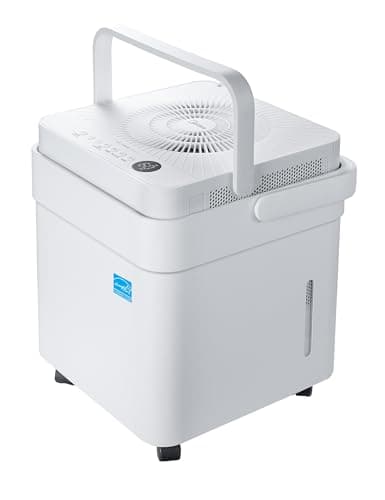 Best overall Midea Dehumidifier, 50 pints/day 49.67 pints a day at IEF 2.08 L/kWh, the only household-name brand above the certified efficiency ceiling. Every liter removed costs about 9 cents. | A whole floor that fogs up — several windows, a basement stair, a house where the problem is the air rather than one cold pane | |
| 2 | 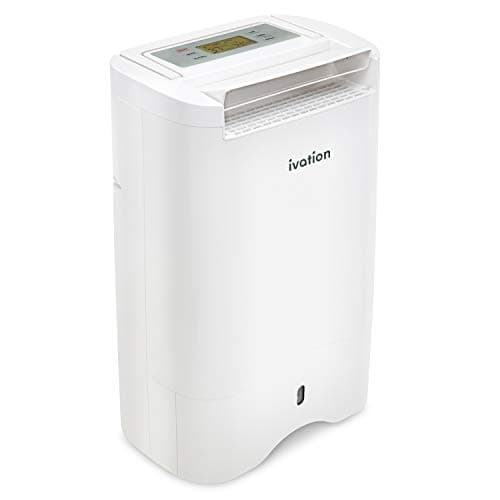 Best for a cold room Ivation 19-Pint Desiccant Dehumidifier A desiccant rotor with no compressor, published down to 33 F. The only machine here that keeps drying in a room cold enough to make the condensation bad in the first place. | An unheated porch, a cold spare room, a garage or a single-glazed room that sits in the forties — where a compressor unit simply stops working | |
| 3 | 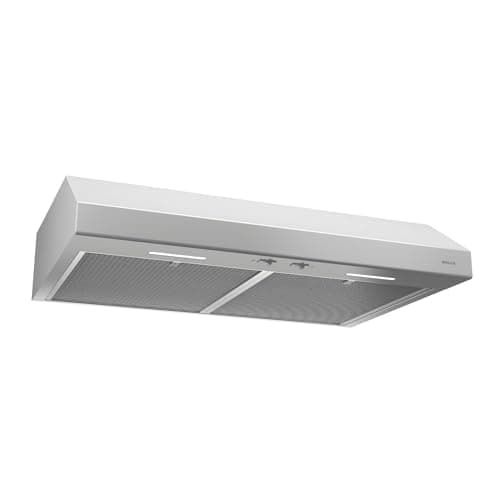 Best for the half of the problem that is cooking Broan BCSEK130WW Range Hood 150 CFM ducted to the outside, which removes cooking moisture before it ever becomes condensation. The EPA names venting at source as the first action, not dehumidifying. | A kitchen with a recirculating hood or no hood at all — where boiling pans put moisture straight into the house and the windows two rooms away wear it | |
| 4 | 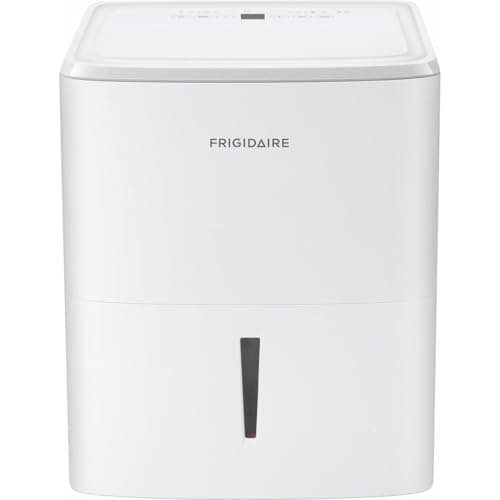 The sensible middle Frigidaire Dehumidifier, 35 pints/day 35.85 pints a day at IEF 2.01, exactly the certified efficiency ceiling that 47 brands share, in a size that suits one room rather than a floor. | One bad room — a bedroom with a cold external wall, a converted attic, a room where the window streams and the rest of the house is fine | |
| — | 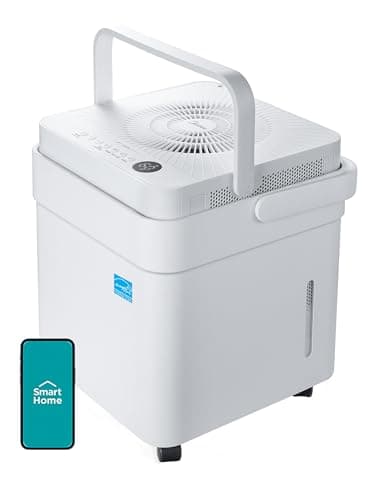 The one to skip Midea Dehumidifier, 20 pints/day 20.16 pints a day at IEF 1.70 — the floor of the entire certified portable field. Every liter costs 22 percent more than the 50-pint unit from the same brand. | Almost nothing here — it is the obvious small-and-cheap choice for one window, and it is the least efficient way on this page to remove water |
Condensation on the inside of a window is not a window fault, a ventilation fault or a heating fault on its own. It is a meeting of two conditions, and the EPA states the mechanism in one sentence: “When warm, humid air contacts a cold surface, condensation may form.”
That gives you the whole solution space. The glass is colder than the dew point of the air in the room. Raise the glass temperature above the dew point, or lower the dew point below the glass temperature. Everything else — wiping, towels, window vacuums, bowls of salt — is managing the symptom.
The number
The humidity to aim for, published
The EPA publishes a single band in two separate documents, with the same figures:
- “Indoor relative humidity (RH) should be kept below 60 percent — ideally between 30 percent and 50 percent, if possible.”
- “Keep indoor humidity low. If possible, keep indoor humidity below 60 percent (ideally between 30 and 50 percent) relative humidity.”
That band exists for mold rather than for your windows, but the two problems share a cause and so they share a fix. The EPA is explicit about the link: “Mold is frequently found on walls in cold corners behind furniture where condensation forms.” Wet glass is the visible version of what is also happening behind the wardrobe on the north wall.
It also sets the clock on acting: “If wet or damp materials or areas are dried 24-48 hours after a leak or spill happens, in most cases mold will not grow.” A window sill that is wet every single morning never gets its 24 hours.
Lever one
Cut the moisture at source, in this order
This is free or nearly free, and the EPA’s own list of actions to reduce humidity puts it before buying equipment. In rough order of how much water each one puts into a house:
- The clothes dryer. The guidance is to “vent appliances that produce moisture, such as clothes dryers, stoves, and kerosene heaters to the outside where possible”. An unvented or badly vented dryer is the largest single moisture source in a house, and drying clothes on an airer indoors is the same water with no appliance attached. How to dry laundry indoors without fogging the house.
- Showers. “Run the bathroom fan or open the window when showering.” The published guidance is to keep the fan running at least 20 minutes after each use, which almost nobody does. Why 20 minutes, and what it costs.
- Cooking. “Use exhaust fans or open windows whenever cooking, running the dishwasher or dishwashing.” Lids on pans is the free half of this.
- Unvented combustion. A kerosene or bottled-gas heater produces water as a combustion product, in quantity, directly into the room it is heating. The EPA names them alongside dryers for venting.
- People, plants and fish tanks. Smaller, constant, and not worth doing anything about except knowing they are there.
Lever two
Warm the glass, or stop hiding it
The other half of the mechanism gets less attention because it is less satisfying, but the EPA lists both: “Increase air temperature” and “Cover cold surfaces, such as cold water pipes, with insulation”.
- Heavy curtains make window condensation worse, not better. They insulate the glass from the warm room, so the pane runs colder overnight and collects more. The same is true of a blind pulled tight to the frame.
- Furniture against an external wall does the same thing to the wall behind it, which is exactly the cold-corner case the EPA describes mold appearing in.
- Air movement across the glass raises its surface temperature. The guidance says to “increase ventilation or air movement… Use fans as needed”. A small fan pointed along a cold wall is a genuinely effective and very cheap intervention. Circulators, which are built for exactly this.
- Single glazing will not be fixed by any of this. A single pane in cold weather sits close to the outdoor temperature, and its dew point requirement is beyond what a normal, comfortable indoor humidity can meet. Secondary glazing or insulating film raises the surface temperature; a dehumidifier chasing it will run forever. What window film does, measured.
This one is not a DIY job
Condensation on the OUTSIDE of the glass, or between the panes, is a different diagnosis. Dew on the outer surface in the morning is normal and is a sign the glazing is working — the outer pane is being kept cold because the unit is not leaking heat through it. Mist sealed between two panes means the unit’s seal has failed, and no amount of ventilation or dehumidification will touch it. That one is a glazing repair.
Why winter
Why this is a cold-weather problem
Nothing about a house changes in November except the temperature of its surfaces. Outdoor air in winter holds very little water, so when it leaks in and gets heated, the relative humidity of the room falls — which is why the same house that fogs its windows in January can also feel dry enough to crack furniture.
Both things are true at once, and it confuses people into the wrong purchase. The room air can be moderately dry by the measure that matters for comfort and still be far too wet for a pane of glass at 40 F. The glass is not reporting on the whole house; it is reporting on the coldest surface in it.
Which is why the first thing to buy is not a machine. It is a way to read the number the EPA publishes, because “condensation can be a sign of high humidity” is a sign and not a measurement, and the band you are aiming for is 30 to 50 percent. Whether you need to add moisture or remove it turns entirely on that reading.
What it costs
Cents per liter, which is the only honest comparison
Dehumidifiers are rated on IEF — integrated energy factor, liters of water removed per kilowatt-hour. That makes the cost of solving this problem unusually easy to state. Divide the rate by the IEF and you have the price of a liter.
| Certified IEF | Where it sits | Cost per liter removed |
|---|---|---|
| 2.24 L/kWh | Best portable ever certified | 8.2¢ |
| 2.08 L/kWh | Best household-name brand | 8.8¢ |
| 2.01 L/kWh | The ceiling 47 brands share | 9.1¢ |
| 1.70 L/kWh | Floor of the certified field | 11¢ |
Our arithmetic: 18.34¢/kWh ÷ IEF. IEF values from the ENERGY STAR Certified Dehumidifiers dataset. The spread across the entire certified portable field is about 11¢ to 8.2¢ a liter.
The useful consequence: the whole certified field is within about three cents a liter of itself. Choosing the right capacity and the right technology for a cold room matters far more than squeezing the last point of efficiency, which is why the desiccant unit earns a place here despite publishing nothing.
Say the unwelcome thing
Do not buy a dehumidifier to fix condensation you have not measured.
Two cases waste the money entirely. The first is single glazing: the pane is so close to outdoor temperature that keeping a room below its dew point would mean drying the air past the point of comfort, and the machine will simply run. The fix there is the glass, not the air.
The second is a cold room below about 60 F. A compressor dehumidifier condenses water onto a cold coil, and in a cold room that coil frosts rather than drains. Unheated porches, garages and spare rooms need a desiccant machine or heat, and a standard unit in one of them is a bill without a result.
In full
Every pick, and what is wrong with it
Published specifications only, each linked to the page it came from. Where a manufacturer publishes nothing, the row says so — we do not fill blanks in.
1. Best overall
Midea Dehumidifier, 50 pints/day
Midea · model MDUDMB-50AEN8-BB0F
49.67 pints a day at IEF 2.08 L/kWh, the only household-name brand above the certified efficiency ceiling. Every liter removed costs about 9 cents.
49.67 pints a day on DOE Appendix X1 at a certified IEF of 2.08 L/kWh. That efficiency figure is the one that matters here, because it converts directly into the cost of solving the problem: 2.08 liters per kilowatt-hour means one liter costs 8.8¢ at 18.34¢/kWh.
Put that next to the 20-pint unit at the bottom of this page, which certifies at IEF 1.70 — 11¢ a liter. Same job, 22 percent more money per liter of water taken out of the air.
515 kWh a year certified, about $94 at 18.34¢/kWh, on HFC-32 refrigerant. Run it against a humidistat rather than continuously and the real figure is a fraction of that, because it only works when the house is above your set point.
Set it to the EPA band. Holding 30 to 50 percent relative humidity is both the published mold target and, not coincidentally, dry enough that ordinary double glazing stays clear in most winter weather. Why a lower setting costs more and achieves less.
What’s wrong with it
At 515 kWh a year it is the biggest electricity line on this page if you run it year-round, and it is a 50-pint machine in a room you have to live in. Capacity this size is wasted on a single bedroom window.
Running cost — MDUDMB-50AEN8-BB0F
| Annual energy use | 515 kWh | ENERGY STAR certified figure |
|---|---|---|
| Annual cost | $94 | 515 × 18.34¢/kWh |
| Per cooling month | $24 | spread over a four-month season |
The annual figure is the certified value from the ENERGY STAR Certified Dehumidifiers dataset, which models a standard cooling season rather than your actual summer. It is more useful than a nameplate wattage here, because a variable-speed compressor spends most of its life well below nameplate.
Rate: 18.34¢/kWh, the US average residential price for June 2026 (EIA Electric Power Monthly, Table 5.3). Yours will differ — swap it in: (watts ÷ 1000) × hours × your rate.
| Water removal | 49.67 pints/day (DOE Appendix X1) |
|---|---|
| Efficiency (IEF) | 2.08 L/kWh |
| Annual energy use | 515 kWh/yr |
| Refrigerant | HFC-32 (GWP 675) |
| Connected | No |
| Noise | Not published in the certified dataset |
| ENERGY STAR | Certified |
Every figure above is from ENERGY STAR Certified Dehumidifiers dataset. Blanks are shown as “not published” rather than filled in.
2. Best for a cold room
Ivation 19-Pint Desiccant Dehumidifier
Ivation · model IVADDH09
A desiccant rotor with no compressor, published down to 33 F. The only machine here that keeps drying in a room cold enough to make the condensation bad in the first place.
Published operating range 33 F to 104 F, from a desiccant rotor rather than a compressor. That is the entire reason it is on this page: the rooms where condensation is worst are the cold ones, and a compressor dehumidifier is fighting physics below roughly 60 F.
19 pints a day at 68 F and 60 percent RH, up to 410 sq ft, with a removable reservoir and a continuous drain hose. Note the condition attached to that pint figure — it is the manufacturer’s, not the federal test, and the two are not interchangeable.
What you give up is measurement, and we will not pretend otherwise. There is no ENERGY STAR program for desiccant dehumidifiers at all, so there is no certified efficiency to compare, no annual kWh, and no wattage on the product page. We cannot tell you what a liter costs on this machine, because nobody publishes the figure that would let us work it out.
Use it where the alternative is a compressor unit not working. The 60-degree line, and which side of it you are on.
What’s wrong with it
Nothing about it is federally certified — no program covers desiccant dehumidifiers — so there is no IEF, no annual kWh and no published wattage. Its 19-pint figure is quoted at the manufacturer's own condition, not DOE Appendix X1, so it is not comparable with the numbers above.
Running cost
Ivation does not publish a wattage for the IVADDH09, so we cannot calculate what it costs to run. We are not going to estimate one. If Ivation publishes a nameplate figure, this block will show the arithmetic.
| Water removal | 19 pints/day at 68 F and 60% RH (manufacturer condition, not DOE Appendix X1) |
|---|---|
| Coverage | Up to 410 sq ft |
| Operating range | 33 F to 104 F |
| Drying element | Desiccant rotor, no compressor |
| Drain | Removable reservoir plus continuous drain hose |
| Speeds | 2 |
| Controls | LCD, timer, sleep mode, outlet swing |
| ENERGY STAR | No program covers desiccant dehumidifiers |
| Efficiency (IEF) | Not published |
| Power | Not published |
Every figure above is from Ivation product page, 19-pint small-area desiccant dehumidifier. Blanks are shown as “not published” rather than filled in.
3. Best for the half of the problem that is cooking
Broan BCSEK130WW Range Hood
Broan · model BCSEK130WW
150 CFM ducted to the outside, which removes cooking moisture before it ever becomes condensation. The EPA names venting at source as the first action, not dehumidifying.
150 CFM at 0.25 inches water gauge, certified, on a 7-inch duct. Unexciting numbers that solve the problem upstream, which is why the EPA’s moisture guidance lists ventilation at source before it mentions dehumidifiers at all: “Use exhaust fans or open windows whenever cooking, running the dishwasher or dishwashing.”
A pan at a rolling boil is the largest single moisture source in most houses on a winter evening, and it is the one people never connect to the bedroom window. Removing a liter of water vapor with a hood costs a few minutes of a 27-watt fan; removing it afterwards with a dehumidifier costs 8.8¢ plus the hours.
5.5 CFM per watt and 1.5 sones. We publish the bad figures too: this is the least efficient certified fan in our registry and it is not quiet. Range hoods are rated against a much harder duty than a bathroom fan and the category reflects it.
The condition on all of it: it must vent outside. A recirculating hood filters grease and odor and returns the water vapor. Ducted against recirculating, with the certified numbers.
What’s wrong with it
5.5 CFM per watt is by far the worst efficacy of any certified fan in our registry, and at 1.5 sones it is audible. It also only works if it is ducted outdoors — a recirculating hood with a charcoal filter returns every gram of the water to the room.
Running cost
Broan does not publish a wattage for the BCSEK130WW, so we cannot calculate what it costs to run. We are not going to estimate one. If Broan publishes a nameplate figure, this block will show the arithmetic.
| Air delivery | 150 CFM at 0.25 in w.g. |
|---|---|
| Efficacy | 5.5 CFM per watt |
| Duct size | 7 in |
| Width | 30 in |
| Unit type | Range hood |
| Noise | 1.5 sones |
| ENERGY STAR | Certified |
Every figure above is from ENERGY STAR Certified Ventilating Fans dataset. Blanks are shown as “not published” rather than filled in.
4. The sensible middle
Frigidaire Dehumidifier, 35 pints/day
Frigidaire · model FHDD3534Y1
35.85 pints a day at IEF 2.01, exactly the certified efficiency ceiling that 47 brands share, in a size that suits one room rather than a floor.
35.85 pints a day on DOE Appendix X1 at IEF 2.01 and 379 kWh a year, about $70 at 18.34¢/kWh if it ran constantly. On R-32 refrigerant.
2.01 is the ceiling, not the exception. Across the certified portable field, 47 separate brands have a best figure of exactly 2.01 — so this is the normal good machine rather than a compromise, and at a middling capacity it is usually the practical answer for one room.
A liter of water on this unit costs 9.1¢ against 8.8¢ on the Midea. That is a real difference and a small one; at these volumes it should not outweigh buying the right capacity.
The honest gap is noise. The certified dehumidifier dataset has no acoustic field at all, for any of the 559 models in it, so every quiet claim in a listing is unverifiable. What is actually known about dehumidifier noise.
What’s wrong with it
IEF 2.01 against the Midea's 2.08, so a liter costs about a cent more to remove, and 35 pints is more machine than a single window needs. No noise figure is published for any dehumidifier, which is the spec you would most want in a bedroom.
Running cost — FHDD3534Y1
| Annual energy use | 379 kWh | ENERGY STAR certified figure |
|---|---|---|
| Annual cost | $70 | 379 × 18.34¢/kWh |
| Per cooling month | $17 | spread over a four-month season |
The annual figure is the certified value from the ENERGY STAR Certified Dehumidifiers dataset, which models a standard cooling season rather than your actual summer. It is more useful than a nameplate wattage here, because a variable-speed compressor spends most of its life well below nameplate.
Rate: 18.34¢/kWh, the US average residential price for June 2026 (EIA Electric Power Monthly, Table 5.3). Yours will differ — swap it in: (watts ÷ 1000) × hours × your rate.
| Water removal | 35.85 pints/day (DOE Appendix X1) |
|---|---|
| Efficiency (IEF) | 2.01 L/kWh |
| Annual energy use | 379 kWh/yr |
| Refrigerant | R-32 (GWP 675) |
| Connected | No |
| Noise | Not published in the certified dataset |
| ENERGY STAR | Certified |
Every figure above is from ENERGY STAR Certified Dehumidifiers dataset. Blanks are shown as “not published” rather than filled in.
Skip this one
Midea Dehumidifier, 20 pints/day
Midea · model MAD20S1QWT
20.16 pints a day at IEF 1.70 — the floor of the entire certified portable field. Every liter costs 22 percent more than the 50-pint unit from the same brand.
It is a functioning, certified machine and the specification is plain: 20.16 pints a day, 249 kWh a year (about $46), HFC-32 refrigerant.
The problem is the efficiency. IEF 1.70 L/kWh is the floor of the whole certified portable field, which runs 1.70 to 2.24. Converted into the number that matters on this page, a liter of water costs 11¢ here against 8.8¢ on the 50-pint unit from the same manufacturer.
That gap would be forgivable on a short job. Condensation is not a short job — it is November to March, every night the glass gets cold, so you pay the penalty a few thousand times.
The pattern is general in this category: capacity and efficiency move together, so the small unit is usually the expensive one per liter. The 20-pint against the 50-pint, in detail.
What’s wrong with it
1.70 L/kWh is the worst certified efficiency available, and a condensation problem is a long job rather than a one-afternoon one, so the inefficiency compounds over a whole winter rather than canceling out.
Running cost — MAD20S1QWT
| Annual energy use | 249 kWh | ENERGY STAR certified figure |
|---|---|---|
| Annual cost | $46 | 249 × 18.34¢/kWh |
| Per cooling month | $11 | spread over a four-month season |
The annual figure is the certified value from the ENERGY STAR Certified Dehumidifiers dataset, which models a standard cooling season rather than your actual summer. It is more useful than a nameplate wattage here, because a variable-speed compressor spends most of its life well below nameplate.
Rate: 18.34¢/kWh, the US average residential price for June 2026 (EIA Electric Power Monthly, Table 5.3). Yours will differ — swap it in: (watts ÷ 1000) × hours × your rate.
| Water removal | 20.16 pints/day (DOE Appendix X1) |
|---|---|
| Efficiency (IEF) | 1.70 L/kWh |
| Annual energy use | 249 kWh/yr |
| Refrigerant | HFC-32 (GWP 675) |
| Connected | No |
| Noise | Not published in the certified dataset |
| ENERGY STAR | Certified |
Every figure above is from ENERGY STAR Certified Dehumidifiers dataset. Blanks are shown as “not published” rather than filled in.
We are not linking a buy button for this one. If you want to look at it anyway, it is easy enough to find — but we would rather send you to something that fits your room.
Questions people actually ask
Frequently asked
How do I stop condensation on my windows?
Warm the glass or dry the air — those are the only two mechanisms. In practice: vent moisture at source (shower fan for 20 minutes after use, extractor while cooking, dryer ducted outside), stop insulating the glass with tight curtains, move air across cold walls, and if it persists hold the house at the EPA's published 30 to 50 percent relative humidity with a dehumidifier.
What humidity level stops condensation on windows?
There is no single figure, because it depends on how cold the glass is — condensation forms wherever a surface is below the dew point of the room air. The EPA's published band of below 60 percent and ideally 30 to 50 percent relative humidity keeps ordinary double glazing clear in most winter weather. Single glazing often cannot be kept clear at any comfortable humidity. What to set the dial to.
Does a dehumidifier stop window condensation?
Yes, if the glass is the kind that can be kept above the dew point and the room is warm enough for the machine to work. A compressor dehumidifier frosts rather than drains below roughly 60 F, so an unheated room needs a desiccant unit. On an efficient dehumidifier removing water costs about 9 cents a liter at the US average electricity rate. Dehumidifiers on certified efficiency.
Why do my windows have condensation in winter but not summer?
Because the glass is cold, not because the house is wetter. Condensation needs a surface below the dew point of the air touching it, and in winter the pane runs close to outdoor temperature. The same house in winter often has lower relative humidity overall — the glass is reporting on the coldest surface in the room, not on the room.
Do curtains make window condensation worse?
Yes, usually. A heavy curtain or a blind pulled tight to the frame insulates the glass from the heated room, so the pane runs colder overnight and collects more water. The EPA's moisture guidance lists increasing air temperature and keeping air moving as humidity-reduction actions for the same reason.
Is window condensation dangerous?
The water itself is not, but what it indicates is worth acting on. The EPA says to act quickly when you see condensation on windows, walls or pipes, that condensation can be a sign of high humidity, and that mold is frequently found on walls in cold corners where condensation forms. Its stated window for drying wet material before mold grows is 24 to 48 hours.
What about condensation between the panes?
That is a failed glazing seal and no amount of ventilation or dehumidification will clear it — the moisture is inside a sealed unit. Condensation on the outside face of the glass in the morning is the opposite: it is normal, and a sign the unit is not leaking heat through the outer pane.
Sources
Where these numbers came from
- EPA, A Brief Guide to Mold, Moisture and Your Home — the 30 to 50 percent band, act quickly on condensation, dry within 24-48 hours, and the full list of actions that reduce humidity
- EPA Mold Course, Chapter 2 — warm humid air on a cold surface forms condensation; mold in cold corners where condensation forms
- ENERGY STAR Certified Dehumidifiers dataset — certified IEF, DOE Appendix X1 capacity and annual kWh for every dehumidifier on this page
- ENERGY STAR Certified Ventilating Fans dataset — the range hood's certified 150 CFM and 5.5 CFM per watt
- Home Ventilating Institute, How much ventilation do I need? — the 20-minute post-use run time for a bathroom fan
- Ivation product page, 19-pint small-area desiccant dehumidifier — 33 F to 104 F operating range
- EIA Electric Power Monthly, Table 5.3 — electricity rate
Read next
Where to go from here
Back to Guides & Calculators, or read how we pick.