Head to head
DC vs AC motor fans: what the wattage gap actually buys
Lasko sells two 42-inch tower fans that look alike on a shelf. One draws 19 watts flat out and the other draws 49. That single specification explains almost everything else about them.
By Sawyer V. · Published
The short answer
A DC motor uses roughly a third to a half the power of an equivalent AC motor, runs quieter, and supports many more speeds. Lasko’s two 42-inch towers: 2.9–19 W, 12 speeds, 23 dBA against 37–49 W, 3 speeds, no published dBA. Over a summer of nightly use the gap is real but modest — the quiet and the speed steps are the stronger argument.
Fan & Frost earns a commission when you buy through our links, at no cost to you. It never changes a ranking, and we say so when the right answer is the cheaper unit or nothing at all. Full disclosure · How we pick.
At a glance
The picks, ranked
Tap any row to jump to the full reasoning. Prices are live from Amazon where we have them, and read “check price” where we don’t — never a number we cannot verify today.
| # | Product | Best for | Price |
|---|---|---|---|
| 1 | 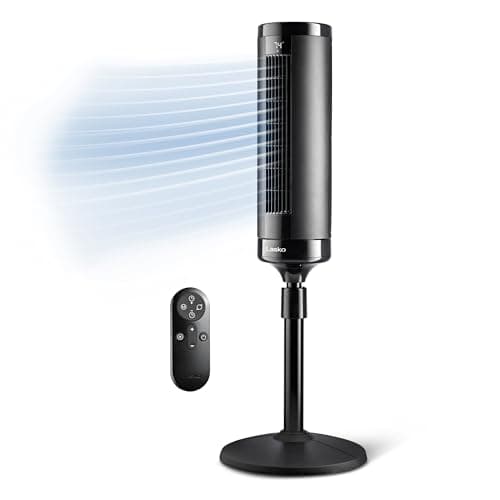 The DC side Lasko EcoQuiet 42" DC Tower Fan 2.9-19 W, twelve speeds and 23 dBA published — the specification sheet is better in every dimension that is published for both. | A bedroom, or anywhere the fan runs for hours | |
| 2 |  The AC side Lasko Wind Curve 42" Tower Fan 720 CFM published — the only airflow figure in the comparison — at 37-49 W and a lower purchase price. | A living room, where the fan runs while people are awake | |
| 3 | 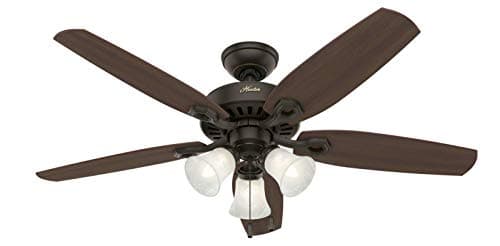 What a DC ceiling fan does with the same idea Hunter Vespucci 52" Ceiling Fan 1.8 W on low at a certified 366.7 CFM per watt — the efficiency argument taken as far as it goes. | A room you own, where the fan can be permanent | |
| — | The one that muddies the picture Lasko Aria 40" Smart Wi-Fi Tower Fan 41-52 W with 460 CFM and app control — an AC-class power draw sold on features rather than motor type. | Someone who wants app control more than efficiency |
“DC motor” is the most common upsell in fan retail, and it is one of the few that is backed by published numbers you can check. The useful question is not whether DC is better — it plainly is — but by how much, and whether that justifies the price.
Mechanism
Why the motor type changes the wattage
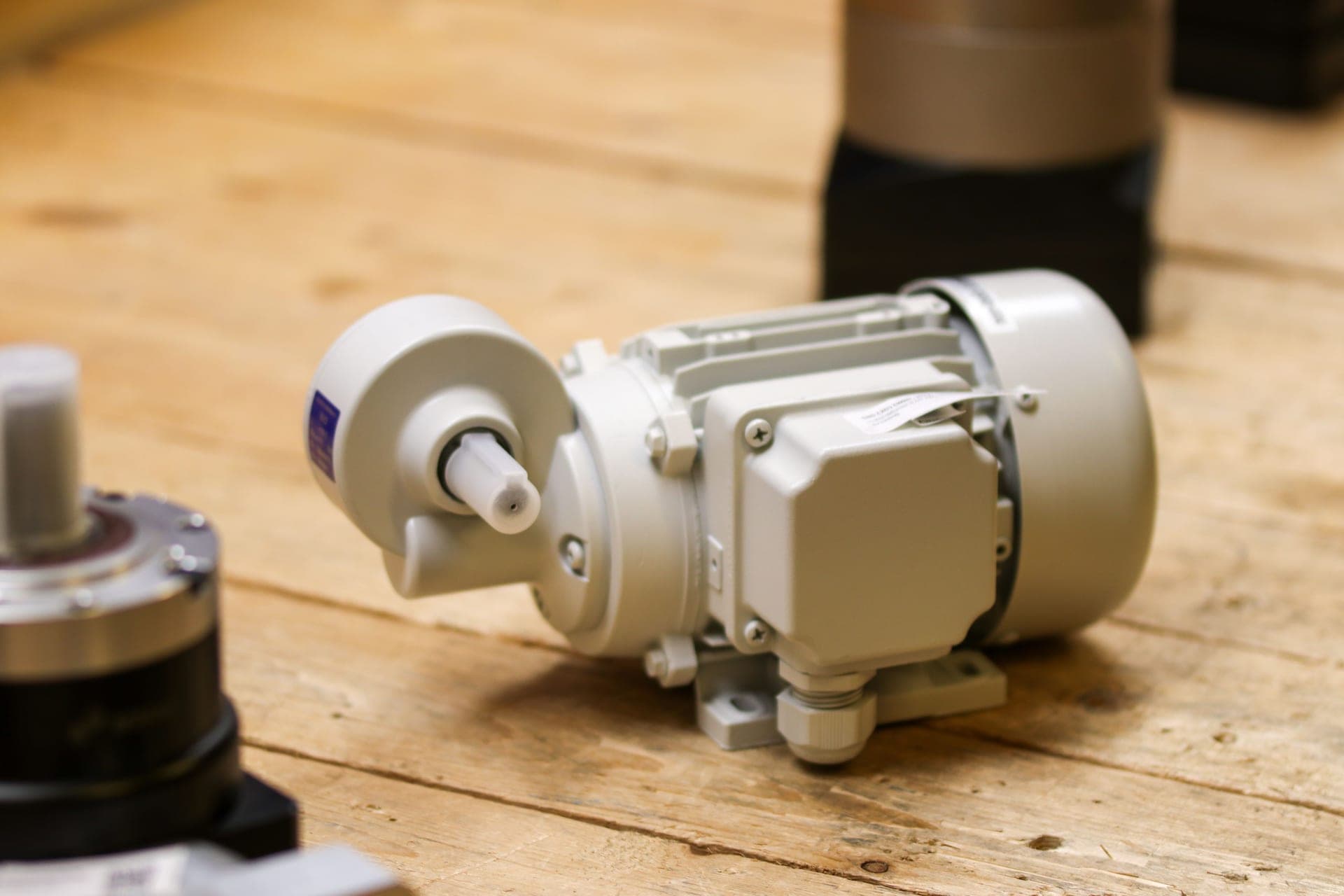
An AC induction motor runs directly on mains alternating current. It creates a rotating magnetic field in the stator which drags the rotor around behind it, and that slip between the two is inherent electrical loss that appears as heat. Speed is changed by switching between physically different windings, which is why you get three settings rather than a range.
A DC (brushless) motor converts mains to DC and electronically commutates the windings. There is no slip loss, the controller can vary speed continuously, and the motor stays efficient at low output rather than falling off a cliff.
Three consequences follow, and all three are visible in the spec sheets:
- Lower power draw, most dramatically at low speed.
- More speeds — twelve rather than three, because speed control is software rather than winding taps.
- Less noise, partly from the motor itself and partly because you can run it slower and still get enough air.
Side by side
Two 42-inch towers from the same brand
| T42710 (DC) | 2554 (AC) | |
|---|---|---|
| Power range | 2.9 – 19 W | 37 – 49 W |
| Speeds | 12 | 3 |
| Noise | 23 / 46 dBA | Not published |
| Air delivery | Not published | 720 CFM |
| Height | 41.6 in | 42.5 in |
| Weight | 7.8 lb | 10.62 lb |
| Timer | 8 hours | 7.5 hours |
| Warranty | 2 years | 1 year |
| 30 nights, lowest speed | 13¢ | $1.63 |
| 30 nights, highest speed | 84¢ | $2.16 |
Specifications from Lasko’s own product pages; costs are our arithmetic at 18.34¢/kWh.
The most striking row is the second-to-last. On its lowest speed the AC fan draws nearly twice what the DC fan draws at maximum. That is the low-speed efficiency collapse, and it is why the DC advantage is bigger in practice than the headline 19-versus-49 suggests.
Notice also what each manufacturer chose to publish. The DC fan publishes noise and hides airflow; the AC fan publishes airflow and hides noise. Each is showing its best number. Neither is lying; both are curating.
The arithmetic
Does the premium pay back?
Let us be honest about the scale rather than overselling it. Take a fan running eight hours a night for four summer months — 120 nights, 960 hours.
| Usage pattern | DC | AC | Difference |
|---|---|---|---|
| A season on low | 51¢ | $6.51 | $6.00 |
| A season on medium | $1.76 | $7.57 | $5.81 |
| A season on high | $3.35 | $8.63 | $5.28 |
960 hours at 18.34¢/kWh. The medium-speed row uses a midpoint between each fan’s published low and high figures, since neither manufacturer publishes per-speed wattage.
So the honest answer is that the electricity saving alone is a few dollars a season, not tens. Over the several summers a fan lasts it accumulates into something real, and it will typically cover a modest price difference — but if somebody sells you a DC fan purely on running cost, the arithmetic does not support the pitch.
Say the unwelcome thing
Do not buy DC for the electricity saving. Buy it for the twelve speeds and the quiet.
The running-cost gap is a few dollars a season. The speed range and the noise floor are what you notice every night.
A three-speed fan frequently has nothing usable between “not enough air” and “too loud to sleep”. Twelve steps means you can sit exactly on the boundary, which is most of what makes a fan liveable overnight. And a published 23 dBA beats an unpublished figure you cannot check.
In a living room, where neither of those matters much, the AC fan is the sensible buy and it moves more air.
Decide
Which to buy
Buy DC if: the fan is for a bedroom; it runs for many hours; you want fine speed control; or you want a published noise figure to hold the manufacturer to.
Buy AC if: the fan is for a living room or a garage; it runs occasionally; you want maximum air per dollar of purchase price; or you specifically want a published CFM figure to size a room with.
Buy neither if you own the room and the ceiling can take a fan. A certified ceiling fan on low draws 1.8 W and moves far more air than either tower, which makes the whole DC-versus-AC question moot for the room it can serve.
In full
Every pick, and what is wrong with it
Published specifications only, each linked to the page it came from. Where a manufacturer publishes nothing, the row says so — we do not fill blanks in.
1. The DC side
Lasko EcoQuiet 42" DC Tower Fan
Lasko · model T42710
2.9-19 W, twelve speeds and 23 dBA published — the specification sheet is better in every dimension that is published for both.
2.9 W on its lowest speed. That is the number that makes the comparison lopsided — 13¢ for a month of eight-hour nights, against $1.63 for the AC fan’s lowest setting.
DC motors hold efficiency at low speed where AC motors lose it badly, and low speed is where a bedroom fan spends its life. The headline 19 W against 49 W understates the real gap because nobody runs a bedroom fan flat out all night.
Twelve speeds comes free with the motor type. Speed control on a DC motor is straightforward electronics; on an AC motor it means physically tapped windings, which is why AC fans almost always have three.
And 23 dBA on low, published — a number you can hold it to.
What’s wrong with it
Lasko publishes no CFM for it, so it cannot be compared on airflow with the AC fan that does publish one. DC fans also cost more up front, and the payback below is modest.
Running cost — T42710
| Nameplate power | 2.9 W – 19 W | manufacturer's published figure |
|---|---|---|
| Energy, 8-hour night | 0.15 kWh | 19 ÷ 1000 × 8 |
| Cost per hour | 0.3¢ | at 18.34¢/kWh |
| Cost per 8-hour night | 2.8¢ | on the highest speed |
| Cost per 30 nights | 84¢ | 4.6 kWh |
| Same month, lowest speed | 13¢ | at 2.9 W |
Rate: 18.34¢/kWh, the US average residential price for June 2026 (EIA Electric Power Monthly, Table 5.3). Yours will differ — swap it in: (watts ÷ 1000) × hours × your rate.
| Power | 2.9 W - 19 W (0.06-0.303 A at 120 V) |
|---|---|
| Noise | 23 dBA low, 46 dBA high |
| Speeds | 12 |
| Height | 41.6 in |
| Footprint | 12.8 x 12.8 in |
| Weight | 7.8 lb |
| Timer | 8 hours |
| Air delivery (CFM) | Not published |
| Warranty | 2 years |
Every figure above is from Lasko product page, T42710. Blanks are shown as “not published” rather than filled in.
2. The AC side
Lasko Wind Curve 42" Tower Fan
Lasko · model 2554
720 CFM published — the only airflow figure in the comparison — at 37-49 W and a lower purchase price.
The AC fan is not a bad product, and one specification genuinely favors it: 720 CFM published. The DC fan publishes none, so on raw airflow the AC unit is the only one you can size a room with.
37–49 W, which is $2.16 for a month of nights at full power. Note the low setting draws 37 W — nearly twice what the DC fan uses at maximum. That is the AC motor’s efficiency curve rather than a design flaw.
For a living room where the fan runs for a few hours while a television is already making more noise, the missing dBA figure and the extra watts matter far less. It is the cheaper fan to buy, and in that room it is a reasonable buy.
What’s wrong with it
No published noise figure at all, three speeds, and a 1-year warranty against the DC fan's 2. On low it draws more than the DC fan does flat out.
Running cost — 2554
| Nameplate power | 37 W – 49 W | manufacturer's published figure |
|---|---|---|
| Energy, 8-hour night | 0.39 kWh | 49 ÷ 1000 × 8 |
| Cost per hour | 0.9¢ | at 18.34¢/kWh |
| Cost per 8-hour night | 7.2¢ | on the highest speed |
| Cost per 30 nights | $2.16 | 11.8 kWh |
| Same month, lowest speed | $1.63 | at 37 W |
Rate: 18.34¢/kWh, the US average residential price for June 2026 (EIA Electric Power Monthly, Table 5.3). Yours will differ — swap it in: (watts ÷ 1000) × hours × your rate.
| Power | 37 W - 49 W (0.4 A at 120 V) |
|---|---|
| Air delivery | 720 CFM |
| Speeds | 3 |
| Height | 42.5 in |
| Footprint | 13 x 13 in |
| Weight | 10.62 lb |
| Timer | 7.5-hour auto-off |
| Noise | Not published |
| Warranty | 1 year |
Every figure above is from Lasko product page, 2554. Blanks are shown as “not published” rather than filled in.
3. What a DC ceiling fan does with the same idea
Hunter Vespucci 52" Ceiling Fan
Hunter · model Vespucci
1.8 W on low at a certified 366.7 CFM per watt — the efficiency argument taken as far as it goes.
The efficient-motor argument reaches its conclusion on the ceiling. Certified ceiling fans publish CFM per watt — a real efficiency figure measured to a common procedure — and this one manages 366.7 at 13.9 W on high and 1.8 W on low.
7.9¢ for a month of nights. The DC tower costs 13¢ on low and the AC tower $1.63.
Part of that is the motor and most of it is blade diameter, but the point stands: if you are shopping on efficiency and the room allows it, the ceiling is where the argument ends.
What’s wrong with it
A wired, permanent installation needing 7 ft of blade clearance, which rules it out in most rentals.
Running cost — Vespucci
| Nameplate power | 1.8 W – 13.9 W | manufacturer's published figure |
|---|---|---|
| Energy, 8-hour night | 0.11 kWh | 13.9 ÷ 1000 × 8 |
| Cost per hour | 0.3¢ | at 18.34¢/kWh |
| Cost per 8-hour night | 2.0¢ | on the highest speed |
| Cost per 30 nights | 61¢ | 3.3 kWh |
| Same month, lowest speed | 7.9¢ | at 1.8 W |
Rate: 18.34¢/kWh, the US average residential price for June 2026 (EIA Electric Power Monthly, Table 5.3). Yours will differ — swap it in: (watts ÷ 1000) × hours × your rate.
| Blade span | 52 in |
|---|---|
| Efficiency | 366.7 CFM per watt |
| Power, high speed | 13.9 W |
| Power, low speed | 1.8 W |
| Standby power | 0.8 W |
| Type | Indoor, fan only (no light kit) |
| Warranty | 3 years, components |
| ENERGY STAR | Certified |
Every figure above is from ENERGY STAR Certified Ceiling Fans dataset. Blanks are shown as “not published” rather than filled in.
Skip this one
Lasko Aria 40" Smart Wi-Fi Tower Fan
Lasko · model T40733
41-52 W with 460 CFM and app control — an AC-class power draw sold on features rather than motor type.
Worth including because “newer and smarter” is easily mistaken for “more efficient”, and here it is not.
41–52 W puts this squarely in AC-motor territory on power draw. It publishes 460 CFM and 31.5 dBA, both genuinely useful, and Wi-Fi with Alexa and Google support — but none of that reduces what it costs to run.
$1.80 a month on its lowest setting against 13¢. Buy it for the scheduling, which is real and useful, not for the electricity bill. The smart fan comparison is here.
What’s wrong with it
41 W on its lowest speed is fourteen times the DC tower's 2.9 W. If you assumed a modern connected fan must also be an efficient one, the published figures say otherwise.
Running cost — T40733
| Nameplate power | 41 W – 52 W | manufacturer's published figure |
|---|---|---|
| Energy, 8-hour night | 0.42 kWh | 52 ÷ 1000 × 8 |
| Cost per hour | 1.0¢ | at 18.34¢/kWh |
| Cost per 8-hour night | 7.6¢ | on the highest speed |
| Cost per 30 nights | $2.29 | 12.5 kWh |
| Same month, lowest speed | $1.80 | at 41 W |
Rate: 18.34¢/kWh, the US average residential price for June 2026 (EIA Electric Power Monthly, Table 5.3). Yours will differ — swap it in: (watts ÷ 1000) × hours × your rate.
| Power | 41 W - 52 W (0.3-0.44 A at 120 V) |
|---|---|
| Air delivery | 460 CFM |
| Noise | 31.5 dBA low, 48.7 dBA high |
| Speeds | 5 |
| Smart control | Aria for Home app (iOS/Android), Amazon Alexa, Google Assistant |
| Height | 39.58 in |
| Footprint | 11.2 x 11.2 in |
| Weight | 9.5 lb |
| Timer | 9 hours |
| Oscillation | 90 degrees |
| Remote | Not included |
| Warranty | 2 years |
Every figure above is from Lasko product page, T40733. Blanks are shown as “not published” rather than filled in.
We are not linking a buy button for this one. If you want to look at it anyway, it is easy enough to find — but we would rather send you to something that fits your room.
Questions people actually ask
Frequently asked
Are DC motor fans worth the extra money?
For a bedroom, usually — but for the twelve speeds and the published 23 dBA rather than the electricity. The running-cost saving is a few dollars a season at typical use, which accumulates over the life of the fan but does not on its own justify a large premium.
How much less electricity does a DC fan use?
Lasko's two 42-inch towers are 2.9 to 19 W (DC) against 37 to 49 W (AC). The gap is widest at low speed, where AC induction motors lose efficiency badly — the AC fan draws nearly twice on its lowest setting what the DC fan draws at maximum.
Why do DC fans have more speeds?
Speed control on a brushless DC motor is electronic, so a controller can vary it continuously — hence twelve settings. An AC induction motor changes speed by switching between physically different windings, which is why AC fans almost always offer three.
Are DC fans quieter than AC fans?
Generally yes, for two reasons: the motor itself runs more quietly, and the extra speed steps let you run it slower while still getting enough air. Lasko publishes 23 dBA for its DC tower and no figure at all for the AC equivalent.
Do DC fans move less air?
Not inherently, but it is hard to prove either way here — Lasko publishes 720 CFM for the AC tower and no CFM at all for the DC one. There is no certification program for portable fans, so airflow claims are not comparable between models. Why fan CFM data is patchy.
Is a smart fan the same as a DC fan?
No, and conflating them is a common mistake. Lasko's Wi-Fi tower draws 41 to 52 W, which is AC-motor territory — it is sold on scheduling and voice control, not efficiency. A connected fan is not automatically an efficient one.
Sources
Where these numbers came from
- Lasko EcoQuiet T42710 specifications — 2.9-19 W, 12 speeds, 23/46 dBA
- Lasko 2554 Wind Curve specifications — 37-49 W, 3 speeds, 720 CFM
- Lasko Aria T40733 specifications — 41-52 W, 460 CFM, 31.5 dBA
- ENERGY STAR Certified Ceiling Fans dataset — certified CFM per watt
- EIA Electric Power Monthly, Table 5.3 — electricity rate
Read next
Where to go from here
Back to Fans, or read how we pick.