Guide and picks
Appliance BTU chart: what each one actually adds to the room
Every figure converted from a certified federal test result, split into the loads that run all day, the loads that run while you are in the room, and the one load that swamps both.
By Sawyer V. · Published
The short answer
A 55-inch TV adds about 286 BTU/h, a full-size refrigerator 180, a laptop 17 — small enough that in a normal bedroom, office or living room everything plugged in comes to under 8% of the capacity the sizing chart already gives you. One appliance breaks the pattern: an electric range with every element on is about 29,343 BTU/h.
Fan & Frost earns a commission when you buy through our links, at no cost to you. It never changes a ranking, and we say so when the right answer is the cheaper unit or nothing at all. Full disclosure · How we pick.
At a glance
The picks, ranked
Tap any row to jump to the full reasoning. Prices are live from Amazon where we have them, and read “check price” where we don’t — never a number we cannot verify today.
| # | Product | Best for | Price |
|---|---|---|---|
| 1 | 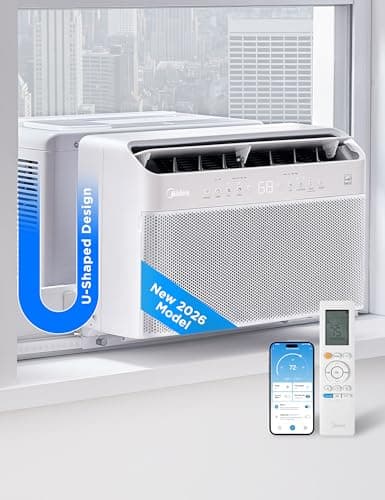 For a bedroom — the chart already covers it Midea U-Shaped Window Air Conditioner, 6,000 BTU Everything running in a typical bedroom comes to 405 BTU/h, so the chart's 6,000 is the answer and 8,000 is money wasted. | Bedrooms whose whole appliance load is a TV and a laptop | |
| 2 | 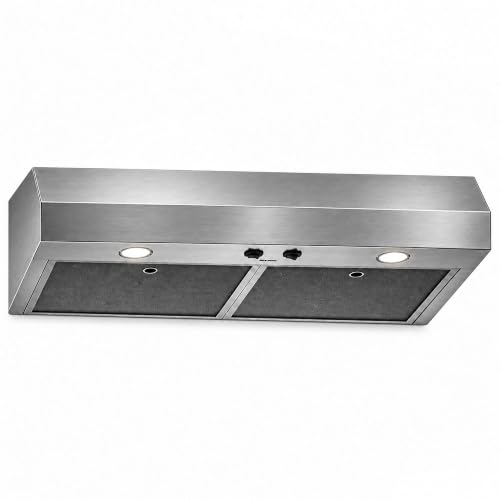 For a kitchen — move the heat, do not chill it Broan-NuTone GLA1303SS 30" Under-Cabinet Range Hood No room air conditioner sold absorbs a 29,343 BTU/h cooking plume. A hood takes it out of the room before it mixes in. | The one room where more cooling capacity is the wrong lever | |
| 3 | 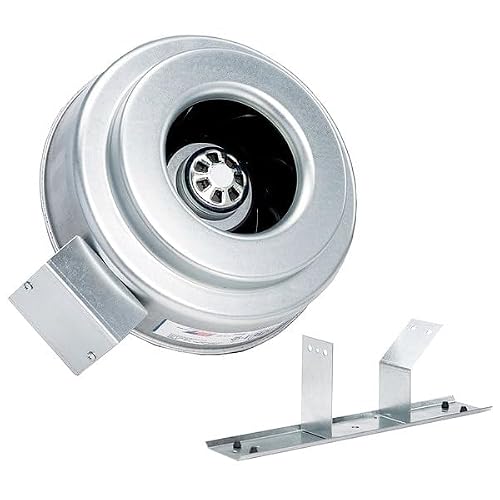 For a closet where the equipment never stops Fantech FG 10 EC In-Line Fan The only rooms where the appliance load IS the cooling load, and exhausting it beats refrigerating it. | Server, network and rack closets with no occupants to cool | |
| 4 | 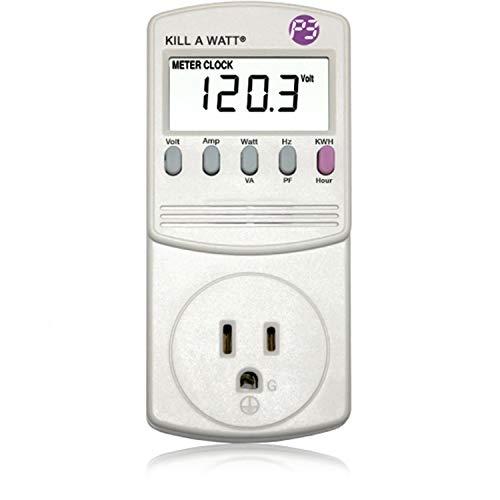 For replacing every median here with your own number P3 Kill A Watt Electricity Usage Monitor Every figure on this page describes a currently certified, efficient model. This tells you what the one in your room draws. | Anyone whose appliances are older than the certified datasets | |
| — | 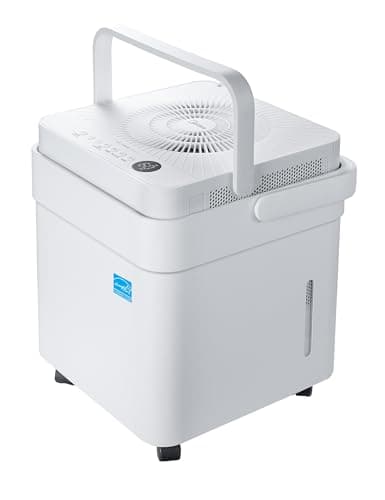 Skip — in the room you are trying to cool Midea Dehumidifier, 50 pints/day A 50-pint dehumidifier is a 1,606 BTU/h heater that happens to dry the air, and a third of a 5,000 BTU unit's output goes to cancelling it. | A basement or a crawl space. Not the bedroom. |
Every number on this page started as a measured result in a federal certification dataset and went through one multiplication. There is no rule of thumb in it, and no table copied from somewhere else.
The conversion is the definition of the watt: 1 watt = 3.412 BTU per hour. Any appliance running inside a room turns essentially all of the electricity it draws into heat in that room, so its draw in watts, times 3.412, is what your air conditioner has to remove. Where a dataset publishes only annual consumption, average watts is that figure times 1,000, divided by the 8,766 hours in an average year.
Read this first
Every appliance has two heat figures, and they differ by up to 386 times
This is the trap that makes most appliance charts useless. The federal test procedure measures a year. You are sizing for an hour.
A certified electric range consumes a median 195 kWh a year. Spread over 8,766 hours that is 22.2 W, or 76 BTU/h — about one lit candle. The same range with every element on draws 8,600 W, which is 29,343 BTU/h. Both numbers are true. They differ by a factor of 386, and only one of them is relevant when the kitchen is hot.
So the chart below is split three ways: appliances that run continuously and can be added straight onto a sizing calculation, appliances that run while you are in the room, and appliances whose peak is so large that adding capacity is the wrong response entirely.
Table one
The loads that never stop
These run day and night whether you are in the room or not, which makes them the only entries that genuinely belong added to a sizing figure. All are converted from certified annual consumption, so each is a true round-the-clock average.
| Appliance | Certified energy | BTU/h |
|---|---|---|
| Refrigerator, top-freezermedian of 612 | 360 kWh/yr = 41.1 W | 140 |
| Refrigerator, all full-sizemedian of 2,775 | 462 kWh/yr = 52.7 W | 180 |
| Refrigerator, bottom-freezer, ice and dispensermedian of 323 | 715 kWh/yr = 81.6 W | 278 |
| Refrigerator, hungriest certifiedJenn-Air JS48PPDUDE**, 29.5 cu ft | 805 kWh/yr = 91.8 W | 313 |
| Refrigerator, thriftiest certifiedLiebherr W5270, 13.1 cu ft | 114 kWh/yr = 13.0 W | 44 |
| Upright or chest freezermedian of 490 | 438 kWh/yr = 50.0 W | 170 |
| Freezer, hungriest certified | 649 kWh/yr = 74.0 W | 253 |
| Air purifiermedian of 245 | 152 kWh/yr = 17.3 W | 59 |
| Air purifier, hungriest certified | 490 kWh/yr = 55.9 W | 191 |
| Dishwasherannual average, not while running | 239 kWh/yr = 27.3 W | 93 |
The spread inside one product class is the interesting part. Choosing a top-freezer refrigerator over a bottom-freezer with an ice maker and a through-the-door dispenser is a 138 BTU/h difference, permanently — and the gap between the thriftiest and hungriest certified units is 269 BTU/h, which is most of a 55-inch television running continuously.
A refrigerator is a heat pump with both ends in your kitchen. It moves heat out of the cabinet and into the room, and it adds the energy its compressor consumed on top. Its electrical draw is the room’s heat gain, which is why the annual kWh figure converts so cleanly here.
Table two
The loads that run while you are in the room
These are measured on-mode figures rather than annual averages — the televisions, displays and computers datasets publish watts at the wall under the federal test, which is exactly the figure a sizing calculation wants.
| Appliance | Watts | BTU/h |
|---|---|---|
| Television, up to 32 inmedian of 19 | 24.3 | 83 |
| Television, 33 to 43 inmedian of 13 | 62.8 | 214 |
| Television, 44 to 55 inmedian of 38 | 83.9 | 286 |
| Television, 56 to 69 inmedian of 25 | 117.0 | 399 |
| Television, 70 in and upmedian of 27 | 167.3 | 571 |
| Television, biggest certifiedSamsung QN115QN90FF, 114.4 in | 343.5 | 1,172 |
| Television, networked standbymedian of 79 | 0.4 | 1 |
| Monitormedian of 1,593 | 14.2 | 48 |
| Monitor, hungriest certified | 151.9 | 518 |
| Laptop, short idlemedian of 1,183 | 4.9 | 17 |
| Desktop, short idlemedian of 307 | 10.5 | 36 |
| All-in-one desktop, short idlemedian of 135 | 15.9 | 54 |
| Workstation, short idlemedian of 68 | 69.9 | 238 |
| Workstation, hungriest at idle | 297.0 | 1,013 |
| Ceiling fan on highmedian of 1,455 | 29.8 | 102 |
Television size is the one consumer choice on this chart that moves the number substantially: each step up the size ladder roughly adds another 70 to 170 BTU/h, and the jump from a 32-inch to a 70-inch set is 488 BTU/h. For scale, the ENERGY STAR sizing chart adds 600 BTU per extra person in the room. A 70-inch television is 571 BTU/h. It is, almost exactly, a person.
Computers go the other way. The idle figures are so low — 17 BTU/h for a laptop, 36 for a desktop — that a home office full of them is a rounding error, with the single exception of a real workstation under load. Standby is not worth a line in anyone’s arithmetic: 1 BTU/h per television.
A ceiling fan is the honest oddity here. It genuinely adds 102 BTU/h of motor heat to the room and still makes the room more comfortable, because it is moving air across your skin rather than cooling it. What a fan actually costs to run goes through that trade.
Table three
The loads that swamp everything else
Electric cooking is in a different category, and it is the reason this page exists. These are published nameplate element wattages from the certified cooking dataset — what the appliance draws when it is working, not what it averages over a year.
| Running at full | Nameplate watts | BTU/h |
|---|---|---|
| One range elementmedian | 2,100 | 7,165 |
| One cooktop zonemedian | 2,800 | 9,554 |
| Biggest single certified zone | 7,000 | 23,884 |
| Range, every element at oncemedian of 140 | 8,600 | 29,343 |
| Cooktop, every zone at oncemedian of 99 | 11,100 | 37,873 |
| Cooktop, every zone, biggest certified | 21,800 | 74,382 |
A single median cooktop zone is 9,554 BTU/h. The ENERGY STAR sizing chart’s entire kitchen allowance is +4,000 BTU. One burner is 2.4 times it; the whole range is 7.3 times it.
That is not a criticism of the chart so much as a warning about how to read it. The chart is sizing a room air conditioner for a kitchen that is occasionally cooked in, and its +4,000 is a pragmatic allowance. It was never a claim about what a range emits.
Worked
Three ordinary rooms, added up
The useful test of any appliance chart is whether it changes the unit you buy. In three of the four rooms people actually ask about, it does not.
| Room | Appliance load | Share of chart |
|---|---|---|
| Bedroom, 12×1455-in TV, laptop, ceiling fan | 405 BTU/h | 6.8% of 6,000 BTU |
| Home office, 10×11Workstation at idle, two monitors | 335 BTU/h | 6.7% of 5,000 BTU |
| Living room, 18×2270-in TV, ceiling fan | 673 BTU/h | 7.5% of 9,000 BTU |
| Kitchen, while cookingRange, every element | 29,343 BTU/h | Uncoolable |
Three rooms, three different appliance mixes, and all three land within a percentage point of each other at roughly 7% of the chart’s capacity. That consistency is not a coincidence: modern electronics have converged on low idle draw, and the sizing chart’s capacity steps are coarse enough to absorb a few hundred BTU/h without changing which row you land on.
So for a bedroom, an office or a living room, the appliance load is not a reason to buy a bigger unit. Go up a size on 405 BTU/h of television and you get a compressor that reaches the thermostat setpoint too quickly, shuts off, and never runs long enough to pull moisture out of the air — so the room hits the target temperature and still feels clammy. The full sizing walkthrough covers the adjustments that genuinely do move you a row.
The exception
A kitchen is not a sizing problem
No room air conditioner sold to a homeowner removes 29,343 BTU/h. The largest window unit in our registry is 24,000 BTU, weighs 115.7 lb and is meant for 1,400 sq ft. It would still lose to a range with four elements on.
The thing that rescues the arithmetic is that cooking heat has not finished mixing into the room yet. It rises off a known spot in a plume, for a bounded period, and a hood over that spot captures it on its way up. Capturing 29,343 BTU/h at source costs 1.4 A at 120 V — about 570 BTU/h of the hood’s own heat. Trying to absorb the same load with refrigeration is not expensive, it is impossible.
That is also why the certified airflow figure matters more than the number on the box. Ductless recirculating hoods are the weak case here: they filter grease and odor and return the air, and the heat, to the kitchen. Cooling a kitchen works through the rest.
Two surprises
The efficient dryer is the one that heats your laundry room
Certified electric dryers split cleanly in two. The 256 certified vented models use a median 608 kWh a year. The 99 certified ventless models — heat pump and condensing designs — use a median 266 kWh, with a combined energy factor of 5.5 against the vented group’s 3.93.
The ventless machine is unambiguously the more efficient appliance and unambiguously the worse one for the temperature of the room it stands in, because a vented dryer throws its heat and moisture outdoors through the duct while a ventless one has nowhere to put either except the laundry room. Less than half the energy, all of it indoors.
Say the unwelcome thing
Do not run a dehumidifier in the room you are cooling
Limits
What this chart cannot tell you
It only describes efficient models. ENERGY STAR certifies products that clear an efficiency threshold, so every median above is drawn from the better end of what is currently sold. A fifteen-year-old side-by-side refrigerator is not in the dataset and is not represented by it — it will be worse, sometimes much worse, than the 313 BTU/h worst case listed here.
It cannot cover gas. The conversion that makes this page work runs from electrical draw, and a gas range, gas dryer or gas water heater does not have one worth measuring. Gas cooking also adds combustion moisture to the room, which is a latent load rather than a sensible one.
It is a median, not your appliance. Every figure above is the middle of a certified population, and the ranges around those medians are wide — monitors run from 3.4 W to 151.9 W. If the exact number matters, measure the exact appliance with a plug-in meter rather than trusting a median, including ours.
Lighting, cooking in progress and people are not in these tables. The sizing chart already handles occupants at 600 BTU each, and lighting in a modern LED house is small enough to disappear into the same rounding the appliance loads did.
In full
Every pick, and what is wrong with it
Published specifications only, each linked to the page it came from. Where a manufacturer publishes nothing, the row says so — we do not fill blanks in.
1. For a bedroom — the chart already covers it
Midea U-Shaped Window Air Conditioner, 6,000 BTU
Midea · model MAW06V1QWT
Everything running in a typical bedroom comes to 405 BTU/h, so the chart's 6,000 is the answer and 8,000 is money wasted.
A 12×14 bedroom is 168 sq ft, which the ENERGY STAR chart puts on the 6,000 BTU row. Add the three things actually running in it — a 55-inch TV at 286 BTU/h, a laptop at 17 and a ceiling fan on high at 102 — and you have 405 BTU/h, or 6.8% of the unit. That is inside the rounding of the chart itself.
298 kWh a year, about $55 at 18.34¢/kWh, CEER 15.1 and on the Most Efficient list. The appliance load is not a reason to go up a size; going up a size costs you dehumidification, because a bigger compressor short-cycles instead of running long enough to wring the air out.
What’s wrong with it
53.1 lb, and the U-shape only works in a single-hung or double-hung sash window. Nothing to do with heat load — it is simply the wrong shape for a casement or a slider.
Running cost — MAW06V1QWT
| Annual energy use | 298 kWh | ENERGY STAR certified figure |
|---|---|---|
| Annual cost | $55 | 298 × 18.34¢/kWh |
| Per cooling month | $14 | spread over a four-month season |
The annual figure is the certified value from the ENERGY STAR Certified Room Air Conditioners dataset, which models a standard cooling season rather than your actual summer. It is more useful than a nameplate wattage here, because a variable-speed compressor spends most of its life well below nameplate.
Rate: 18.34¢/kWh, the US average residential price for June 2026 (EIA Electric Power Monthly, Table 5.3). Yours will differ — swap it in: (watts ÷ 1000) × hours × your rate.
| Cooling capacity | 6,000 BTU/h |
|---|---|
| CEER | 15.1 |
| Annual energy use | 298 kWh/yr |
| vs federal standard | 37% less energy |
| Dimensions | 13.5 H x 19.2 W x 22.0 D in |
| Weight | 53.1 lb |
| Refrigerant | R-32 |
| Installation | U-shape; sash closes through the middle of the unit |
| Compressor | Variable speed |
| ENERGY STAR | Certified, and on the Most Efficient list |
Every figure above is from ENERGY STAR Certified Room Air Conditioners dataset. Blanks are shown as “not published” rather than filled in.
2. For a kitchen — move the heat, do not chill it
Broan-NuTone GLA1303SS 30" Under-Cabinet Range Hood
Broan-NuTone · model GLA1303SS
No room air conditioner sold absorbs a 29,343 BTU/h cooking plume. A hood takes it out of the room before it mixes in.
The median certified electric range runs 8,600 W with every element on — 29,343 BTU/h, more than a 24,000 BTU window unit can remove and 7.3 times the entire kitchen adjustment that the ENERGY STAR sizing chart offers. You cannot buy your way out of that with capacity, and you do not need to, because the heat has not finished mixing into the room yet. It is a plume, over a known spot, for forty minutes.
150 CFM certified at 4.6 CFM per watt and 1.5 sones, on a 7-inch duct. Its own nameplate draw is 1.4 A at 120 V, so at full tilt it adds at most about 570 BTU/h of its own back into the kitchen while removing the plume — a trade worth making roughly fifty times over.
What’s wrong with it
The box says 350 CFM, Broan's own spec table says 250, and the certified figure at a realistic 0.25 in w.g. of duct resistance is 150. Buy on the 150. Running it ductless needs a charcoal kit that is not in the carton.
Running cost
Broan-NuTone does not publish a wattage for the GLA1303SS, so we cannot calculate what it costs to run. We are not going to estimate one. If Broan-NuTone publishes a nameplate figure, this block will show the arithmetic.
| Air delivery, certified | 150 CFM at 0.25 in w.g. (ENERGY STAR Certified Ventilating Fans dataset) |
|---|---|
| Efficacy, certified | 4.6 CFM per watt |
| Air delivery, Broan's spec table | 250 CFM |
| Air delivery, on the box | 350 max blower CFM |
| Noise | 1.5 sones |
| Duct size | 7 in |
| Rated amps | 1.4 A at 120 V |
| Ductless capable | Yes, but the charcoal filter kit is NOT included |
| Light | 5 W bulb, included |
| Minimum height above cooktop | 18 in |
| Dimensions | 30 W x 19.68 D x 5.98 H in |
| ENERGY STAR | Certified |
| Warranty | 1 year, 3 year LED |
Every figure above is from Broan-NuTone GLA1303SS product page — ENERGY STAR certified, 1.5 sones, 250 CFM in the spec table against 350 max blower CFM in the title, 7 in duct, 1.4 rated amps, ductless capable with the filter kit sold separately. Certified airflow and efficacy from the ENERGY STAR Certified Ventilating Fans dataset. Blanks are shown as “not published” rather than filled in.
3. For a closet where the equipment never stops
Fantech FG 10 EC In-Line Fan
Fantech · model FG 10 EC
The only rooms where the appliance load IS the cooling load, and exhausting it beats refrigerating it.
A workstation at short idle is 238 BTU/h and the hungriest certified one is 1,013 BTU/h at idle. Stack three machines and two monitors in an unventilated closet and you have a continuous load with nowhere to go, which is the one case on this page where the appliance figures are the entire design problem rather than a footnote to the room’s area.
460 CFM at 0.25 in w.g. and 5.2 CFM per watt, certified, with an EC motor that lets you dial the speed down to what the closet actually needs. Equipment heat is sensible heat with no latent component, so moving air through the space handles it — there is nothing to dehumidify. The server closet page works through the ducting.
What’s wrong with it
It is a $450-class commercial fan that has to be mounted in a duct run, with no sones figure published for in-line units. Overkill for a closet holding one router.
Running cost
Fantech does not publish a wattage for the FG 10 EC, so we cannot calculate what it costs to run. We are not going to estimate one. If Fantech publishes a nameplate figure, this block will show the arithmetic.
| Air delivery | 460 CFM at 0.25 in w.g. |
|---|---|
| Efficacy | 5.2 CFM per watt |
| Duct size | 10 in diameter |
| Unit type | In-line (single-port), mounted in the duct run |
| Motor | EC (electronically commutated) |
| Noise (sones) | Not published for in-line units |
| ENERGY STAR | Certified |
Every figure above is from ENERGY STAR Certified Ventilating Fans dataset. Blanks are shown as “not published” rather than filled in.
4. For replacing every median here with your own number
P3 Kill A Watt Electricity Usage Monitor
P3 International · model P4400
Every figure on this page describes a currently certified, efficient model. This tells you what the one in your room draws.
The honest limit of this page is that ENERGY STAR only certifies products that pass an efficiency threshold, so every median below describes the better end of what is currently sold. A twelve-year-old side-by-side refrigerator is not in that dataset and is not represented by it. Nor is anything that runs on gas, which the electrical conversion cannot touch.
0.2% accuracy, reading volts, amps, watts, VA, hertz and cumulative kWh. Plug the appliance into it, leave it a day, read the kWh, and you have your own figure for the same arithmetic this page uses: divide by the hours, multiply by 3.412.
What’s wrong with it
15 A and 1,875 VA is its ceiling, so it cannot measure a 240 V electric range, most electric dryers, or anything hardwired — which is to say the two biggest entries on this whole chart are out of its reach.
Running cost
P3 International does not publish a wattage for the P4400, so we cannot calculate what it costs to run. We are not going to estimate one. If P3 International publishes a nameplate figure, this block will show the arithmetic.
| Accuracy | 0.2% |
|---|---|
| Displays | Volts, amps, watts, VA, hertz and cumulative kWh |
| Operating voltage | 115 VAC |
| Max voltage | 125 VAC |
| Max current | 15 A |
| Max power | 1,875 VA |
| Cannot measure | Anything on a 240 V circuit — electric ranges, most dryers, hardwired equipment |
| Dimensions | 5-1/8 H x 2-3/8 W x 1-5/8 D in |
| Weight | 5 oz |
Every figure above is from P3 International P4400 product page — 0.2% accuracy, 115 VAC operating, 125 VAC max, 15 A max current, 1,875 VA max power, 5 oz, 5-1/8 x 2-3/8 x 1-5/8 in. Blanks are shown as “not published” rather than filled in.
Skip this one
Midea Dehumidifier, 50 pints/day
Midea · model MDUDMB-50AEN8-BB0F
A 50-pint dehumidifier is a 1,606 BTU/h heater that happens to dry the air, and a third of a 5,000 BTU unit's output goes to cancelling it.
Certified at 49.67 pints/day with an integrated energy factor of 2.08 L/kWh, which works out at 471 W while it runs — 1,606 BTU/h of electrical heat, all of it released into the room, because both of its coils are in that room. The latent heat given up as water vapor condenses on the cold coil lands there too.
The room feels better, because drier air lets sweat evaporate again. The thermometer goes the other way. Run one alongside a 5,000 BTU window unit and roughly a third of that unit’s output is spent undoing the dehumidifier. Which machine you actually need is its own question.
What’s wrong with it
Nothing is wrong with the machine — 49.67 pints a day at IEF 2.08 L/kWh is a good certified number, and in a damp basement it is the right purchase. The mistake is the room, not the model.
Running cost — MDUDMB-50AEN8-BB0F
| Annual energy use | 515 kWh | ENERGY STAR certified figure |
|---|---|---|
| Annual cost | $94 | 515 × 18.34¢/kWh |
| Per cooling month | $24 | spread over a four-month season |
The annual figure is the certified value from the ENERGY STAR Certified Dehumidifiers dataset, which models a standard cooling season rather than your actual summer. It is more useful than a nameplate wattage here, because a variable-speed compressor spends most of its life well below nameplate.
Rate: 18.34¢/kWh, the US average residential price for June 2026 (EIA Electric Power Monthly, Table 5.3). Yours will differ — swap it in: (watts ÷ 1000) × hours × your rate.
| Water removal | 49.67 pints/day (DOE Appendix X1) |
|---|---|
| Efficiency (IEF) | 2.08 L/kWh |
| Annual energy use | 515 kWh/yr |
| Refrigerant | HFC-32 (GWP 675) |
| Connected | No |
| Noise | Not published in the certified dataset |
| ENERGY STAR | Certified |
Every figure above is from ENERGY STAR Certified Dehumidifiers dataset. Blanks are shown as “not published” rather than filled in.
We are not linking a buy button for this one. If you want to look at it anyway, it is easy enough to find — but we would rather send you to something that fits your room.
Questions people actually ask
Frequently asked
How many BTU does a refrigerator add to a room?
A median full-size certified refrigerator uses 462 kWh a year, which is 52.7 watts averaged round the clock, or about 180 BTU per hour of continuous heat into the kitchen. A top-freezer model is nearer 140 BTU/h and a large bottom-freezer with an ice maker and dispenser is nearer 278.
How many BTU does a TV give off?
It depends almost entirely on screen size. Certified televisions measure a median 24.3 watts up to 32 inches (83 BTU/h), 83.9 watts at 44 to 55 inches (286 BTU/h) and 167.3 watts at 70 inches and up (571 BTU/h). The largest certified set, a 114-inch Samsung, draws 343.5 watts, or 1,172 BTU/h.
Do I need a bigger air conditioner because of my appliances?
In a bedroom, office or living room, no. Adding up everything running in each of those rooms comes to about 7% of the capacity the ENERGY STAR sizing chart already gives you, which is inside the chart's own rounding. Oversizing costs you dehumidification, because a bigger compressor short-cycles. How to size an air conditioner properly.
How do you convert watts to BTU per hour?
Multiply watts by 3.412. That conversion is exact, because it is the definition of the units rather than an estimate. If you only know annual consumption, average watts is kilowatt-hours per year times 1,000, divided by the 8,766 hours in an average year.
How much heat does an electric stove put into the kitchen?
A median certified electric range draws 8,600 watts with every element on, which is 29,343 BTU per hour. One element alone is about 7,165 BTU/h. No room air conditioner removes that, which is why a range hood over the cooktop does more for a hot kitchen than extra cooling capacity does. Cooling a kitchen.
Does a dehumidifier cool a room?
No, it warms it. A certified 50-pint unit draws a median 488 watts while running, or 1,665 BTU/h, and every watt becomes heat in the room because both coils are in that room. The latent heat released as water vapor condenses lands there too. The room feels better because drier air lets sweat evaporate. Dehumidifier vs air conditioner.
Sources
Where these numbers came from
- ENERGY STAR Certified Residential Refrigerators dataset — annual energy use and product class for 2,775 full-size US models
- ENERGY STAR Certified Residential Freezers dataset — annual energy use for 490 full-size US models
- ENERGY STAR Certified Residential Dishwashers dataset — annual energy use for 712 US models
- ENERGY STAR Certified Televisions dataset — on-mode and standby power for 122 US models with screen size
- ENERGY STAR Certified Displays dataset — on-mode power for 1,593 US monitors
- ENERGY STAR Certified Computers dataset — short-idle, sleep and off-mode power for 1,848 models
- ENERGY STAR Certified Residential Electric Cooking Products dataset — per-zone nameplate wattage and annual consumption for 239 US models
- ENERGY STAR Certified Residential Clothes Dryers dataset — annual energy use and vented or ventless designation for 560 US models
- ENERGY STAR Certified Room Air Cleaners dataset — annual energy use for 245 US models
- ENERGY STAR Certified Dehumidifiers dataset — water removal capacity and integrated energy factor for 157 US models of 45 pints a day and over
- ENERGY STAR Certified Ceiling Fans dataset — high-speed power consumption for 1,455 US models
- ENERGY STAR room air conditioner sizing guidance — the capacity table and its four adjustments, including +4,000 BTU for a kitchen and +600 BTU per additional occupant
- P3 International P4400 product page — 0.2% accuracy, 15 A and 1,875 VA maximum
Read next
Where to go from here
Back to Guides & Calculators, or read how we pick.