Guide and picks
The seasonal cooling checklist
Almost every cooling problem people meet in July is one that could have been dealt with in April for nothing.
By Sawyer V. · Published
The short answer
In spring: clean the filter and coil, check the drain path, replace evaporative pads, reverse ceiling fans to downdraft, and shade the glass before the first hot week. In autumn: drain anything holding water, store or cover window units, and reverse the fans back. The filter is the highest-value job of the lot — a blocked one starves the coil, so capacity falls and run time rises.
Fan & Frost earns a commission when you buy through our links, at no cost to you. It never changes a ranking, and we say so when the right answer is the cheaper unit or nothing at all. Full disclosure · How we pick.

At a glance
The picks, ranked
Tap any row to jump to the full reasoning. Prices are live from Amazon where we have them, and read “check price” where we don’t — never a number we cannot verify today.
| # | Product | Best for | Price |
|---|---|---|---|
| 1 | 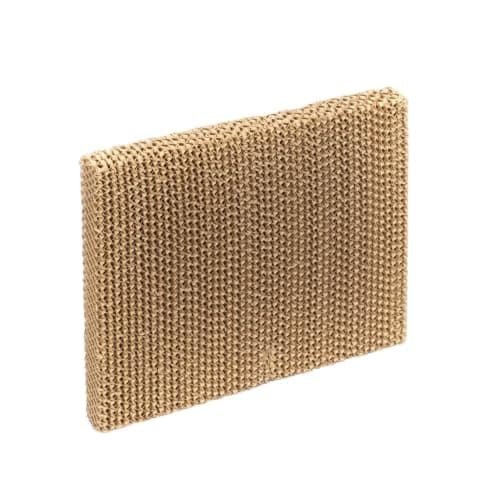 The spring consumable Hessaire CP370 Media Pad Set Replacement media pads — the part that silently takes most of the cooling with it when it degrades. | An evaporative cooler going into its second season or later | |
| 2 | 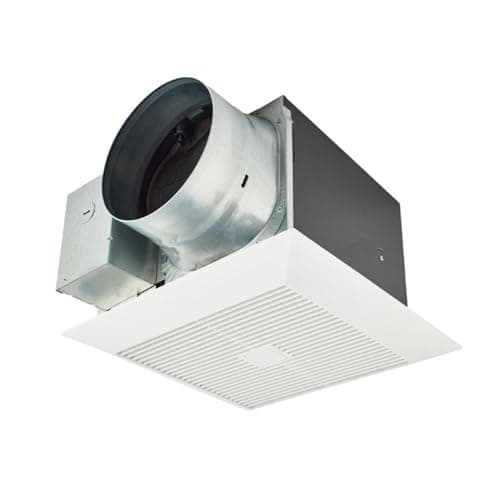 The year-round one Panasonic WhisperGreen Select FV-0511VK3 Ventilation Fan 110 CFM at 0.1 sones and 16.7 CFM per watt — the appliance most people forget to maintain. | Extraction that should be running in both seasons | |
| 3 | 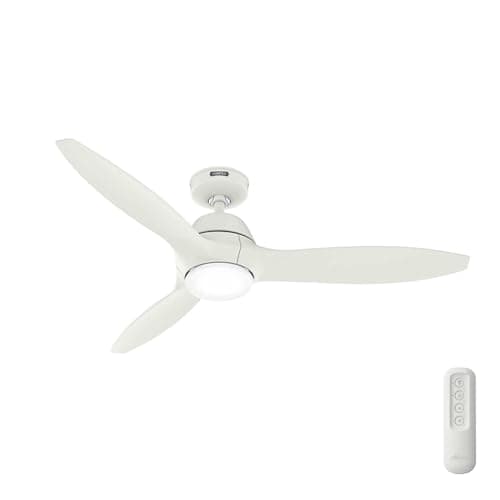 The twice-a-year switch Hunter Skyway 52" Ceiling Fan with Light Kit 363.8 CFM per watt, 2.1 W on low, and damp-rated for a porch or sunroom. | A room where the fan should reverse with the season | |
| — | 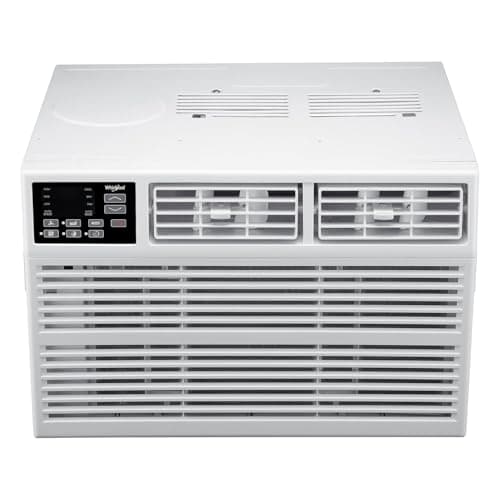 The end-of-summer panic buy Whirlpool Window Air Conditioner, 24,000 BTU 1,417.3 kWh a year at CEER 12.7 — what a bad August talks people into. | A genuinely large space, decided calmly in April |
The whole argument of this page is timing. Every item below is easier, cheaper and more effective done before you need it.
Spring
Before the first hot week
- Clean the filter. The highest-value maintenance on any air conditioner. A blocked filter starves the evaporator of airflow, so capacity falls and run time rises — you pay for it twice. The full routine.
- Check the coil and fins. Behind the filter is where the finer material ends up. Bent fins and a dusty coil both cost you heat transfer.
- Check the drain path. Condensate has to go somewhere, and a blocked path is a water problem before it is a cooling one — how drainage works.
- Test it before you need it. Run the unit for an hour on a mild day. Finding a failure in April is an inconvenience; finding it in a heatwave is a week of waiting.
- Replace evaporative pads. The cooling happens at the pad, and a degraded one takes most of the performance quietly.
- Reverse ceiling fans to downdraft. Ten seconds, and it is the difference between a fan cooling you and a fan mixing the ceiling.
- Check for wobble. A wobbling fan is a mounting or balance issue that gets worse, not better — how to fix it.
- Shade the glass. The one intervention with no running cost at all, and the one that decides how hard everything else has to work.
Mid-season
While it is running
- Filter, every two to four weeks. Check your manual, since intervals vary with filter type. This is the one recurring job that genuinely matters.
- More often with pets. Hair loads a filter and a grille far faster than dust alone.
- Watch for ice. A frozen coil means airflow or refrigerant trouble, and running through it makes things worse — what the symptoms mean.
- Drain and refill evaporative coolers regularly. Standing warm water is a maintenance commitment, not an optional one — the cleaning routine.
- Clean fan blades. Dust on a blade edge costs airflow and unbalances the fan — how, without breaking it.
Autumn
After the last hot day
- Drain everything that holds water. Evaporative coolers, misting fans, condensate trays. Water left through a freeze is how these die — the shutdown routine.
- Disconnect hoses from misting equipment. A hose left connected over winter can freeze and split, and the equipment goes with it.
- Remove or cover window units. An installed window unit is a hole in the wall all winter, and a cover on the outside is the minimum — removing and storing one properly.
- Clean before storing, not after. Dust and moisture left on a coil for six months is worse than either alone.
- Reverse ceiling fans to updraft, slowly. Moving warm air off a high ceiling without making a draft.
- Keep the extract fans running. Ventilation is a year-round job, and winter is when indoor moisture is highest.
This one is not a DIY job
Two of these are not DIY. Anything involving refrigerant — low charge, a leak, a system that ices repeatedly — is a licensed job. Refrigerant handling is regulated and the circuit is sealed for a reason.
Removing and reinstalling a heavy window unit is the other. Units above about 50 lb, and any unit above ground floor level, need at least two people and a considered plan. Bracket requirements do not track weight the way you would expect.
Always unplug before opening any cabinet, and follow your manual rather than a general guide — including this one.
Ducted and central systems have their own seasonal service requirements, which belong to a qualified HVAC contractor.
Why the timing
The case for doing it early
Every item above is cheap in April and expensive in July, for reasons that have nothing to do with the work itself.
- Failures are found on your schedule. A unit that will not start is a mild annoyance in spring and a serious problem in a heatwave.
- Purchases get made calmly. The single worst decision in home cooling is a large unit bought in the third week of a bad August — $260 a year of running cost, decided under duress.
- Load reduction has to be in place first. Shading only works if it is up before the sun is on the glass, and that is a seasonal decision.
- Availability. Everything in this category is easier to obtain before the weather turns.
Say the unwelcome thing
Do not buy cooling equipment during a heatwave.
It is the most reliably bad time to make the decision, and the consequences are permanent rather than seasonal.
Under pressure people size up, because bigger sounds safer. The certified data punishes that twice: capacity is the dominant term in running cost, and the largest unit in the set is also the least efficient, at CEER 12.7 against 16.0 for the small ones.
They also skip the load work. Shading and sealing cost nothing to run and frequently drop the capacity needed by a full step — $34 a year, every year.
Do the checklist in spring. Then, if you still need a machine, buy the right size — 281.3 kWh a year beats 1,417.3 in every room that does not genuinely need the capacity.
In full
Every pick, and what is wrong with it
Published specifications only, each linked to the page it came from. Where a manufacturer publishes nothing, the row says so — we do not fill blanks in.
1. The spring consumable
Hessaire CP370 Media Pad Set
Hessaire · model CP370
Replacement media pads — the part that silently takes most of the cooling with it when it degrades.
The one part of a cooling system that is genuinely a consumable, and the one most often left in place until it fails completely.
Evaporative cooling happens at the pad. A pad clogged with mineral deposits, dust or biological growth presents less wetted surface to the air, and the cooling falls off gradually enough that nobody notices.
21 x 23 in, fitting the MC37, M150 and MFC3600 3,100 CFM coolers.
No published replacement interval, which we note rather than invent one for. Judge by condition, and what a degraded pad looks like is the practical guide.
What’s wrong with it
The manufacturer publishes no replacement interval, so you are judging by condition.
Running cost
Hessaire does not publish a wattage for the CP370, so we cannot calculate what it costs to run. We are not going to estimate one. If Hessaire publishes a nameplate figure, this block will show the arithmetic.
| Fits | MC37, M150 and MFC3600 (3,100 CFM) coolers |
|---|---|
| Pad size | 21 x 23 in |
| Type | Replacement media pad set |
| Replacement interval | Not published by the manufacturer |
Every figure above is from Hessaire parts page, CP370 media pad set. Blanks are shown as “not published” rather than filled in.
2. The year-round one
Panasonic WhisperGreen Select FV-0511VK3 Ventilation Fan
Panasonic · model FV-0511VK3
110 CFM at 0.1 sones and 16.7 CFM per watt — the appliance most people forget to maintain.
The one machine on this list that does not have a season, which is precisely why it goes years without attention.
16.7 CFM per watt against a 4.7 category median, and 0.1 sones — but only while the blower wheel is clean. Dust loads a wheel gradually and the airflow falls with it.
Its middle speed is the efficient one at 18.4 CFM per watt, which suits continuous low-rate running — the mode that quietly accumulates the most dust.
On the Most Efficient list. The cleaning routine is an hour, once a year.
What’s wrong with it
It is a ducted installation, and cleaning it means getting into the ceiling.
Running cost
Panasonic does not publish a wattage for the FV-0511VK3, so we cannot calculate what it costs to run. We are not going to estimate one. If Panasonic publishes a nameplate figure, this block will show the arithmetic.
| Noise | 0.1 sones |
|---|---|
| Air delivery, high | 110 CFM at 0.25 in w.g. |
| Air delivery, medium | 80 CFM |
| Air delivery, low | 50 CFM |
| Efficacy, high | 16.7 CFM per watt |
| Efficacy, medium | 18.4 CFM per watt |
| Efficacy, low | 14.7 CFM per watt |
| Duct size | 6 in diameter |
| Speeds | 3 or more |
| Lighting | None |
| Power | Not published in the certified dataset |
| ENERGY STAR | Certified, and on the Most Efficient list |
Every figure above is from ENERGY STAR Certified Ventilating Fans dataset. Blanks are shown as “not published” rather than filled in.
3. The twice-a-year switch
Hunter Skyway 52" Ceiling Fan with Light Kit
Hunter · model 52" Skyway (damp-rated)
363.8 CFM per watt, 2.1 W on low, and damp-rated for a porch or sunroom.
The seasonal job that takes ten seconds and gets skipped for years, usually because nobody is sure which way is which.
Summer is downdraft — air blown down at people, which is the only way a fan cools anyone. Winter is updraft, gently, to move warm air off the ceiling without creating a draft.
2.1 W on low, 0.3¢ for eight hours, at 363.8 CFM per watt certified.
Damp-rated, so it also suits a covered porch. Which way in summer and in winter.
What’s wrong with it
Reversing only helps in winter if the ceiling is high enough to stratify.
Running cost — 52" Skyway (damp-rated)
| Nameplate power | 2.1 W – 16.3 W | manufacturer's published figure |
|---|---|---|
| Energy, 8-hour night | 0.13 kWh | 16.3 ÷ 1000 × 8 |
| Cost per hour | 0.3¢ | at 18.34¢/kWh |
| Cost per 8-hour night | 2.4¢ | on the highest speed |
| Cost per 30 nights | 72¢ | 3.9 kWh |
| Same month, lowest speed | 9.2¢ | at 2.1 W |
Rate: 18.34¢/kWh, the US average residential price for June 2026 (EIA Electric Power Monthly, Table 5.3). Yours will differ — swap it in: (watts ÷ 1000) × hours × your rate.
| Blade span | 52 in |
|---|---|
| Efficiency | 363.8 CFM per watt |
| Power, high speed | 16.3 W |
| Power, low speed | 2.1 W |
| Standby power | 0.4 W |
| Type | Indoor, with light kit; damp-rated |
| Warranty | 3 years, components |
| ENERGY STAR | Certified |
Every figure above is from ENERGY STAR Certified Ceiling Fans dataset. Blanks are shown as “not published” rather than filled in.
Skip this one
Whirlpool Window Air Conditioner, 24,000 BTU
Whirlpool · model WHAW-241IN
1,417.3 kWh a year at CEER 12.7 — what a bad August talks people into.
Included as a seasonal warning rather than a product criticism. This is the purchase people make in the third week of a bad summer.
1,417.3 kWh a year, $260 at 18.34¢/kWh — and CEER 12.7, the lowest in the certified set we hold. You pay for the capacity and again for the inefficiency.
115.7 lb, straddling a window, firmly in support-bracket territory — not a thing to install in a hurry in a heatwave.
If a large space genuinely needs this, decide it in spring, after the load work and with a proper sizing.
What’s wrong with it
Bought in a heatwave, it locks in the highest running cost in the certified set.
Running cost — WHAW-241IN
| Annual energy use | 1417.3 kWh | ENERGY STAR certified figure |
|---|---|---|
| Annual cost | $260 | 1417.3 × 18.34¢/kWh |
| Per cooling month | $65 | spread over a four-month season |
The annual figure is the certified value from the ENERGY STAR Certified Room Air Conditioners dataset, which models a standard cooling season rather than your actual summer. It is more useful than a nameplate wattage here, because a variable-speed compressor spends most of its life well below nameplate.
Rate: 18.34¢/kWh, the US average residential price for June 2026 (EIA Electric Power Monthly, Table 5.3). Yours will differ — swap it in: (watts ÷ 1000) × hours × your rate.
| Cooling capacity | 24,000 BTU/h |
|---|---|
| CEER | 12.7 |
| Annual energy use | 1,417.3 kWh/yr |
| vs federal standard | 35% less energy |
| Dimensions | 20.7 H x 30.0 W x 28.8 D in |
| Weight | 115.7 lb |
| Refrigerant | R-32 |
| Installation | Straddles the window; support bracket territory |
| ENERGY STAR | Certified |
Every figure above is from ENERGY STAR Certified Room Air Conditioners dataset. Blanks are shown as “not published” rather than filled in.
We are not linking a buy button for this one. If you want to look at it anyway, it is easy enough to find — but we would rather send you to something that fits your room.
Questions people actually ask
Frequently asked
What should I do to my air conditioner before summer?
Clean the filter, check the coil and fins, verify the drain path is clear, and run the unit for an hour on a mild day. The filter is the highest-value job — a blocked one starves the coil, so capacity falls and run time rises. The cleaning routine.
How often should I clean the filter during the season?
Every two to four weeks, and check your manual since intervals vary with filter type. More often if you have pets — hair loads a filter and a grille far faster than dust alone.
What has to be done before winter?
Drain everything that holds water — evaporative coolers, misting fans, condensate trays — and disconnect hoses. Water left through a freeze is how this equipment dies. Then remove or cover window units, and reverse ceiling fans to updraft. Winterising a cooler.
Do I need to take my window air conditioner out for winter?
Removing it is better, because an installed unit is a hole in the wall all winter. If removing it is impractical, an external cover is the minimum. Clean it before storing rather than after — dust plus moisture on a coil for six months is worse than either alone.
When should I replace evaporative cooler pads?
By condition, since manufacturers do not publish an interval. The cooling happens at the pad, and one clogged with mineral deposits or growth presents less wetted surface to the air — so performance drops gradually enough that nobody notices.
Why does buying in a heatwave matter?
Because people size up under pressure, and the certified data punishes that twice: capacity is the dominant term in running cost, and the largest unit in the set is also the least efficient at CEER 12.7 against 16.0. Decide in spring, after the load work.
Sources
Where these numbers came from
- ENERGY STAR Certified Room Air Conditioners dataset — capacity, CEER, annual kWh
- ENERGY STAR Certified Ventilating Fans dataset — CFM per watt by speed, sones, Most Efficient flag
- ENERGY STAR Certified Ceiling Fans dataset — CFM per watt, low-speed wattage
- Hessaire CP370 media pad set — 21 x 23 in, fits MC37, M150 and MFC3600
- EIA Electric Power Monthly, Table 5.3 — average residential electricity price
Read next
Where to go from here
Back to Guides & Calculators, or read how we pick.