Guide and picks
Window film, shading and insulation for cooling
The only cooling on this site with no running cost at all is the heat that never gets into the building.
By Sawyer V. · Published
The short answer
Shading is the only intervention here that costs nothing to run, and its real payoff is that it lets you buy less machine. Dropping one capacity step — 12,000 BTU to 8,000 — is 562.5 kWh down to 375, saving 187.5 kWh or $34 every year. External shading beats internal, because once light is through the glass its energy is inside.
Fan & Frost earns a commission when you buy through our links, at no cost to you. It never changes a ranking, and we say so when the right answer is the cheaper unit or nothing at all. Full disclosure · How we pick.

At a glance
The picks, ranked
Tap any row to jump to the full reasoning. Prices are live from Amazon where we have them, and read “check price” where we don’t — never a number we cannot verify today.
| # | Product | Best for | Price |
|---|---|---|---|
| 1 | What shading lets you buy Midea Window Air Conditioner, 6,000 BTU 281.3 kWh a year at CEER 16 — the size you can drop to once the sun is handled. | A room whose solar load you have already dealt with | |
| 2 | 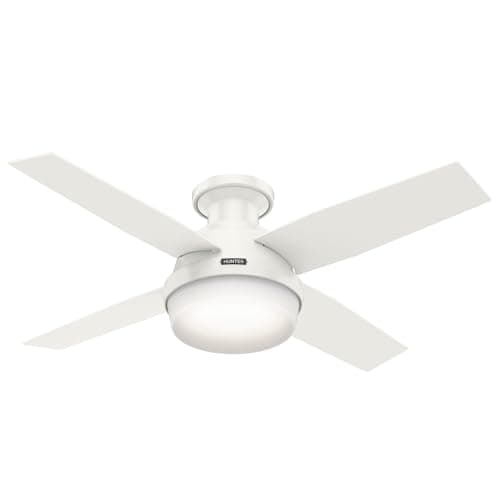 Cheapest comfort there is Hunter Martindale 44" Ceiling Fan 1.1 W on low — the lowest low-speed draw of any certified fan we hold data for. | Raising the temperature at which the room needs cooling | |
| 3 | Best companion Lasko Twin Window Fan with Remote 22 to 31 W, reversible twin motors, and an adjustable thermostat. | Clearing the heat that got in during the day | |
| — | 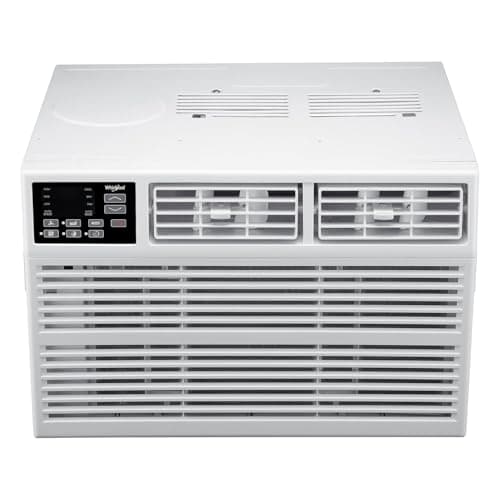 What happens if you skip this Whirlpool Window Air Conditioner, 24,000 BTU 1,417.3 kWh a year at CEER 12.7 — where sizing up to beat solar gain ends. | A genuinely large space, sized after the load work is done |
Everything else on this site is about moving heat efficiently. This page is about the heat that never arrives.
The arithmetic
Shading buys you a size, and a size is money
Most articles frame shading as a comfort measure. The more useful frame is that it changes the equipment you need, and equipment size is the dominant term in running cost.
Look at what a single capacity step costs across the certified units:
| Capacity | kWh/yr | Season | Saved by dropping to it |
|---|---|---|---|
| 6,000 BTU | 281.3 | $52 | $17 a year |
| 8,000 BTU | 375 | $69 | $34 a year |
| 12,000 BTU | 562.5 | $103 | $17 a year |
| 14,000 BTU | 656.3 | $120 | — |
Dropping from 12,000 BTU to 8,000 saves 187.5 kWh a year, or $34. That is not a one-off. It repeats every year the unit is in service, on top of buying a smaller and usually cheaper machine.
And solar gain is precisely what pushes a room up a size. The official sizing guidance says so directly:
| If | Then |
|---|---|
| The room is heavily shaded | reduce capacity by 10 percent |
| The room is very sunny | increase capacity by 10 percent |
| More than two people regularly occupy the room | add 600 BTUs for each additional person |
| The unit is used in a kitchen | increase capacity by 4,000 BTUs |
All four quoted from ENERGY STAR.
Handle the sun and that adjustment does not apply. For a lot of rooms, that single line is the difference between two capacity steps. The full sizing method.
The rule
Outside beats inside, always
The single most important thing to understand about shading is where it sits relative to the glass.
Sunlight that passes through a window has already delivered its energy into the room. An internal blind absorbs it and re-radiates it — as heat, inside. It reduces glare and it helps a little, but the energy is already indoors.
Shading on the outside of the glass stops the light arriving at all. The energy is reflected or absorbed outdoors, where the air carries it away.
- External shutters, awnings and shade sails are the most effective option, in that order of permanence.
- Planting and trees shade seasonally, which is convenient: deciduous cover blocks summer sun and admits winter sun.
- Window film sits at the glass, so it intercepts before most of the energy is in the room. A middle option and often the only one available to renters or in apartments.
- Internal blinds and curtains are the weakest but the cheapest. Light-colored and reflective is better than dark.
Film
What window film does and does not do
Film is worth its own section because its trade-offs are less obvious than a curtain’s.
- It works year round, including winter. The same film that blocks July sun blocks January sun, and in a heating-dominated climate that is a genuine cost on the other side of the year.
- It is effectively permanent. Unlike a blind you can raise, film is a decision about the window rather than a setting.
- It changes how the room looks. Both the light coming in and, with reflective types, the appearance from outside.
- It can conflict with glazing warranties. Applying film to some double- and triple-glazed units affects manufacturer coverage, and thermal stress on the glass is a real consideration. Check before buying.
- Performance claims vary enormously between products. We hold no certified dataset for film, so treat the manufacturer’s own figures as the source and read them carefully.
This one is not a DIY job
Two things here are not DIY. Applying film to sealed double or triple glazing can void the glazing warranty and, in some combinations, cause thermal stress cracking. Check with the window manufacturer, not just the film supplier.
Insulation work is the other. Adding insulation changes how a building assembly dries, and getting the vapor and ventilation details wrong causes moisture problems that cost far more than the cooling ever would.
Loft, wall and roof insulation belong to a qualified installer working to local code — particularly in a converted attic, where insulating between rafters interacts with roof ventilation.
External fixtures on a rented or leasehold property, and anything that changes a building’s appearance, may also need permission.
Order of operations
Cheapest first
- Close blinds before the sun is on the glass. Free, and the timing is the whole trick — closing them after the room has heated does nothing.
- Move what is in the sun path. A desk, a bed, a pet bed. Free, and it solves the comfort problem without touching the load.
- Seal the obvious leaks. Gaps around a window unit, uninsulated loft hatches, and knee-wall access panels are the usual ones.
- Add external shade where you can. Awnings, shutters, planting. The highest-impact step available to most homes.
- Consider film if external shading is not possible. Renters, apartments, and windows nothing can be fixed to.
- Then size the equipment. With the load reduced, you may be a full capacity step lower — $34 a year, every year.
Say the unwelcome thing
Do not buy a bigger air conditioner to beat the sun.
It is the default response to a room that will not cool, and it locks in a running cost that never goes away.
Solar gain is a load, and loads can be blocked. Capacity is a purchase, and purchases have to be run. Every step up the capacity ladder is roughly $34 a year of permanent cost — and at the top of the ladder the efficiency is worse too, at CEER 12.7 against 16.0.
Shading has no running cost at all. It is the only thing on this site that can honestly claim that.
Do the load work, then buy 281.3 kWh a year instead of 1,417.3.
In full
Every pick, and what is wrong with it
Published specifications only, each linked to the page it came from. Where a manufacturer publishes nothing, the row says so — we do not fill blanks in.
1. What shading lets you buy
Midea Window Air Conditioner, 6,000 BTU
Midea · model MAW06S1KWT-A
281.3 kWh a year at CEER 16 — the size you can drop to once the sun is handled.
The point of this page in product form. Shading does not just lower your bill on the machine you own — it changes which machine you should buy.
281.3 kWh a year, $52 at 18.34¢/kWh, at CEER 16 and on the Most Efficient list.
The sizing guidance adds capacity for a very sunny room. Deal with the sun and that adjustment does not apply, which for many rooms is the difference between this and the next size up.
31.6 lb, no support bracket, variable speed compressor.
What’s wrong with it
If you have not done the shading, 6,000 BTU will not keep up in a sunny room.
Running cost — MAW06S1KWT-A
| Annual energy use | 281.3 kWh | ENERGY STAR certified figure |
|---|---|---|
| Annual cost | $52 | 281.3 × 18.34¢/kWh |
| Per cooling month | $13 | spread over a four-month season |
The annual figure is the certified value from the ENERGY STAR Certified Room Air Conditioners dataset, which models a standard cooling season rather than your actual summer. It is more useful than a nameplate wattage here, because a variable-speed compressor spends most of its life well below nameplate.
Rate: 18.34¢/kWh, the US average residential price for June 2026 (EIA Electric Power Monthly, Table 5.3). Yours will differ — swap it in: (watts ÷ 1000) × hours × your rate.
| Cooling capacity | 6,000 BTU/h |
|---|---|
| CEER | 16 |
| Annual energy use | 281.3 kWh/yr |
| vs federal standard | 45% less energy |
| Dimensions | 12.1 H x 16.0 W x 13.3 D in |
| Weight | 31.6 lb |
| Installation | Does not straddle the windowsill |
| Support bracket | Not required |
| Compressor | Variable speed |
| Refrigerant | R-32 |
| ENERGY STAR | Certified, and on the Most Efficient list |
Every figure above is from ENERGY STAR Certified Room Air Conditioners dataset. Blanks are shown as “not published” rather than filled in.
2. Cheapest comfort there is
Hunter Martindale 44" Ceiling Fan
Hunter · model 44in Martindale
1.1 W on low — the lowest low-speed draw of any certified fan we hold data for.
Shading and air movement work on the same principle from opposite ends: neither runs a compressor, and both raise the temperature at which you need one.
1.1 W on low is 0.2¢ for an eight-hour night. There is no meaningful sense in which that is a running cost.
304.5 CFM per watt, certified, with 0.4 W standby — low even among certified fans, where standby is often the forgotten number.
44-inch span, fan only, no light kit. Sizing a fan to the room.
What’s wrong with it
44 inches is a small room, and it lowers no temperature at all.
Running cost — 44in Martindale
| Nameplate power | 1.1 W – 10.1 W | manufacturer's published figure |
|---|---|---|
| Energy, 8-hour night | 0.08 kWh | 10.1 ÷ 1000 × 8 |
| Cost per hour | 0.2¢ | at 18.34¢/kWh |
| Cost per 8-hour night | 1.5¢ | on the highest speed |
| Cost per 30 nights | 44¢ | 2.4 kWh |
| Same month, lowest speed | 4.8¢ | at 1.1 W |
Rate: 18.34¢/kWh, the US average residential price for June 2026 (EIA Electric Power Monthly, Table 5.3). Yours will differ — swap it in: (watts ÷ 1000) × hours × your rate.
| Blade span | 44 in |
|---|---|
| Efficiency | 304.5 CFM per watt |
| Power, high speed | 10.1 W |
| Power, low speed | 1.1 W |
| Standby power | 0.4 W |
| Type | Indoor, fan only |
| Warranty | 3 years, components |
| ENERGY STAR | Certified |
Every figure above is from ENERGY STAR Certified Ceiling Fans dataset. Blanks are shown as “not published” rather than filled in.
3. Best companion
Lasko Twin Window Fan with Remote
Lasko · model W09550
22 to 31 W, reversible twin motors, and an adjustable thermostat.
Shading blocks heat from arriving. This removes the heat that arrived anyway, using outdoor air once it has cooled.
Independently reversible motors mean you can run one as intake and one as exhaust, which drives a real exchange instead of just pushing at an opening.
The adjustable thermostat handles the crossover overnight without you. Set it and it runs when outdoor air is worth importing.
22 W on low, 3.2¢ for a night, and it fits windows 24 to 32 inches wide. Where it fits in the day.
What’s wrong with it
Useless where overnight air is not actually cooler than indoor air.
Running cost — W09550
| Nameplate power | 22 W – 31 W | manufacturer's published figure |
|---|---|---|
| Energy, 8-hour night | 0.25 kWh | 31 ÷ 1000 × 8 |
| Cost per hour | 0.6¢ | at 18.34¢/kWh |
| Cost per 8-hour night | 4.5¢ | on the highest speed |
| Cost per 30 nights | $1.36 | 7.4 kWh |
| Same month, lowest speed | 97¢ | at 22 W |
Rate: 18.34¢/kWh, the US average residential price for June 2026 (EIA Electric Power Monthly, Table 5.3). Yours will differ — swap it in: (watts ÷ 1000) × hours × your rate.
| Power | 22 W - 31 W at 120 V |
|---|---|
| Air delivery | Up to 560 CFM |
| Window fit | 24 - 32 in wide |
| Modes | Intake, exhaust or exchange (independent motors) |
| Thermostat | Adjustable |
| Speeds | 3 |
| Dimensions | 12.9 H x 24.0 W x 4.9 D in |
| Weight | 8.0 lb |
| Warranty | 1 year |
Every figure above is from Lasko product page, W09550. Blanks are shown as “not published” rather than filled in.
Skip this one
Whirlpool Window Air Conditioner, 24,000 BTU
Whirlpool · model WHAW-241IN
1,417.3 kWh a year at CEER 12.7 — where sizing up to beat solar gain ends.
Nothing wrong with the machine. It is where the escalation ends when each hot summer is answered with more capacity instead of less load.
1,417.3 kWh a year is $260 at 18.34¢/kWh — five times the 6,000 BTU unit above, every year, indefinitely.
CEER 12.7 is the sting. It is the least efficient unit in the certified set we hold, so each unit of that extra capacity also costs more to produce.
115.7 lb and firmly bracket territory. If you genuinely have a large space, size it after the shading, not before.
What’s wrong with it
Buying capacity to fight a load you could have blocked for a fraction of the cost.
Running cost — WHAW-241IN
| Annual energy use | 1417.3 kWh | ENERGY STAR certified figure |
|---|---|---|
| Annual cost | $260 | 1417.3 × 18.34¢/kWh |
| Per cooling month | $65 | spread over a four-month season |
The annual figure is the certified value from the ENERGY STAR Certified Room Air Conditioners dataset, which models a standard cooling season rather than your actual summer. It is more useful than a nameplate wattage here, because a variable-speed compressor spends most of its life well below nameplate.
Rate: 18.34¢/kWh, the US average residential price for June 2026 (EIA Electric Power Monthly, Table 5.3). Yours will differ — swap it in: (watts ÷ 1000) × hours × your rate.
| Cooling capacity | 24,000 BTU/h |
|---|---|
| CEER | 12.7 |
| Annual energy use | 1,417.3 kWh/yr |
| vs federal standard | 35% less energy |
| Dimensions | 20.7 H x 30.0 W x 28.8 D in |
| Weight | 115.7 lb |
| Refrigerant | R-32 |
| Installation | Straddles the window; support bracket territory |
| ENERGY STAR | Certified |
Every figure above is from ENERGY STAR Certified Room Air Conditioners dataset. Blanks are shown as “not published” rather than filled in.
We are not linking a buy button for this one. If you want to look at it anyway, it is easy enough to find — but we would rather send you to something that fits your room.
Questions people actually ask
Frequently asked
Does window film actually help with cooling?
Yes, and its biggest payoff is indirect: dealing with solar gain can drop you a capacity step when you buy. Going from 12,000 BTU to 8,000 saves 187.5 kWh a year on the certified figures, every year the unit is in service.
Is external shading better than internal blinds?
Substantially. Sunlight that passes through the glass has already delivered its energy indoors — an internal blind absorbs it and re-radiates it as heat in the room. External shading stops the light arriving at all.
What are the downsides of window film?
It works year round, so it blocks winter sun too. It is effectively permanent. It changes how the room looks. And on sealed double or triple glazing it can affect the glazing warranty and cause thermal stress — check with the window manufacturer first.
When should I close the blinds?
Before the sun reaches the glass, not after the room has heated. The timing is the whole trick, and it is free.
How much is one capacity step worth?
On the certified figures, 12,000 BTU is 562.5 kWh a year and 8,000 BTU is 375 — a difference of 187.5 kWh, about $34 at 18.34¢/kWh. That repeats every year, on top of a cheaper machine. Sizing properly.
Should I insulate to reduce cooling costs?
It helps, but it is not a shopping decision. Adding insulation changes how a building assembly dries, and getting the vapor and ventilation details wrong causes moisture problems. That belongs to a qualified installer working to local code.
Sources
Where these numbers came from
- ENERGY STAR Certified Room Air Conditioners dataset — capacity, CEER, annual kWh
- ENERGY STAR room air conditioner sizing guidance — base capacity and adjustments
- ENERGY STAR Certified Ceiling Fans dataset — CFM per watt, low-speed and standby wattage
- Lasko W09550 product page — 22-31 W, reversible twin motors, thermostat
- EIA Electric Power Monthly, Table 5.3 — average residential electricity price
Read next
Where to go from here
Back to Guides & Calculators, or read how we pick.