Head to head
Cooling vs refrigeration
They are the same physics wearing different boxes, and knowing which is which explains several things that otherwise look like magic.
By Sawyer V. · Published
The short answer
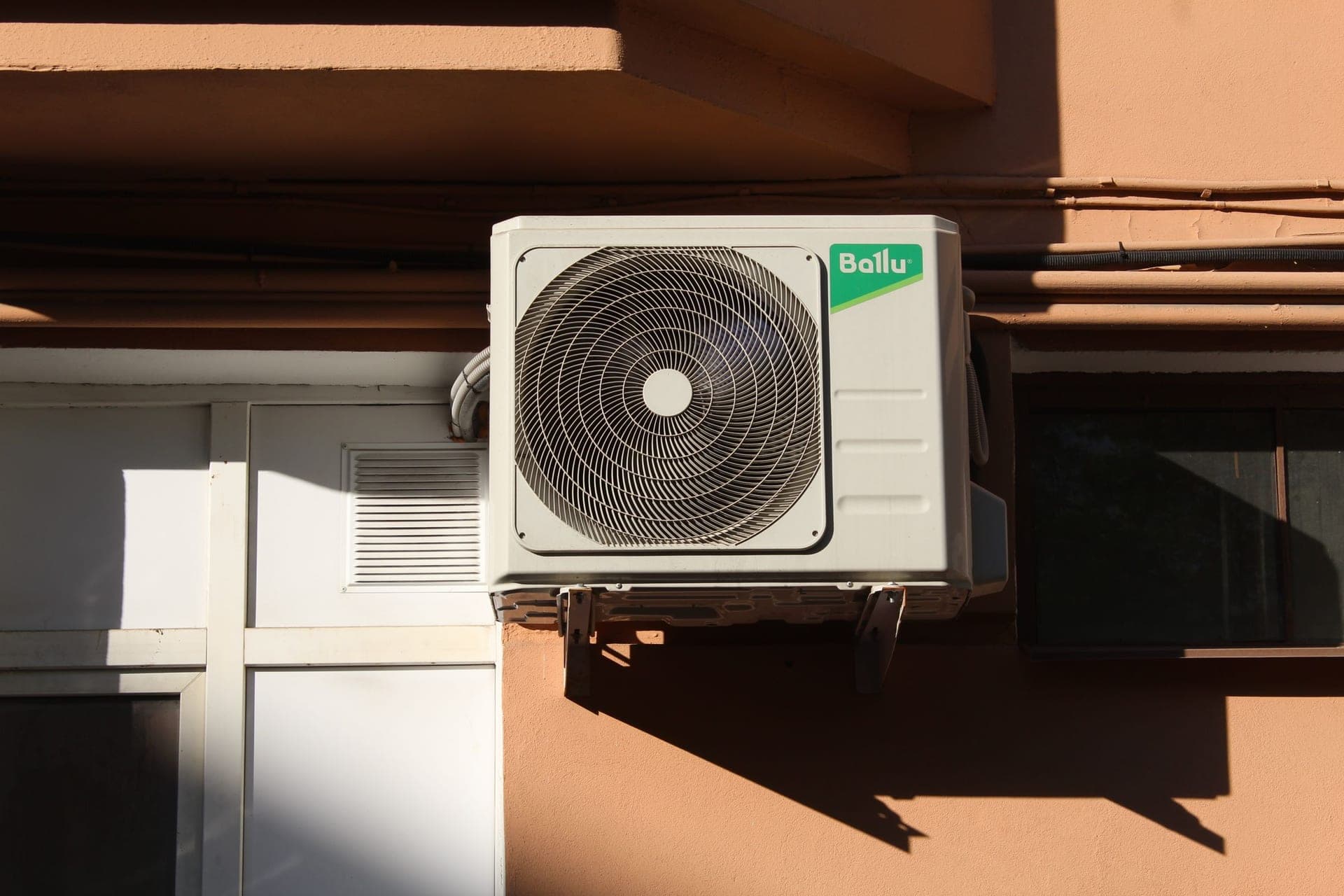
Refrigeration is the mechanism; cooling is the outcome. An air conditioner, a fridge, a dehumidifier and a heat pump all run the same vapor-compression cycle — they move heat rather than destroy it. The difference is where the hot side points. An air conditioner puts it outdoors; a fridge puts it in the kitchen, which is why a fridge is a net heater of your home.
Fan & Frost earns a commission when you buy through our links, at no cost to you. It never changes a ranking, and we say so when the right answer is the cheaper unit or nothing at all. Full disclosure · How we pick.
At a glance
The picks, ranked
Tap any row to jump to the full reasoning. Prices are live from Amazon where we have them, and read “check price” where we don’t — never a number we cannot verify today.
| # | Product | Best for | Price |
|---|---|---|---|
| 1 | Refrigeration pointed outward Midea Window Heat Pump Air Conditioner, 9,500 BTU CEER 17.6 with reverse-cycle heating — the same cycle running forwards in summer and backwards in winter, in one box. | One room, either season, when a window is available | |
| 2 | 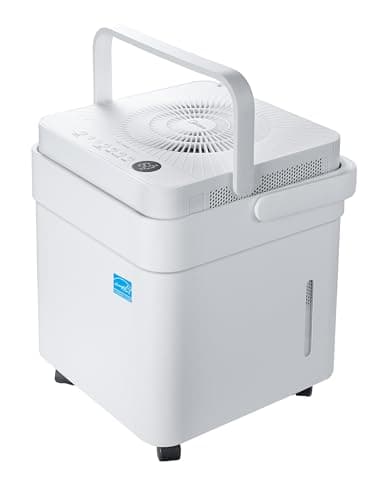 Refrigeration used for water Midea Dehumidifier, 50 pints/day The same cycle with both coils indoors, used deliberately to condense water out of the air rather than to cool the room. | A basement or humid room where the problem is moisture, not heat | |
| 3 | Cooling without refrigeration Honeywell CL25AE Indoor Evaporative Cooler 764 CFM on 235 W with no compressor and no refrigerant at all — cooling by evaporation instead. | A dry climate, with a window open | |
| — | 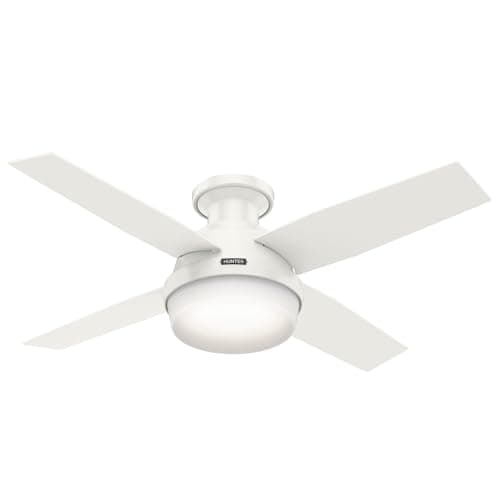 Neither of the above Hunter Martindale 44" Ceiling Fan 1.1 W on low and it lowers the air temperature by precisely nothing — which is a useful thing to understand about it. | People, not rooms |
Cooling and refrigeration get used as though they were interchangeable. They are not, and the distinction is not pedantry — it explains why some appliances make a room colder, some make it warmer, and some make you feel cooler while doing neither.
Definitions
One is a mechanism, the other is an outcome
Refrigeration is a specific process. A refrigerant is compressed until it is hot, run through a coil where it sheds that heat, allowed to expand until it is cold, and run through a second coil where it absorbs heat. Repeat. That is the vapor-compression cycle, and it is the same in every machine that uses it.
Cooling is just the result of something getting colder, by whatever route. Refrigeration is one route. Evaporation is another. Shading, night ventilation and thermal mass are others still, and none of them involve a compressor.
The critical thing the cycle does not do is destroy heat. Heat is conserved. Every refrigeration machine is a heat pump in the literal sense: it picks heat up in one place and puts it down in another, and it adds its own electrical consumption to the pile on the way.
The consequence
Where the hot side points is the whole difference
| Appliance | Cold side | Hot side | Net effect on the house |
|---|---|---|---|
| Window air conditioner | Indoors | Outdoors | Cools |
| Mini-split, cooling | Indoors | Outdoors | Cools |
| Mini-split, heating | Outdoors | Indoors | Heats |
| Dehumidifier | Indoors | Indoors | Warms slightly, dries a lot |
| Fridge or freezer | Inside the box | Indoors | Heats |
| Single-hose portable AC | Indoors | Outdoors, partly | Cools, inefficiently |
Read the fridge row again. A refrigerator has both coils inside your house: the cold one inside the cabinet, the hot one on the back or underneath. It moves heat from the food into the kitchen, and adds its own electricity consumption on top.
A fridge is therefore, unambiguously, a net heater of your home. So is a freezer. So is anything that makes ice indoors, which is why freezing water to put in front of a fan heats the house more than the ice cools it.
Why it matters
Three practical consequences
- A portable air conditioner is a compromised design for a structural reason. Its hot side is a hose rather than a wall, and on a single-hose unit the condenser air comes from the room itself. The hot side is not fully outside, which is the entire problem — single hose against dual.
- A heat pump is not a different machine from an air conditioner. It is an air conditioner with a reversing valve. That is the whole of the difference, and it is why one box can do both seasons — heat pump against air conditioner.
- A dehumidifier is not a broken air conditioner. Both coils indoors is the design intent. In a cool damp basement it is exactly right and an air conditioner is exactly wrong — the basement case.
This one is not a DIY job
Because heat is conserved, an air conditioner always puts more heat outdoors than it removes from indoors — the difference being its own electricity consumption. It is not an inefficiency to be engineered away; it is the arithmetic. This is why running an air conditioner with the window open is not a marginal loss but an outright net heating of the neighborhood.
Efficiency
Why refrigeration can beat 100% and a heater cannot
A resistance heater turns one unit of electricity into one unit of heat. Its coefficient of performance is exactly 1, and no manufacturer can improve it, because it is bounded by conservation of energy.
A refrigeration machine is not making heat, it is moving it, so it is not bounded the same way. The certified mini-split field has a median COP of 2.00 at 5°F and a maximum of 3.28 — two to three units of heat delivered per unit of electricity consumed, in genuinely cold weather.
That is the single most useful consequence of understanding the distinction. Heating by moving heat rather than making it is two to three times cheaper, and it is the reason heat pumps exist at all — when that pays for an installer.
Ratings
Different categories, different rating scales
One irritating consequence of the same cycle appearing in different product categories: each category has its own rating scale, and they are not interchangeable.
- CEER — room air conditioners. Certified units span 12.0 to 17.6.
- EER2 and SEER2 — mini-splits. EER2 is the full-load figure and the only one comparable to CEER; SEER2 is a seasonal average and is much higher.
- IEF, in liters per kWh — dehumidifiers. A completely different unit, because the useful output is water rather than temperature.
- CFM per watt — fans. Airflow per unit of power, measuring something that is not refrigeration at all.
Comparing across those scales produces nonsense. The most common version is quoting a mini-split’s SEER2 against a window unit’s CEER, which overstates the gap by a factor of ten — how to read them without being misled.
Say the unwelcome thing
Do not try to cool a room by opening the fridge.
It comes up every heat wave and it is worth answering properly, because the reasoning is exactly backwards.
An open fridge dumps its cold into the kitchen, and its compressor then runs continuously to replace that cold — rejecting all of it, plus its own electricity consumption, into the same kitchen through the coil on the back. The room ends up warmer than if you had left the door shut.
The same logic disposes of making ice at home for cooling. Both coils are indoors, so the freezer puts more heat into the house than the ice will ever take out. If you want cheap comfort right now, move air: 1.1 W on low does more for how you feel than any of it.
In full
Every pick, and what is wrong with it
Published specifications only, each linked to the page it came from. Where a manufacturer publishes nothing, the row says so — we do not fill blanks in.
1. Refrigeration pointed outward
Midea Window Heat Pump Air Conditioner, 9,500 BTU
Midea · model MAH09B1AGR
CEER 17.6 with reverse-cycle heating — the same cycle running forwards in summer and backwards in winter, in one box.
The clearest demonstration of the point this page is making, because it literally reverses.
In cooling, the indoor coil is cold and the outdoor coil is hot. In heating, a reversing valve swaps them and the same hardware pulls heat out of cold outdoor air and releases it indoors.
CEER 17.6 and 404.8 kWh a year, about $74 at 18.34¢/kWh — the highest certified efficiency of all 505 certified room air conditioners, and 80% under the federal standard.
129 lb, on a saddle mount that straddles the sill so no bracket is needed. It is still a two-person job — window units that heat, compared.
What’s wrong with it
129 lb of it, sitting in your window.
Running cost — MAH09B1AGR
| Annual energy use | 404.8 kWh | ENERGY STAR certified figure |
|---|---|---|
| Annual cost | $74 | 404.8 × 18.34¢/kWh |
| Per cooling month | $19 | spread over a four-month season |
The annual figure is the certified value from the ENERGY STAR Certified Room Air Conditioners dataset, which models a standard cooling season rather than your actual summer. It is more useful than a nameplate wattage here, because a variable-speed compressor spends most of its life well below nameplate.
Rate: 18.34¢/kWh, the US average residential price for June 2026 (EIA Electric Power Monthly, Table 5.3). Yours will differ — swap it in: (watts ÷ 1000) × hours × your rate.
| Cooling capacity | 9,500 BTU/h |
|---|---|
| Heating mode | Yes, reverse cycle |
| CEER | 17.6 |
| Annual energy use | 404.8 kWh/yr |
| vs federal standard | 80% less energy |
| Dimensions | 20.9 H x 25.0 W x 41.2 D in |
| Weight | 129.0 lb |
| Installation | Straddles the windowsill (saddle style) |
| Support bracket | Not required |
| Compressor | Variable speed |
| Refrigerant | R-32 |
| ENERGY STAR | Certified, and on the Most Efficient list |
Every figure above is from ENERGY STAR Certified Room Air Conditioners dataset. Blanks are shown as “not published” rather than filled in.
2. Refrigeration used for water
Midea Dehumidifier, 50 pints/day
Midea · model MDUDMB-50AEN8-BB0F
The same cycle with both coils indoors, used deliberately to condense water out of the air rather than to cool the room.
A dehumidifier is an air conditioner with its hot side pointed back into the same room, on purpose.
Air passes the cold coil, water condenses out, then the same air passes the hot coil and is reheated before it returns. Net result: drier air, slightly warmer room.
That warming is not a design flaw. It is the reason a dehumidifier can be far more effective than an air conditioner in a cool damp basement, where the problem was never temperature.
Where humidity and heat are both problems, an air conditioner does both at once — which to use when.
What’s wrong with it
It warms the room it is drying, by exactly the energy it consumes plus the latent heat it releases.
Running cost — MDUDMB-50AEN8-BB0F
| Annual energy use | 515 kWh | ENERGY STAR certified figure |
|---|---|---|
| Annual cost | $94 | 515 × 18.34¢/kWh |
| Per cooling month | $24 | spread over a four-month season |
The annual figure is the certified value from the ENERGY STAR Certified Dehumidifiers dataset, which models a standard cooling season rather than your actual summer. It is more useful than a nameplate wattage here, because a variable-speed compressor spends most of its life well below nameplate.
Rate: 18.34¢/kWh, the US average residential price for June 2026 (EIA Electric Power Monthly, Table 5.3). Yours will differ — swap it in: (watts ÷ 1000) × hours × your rate.
| Water removal | 49.67 pints/day (DOE Appendix X1) |
|---|---|
| Efficiency (IEF) | 2.08 L/kWh |
| Annual energy use | 515 kWh/yr |
| Refrigerant | HFC-32 (GWP 675) |
| Connected | No |
| Noise | Not published in the certified dataset |
| ENERGY STAR | Certified |
Every figure above is from ENERGY STAR Certified Dehumidifiers dataset. Blanks are shown as “not published” rather than filled in.
3. Cooling without refrigeration
Honeywell CL25AE Indoor Evaporative Cooler
Honeywell · model CL25AE
764 CFM on 235 W with no compressor and no refrigerant at all — cooling by evaporation instead.
Proof that cooling and refrigeration are not the same word: this lowers air temperature with no refrigeration cycle anywhere in it.
Water evaporating absorbs heat from the air as it changes state. No compressor, no refrigerant, no hot side to point anywhere.
764 CFM on 235 W with a 6.6 gallon tank and a published 52 to 60 dBA. Eight hours of that is about 34¢ at 18.34¢/kWh.
The limitation is structural rather than a build quality issue: it works by adding moisture to the air, so it needs air with capacity to absorb it — why it fails in a humid climate.
What’s wrong with it
It only works where the air is dry enough to absorb the moisture it adds.
Running cost — CL25AE
| Nameplate power | 235 W | manufacturer's published figure |
|---|---|---|
| Energy, 8-hour night | 1.88 kWh | 235 ÷ 1000 × 8 |
| Cost per hour | 4.3¢ | at 18.34¢/kWh |
| Cost per 8-hour night | 34¢ | on the highest speed |
| Cost per 30 nights | $10 | 56.4 kWh |
Rate: 18.34¢/kWh, the US average residential price for June 2026 (EIA Electric Power Monthly, Table 5.3). Yours will differ — swap it in: (watts ÷ 1000) × hours × your rate.
| Air delivery | 764 CFM |
|---|---|
| Power | 235 W |
| Water tank | 6.6 gallons |
| Air throw | 33 ft |
| Noise | 52-60 dBA |
| Speeds | 3, oscillating louvers |
| Timer | Up to 7.5 hours |
| Dimensions | 18.9 x 14.6 x 33.3 in |
| Weight | 25.4 lb |
| Manufacturer coverage claim | 466 sq ft |
| Warranty | 1 year |
Every figure above is from Honeywell Air Comfort product page, CL25AE. Blanks are shown as “not published” rather than filled in.
Skip this one
Hunter Martindale 44" Ceiling Fan
Hunter · model 44in Martindale
1.1 W on low and it lowers the air temperature by precisely nothing — which is a useful thing to understand about it.
Marked as the odd one out because it is neither cooling nor refrigeration in the strict sense, and confusing it for either is a common and expensive mistake.
A fan removes no heat from a room. It adds a little, from the motor. What it does is speed the evaporation of sweat from skin, which makes a person feel several degrees cooler in unchanged air — the mechanism in full.
1.1 W on low at 304.5 CFM per watt, which is 0.2¢ for an eight-hour evening. It is the cheapest comfort available by an enormous margin.
The corollary: switch it off in an empty room. With nobody there to evaporate, it is purely a small heater.
What’s wrong with it
It cools nobody who is not sitting in the moving air.
Running cost — 44in Martindale
| Nameplate power | 1.1 W – 10.1 W | manufacturer's published figure |
|---|---|---|
| Energy, 8-hour night | 0.08 kWh | 10.1 ÷ 1000 × 8 |
| Cost per hour | 0.2¢ | at 18.34¢/kWh |
| Cost per 8-hour night | 1.5¢ | on the highest speed |
| Cost per 30 nights | 44¢ | 2.4 kWh |
| Same month, lowest speed | 4.8¢ | at 1.1 W |
Rate: 18.34¢/kWh, the US average residential price for June 2026 (EIA Electric Power Monthly, Table 5.3). Yours will differ — swap it in: (watts ÷ 1000) × hours × your rate.
| Blade span | 44 in |
|---|---|
| Efficiency | 304.5 CFM per watt |
| Power, high speed | 10.1 W |
| Power, low speed | 1.1 W |
| Standby power | 0.4 W |
| Type | Indoor, fan only |
| Warranty | 3 years, components |
| ENERGY STAR | Certified |
Every figure above is from ENERGY STAR Certified Ceiling Fans dataset. Blanks are shown as “not published” rather than filled in.
We are not linking a buy button for this one. If you want to look at it anyway, it is easy enough to find — but we would rather send you to something that fits your room.
Questions people actually ask
Frequently asked
What is the difference between cooling and refrigeration?
Refrigeration is a specific mechanism — the vapor-compression cycle that moves heat from one place to another. Cooling is the outcome, by any route. Evaporative cooling and night ventilation lower temperature with no refrigeration involved at all.
Is an air conditioner the same as a refrigerator?
Mechanically, near enough yes — both run the same vapor-compression cycle. The difference is where the hot coil faces. An air conditioner puts it outdoors, so the house gets cooler. A fridge puts it in the kitchen, so the house gets warmer.
Does a refrigerator heat up the house?
Yes. Both of its coils are inside your home — the cold one inside the cabinet, the hot one on the back or underneath. It moves heat out of the food into the kitchen and adds its own electricity consumption on top, so it is a net heater.
Does an air conditioner destroy heat?
No. Heat is conserved, so an air conditioner always rejects more heat outdoors than it removes from indoors — the difference being the electricity it consumed. That is arithmetic, not inefficiency, and no design can avoid it.
Why can a heat pump be more than 100% efficient?
Because it moves heat rather than making it, so it is not bounded the way a resistance heater is. Certified mini-splits deliver a median COP of 2.00 at 5°F and up to 3.28 — two to three units of heat per unit of electricity. Heat pumps explained.
Is a dehumidifier a type of air conditioner?
It uses the same cycle with both coils indoors, deliberately. Air passes a cold coil where water condenses out, then a hot coil that reheats it. The room gets drier and slightly warmer, which is exactly right for a cool damp basement. Which to use when.
Sources
Where these numbers came from
- ENERGY STAR Certified Room Air Conditioners dataset — CEER range and annual kWh for every unit cited
- ENERGY STAR Certified Mini-Split Heat Pumps dataset — COP at 5°F across 16,667 US records that publish one
- Honeywell CL25AE product page — 764 CFM, 235 W, 6.6 gallon tank, 52 to 60 dBA
- EIA Electric Power Monthly, Table 5.3 — average residential electricity price
Read next
Where to go from here
Back to Guides & Calculators, or read how we pick.