Guide and picks
How long do fans last?
No manufacturer states how long a fan lasts. The warranty is the closest thing to an answer, and the distribution is more revealing than any single figure.
By Sawyer V. · Published
The short answer
Nobody publishes a service life figure. The closest available signal is warranty, and across 1,398 certified ceiling fans three years dominates— roughly 1,290 records once the wording variants are combined — with only about 87 offering five years or more and 8 offering ten. Portable fans typically carry one to two years. What actually fails is bearings, capacitors and oscillation gearboxes, and cleaning changes the odds on all three.
Fan & Frost earns a commission when you buy through our links, at no cost to you. It never changes a ranking, and we say so when the right answer is the cheaper unit or nothing at all. Full disclosure · How we pick.
At a glance
The picks, ranked
Tap any row to jump to the full reasoning. Prices are live from Amazon where we have them, and read “check price” where we don’t — never a number we cannot verify today.
| # | Product | Best for | Price |
|---|---|---|---|
| 1 | 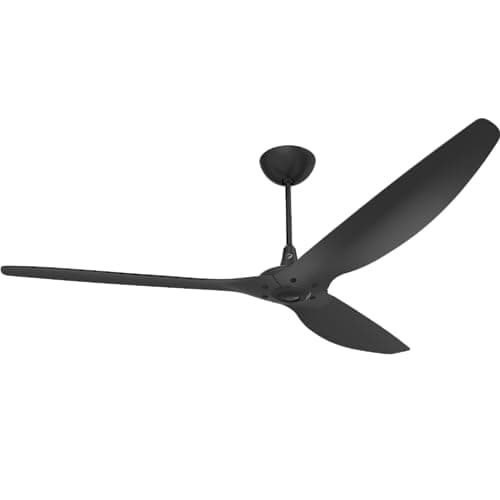 Longest warranty we hold data for Big Ass Fans Haiku MK-i61 84" Ceiling Fan Five years on components at 418.0 CFM per watt — five years puts it in roughly the top 6% of the certified field. | A large room where you want the fan to outlast the decision | |
| 2 | 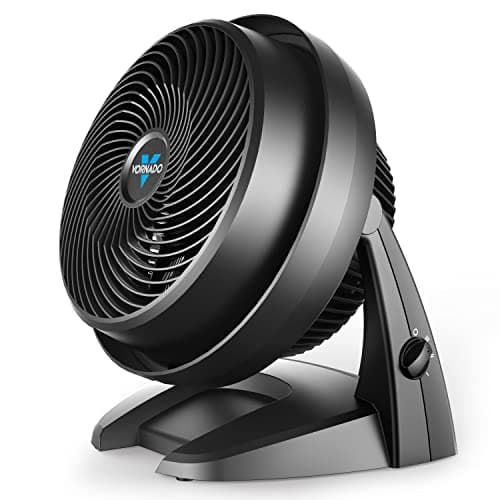 Longest warranty in portable fans Vornado 630 Medium Air Circulator Five years, against the one to two years most portable fans carry. | Anyone tired of replacing a fan every couple of summers | |
| 3 | 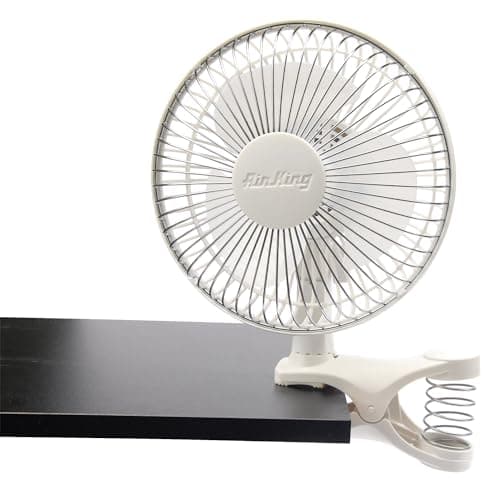 Built to a commercial standard Air King 6" Commercial Grade Clip-On Fan ETL listed and OSHA compliant with a metal guard, at 9 to 12 W — a jobsite specification on a small fan. | A workshop, kitchen or anywhere domestic fans keep dying | |
| — | The format that is not built to be repaired Lasko Power Plus 20" Box Fan 73 to 102 W with a riveted grille — cheap, sturdy in use, and effectively unserviceable. | A window or a garage, accepting it is a consumable |
This is a fair question with no published answer. No fan manufacturer we have found states an expected service life, a duty-hour rating or a mean time between failures.
The proxy
Warranty is the only signal anyone publishes
The ENERGY STAR Certified Ceiling Fans dataset records a component warranty period for every fan, which makes it the one place a durability-adjacent figure exists at scale.
Across 1,398 US-market records, once the wording variants are combined:
| Component warranty | Approximate records |
|---|---|
| 3 years | ~1,290 |
| 5 years | ~85 |
| 10 years | 8 |
Counted by us from the ENERGY STAR Certified Ceiling Fans dataset. The field is free text, so wording variants like “3 year” and “3 Years” have been combined.
Three years is not a differentiator; it is the price of entry. Roughly 92% of the certified field offers it, so a fan advertising three years is telling you nothing.
Five years is genuinely uncommon at around 6% of records, and ten years is rare enough to be notable at 8 fans.
Portable fans are outside this dataset and generally worse: one year is common, two is good, and five years is an outlier.
What fails
Four failure modes, in order
- Bearings. The most common end for an older fan. They dry out, then run rough, then seize — usually announcing themselves as a whine or a rumble months before they stop. Heat and continuous running accelerate it.
- Start capacitors. On AC-motor fans, a failed capacitor produces the classic symptom: the motor hums but the blades do not turn. Capacitors degrade with heat and with cycles.
- Oscillation gearboxes. The most common avoidable failure, and almost always caused by someone forcing the head by hand. A stripped gearbox does not stop the fan working as a fixed fan.
- Switches and controls. A worn rotary selector loses one position while others still work, which reads as a partial failure rather than a dead fan.
Notice that three of the four are heat-related or mechanical, and that dust drives the heat. That is why cleaning matters more to fan lifespan than anything else you can do.
This one is not a DIY job
Dust is the mechanism behind most failures. A felted layer on the blades changes their shape, so the fan moves less air per revolution while the motor works just as hard. Dust in the motor vents then stops it shedding that extra heat.
Hotter motor means faster bearing degradation and faster capacitor ageing. The fan gets quieter about it — airflow drops without any change in noise — so the damage accumulates unnoticed.
Clean twice a season, not once at the end. Blades, guard front and back, and the motor housing vents. The procedure.
Store it dry. Most seized bearings on seasonal fans come from a winter in a damp garage rather than from use.
Extending it
What actually helps
- Run it slower. Lower speed means less heat, less bearing load and less vibration. On a DC fan it also costs less — 2.9 W against 19 W.
- Give it clearance. A fan pushed against a wall is starved on the intake side, so the motor works harder for less output.
- Never force the oscillation head. The single most common avoidable failure in the category.
- Keep the vents clear. They matter more than the blades for the motor’s survival, and they are the part nobody looks at.
- Buy for the environment. A domestic fan in a workshop, a kitchen or a garage is in a harsher place than it was designed for.
Replace or repair
When it is worth stopping
The repair calculation has shifted, and not because fans got worse.
An older AC-motor fan typically draws 50 to 100 W. A current DC tower fan draws 2.9 W on low and 19 W on high, and a certified ceiling fan draws 1.1 W on low. That is a running-cost difference large enough to matter over a season.
Worth repairing: anything cleaning fixes, loose guard screws, a bearing that frees with light oil on an accessible shaft.
Usually not: a failed capacitor on an inexpensive fan, a stripped oscillation gearbox, a failed motor, or any fan whose housing is not designed to be opened.
And a burning smell or a scorch mark is not a repair question. Unplug it and do not use it again.
Say the unwelcome thing
Do not treat a three-year warranty as a durability claim.
It reads like a quality signal and it is not, because roughly 92% of the certified ceiling fan field offers exactly three years.
A specification that almost every product shares carries no information. Three years is the category floor — what a manufacturer offers to be taken seriously, not what they believe about this particular fan.
Five years is the number that means something, at around 6% of records, and ten at 8 fans out of 1,398.
Beyond that, look at what correlates with lasting: a motor with margin, low wattage for the airflow, no oscillation gearbox to strip, and a housing you can actually open to clean.
In full
Every pick, and what is wrong with it
Published specifications only, each linked to the page it came from. Where a manufacturer publishes nothing, the row says so — we do not fill blanks in.
1. Longest warranty we hold data for
Big Ass Fans Haiku MK-i61 84" Ceiling Fan
Big Ass Fans · model MK-i61-071806
Five years on components at 418.0 CFM per watt — five years puts it in roughly the top 6% of the certified field.
Five years, components. Across 1,398 certified ceiling fans, three years is the overwhelming norm; only about 87 records offer five or more.
A warranty is a manufacturer’s own estimate of failure rate with money behind it. In a category where nobody publishes MTBF or expected service life, that makes it the most honest durability signal available.
418.0 CFM per watt at 84 inches, third-highest in the certified dataset and first among connected fans.
39.8 W on high — about 4.4¢ for a six-hour evening — and 2.0 W standby drawn continuously.
What’s wrong with it
39.8 W on high is the highest draw of any fan here, and 2.0 W standby is above the connected average.
Running cost — MK-i61-071806
| Nameplate power | 39.8 W | manufacturer's published figure |
|---|---|---|
| Energy, 8-hour night | 0.32 kWh | 39.8 ÷ 1000 × 8 |
| Cost per hour | 0.7¢ | at 18.34¢/kWh |
| Cost per 8-hour night | 5.8¢ | on the highest speed |
| Cost per 30 nights | $1.75 | 9.6 kWh |
Rate: 18.34¢/kWh, the US average residential price for June 2026 (EIA Electric Power Monthly, Table 5.3). Yours will differ — swap it in: (watts ÷ 1000) × hours × your rate.
| Blade span | 84 in |
|---|---|
| Efficiency | 418.0 CFM per watt |
| Power, high speed | 39.8 W |
| Standby power | 2.0 W |
| Connected functionality | Yes |
| Type | Indoor |
| Warranty | 5 years, components |
| ENERGY STAR | Certified, and on the Most Efficient list |
Every figure above is from ENERGY STAR Certified Ceiling Fans dataset. Blanks are shown as “not published” rather than filled in.
2. Longest warranty in portable fans
Vornado 630 Medium Air Circulator
Vornado · model 630
Five years, against the one to two years most portable fans carry.
Five years is unusual in portable fans, where one year is common and two is generous.
The design supports the claim: a deep shrouded circulator with a substantial motor, built to run continuously rather than in bursts. Motors sized with margin run cooler, and heat is what kills bearings.
Three speeds, deliberately no oscillation — which also removes the most common mechanical failure point in the category.
The gap remains: no published wattage, CFM, dimensions or weight. The 70-foot throw figure is the manufacturer’s own.
What’s wrong with it
Vornado publishes no wattage, CFM, dimensions or weight — the longest warranty on the least data.
Running cost
Vornado does not publish a wattage for the 630, so we cannot calculate what it costs to run. We are not going to estimate one. If Vornado publishes a nameplate figure, this block will show the arithmetic.
| Power | Not published |
|---|---|
| Airflow reach | Moves air up to 70 ft |
| Speeds | 3 |
| Air delivery (CFM) | Not published |
| Dimensions | Not published |
| Weight | Not published |
| Warranty | 5 years |
Every figure above is from Vornado product page, 630. Blanks are shown as “not published” rather than filled in.
3. Built to a commercial standard
Air King 6" Commercial Grade Clip-On Fan
Air King · model 9145
ETL listed and OSHA compliant with a metal guard, at 9 to 12 W — a jobsite specification on a small fan.
When fans keep failing in one particular place, the environment is usually the cause — dust, grease, heat, vibration — and a commercial-grade fan is built for it.
ETL listed and OSHA compliant is a jobsite specification, and it comes with the construction to match rather than just the certificate.
9 to 12 W is also relevant to longevity. Low power means low heat in the motor, and heat is the primary driver of bearing and capacitor failure.
34 to 37 dBA, three-decibel spread. The one-year warranty is the weak point on paper.
What’s wrong with it
One-year warranty, which is short — the durability argument here is construction rather than paperwork.
Running cost — 9145
| Nameplate power | 9 W – 12 W | manufacturer's published figure |
|---|---|---|
| Energy, 8-hour night | 0.10 kWh | 12 ÷ 1000 × 8 |
| Cost per hour | 0.2¢ | at 18.34¢/kWh |
| Cost per 8-hour night | 1.8¢ | on the highest speed |
| Cost per 30 nights | 53¢ | 2.9 kWh |
| Same month, lowest speed | 40¢ | at 9 W |
Rate: 18.34¢/kWh, the US average residential price for June 2026 (EIA Electric Power Monthly, Table 5.3). Yours will differ — swap it in: (watts ÷ 1000) × hours × your rate.
| Power | 9 W - 12 W (0.1-0.2 A at 120 V) |
|---|---|
| Air delivery | Up to 190 CFM |
| Noise | 34 dBA low, 37 dBA high |
| Speeds | 2 |
| Mounting | Spring-loaded clip, non-marking |
| Dimensions | 10.38 H x 6.25 L x 8.13 W in |
| Weight | 2.22 lb |
| Cord | 6 ft, 3-conductor |
| Listing | ETL listed, OSHA compliant |
| Warranty | 1 year |
Every figure above is from Air King product page, 9145 (via Lasko). Blanks are shown as “not published” rather than filled in.
Skip this one
Lasko Power Plus 20" Box Fan
Lasko · model B20801
73 to 102 W with a riveted grille — cheap, sturdy in use, and effectively unserviceable.
Listed as a caution about serviceability rather than build quality. Box fans are genuinely robust in use.
The problem is access. The grille is typically riveted or heat-staked rather than screwed, so cleaning the blades properly means damaging the fan. And dust on the blades is what causes the airflow loss, the motor overheating and the thermal cutout tripping.
So the maintenance that would extend its life is the maintenance the design prevents.
73 to 102 W also makes replacement easy to justify: 15¢ a night against 0.4¢ for a DC tower fan. The comparison.
What’s wrong with it
You cannot easily get to the blades to clean them, and dust on the blades is the main cause of the failures on this page.
Running cost — B20801
| Nameplate power | 73 W – 102 W | manufacturer's published figure |
|---|---|---|
| Energy, 8-hour night | 0.82 kWh | 102 ÷ 1000 × 8 |
| Cost per hour | 1.9¢ | at 18.34¢/kWh |
| Cost per 8-hour night | 15¢ | on the highest speed |
| Cost per 30 nights | $4.49 | 24.5 kWh |
| Same month, lowest speed | $3.21 | at 73 W |
Rate: 18.34¢/kWh, the US average residential price for June 2026 (EIA Electric Power Monthly, Table 5.3). Yours will differ — swap it in: (watts ÷ 1000) × hours × your rate.
| Power | 73 W - 102 W (0.6-0.9 A at 120 V) |
|---|---|
| Speeds | 3 |
| Dimensions | 21.25 H x 22.5 x 4.75 in |
| Weight | 10.1 lb |
| Motor | Weather-resistant |
| Air delivery (CFM) | Not published |
| Warranty | 2 years |
Every figure above is from Lasko product page, B20801. Blanks are shown as “not published” rather than filled in.
We are not linking a buy button for this one. If you want to look at it anyway, it is easy enough to find — but we would rather send you to something that fits your room.
Questions people actually ask
Frequently asked
How long should a fan last?
No manufacturer publishes a service life figure. The closest signal is warranty — across 1,398 certified ceiling fans, roughly 1,290 offer three years, about 85 offer five and only 8 offer ten. Portable fans typically carry one to two.
What usually fails on a fan?
Bearings first, then start capacitors on AC-motor fans, then oscillation gearboxes, then switches. Three of the four are heat-related or mechanical, and dust is what drives the heat — which is why cleaning matters more than anything else.
Is a three-year fan warranty good?
It is the category floor rather than a distinction — roughly 92% of certified ceiling fans offer exactly three years. Five years is genuinely uncommon at around 6% of records, and ten years is rare at 8 fans out of 1,398.
How do I make a fan last longer?
Clean it twice a season including the motor vents, run it slower where possible, give it clearance so it is not starved on the intake side, never force the oscillation head by hand, and store it dry. How to clean a fan.
Is it worth repairing an old fan?
Cleaning fixes more than people expect, and loose guard screws fix most rattles. It is usually not worth it for a failed capacitor on a cheap fan, a stripped oscillation gearbox, or a failed motor — and an old AC-motor fan draws 50 to 100 W against 2.9 for a modern DC one.
Why does my fan whine or rumble?
Usually bearings beginning to fail, and they typically announce themselves months before they seize. It can also be uneven dust loading creating a per-revolution beat, which is worth ruling out first because it is free to fix.
Sources
Where these numbers came from
- ENERGY STAR Certified Ceiling Fans dataset — component warranty years, CFM per watt, wattage and standby power across 1,398 US-market records
- Vornado 630 product page — 5-year warranty
- Air King 9145 product page — ETL listed, OSHA compliant, 9-12 W, 1-year warranty
- EIA Electric Power Monthly, Table 5.3 — electricity rate
Read next
Where to go from here
Back to Fans, or read how we pick.