Guide and picks
The best time of day to run air conditioning
Cooling gets more expensive per unit as the day gets hotter, which means the hour you run it matters as much as the setting.
By Sawyer V. · Published
The short answer
Run it before the peak, not during it. An air conditioner rejects heat outdoors, so its job gets harder as the outdoor temperature climbs — the hour it is least efficient is the hour you most want it. Pre-cool in the late morning, coast through the afternoon, and purge with outdoor air at night, which a 22 W thermostat-controlled window fan does for a fraction of a cent an hour.
Fan & Frost earns a commission when you buy through our links, at no cost to you. It never changes a ranking, and we say so when the right answer is the cheaper unit or nothing at all. Full disclosure · How we pick.
At a glance
The picks, ranked
Tap any row to jump to the full reasoning. Prices are live from Amazon where we have them, and read “check price” where we don’t — never a number we cannot verify today.
| # | Product | Best for | Price |
|---|---|---|---|
| 1 | 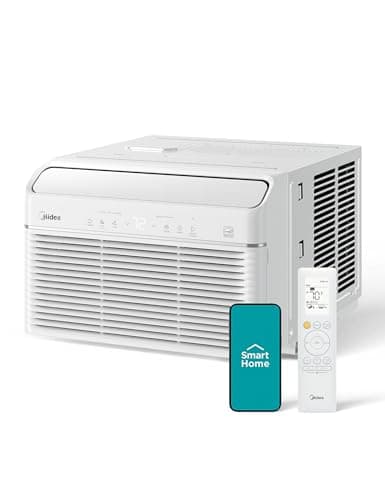 Best overall Midea Window Air Conditioner with Heat, 8,000 BTU 397.4 kWh a year at CEER 15.1, variable speed, and 54% below the federal standard. | A room you want held at a steady temperature all day | |
| 2 | Best for the night purge Lasko Twin Window Fan with Remote 22 to 31 W with an adjustable thermostat and independently reversible motors. | Dumping the day's stored heat once the outdoor air is cooler | |
| 3 | 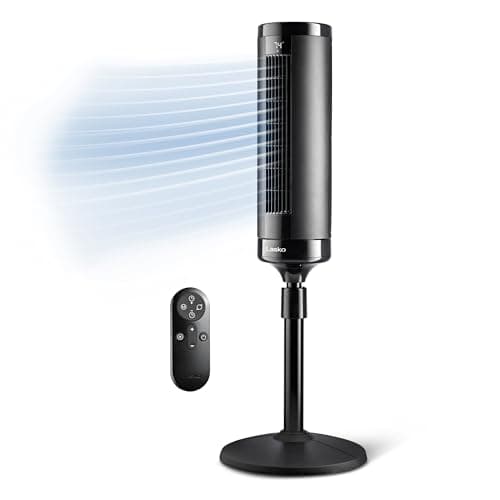 Best for coasting Lasko EcoQuiet 42" DC Tower Fan 2.9 W on the lowest of 12 speeds, 23 dBA, with an 8-hour timer. | Keeping the afternoon tolerable without running the compressor | |
| — | 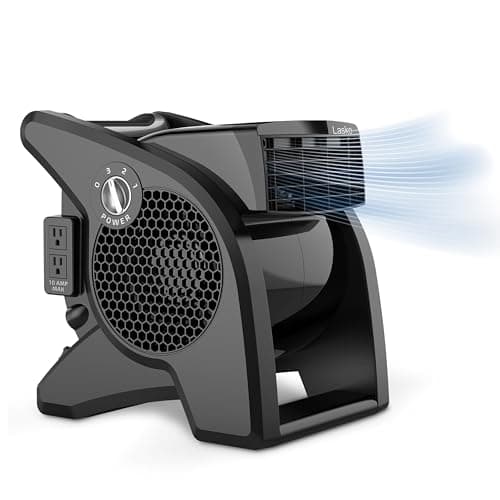 Not for all-day running Lasko Max Performance 15" Air Mover 160 to 178 W — more than half the draw of a small evaporative cooler, for a fan. | Short bursts of serious air movement in a garage or workshop |
Everyone treats cooling as though a kilowatt-hour buys the same amount of comfort whenever it is spent. It does not.
The mechanism
Why the afternoon is the expensive hour
An air conditioner does not destroy heat, it moves it — from indoor air to outdoor air. Moving heat from a cool place to a hot place is the hard direction, and the bigger that gap, the more work it takes.
So the efficiency you get is not a fixed property of the machine. At four in the afternoon, when outdoor air is at its hottest, the unit is rejecting heat into the least receptive air of the day — and that is precisely when the room most needs it.
This is worth knowing because CEER is a single-point rating. It is measured under one standard test condition, so it tells you how units compare with each other, not how any of them behaves at three in the afternoon in your climate. What the rating does and does not cover.
The lag
Your house peaks later than the weather does
The second half of the timing picture is thermal mass. A building absorbs heat all day and releases it slowly, so indoor temperature peaks hours after outdoor temperature does — often well into the evening.
That lag is what makes pre-cooling work at all. Cooling delivered in the morning does not evaporate at noon; it is partly stored in the building’s structure and it lowers the peak that arrives later.
It is also why a west-facing room is the worst room in the house. Its solar peak lands late, on a structure that has already been warming since morning.
The schedule
What a good day looks like
- Overnight and early morning: purge. Once outdoor air is cooler than indoor, open up and exchange it. A 22 W thermostat-controlled window fan does this without you.
- Early morning: close everything. Windows, blinds, curtains — before the sun is on the glass, not after. You are sealing in the cool you just imported.
- Late morning: pre-cool. Run the unit while outdoor temperature is still moderate. Every unit of cooling made now costs less than the same unit made at four.
- Afternoon: coast. Let the room drift up a degree or two and use air movement instead. A 2.9 W fan holds comfort a surprisingly long way past where the thermostat would have restarted.
- Evening: cool if you must. This is the genuine peak indoors. If you need the compressor, this is when.
- Night: purge again. The cycle repeats, and every night you skip it, tomorrow starts warmer.
This one is not a DIY job
Check your tariff before restructuring your day. Some households are on time-of-use pricing, where electricity costs materially more during defined peak hours — and those hours are usually the same afternoon and early-evening window discussed here.
Where that applies, the financial case for pre-cooling is stronger than the thermodynamic one, and the exact hours are set by your utility rather than by the weather. Read your own tariff; the figures on this site use a single national average rate.
Some utilities also run demand-response programs that control equipment directly. Those have their own terms and are worth reading before enrolling.
Caveats
Where this advice stops working
- The night purge needs cool nights. In humid climates where overnight temperatures stay high, you would be importing heat and moisture. Check before committing to it.
- Purging imports humidity as well as air. If your overnight air is very damp, you may undo the dehumidification the unit did all day. Why that matters more than the temperature.
- Pre-cooling only works if the building holds it. A poorly insulated room with large unshaded glass loses it too fast to be worth storing.
- A fixed-speed unit pre-cools badly. It overshoots and shuts off rather than running gently, so you get less of the benefit.
- Do not set the thermostat lower to cool faster. It does not; it just runs past the point you wanted and keeps going.
Say the unwelcome thing
Do not wait until the room is uncomfortable to switch it on.
It is the intuitive way to run an air conditioner and it is the most expensive one available.
Waiting means you start cooling at the hour outdoor temperature is highest, which is the hour the machine works hardest per unit of cooling delivered. You are also asking it to remove heat that has already been absorbed by the building’s structure, not just the air.
Starting earlier at a gentler output uses cheaper cooling, runs the compressor at its more efficient part-load condition, and never lets the room get far enough away to need a recovery.
Pre-cool with something that can run gently — a variable-speed unit at 397.4 kWh a year — and purge overnight with 22 W of thermostat-controlled window fan.
In full
Every pick, and what is wrong with it
Published specifications only, each linked to the page it came from. Where a manufacturer publishes nothing, the row says so — we do not fill blanks in.
1. Best overall
Midea Window Air Conditioner with Heat, 8,000 BTU
Midea · model MAW08HV1KWT-A
397.4 kWh a year at CEER 15.1, variable speed, and 54% below the federal standard.
Timing strategy depends on a compressor that can run gently for a long time, and a fixed-speed unit cannot do that.
The variable-speed compressor is the feature that makes pre-cooling work. It can hold a temperature at partial output instead of blasting and stopping, which is both quieter and more efficient at part load.
397.4 kWh a year — about $73 a season — at CEER 15.1, on the Most Efficient list and 54% below the federal standard, the largest margin in the certified set we hold.
No support bracket required at 56.0 lb, and it reverses to heat in winter — so the same window opening works in both seasons.
What’s wrong with it
8,000 BTU is one room, and heating mode is only useful if you need it.
Running cost — MAW08HV1KWT-A
| Annual energy use | 397.4 kWh | ENERGY STAR certified figure |
|---|---|---|
| Annual cost | $73 | 397.4 × 18.34¢/kWh |
| Per cooling month | $18 | spread over a four-month season |
The annual figure is the certified value from the ENERGY STAR Certified Room Air Conditioners dataset, which models a standard cooling season rather than your actual summer. It is more useful than a nameplate wattage here, because a variable-speed compressor spends most of its life well below nameplate.
Rate: 18.34¢/kWh, the US average residential price for June 2026 (EIA Electric Power Monthly, Table 5.3). Yours will differ — swap it in: (watts ÷ 1000) × hours × your rate.
| Cooling capacity | 8,000 BTU/h |
|---|---|
| Heating mode | Yes, reverse cycle |
| CEER | 15.1 |
| Annual energy use | 397.4 kWh/yr |
| vs federal standard | 54% less energy |
| Dimensions | 13.9 H x 19.4 W x 22.2 D in |
| Weight | 56.0 lb |
| Installation | Does not straddle the windowsill |
| Support bracket | Not required |
| Compressor | Variable speed |
| Refrigerant | R-32 |
| ENERGY STAR | Certified, and on the Most Efficient list |
Every figure above is from ENERGY STAR Certified Room Air Conditioners dataset. Blanks are shown as “not published” rather than filled in.
2. Best for the night purge
Lasko Twin Window Fan with Remote
Lasko · model W09550
22 to 31 W with an adjustable thermostat and independently reversible motors.
The timing strategy that costs nearly nothing: when outdoor air drops below indoor, stop making cold and start importing it.
Independent motors that reverse electrically, so you can set one to intake and one to exhaust and drive an actual exchange rather than just blowing at a window.
The adjustable thermostat is what makes this a timing product rather than a fan. Set it and it works the crossover for you overnight while you are asleep.
22 W on low — 3.2¢ for an eight-hour night, against a compressor doing the same job for multiples of that. How the window fan category compares.
What’s wrong with it
It depends entirely on the outdoor air actually being cooler, which some climates never deliver.
Running cost — W09550
| Nameplate power | 22 W – 31 W | manufacturer's published figure |
|---|---|---|
| Energy, 8-hour night | 0.25 kWh | 31 ÷ 1000 × 8 |
| Cost per hour | 0.6¢ | at 18.34¢/kWh |
| Cost per 8-hour night | 4.5¢ | on the highest speed |
| Cost per 30 nights | $1.36 | 7.4 kWh |
| Same month, lowest speed | 97¢ | at 22 W |
Rate: 18.34¢/kWh, the US average residential price for June 2026 (EIA Electric Power Monthly, Table 5.3). Yours will differ — swap it in: (watts ÷ 1000) × hours × your rate.
| Power | 22 W - 31 W at 120 V |
|---|---|
| Air delivery | Up to 560 CFM |
| Window fit | 24 - 32 in wide |
| Modes | Intake, exhaust or exchange (independent motors) |
| Thermostat | Adjustable |
| Speeds | 3 |
| Dimensions | 12.9 H x 24.0 W x 4.9 D in |
| Weight | 8.0 lb |
| Warranty | 1 year |
Every figure above is from Lasko product page, W09550. Blanks are shown as “not published” rather than filled in.
3. Best for coasting
Lasko EcoQuiet 42" DC Tower Fan
Lasko · model T42710
2.9 W on the lowest of 12 speeds, 23 dBA, with an 8-hour timer.
The bridge between pre-cooling and evening. Once the room has drifted up a degree or two, air movement buys back the comfort without restarting the compressor.
2.9 W on its lowest setting, which is 0.4¢ for a working afternoon — effectively free against any cooling.
12 speeds matter more than they sound. Coasting is about finding the least airflow that is enough, and three steps is too coarse for that.
23 dBA on low, and an 8-hour timer so it stops on its own. Scheduling, more generally.
What’s wrong with it
It changes no temperature, so it only extends how long you can go without cooling.
Running cost — T42710
| Nameplate power | 2.9 W – 19 W | manufacturer's published figure |
|---|---|---|
| Energy, 8-hour night | 0.15 kWh | 19 ÷ 1000 × 8 |
| Cost per hour | 0.3¢ | at 18.34¢/kWh |
| Cost per 8-hour night | 2.8¢ | on the highest speed |
| Cost per 30 nights | 84¢ | 4.6 kWh |
| Same month, lowest speed | 13¢ | at 2.9 W |
Rate: 18.34¢/kWh, the US average residential price for June 2026 (EIA Electric Power Monthly, Table 5.3). Yours will differ — swap it in: (watts ÷ 1000) × hours × your rate.
| Power | 2.9 W - 19 W (0.06-0.303 A at 120 V) |
|---|---|
| Noise | 23 dBA low, 46 dBA high |
| Speeds | 12 |
| Height | 41.6 in |
| Footprint | 12.8 x 12.8 in |
| Weight | 7.8 lb |
| Timer | 8 hours |
| Air delivery (CFM) | Not published |
| Warranty | 2 years |
Every figure above is from Lasko product page, T42710. Blanks are shown as “not published” rather than filled in.
Skip this one
Lasko Max Performance 15" Air Mover
Lasko · model U15720
160 to 178 W — more than half the draw of a small evaporative cooler, for a fan.
A good tool doing the wrong job. This is a utility air mover, and the timing strategy on this page assumes fans are nearly free.
178 W is 26¢ for an eight-hour day — roughly sixty times the 2.9 W tower above for the same eight hours.
At that draw the arithmetic starts to change. It is a large fraction of what an efficient window unit costs to run, and unlike the window unit it does not lower the temperature at all.
Its pivoting head and two accessory outlets are genuinely useful in a workshop. Use it in bursts, not as background.
What’s wrong with it
Leaving 178 W running all day undoes the point of using a fan to avoid cooling.
Running cost — U15720
| Nameplate power | 160 W – 178 W | manufacturer's published figure |
|---|---|---|
| Energy, 8-hour night | 1.42 kWh | 178 ÷ 1000 × 8 |
| Cost per hour | 3.3¢ | at 18.34¢/kWh |
| Cost per 8-hour night | 26¢ | on the highest speed |
| Cost per 30 nights | $7.83 | 42.7 kWh |
| Same month, lowest speed | $7.04 | at 160 W |
Rate: 18.34¢/kWh, the US average residential price for June 2026 (EIA Electric Power Monthly, Table 5.3). Yours will differ — swap it in: (watts ÷ 1000) × hours × your rate.
| Power | 160 W - 178 W (1.35-1.53 A at 120 V) |
|---|---|
| Speeds | 3 |
| Dimensions | 14.5 H x 14.0 D x 11.5 W in |
| Weight | 12.55 lb |
| Extras | Two 120 V accessory outlets, 9.5 ft cord, pivoting head |
| Air delivery (CFM) | Not published |
| Warranty | 1 year |
Every figure above is from Lasko product page, U15720. Blanks are shown as “not published” rather than filled in.
We are not linking a buy button for this one. If you want to look at it anyway, it is easy enough to find — but we would rather send you to something that fits your room.
Questions people actually ask
Frequently asked
What time of day is cheapest to run air conditioning?
The cooler hours — late morning and evening rather than mid-afternoon. An air conditioner rejects heat into outdoor air, so the hotter that air is, the more work each unit of cooling takes. The hour you most want it is the hour it is least efficient.
Does pre-cooling actually save money?
It can, for two reasons. Cooling made while outdoor temperature is moderate costs less per unit, and a building's thermal mass holds some of it — so it lowers the peak that arrives hours later. It works best with a variable-speed unit that can run gently.
Should I open windows at night?
If overnight outdoor air is genuinely cooler than indoor, yes — that is the cheapest cooling available. A thermostat-controlled window fan at 22 W does the exchange for you. In humid climates where nights stay warm, you would be importing heat and moisture instead. Window fans, ranked.
Why does my house feel hottest in the evening?
Thermal lag. The building absorbs heat all day and releases it slowly, so indoor temperature peaks hours after outdoor temperature does. That is also why cooling delivered in the morning is not wasted.
Does turning the thermostat lower cool the room faster?
No. The unit produces cooling at the same rate either way; the setting only decides when it stops. Setting it lower just means it runs past the temperature you actually wanted.
Does CEER tell me how efficient my unit is on a hot day?
No. CEER is a single-point rating measured under one standard test condition. It is good for comparing units against each other and it says nothing about how any of them behaves at three in the afternoon in your climate. Reading a spec sheet.
Sources
Where these numbers came from
- ENERGY STAR Certified Room Air Conditioners dataset — CEER, annual kWh, Most Efficient flag
- Lasko W09550 product page — 22-31 W, reversible twin motors, thermostat
- Lasko T42710 product page — 2.9-19 W, 23 dBA low, 12 speeds, 8-hour timer
- Lasko U15720 product page — 160-178 W air mover
- EIA Electric Power Monthly, Table 5.3 — average residential electricity price
Read next
Where to go from here
Back to Guides & Calculators, or read how we pick.