Guide and picks
How to cool a garage
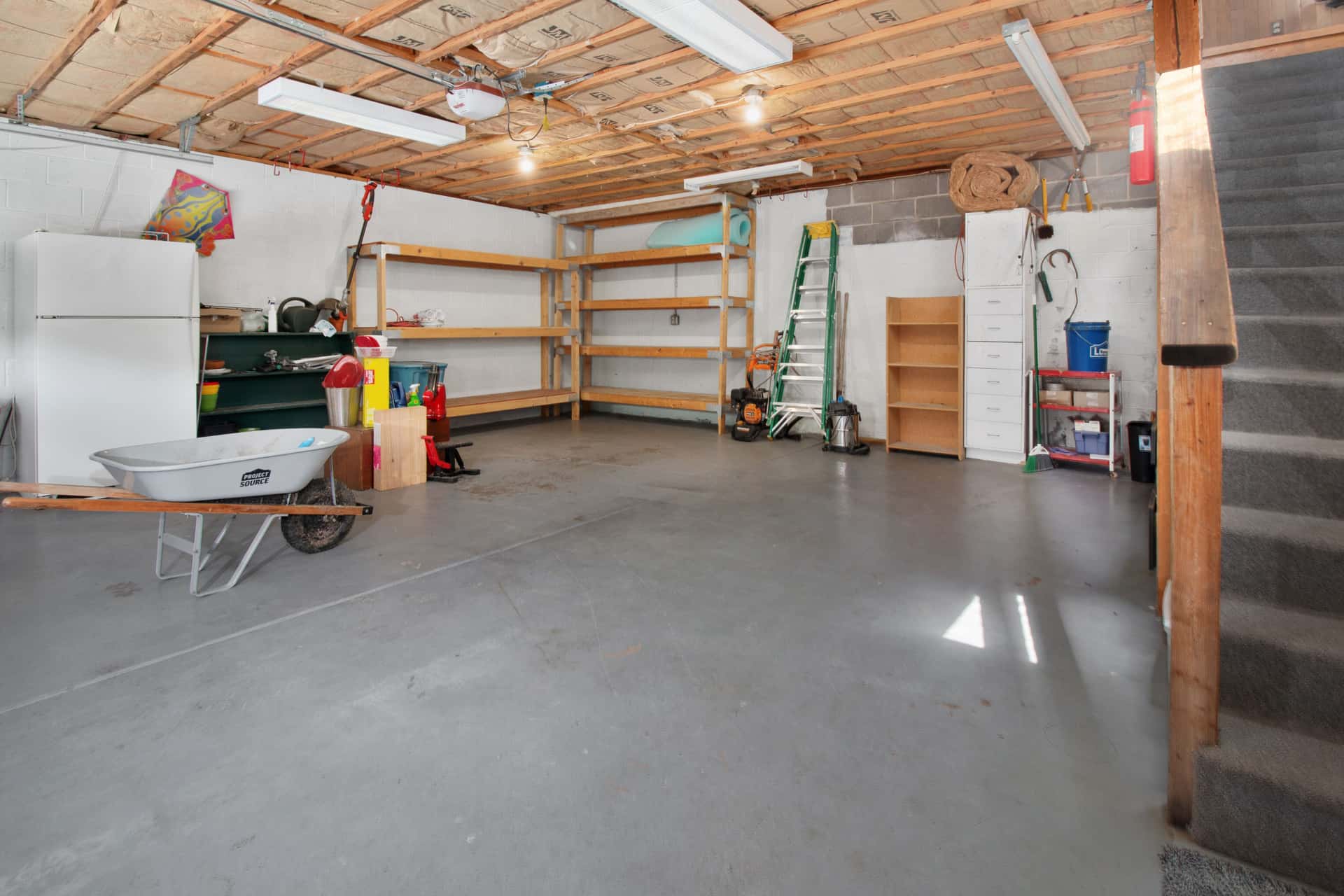
A garage defeats air conditioning by design: uninsulated, a huge uninsulated door, and it opens directly to outside. Stop trying to hold a temperature and move air instead.
By Sawyer V. · Published
The short answer
Do not try to hold a temperature — a garage leaks too much. In a dry climate, an evaporative cooler is the answer: 3,100 CFM on 250 W, and the open door provides the ventilation it needs. In a humid climate, a high-velocity air mover aimed at you. And insulate the door — it is the biggest single heat source.
Fan & Frost earns a commission when you buy through our links, at no cost to you. It never changes a ranking, and we say so when the right answer is the cheaper unit or nothing at all. Full disclosure · How we pick.
At a glance
The picks, ranked
Tap any row to jump to the full reasoning. Prices are live from Amazon where we have them, and read “check price” where we don’t — never a number we cannot verify today.
| # | Product | Best for | Price |
|---|---|---|---|
| 1 | 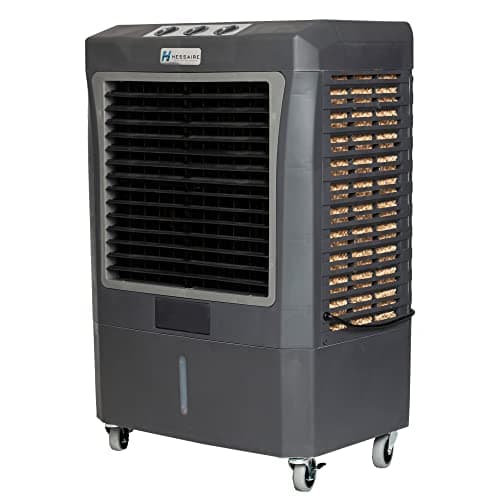 Best in a dry climate Hessaire MC37M Mobile Evaporative Cooler 3,100 CFM on 250 W and a 10.3 gallon tank — the open door supplies exactly the ventilation this needs. | A garage with the door open, below about 40% humidity | |
| 2 | 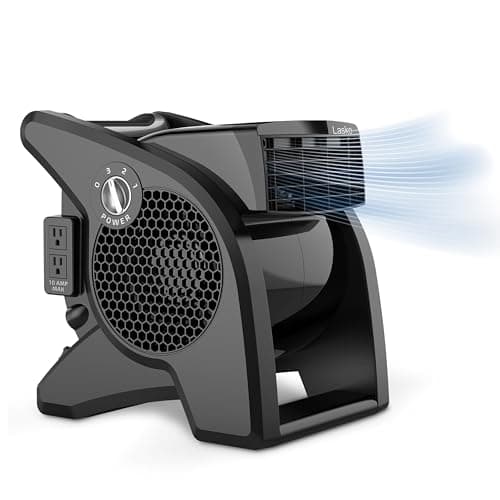 Best in a humid climate Lasko Max Performance 15" Air Mover 160-178 W of directed high-velocity air, with two accessory outlets and a 9.5 ft cord — built for exactly this room. | A garage where evaporative cooling cannot work | |
| 3 | Cheapest way to exhaust the heat Lasko Power Plus 20" Box Fan A weather-resistant motor at 102 W, put in a window or propped in a side door to exhaust hot air. | Getting hot air out of a garage that has a window or side door | |
| — | The one to skip Whynter ARC-14S Dual Hose Portable Air Conditioner 1,300 W trying to hold a temperature in a space with an uninsulated door the size of a wall. | A sealed insulated room, which a garage is not |
A garage defeats air conditioning by construction, and understanding why saves you from the most expensive mistake in this category.
Why AC fails here
Four reasons refrigeration is the wrong tool
- It is uninsulated. Garages typically have bare stud walls, an uninsulated ceiling and no insulation in the roof above. Heat enters continuously through every surface.
- The door is a wall-sized uninsulated panel. A steel garage door in afternoon sun becomes a large radiant heater facing into the space. This is usually the single biggest heat source and it is the one people never address.
- It opens directly to outside, and you will open it. Every time you do, all the conditioned air leaves.
- It is often bigger than you think. A two-car garage is around 400 sq ft with a 9 or 10 foot ceiling — more volume than a large living room.
So stop trying to hold a temperature and move air instead. That is not a compromise; it is the correct approach for a leaky space, and it is what the picks above do.
Step zero
Insulate the door first
Before you buy any cooling at all, this is the highest-value intervention in a garage and it is rarely mentioned.
An uninsulated steel garage door in direct sun reaches very high surface temperatures and radiates that heat into the space all afternoon — and, like attic heat radiating downward, radiant heat is not something a fan can address. You are being warmed by a hot surface, not by hot air.
Garage door insulation kits are inexpensive, are a genuine DIY job, and make more difference than any single piece of equipment you can plug in. If the door faces south or west, treat it as step zero.
Insulating the ceiling, if there is unconditioned space above, is the next best structural move for the same reason.
The choice
Then let your climate decide
| Afternoon humidity | Use | Power | 30 × 8 hrs |
|---|---|---|---|
| Under 40% | Evaporative cooler, door open | 250 W | $11 |
| 40–60% | Marginal — try an air mover first | 178 W | $7.83 |
| Over 60% | High-velocity air mover aimed at you | 178 W | $7.83 |
Wattages from manufacturer pages; costs are our arithmetic at 18.34¢/kWh. Check your humidity at 3–5pm on a hot day, not in the morning.
The two-minute humidity check is here, and it is worth doing properly — morning humidity readings dramatically overstate how humid the air will be when you are actually working.
Sizing
How much airflow a garage needs
There is no BTU calculation here, because you are not holding a temperature. The useful measure is air changes per hour.
Floor area × ceiling height × 35 air changes ÷ 60 = CFM needed.
- Single car, 12 × 20 × 9 ft = 2,160 cu ft → about 1,260 CFM
- Two car, 20 × 20 × 9 ft = 3,600 cu ft → about 2,100 CFM
- Large two car, 24 × 24 × 10 ft = 5,760 cu ft → about 3,360 CFM
So a 3,100 CFM unit comfortably covers a standard two-car garage. A 764 CFM indoor evaporative cooler does not reach even a single-car garage, which is why small units are a false economy here.
Say the unwelcome thing
Do not buy a portable air conditioner for a garage.
It is the most common and most expensive mistake in this room, and it fails on both capacity and physics.
A 14,000 BTU portable is DOE-rated as low as 9,500 BTU SACC, which suits roughly 400 sq ft of insulated room. A two-car garage is that floor area with no insulation, a higher ceiling and a wall-sized door. The unit will run continuously at 1,300 W — $57 for thirty eight-hour days — and never reach its set point.
Worse, a single-hose portable depressurizes the space and pulls hot outside air in through every gap, and a garage is nothing but gaps.
This one is not a DIY job
A mini-split is the one refrigeration option that makes sense in a garage, and only if you insulate first — walls, ceiling and door. It puts the compressor outside, is efficient and quiet, and can hold a temperature in a space that has been properly sealed.
Installation is licensed work involving refrigerant handling and electrical connections. Insulating a garage before installing one is not optional; without it you are buying an expensive machine to cool the outdoors.
Practical
Getting the most from what you have
- Cross-flow, not circulation. Air in one side, out the other. Main door open and a side door or window open opposite is worth more than any single fan positioned cleverly.
- Aim at yourself, not the space. In a garage you are cooling a person doing a task, not a room. Point the airflow at the bench.
- Work early or late. Free, and the largest effect available. A garage lags outdoor temperature by hours, so early morning is far better than early evening.
- Park the car outside on hot days. A car that has been driven is a substantial heat source parked in an enclosed space.
- Move heat-producing tools out, or run them with the door open. Compressors, welders and chargers all dump their power into the room as heat.
In full
Every pick, and what is wrong with it
Published specifications only, each linked to the page it came from. Where a manufacturer publishes nothing, the row says so — we do not fill blanks in.
1. Best in a dry climate
Hessaire MC37M Mobile Evaporative Cooler
Hessaire · model MC37M
3,100 CFM on 250 W and a 10.3 gallon tank — the open door supplies exactly the ventilation this needs.
A garage with the door up is the ideal application for evaporative cooling, because the one thing these units need — continuous airflow out of the space — is already there.
3,100 CFM on 250 W is 12.4 CFM per watt, the best ratio we found. In a garage, airflow is what matters: you are not holding a temperature in a sealed box, you are pushing a continuous stream of cooled air through a large leaky space and out the door.
The 10.3 gallon tank runs a working day without interruption, and it takes a continuous water connection if there is a tap nearby. About 37¢ for an eight-hour day at 18.34¢/kWh.
A concrete floor, a tap and usually a drain make the water side trivial here in a way it is not indoors. The garage-specific sizing math is here.
What’s wrong with it
Useless above about 60% relative humidity, and no larger unit fixes that. Hessaire publishes no noise figure or speed count, and a full unit is heavy to reposition.
Running cost — MC37M
| Nameplate power | 250 W | manufacturer's published figure |
|---|---|---|
| Energy, 8-hour night | 2.00 kWh | 250 ÷ 1000 × 8 |
| Cost per hour | 4.6¢ | at 18.34¢/kWh |
| Cost per 8-hour night | 37¢ | on the highest speed |
| Cost per 30 nights | $11 | 60.0 kWh |
Rate: 18.34¢/kWh, the US average residential price for June 2026 (EIA Electric Power Monthly, Table 5.3). Yours will differ — swap it in: (watts ÷ 1000) × hours × your rate.
| Air delivery | 3,100 CFM |
|---|---|
| Power | 250 W / 2.4 A |
| Water tank | 10.3 gallons, continuous hookup capable |
| Dimensions | 24 L x 16 W x 38 H in |
| Weight | 40 lb |
| Pads | Industrial-grade cooling pads |
| Coverage claim | Not published on the product page |
Every figure above is from Hessaire product page, MC37M. Blanks are shown as “not published” rather than filled in.
2. Best in a humid climate
Lasko Max Performance 15" Air Mover
Lasko · model U15720
160-178 W of directed high-velocity air, with two accessory outlets and a 9.5 ft cord — built for exactly this room.
In Houston or Atlanta an evaporative cooler is a fan that makes you damp. This is at least honest about being a fan, and in humid air a hard directed airstream is the most effective thing available — it speeds evaporation of your own sweat, which is the same physics with your body supplying the water.
160–178 W published, so about $7.83 for thirty eight-hour days.
Two details that matter here and nowhere else: two 120 V accessory outlets on the unit and a 9.5-foot cord. A garage with one badly placed socket is the normal case, and a fan you can plug a tool into is genuinely useful. The pivoting head aims it where you are working.
12.55 lb, so it moves around the bench with you.
What’s wrong with it
It cannot lower the air temperature at all. Lasko publishes no CFM for it either, which is a gap on a machine sold on airflow.
Running cost — U15720
| Nameplate power | 160 W – 178 W | manufacturer's published figure |
|---|---|---|
| Energy, 8-hour night | 1.42 kWh | 178 ÷ 1000 × 8 |
| Cost per hour | 3.3¢ | at 18.34¢/kWh |
| Cost per 8-hour night | 26¢ | on the highest speed |
| Cost per 30 nights | $7.83 | 42.7 kWh |
| Same month, lowest speed | $7.04 | at 160 W |
Rate: 18.34¢/kWh, the US average residential price for June 2026 (EIA Electric Power Monthly, Table 5.3). Yours will differ — swap it in: (watts ÷ 1000) × hours × your rate.
| Power | 160 W - 178 W (1.35-1.53 A at 120 V) |
|---|---|
| Speeds | 3 |
| Dimensions | 14.5 H x 14.0 D x 11.5 W in |
| Weight | 12.55 lb |
| Extras | Two 120 V accessory outlets, 9.5 ft cord, pivoting head |
| Air delivery (CFM) | Not published |
| Warranty | 1 year |
Every figure above is from Lasko product page, U15720. Blanks are shown as “not published” rather than filled in.
3. Cheapest way to exhaust the heat
Lasko Power Plus 20" Box Fan
Lasko · model B20801
A weather-resistant motor at 102 W, put in a window or propped in a side door to exhaust hot air.
A garage traps heat all afternoon and holds it. If yours has a window or a side door, exhausting that accumulated air is often the highest-value cheap move — especially at the end of the day when the outside air has dropped.
The weather-resistant motor is the relevant specification. This fan will live somewhere dusty and occasionally damp, and an indoor-rated motor has a short life in a garage. 2-year warranty.
73–102 W — $4.49 for thirty eight-hour periods. Combine it with the main door open on the opposite side for a genuine cross-flow.
Same rule as everywhere: only exhaust once the outside air is genuinely cooler.
What’s wrong with it
73-102 W and no published CFM. It also needs somewhere to sit — a garage window or side door — which not every garage has.
Running cost — B20801
| Nameplate power | 73 W – 102 W | manufacturer's published figure |
|---|---|---|
| Energy, 8-hour night | 0.82 kWh | 102 ÷ 1000 × 8 |
| Cost per hour | 1.9¢ | at 18.34¢/kWh |
| Cost per 8-hour night | 15¢ | on the highest speed |
| Cost per 30 nights | $4.49 | 24.5 kWh |
| Same month, lowest speed | $3.21 | at 73 W |
Rate: 18.34¢/kWh, the US average residential price for June 2026 (EIA Electric Power Monthly, Table 5.3). Yours will differ — swap it in: (watts ÷ 1000) × hours × your rate.
| Power | 73 W - 102 W (0.6-0.9 A at 120 V) |
|---|---|
| Speeds | 3 |
| Dimensions | 21.25 H x 22.5 x 4.75 in |
| Weight | 10.1 lb |
| Motor | Weather-resistant |
| Air delivery (CFM) | Not published |
| Warranty | 2 years |
Every figure above is from Lasko product page, B20801. Blanks are shown as “not published” rather than filled in.
Skip this one
Whynter ARC-14S Dual Hose Portable Air Conditioner
Whynter · model ARC-14S
1,300 W trying to hold a temperature in a space with an uninsulated door the size of a wall.
This is a capable machine, and a garage is the wrong room for it in a way that no amount of capacity fixes.
An air conditioner works by removing heat from a space faster than heat enters it. A garage is uninsulated, usually has an uninsulated roof, and has a door the size of a wall with gaps around it. Heat enters continuously and fast. Even with the door shut you are fighting a losing battle; with it open you are cooling the street.
1,300 W — $57 for thirty eight-hour days, which is five times the evaporative cooler for a result you will not notice.
And its 9,500 BTU SACC suits about 400 sq ft of insulated room. A two-car garage is 400 sq ft of uninsulated space with a wall-sized door. The SACC explanation is here.
What’s wrong with it
9,500 BTU SACC in an uninsulated space with a huge door is nowhere near enough, and 1,300 W to achieve nothing is the most expensive mistake available here.
Running cost — ARC-14S
| Nameplate power | 1300 W | manufacturer's published figure |
|---|---|---|
| Energy, 8-hour night | 10.40 kWh | 1300 ÷ 1000 × 8 |
| Cost per hour | 24¢ | at 18.34¢/kWh |
| Cost per 8-hour night | $1.91 | on the highest speed |
| Cost per 30 nights | $57 | 312.0 kWh |
Rate: 18.34¢/kWh, the US average residential price for June 2026 (EIA Electric Power Monthly, Table 5.3). Yours will differ — swap it in: (watts ÷ 1000) × hours × your rate.
| Marketing capacity | 14,000 BTU (ASHRAE-128) |
|---|---|
| DOE-rated capacity | 9,500 BTU SACC |
| Hoses | Dual |
| Power | 1,300 W / 11.6 A at 115 V |
| Noise | Under 51 dBA low, under 56 dBA high |
| Dehumidification | 71 pints/day |
| Refrigerant | R-32 |
| Dimensions | 16 W x 19 D x 35.5 H in |
| Weight | 73 lb |
| Manufacturer coverage claim | 500 sq ft |
| Warranty | 1 year unit, 3 years compressor |
Every figure above is from Whynter product page, ARC-14S. Blanks are shown as “not published” rather than filled in.
We are not linking a buy button for this one. If you want to look at it anyway, it is easy enough to find — but we would rather send you to something that fits your room.
Questions people actually ask
Frequently asked
What is the best way to cool a garage?
Insulate the door first, then move air rather than trying to hold a temperature. In a dry climate an evaporative cooler is ideal because the open door provides the ventilation it needs. In a humid climate, a high-velocity air mover aimed at where you are working.
Can I use a portable air conditioner in a garage?
It will not work well. A garage is uninsulated with a wall-sized uninsulated door, so heat enters continuously — an air conditioner will run at full power and never reach its set point. A 14,000 BTU portable is DOE-rated as low as 9,500 SACC, which suits about 400 sq ft of insulated room.
What size evaporative cooler for a two-car garage?
About 2,100 CFM for a 20 by 20 garage with a 9 ft ceiling. Multiply floor area by ceiling height, multiply by roughly 35 air changes per hour, and divide by 60. A 3,100 CFM unit covers that comfortably; a 764 CFM indoor unit does not reach even a single-car garage. The garage picks.
Does insulating a garage door help with heat?
Substantially, and it is the most overlooked step. An uninsulated steel door in afternoon sun becomes a large radiant heater facing into the space — and radiant heat is not something a fan can address. Insulation kits are inexpensive and a genuine DIY job.
How much does it cost to cool a garage?
Very little, if you use the right tool. An evaporative cooler at 250 W costs about $11 for thirty eight-hour days, and an air mover at 178 W about $7.83. A 1,300 W portable air conditioner would cost $57 and still not hold a temperature.
Is a mini-split worth it for a garage?
Only if you insulate the walls, ceiling and door first. A mini-split is efficient, quiet and puts the compressor outside, so it is the one refrigeration option that makes sense here — but in an uninsulated garage it is an expensive way to cool the outdoors. Installation is licensed work.
Sources
Where these numbers came from
- Hessaire MC37M specifications — 3,100 CFM, 250 W, 10.3 gal
- Lasko U15720 air mover specifications — 160-178 W, two accessory outlets
- Lasko B20801 box fan specifications — 73-102 W, weather-resistant motor
- Whynter ARC-14S specifications — 1,300 W, 9,500 BTU SACC
- EIA Electric Power Monthly, Table 5.3 — electricity rate
Read next
Where to go from here
Back to Room Cooling, or read how we pick.