Guide and picks
How to cool a bedroom, in order of what actually works
Ranked by how much each step actually does, cheapest first. Most bedrooms are solvable for most of the season before you get to step five.
By Sawyer V. · Published
The short answer
In order: close the blinds during the day (free, and it beats every fan); exhaust hot air once the evening is cooler than the room (31 W); a quiet fan on you, not the room (19 W); then, if that is genuinely not enough, a correctly sized window unit — 6,000 BTU for a typical bedroom, not 8,000.
Fan & Frost earns a commission when you buy through our links, at no cost to you. It never changes a ranking, and we say so when the right answer is the cheaper unit or nothing at all. Full disclosure · How we pick.

At a glance
The picks, ranked
Tap any row to jump to the full reasoning. Prices are live from Amazon where we have them, and read “check price” where we don’t — never a number we cannot verify today.
| # | Product | Best for | Price |
|---|---|---|---|
| 1 | Step 2 — exhaust the heat Lasko Twin Window Fan with Remote The only thing here that genuinely lowers the room's temperature without a compressor, for 31 W. | Any bedroom with a 24-32 inch sash window | |
| 2 | 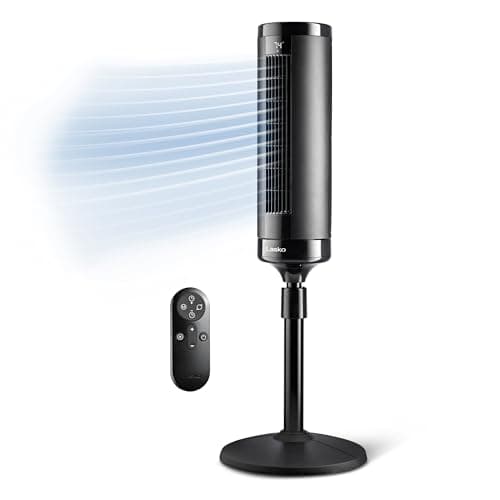 Step 3 — air on you Lasko EcoQuiet 42" DC Tower Fan 23 dBA published and 2.9 W on low — the specifications a bedroom fan should actually be chosen on. | Sleeping, in a room that is warm rather than hot | |
| 3 | 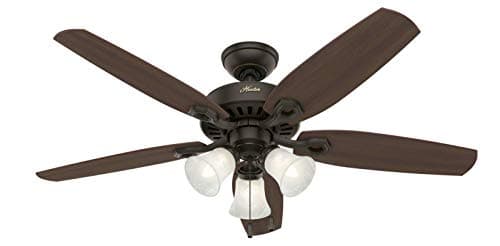 Step 4 — if you own the room Hunter Vespucci 52" Ceiling Fan 1.8 W on low at a certified 366.7 CFM per watt. The cheapest cooling that exists, by a factor of about fifty. | A bedroom you own, with a ceiling that takes a fan | |
| 4 | Step 5 — when the fan is genuinely not enough Midea U-Shaped Window Air Conditioner, 6,000 BTU 6,000 BTU is the right size for a typical bedroom, and 298 kWh a year is the lowest running cost of any AC on this site. | A bedroom up to about 250 sq ft with a vertical sash window | |
| — | The one to skip beside a bed Lasko Power Plus 20" Box Fan 102 W and no published noise figure, bought for white noise it does not produce well. | A window, not a nightstand |
A hot bedroom is the most common problem this site exists for, and it is usually solvable in stages. What follows is ordered by how much each step actually does per dollar, not by how satisfying it feels to buy something.
Work down the list. A lot of bedrooms never need step five.
Step one
Close the blinds during the day. Free, and it beats every fan here.
A bedroom that is unbearable at 10pm was usually heated at 3pm. Sun through glass deposits heat into the walls, the floor, the mattress and the furniture, and that mass releases it slowly all evening. By the time you are trying to sleep, you are not fighting the air temperature — you are fighting a room that has been storing heat for six hours.
Closing a blind or curtain before the sun hits the window prevents that heat arriving at all, which is categorically better than removing it afterwards. It costs nothing, it requires no purchase, and in a south or west-facing bedroom it makes more difference than any fan on this page.
Light-colored, reflective or blackout material works best, and the outside of the glass is better than the inside if you have external shutters or an awning — once the heat is through the glass, a curtain is intercepting it late.
Step two
Exhaust the heat once the evening air is cooler
This is the only step that genuinely lowers the room’s temperature without a compressor, and the rule is strict:
Check that the outdoor temperature is actually below your indoor temperature. With a thermometer, not by feel.
Evening air feels cool long before it is cool. The light changes, there is a breeze, and it is still 86°F while your bedroom is 82°F. Opening up at that point actively makes things worse, and it is the most common mistake in no-AC cooling. In many climates the crossover is 9 or 10pm rather than dusk.
Once it has crossed over, put a fan in the window blowing out, and open another window elsewhere in the house. Hot air collects high, so exhausting from an upstairs bedroom pulls cooler air in from below and drags it through. The full window-fan method is here.
Step three
Then a fan on you, not on the room
A fan does not lower the temperature of a room; its motor adds a small amount of heat. What it does is move air across your skin, speeding evaporation and stripping off the warm layer sitting against you. That is worth several degrees of perceived temperature — enough that many people raise a thermostat by 4°F with a fan running and notice no difference.
Which means: aim it at yourself. A fan pointed at the middle of the room is decorative. A fan running in an empty room is doing nothing at all.
Three things that matter more than the fan you choose:
- No oscillation overnight. Steady sound disappears within minutes; changing sound never does. A constant 40 dBA beats an intermittent 30.
- Lowest usable speed. On a DC fan the power curve is steep — 2.9 W on low against 19 W on high — and the low setting is usually enough once the fan is aimed properly.
- Close, not powerful. A small fan two feet away delivers more air at your skin than a big one across the room, for a fraction of the watts.
Step four
A ceiling fan, if you own the room
1.8 W on low. That is the number that makes this worth a paragraph of its own. A certified ceiling fan is roughly fifty times cheaper to run than a box fan for comparable comfort, uses no floor space, cannot be knocked over, and distributes air across the whole bed from above.
If you own the bedroom and the ceiling can take one, it is the best cooling purchase available to you, and it is not close. The certified ranking is here.
Step five
Only then, an air conditioner — sized correctly
If the room is genuinely hot rather than warm — and above roughly 95°F, moving air stops helping at all, because air hotter than your skin adds heat faster than the extra evaporation removes it — then you need something that removes heat.
Size it from the room, not from the shelf. The ENERGY STAR table:
- 100–150 sq ft (10×12, 12×12): 5,000 BTU
- 150–250 sq ft (12×14, 12×16): 6,000 BTU
- 250–300 sq ft: 7,000 BTU
Then +10% if the room is very sunny, −10% if heavily shaded, and +600 BTU per person beyond two. The full sizing walkthrough is here.
Say the unwelcome thing
Do not buy 8,000 BTU for a bedroom because it is the common size.
Almost every bedroom wants 5,000 or 6,000 BTU, and 8,000 is what sells. Oversizing is not a safety margin — it is a comfort problem.
An air conditioner removes moisture only while it is actually running. An oversized unit hits the set temperature in minutes, shuts off, and never runs long enough to dehumidify. The thermometer reads 70°F and the room feels like a cellar. Then it short-cycles, which wastes energy and is hard on the compressor — and each restart is exactly the kind of intermittent noise that wakes people.
ENERGY STAR states it plainly: an oversized air conditioner “costs more to purchase, wastes energy and does not provide better cooling.”
What it all costs
The whole ladder, in dollars
| Step | Power | Cost to run |
|---|---|---|
| 1. Close the blinds | 0 W | Free |
| 2. Window fan, exhaust | 31 W | $1.36 / month of nights |
| 3. DC tower fan, low | 2.9 W | 13¢ / month of nights |
| 4. Ceiling fan, low | 1.8 W | 7.9¢ / month of nights |
| 5. 6,000 BTU window AC | 298 kWh/yr | $55 / YEAR |
| (Skip) Box fan, high | 102 W | $4.49 / month of nights |
Wattages from manufacturer pages and ENERGY STAR certified data; costs are our arithmetic at 18.34¢/kWh.
The striking row is the last one. A box fan on a nightstand costs more per month than a certified window air conditioner costs per year — and it does not lower the temperature at all.
In full
Every pick, and what is wrong with it
Published specifications only, each linked to the page it came from. Where a manufacturer publishes nothing, the row says so — we do not fill blanks in.
1. Step 2 — exhaust the heat
Lasko Twin Window Fan with Remote
Lasko · model W09550
The only thing here that genuinely lowers the room's temperature without a compressor, for 31 W.
Every other fan on this page makes you feel cooler. This one actually lowers the room temperature, by swapping hot indoor air for cooler outdoor air.
22–31 W, up to 560 CFM, with two independently controlled motors — so in a bedroom with one window you can run one motor exhausting and one drawing in, and get a genuine exchange through a single opening. That is the feature that matters here.
The adjustable thermostat is the second one. Without it you wake at 4am in a cold room because the fan has been pulling in night air for six hours. Set it and it stops when the room reaches temperature.
About $1.36 for a month of nights at 18.34¢/kWh. The discipline it requires: check a thermometer, not the feel of the air. Evening air feels cool long before it is cooler than your bedroom, and opening up too early makes the room hotter.
What’s wrong with it
It only works once the outside air is actually cooler than the inside air, which in many climates is 9 or 10pm rather than dusk. Fits windows 24-32 inches wide and no others.
Running cost — W09550
| Nameplate power | 22 W – 31 W | manufacturer's published figure |
|---|---|---|
| Energy, 8-hour night | 0.25 kWh | 31 ÷ 1000 × 8 |
| Cost per hour | 0.6¢ | at 18.34¢/kWh |
| Cost per 8-hour night | 4.5¢ | on the highest speed |
| Cost per 30 nights | $1.36 | 7.4 kWh |
| Same month, lowest speed | 97¢ | at 22 W |
Rate: 18.34¢/kWh, the US average residential price for June 2026 (EIA Electric Power Monthly, Table 5.3). Yours will differ — swap it in: (watts ÷ 1000) × hours × your rate.
| Power | 22 W - 31 W at 120 V |
|---|---|
| Air delivery | Up to 560 CFM |
| Window fit | 24 - 32 in wide |
| Modes | Intake, exhaust or exchange (independent motors) |
| Thermostat | Adjustable |
| Speeds | 3 |
| Dimensions | 12.9 H x 24.0 W x 4.9 D in |
| Weight | 8.0 lb |
| Warranty | 1 year |
Every figure above is from Lasko product page, W09550. Blanks are shown as “not published” rather than filled in.
2. Step 3 — air on you
Lasko EcoQuiet 42" DC Tower Fan
Lasko · model T42710
23 dBA published and 2.9 W on low — the specifications a bedroom fan should actually be chosen on.
23 dBA on low, 46 on high, both published — which almost nothing else in this category gives you. 2.9 W to 19 W, so about 13¢ for a month of eight-hour nights on low.
Twelve speeds is the underrated part for sleeping. A three-speed fan often has nothing usable between not enough air and too much noise; twelve steps lets you sit exactly on the boundary.
Aim it at yourself, not at the room, and do not use oscillation overnight — your hearing habituates to steady sound within minutes but never to change, so a constant 40 dBA is easier to sleep through than an intermittent 30. More on that here.
What’s wrong with it
It does not lower the room's temperature at all, and above roughly 95°F moving air stops helping. Lasko publishes no CFM for it either.
Running cost — T42710
| Nameplate power | 2.9 W – 19 W | manufacturer's published figure |
|---|---|---|
| Energy, 8-hour night | 0.15 kWh | 19 ÷ 1000 × 8 |
| Cost per hour | 0.3¢ | at 18.34¢/kWh |
| Cost per 8-hour night | 2.8¢ | on the highest speed |
| Cost per 30 nights | 84¢ | 4.6 kWh |
| Same month, lowest speed | 13¢ | at 2.9 W |
Rate: 18.34¢/kWh, the US average residential price for June 2026 (EIA Electric Power Monthly, Table 5.3). Yours will differ — swap it in: (watts ÷ 1000) × hours × your rate.
| Power | 2.9 W - 19 W (0.06-0.303 A at 120 V) |
|---|---|
| Noise | 23 dBA low, 46 dBA high |
| Speeds | 12 |
| Height | 41.6 in |
| Footprint | 12.8 x 12.8 in |
| Weight | 7.8 lb |
| Timer | 8 hours |
| Air delivery (CFM) | Not published |
| Warranty | 2 years |
Every figure above is from Lasko product page, T42710. Blanks are shown as “not published” rather than filled in.
3. Step 4 — if you own the room
Hunter Vespucci 52" Ceiling Fan
Hunter · model Vespucci
1.8 W on low at a certified 366.7 CFM per watt. The cheapest cooling that exists, by a factor of about fifty.
366.7 CFM per watt certified, 13.9 W on high, 1.8 W on low. A month of eight-hour nights on low costs about 7.9¢.
Read that against the tower fan at 13¢ and the box fan at $4.49. It is roughly fifty times cheaper than a box fan for comparable comfort in a bedroom, and the reason is geometry: a 52-inch blade turning slowly moves far more air per watt than a small impeller turning fast.
It also uses no floor space, cannot be knocked over, and puts the airflow above everything so it reaches the whole bed.
Check the direction after installing: counterclockwise seen from below, pushing air down. It takes ten seconds and it is the most common thing people get wrong.
What’s wrong with it
A permanent wired installation needing 7 ft of clearance below the blades, which rules it out in most rentals and in rooms with 8 ft ceilings unless you use a flush mount.
Running cost — Vespucci
| Nameplate power | 1.8 W – 13.9 W | manufacturer's published figure |
|---|---|---|
| Energy, 8-hour night | 0.11 kWh | 13.9 ÷ 1000 × 8 |
| Cost per hour | 0.3¢ | at 18.34¢/kWh |
| Cost per 8-hour night | 2.0¢ | on the highest speed |
| Cost per 30 nights | 61¢ | 3.3 kWh |
| Same month, lowest speed | 7.9¢ | at 1.8 W |
Rate: 18.34¢/kWh, the US average residential price for June 2026 (EIA Electric Power Monthly, Table 5.3). Yours will differ — swap it in: (watts ÷ 1000) × hours × your rate.
| Blade span | 52 in |
|---|---|
| Efficiency | 366.7 CFM per watt |
| Power, high speed | 13.9 W |
| Power, low speed | 1.8 W |
| Standby power | 0.8 W |
| Type | Indoor, fan only (no light kit) |
| Warranty | 3 years, components |
| ENERGY STAR | Certified |
Every figure above is from ENERGY STAR Certified Ceiling Fans dataset. Blanks are shown as “not published” rather than filled in.
4. Step 5 — when the fan is genuinely not enough
Midea U-Shaped Window Air Conditioner, 6,000 BTU
Midea · model MAW06V1QWT
6,000 BTU is the right size for a typical bedroom, and 298 kWh a year is the lowest running cost of any AC on this site.
6,000 BTU, not 8,000. A 12×14 bedroom is 168 sq ft, which the ENERGY STAR table puts squarely at 6,000. Most people buy 8,000 because it is the volume size on the shelf, and oversizing is actively worse: the unit reaches temperature before it has removed any humidity, shuts off, and leaves the room cold and clammy while short-cycling.
298 kWh a year — about $55 at 18.34¢/kWh for an entire cooling season, from a certified figure. It is on the ENERGY STAR Most Efficient list.
The U-shape is what makes it a bedroom unit specifically. The sash closes down through the middle of the machine, so the compressor sits outside a closed window with the glass between it and your pillow. No bracket, no drilling, and the window still opens — which is usually what a lease objects to.
What’s wrong with it
53.1 lb is a two-person lift for most people, and the U-shape only fits single-hung or double-hung sash windows — not casements or sliders.
Running cost — MAW06V1QWT
| Annual energy use | 298 kWh | ENERGY STAR certified figure |
|---|---|---|
| Annual cost | $55 | 298 × 18.34¢/kWh |
| Per cooling month | $14 | spread over a four-month season |
The annual figure is the certified value from the ENERGY STAR Certified Room Air Conditioners dataset, which models a standard cooling season rather than your actual summer. It is more useful than a nameplate wattage here, because a variable-speed compressor spends most of its life well below nameplate.
Rate: 18.34¢/kWh, the US average residential price for June 2026 (EIA Electric Power Monthly, Table 5.3). Yours will differ — swap it in: (watts ÷ 1000) × hours × your rate.
| Cooling capacity | 6,000 BTU/h |
|---|---|
| CEER | 15.1 |
| Annual energy use | 298 kWh/yr |
| vs federal standard | 37% less energy |
| Dimensions | 13.5 H x 19.2 W x 22.0 D in |
| Weight | 53.1 lb |
| Refrigerant | R-32 |
| Installation | U-shape; sash closes through the middle of the unit |
| Compressor | Variable speed |
| ENERGY STAR | Certified, and on the Most Efficient list |
Every figure above is from ENERGY STAR Certified Room Air Conditioners dataset. Blanks are shown as “not published” rather than filled in.
Skip this one
Lasko Power Plus 20" Box Fan
Lasko · model B20801
102 W and no published noise figure, bought for white noise it does not produce well.
The box fan is the traditional bedroom purchase and it is the wrong one, on both of the things people buy it for.
73–102 W — $4.49 for a month of nights against 13¢ for the tower fan on low. Roughly 35 times the running cost.
And Lasko publishes no decibel figure for it, which for a fan bought largely for its sound is telling. An open 20-inch blade produces turbulent broadband noise, which is not the smooth hiss people find soothing.
It is genuinely excellent in a window, where it does something no bedside fan can. Not beside a pillow.
What’s wrong with it
73-102 W with no published dBA at all, and a 20-inch open-frame blade generates broadband turbulent noise with a rattly edge rather than a smooth hiss.
Running cost — B20801
| Nameplate power | 73 W – 102 W | manufacturer's published figure |
|---|---|---|
| Energy, 8-hour night | 0.82 kWh | 102 ÷ 1000 × 8 |
| Cost per hour | 1.9¢ | at 18.34¢/kWh |
| Cost per 8-hour night | 15¢ | on the highest speed |
| Cost per 30 nights | $4.49 | 24.5 kWh |
| Same month, lowest speed | $3.21 | at 73 W |
Rate: 18.34¢/kWh, the US average residential price for June 2026 (EIA Electric Power Monthly, Table 5.3). Yours will differ — swap it in: (watts ÷ 1000) × hours × your rate.
| Power | 73 W - 102 W (0.6-0.9 A at 120 V) |
|---|---|
| Speeds | 3 |
| Dimensions | 21.25 H x 22.5 x 4.75 in |
| Weight | 10.1 lb |
| Motor | Weather-resistant |
| Air delivery (CFM) | Not published |
| Warranty | 2 years |
Every figure above is from Lasko product page, B20801. Blanks are shown as “not published” rather than filled in.
We are not linking a buy button for this one. If you want to look at it anyway, it is easy enough to find — but we would rather send you to something that fits your room.
Questions people actually ask
Frequently asked
How can I cool my bedroom down quickly at night?
Once the outdoor temperature is genuinely below your indoor temperature, put a fan in the window blowing out and open another window elsewhere in the house. That exchanges hot indoor air for cooler outdoor air and actually lowers the room temperature — which no fan aimed into the room can do.
What size air conditioner do I need for a bedroom?
Usually 5,000 or 6,000 BTU. The ENERGY STAR table puts 100 to 150 sq ft at 5,000 and 150 to 250 sq ft at 6,000, which covers almost every bedroom. Resist buying 8,000 because it is the common size — oversizing leaves the room cold and clammy. The full sizing guide.
Does closing the blinds actually keep a bedroom cooler?
Substantially, and it is the highest-value free step available. Sun through glass deposits heat into walls, floor, mattress and furniture, which then release it slowly all evening. Preventing the heat arriving is categorically better than removing it afterwards.
Should I run a fan with the window open or closed?
It depends on the temperature outside. While it is hotter outside, keep windows and blinds closed and run a fan on yourself. Once the outdoor air is genuinely cooler — check a thermometer, not the feel — open up and exhaust the hot air out with a window fan.
What is the quietest fan for a bedroom?
The Lasko EcoQuiet T42710 publishes 23 dBA on its lowest speed, the lowest figure we found, and offers twelve speeds. More important than the number: avoid oscillation overnight, because steady sound disappears within minutes and changing sound never does. Quiet fans compared.
Is it cheaper to run a fan or an air conditioner in a bedroom?
A fan, dramatically — a DC tower on low costs about 13¢ for a month of nights. But a certified 6,000 BTU window unit uses 298 kWh for a whole year, about $55, which is far less than most people expect. The fan is not a cheaper air conditioner; it does a different job.
Sources
Where these numbers came from
- ENERGY STAR — Room Air Conditioners sizing table and oversizing guidance
- ENERGY STAR Certified Room Air Conditioners dataset — 298 kWh/yr figure
- ENERGY STAR Certified Ceiling Fans dataset — 1.8 W low-speed figure
- Lasko EcoQuiet T42710 specifications — 2.9-19 W, 23 dBA
- Lasko W09550 twin window fan specifications — 22-31 W, 560 CFM, thermostat
- EIA Electric Power Monthly, Table 5.3 — electricity rate
Read next
Where to go from here
Back to Room Cooling, or read how we pick.