Guide and picks
Cooling a mobile or manufactured home
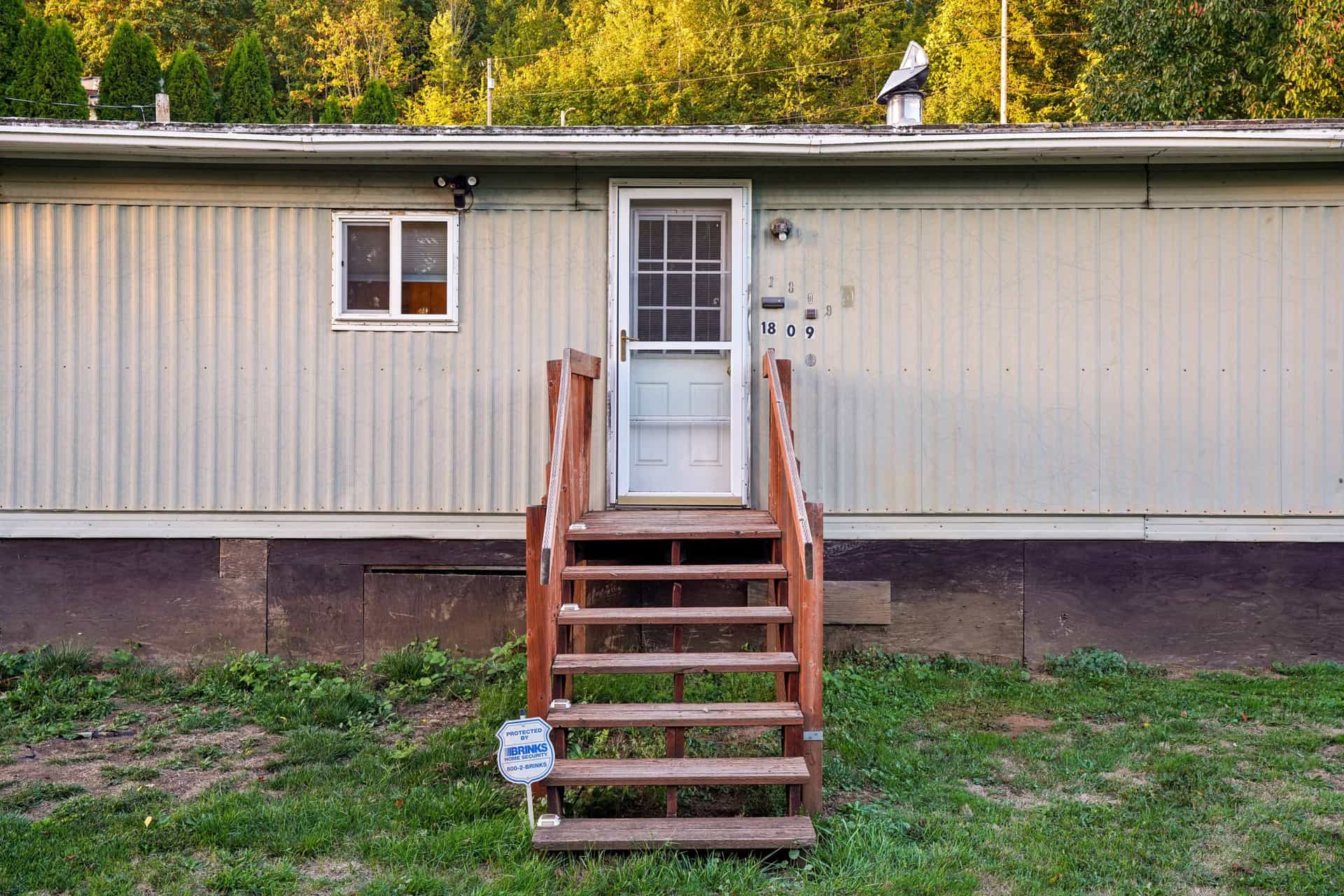
The construction that makes a manufactured home affordable is the same construction that makes it heat up quickly, and both facts point at the same fixes.
By Sawyer V. · Published
The short answer
Three things define this problem: a low-mass roof directly over the living space, thinner wall assemblies than site-built construction, and window openings that many air conditioners do not fit. Measure the opening before buying anything — several certified units need only a 19-inch-wide opening, and the lightest need no support bracket at all.
Fan & Frost earns a commission when you buy through our links, at no cost to you. It never changes a ranking, and we say so when the right answer is the cheaper unit or nothing at all. Full disclosure · How we pick.
At a glance
The picks, ranked
Tap any row to jump to the full reasoning. Prices are live from Amazon where we have them, and read “check price” where we don’t — never a number we cannot verify today.
| # | Product | Best for | Price |
|---|---|---|---|
| 1 | Best overall Midea Window Air Conditioner, 10,000 BTU CEER 16 and 468.8 kWh a year at 47.2 lb, needing no support bracket and only a 19.0-inch-wide opening. | A main living area, in a window frame you do not want to drill | |
| 2 | 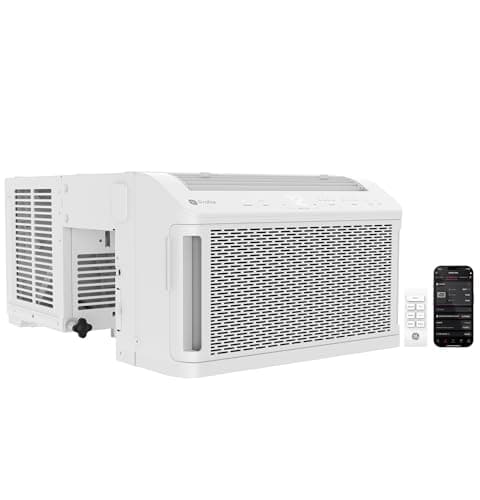 Best for a bedroom GE Profile ClearView Window Air Conditioner, 8,000 BTU CEER 16 and 375 kWh a year at 46.2 lb, in an 18.6-inch-wide body — the smallest certified footprint we hold data for at this efficiency. | A bedroom at the end of the home, sized properly | |
| 3 | Best night purge QuietCool Stealth Pro X Whole House Fan, 3,159 CFM 3,159 CFM on high with a 15-year warranty, to flush the day's heat out of a low-mass structure overnight. | A home where nights are genuinely cooler, with attic access | |
| — | The tempting mistake Whynter ARC-14S Dual Hose Portable Air Conditioner 1,300 W of uncertified cooling, bought because a window unit looked like too much work — which in a leaky structure is the worst possible trade. | A window that genuinely cannot take a mounted unit |
Manufactured homes get treated in cooling advice as though they were small houses. They are not, quite. The construction differs in ways that change which fixes pay back, and generic advice misses most of them.
Why
Why it heats up faster than a site-built house
Four things, and they compound:
- The roof is directly over the living space. Most manufactured homes have a shallow or nonexistent attic cavity, so there is no buffer between the hot roof deck and your ceiling. In a site-built house an attic absorbs and delays that heat; here it arrives.
- Wall assemblies are thinner. Less depth means less insulation, so the rate at which outdoor heat leaks in is higher for the same temperature difference.
- There is less thermal mass. A house with a slab, plaster and masonry stores heat and releases it slowly, which flattens the daily swing. A lightweight structure follows outdoor temperature much more closely — hotter in the afternoon, and cooler at night.
- The floor may be over open air. If the underside is not skirted and insulated, the floor is exposed on both sides to whatever the weather is doing.
The third of those is genuinely useful rather than purely bad. Low mass means the structure responds fast in both directions, which is why night ventilation works unusually well here — the night purge.
Fit
Measure the window before you buy anything
This is the practical failure that sends more units back than any other, and it is entirely avoidable.
Manufactured-home windows are frequently narrower and shorter than site-built ones, and many slide horizontally rather than vertically. A conventional window air conditioner needs a vertically sliding sash to rest on top of it.
| Unit | Width | Height | Weight | Bracket |
|---|---|---|---|---|
| GE ClearView 8,000 BTU | 18.6 in | 12.6 in | 46.2 lb | Required |
| Midea 10,000 BTU (V1WWT) | 19.0 in | 13.6 in | 47.2 lb | Not required |
| TCL 10,000 BTU | 19.8 in | 15.2 in | 49.6 lb | Required |
| GE 10,000 BTU (PWJV10W) | 19.0 in | 14.5 in | 70.1 lb | Required |
Measure three things: the opening width between the jambs, the opening height when the sash is fully up, and how the window opens. If it slides sideways or cranks outward, a conventional unit will not fit and you need a different product entirely — casement and sliding window units.
This one is not a DIY job
Check the bracket question before the efficiency question. A support bracket transfers the unit’s weight to the outside wall, and a manufactured home’s wall section may not be the right thing to hang 50 lb on. Units that need no bracket exist at the top of the certified efficiency range, so this is not a compromise you have to make.
The roof
The roof is where the money is
In a site-built house, windows usually dominate the heat gain. In a manufactured home the roof competes hard, because there is so little between it and you.
The interventions worth knowing about, roughly in order of return per effort:
- Shade whatever you can from outside. An awning, a carport, a porch roof or a tree removes the sun before it reaches the surface. Cheaper and more effective than anything you do indoors — shading and film.
- Ventilate the roof cavity if there is one. Even a shallow cavity benefits from moving air, and a solar-powered vent adds no wiring — solar attic fans.
- Skirt and insulate underneath. Closing the underside stops the floor being a second exposed surface, and it helps in winter as much as in summer.
- Seal the obvious leaks. Around windows, doors, and where services enter. Low-mass, leaky construction rewards this more than a tight house does.
Zoning
Treat it as two or three zones, not one
Manufactured homes are long and narrow, usually with a living area at one end and bedrooms at the other, connected by a corridor. That layout resists whole-home cooling from a single point.
A single large unit in the living area will make that room cold and leave the far bedroom warm, because air does not travel down a corridor without help. Two correctly sized units do the job better and cost less to run than one oversized one.
Where you are not putting a compressor, use air movement to distribute what you have. A fan in the corridor moving air toward the warm end does real work for a couple of watts — where to put a fan, and circulators built for moving air across distance.
Humidity
If the floor is over open ground
A manufactured home on piers with an unsealed underside shares a problem with crawl-space houses: moisture from the ground below finds its way up into the floor assembly and the living space.
That shows up as a home that feels clammy even when the temperature is reasonable, and over time as soft spots in flooring. Skirting helps; a ground vapor barrier underneath helps more; and a dehumidifier addresses the symptom directly — crawl-space dehumidifiers and why humidity makes the same temperature feel worse.
Say the unwelcome thing
Do not buy a unit sized for the whole home.
The instinct in a home that heats fast is to buy the biggest unit that will fit. It is the wrong move twice over.
An oversized unit satisfies its thermostat quickly, shuts off, and never runs long enough to remove humidity — so the living area reads cool and feels clammy, which in a home already prone to moisture is the opposite of helpful.
And it still will not reach the far bedroom, because the problem there is distribution rather than capacity. Size each zone for its own square footage, add the adjustments for sun and ceiling, and use fans to move air between them — sizing, properly.
In full
Every pick, and what is wrong with it
Published specifications only, each linked to the page it came from. Where a manufacturer publishes nothing, the row says so — we do not fill blanks in.
1. Best overall
Midea Window Air Conditioner, 10,000 BTU
Midea · model MAW10V1WWT
CEER 16 and 468.8 kWh a year at 47.2 lb, needing no support bracket and only a 19.0-inch-wide opening.
The combination that matters in a manufactured home: no bracket, a narrow opening, and the top of the certified efficiency range.
No support bracket required at 47.2 lb. That is the decisive spec here, because manufactured-home window frames are often aluminum or vinyl in thin wall sections that a bracket does not want to load — when a bracket is and is not an option.
19.0 inches wide and 13.6 high, which fits a great many manufactured-home openings that a wider unit will not.
CEER 16 and 468.8 kWh a year — about $86 at 18.34¢/kWh, Most Efficient certified, 47% under the federal standard. In a home that will run it hard, that efficiency is the whole bill.
What’s wrong with it
10,000 BTU is a living area, not a whole home, and the certified dataset publishes no noise figure.
Running cost — MAW10V1WWT
| Annual energy use | 468.8 kWh | ENERGY STAR certified figure |
|---|---|---|
| Annual cost | $86 | 468.8 × 18.34¢/kWh |
| Per cooling month | $21 | spread over a four-month season |
The annual figure is the certified value from the ENERGY STAR Certified Room Air Conditioners dataset, which models a standard cooling season rather than your actual summer. It is more useful than a nameplate wattage here, because a variable-speed compressor spends most of its life well below nameplate.
Rate: 18.34¢/kWh, the US average residential price for June 2026 (EIA Electric Power Monthly, Table 5.3). Yours will differ — swap it in: (watts ÷ 1000) × hours × your rate.
| Cooling capacity | 10,000 BTU/h |
|---|---|
| CEER | 16 |
| Annual energy use | 468.8 kWh/yr |
| vs federal standard | 47% less energy |
| Dimensions | 13.6 H x 19.0 W x 18.6 D in |
| Weight | 47.2 lb |
| Refrigerant | R-32 |
| Installation | Does not straddle the windowsill |
| Support bracket | Not required |
| Compressor | Variable speed |
| Noise | Not published in the certified dataset |
| ENERGY STAR | Certified, and on the Most Efficient list |
Every figure above is from ENERGY STAR Certified Room Air Conditioners dataset. Blanks are shown as “not published” rather than filled in.
2. Best for a bedroom
GE Profile ClearView Window Air Conditioner, 8,000 BTU
GE Profile · model PWJV08W
CEER 16 and 375 kWh a year at 46.2 lb, in an 18.6-inch-wide body — the smallest certified footprint we hold data for at this efficiency.
Manufactured homes are long and narrow, which means bedrooms at the ends are often effectively separate cooling zones from the living area.
18.6 inches wide is the narrowest certified body in our set, which matters when the bedroom windows are smaller than the living-room ones — as they usually are.
CEER 16 and 375 kWh a year, about $69 at 18.34¢/kWh, Most Efficient certified.
A support bracket is required. Check what the window frame and the wall behind it can actually carry before ordering — that is a different question in a manufactured home than in a stud wall.
What’s wrong with it
It requires a support bracket, which in a thin wall section needs checking first.
Running cost — PWJV08W
| Annual energy use | 375 kWh | ENERGY STAR certified figure |
|---|---|---|
| Annual cost | $69 | 375 × 18.34¢/kWh |
| Per cooling month | $17 | spread over a four-month season |
The annual figure is the certified value from the ENERGY STAR Certified Room Air Conditioners dataset, which models a standard cooling season rather than your actual summer. It is more useful than a nameplate wattage here, because a variable-speed compressor spends most of its life well below nameplate.
Rate: 18.34¢/kWh, the US average residential price for June 2026 (EIA Electric Power Monthly, Table 5.3). Yours will differ — swap it in: (watts ÷ 1000) × hours × your rate.
| Cooling capacity | 8,000 BTU/h |
|---|---|
| CEER | 16 |
| Annual energy use | 375 kWh/yr |
| vs federal standard | 47% less energy |
| Dimensions | 12.6 H x 18.6 W x 15.3 D in |
| Weight | 46.2 lb |
| Refrigerant | R-32 |
| Installation | Does not straddle the windowsill |
| Compressor | Variable speed |
| ENERGY STAR | Certified, and on the Most Efficient list |
Every figure above is from ENERGY STAR Certified Room Air Conditioners dataset. Blanks are shown as “not published” rather than filled in.
3. Best night purge
QuietCool Stealth Pro X Whole House Fan, 3,159 CFM
QuietCool · model QC STL PRO-3.3X
3,159 CFM on high with a 15-year warranty, to flush the day's heat out of a low-mass structure overnight.
Low-mass construction cuts both ways. A manufactured home heats quickly, and it also cools quickly once you give the heat somewhere to go.
3,159 CFM on high, with published draws of 264 W high and 74.6 W low. That is the smallest of the range and the right scale for this footprint.
Run it on low. Our arithmetic on the published figures gives 26.5 CFM per watt on low against 12.0 on high — 1,980 CFM on 74.6 W against 3,159 CFM on 264 W — the full cost breakdown.
The real limit is structural. Many manufactured homes have a shallow or fully sealed roof cavity with no practical place to mount this. Check before you buy — and whether a whole-house fan suits your house at all.
What’s wrong with it
Many manufactured homes have little or no accessible attic cavity, which rules this out entirely.
Running cost — QC STL PRO-3.3X
| Nameplate power | 74.6 W – 264 W | manufacturer's published figure |
|---|---|---|
| Energy, 8-hour night | 2.11 kWh | 264 ÷ 1000 × 8 |
| Cost per hour | 4.8¢ | at 18.34¢/kWh |
| Cost per 8-hour night | 39¢ | on the highest speed |
| Cost per 30 nights | $12 | 63.4 kWh |
| Same month, lowest speed | $3.28 | at 74.6 W |
Rate: 18.34¢/kWh, the US average residential price for June 2026 (EIA Electric Power Monthly, Table 5.3). Yours will differ — swap it in: (watts ÷ 1000) × hours × your rate.
| Air delivery, high | 3,159 CFM |
|---|---|
| Air delivery, low | 1,980 CFM |
| Power, high | 264 W |
| Power, low | 74.6 W |
| Coverage claim | 1,053 - 1,580 sq ft |
| Motor | ECM |
| Warranty | 15 years |
| Noise | Not published as sones or dBA |
| ENERGY STAR | No program exists for whole-house fans |
Every figure above is from QuietCool Stealth Pro X specification sheet, QC STL PRO-3.3. Blanks are shown as “not published” rather than filled in.
Skip this one
Whynter ARC-14S Dual Hose Portable Air Conditioner
Whynter · model ARC-14S
1,300 W of uncertified cooling, bought because a window unit looked like too much work — which in a leaky structure is the worst possible trade.
Flagged because portables are heavily bought for manufactured homes, on the reasonable thought that the windows are awkward and nothing needs mounting.
1,300 W running — about $1.91 for an eight-hour night at 18.34¢/kWh. No portable is ENERGY STAR certified, so there is no annual figure to compare.
The specific problem here is envelope pressure. A manufactured home typically has more air leakage than a site-built one, so a unit that pushes the interior negative pulls hot outdoor air in through every seam at once.
If it has to be a portable, insist on dual hose and seal the window kit properly — when a portable is genuinely the right call. Otherwise a CEER 16 unit needing no bracket is far less work than it looks.
What’s wrong with it
A single hose depressurizes a home that is already hard to seal, and even dual-hose units are uncertified.
Running cost — ARC-14S
| Nameplate power | 1300 W | manufacturer's published figure |
|---|---|---|
| Energy, 8-hour night | 10.40 kWh | 1300 ÷ 1000 × 8 |
| Cost per hour | 24¢ | at 18.34¢/kWh |
| Cost per 8-hour night | $1.91 | on the highest speed |
| Cost per 30 nights | $57 | 312.0 kWh |
Rate: 18.34¢/kWh, the US average residential price for June 2026 (EIA Electric Power Monthly, Table 5.3). Yours will differ — swap it in: (watts ÷ 1000) × hours × your rate.
| Marketing capacity | 14,000 BTU (ASHRAE-128) |
|---|---|
| DOE-rated capacity | 9,500 BTU SACC |
| Hoses | Dual |
| Power | 1,300 W / 11.6 A at 115 V |
| Noise | Under 51 dBA low, under 56 dBA high |
| Dehumidification | 71 pints/day |
| Refrigerant | R-32 |
| Dimensions | 16 W x 19 D x 35.5 H in |
| Weight | 73 lb |
| Manufacturer coverage claim | 500 sq ft |
| Warranty | 1 year unit, 3 years compressor |
Every figure above is from Whynter product page, ARC-14S. Blanks are shown as “not published” rather than filled in.
We are not linking a buy button for this one. If you want to look at it anyway, it is easy enough to find — but we would rather send you to something that fits your room.
Questions people actually ask
Frequently asked
Why does my mobile home get so hot?
Four reasons that compound: the roof sits directly over the living space with little or no attic buffer, wall assemblies are thinner so less insulated, there is little thermal mass to flatten the daily swing, and an unskirted floor is exposed on both sides.
What size air conditioner does a mobile home need?
Size each zone rather than the whole home. A long narrow layout resists cooling from a single point — a large unit in the living area will overcool that room and leave the far bedroom warm, because air does not travel down a corridor without help. Sizing, properly.
Will a window air conditioner fit a mobile home window?
Measure first. Manufactured-home windows are often narrower and shorter, and many slide horizontally rather than vertically — which a conventional unit cannot use at all. Certified units start around 18.6 inches wide, and some need no support bracket. Awkward windows.
Do I need a support bracket for an air conditioner in a mobile home?
Check what the wall section can carry before assuming. Several certified units at the top of the efficiency range need no bracket at all — one CEER 16 unit at 47.2 lb requires none — so you do not have to trade efficiency to avoid one.
Is a whole-house fan a good idea in a manufactured home?
In principle yes, because low-mass construction cools quickly once the heat has somewhere to go. In practice many manufactured homes have a shallow or sealed roof cavity with nowhere to mount one, so check the structure before buying. Whole-house fans.
Why does my mobile home feel damp?
Usually moisture rising from the ground into an unsealed floor assembly. Skirting helps, a ground vapor barrier underneath helps more, and a dehumidifier addresses the symptom directly. Clamminess at a reasonable temperature is a humidity problem, not a cooling one.
Sources
Where these numbers came from
- ENERGY STAR Certified Room Air Conditioners dataset — dimensions, weight, bracket requirement, CEER and annual kWh for every unit cited
- QuietCool Stealth Pro X specification sheet — published CFM and wattage at each speed, from which the CFM-per-watt figures are our arithmetic
- Whynter ARC-14S product page — 1,300 W, 11.6 A at 115 V
- EIA Electric Power Monthly, Table 5.3 — average residential electricity price
Read next
Where to go from here
Back to Room Cooling, or read how we pick.