The picks
The best fans for large rooms
In a large room the useful question is not how much air a fan moves but how far that air still has velocity when it gets there. Those are different specifications.
By Sawyer V. · Published
The short answer
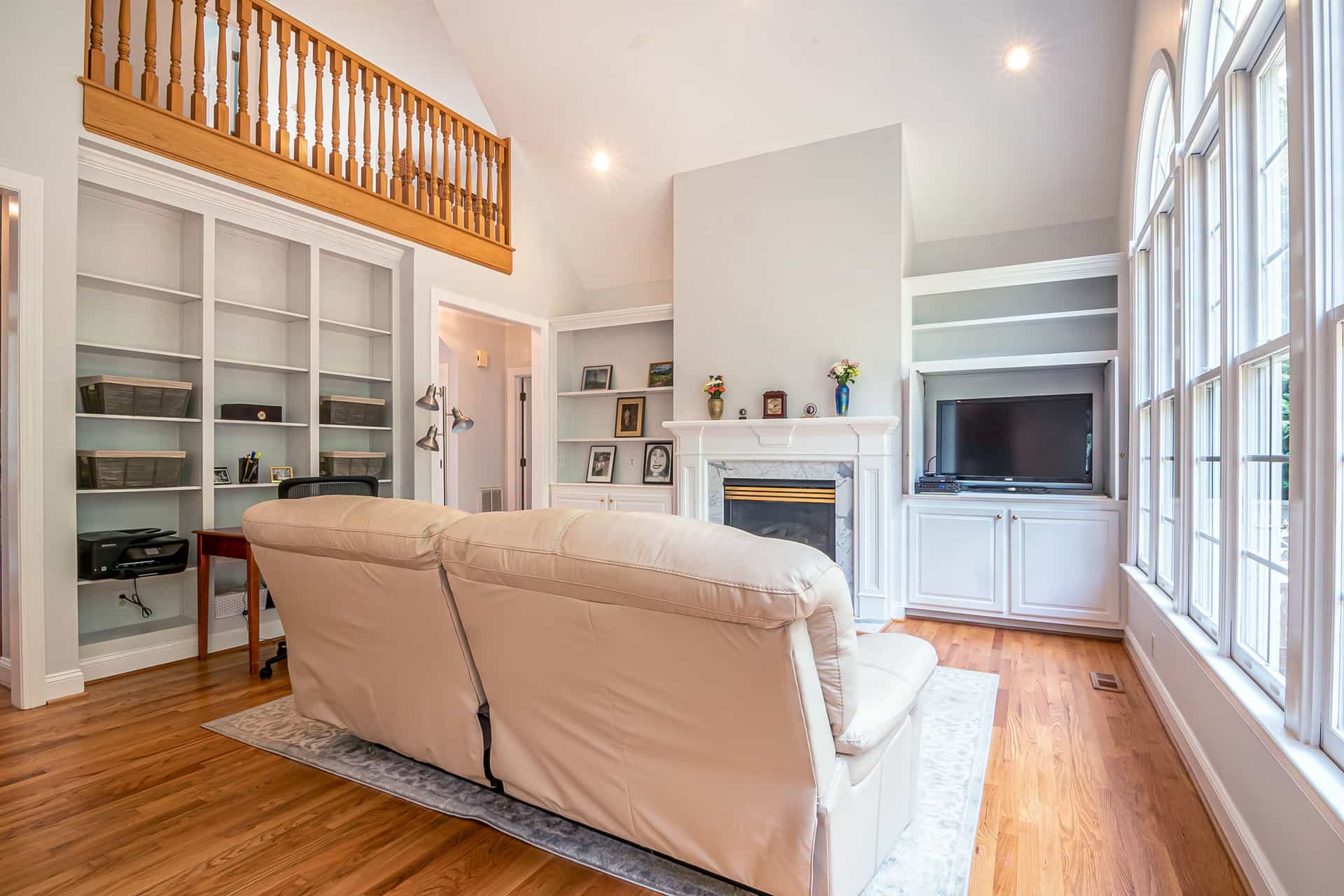
A 72-inch ceiling fan is the right answer if you can mount one: 385 CFM per watt certified, 27.8 W on high, moving air across an entire great room from above. On the floor, an air circulator with a published 70 ft reach beats a higher-CFM tower fan, because reach matters more than volume here.
Fan & Frost earns a commission when you buy through our links, at no cost to you. It never changes a ranking, and we say so when the right answer is the cheaper unit or nothing at all. Full disclosure · How we pick.
At a glance
The picks, ranked
Tap any row to jump to the full reasoning. Prices are live from Amazon where we have them, and read “check price” where we don’t — never a number we cannot verify today.
| # | Product | Best for | Price |
|---|---|---|---|
| 1 | Best overall Visual Comfort Kingston 72" LED Ceiling Fan 385.0 CFM per watt — the highest certified figure we found at any size — from a 72-inch span on 27.8 W. | Great rooms, open-plan spaces, high ceilings | |
| 2 | 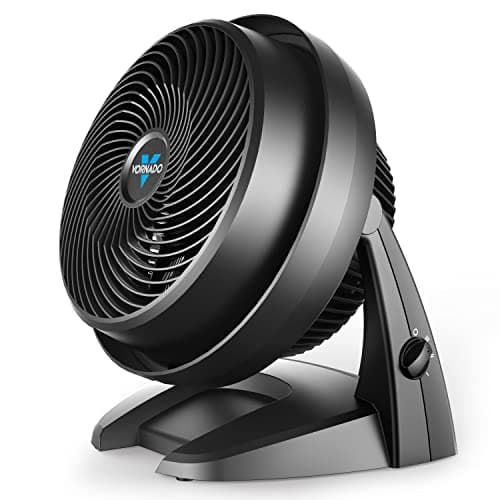 Best floor fan for the job Vornado 630 Medium Air Circulator A published 70 ft reach — the only floor fan here that claims to get air to the far end of a big room. | A large room where a ceiling fan is not an option | |
| 3 |  Most published airflow on the floor Lasko Wind Curve 42" Tower Fan 720 CFM — the only floor-standing fan here with a published airflow figure, and it is a big one. | A large room where you want maximum air near the seating | |
| — | 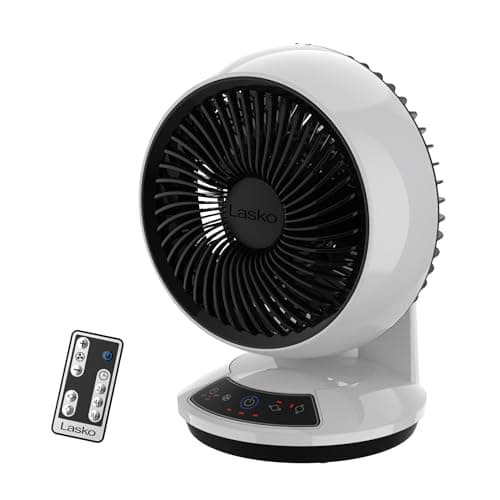 The one to skip here Lasko Whirlwind Tilt 12" Table Fan 18-32 W and a 12-inch blade, which in a large room reaches the coffee table and stops. | A desk, where it is genuinely excellent |
A large room changes which specification matters. In a bedroom, almost any fan reaches you and the questions are noise and power. In a 25-foot great room, most fans simply do not get air to the other end, and no amount of raw volume fixes that.
The distinction
Reach and volume are different specifications
Volume (CFM) is how much air a fan moves per minute. Reach is how far that air still has useful velocity. They are not correlated, and a fan can be excellent at one and poor at the other.
A tower fan pushing 720 CFM in a wide, gentle column has high volume and short reach — ideal beside a sofa, useless at 25 feet. An air circulator with a tight vortex may move less total air while delivering useful velocity at the far wall. Neither is better in the abstract; in a large room, reach is the constraint.
And the fan that solves both at once is the one on the ceiling. A 72-inch span moves an enormous volume of air and distributes it over the entire floor area by virtue of being above everything, which is why it wins on efficiency by such a margin.
The numbers
What the published data shows
| Fan | Watts | Airflow | Reach | 30 nights |
|---|---|---|---|---|
| Kingston 72" ceiling fan | 27.8 W | 385 CFM/W certified | Whole room, from above | $1.22 |
| Vornado 630 circulator | Not published | Not published | 70 ft claimed | — |
| Lasko 2554 tower | 49 W | 720 CFM | Not published | $2.16 |
| Lasko B20801 box fan | 102 W | Not published | Not published | $4.49 |
| Lasko A12107 desk fan | 32 W | Not published | 50 ft claimed | $1.41 |
From ENERGY STAR certified data and manufacturer product pages; costs are our arithmetic at 18.34¢/kWh.
Only the ceiling fan has a figure that is both comparable and certified. Everything else is a partial picture, and three of the five rows have “not published” in more than one column. That is the honest state of portable fan documentation, and it is why we recommend the ceiling fan first wherever it is possible.
Say the unwelcome thing
Two medium fans are not equivalent to one large fan.
The arithmetic looks reasonable — two fans, twice the air — and it fails on efficiency and on how a room actually moves air.
Efficiency rises with blade diameter, so two 44-inch ceiling fans use more power than one 72-inch fan for comparable total airflow. And two floor fans aimed into the same space frequently work against each other, breaking up the circulation loop that either one alone would have established.
One large fan, correctly placed, beats two medium ones in a single open space. Two fans make sense when a “large room” is really two connected areas with an obstruction between them.
Placement
Getting a large room moving
- With a ceiling fan: counterclockwise in summer, seen from below, so it pushes air down. This is the single most common thing people get wrong, and it takes ten seconds to check — here is how.
- With a circulator: aim at a far wall, not at people. It is designed to bounce its column and establish a loop. Aimed at your chair it becomes an ordinary fan and the design is wasted.
- Aim down the longest dimension. Give the airflow room to develop.
- Add a window once the evening air is cooler. A fan moving air within a large room does not lower its temperature. A fan exhausting through a window, once it is genuinely cooler outside, does — the rule is here.
If the large room needs to be genuinely colder rather than airier, no fan will do it. Size it properly — a 450–550 sq ft space wants 12,000 BTU on the ENERGY STAR table — and look at a correctly sized window unit.
In full
Every pick, and what is wrong with it
Published specifications only, each linked to the page it came from. Where a manufacturer publishes nothing, the row says so — we do not fill blanks in.
1. Best overall
Visual Comfort Kingston 72" LED Ceiling Fan
Visual Comfort & Co. · model Kingston 72 LED
385.0 CFM per watt — the highest certified figure we found at any size — from a 72-inch span on 27.8 W.
385.0 CFM per watt, certified by ENERGY STAR, and the best efficiency figure in the whole certified dataset we pulled. That is not a coincidence of this particular model — efficiency rises with blade diameter, because a large blade turning slowly is a far more efficient way to move air than a small one turning fast.
27.8 W on high, 4.1 W on low. About $1.22 for a month of eight-hour nights at full power, or 18¢ on low. A 49 W tower fan costs $2.16 over the same hours and moves a fraction of the air.
For a large room, one big fan beats two small ones on efficiency, on noise and on coverage. A 72-inch span turning slowly reaches the whole floor area from above, without having to fight past furniture the way a floor fan does.
The constraints are real: space for the span, ceiling height for safe clearance (blades at least 7 ft from the floor), and a wired installation. The full certified ranking, including 52-inch options, is here.
What’s wrong with it
72 inches needs genuine room and a ceiling high enough to keep blades safely clear, and it is a permanent wired installation. 1.2 W of standby is also the highest here.
Running cost — Kingston 72 LED
| Nameplate power | 4.1 W – 27.8 W | manufacturer's published figure |
|---|---|---|
| Energy, 8-hour night | 0.22 kWh | 27.8 ÷ 1000 × 8 |
| Cost per hour | 0.5¢ | at 18.34¢/kWh |
| Cost per 8-hour night | 4.1¢ | on the highest speed |
| Cost per 30 nights | $1.22 | 6.7 kWh |
| Same month, lowest speed | 18¢ | at 4.1 W |
Rate: 18.34¢/kWh, the US average residential price for June 2026 (EIA Electric Power Monthly, Table 5.3). Yours will differ — swap it in: (watts ÷ 1000) × hours × your rate.
| Blade span | 72 in |
|---|---|
| Efficiency | 385.0 CFM per watt |
| Power, high speed | 27.8 W |
| Power, low speed | 4.1 W |
| Standby power | 1.2 W |
| Type | Indoor, with light kit |
| Warranty | 3 years, components |
| ENERGY STAR | Certified |
Every figure above is from ENERGY STAR Certified Ceiling Fans dataset. Blanks are shown as “not published” rather than filled in.
2. Best floor fan for the job
Vornado 630 Medium Air Circulator
Vornado · model 630
A published 70 ft reach — the only floor fan here that claims to get air to the far end of a big room.
In a large room, a conventional fan’s airflow runs out of energy long before it reaches the far side. An air circulator is built specifically against that: a shrouded deep-pitch blade produces a focused rotating column that holds together over distance rather than dissipating.
“Moves air up to 70 feet” is Vornado’s published claim, and in a 25-foot great room that means the column arrives at the far wall with velocity left, and deflects into a circulation loop that turns over the whole space. That is a different outcome from a tower fan stirring one end.
The 5-year warranty is five times the category norm and, with no performance data published, one of the few genuine signals available.
The gap is real though: no wattage means no running cost, and no CFM means no efficiency comparison with anything. The circulator category is covered properly here.
What’s wrong with it
No wattage, no CFM, no weight and no noise figure published. You are buying on a distance claim and a 5-year warranty, with no way to compute a running cost.
Running cost
Vornado does not publish a wattage for the 630, so we cannot calculate what it costs to run. We are not going to estimate one. If Vornado publishes a nameplate figure, this block will show the arithmetic.
| Power | Not published |
|---|---|
| Airflow reach | Moves air up to 70 ft |
| Speeds | 3 |
| Air delivery (CFM) | Not published |
| Dimensions | Not published |
| Weight | Not published |
| Warranty | 5 years |
Every figure above is from Vornado product page, 630. Blanks are shown as “not published” rather than filled in.
3. Most published airflow on the floor
Lasko Wind Curve 42" Tower Fan
Lasko · model 2554
720 CFM — the only floor-standing fan here with a published airflow figure, and it is a big one.
720 CFM published. That is a genuinely large volume of air and the only comparable airflow figure among the floor-standing options here.
What it will not do is reach. A tower fan produces a wide, soft column optimized for spreading air over a person nearby, and it loses coherence quickly. Volume without velocity does not circulate a large room — it makes one end of it pleasant.
37–49 W, so $2.16 for a month of eight-hour nights against $1.22 for the 72-inch ceiling fan moving far more air.
Buy it if the seating in your large room is clustered in one place and you want that area comfortable. Do not buy it expecting the whole room to change.
What’s wrong with it
37-49 W with no published noise figure, and a tower's broad soft column dissipates within a few feet. It moves a lot of air; it does not move it far.
Running cost — 2554
| Nameplate power | 37 W – 49 W | manufacturer's published figure |
|---|---|---|
| Energy, 8-hour night | 0.39 kWh | 49 ÷ 1000 × 8 |
| Cost per hour | 0.9¢ | at 18.34¢/kWh |
| Cost per 8-hour night | 7.2¢ | on the highest speed |
| Cost per 30 nights | $2.16 | 11.8 kWh |
| Same month, lowest speed | $1.63 | at 37 W |
Rate: 18.34¢/kWh, the US average residential price for June 2026 (EIA Electric Power Monthly, Table 5.3). Yours will differ — swap it in: (watts ÷ 1000) × hours × your rate.
| Power | 37 W - 49 W (0.4 A at 120 V) |
|---|---|
| Air delivery | 720 CFM |
| Speeds | 3 |
| Height | 42.5 in |
| Footprint | 13 x 13 in |
| Weight | 10.62 lb |
| Timer | 7.5-hour auto-off |
| Noise | Not published |
| Warranty | 1 year |
Every figure above is from Lasko product page, 2554. Blanks are shown as “not published” rather than filled in.
Skip this one
Lasko Whirlwind Tilt 12" Table Fan
Lasko · model A12107
18-32 W and a 12-inch blade, which in a large room reaches the coffee table and stops.
Small fans get bought for large rooms on the assumption that two or three of them will add up. They do not, and the reason is the same physics that makes big ceiling fans efficient.
A 12-inch blade has to spin fast to move any air, which is inefficient and noisy, and the volume it moves is small relative to a large room. Three of them draw $4.23 a month between them — more than the 72-inch ceiling fan — and produce three small pockets of moving air rather than a circulating room.
Lasko’s published 50 ft air distance for this fan is worth reading carefully: it describes how far a detectable airstream travels, not how much useful airflow arrives there. At 50 feet from a 12-inch fan there is very little left.
It is a very good fan two feet from a person, which is exactly where it should be.
What’s wrong with it
A 12-inch fan cannot move a meaningful fraction of a large room's air volume. Its 50 ft air distance figure describes a thin detectable stream, not useful airflow at that range.
Running cost — A12107
| Nameplate power | 18 W – 32 W | manufacturer's published figure |
|---|---|---|
| Energy, 8-hour night | 0.26 kWh | 32 ÷ 1000 × 8 |
| Cost per hour | 0.6¢ | at 18.34¢/kWh |
| Cost per 8-hour night | 4.7¢ | on the highest speed |
| Cost per 30 nights | $1.41 | 7.7 kWh |
| Same month, lowest speed | 79¢ | at 18 W |
Rate: 18.34¢/kWh, the US average residential price for June 2026 (EIA Electric Power Monthly, Table 5.3). Yours will differ — swap it in: (watts ÷ 1000) × hours × your rate.
| Power | 18 W - 32 W (0.24-0.5 A at 120 V) |
|---|---|
| Noise | 39 dBA low, 55 dBA high |
| Air distance | 50 ft |
| Speeds | 3 |
| Dimensions | 11.19 H x 11.4 W x 6.2 D in |
| Weight | 2.78 lb |
| Mounting | Wall-mountable (hardware not included) |
| Air delivery (CFM) | Not published |
| Warranty | 1 year |
Every figure above is from Lasko product page, A12107. Blanks are shown as “not published” rather than filled in.
We are not linking a buy button for this one. If you want to look at it anyway, it is easy enough to find — but we would rather send you to something that fits your room.
Questions people actually ask
Frequently asked
What is the best fan for a large room?
A large ceiling fan, if you can mount one. The 72-inch Kingston is certified at 385.0 CFM per watt — the highest figure in the ENERGY STAR data we pulled — and draws 27.8 W on high. Efficiency rises with blade diameter, so a big fan turning slowly beats anything on the floor.
Do I need one big fan or two small ones for a large room?
One big one. Efficiency rises with blade diameter, so two 44-inch ceiling fans use more power than one 72-inch for comparable airflow. Two floor fans aimed into the same space also tend to break up the circulation loop either one alone would establish.
What size ceiling fan for a large room?
60 inches or more for spaces over 450 sq ft; 56 to 60 inches for 350 to 450 sq ft. Where you are between sizes, go larger — a bigger fan on a lower speed is quieter and more efficient than a smaller one working hard. The full sizing table.
Will a tower fan cool a large room?
It will make the area near it more comfortable. A tower fan produces a wide soft column that dissipates within a few feet, so 720 CFM of it does not reach the far end of a 25-foot room. For a large space you want reach, which means a circulator or a ceiling fan.
What does 'moves air up to 70 feet' mean?
It is a reach claim — how far a detectable airstream travels — rather than a volume. An air circulator uses a shrouded deep-pitch blade to produce a focused vortex that holds together over distance. It is not comparable with a CFM figure, and Vornado publishes no CFM.
Can a fan cool a large room, or do I need an air conditioner?
A fan does not lower a room's temperature at all — it moves air so people in it feel cooler. If the room needs to be genuinely colder, size it from the ENERGY STAR table (a 450 to 550 sq ft space wants 12,000 BTU) and use a correctly sized air conditioner.
Sources
Where these numbers came from
- ENERGY STAR Certified Ceiling Fans dataset — 385.0 CFM/W, per-speed wattage
- Vornado 630 air circulator — 70 ft reach claim, no wattage published
- Lasko 2554 Wind Curve specifications — 37-49 W, 720 CFM
- Lasko A12107 specifications — 18-32 W, 50 ft air distance
- ENERGY STAR — Room Air Conditioners sizing table
Read next
Where to go from here
Back to Fans, or read how we pick.