Guide and picks
Do air conditioners bring in fresh air?
The short answer is no, and the small exception on some units works against the machine rather than with it.
By Sawyer V. · Published
The short answer
No — almost all room air conditioners recirculate. They pull room air over a cold coil and return it to the same room, and the outdoor half of the machine is a separate air path that never mixes with it. Some units have a vent or fresh-air lever that opens a small damper between the two, and using it reduces capacity and efficiency because you are asking the machine to cool outdoor air. Ventilate separately instead.
Fan & Frost earns a commission when you buy through our links, at no cost to you. It never changes a ranking, and we say so when the right answer is the cheaper unit or nothing at all. Full disclosure · How we pick.
At a glance
The picks, ranked
Tap any row to jump to the full reasoning. Prices are live from Amazon where we have them, and read “check price” where we don’t — never a number we cannot verify today.
| # | Product | Best for | Price |
|---|---|---|---|
| 1 | The right tool for actual ventilation Lasko Twin Window Fan with Remote Up to 560 CFM on 22 to 31 W with a thermostat and independent intake and exhaust motors. | Exchanging indoor air for outdoor air, on a schedule | |
| 2 | 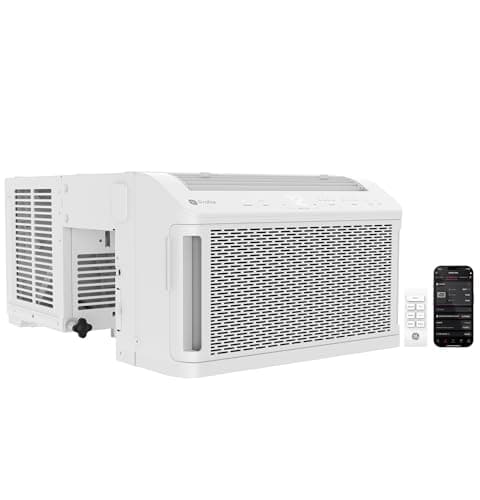 What a recirculating unit does well GE Profile ClearView Window Air Conditioner, 8,000 BTU CEER 16 and 375 kWh a year — efficient precisely because it is not fighting a continuous supply of outdoor air. | Cooling and dehumidifying a closed room efficiently | |
| 3 | 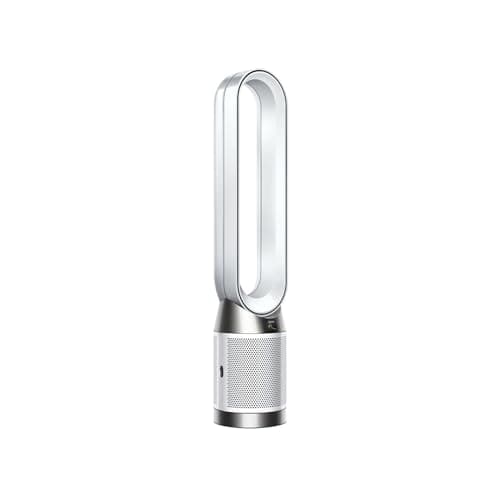 Filtration, not ventilation Dyson Purifier Cool TP07 HEPA and activated carbon filtration on 40 W — it improves the air you have without bringing any in. | Cleaning recirculated indoor air rather than replacing it | |
| — | The one that ventilates by accident Whynter ARC-14S Dual Hose Portable Air Conditioner A single-hose portable exhausts room air outdoors continuously, so outdoor air infiltrates to replace it. | A room with no usable window — and it exchanges air whether you want it or not |
This comes up constantly, usually because a room feels stuffy with the air conditioner running. The answer explains both why that happens and what to do about it.
How it works
Two air paths that never meet
A window air conditioner contains two entirely separate airflows, divided by a bulkhead through the middle of the machine.
- The indoor loop. Room air is drawn in through the front grille, passes over the cold evaporator coil, gives up heat and moisture, and returns to the same room. Same air, round and round.
- The outdoor loop. Outdoor air is drawn across the hot condenser coil to carry heat away, and is blown straight back outdoors. It never enters the room.
The refrigerant is what connects them — it carries heat from the indoor coil to the outdoor coil. Air does not cross.
That separation is the whole reason the machine is efficient. Cooling the same air repeatedly is far cheaper than continuously cooling a fresh supply of hot outdoor air. A unit rated at 375 kWh a year is rated on the assumption that it is working on a closed room.
The exception
What the vent lever actually does
Some window units — more commonly older ones — have a slider or lever marked vent, fresh air or exhaust. It opens a small damper in the bulkhead between the two air paths.
Depending on the design it either lets a little outdoor air into the indoor stream, or lets a little indoor air out into the exhaust.
Both cost you.
- Fresh-air position: the unit now has to cool unconditioned outdoor air continuously, which reduces its effective capacity and raises run time.
- Exhaust position: you are throwing away air you already paid to cool and dry, and outdoor air infiltrates through the building to replace it.
The volume involved is small, so neither is a disaster. But it is worth knowing that the lever is not a free feature — it trades cooling performance for a modest amount of air exchange.
For normal use, keep it closed. Check yours; it is frequently left open from a previous owner or a previous season, and it is a common cause of a unit that seems weaker than it should be.
This one is not a DIY job
Stuffiness is usually carbon dioxide, and cooling does nothing about it. A closed room with people in it accumulates CO₂ steadily, and that is what produces the heavy, stale feeling people attribute to the air conditioner.
An air conditioner removes heat and moisture. It does not remove CO₂, and neither does an air purifier — filtration captures particles and some gases, not carbon dioxide.
The only thing that reduces it is air exchange: opening something, or running a ventilation fan.
Which means the honest answer to a stuffy cooled room is to ventilate deliberately at sensible times, rather than expecting the cooling appliance to do it.
What to do
Ventilating a room you are cooling
These two goals genuinely conflict — you cannot cool efficiently and exchange air at the same time — so separate them in time rather than trying to do both at once.
- Purge when outdoor air is cooler. Early morning and late evening, open up properly for a short period with the air conditioner off. Short and thorough beats a permanently cracked window.
- Use the extract fans you already have. A bathroom fan or a ducted range hood removes stale air and moisture at 0.1 sones and 16.7 CFM per watt on the best certified units — a fraction of a cent an hour. Bathroom fans, ranked.
- Run a window fan for scheduled exchange rather than leaving a window open all night against the air conditioner.
- Do not crack a window while cooling. It is continuous, uncontrolled, and works against the machine the whole time.
Related
Filtering is not ventilating
Air conditioners have filters, and their job is to protect the coil from dust rather than to clean your air. They are coarse by design.
A dedicated purifier does clean recirculated air — particles, allergens, some odors — which is genuinely useful. It does not exchange air, so it does nothing for CO₂ or general stuffiness.
Three different problems, three different machines: cooling, filtering, ventilating. Expecting one to do all three is where the confusion starts.
Say the unwelcome thing
Do not leave a window cracked to freshen a room you are cooling.
It is the intuitive compromise and it is the worst of both.
A permanently open gap means the air conditioner is fighting a continuous inflow of hot, humid outdoor air for as long as it runs. Certified figures like 375 kWh a year assume no air leaking around the machine, and this is a deliberate leak.
Meanwhile the exchange rate through a small gap is low and uncontrolled — not enough to meaningfully reduce CO₂, and entirely dependent on wind and pressure.
Purge properly when it is cool outside, use extract fans, and keep the room closed while cooling. If ventilation while cooling is genuinely required, that is a mechanical ventilation question rather than something a cracked sash solves.
In full
Every pick, and what is wrong with it
Published specifications only, each linked to the page it came from. Where a manufacturer publishes nothing, the row says so — we do not fill blanks in.
1. The right tool for actual ventilation
Lasko Twin Window Fan with Remote
Lasko · model W09550
Up to 560 CFM on 22 to 31 W with a thermostat and independent intake and exhaust motors.
If the goal is fresh air, this does the job an air conditioner is not designed for and does it on a fraction of the power.
Two independent motors mean one window can intake and exhaust simultaneously, so you get genuine air exchange rather than pressurising the room.
22 to 31 W for up to 560 CFM. For comparison, a certified window air conditioner uses 375 kWh a year — about $69 for a season — and does not exchange any air at all.
The adjustable thermostat makes unattended overnight use practical. Window fan comparison.
What’s wrong with it
It only helps when outdoor air is cooler or cleaner, and it fits 24 to 32 inch windows only.
Running cost — W09550
| Nameplate power | 22 W – 31 W | manufacturer's published figure |
|---|---|---|
| Energy, 8-hour night | 0.25 kWh | 31 ÷ 1000 × 8 |
| Cost per hour | 0.6¢ | at 18.34¢/kWh |
| Cost per 8-hour night | 4.5¢ | on the highest speed |
| Cost per 30 nights | $1.36 | 7.4 kWh |
| Same month, lowest speed | 97¢ | at 22 W |
Rate: 18.34¢/kWh, the US average residential price for June 2026 (EIA Electric Power Monthly, Table 5.3). Yours will differ — swap it in: (watts ÷ 1000) × hours × your rate.
| Power | 22 W - 31 W at 120 V |
|---|---|
| Air delivery | Up to 560 CFM |
| Window fit | 24 - 32 in wide |
| Modes | Intake, exhaust or exchange (independent motors) |
| Thermostat | Adjustable |
| Speeds | 3 |
| Dimensions | 12.9 H x 24.0 W x 4.9 D in |
| Weight | 8.0 lb |
| Warranty | 1 year |
Every figure above is from Lasko product page, W09550. Blanks are shown as “not published” rather than filled in.
2. What a recirculating unit does well
GE Profile ClearView Window Air Conditioner, 8,000 BTU
GE Profile · model PWJV08W
CEER 16 and 375 kWh a year — efficient precisely because it is not fighting a continuous supply of outdoor air.
Recirculation is not a limitation to work around — it is why the machine is efficient. Cooling the same air repeatedly is far cheaper than continuously cooling fresh outdoor air.
375 kWh a year, about $69 for a season, at CEER 16 and 47% below the federal standard. Those figures assume a closed room.
The variable-speed compressor also matters for air quality indirectly: it runs longer and steadier, which means more moisture removed, and lower humidity discourages the biological growth that makes a closed room smell.
On the Most Efficient list, 15.3 inches deep, 46.2 lb.
What’s wrong with it
It brings in no fresh air, so a sealed room being cooled still needs ventilation from somewhere.
Running cost — PWJV08W
| Annual energy use | 375 kWh | ENERGY STAR certified figure |
|---|---|---|
| Annual cost | $69 | 375 × 18.34¢/kWh |
| Per cooling month | $17 | spread over a four-month season |
The annual figure is the certified value from the ENERGY STAR Certified Room Air Conditioners dataset, which models a standard cooling season rather than your actual summer. It is more useful than a nameplate wattage here, because a variable-speed compressor spends most of its life well below nameplate.
Rate: 18.34¢/kWh, the US average residential price for June 2026 (EIA Electric Power Monthly, Table 5.3). Yours will differ — swap it in: (watts ÷ 1000) × hours × your rate.
| Cooling capacity | 8,000 BTU/h |
|---|---|
| CEER | 16 |
| Annual energy use | 375 kWh/yr |
| vs federal standard | 47% less energy |
| Dimensions | 12.6 H x 18.6 W x 15.3 D in |
| Weight | 46.2 lb |
| Refrigerant | R-32 |
| Installation | Does not straddle the windowsill |
| Compressor | Variable speed |
| ENERGY STAR | Certified, and on the Most Efficient list |
Every figure above is from ENERGY STAR Certified Room Air Conditioners dataset. Blanks are shown as “not published” rather than filled in.
3. Filtration, not ventilation
Dyson Purifier Cool TP07
Dyson · model TP07
HEPA and activated carbon filtration on 40 W — it improves the air you have without bringing any in.
Worth distinguishing carefully, because filtration and ventilation get conflated and they solve different problems.
A filter removes particles and some gases from air that is already in the room. It does not reduce carbon dioxide, and CO₂ is the usual reason a closed room feels stuffy.
40 W maximum and under 0.5 W standby, with HEPA and activated carbon filtration.
The honest gaps: Dyson publishes airflow in gallons per second rather than CFM, which is not comparable to anything else on this site, and no dBA figure at all. More on filtering fans.
What’s wrong with it
Dyson publishes no CFM and no dBA, and filtering is not the same as ventilating — it does nothing about carbon dioxide.
Running cost — TP07
| Nameplate power | 40 W | manufacturer's published figure |
|---|---|---|
| Energy, 8-hour night | 0.32 kWh | 40 ÷ 1000 × 8 |
| Cost per hour | 0.7¢ | at 18.34¢/kWh |
| Cost per 8-hour night | 5.9¢ | on the highest speed |
| Cost per 30 nights | $1.76 | 9.6 kWh |
Rate: 18.34¢/kWh, the US average residential price for June 2026 (EIA Electric Power Monthly, Table 5.3). Yours will differ — swap it in: (watts ÷ 1000) × hours × your rate.
| Maximum input power | 40 W |
|---|---|
| Standby power | Under 0.5 W |
| Air delivery (CFM) | Not published — Dyson states airflow in gallons per second, which is not comparable to a CFM figure |
| Noise (dBA) | Not published |
| Dimensions | Not published on the accessible spec sheet |
| Weight | Not published on the accessible spec sheet |
| Filter | HEPA and activated carbon (purifier function) |
Every figure above is from Dyson Purifier Cool TP07 technical specification (dyson.com). Blanks are shown as “not published” rather than filled in.
Skip this one
Whynter ARC-14S Dual Hose Portable Air Conditioner
Whynter · model ARC-14S
A single-hose portable exhausts room air outdoors continuously, so outdoor air infiltrates to replace it.
An interesting edge case. A portable air conditioner does exchange air with outside — and that is precisely its biggest problem.
A single-hose unit takes room air, runs it over the condenser, and blows it outside. The room goes slightly negative, and outdoor air comes back in through every gap in the building.
That is uncontrolled infiltration, not ventilation. It arrives wherever the leaks are, unfiltered, at whatever temperature and humidity outdoors happens to be — and the unit then has to cool it.
It is why 9,500 BTU SACC comes from a 14,000 BTU headline. The full analysis.
What’s wrong with it
That is not ventilation you control — it is uncontrolled infiltration, and it is why SACC capacity is 32% below the headline BTU.
Running cost — ARC-14S
| Nameplate power | 1300 W | manufacturer's published figure |
|---|---|---|
| Energy, 8-hour night | 10.40 kWh | 1300 ÷ 1000 × 8 |
| Cost per hour | 24¢ | at 18.34¢/kWh |
| Cost per 8-hour night | $1.91 | on the highest speed |
| Cost per 30 nights | $57 | 312.0 kWh |
Rate: 18.34¢/kWh, the US average residential price for June 2026 (EIA Electric Power Monthly, Table 5.3). Yours will differ — swap it in: (watts ÷ 1000) × hours × your rate.
| Marketing capacity | 14,000 BTU (ASHRAE-128) |
|---|---|
| DOE-rated capacity | 9,500 BTU SACC |
| Hoses | Dual |
| Power | 1,300 W / 11.6 A at 115 V |
| Noise | Under 51 dBA low, under 56 dBA high |
| Dehumidification | 71 pints/day |
| Refrigerant | R-32 |
| Dimensions | 16 W x 19 D x 35.5 H in |
| Weight | 73 lb |
| Manufacturer coverage claim | 500 sq ft |
| Warranty | 1 year unit, 3 years compressor |
Every figure above is from Whynter product page, ARC-14S. Blanks are shown as “not published” rather than filled in.
We are not linking a buy button for this one. If you want to look at it anyway, it is easy enough to find — but we would rather send you to something that fits your room.
Questions people actually ask
Frequently asked
Do window air conditioners bring in outside air?
Almost never. They contain two separate air paths divided by a bulkhead — room air recirculates over the cold coil, and outdoor air passes over the hot coil and goes straight back out. The two never mix.
What does the vent lever on an air conditioner do?
It opens a small damper between the indoor and outdoor air paths, either admitting a little outdoor air or exhausting a little indoor air. Both reduce capacity and efficiency, because the unit ends up conditioning unconditioned air.
Should I use the fresh air setting on my air conditioner?
Generally no — keep it closed. It trades cooling performance for a modest, uncontrolled amount of air exchange, and it is a common cause of a unit that seems weaker than it should be after being left open from a previous season.
Why does my room feel stuffy with the air conditioner on?
Usually accumulated carbon dioxide, which an air conditioner does not remove — it removes heat and moisture only. Air purifiers do not remove it either. The only thing that reduces CO2 is air exchange.
How do I ventilate a room I am air conditioning?
Separate the two in time. Purge properly when outdoor air is cooler — early morning and late evening with the unit off — and use extract fans, rather than leaving a window cracked while cooling.
Does an air purifier bring in fresh air?
No. It filters air already in the room, capturing particles and some gases, which is useful for allergens and odors. It does not exchange air, so it does nothing for carbon dioxide or general stuffiness. Cooling and air quality.
Sources
Where these numbers came from
- ENERGY STAR Certified Room Air Conditioners dataset — CEER, annual kWh and compressor data
- ENERGY STAR Certified Ventilating Fans dataset — CFM per watt and sones for the extract comparison
- Lasko W09550 twin window fan product page — 22-31 W, up to 560 CFM, thermostat
- EIA Electric Power Monthly, Table 5.3 — electricity rate
Read next
Where to go from here
Back to Air Conditioners, or read how we pick.