The picks
Best range hoods
The least efficient certified ventilation category, with a noise field that cannot be trusted at the top end. Here is how to read it anyway.
By Sawyer V. · Published
The short answer
The Best HBN536212SS leads on efficacy at 200 CFM and 16.6 CFM per watt, though we would not trust its 0.0-sone filing. For a plausible noise figure, the Air King ESQZ2308 at 120 CFM and 1.5 sones matches the category median. Two things matter more than the model: it must duct outdoors, and duct diameter drives the efficiency far more than the motor does.
Fan & Frost earns a commission when you buy through our links, at no cost to you. It never changes a ranking, and we say so when the right answer is the cheaper unit or nothing at all. Full disclosure · How we pick.
At a glance
The picks, ranked
Tap any row to jump to the full reasoning. Prices are live from Amazon where we have them, and read “check price” where we don’t — never a number we cannot verify today.
| # | Product | Best for | Price |
|---|---|---|---|
| 1 | Highest efficacy certified Best HBN536212SS Range Hood 200 CFM at 16.6 CFM per watt — more than three times the category median, and the most airflow here. | A kitchen where the duct run can take 10 inches | |
| 2 | Best figures you can actually trust Air King ESQZ2308 Range Hood 120 CFM at 7.9 CFM per watt and 1.5 sones — the second-best efficacy here, with a noise figure that reads as real. | A smaller kitchen, or a shallow duct route above cabinets | |
| 3 | 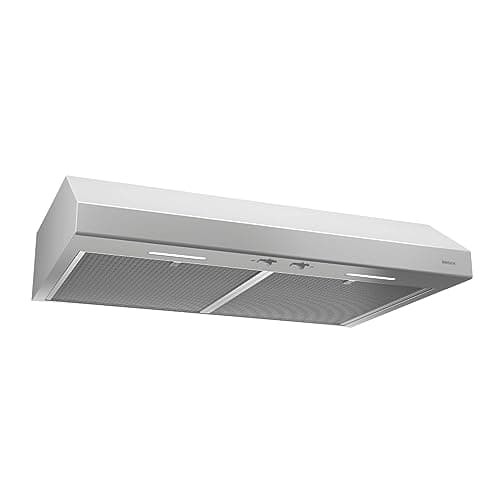 Middle ground on duct size Broan BCSEK124WW Range Hood 150 CFM at 5.5 CFM per watt and 1.5 sones — median noise, median-ish efficiency, and a duct size that often already exists. | A 7-inch duct route and a modest kitchen | |
| — | 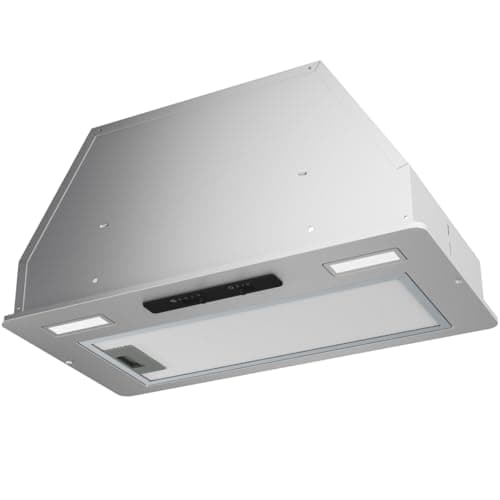 The efficiency floor Zephyr AK8400BS-ES Range Hood 190 CFM at 3.9 CFM per watt and 2.0 sones — good airflow, the worst efficacy here, and the loudest rating. | Illustrating the bottom of the certified range |
A range hood is the only appliance in the house whose job is to catch a plume of hot, greasy, humid air before it disperses. It is also, by the certified numbers, the least efficient ventilation category there is.
The finding
Zero of 91 are Most Efficient
Range hoods are certified under the same ENERGY STAR ventilating fan program as bathroom and in-line fans, tested the same way at 0.25 inches of water gauge. So the categories are directly comparable, and the comparison is unflattering.
| Category | Best CFM/W | Most Efficient |
|---|---|---|
| Bathroom / utility fans | 16.7 | 80 of 912 (8.8%) |
| Range hoods | 16.6 | 0 of 91 (0.0%) |
| In-line duct fans | 5.2 | 16 of 74 (21.6%) |
Counted by us from the ENERGY STAR Certified Ventilating Fans dataset, US-market records.
Not one certified range hood carries the Most Efficient designation. The criteria for that category sit beyond where the field currently reaches — even the 16.6 CFM per watt leader does not qualify.
The practical consequence: the absence of a Most Efficient badge on a range hood tells you nothing. Read the CFM-per-watt and sone figures directly. Why the label means different things by category.
The data
The certified field
| Hood | CFM | CFM/W | Sones | Duct |
|---|---|---|---|---|
| Best HBN536212SS | 200 | 16.6 | 0.0 as filed | 10 in round |
| Air King ESQZ2308 | 120 | 7.9 | 1.5 | 3.25 × 10 in |
| Broan BCSEK124WW | 150 | 5.5 | 1.5 | 7 in |
| Whirlpool WVW73UC0LS | 132.2 | 4.9 | not published | 6 in round |
| Zephyr AK8400BS-ES | 190 | 3.9 | 2.0 | 6 in |
Highest-efficacy certified hood per brand. Across all 91 US range hood records the sone median is 1.5 and the range is 0.0 to 2.0.
Duct diameter is doing most of the work. The 10-inch hood manages 16.6 CFM per watt; the 6- and 7-inch hoods manage 3.9 to 5.5. That is not four different motor technologies — it is mostly four different amounts of resistance.
Which reframes the shopping question. If your duct route can take a larger diameter, that decision will affect efficiency more than which brand you pick.
This one is not a DIY job
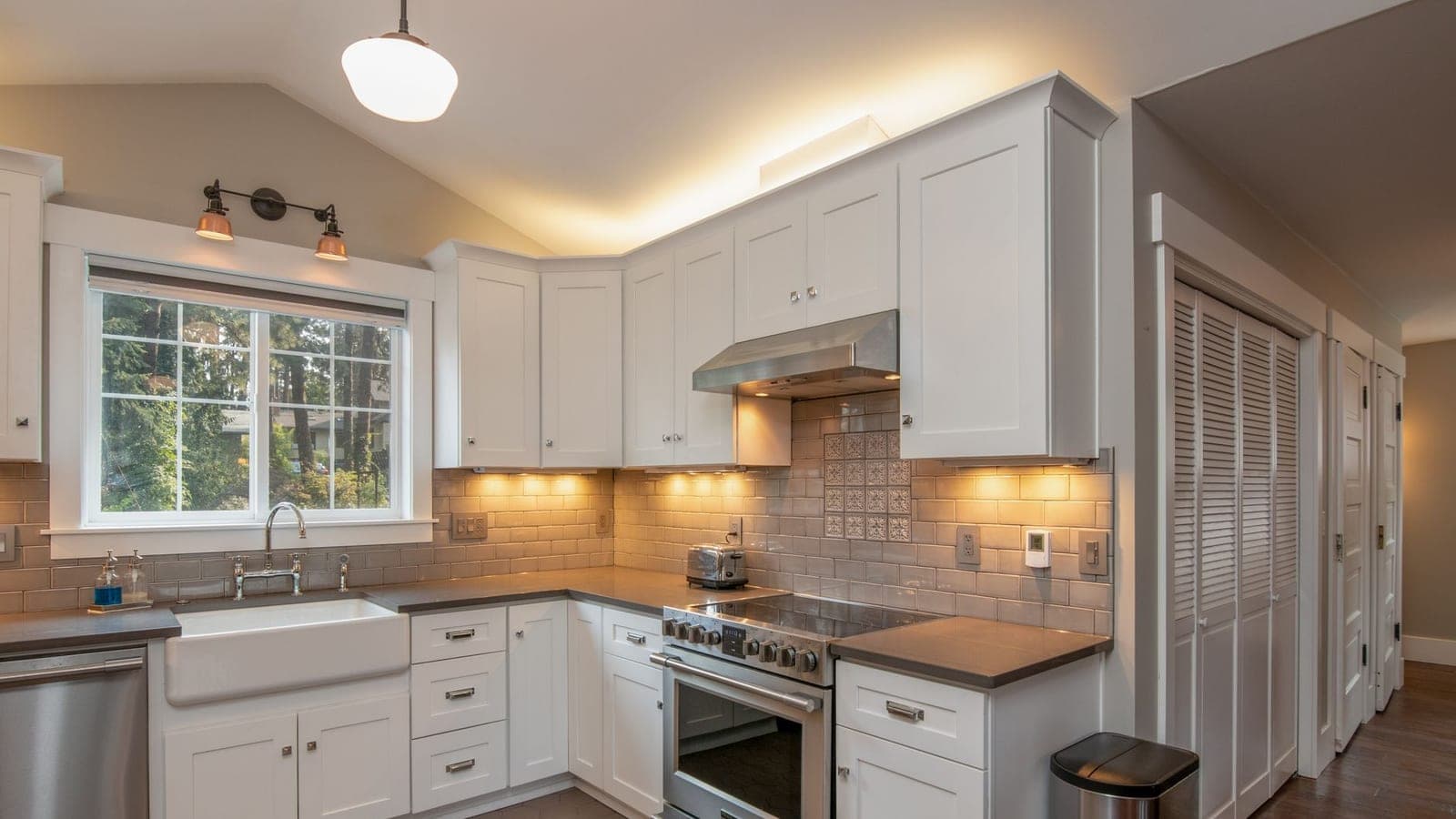
A recirculating hood removes no heat and no moisture. This is the single most consequential distinction in the category and it is easy to miss on a product page.
A ducted hood sends the captured air outdoors. Heat, moisture, grease and combustion products all leave the building.
A recirculating hood pulls air through a charcoal filter and returns it to the room. It removes some odor and some grease, and returns all the heat, all the moisture, and the fan motor’s own energy on top.
Gas cooking changes the stakes. Combustion produces products that need to leave the building, and adequate ventilation around gas appliances is a safety matter rather than a comfort one. Follow your appliance manual and local code, and take a professional view if unsure.
Sizing
Airflow, and the thing that undermines it
Certified CFM is measured at 0.25 inches of water gauge. A real installation frequently presents far more resistance than that, and the hood delivers correspondingly less.
Three things determine whether you get the rated airflow:
- Duct diameter. Larger is dramatically better, as the table above shows. Never reduce below what the hood specifies.
- Run length and elbows. Short and straight. Every bend adds resistance, and flexible duct with sags is worse than smooth- walled rigid duct at the same diameter.
- Make-up air. Pulling air out of a closed kitchen creates negative pressure that the fan then fights. A cracked window on the far side of the room measurably improves capture.
Requirements vary with hob type, hood style and local code, so size against those rather than against a rule of thumb.
Habits
Getting the most from the hood you have
- Switch it on before you start cooking. A hood captures a rising plume; it cannot recover heat and moisture that have already dispersed into the room.
- Leave it running afterward. A hot hob and hot cookware keep producing a plume well after the burners are off.
- Use the back burners where you can — they sit further under the capture area on most hoods.
- Clean the grease filters. A loaded filter cuts airflow exactly the way a blocked air conditioner filter does. Most are dishwasher-safe.
- Run it on a lower setting for longer. Across certified multi-speed ventilating fans, 71.8% move air more efficiently below full speed.
Say the unwelcome thing
Do not buy a recirculating hood if you can duct outdoors.
Recirculating models are cheaper to buy and far cheaper to install, because there is no duct route, no exterior penetration and no cap. That is a real saving and it buys you a fundamentally different appliance.
A charcoal filter can adsorb some odor compounds. It cannot remove heat, it cannot remove water vapor, and the filter is a consumable that needs replacing on a schedule most people never keep.
So in a kitchen you are trying to keep cool, a recirculating hood is not part of the solution — everything the cooking produces stays in the room, plus the fan’s own motor heat. The full kitchen cooling case.
Duct outdoors if the building allows it, even at a shorter run and a smaller diameter than ideal.
In full
Every pick, and what is wrong with it
Published specifications only, each linked to the page it came from. Where a manufacturer publishes nothing, the row says so — we do not fill blanks in.
1. Highest efficacy certified
Best HBN536212SS Range Hood
Best · model HBN536212SS
200 CFM at 16.6 CFM per watt — more than three times the category median, and the most airflow here.
16.6 CFM per watt is exceptional in a category that mostly sits near 5. It is also the highest airflow on this page at 200 CFM.
The efficiency comes largely from the 10-inch duct. Less resistance means the motor does less work for the same air, which is the same pattern that shows up across in-line duct fans.
We will flag the number we do not believe. The dataset records 0.0 sones, and eight of the 91 certified range hoods carry that value. A fan moving 200 CFM produces sound; zero perceived loudness is not physically meaningful. Treat it as a filing artifact and go and listen to one.
Lighting included. Not Most Efficient — nothing in this category is.
What’s wrong with it
Filed at 0.0 sones, which is not a meaningful value for a fan moving 200 CFM, and it needs a 10-inch duct.
Running cost
Best does not publish a wattage for the HBN536212SS, so we cannot calculate what it costs to run. We are not going to estimate one. If Best publishes a nameplate figure, this block will show the arithmetic.
| Air delivery | 200 CFM at 0.25 in w.g. |
|---|---|
| Efficacy | 16.6 CFM per watt |
| Duct size | 10 in diameter |
| Unit type | Range hood |
| Noise | 0.0 sones as filed in the certified dataset |
| ENERGY STAR | Certified |
Every figure above is from ENERGY STAR Certified Ventilating Fans dataset. Blanks are shown as “not published” rather than filled in.
2. Best figures you can actually trust
Air King ESQZ2308 Range Hood
Air King · model ESQZ2308
120 CFM at 7.9 CFM per watt and 1.5 sones — the second-best efficacy here, with a noise figure that reads as real.
7.9 CFM per watt is roughly 60% above the category median, and it comes with a 1.5-sone rating that matches the median exactly — which on a page where the top figure is implausible is worth something.
Because sones are linear, 1.5 is an audible fan — about what you would expect standing at a hob. That is the honest state of the category, and a hood you can hear is not a defect.
The 3.25 by 10 inch rectangular duct is the reason for the modest airflow, and also the reason it fits where a 10-inch round duct will not: above wall cabinets, through a shallow soffit.
120 CFM suits a small kitchen. Lighting included.
What’s wrong with it
120 CFM is the lowest airflow on this page, and a 3.25 by 10 inch rectangular duct restricts what the fan can do.
Running cost
Air King does not publish a wattage for the ESQZ2308, so we cannot calculate what it costs to run. We are not going to estimate one. If Air King publishes a nameplate figure, this block will show the arithmetic.
| Air delivery | 120 CFM at 0.25 in w.g. |
|---|---|
| Efficacy | 7.9 CFM per watt |
| Noise | 1.5 sones |
| Duct size | 3.25 x 10 in rectangular |
| Lighting | Included |
| Unit type | Range hood |
| ENERGY STAR | Certified |
Every figure above is from ENERGY STAR Certified Ventilating Fans dataset. Blanks are shown as “not published” rather than filled in.
3. Middle ground on duct size
Broan BCSEK124WW Range Hood
Broan · model BCSEK124WW
150 CFM at 5.5 CFM per watt and 1.5 sones — median noise, median-ish efficiency, and a duct size that often already exists.
150 CFM at 5.5 CFM per watt through a 7-inch duct. Unremarkable numbers, and useful precisely because they are typical.
The comparison against the Best hood is the clearest illustration on this page of what duct diameter does: 16.6 CFM per watt through 10 inches against 5.5 through 7. Three times the efficiency, largely from the pipe.
1.5 sones, matching the category median across 91 certified hoods.
If your kitchen already has a 7-inch duct route, this is the realistic option — enlarging a duct through a wall or ceiling is usually the most expensive part of the whole job.
What’s wrong with it
5.5 CFM per watt is a third of the Best hood's figure, which is what the smaller duct costs you.
Running cost
Broan does not publish a wattage for the BCSEK124WW, so we cannot calculate what it costs to run. We are not going to estimate one. If Broan publishes a nameplate figure, this block will show the arithmetic.
| Air delivery | 150 CFM at 0.25 in w.g. |
|---|---|
| Efficacy | 5.5 CFM per watt |
| Duct size | 7 in |
| Unit type | Range hood |
| Noise | 1.5 sones |
| ENERGY STAR | Certified |
Every figure above is from ENERGY STAR Certified Ventilating Fans dataset. Blanks are shown as “not published” rather than filled in.
Skip this one
Zephyr AK8400BS-ES Range Hood
Zephyr · model AK8400BS-ES
190 CFM at 3.9 CFM per watt and 2.0 sones — good airflow, the worst efficacy here, and the loudest rating.
Included to bracket the range rather than to criticise a specific product. 190 CFM is genuinely useful airflow.
3.9 CFM per watt is the lowest on this page and close to the bottom of the certified field. It is moving nearly as much air as the Best hood on roughly four times the power, through a 6-inch duct rather than a 10-inch one.
2.0 sones is the top of the certified range hood distribution. Because sones are linear, that is more than thirteen times the perceived loudness of a 0.1-sone bathroom fan.
Lighting included, ENERGY STAR certified. The certification is a floor, not a distinction.
What’s wrong with it
3.9 CFM per watt against 16.6 for the top of the category, and 2.0 sones is at the loud end of the certified field.
Running cost
Zephyr does not publish a wattage for the AK8400BS-ES, so we cannot calculate what it costs to run. We are not going to estimate one. If Zephyr publishes a nameplate figure, this block will show the arithmetic.
| Air delivery | 190 CFM at 0.25 in w.g. |
|---|---|
| Efficacy | 3.9 CFM per watt |
| Noise | 2.0 sones |
| Duct size | 6 in |
| Lighting | Included |
| Unit type | Range hood |
| ENERGY STAR | Certified |
Every figure above is from ENERGY STAR Certified Ventilating Fans dataset. Blanks are shown as “not published” rather than filled in.
We are not linking a buy button for this one. If you want to look at it anyway, it is easy enough to find — but we would rather send you to something that fits your room.
Questions people actually ask
Frequently asked
Are any range hoods ENERGY STAR Most Efficient?
No — zero of the 91 certified US range hoods carry the designation, including the one managing 16.6 CFM per watt against a category median near 5. The criteria sit beyond where the field reaches, so the absence of the badge tells you nothing.
How efficient are range hoods?
Between 3.9 and 16.6 CFM per watt in the certified data, and duct diameter drives most of that. The 10-inch hood manages 16.6; the 6- and 7-inch hoods manage 3.9 to 5.5 — largely a difference in resistance rather than motor technology.
Why do some range hoods claim 0.0 sones?
It appears to be a filing artifact rather than a measurement. Eight of the 91 certified US range hoods carry that value, and a fan moving 200 CFM produces sound. The category median is 1.5 sones, which is an audible fan.
Is a recirculating range hood worth it?
Only when ducting outdoors is genuinely impossible. A charcoal filter adsorbs some odor but returns all the heat, all the moisture and the fan's own motor heat to the room — so it is not part of a kitchen cooling solution. Cooling a kitchen.
Does duct size matter more than the hood?
For efficiency, largely yes. Certified data shows 16.6 CFM per watt through a 10-inch duct against 5.5 through a 7-inch one. If your duct route can take a larger diameter, that decision affects efficiency more than the brand does.
Should I run a range hood on high?
For clearing a heavy plume, yes; for general cooking, a lower setting run longer is usually better. Across 351 certified multi-speed ventilating fans, 71.8% move air more efficiently below full speed, with a median gain of 23.9%.
Sources
Where these numbers came from
Read next
Where to go from here
Back to Whole-House Airflow, or read how we pick.