The picks
The best air conditioners for a small room
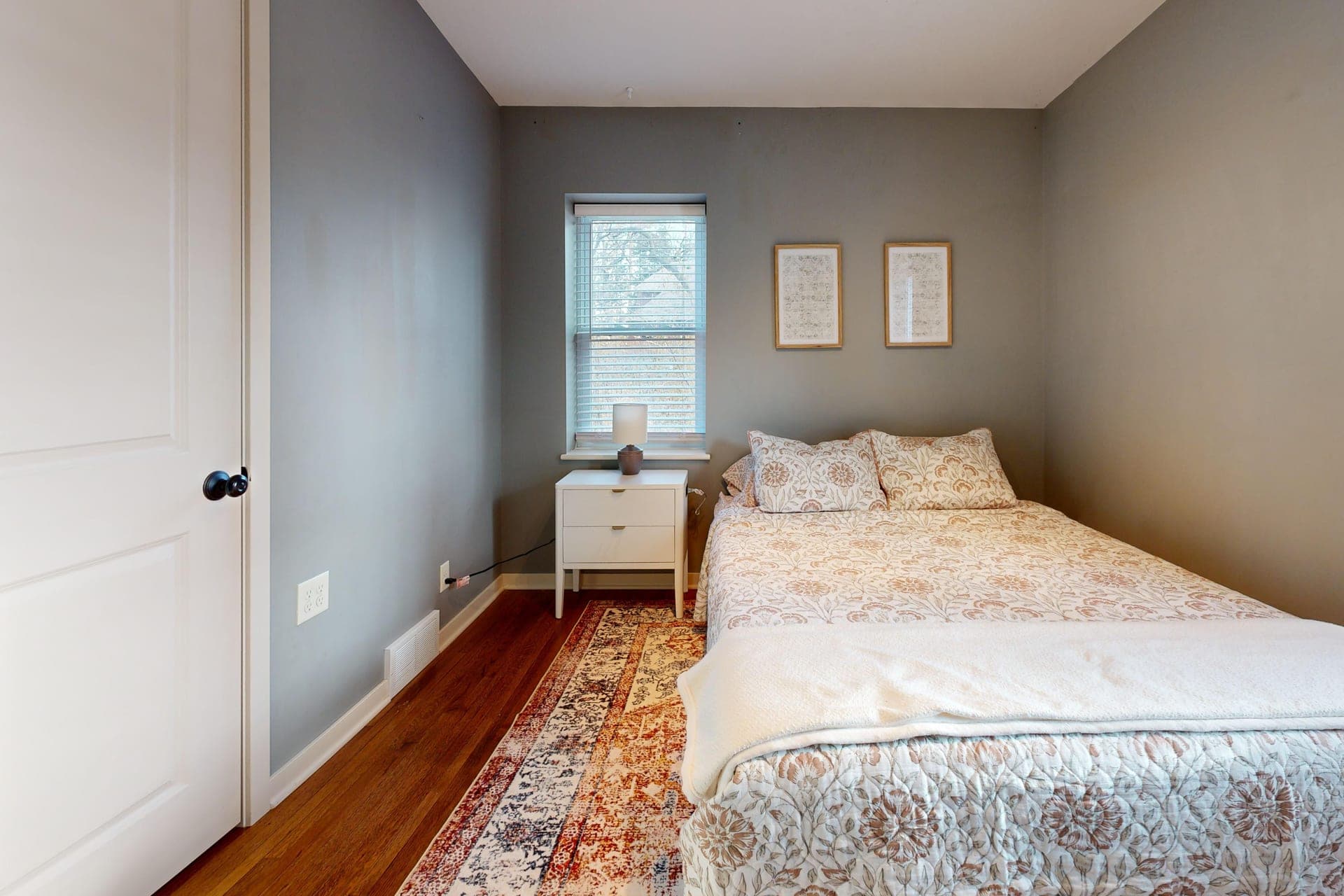
In a small room the opening you have decides more than the capacity you need, so this page is organized by what will physically fit.
By Sawyer V. · Published
The short answer
If a sash window will take a unit, use one: CEER 16 at 281.3 kWh a year, about $52 for a season at 18.34¢/kWh. If the opening is awkward, a through-the-wall sleeve is the next best. A portable is the fallback, not the default — a 1,300 W unit costs $1.91 for an eight-hour night, and a small room is where its losses hurt most.
Fan & Frost earns a commission when you buy through our links, at no cost to you. It never changes a ranking, and we say so when the right answer is the cheaper unit or nothing at all. Full disclosure · How we pick.
At a glance
The picks, ranked
Tap any row to jump to the full reasoning. Prices are live from Amazon where we have them, and read “check price” where we don’t — never a number we cannot verify today.
| # | Product | Best for | Price |
|---|---|---|---|
| 1 | Best overall Midea Window Air Conditioner, 6,000 BTU CEER 16 and 281.3 kWh a year at 31.6 lb, no bracket required — the lowest running cost of any certified room unit. | A small room with a standard sash window | |
| 2 | Best if you want the window back Midea U-Shaped Window Air Conditioner, 6,000 BTU CEER 15.1 and 298 kWh a year in a U-shape — the sash closes through the middle, so the window works and the compressor is outside. | A small room where the window still needs to open | |
| 3 | 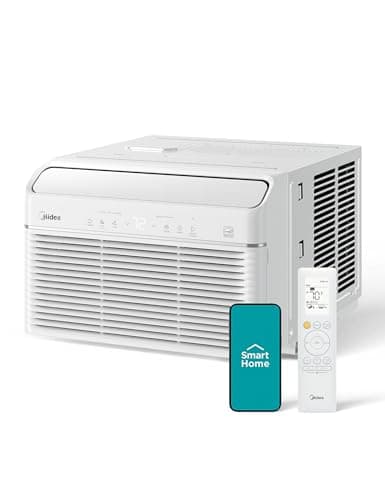 Best when the window is unusable Midea Through-the-Wall Air Conditioner, 8,000 BTU 425.5 kWh a year at CEER 14.1, Most Efficient — through an existing wall sleeve, leaving every window free. | A casement window, a sliding window, or no window at all | |
| 4 | 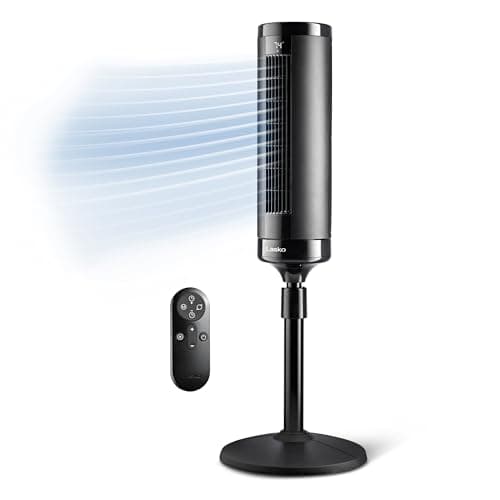 Try this first Lasko EcoQuiet 42" DC Tower Fan 2.9 W on the lowest of 12 speeds, 23 dBA — it changes no temperature, and it is 100 times cheaper to run. | A small room that is warm rather than genuinely hot | |
| — | 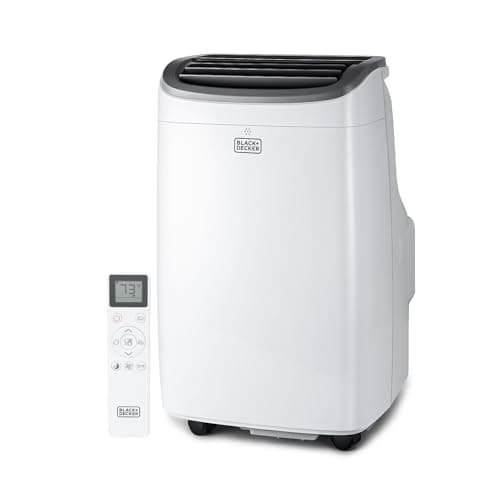 The small-room trap BLACK+DECKER BPACT08WT Portable Air Conditioner 4,000 BTU DOE-rated, single hose, no published wattage — and a small room is where single-hose losses hurt most. | A room where nothing else will physically fit |
For a small room the usual first question — how much capacity? — is the second question. The first is what will fit the opening you have.
Start here
The opening decides, not the square footage
Almost every small room needs somewhere between 5,000 and 8,000 BTU. That part is easy. What varies enormously is what the room lets you install.
- Standard sash window that opens vertically? A window unit. This is the efficient answer and it is not close.
- Sash window you still need to open? A U-shaped unit — the window closes through the middle of it.
- Casement or sliding window? No certified unit is recorded as casement-capable. Look at a through-the-wall sleeve instead.
- Existing wall sleeve? Use it. Through-the-wall units are efficient and leave the windows alone.
- No window and no sleeve? Read the windowless room page before you buy anything.
- Renting, and cannot modify anything? What actually installs without drilling.
Running cost
The gap between the types is enormous
This is the single most decision-relevant table on the page, because the type you choose matters far more than the model within it.
| Option | Published figure | Cost | Basis |
|---|---|---|---|
| DC tower fan, low | 2.9 W | 0.4¢ | one 8-hour night |
| Ceiling fan, low | 1.8 W | 0.3¢ | one 8-hour night |
| 6,000 BTU window unit | 281.3 kWh/yr | $52 | a whole season |
| 8,000 BTU through-wall | 425.5 kWh/yr | $78 | a whole season |
| 1,300 W portable | 1,300 W | $1.91 | one 8-hour night |
Read the basis column carefully, because it is doing the work. A certified window unit’s whole season costs about $52. A 1,300 W portable costs $1.91 for a single night — roughly $57 for a month of overnight running.
That comparison is not quite like-for-like, because the certified annual figure assumes a standard usage pattern rather than continuous running. It is still the right order of magnitude, and it is why the window unit is the default recommendation whenever a window exists. Every option ranked by watts.
Capacity
Do not oversize a small room
This is where the small-room case differs most from a large one, and where the common instinct is wrong.
An air conditioner does two jobs: it lowers temperature and it removes moisture. An oversized unit in a small room hits the thermostat setpoint fast and shuts off before it has removed much moisture, so you get a room that is cold and clammy, cycling on and off.
The official sizing guidance says so directly: an oversized unit “costs more to purchase, wastes energy and does not provide better cooling.”
- Size from the room, then apply the adjustments that genuinely apply — sunny, top floor, extra occupants, kitchen.
- Shade the glass first. The very-sunny adjustment is the one most often triggered, and it can be removed rather than paid for.
- Prefer variable speed. A variable-speed compressor handles a small room far better because it can run gently rather than cycling.
- Do not size up “for hot days”. That is how a small room ends up clammy for the other ninety.
This one is not a DIY job
Window unit installation is a safety job regardless of how small the unit is. The sash, frame and side curtains carry the load, and a fall from a window is a serious matter.
Follow the manual for your model on brackets, screws and tilt. Do not assume a light unit needs no bracket — the certified data shows the requirement tracks mounting design, not weight.
Cutting a new through-the-wall sleeve is structural work involving a load-bearing decision, weatherproofing and possibly a permit. That is a contractor’s job.
Room air conditioner manuals typically require a dedicated grounded outlet and forbid extension cords and adapters.
Say the unwelcome thing
Do not default to a portable because the room is small.
The reasoning feels sound — small room, small problem, get the flexible one. The physics runs the other way.
A single-hose portable exhausts room air outdoors and pulls replacement air in through whatever gaps exist. In a small room that infiltration is a larger fraction of the total volume, so proportionally more of the cooling you paid for is undone.
It also takes floor space a small room does not have, and many portables publish no wattage at all, so you cannot even work out what it costs before buying.
If a window exists, use it: 281.3 kWh for a season. If the window is unusable, a through-the-wall sleeve is the next best answer, and a portable is the fallback after both.
In full
Every pick, and what is wrong with it
Published specifications only, each linked to the page it came from. Where a manufacturer publishes nothing, the row says so — we do not fill blanks in.
1. Best overall
Midea Window Air Conditioner, 6,000 BTU
Midea · model MAW06S1KWT-A
CEER 16 and 281.3 kWh a year at 31.6 lb, no bracket required — the lowest running cost of any certified room unit.
The right answer for the majority of small rooms, and the cheapest certified unit to run at any capacity.
281.3 kWh a year is about $52 at 18.34¢/kWh — roughly what a 1,300 W portable costs in six nights of overnight running.
CEER 16, Most Efficient certified, 45% below the federal standard, with a variable-speed compressor that holds temperature instead of cycling hard.
31.6 lb and no support bracket required makes this one of the few certified units a single person can realistically install. The rest of the 6,000 BTU class.
What’s wrong with it
It occupies the window all season, and it does not heat.
Running cost — MAW06S1KWT-A
| Annual energy use | 281.3 kWh | ENERGY STAR certified figure |
|---|---|---|
| Annual cost | $52 | 281.3 × 18.34¢/kWh |
| Per cooling month | $13 | spread over a four-month season |
The annual figure is the certified value from the ENERGY STAR Certified Room Air Conditioners dataset, which models a standard cooling season rather than your actual summer. It is more useful than a nameplate wattage here, because a variable-speed compressor spends most of its life well below nameplate.
Rate: 18.34¢/kWh, the US average residential price for June 2026 (EIA Electric Power Monthly, Table 5.3). Yours will differ — swap it in: (watts ÷ 1000) × hours × your rate.
| Cooling capacity | 6,000 BTU/h |
|---|---|
| CEER | 16 |
| Annual energy use | 281.3 kWh/yr |
| vs federal standard | 45% less energy |
| Dimensions | 12.1 H x 16.0 W x 13.3 D in |
| Weight | 31.6 lb |
| Installation | Does not straddle the windowsill |
| Support bracket | Not required |
| Compressor | Variable speed |
| Refrigerant | R-32 |
| ENERGY STAR | Certified, and on the Most Efficient list |
Every figure above is from ENERGY STAR Certified Room Air Conditioners dataset. Blanks are shown as “not published” rather than filled in.
2. Best if you want the window back
Midea U-Shaped Window Air Conditioner, 6,000 BTU
Midea · model MAW06V1QWT
CEER 15.1 and 298 kWh a year in a U-shape — the sash closes through the middle, so the window works and the compressor is outside.
In a small room, a window unit is a large share of your daylight and your ventilation. The U-shape gives both back.
The sash closes through the middle of the unit, so you can still open the window — and the compressor sits outside that closed sash, which is why this style is noticeably quieter indoors.
298 kWh a year, about $55 at 18.34¢/kWh, at CEER 15.1 and Most Efficient certified.
53.1 lb, no bracket required, R-32. Where the U-shape does and does not fit.
What’s wrong with it
53.1 lb, and the U-shape only fits a standard single- or double-hung window.
Running cost — MAW06V1QWT
| Annual energy use | 298 kWh | ENERGY STAR certified figure |
|---|---|---|
| Annual cost | $55 | 298 × 18.34¢/kWh |
| Per cooling month | $14 | spread over a four-month season |
The annual figure is the certified value from the ENERGY STAR Certified Room Air Conditioners dataset, which models a standard cooling season rather than your actual summer. It is more useful than a nameplate wattage here, because a variable-speed compressor spends most of its life well below nameplate.
Rate: 18.34¢/kWh, the US average residential price for June 2026 (EIA Electric Power Monthly, Table 5.3). Yours will differ — swap it in: (watts ÷ 1000) × hours × your rate.
| Cooling capacity | 6,000 BTU/h |
|---|---|
| CEER | 15.1 |
| Annual energy use | 298 kWh/yr |
| vs federal standard | 37% less energy |
| Dimensions | 13.5 H x 19.2 W x 22.0 D in |
| Weight | 53.1 lb |
| Refrigerant | R-32 |
| Installation | U-shape; sash closes through the middle of the unit |
| Compressor | Variable speed |
| ENERGY STAR | Certified, and on the Most Efficient list |
Every figure above is from ENERGY STAR Certified Room Air Conditioners dataset. Blanks are shown as “not published” rather than filled in.
3. Best when the window is unusable
Midea Through-the-Wall Air Conditioner, 8,000 BTU
Midea · model MAT08R1FWTK
425.5 kWh a year at CEER 14.1, Most Efficient — through an existing wall sleeve, leaving every window free.
The answer for the rooms that defeat window units, and there are more of them than people expect.
Zero of the certified room air conditioners are recorded as casement-capable. If your windows crank outward or slide sideways, there is no certified efficiency figure for a window-mounted unit at all.
425.5 kWh a year, about $78 at 18.34¢/kWh, at CEER 14.1 — on the Most Efficient list, because through-the-wall units are rated as their own class.
An existing sleeve is required. That is the whole question — what the installation involves.
What’s wrong with it
It needs an existing sleeve. Cutting a new one is construction, not installation.
Running cost — MAT08R1FWTK
| Annual energy use | 425.5 kWh | ENERGY STAR certified figure |
|---|---|---|
| Annual cost | $78 | 425.5 × 18.34¢/kWh |
| Per cooling month | $20 | spread over a four-month season |
The annual figure is the certified value from the ENERGY STAR Certified Room Air Conditioners dataset, which models a standard cooling season rather than your actual summer. It is more useful than a nameplate wattage here, because a variable-speed compressor spends most of its life well below nameplate.
Rate: 18.34¢/kWh, the US average residential price for June 2026 (EIA Electric Power Monthly, Table 5.3). Yours will differ — swap it in: (watts ÷ 1000) × hours × your rate.
| Cooling capacity | 8,000 BTU/h |
|---|---|
| CEER | 14.1 |
| Annual energy use | 425.5 kWh/yr |
| Refrigerant | R-32 |
| Installation | Through the wall (existing sleeve required) |
| Compressor | Variable speed |
| ENERGY STAR | Certified, and on the Most Efficient list |
Every figure above is from ENERGY STAR Certified Room Air Conditioners dataset. Blanks are shown as “not published” rather than filled in.
4. Try this first
Lasko EcoQuiet 42" DC Tower Fan
Lasko · model T42710
2.9 W on the lowest of 12 speeds, 23 dBA — it changes no temperature, and it is 100 times cheaper to run.
A small room reaches comfort with air movement more readily than a large one, because a single fan can reach every part of it.
2.9 W on low is 0.4¢ for an eight-hour night. The 6,000 BTU unit above is roughly a hundred times that per hour of running.
23 dBA on low and 12 speeds, which matters in a small room where the fan is never far from you.
The honest limit: a fan cools the person, not the room, and its own motor watts warm the space very slightly. It raises the temperature at which you need cooling; it does not replace it.
What’s wrong with it
It cools people, not air. If the room is genuinely hot, this is not enough.
Running cost — T42710
| Nameplate power | 2.9 W – 19 W | manufacturer's published figure |
|---|---|---|
| Energy, 8-hour night | 0.15 kWh | 19 ÷ 1000 × 8 |
| Cost per hour | 0.3¢ | at 18.34¢/kWh |
| Cost per 8-hour night | 2.8¢ | on the highest speed |
| Cost per 30 nights | 84¢ | 4.6 kWh |
| Same month, lowest speed | 13¢ | at 2.9 W |
Rate: 18.34¢/kWh, the US average residential price for June 2026 (EIA Electric Power Monthly, Table 5.3). Yours will differ — swap it in: (watts ÷ 1000) × hours × your rate.
| Power | 2.9 W - 19 W (0.06-0.303 A at 120 V) |
|---|---|
| Noise | 23 dBA low, 46 dBA high |
| Speeds | 12 |
| Height | 41.6 in |
| Footprint | 12.8 x 12.8 in |
| Weight | 7.8 lb |
| Timer | 8 hours |
| Air delivery (CFM) | Not published |
| Warranty | 2 years |
Every figure above is from Lasko product page, T42710. Blanks are shown as “not published” rather than filled in.
Skip this one
BLACK+DECKER BPACT08WT Portable Air Conditioner
BLACK+DECKER · model BPACT08WT
4,000 BTU DOE-rated, single hose, no published wattage — and a small room is where single-hose losses hurt most.
Portables get bought for small rooms constantly, and a small room is the worst place for a single-hose one.
A single-hose unit blows room air outdoors, which lowers indoor pressure and pulls replacement air in through gaps. In a small room that infiltration is a larger fraction of the total volume, so the effect is proportionally worse than in a big space.
4,000 BTU DOE-rated against 8,000 ASHRAE on the box — the two numbers measure different things.
No published wattage at all, so its running cost cannot be calculated honestly. It also occupies floor area a small room does not have.
What’s wrong with it
It depressurizes the room it is cooling, pulling warm unfiltered air in through every gap.
Running cost
BLACK+DECKER does not publish a wattage for the BPACT08WT, so we cannot calculate what it costs to run. We are not going to estimate one. If BLACK+DECKER publishes a nameplate figure, this block will show the arithmetic.
| Manufacturer capacity | 4,000 BTU (8,000 BTU ASHRAE) |
|---|---|
| Hoses | Single |
| Refrigerant | R-410A |
| Dimensions | 15.3 W x 14.0 D x 25.0 H in |
| Weight | 52.9 lb |
| Power | Not published by the manufacturer |
| Noise | Not published |
| Coverage claim | Not published by the manufacturer |
| Warranty | 1 year parts and labor, 5 years compressor |
Every figure above is from BLACK+DECKER product page, BPACT08WT. Blanks are shown as “not published” rather than filled in.
We are not linking a buy button for this one. If you want to look at it anyway, it is easy enough to find — but we would rather send you to something that fits your room.
Questions people actually ask
Frequently asked
What size air conditioner do I need for a small room?
Usually 5,000 to 8,000 BTU, with 6,000 the common answer. Apply the published adjustments that genuinely apply — very sunny, top floor, extra occupants, kitchen — and shade the glass first, because that can remove the sunny-room adjustment entirely. The sizing method.
Is a portable air conditioner good for a small room?
It is the fallback, not the default. A single-hose portable depressurizes the room and pulls warm air in through gaps, and in a small room that infiltration is a larger share of the total volume — so the losses are proportionally worse than in a big space.
What if my window is a casement or slider?
No certified room air conditioner is recorded as casement-capable, so there is no published efficiency figure for a window-mounted unit in that opening. A through-the-wall sleeve is the usual answer. Casement and sliding windows.
Can I oversize an air conditioner for a small room to be safe?
No — it is the classic mistake. An oversized unit reaches the thermostat setpoint before it has removed much moisture, so it short-cycles and leaves the room cold and clammy. The official guidance is explicit that oversizing wastes energy and does not cool better.
How much does it cost to cool a small room?
About $52 for a season with an efficient 6,000 BTU window unit at 18.34¢/kWh. A 1,300 W portable costs roughly $1.91 for a single eight-hour night, which is a completely different order of expense.
Will a fan be enough for a small room?
Often, if the room is warm rather than genuinely hot — a single fan can reach every part of a small room, and 2.9 W on low is about a hundredth of what an air conditioner draws. It cools the person rather than the air, so it raises the temperature at which you need cooling rather than replacing it. What fans really do.
Sources
Where these numbers came from
- ENERGY STAR Certified Room Air Conditioners dataset — capacity, CEER, annual kWh, casement capability and Most Efficient flag
- ENERGY STAR room air conditioner sizing guidance — base capacity, adjustments and the oversizing warning
- Lasko T42710 product page — 2.9-19 W, 23 dBA low, 12 speeds
- BLACK+DECKER BPACT08WT product page — DOE and ASHRAE capacity, single hose
- EIA Electric Power Monthly, Table 5.3 — average residential electricity price
Read next
Where to go from here
Back to Air Conditioners, or read how we pick.