Guide and picks
How to cool an apartment you don't own
Read the lease clause before you read a review. Most restrictions target brackets and exterior appearance, which rules out far less than renters assume.
By Sawyer V. · Published
The short answer
Start by finding out what the lease actually says — most clauses target brackets and exterior fixings, not cooling. A U-shaped window unit needs neither and uses 298 kWh a year (about $55). If windows are genuinely off-limits, a dual-hose portable is the fallback, at roughly three times the running cost.
Fan & Frost earns a commission when you buy through our links, at no cost to you. It never changes a ranking, and we say so when the right answer is the cheaper unit or nothing at all. Full disclosure · How we pick.

At a glance
The picks, ranked
Tap any row to jump to the full reasoning. Prices are live from Amazon where we have them, and read “check price” where we don’t — never a number we cannot verify today.
| # | Product | Best for | Price |
|---|---|---|---|
| 1 | Best for most apartments Midea U-Shaped Window Air Conditioner, 6,000 BTU No bracket, no drilling, nothing hanging outside — and the window still opens above it. | A bedroom up to about 250 sq ft with a sash window | |
| 2 | Try this first Lasko Twin Window Fan with Remote 31 W, needs no permission from anyone, and in a lot of apartments it handles most of the season. | Any apartment, before you buy a compressor | |
| 3 | 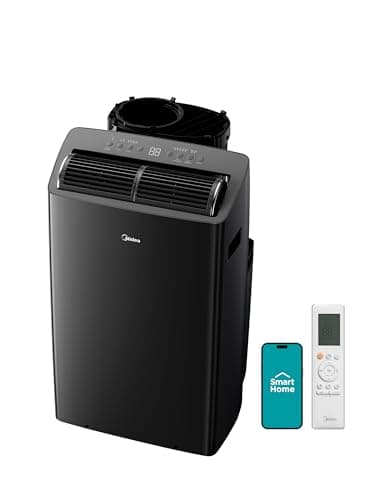 When windows are genuinely off-limits Midea Duo Smart Inverter Portable Air Conditioner Nothing goes in the window frame, and among portables this has the smallest capacity haircut and the quietest published figure. | Casement windows, sliders, or an absolute prohibition | |
| — | 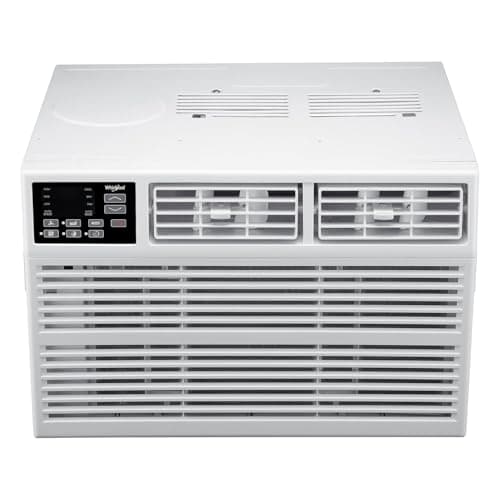 The one to skip Whirlpool Window Air Conditioner, 24,000 BTU 115.7 lb straddling a window in a building you do not own, needing exactly the bracket your lease forbids. | Nobody renting anything |
Renting adds two constraints that homeowners do not have: what the lease permits, and what the building’s electrical system will take. Both are worth resolving before you shop, because between them they usually decide the answer.
Constraint one
What leases actually forbid
In how these clauses are typically written, restrictions cluster into four kinds, and only one of them rules out a window unit outright:
- Brackets and exterior fixings. The most common clause, and it is about the building fabric and liability rather than cooling. A U-shaped unit needs neither.
- Anything protruding over a sidewalk or a neighbor. An insurance question. A unit sitting inside the opening is a different proposition.
- Exterior appearance. Common in managed buildings and HOAs. Worth asking what is permitted rather than assuming.
- Any modification to the window. This is the clause that genuinely rules window units out, and it is the least common.
Ask specifically, not generally. “May I install a U-shaped window unit that needs no bracket and no drilling, and leaves the window openable?” gets a different answer from “may I install an air conditioner?” often enough to be worth the email.
The full renter's roundup is here.
Constraint two
The shared-circuit trap
This one catches people and it is worth checking before you buy anything with a compressor.
Older apartment buildings frequently run several rooms — sometimes a whole unit — on a small number of circuits. A 1,300 W portable air conditioner draws roughly 11 amps. Add a microwave, a hairdryer or a space heater on the same circuit and you are over a 15-amp breaker.
A window unit at 400–900 W is a much easier load, which is a practical argument for one beyond the running cost.
Never run either on an extension cord. Both draw high current continuously, every manufacturer’s manual prohibits it, and it is a genuine fire risk. If the outlet is in the wrong place, the answer is a different position for the unit — not a cord.
The cost
What assuming you cannot use a window costs
| Option | Energy | Cost |
|---|---|---|
| Window fan, 31 W | 7.4 kWh/month | $1.36 / month |
| 6,000 BTU U-shaped window unit | 298 kWh/year | $55 / YEAR |
| Portable, 1,300 W, 30 nights | 312 kWh/month | $57 / month |
Window figure is ENERGY STAR certified annual energy use; the portable is nameplate draw, so treat it as a ceiling. Costs are our arithmetic at 18.34¢/kWh.
The portable’s monthly figure exceeds the window unit’s annual figure. Over a four-month season, that is real money on a renter’s bill — which is why the ten minutes spent asking about the lease clause is worth it.
Before buying
Free things that work in an apartment
- Blackout blinds, closed during the day. The single highest-value free step. Apartments often have large windows relative to floor area and little thermal mass, so they heat fast in sun.
- Find out which way your windows face. West-facing apartments take the full afternoon sun and are dramatically hotter in the evening. Prioritize shading those windows.
- Turn off heat sources. Every watt consumed inside the apartment becomes heat in it, and a small apartment has nowhere for it to go. A gaming PC is 300–500 W of heater.
- Close doors to unused rooms to concentrate whatever cooling you are achieving.
- Cook less, or later. ENERGY STAR adds 4,000 BTU for a kitchen, and in a studio the kitchen is the room you sleep in.
The full no-AC sequence is here, ranked by effect.
Say the unwelcome thing
Do not buy a 'ventless' or 'hose-free' air conditioner because you cannot use a window.
The category is aimed squarely at renters, and it does not work. A refrigeration cycle must reject its waste heat somewhere, and with no duct that somewhere is your apartment. The net effect is slightly warmer air.
Anything sold under that name is an evaporative cooler — which only works in dry air, and needs an open window anyway — or a fan.
Installing
Protecting your deposit
- Photograph the window before you start, both sides. It settles any argument at move-out.
- Use the supplied foam panels plus removable weatherstrip. Never expanding foam or caulk — anything that cures is a deposit problem.
- Make sure water drains outward. A unit tilted the wrong way drains into the room and onto the sill, which is how window frames get damaged.
- Keep the box. You will uninstall it in October, and it is also what you sell it in when you move.
In full
Every pick, and what is wrong with it
Published specifications only, each linked to the page it came from. Where a manufacturer publishes nothing, the row says so — we do not fill blanks in.
1. Best for most apartments
Midea U-Shaped Window Air Conditioner, 6,000 BTU
Midea · model MAW06V1QWT
No bracket, no drilling, nothing hanging outside — and the window still opens above it.
The sash closes down through the middle of the unit rather than resting on top of it, so the machine sits in the opening instead of hanging out of it. No support bracket, no screws into the frame, nothing cantilevered over the sidewalk.
That matters because those three things are what leases actually object to. A landlord banning “window air conditioners” is usually banning hardware bolted to their building and the liability of something heavy above a walkway. A photograph of a U-shaped installation often changes the answer.
298 kWh a year — about $55 at 18.34¢/kWh for a whole cooling season, and on the ENERGY STAR Most Efficient list. It also draws far less current than a portable, which matters on the old shared circuits common in apartment buildings.
6,000 BTU suits 150–250 sq ft, which is most apartment bedrooms. Resist buying 8,000 because it is the common size.
What’s wrong with it
53.1 lb in a building with stairs and no elevator is a genuine problem, and the U-shape only fits single-hung or double-hung sash windows.
Running cost — MAW06V1QWT
| Annual energy use | 298 kWh | ENERGY STAR certified figure |
|---|---|---|
| Annual cost | $55 | 298 × 18.34¢/kWh |
| Per cooling month | $14 | spread over a four-month season |
The annual figure is the certified value from the ENERGY STAR Certified Room Air Conditioners dataset, which models a standard cooling season rather than your actual summer. It is more useful than a nameplate wattage here, because a variable-speed compressor spends most of its life well below nameplate.
Rate: 18.34¢/kWh, the US average residential price for June 2026 (EIA Electric Power Monthly, Table 5.3). Yours will differ — swap it in: (watts ÷ 1000) × hours × your rate.
| Cooling capacity | 6,000 BTU/h |
|---|---|
| CEER | 15.1 |
| Annual energy use | 298 kWh/yr |
| vs federal standard | 37% less energy |
| Dimensions | 13.5 H x 19.2 W x 22.0 D in |
| Weight | 53.1 lb |
| Refrigerant | R-32 |
| Installation | U-shape; sash closes through the middle of the unit |
| Compressor | Variable speed |
| ENERGY STAR | Certified, and on the Most Efficient list |
Every figure above is from ENERGY STAR Certified Room Air Conditioners dataset. Blanks are shown as “not published” rather than filled in.
2. Try this first
Lasko Twin Window Fan with Remote
Lasko · model W09550
31 W, needs no permission from anyone, and in a lot of apartments it handles most of the season.
An apartment is often a single floor with windows on one or two sides, which makes cross-ventilation harder than in a house — and makes a fan that can do intake and exhaust through one window genuinely useful.
Two independently controlled motors. Run one out and one in through the same opening and you get a deliberate exchange where a single-direction fan would just pressurize the room.
22–31 W, up to 560 CFM — about $1.36 for a month of nights. No lease clause covers a fan, no landlord conversation is required, and it goes with you when you move.
The thermostat matters in a small apartment, where a single room cools quickly and you would otherwise overshoot.
What’s wrong with it
It only works once the outdoor air is genuinely cooler than indoor, and in a dense city that crossover can come late. Fits windows 24-32 inches wide.
Running cost — W09550
| Nameplate power | 22 W – 31 W | manufacturer's published figure |
|---|---|---|
| Energy, 8-hour night | 0.25 kWh | 31 ÷ 1000 × 8 |
| Cost per hour | 0.6¢ | at 18.34¢/kWh |
| Cost per 8-hour night | 4.5¢ | on the highest speed |
| Cost per 30 nights | $1.36 | 7.4 kWh |
| Same month, lowest speed | 97¢ | at 22 W |
Rate: 18.34¢/kWh, the US average residential price for June 2026 (EIA Electric Power Monthly, Table 5.3). Yours will differ — swap it in: (watts ÷ 1000) × hours × your rate.
| Power | 22 W - 31 W at 120 V |
|---|---|
| Air delivery | Up to 560 CFM |
| Window fit | 24 - 32 in wide |
| Modes | Intake, exhaust or exchange (independent motors) |
| Thermostat | Adjustable |
| Speeds | 3 |
| Dimensions | 12.9 H x 24.0 W x 4.9 D in |
| Weight | 8.0 lb |
| Warranty | 1 year |
Every figure above is from Lasko product page, W09550. Blanks are shown as “not published” rather than filled in.
3. When windows are genuinely off-limits
Midea Duo Smart Inverter Portable Air Conditioner
Midea · model MAP14S1TBL
Nothing goes in the window frame, and among portables this has the smallest capacity haircut and the quietest published figure.
Some leases genuinely prohibit anything in a window frame, and some windows crank outward or slide sideways. Then this is the answer, and it is a good one: dual hose, 12,000 BTU SACC against a 14,000 headline, and 43 dBA.
Be clear-eyed about the trade. The exhaust hose runs hot through the room, the machine takes floor space, and the running cost is substantially higher than a window unit’s.
Check whether your lease bans U-shaped units specifically, or only brackets. Those get conflated constantly, and only one of them rules out the cheaper option.
What’s wrong with it
Roughly three times the running cost of a window unit, occupies about two square feet of floor in an apartment that probably has none to spare, and Midea publishes no wattage.
Running cost
Midea does not publish a wattage for the MAP14S1TBL, so we cannot calculate what it costs to run. We are not going to estimate one. If Midea publishes a nameplate figure, this block will show the arithmetic.
| Marketing capacity | 14,000 BTU |
|---|---|
| DOE-rated capacity | 12,000 BTU SACC |
| Hoses | Dual |
| Noise | 43 dBA |
| Speeds | 3 |
| Refrigerant | R-32 |
| Dimensions | 19.52 W x 16.73 D x 32.48 H in |
| Weight | 74.96 lb |
| Manufacturer coverage claim | 550 sq ft |
| Power | Not published (115 V stated, no wattage) |
| Warranty | 1 year |
Every figure above is from Midea product page, MAP14S1TBL. Blanks are shown as “not published” rather than filled in.
Skip this one
Whirlpool Window Air Conditioner, 24,000 BTU
Whirlpool · model WHAW-241IN
115.7 lb straddling a window in a building you do not own, needing exactly the bracket your lease forbids.
This is the shape of unit that gave window air conditioners their reputation with landlords: heavy, straddling the sill, protruding over whatever is below, and needing hardware fixed to the building.
It is also the wrong capacity. 24,000 BTU serves 1,400–1,500 sq ft — larger than most whole apartments. In a rented room it would short-cycle, never dehumidify properly, and cost about $260 a year against $55 for the unit at the top of this page.
And 115.7 lb hanging out of a window on a building you do not own is a liability question as much as a comfort one.
What’s wrong with it
It straddles the window and requires a support bracket — the fixing most leases prohibit — and 1,417 kWh a year is nearly five times the 6,000 BTU unit above.
Running cost — WHAW-241IN
| Annual energy use | 1417.3 kWh | ENERGY STAR certified figure |
|---|---|---|
| Annual cost | $260 | 1417.3 × 18.34¢/kWh |
| Per cooling month | $65 | spread over a four-month season |
The annual figure is the certified value from the ENERGY STAR Certified Room Air Conditioners dataset, which models a standard cooling season rather than your actual summer. It is more useful than a nameplate wattage here, because a variable-speed compressor spends most of its life well below nameplate.
Rate: 18.34¢/kWh, the US average residential price for June 2026 (EIA Electric Power Monthly, Table 5.3). Yours will differ — swap it in: (watts ÷ 1000) × hours × your rate.
| Cooling capacity | 24,000 BTU/h |
|---|---|
| CEER | 12.7 |
| Annual energy use | 1,417.3 kWh/yr |
| vs federal standard | 35% less energy |
| Dimensions | 20.7 H x 30.0 W x 28.8 D in |
| Weight | 115.7 lb |
| Refrigerant | R-32 |
| Installation | Straddles the window; support bracket territory |
| ENERGY STAR | Certified |
Every figure above is from ENERGY STAR Certified Room Air Conditioners dataset. Blanks are shown as “not published” rather than filled in.
We are not linking a buy button for this one. If you want to look at it anyway, it is easy enough to find — but we would rather send you to something that fits your room.
Questions people actually ask
Frequently asked
What air conditioner can I use in an apartment without drilling?
A U-shaped window unit needs no bracket and no drilling — the sash closes through the middle of the machine and it sits inside the opening. Several conventional units also sit inside the opening rather than straddling the sill. A portable needs nothing in the window frame beyond a vent panel.
Can my landlord stop me installing an air conditioner?
It depends what the lease actually says. Most clauses target brackets, exterior fixings and anything protruding over a walkway rather than cooling as such — and a U-shaped unit avoids all three. Ask specifically about that configuration rather than about air conditioners in general.
Will an air conditioner trip the breaker in an old apartment?
It can. A 1,300 W portable draws about 11 amps, and older buildings often run several rooms on one circuit — add a microwave or hairdryer and you exceed a 15-amp breaker. A window unit at 400 to 900 W is a much easier load. Never use an extension cord with either.
What size air conditioner for an apartment bedroom?
Usually 5,000 or 6,000 BTU. The ENERGY STAR table puts 100 to 150 sq ft at 5,000 and 150 to 250 sq ft at 6,000. For a studio, measure the whole open space and add 4,000 BTU if it includes a kitchen area. Size it properly.
Is a portable air conditioner better for an apartment?
Easier to install and remove, and about three times the running cost — $57 a month against $55 a year for a certified 6,000 BTU window unit. Use one when your window type or lease genuinely rules a window unit out, not as a default.
How can I cool an apartment without buying anything?
Close blinds on sun-facing windows during the day, especially west-facing ones; turn off heat sources inside, since every watt consumed becomes heat with nowhere to go in a small space; close doors to unused rooms; and open up only once the outdoor temperature is genuinely below indoor.
Sources
Where these numbers came from
- ENERGY STAR Certified Room Air Conditioners dataset — CEER, annual kWh, mounting type
- ENERGY STAR — Room Air Conditioners sizing table and kitchen adjustment
- Whynter ARC-14S specifications — 1,300 W / 11.6 A
- Lasko W09550 twin window fan specifications — 22-31 W, 560 CFM
- EIA Electric Power Monthly, Table 5.3 — electricity rate
Read next
Where to go from here
Back to Room Cooling, or read how we pick.