The picks
The best small dehumidifiers
The small-dehumidifier class is where the ENERGY STAR label and the efficiency figure disagree most sharply, and the reason is worth knowing.
By Sawyer V. · Published
The short answer
Small units are where the label misleads. The 238 certified units under 25 pints a day hold 88 of the 111 Most Efficient badges in the whole portable field — and have the worst median efficiency of any band at 1.79 L/kWh. Every household-name brand here sits at 1.70 to 1.85. The class leader reaches 2.05 at 257 kWh a year.
Fan & Frost earns a commission when you buy through our links, at no cost to you. It never changes a ranking, and we say so when the right answer is the cheaper unit or nothing at all. Full disclosure · How we pick.
At a glance
The picks, ranked
Tap any row to jump to the full reasoning. Prices are live from Amazon where we have them, and read “check price” where we don’t — never a number we cannot verify today.
| # | Product | Best for | Price |
|---|---|---|---|
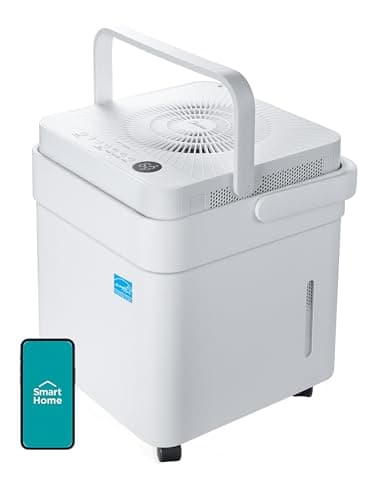
| 1 | Best overall AeroNova Dehumidifier, 24.5 pints/day 2.05 L/kWh at 24.50 pints a day and 257 kWh a year — the highest efficiency in the sub-25-pint field. | A studio, a single room, or the top of the small class | |
| 2 | Best household brand TCL Dehumidifier, 24.8 pints/day 1.85 L/kWh at 24.84 pints a day — the highest figure any household-name brand reaches in the small class. | Buyers who want a recognisable name with support behind it | |
| 3 | For a closet or a caravan BLACK+DECKER Dehumidifier, 9.2 pints/day 9.20 pints a day at 117 kWh a year — the lowest annual energy of anything certified we hold. | A very small enclosed space — a wardrobe, a boat, a single cupboard | |
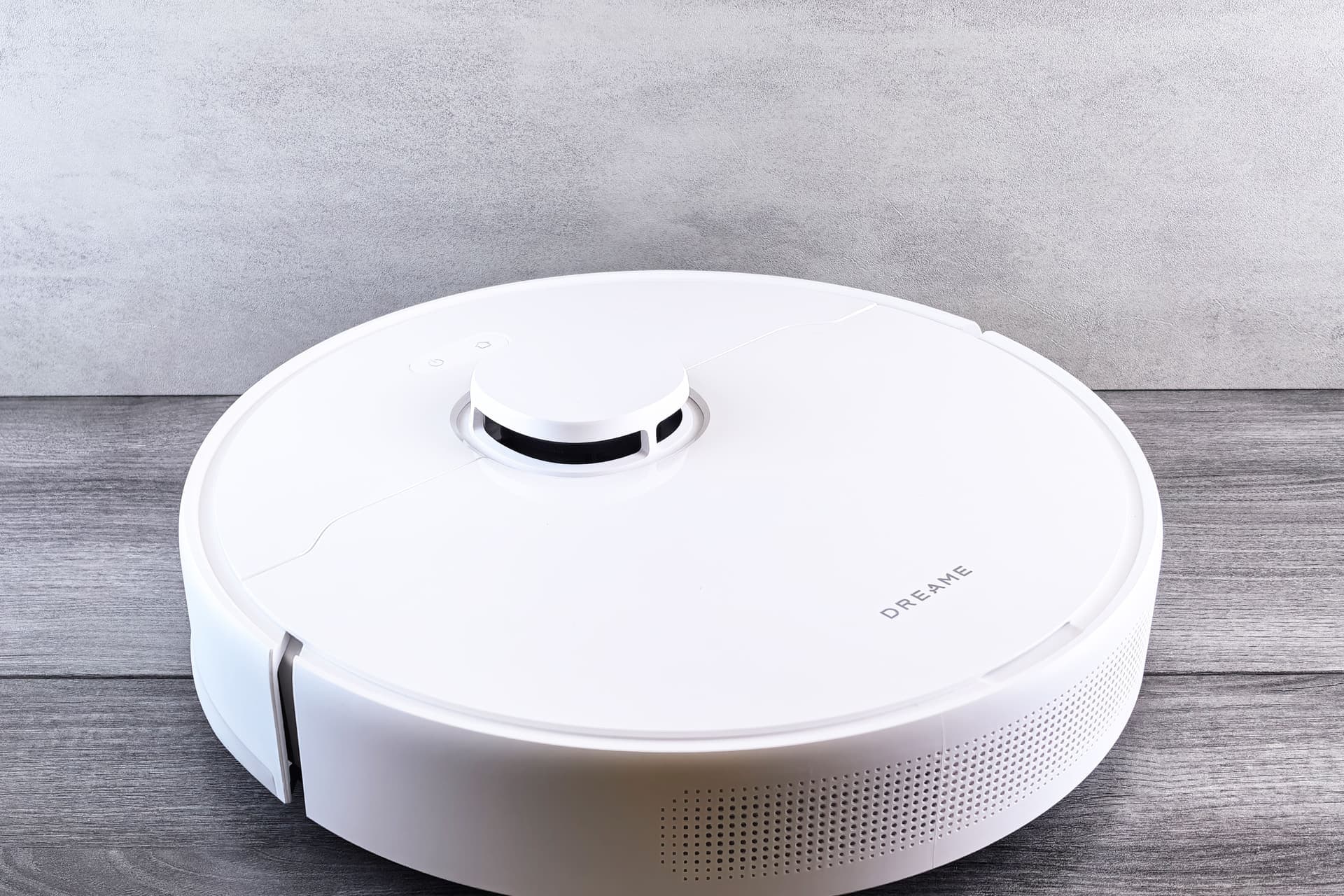
| — |  The floor of the field Midea Dehumidifier, 20 pints/day 1.70 L/kWh — the lowest efficiency of any certified dehumidifier — at 20.16 pints a day. | Nothing, over the alternatives above |
The sub-25-pint class is the most confusing part of this category, because the badge and the number point in opposite directions.
The paradox
80% of the Most Efficient badges, the worst median efficiency
Across the 502 certified portable dehumidifiers, 111 carry the ENERGY STAR Most Efficient designation. Where they sit by capacity is startling.
| Band | Units | Most Efficient | Median IEF | Best IEF |
|---|---|---|---|---|
| Under 25 pt/day | 238 | 88 (37%) | 1.79 | 2.05 |
| 25 to 35 pt/day | 40 | 15 (38%) | 2.04 | 2.15 |
| 35 to 45 pt/day | 68 | 2 (3%) | 2.01 | 2.21 |
| 45 to 60 pt/day | 155 | 5 (3%) | 2.01 | 2.24 |
The small class has the lowest median efficiency of any band (1.79) and the lowest ceiling (2.05) and yet holds 88 of the 111 Most Efficient units.
There is nothing dishonest in that. The criteria are set relative to a scale that varies by capacity class, so a unit clearing the bar for its size does not have to beat a much larger machine on raw L/kWh. But it does mean one thing for shoppers:
The Most Efficient badge on a small dehumidifier tells you it is good for its size, not that it is efficient. An identically badged 45-pint unit removes water at 2.24 L/kWh — 25% better than the best small one. How selective the label is by category.
The brands
Every familiar name is at the bottom
We found this pattern in the 50-pint class, where eleven household brands all stopped at exactly 2.01. In the small class it is more pronounced.
| Brand | Best IEF in this class | At |
|---|---|---|
| AeroNova | 2.05 | 24.50 pt/day |
| Waykar | 1.91 | 10.16 pt/day |
| TCL | 1.85 | 24.84 pt/day |
| hOmeLabs | 1.75 | 24.48 pt/day |
| Honeywell | 1.75 | 24.48 pt/day |
| Black+Decker | 1.73 | 9.20 pt/day |
| Danby | 1.70 | 22.31 pt/day |
| Frigidaire | 1.70 | 22.27 pt/day |
| Vissani | 1.70 | 22.27 pt/day |
| GE | 1.70 | 24.71 pt/day |
| Hisense | 1.70 | 24.89 pt/day |
| Midea | 1.70 | 20.16 pt/day |
Six household names all at exactly 1.70 — the floor of the entire certified dataset, portable or whole-home, at any capacity. Only the online-native brands climb above 1.85.
It is the same shared-platform pattern we found in the 50-pint class and in room air conditioners, where 58% of certified units share every published spec with another brand.
When small is right
And when it is a mistake
Undersizing a dehumidifier is the expensive error — an undersized unit runs at 100% duty forever, never reaches setpoint, and uses more energy over a season than the larger machine would have.
A small unit is right for:
- A single bedroom or study whose load is occupants and a bathroom next door.
- A studio or one-bedroom flat with shared walls on most sides.
- A wardrobe, cupboard, boat cabin or caravan — this is where the 9-pint units earn their place.
- A room where you will empty the tank by hand, since small capacity means a manageable schedule.
It is wrong for:
- A basement. Groundwater arrives continuously and 25 pints will not hold it — that room wants 45 to 60.
- A garage or crawl space. Same reason, plus the cold-temperature problem.
- A whole floor. Humidity equalises slowly through doorways; one small unit will not serve several rooms.
This one is not a DIY job
Very small units are sometimes not compressor dehumidifiers at all. Below about 10 pints a day, some products on the market are thermoelectric (Peltier) or desiccant rather than refrigerant machines, and they behave quite differently — particularly at low temperatures.
Everything on this page is a certified refrigerant unit with a published DOE capacity figure. If a listing quotes capacity in millilitres per day with no DOE rating, it is very likely not in the same category and cannot be compared on these numbers.
As everywhere in this category, the certified data records no minimum operating temperature. If the space gets cold, check the manual.
Say the unwelcome thing
Do not buy a small dehumidifier because it says Most Efficient.
In this class that badge is the least informative it is anywhere on this site.
88 of the 111 Most Efficient portable dehumidifiers are under 25 pints a day — and the sub-25 class has the worst median efficiency of any band at 1.79 L/kWh, against 2.04 for the 25 to 35 pint class and 2.01 for the basement sizes.
The criteria are scored relative to capacity class, so the badge means “good for its size”. It does not mean the machine removes water cheaply compared to a larger one, and a badged 45-pint unit is 25% better on raw L/kWh.
Read the IEF figure instead. In this class that means 2.05 at 257 kWh a year or, for a familiar name, 1.85 at 24.84 pints.
In full
Every pick, and what is wrong with it
Published specifications only, each linked to the page it came from. Where a manufacturer publishes nothing, the row says so — we do not fill blanks in.
1. Best overall
AeroNova Dehumidifier, 24.5 pints/day
AeroNova · model ADC018
2.05 L/kWh at 24.50 pints a day and 257 kWh a year — the highest efficiency in the sub-25-pint field.
The efficiency leader of a class where the spread between best and typical is unusually wide.
2.05 L/kWh against a sub-25-pint median of 1.79 — about 15% more water removed per kilowatt-hour than the typical machine in its size class.
257 kWh a year, roughly $47 at 18.34¢/kWh, at 24.50 pints a day.
Most Efficient certified — though in this class that designation is much less selective than it sounds, for reasons covered below. HFC-32 refrigerant.
What’s wrong with it
An online-native brand with no service network, and 24.5 pints is the ceiling of this class.
Running cost — ADC018
| Annual energy use | 257 kWh | ENERGY STAR certified figure |
|---|---|---|
| Annual cost | $47 | 257 × 18.34¢/kWh |
| Per cooling month | $12 | spread over a four-month season |
The annual figure is the certified value from the ENERGY STAR Certified Dehumidifiers dataset, which models a standard cooling season rather than your actual summer. It is more useful than a nameplate wattage here, because a variable-speed compressor spends most of its life well below nameplate.
Rate: 18.34¢/kWh, the US average residential price for June 2026 (EIA Electric Power Monthly, Table 5.3). Yours will differ — swap it in: (watts ÷ 1000) × hours × your rate.
| Water removal | 24.50 pints/day (DOE Appendix X1) |
|---|---|
| Efficiency (IEF) | 2.05 L/kWh |
| Annual energy use | 257 kWh/yr |
| Refrigerant | HFC-32 (GWP 675) |
| Connected | No |
| Noise | Not published in the certified dataset |
| ENERGY STAR | Certified, and on the Most Efficient list |
Every figure above is from ENERGY STAR Certified Dehumidifiers dataset. Blanks are shown as “not published” rather than filled in.
2. Best household brand
TCL Dehumidifier, 24.8 pints/day
TCL · model T25DC9R
1.85 L/kWh at 24.84 pints a day — the highest figure any household-name brand reaches in the small class.
Included because the brand pattern in the small class is even starker than in the 50-pint one.
1.85 L/kWh is the best of any familiar name here. Danby, Vissani, Frigidaire, GE, Midea and Hisense all sit at 1.70 — the floor of the entire certified dehumidifier field.
24.84 pints a day and 283 kWh a year, about $52 at 18.34¢/kWh.
Most Efficient certified. The honest cost against the class leader is $4.77 a year — small, and a fair price for a repair path if you want one.
What’s wrong with it
1.85 is 10% behind the class leader, which is 26 kWh a year.
Running cost — T25DC9R
| Annual energy use | 283 kWh | ENERGY STAR certified figure |
|---|---|---|
| Annual cost | $52 | 283 × 18.34¢/kWh |
| Per cooling month | $13 | spread over a four-month season |
The annual figure is the certified value from the ENERGY STAR Certified Dehumidifiers dataset, which models a standard cooling season rather than your actual summer. It is more useful than a nameplate wattage here, because a variable-speed compressor spends most of its life well below nameplate.
Rate: 18.34¢/kWh, the US average residential price for June 2026 (EIA Electric Power Monthly, Table 5.3). Yours will differ — swap it in: (watts ÷ 1000) × hours × your rate.
| Water removal | 24.84 pints/day (DOE Appendix X1) |
|---|---|
| Efficiency (IEF) | 1.85 L/kWh |
| Annual energy use | 283 kWh/yr |
| Refrigerant | HFC-32 (GWP 675) |
| Connected | No |
| Noise | Not published in the certified dataset |
| ENERGY STAR | Certified, and on the Most Efficient list |
Every figure above is from ENERGY STAR Certified Dehumidifiers dataset. Blanks are shown as “not published” rather than filled in.
3. For a closet or a caravan
BLACK+DECKER Dehumidifier, 9.2 pints/day
BLACK+DECKER · model BDT08TW
9.20 pints a day at 117 kWh a year — the lowest annual energy of anything certified we hold.
The bottom of the useful range, and worth knowing exists because people keep buying room-sized units for cupboard-sized problems.
9.20 pints a day and 117 kWh a year — about $21 at 18.34¢/kWh, which is less than half the smallest room unit.
1.73 L/kWh, close to the class median. Efficiency is not the point at this size; the point is that it is appropriately tiny.
Be clear about the limit. This will dry a wardrobe, a boat cabin or a single damp cupboard. It will not make a bedroom comfortable, and using it as though it will is how people conclude dehumidifiers do not work.
What’s wrong with it
9.2 pints will not touch a room. This is a cupboard appliance and should be treated as one.
Running cost — BDT08TW
| Annual energy use | 117 kWh | ENERGY STAR certified figure |
|---|---|---|
| Annual cost | $21 | 117 × 18.34¢/kWh |
| Per cooling month | $5.36 | spread over a four-month season |
The annual figure is the certified value from the ENERGY STAR Certified Dehumidifiers dataset, which models a standard cooling season rather than your actual summer. It is more useful than a nameplate wattage here, because a variable-speed compressor spends most of its life well below nameplate.
Rate: 18.34¢/kWh, the US average residential price for June 2026 (EIA Electric Power Monthly, Table 5.3). Yours will differ — swap it in: (watts ÷ 1000) × hours × your rate.
| Water removal | 9.20 pints/day (DOE Appendix X1) |
|---|---|
| Efficiency (IEF) | 1.73 L/kWh |
| Annual energy use | 117 kWh/yr |
| Refrigerant | Not stated in the certified record |
| Connected | No |
| Noise | Not published in the certified dataset |
| ENERGY STAR | Certified |
Every figure above is from ENERGY STAR Certified Dehumidifiers dataset. Blanks are shown as “not published” rather than filled in.
Skip this one
Midea Dehumidifier, 20 pints/day
Midea · model MAD20S1QWT
1.70 L/kWh — the lowest efficiency of any certified dehumidifier — at 20.16 pints a day.
Not a broken machine, and a useful illustration of how wide the small-class spread actually is.
1.70 L/kWh is the floor of the entire certified dehumidifier dataset — portable or whole-home, any capacity. Six household brands sit on it.
249 kWh a year for 20.16 pints a day. Compare that to the class leader: 257 kWh for 24.50 pints. You spend $1.47 a year less and remove 18% less water.
It is not Most Efficient certified, which is the correct outcome for 1.70.
If the small class is what you need, the units above do the same job for effectively the same money.
What’s wrong with it
It uses nearly as much energy as a 25-pint unit while removing 20% less water.
Running cost — MAD20S1QWT
| Annual energy use | 249 kWh | ENERGY STAR certified figure |
|---|---|---|
| Annual cost | $46 | 249 × 18.34¢/kWh |
| Per cooling month | $11 | spread over a four-month season |
The annual figure is the certified value from the ENERGY STAR Certified Dehumidifiers dataset, which models a standard cooling season rather than your actual summer. It is more useful than a nameplate wattage here, because a variable-speed compressor spends most of its life well below nameplate.
Rate: 18.34¢/kWh, the US average residential price for June 2026 (EIA Electric Power Monthly, Table 5.3). Yours will differ — swap it in: (watts ÷ 1000) × hours × your rate.
| Water removal | 20.16 pints/day (DOE Appendix X1) |
|---|---|
| Efficiency (IEF) | 1.70 L/kWh |
| Annual energy use | 249 kWh/yr |
| Refrigerant | HFC-32 (GWP 675) |
| Connected | No |
| Noise | Not published in the certified dataset |
| ENERGY STAR | Certified |
Every figure above is from ENERGY STAR Certified Dehumidifiers dataset. Blanks are shown as “not published” rather than filled in.
We are not linking a buy button for this one. If you want to look at it anyway, it is easy enough to find — but we would rather send you to something that fits your room.
Questions people actually ask
Frequently asked
What is the best small dehumidifier?
On certified efficiency, 2.05 L/kWh at 24.50 pints a day and 257 kWh a year — the highest IEF in the sub-25-pint class, against a class median of 1.79. Among household-name brands, TCL's 1.85 is the best available.
Why do so many small dehumidifiers have the Most Efficient badge?
Because the criteria are scored relative to capacity class. 88 of the 111 Most Efficient portable units are under 25 pints a day, even though that band has the worst median efficiency of any band at 1.79 L/kWh. The badge means good for its size, not efficient overall. How the label works.
Are small dehumidifiers less efficient?
Yes, measurably. The sub-25-pint class has a median IEF of 1.79 and a ceiling of 2.05. The 45 to 60 pint class has a median of 2.01 and reaches 2.24 — about 25% better at the top. Small is the right choice for load reasons, not efficiency reasons.
When should I not buy a small dehumidifier?
A basement, a garage or a crawl space — all of which fight a continuous water source that 25 pints a day will not hold. Also a whole floor, because humidity equalises slowly through doorways and one small unit will not serve several rooms.
How much does a small dehumidifier cost to run?
From about $21 a year for a 9-pint cupboard unit to $52 for a 25-pint one at 18.34¢/kWh. The class leader is 257 kWh, or $47.
What is the smallest useful dehumidifier?
Around 9 pints a day at 117 kWh a year, which is genuinely a cupboard, wardrobe or boat-cabin appliance. The certified field goes down to 1.91 pints a day, but at that point you are buying something that will not affect a room.
Sources
Where these numbers came from
Read next
Where to go from here
Back to Dehumidifiers, or read how we pick.