Guide and picks
Cooling and airing a guest room
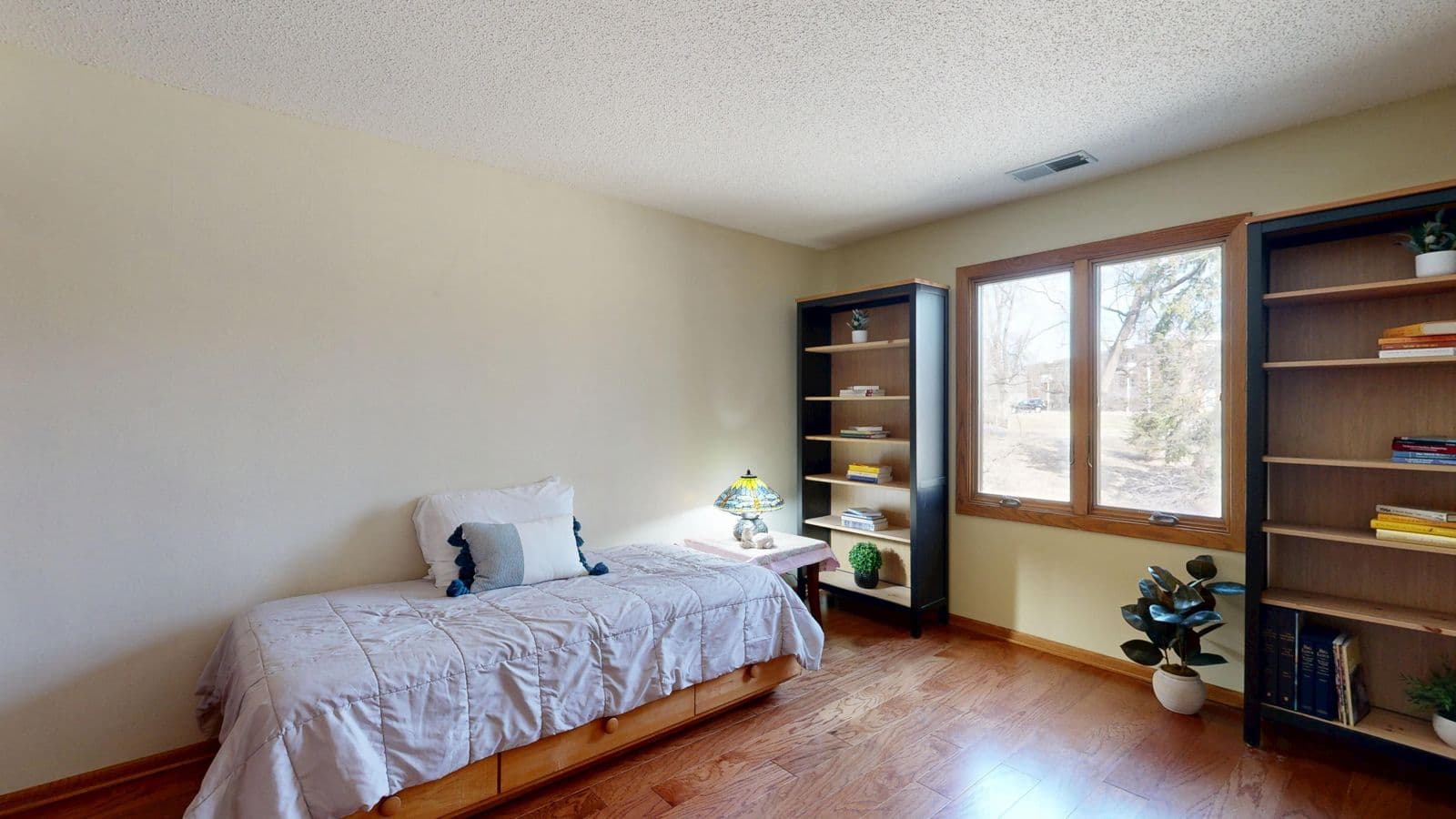
Nobody notices a guest room until somebody has to sleep in it. The problem is almost never the temperature — it is a room that has had no air moved through it since the last visit.
By Sawyer V. · Published
The short answer
Air it out first, dry it second, and only then worry about temperature. A closed spare room has had no air exchange for months, and its surfaces are the coldest in the house in winter — which is why it smells and why the window streams. A reversible window fan to flush it, a dehumidifier held in the EPA’s 30 to 50 percent band, and a quiet bedside fan covers almost every guest visit. Cooling matters only if they come in summer.
Fan & Frost earns a commission when you buy through our links, at no cost to you. It never changes a ranking, and we say so when the right answer is the cheaper unit or nothing at all. Full disclosure · How we pick.
At a glance
The picks, ranked
Tap any row to jump to the full reasoning. Prices are live from Amazon where we have them, and read “check price” where we don’t — never a number we cannot verify today.
| # | Product | Best for | Price |
|---|---|---|---|
| 1 | 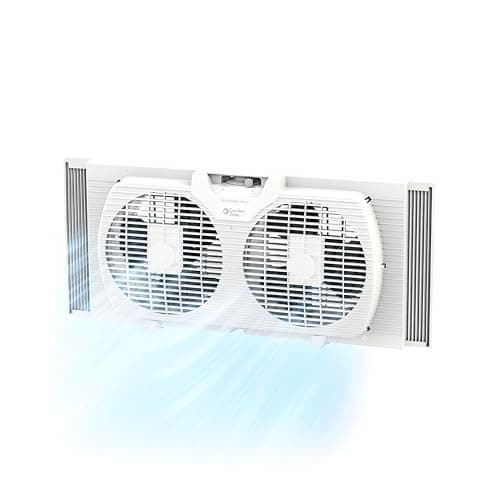 Best for airing it out Comfort Zone 9" Twin Window Fan Two 9-inch fans that reverse between intake and exhaust with a manual control, fitting a window from 22.25 inches wide. The narrowest window fit in our registry. | The day before guests arrive — pulling the stale air out of a room that has been shut since the last visit, in an hour rather than a weekend | |
| 2 | 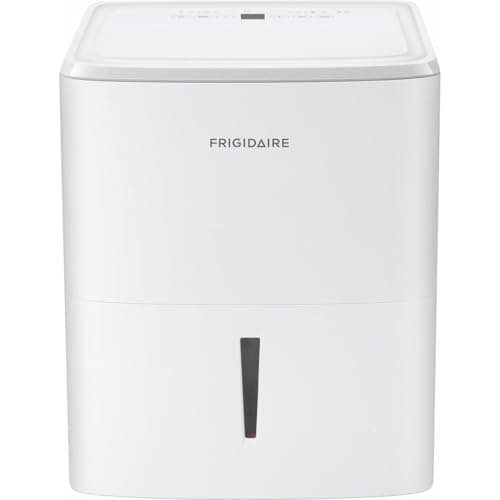 Best for the damp underneath the smell Frigidaire Dehumidifier, 35 pints/day 35.85 pints a day at a certified IEF of 2.01 L/kWh, about 9 cents per liter removed. Run it for a few days before the visit, not during it. | A spare room that has been unheated all winter, where the window is wet in the morning and the wardrobe smells of the room rather than of clothes | |
| 3 | 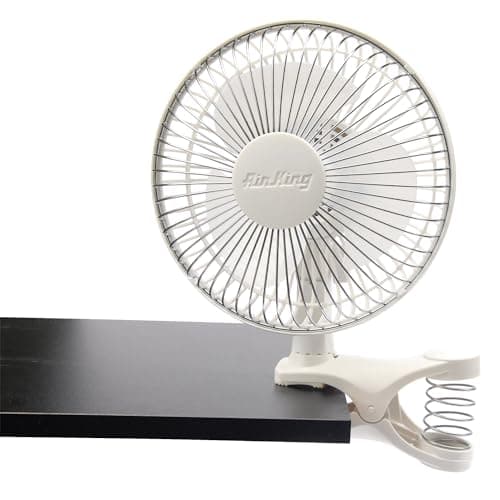 Best bedside extra Air King 6" Commercial Grade Clip-On Fan 190 CFM on 9 to 12 W, and 34 dBA on low — one of very few portable fans on this site that publishes a decibel figure at all, which is the number that matters beside a bed. | Leaving in the room for the whole visit — a guest who sleeps warm, or one who wants white noise, without a floor fan in a room with no floor space | |
| 4 | 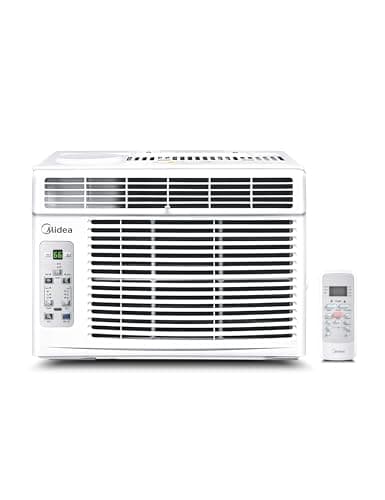 Best cooling, if they come in summer Midea Window Air Conditioner, 5,000 BTU 5,000 BTU at CEER 14.4 and 260.4 certified kWh a year, which is 31 percent under the federal standard. 30.2 lb and no support bracket required. | A spare room used in hot weather — the smallest certified window unit, sized for a room you are not trying to cool all season | |
| — | 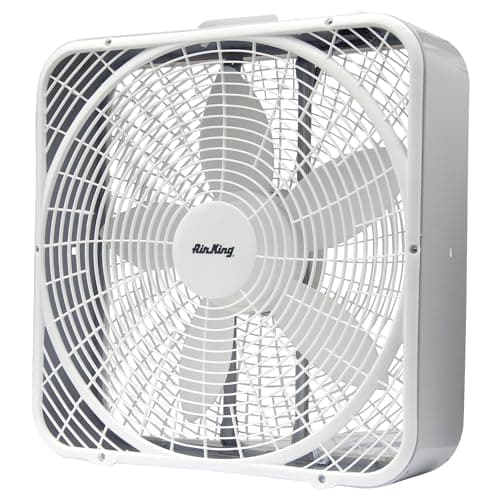 The one to skip in a guest room Air King 9723 20" Commercial Grade Box Fan 2,163 CFM on 105 W and 20.6 CFM per watt, which is excellent, with no published decibel figure at all — in the one room where noise decides everything. | A utility room, a garage or a workshop — not a room somebody is trying to sleep in for the first time |
A guest room is not a cooling problem with a seasonal twist. It is a room that has been sealed for eleven months, and everything people complain about in one — the smell, the wet window, the airless feeling at 3 a.m. — comes from that single fact.
The order
Air, then damp, then temperature
Doing these in the wrong order is why people buy an air conditioner for a room whose actual problem is that no air has moved through it since last Christmas.
- Air exchange, 24 to 48 hours before they arrive. Replace the air in the room several times over. A window fan on exhaust with the door ajar does this properly; an open window on a still day barely does it at all.
- Measure the humidity, in that room. The EPA target is “below 60 percent (ideally between 30 and 50 percent) ”. A reading from the heated hallway tells you nothing — a closed unheated room routinely reads twenty points higher.
- Dry it if it is above the band, for a day or three, then remove the machine before the guest arrives.
- Heat or cool it last, and only to the extent the season demands. In winter the room needs warming, and warming it is also what lifts its surfaces above the dew point.
- Leave one quiet fan with a published noise figure, for the guest to use or not.
Why it smells
The smell is the humidity, mostly
Stale-room smell is produced by things that need moisture to work: mold and bacteria in soft furnishings, in the mattress and in the carpet underlay. The EPA sets the condition plainly — keep relative humidity in the 30 to 50 percent band, and “if wet or damp materials or areas are dried 24-48 hours after a leak or spill happens, in most cases mold will not grow”.
A closed spare room fails that test continuously rather than once. It has no ventilation to carry moisture away, its surfaces are the coldest in the house, and moisture from the occupied rooms migrates in under the door and condenses there. The EPA again: “When warm, humid air contacts a cold surface, condensation may form.”
Which is why airing and drying fix the smell and air freshener does not. One addresses the mechanism; the other addresses your nose.
The numbers
What the whole setup costs to run
| Job | Machine | Published figure | Cost |
|---|---|---|---|
| Flush the air | Twin window fan | No wattage published | Not calculable |
| Dry it out | 35-pint dehumidifier | IEF 2.01 L/kWh | 9.1¢ per liter |
| Bedside air, all night | 6-inch clip-on, 12 W | 190 CFM, 34 dBA low | 1.8¢ per night |
| Cool it in summer | 5,000 BTU window unit | CEER 14.4, 260.4 kWh/yr | $48 per year |
Figures from the ENERGY STAR certified datasets and the manufacturers’ own pages; costs are our arithmetic at 18.34¢/kWh. The window fan publishes neither airflow nor power, which is why its row is empty rather than estimated.
The whole seasonal routine — a few days of drying and a few nights of a 12-watt fan — costs less than a dollar. The expensive item on that list is the only one most people buy first.
This one is not a DIY job
Leave the door open between visits. Free, and the single most effective thing on this page. An open interior door lets the guest room share the heated, drier air of the rest of the house, which raises its surface temperatures and stops the one-way migration of moisture under a closed door. If the room has a radiator, leaving it on its lowest setting through the winter costs far less than drying the room out in December.
Winter guests
A room nobody heats, in the week it gets used
The holiday case has its own shape, and the mistake is predictable: turning the heating on in the spare room the night before people arrive.
Warming cold, damp surfaces quickly drives moisture out of them into the room air, which then condenses on the window as soon as the temperature drops overnight. The room is warm, the glass is streaming and the bed feels damp — and all three happen because the heat arrived without any ventilation or drying beforehand.
The order that works: ventilate, dry, then heat, starting two or three days out. Each step makes the next one cheaper. Whether the room needs a dehumidifier at all turns on the reading rather than the season.
Summer guests
If the spare room is the hot one
Spare rooms are frequently the worst room in the house in summer, because they are the ones nobody optimized: the loft conversion, the room over the garage, the one facing west.
- Size the cooling for the room, not the guest. 5,000 BTU covers 100 to 150 sq ft on the published table, which is most spare rooms. Oversizing produces a cold clammy room.
- Check which of the awkward-room problems you actually have before buying, because the fix differs: a finished attic, a room over the garage and a west-facing room are three different diagnoses.
- A fan is a better guest-room purchase than cooling for most households, because it works in both seasons and costs cents a night.
Say the unwelcome thing
Do not leave a dehumidifier running in the room while a guest sleeps in it.
Not for any exotic reason: no dehumidifier publishes a noise rating. The ENERGY STAR certified dataset has no acoustic field for any of its 559 models, so there is no figure to check and no way to know whether the unit you own is tolerable beside a bed. Do the drying in the days before the visit and take the machine out.
The other thing not to do is seal the room up again the moment they leave. A closed door is what produced the problem in the first place, and reinstating it means you will be doing all of this again next year.
In full
Every pick, and what is wrong with it
Published specifications only, each linked to the page it came from. Where a manufacturer publishes nothing, the row says so — we do not fill blanks in.
1. Best for airing it out
Comfort Zone 9" Twin Window Fan
Comfort Zone · model CZ319WT
Two 9-inch fans that reverse between intake and exhaust with a manual control, fitting a window from 22.25 inches wide. The narrowest window fit in our registry.
Two 9-inch fans, intake or exhaust, reversed by a manual control, fitting a window opening from 22.25 to 33 inches wide — the narrowest fit of any window fan we have found, which matters because spare rooms are usually the small room with the small window.
Set it to exhaust and crack a door or a second window. That makes the guest room negative-pressure, so it pulls fresh air in from the house and pushes the stale air outdoors instead of distributing it into the hall. An hour of that does more than a day of an open window on a still day.
Why a window fan rather than any fan: a room fan recirculates. The smell in a closed room is in the air and coming off the soft furnishings, so you need air exchange rather than air movement.
What it does not publish is airflow or power, and we are not going to invent either. For a once-or-twice-a-year job in a small room that absence is tolerable — where for a fan you ran every night it would not be. Window fans ranked for exhaust.
What’s wrong with it
Comfort Zone publishes no airflow figure and no wattage for it, so there is nothing to compare it against. Reversing is manual rather than electronic, and the plastic build is a long way from the commercial fans elsewhere on this site.
Running cost
Comfort Zone does not publish a wattage for the CZ319WT, so we cannot calculate what it costs to run. We are not going to estimate one. If Comfort Zone publishes a nameplate figure, this block will show the arithmetic.
| Modes | Intake or exhaust, reversed by a manual control |
|---|---|
| Speeds | 2 |
| Blades | Two 9 in fans |
| Window fit | 22.25 - 33 in wide |
| Opening required | Not published |
| Air delivery | Not published |
| Power | Not published |
| Cover | Removable fabric cover |
| Warranty | 1 year |
Every figure above is from Comfort Zone product page, CZ319WT. Blanks are shown as “not published” rather than filled in.
2. Best for the damp underneath the smell
Frigidaire Dehumidifier, 35 pints/day
Frigidaire · model FHDD3534Y1
35.85 pints a day at a certified IEF of 2.01 L/kWh, about 9 cents per liter removed. Run it for a few days before the visit, not during it.
35.85 pints a day on DOE Appendix X1 at IEF 2.01 L/kWh and 379 kWh a year certified — about $70 at 18.34¢/kWh on a constant run, which this will not be.
A closed spare room is the textbook case for the EPA’s cold corner: “Mold is frequently found on walls in cold corners behind furniture where condensation forms.” Heating off, door shut, so every surface tracks the outdoor temperature while moisture from the rest of the house drifts in under the door.
Because IEF is liters per kilowatt-hour, the job has a price: 9.1¢ a liter. Three days of drying a small room before a visit is a few liters and a few tens of cents.
Aim for the EPA band of 30 to 50 percent and then take the machine out of the room. Guests should not have to sleep next to an appliance with no published decibel rating. What to set it to.
What’s wrong with it
No dehumidifier publishes a noise figure, so running it while somebody sleeps in the room is a gamble. It also warms the room, which is welcome in December and unhelpful in July.
Running cost — FHDD3534Y1
| Annual energy use | 379 kWh | ENERGY STAR certified figure |
|---|---|---|
| Annual cost | $70 | 379 × 18.34¢/kWh |
| Per cooling month | $17 | spread over a four-month season |
The annual figure is the certified value from the ENERGY STAR Certified Dehumidifiers dataset, which models a standard cooling season rather than your actual summer. It is more useful than a nameplate wattage here, because a variable-speed compressor spends most of its life well below nameplate.
Rate: 18.34¢/kWh, the US average residential price for June 2026 (EIA Electric Power Monthly, Table 5.3). Yours will differ — swap it in: (watts ÷ 1000) × hours × your rate.
| Water removal | 35.85 pints/day (DOE Appendix X1) |
|---|---|
| Efficiency (IEF) | 2.01 L/kWh |
| Annual energy use | 379 kWh/yr |
| Refrigerant | R-32 (GWP 675) |
| Connected | No |
| Noise | Not published in the certified dataset |
| ENERGY STAR | Certified |
Every figure above is from ENERGY STAR Certified Dehumidifiers dataset. Blanks are shown as “not published” rather than filled in.
3. Best bedside extra
Air King 6" Commercial Grade Clip-On Fan
Air King · model 9145
190 CFM on 9 to 12 W, and 34 dBA on low — one of very few portable fans on this site that publishes a decibel figure at all, which is the number that matters beside a bed.
Up to 190 CFM on 9 to 12 W, two speeds, and the figure that earns it a place here: 34 dBA on low and 37 dBA on high, published. Across this whole site, portable fans that publish a decibel rating are the exception.
For a guest room that is the whole argument. You are putting a fan next to somebody’s head in an unfamiliar room, so the only specification that decides whether it helps or ruins the night is the one almost nobody publishes.
12 W at the top speed means an eight-hour night costs 1.8¢ at 18.34¢/kWh — a month of nights would be 53¢. It is a rounding error on any guest’s stay.
2.22 lb on a spring-loaded non-marking clip, which grips a bed frame, a shelf edge or a door. That is the real virtue in a small room with a bed, a bedside table and no spare floor. Clip-on fans, compared.
What’s wrong with it
190 CFM is a personal fan's output, not a room's: it will not change the temperature of the space, only the air moving across whoever is in front of it. The clip needs an edge to grip, so a solid bedside cabinet defeats it.
Running cost — 9145
| Nameplate power | 9 W – 12 W | manufacturer's published figure |
|---|---|---|
| Energy, 8-hour night | 0.10 kWh | 12 ÷ 1000 × 8 |
| Cost per hour | 0.2¢ | at 18.34¢/kWh |
| Cost per 8-hour night | 1.8¢ | on the highest speed |
| Cost per 30 nights | 53¢ | 2.9 kWh |
| Same month, lowest speed | 40¢ | at 9 W |
Rate: 18.34¢/kWh, the US average residential price for June 2026 (EIA Electric Power Monthly, Table 5.3). Yours will differ — swap it in: (watts ÷ 1000) × hours × your rate.
| Power | 9 W - 12 W (0.1-0.2 A at 120 V) |
|---|---|
| Air delivery | Up to 190 CFM |
| Noise | 34 dBA low, 37 dBA high |
| Speeds | 2 |
| Mounting | Spring-loaded clip, non-marking |
| Dimensions | 10.38 H x 6.25 L x 8.13 W in |
| Weight | 2.22 lb |
| Cord | 6 ft, 3-conductor |
| Listing | ETL listed, OSHA compliant |
| Warranty | 1 year |
Every figure above is from Air King product page, 9145 (via Lasko). Blanks are shown as “not published” rather than filled in.
4. Best cooling, if they come in summer
Midea Window Air Conditioner, 5,000 BTU
Midea · model MAW05R1VWWT-T
5,000 BTU at CEER 14.4 and 260.4 certified kWh a year, which is 31 percent under the federal standard. 30.2 lb and no support bracket required.
5,000 BTU/h at CEER 14.4, with a certified 260.4 kWh a year — about $48 at 18.34¢/kWh for a season of use — which ENERGY STAR records as 31 percent less energy than the federal standard. Variable-speed compressor, R-32 refrigerant.
5,000 BTU is the right size and people oversize it. The published sizing table starts at 5,000 BTU for 100 to 150 square feet, which is most spare rooms. A bigger unit cools the air fast, shuts off before it has removed any moisture, and leaves the room cold and clammy. The whole sizing table.
30.2 lb, 12.1 by 16.0 by 13.3 inches, and it does not straddle the windowsill and needs no support bracket. For a room you fit a unit in for August and take out in September, both of those matter more than the efficiency figure. Taking it out again.
Buy this only if guests actually come in hot weather. For a room used at Christmas it is the wrong end of the problem entirely.
What’s wrong with it
It is the wrong purchase for a room used twice a year in winter — that is what the fan and the dehumidifier above are for. The certified dataset publishes no decibel figure for it, which in a guest bedroom is the spec you would want most.
Running cost — MAW05R1VWWT-T
| Annual energy use | 260.4 kWh | ENERGY STAR certified figure |
|---|---|---|
| Annual cost | $48 | 260.4 × 18.34¢/kWh |
| Per cooling month | $12 | spread over a four-month season |
The annual figure is the certified value from the ENERGY STAR Certified Room Air Conditioners dataset, which models a standard cooling season rather than your actual summer. It is more useful than a nameplate wattage here, because a variable-speed compressor spends most of its life well below nameplate.
Rate: 18.34¢/kWh, the US average residential price for June 2026 (EIA Electric Power Monthly, Table 5.3). Yours will differ — swap it in: (watts ÷ 1000) × hours × your rate.
| Cooling capacity | 5,000 BTU/h |
|---|---|
| CEER | 14.4 |
| Annual energy use | 260.4 kWh/yr |
| vs federal standard | 31% less energy |
| Dimensions | 12.1 H x 16.0 W x 13.3 D in |
| Weight | 30.2 lb |
| Installation | Does not straddle the windowsill |
| Support bracket | Not required |
| Compressor | Variable speed |
| Refrigerant | R-32 |
| ENERGY STAR | Certified (not on the Most Efficient list) |
Every figure above is from ENERGY STAR Certified Room Air Conditioners dataset. Blanks are shown as “not published” rather than filled in.
Skip this one
Air King 9723 20" Commercial Grade Box Fan
Air King · model 9723
2,163 CFM on 105 W and 20.6 CFM per watt, which is excellent, with no published decibel figure at all — in the one room where noise decides everything.
There is nothing wrong with this fan — it is the pick on several other pages here. 2,163 / 1,900 / 1,463 CFM on 105 / 87 / 65 W, fully published, at 20.6 CFM per watt.
The problem is the missing row. Air King publishes no decibel figure for it, and in a guest room the decibel figure is the specification. The same manufacturer publishes 34 dBA for the clip-on fan above and 50 to 64 dB for its window fans, so the absence here is a choice rather than an industry-wide gap.
It is also the wrong object socially. A 20-inch steel commercial box fan on the floor of a spare bedroom reads as improvised, and a guest who finds it too loud will not say so.
Keep it for the jobs it is built for — including drying laundry, where its lack of a noise rating does not matter. Where it is the right answer.
What’s wrong with it
Air King publishes no dBA for it, even though the same company publishes 34 dBA for its clip-on fan and 50 to 64 dB for its window fans. A commercial steel box fan in a spare bedroom is also simply the wrong object to hand a guest.
Running cost — 9723
| Nameplate power | 65 W – 105 W | manufacturer's published figure |
|---|---|---|
| Energy, 8-hour night | 0.84 kWh | 105 ÷ 1000 × 8 |
| Cost per hour | 1.9¢ | at 18.34¢/kWh |
| Cost per 8-hour night | 15¢ | on the highest speed |
| Cost per 30 nights | $4.62 | 25.2 kWh |
| Same month, lowest speed | $2.86 | at 65 W |
Rate: 18.34¢/kWh, the US average residential price for June 2026 (EIA Electric Power Monthly, Table 5.3). Yours will differ — swap it in: (watts ÷ 1000) × hours × your rate.
| Air delivery | 2,163 / 1,900 / 1,463 CFM (high / medium / low) |
|---|---|
| Power | 105 / 87 / 65 W (0.94 / 0.72 / 0.56 A) |
| Efficiency | 20.6 CFM per watt on high, 22.5 on low (our arithmetic) |
| Blade speed | 1,220 / 1,075 / 855 RPM |
| Blade | 20 in |
| Speeds | 3 |
| Motor | 1/25 HP, 120 V, 1 phase |
| Dimensions | 21.38 W x 6.38 D x 22.5 H in |
| Weight | 11.4 lb |
| Oscillation | No |
| Noise | Not published |
Every figure above is from Air King commercial box fan product page, model 9723. Blanks are shown as “not published” rather than filled in.
We are not linking a buy button for this one. If you want to look at it anyway, it is easy enough to find — but we would rather send you to something that fits your room.
Questions people actually ask
Frequently asked
Why does my guest room smell musty?
Because it has had no air exchange for months and its surfaces are the coldest in the house, so moisture from the rest of the home condenses there and feeds mold and bacteria in the mattress, carpet and soft furnishings. The EPA's target is relative humidity below 60 percent and ideally 30 to 50. Airing and drying fix the cause; air freshener does not.
How do I get a spare room ready for guests?
In this order, starting two or three days out: flush the air with a window fan on exhaust and the door ajar; take a humidity reading in that room; dry it to the 30 to 50 percent band if it is above it; then heat or cool it. Doing the heating first drives moisture out of cold surfaces and straight onto the window overnight.
Should I leave the guest room door open?
Yes, and it is the most effective free thing you can do. An open interior door lets the room share the heated, drier air of the rest of the house, which raises its surface temperatures and stops moisture migrating one way under a closed door. A closed spare room is the condition that creates the smell.
What size air conditioner does a guest room need?
Usually 5,000 BTU. The published sizing table starts there for 100 to 150 square feet, which covers most spare rooms. Resist oversizing: a bigger unit reaches the set temperature before it has removed any moisture, shuts off, and leaves the room cold and clammy. The whole sizing table.
Should I put a dehumidifier in the guest room?
Run one for a few days before the visit if the reading is above the EPA band, then take it out. No dehumidifier publishes a noise figure — the certified dataset has no acoustic field for any of its 559 models — so leaving one running beside a sleeping guest is a gamble you cannot check in advance. Dehumidifiers in bedrooms.
What fan should I leave in a guest room?
One that publishes a decibel figure, which rules out most of them. The Air King 6-inch clip-on states 34 dBA on low and 37 on high at 190 CFM and 9 to 12 W, so an eight-hour night costs under two cents. Noise is the specification that decides whether a bedside fan helps or ruins the night. Quiet fans for sleeping.
Why are the windows wet in the spare room?
The glass is below the dew point of the air touching it, and an unheated room's windows are the coldest surface in the house. It gets worse if you heat the room suddenly the night before guests arrive, because warming damp surfaces releases moisture into the air that then condenses overnight. Stopping the condensation.
Sources
Where these numbers came from
- EPA, A Brief Guide to Mold, Moisture and Your Home — the 30 to 50 percent band, the 24-48 hour drying window, and increasing ventilation and air temperature to reduce humidity
- EPA Mold Course, Chapter 2 — warm humid air on a cold surface forms condensation; mold in cold corners behind furniture
- ENERGY STAR Certified Room Air Conditioners dataset — CEER 14.4 and 260.4 kWh/yr for the 5,000 BTU unit
- ENERGY STAR Certified Dehumidifiers dataset — certified IEF and DOE Appendix X1 capacity; no acoustic field exists in it
- Air King product page, 9145 6-inch clip-on fan — 190 CFM, 9-12 W, 34 dBA low and 37 dBA high
- Comfort Zone product page, CZ319WT twin window fan — 22.25 to 33 in window fit, reversible intake and exhaust
- EIA Electric Power Monthly, Table 5.3 — electricity rate
Read next
Where to go from here
Back to Room Cooling, or read how we pick.