Guide and picks
Can you leave a fan on all night?
The electricity question answers itself in a sentence. The reasons people actually wake up unhappy are different ones.
By Sawyer V. · Published
The short answer
Yes, and the running cost is negligible. A certified ceiling fan on low draws 1.1 to 6.0 W and a good DC tower fan 2.9 W, so a twelve-hour night costs a fraction of a cent. The genuine considerations are dry eyes and throat from air blowing directly on you, noise consistency, and keeping the fan and its cord safe — not electricity, and not fire risk on a clean modern fan.
Fan & Frost earns a commission when you buy through our links, at no cost to you. It never changes a ranking, and we say so when the right answer is the cheaper unit or nothing at all. Full disclosure · How we pick.
At a glance
The picks, ranked
Tap any row to jump to the full reasoning. Prices are live from Amazon where we have them, and read “check price” where we don’t — never a number we cannot verify today.
| # | Product | Best for | Price |
|---|---|---|---|
| 1 | 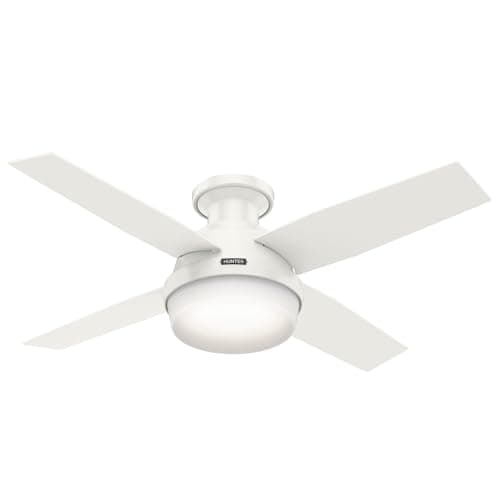 Cheapest overnight run available Hunter Martindale 44" Ceiling Fan 1.1 W on low — a twelve-hour night costs a fraction of a cent, and there is no cord in the room at all. | A bedroom you own, running every night without thinking about it | |
| 2 | 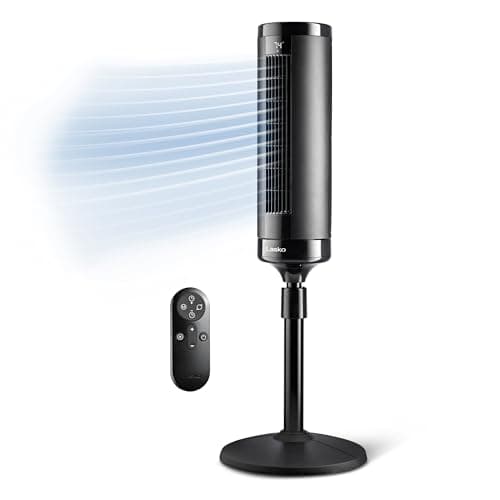 Best plug-in for overnight Lasko EcoQuiet 42" DC Tower Fan 2.9 W on low at 23 dBA with twelve speeds and an 8-hour timer — the quietest published figure on the site. | A rental, or a room where you want the air aimed | |
| 3 | 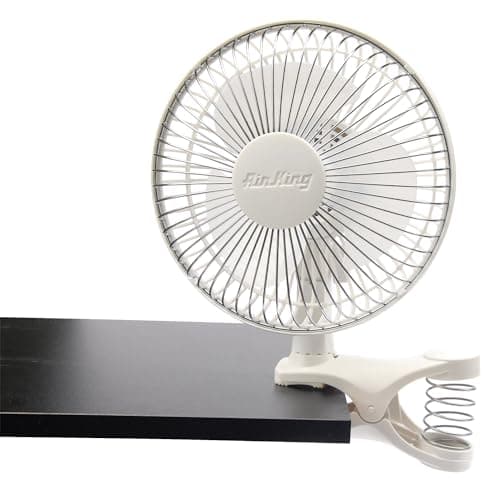 Most consistent sound overnight Air King 6" Commercial Grade Clip-On Fan 34 to 37 dBA — a three-decibel spread, so it sounds the same at 3am as it did at 11pm. | Masking outside noise without the level changing | |
| — | The one not to run all night Lasko Power Plus 20" Box Fan 73 W on its lowest setting, with no published dBA — the expensive way to do this, in the room where noise matters most. | A window or a garage, not a bedroom |
People ask this worrying about electricity or fire. Neither is the real issue with a modern, clean fan. The things that actually make an overnight fan unpleasant are more mundane and easier to fix.
The easy part
What a night actually costs
| Fan | Power | 12 hours | 120 nights |
|---|---|---|---|
| Ceiling fan, low | 1.1 W | 0.2¢ | 29¢ |
| DC tower fan, low | 2.9 W | 0.6¢ | 77¢ |
| Large ceiling fan, low | 6 W | 1.3¢ | $1.58 |
| Clip-on fan, high | 12 W | 2.6¢ | $3.17 |
| DC tower fan, high | 19 W | 4.2¢ | $5.02 |
| Box fan, low | 73 W | 16¢ | $19 |
Ceiling fan wattage certified; others from manufacturer product pages.
A whole summer of nights on an efficient fan costs less than a coffee. Electricity is not a reason to switch it off, and a timer set to save money is saving something that does not need saving.
The real issues
Three things that actually matter
Dryness. Air moving continuously over your face accelerates evaporation — which is exactly the cooling mechanism you want, and also what dries eyes, nose and throat over eight hours. People wake with a scratchy throat and blame the fan, correctly.
The fix is not to switch it off. Aim it away from your face — at a wall, or across the room — and you keep the air movement and the sound without the direct stream. A ceiling fan on low sidesteps the problem entirely.
Sound consistency. A constant sound disappears from awareness within minutes; a changing one does not. So an oscillating fan, a fan on an auto mode, or a timer that switches off at 3am all create the thing that wakes people. Why steadiness beats quietness.
Temperature overshoot. Rooms cool overnight, and a fan that felt right at bedtime can feel cold at 4am — because felt cooling does not care that the air temperature has already dropped. A lower speed, or a fan aimed away, handles it better than a timer does.
This one is not a DIY job
What to check before running any fan unattended.
Cord condition and routing. No damage, particularly where the cord enters the body, and routed behind furniture rather than across a floor you walk on in the dark. Not under a rug, where damage goes unseen and heat cannot escape.
Clean blades and clear motor vents. Dust makes the motor work harder and run hotter. It is also what makes an old fan smell warm. The procedure.
Stable placement. Not somewhere it can be knocked over reaching for a light in the dark.
Any burning smell, scorch mark or intermittent operation means stop. That is not a fan to run unattended, or at all.
In a nursery the rules are stricter and separate — nothing on, above or within reach of a crib.
Setup
Getting an overnight fan right
- Aim it away from your face. At a wall, or across the bed rather than at it. You keep the air movement and lose the dry-throat problem.
- Use the lowest speed that works. Quieter, cheaper, and less drying. A fan with twelve speeds finds that setting where one with three cannot.
- Turn oscillation off. A sweeping head modulates the sound on a slow cycle, which is exactly the structure that keeps you noticing it.
- Do not use the timer. Switching off partway through the night removes the masking when sleep is lightest, and the electricity saved is a fraction of a cent.
- Get it off the floor if you are using it for sound — carpet and furniture absorb it before it reaches ear height.
Other rooms
Leaving a fan on when nobody is there
Different question, different answer. A conventional fan in an empty room achieves nothing — the cooling mechanism needs skin — and its motor is adding heat to a room you wanted cool.
Two exceptions. A window fan exchanging air is genuinely lowering the temperature while outdoor air is cooler. And a ceiling fan on low keeps a room from stratifying, which is useful in a tall space.
Say the unwelcome thing
Do not buy a fan for its sleep timer.
It is marketed as an energy-saving feature and it saves an amount that rounds to nothing while creating a genuine problem.
A fan switching off after four hours removes the air movement and the sound masking at roughly the point in the night when sleep is lightest. The room is quiet again, and the sounds the fan was covering are suddenly audible — and the change itself is a stimulus.
The electricity involved is 0.6¢ for a full night on a good DC fan. There is nothing to save.
Buy on low-speed wattage, published dBA, and the number of speeds instead. If the fan has a timer, leaving it unused is fine.
In full
Every pick, and what is wrong with it
Published specifications only, each linked to the page it came from. Where a manufacturer publishes nothing, the row says so — we do not fill blanks in.
1. Cheapest overnight run available
Hunter Martindale 44" Ceiling Fan
Hunter · model 44in Martindale
1.1 W on low — a twelve-hour night costs a fraction of a cent, and there is no cord in the room at all.
1.1 watts. Twelve hours is 0.2¢. A full 120-night summer at twelve hours each is 29¢.
At that level the question of whether to leave it on does not arise, which is the practical point of this page.
The other overnight advantage is that there is nothing in the room — no cord across a floor, nothing to knock over, nothing at reachable height.
304.5 CFM per watt certified, the best small-fan efficiency in our data. Small-room comparison.
What’s wrong with it
It is an electrical installation, so not an option in most rentals, and it cannot be aimed away from the bed.
Running cost — 44in Martindale
| Nameplate power | 1.1 W – 10.1 W | manufacturer's published figure |
|---|---|---|
| Energy, 8-hour night | 0.08 kWh | 10.1 ÷ 1000 × 8 |
| Cost per hour | 0.2¢ | at 18.34¢/kWh |
| Cost per 8-hour night | 1.5¢ | on the highest speed |
| Cost per 30 nights | 44¢ | 2.4 kWh |
| Same month, lowest speed | 4.8¢ | at 1.1 W |
Rate: 18.34¢/kWh, the US average residential price for June 2026 (EIA Electric Power Monthly, Table 5.3). Yours will differ — swap it in: (watts ÷ 1000) × hours × your rate.
| Blade span | 44 in |
|---|---|
| Efficiency | 304.5 CFM per watt |
| Power, high speed | 10.1 W |
| Power, low speed | 1.1 W |
| Standby power | 0.4 W |
| Type | Indoor, fan only |
| Warranty | 3 years, components |
| ENERGY STAR | Certified |
Every figure above is from ENERGY STAR Certified Ceiling Fans dataset. Blanks are shown as “not published” rather than filled in.
2. Best plug-in for overnight
Lasko EcoQuiet 42" DC Tower Fan
Lasko · model T42710
2.9 W on low at 23 dBA with twelve speeds and an 8-hour timer — the quietest published figure on the site.
2.9 W on low is 0.6¢ for a twelve-hour night — within a rounding error of a hard-wired ceiling fan, from something you plug in.
23 dBA is the quietest published figure we hold, and twelve DC speeds matter overnight because you can find the setting that moves enough air without drying you out.
The 8-hour timer is worth mentioning as something not to use. Switching off partway through the night removes whatever sound masking it was providing at the point sleep is lightest.
Route the cord behind furniture, not across a floor you walk on in the dark.
What’s wrong with it
The 8-hour timer is a feature we would not use overnight, and the cord needs routing safely.
Running cost — T42710
| Nameplate power | 2.9 W – 19 W | manufacturer's published figure |
|---|---|---|
| Energy, 8-hour night | 0.15 kWh | 19 ÷ 1000 × 8 |
| Cost per hour | 0.3¢ | at 18.34¢/kWh |
| Cost per 8-hour night | 2.8¢ | on the highest speed |
| Cost per 30 nights | 84¢ | 4.6 kWh |
| Same month, lowest speed | 13¢ | at 2.9 W |
Rate: 18.34¢/kWh, the US average residential price for June 2026 (EIA Electric Power Monthly, Table 5.3). Yours will differ — swap it in: (watts ÷ 1000) × hours × your rate.
| Power | 2.9 W - 19 W (0.06-0.303 A at 120 V) |
|---|---|
| Noise | 23 dBA low, 46 dBA high |
| Speeds | 12 |
| Height | 41.6 in |
| Footprint | 12.8 x 12.8 in |
| Weight | 7.8 lb |
| Timer | 8 hours |
| Air delivery (CFM) | Not published |
| Warranty | 2 years |
Every figure above is from Lasko product page, T42710. Blanks are shown as “not published” rather than filled in.
3. Most consistent sound overnight
Air King 6" Commercial Grade Clip-On Fan
Air King · model 9145
34 to 37 dBA — a three-decibel spread, so it sounds the same at 3am as it did at 11pm.
For anyone using a fan as sound masking rather than for airflow, consistency beats quietness — and this is the most consistent fan we hold figures for.
Three decibels between its extremes, against 23 for a variable-speed tower fan. The brain habituates to constant sound and registers changes as events, so a fan that cannot change is doing the job properly.
9 to 12 W — 2.6¢ for a twelve-hour night.
The clip needs care in a bedroom. Somewhere solid, not a headboard rail above your head, and nowhere near a crib.
What’s wrong with it
34 dBA is well above the quietest fans here, and a clip mount needs somewhere safe and solid to attach.
Running cost — 9145
| Nameplate power | 9 W – 12 W | manufacturer's published figure |
|---|---|---|
| Energy, 8-hour night | 0.10 kWh | 12 ÷ 1000 × 8 |
| Cost per hour | 0.2¢ | at 18.34¢/kWh |
| Cost per 8-hour night | 1.8¢ | on the highest speed |
| Cost per 30 nights | 53¢ | 2.9 kWh |
| Same month, lowest speed | 40¢ | at 9 W |
Rate: 18.34¢/kWh, the US average residential price for June 2026 (EIA Electric Power Monthly, Table 5.3). Yours will differ — swap it in: (watts ÷ 1000) × hours × your rate.
| Power | 9 W - 12 W (0.1-0.2 A at 120 V) |
|---|---|
| Air delivery | Up to 190 CFM |
| Noise | 34 dBA low, 37 dBA high |
| Speeds | 2 |
| Mounting | Spring-loaded clip, non-marking |
| Dimensions | 10.38 H x 6.25 L x 8.13 W in |
| Weight | 2.22 lb |
| Cord | 6 ft, 3-conductor |
| Listing | ETL listed, OSHA compliant |
| Warranty | 1 year |
Every figure above is from Air King product page, 9145 (via Lasko). Blanks are shown as “not published” rather than filled in.
Skip this one
Lasko Power Plus 20" Box Fan
Lasko · model B20801
73 W on its lowest setting, with no published dBA — the expensive way to do this, in the room where noise matters most.
73 W on low. Twelve hours is 16¢ — about twenty-five times a DC tower fan on low, every night.
Across a 120-night summer that is $19 against 77¢. Still not a large sum, and no longer a rounding error.
The bigger issue for overnight use is that no box fan we hold data for publishes a dBA figure. In the room where noise matters most, that is precisely the specification the category declines to state.
What’s wrong with it
Its quietest setting draws more than most fans' loudest, and no box fan we hold data for publishes a noise rating.
Running cost — B20801
| Nameplate power | 73 W – 102 W | manufacturer's published figure |
|---|---|---|
| Energy, 8-hour night | 0.82 kWh | 102 ÷ 1000 × 8 |
| Cost per hour | 1.9¢ | at 18.34¢/kWh |
| Cost per 8-hour night | 15¢ | on the highest speed |
| Cost per 30 nights | $4.49 | 24.5 kWh |
| Same month, lowest speed | $3.21 | at 73 W |
Rate: 18.34¢/kWh, the US average residential price for June 2026 (EIA Electric Power Monthly, Table 5.3). Yours will differ — swap it in: (watts ÷ 1000) × hours × your rate.
| Power | 73 W - 102 W (0.6-0.9 A at 120 V) |
|---|---|
| Speeds | 3 |
| Dimensions | 21.25 H x 22.5 x 4.75 in |
| Weight | 10.1 lb |
| Motor | Weather-resistant |
| Air delivery (CFM) | Not published |
| Warranty | 2 years |
Every figure above is from Lasko product page, B20801. Blanks are shown as “not published” rather than filled in.
We are not linking a buy button for this one. If you want to look at it anyway, it is easy enough to find — but we would rather send you to something that fits your room.
Questions people actually ask
Frequently asked
Is it expensive to leave a fan on all night?
No. A certified ceiling fan on low draws 1.1 W and a good DC tower fan 2.9 W, so a twelve-hour night costs a fraction of a cent — and a whole summer of nights costs less than a coffee.
Is it safe to leave a fan running overnight?
On a clean, undamaged modern fan, yes. Check the cord for damage and route it behind furniture rather than under a rug, keep the blades and motor vents clean, and place it where it cannot be knocked over. Any burning smell or scorch mark means stop.
Why do I wake up with a dry throat from a fan?
Air moving continuously over your face accelerates evaporation — the same mechanism that cools you — and over eight hours that dries eyes, nose and throat. Aim the fan at a wall or across the bed rather than at it.
Should I use a sleep timer on a fan?
Generally no. Switching off partway through the night removes the air movement and sound masking when sleep is lightest, and the change itself is a stimulus. The electricity saved is a fraction of a cent.
Should an overnight fan oscillate?
No. A sweeping head modulates the sound on a slow cycle, and the brain habituates to constant sound while registering changes as events. Set it fixed and aimed away from the bed. Steadiness beats quietness.
Should I leave a fan on in an empty room?
No — a conventional fan cools people, not air, so with nobody there it achieves nothing while its motor adds heat. The exceptions are a window fan exchanging air, or a ceiling fan on low preventing stratification.
Sources
Where these numbers came from
Read next
Where to go from here
Back to Fans, or read how we pick.