Guide and picks
Cooling a home gym
In every other room the heat comes from outside. In this one it comes from you, and it arrives fast.
By Sawyer V. · Published
The short answer
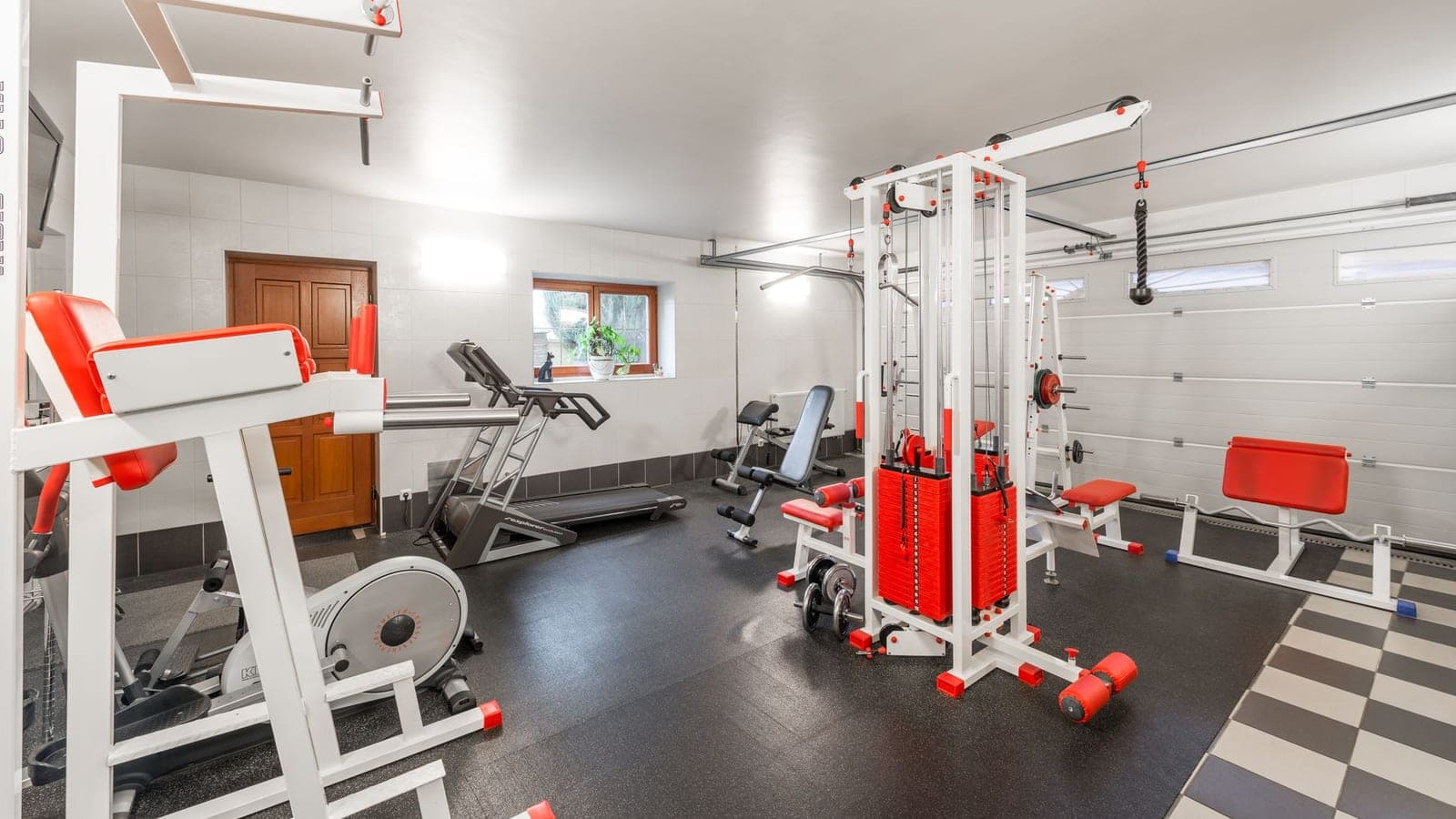
You are the heat source, and a person exercising produces several times the heat of a person sitting still — so the room heats up fast and airflow matters more than air temperature. Prioritize strong directed airflow that does not use floor space: a wall or clip mount. Ventilate too, because a closed gym accumulates humidity from you. Cooling comes last, and it should be running before you start, not after.
Fan & Frost earns a commission when you buy through our links, at no cost to you. It never changes a ranking, and we say so when the right answer is the cheaper unit or nothing at all. Full disclosure · How we pick.
At a glance
The picks, ranked
Tap any row to jump to the full reasoning. Prices are live from Amazon where we have them, and read “check price” where we don’t — never a number we cannot verify today.
| # | Product | Best for | Price |
|---|---|---|---|
| 1 | 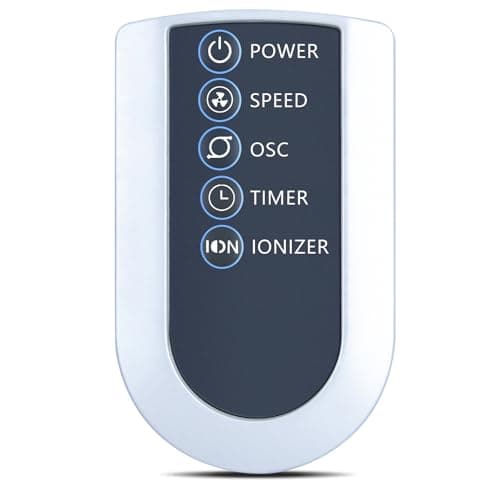 Most airflow published Lasko Wind Curve 42" Tower Fan 720 CFM — the highest published airflow figure on this site, at head height rather than floor level. | Serious airflow across a training area | |
| 2 | 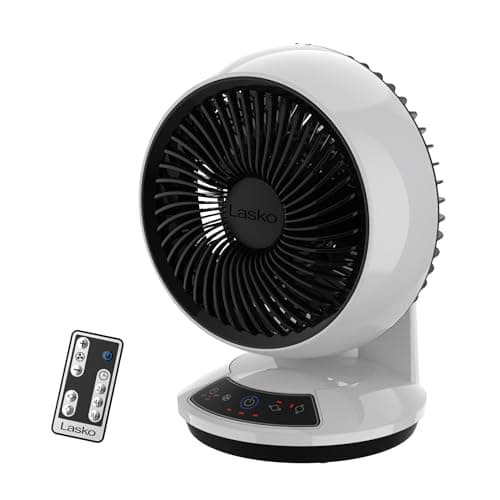 Off the floor entirely Lasko Whirlwind Tilt 12" Table Fan Wall-mountable at 18 to 32 W with a 50-foot throw and published 39 to 55 dBA. | A gym where floor space is the whole point of the room | |
| 3 | 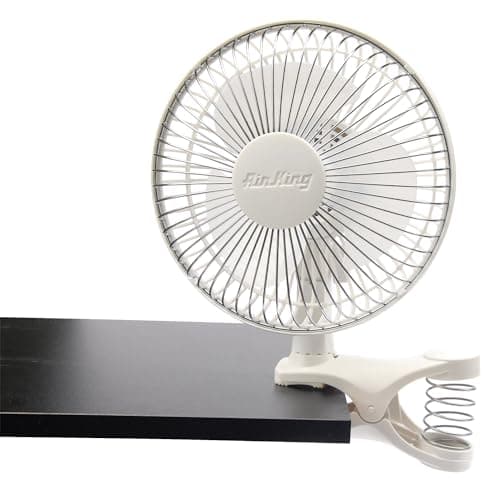 Clamps to a rack Air King 6" Commercial Grade Clip-On Fan A spring-loaded clip at 9 to 12 W, ETL listed and OSHA compliant — it mounts to a rack upright or a shelf. | Aiming air at one station without drilling anything | |
| — | 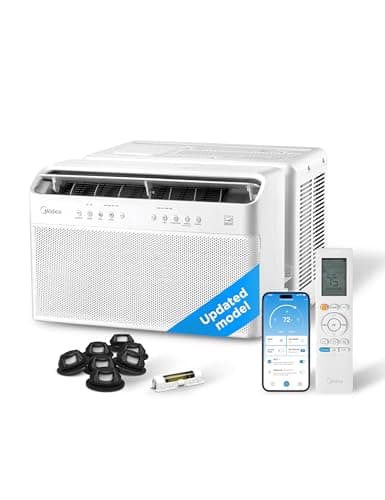 If the room genuinely needs cooling Midea U-Shaped Window Air Conditioner, 8,000 BTU 8,000 BTU at CEER 15 and 400 kWh a year, with the compressor outside a closed window. | A gym in a hot room, running before you start |
Every other room on this site is cooled against the weather. A home gym is cooled against its occupant, and that changes both the size of the problem and the shape of the answer.
The load
You produce several times more heat exercising
A person at rest produces roughly the heat of a light bulb. A person exercising hard produces several times that, continuously, for the duration of the session.
Two consequences follow, and they are both unusual:
- The room heats up fast once you start. A gym that felt fine when you walked in is uncomfortable twenty minutes later, because the load arrived with you.
- You are also adding humidity. Sweat evaporating is the mechanism keeping you cool, and all of that moisture goes into the room. In a closed space it accumulates, and rising humidity slows the evaporation you depend on.
That second point is why a closed home gym gets progressively harder to train in even if the temperature holds steady.
First
Airflow does more here than cooling
Felt cooling comes from air moving over skin, accelerating evaporation and convective heat loss. When you are producing heat and sweat rapidly, that mechanism is working hard — and air movement is what keeps it working.
The economics are unarguable. A fan at 12 to 32 W costs 1.2¢ for a two-hour session; a window air conditioner is $73 for a whole season and does not act on you directly at all.
The constraint is where the fan goes. A gym floor is for training, and a pedestal fan is an obstacle you will eventually knock into or drop something on.
- Wall mount for a permanent solution aimed across the main training area. What supports it.
- Clip mount to a rack upright or shelf, so it moves between stations and drills nothing.
- Ceiling fan if you own the space — nothing on the floor at all, at 1.1 to 6.0 W on low.
This one is not a DIY job
Ventilate, because you are adding moisture. A closed gym accumulates humidity from a single person surprisingly quickly, and rising humidity directly reduces how well you cool yourself.
Open something, or run an extract fan. A certified ventilating fan removes air at 16.7 CFM per watt and 0.1 sones — a fraction of a cent an hour, and it takes the moisture out of the building rather than moving it around.
This matters more in a basement or garage gym, where the space is already humid before you start. The basement case.
It also matters for the room itself. Persistent humidity in a space full of steel plates and machined surfaces is a rust problem as well as a comfort one.
Timing
Pre-cool, do not chase
A gym is used on a predictable schedule, which makes it one of the few rooms where timing genuinely helps.
Start the cooling or the fan before you train, not when you notice you are hot. A room already at a comfortable temperature when you begin absorbs your heat output for far longer before it becomes a problem than a room you are trying to cool while also heating it.
The same applies to ventilation: opening up beforehand and leaving it open through the session beats opening a window at the end.
A smart plug or a scheduled fan does this without thinking about it — scheduling without a smart appliance.
Where it is
Garage, basement or spare room
Garage gym: uninsulated, large door, concrete slab that stores heat all day. Insulating the door is the highest-value free measure, and the door being openable is a real ventilation advantage. The garage case.
Basement gym: naturally the coolest space in the house, and the most humid. Your added moisture lands in a room that already has too much, so ventilation and dehumidification matter more than cooling here. The basement case.
Spare room gym: the most ordinary case. Shade the glass, ventilate, put a fan on the training area, and pre-cool if the room runs hot.
Say the unwelcome thing
Do not buy a portable air conditioner for a home gym.
It is a common purchase for this room and it suits it badly.
It occupies floor space plus a hose to a window, in the room where clear floor is the entire point — and it is a heavy object near where you are moving weights.
It works against ventilation. A portable needs a closed room to be effective, and a gym needs an air path to clear the moisture you are adding. Those two requirements conflict directly.
And it costs 48¢ for a two-hour session at 1,300 W, against 1.2¢ for a wall-mounted fan.
Put airflow on yourself, ventilate the room, and if it genuinely needs cooling use a window unit that leaves the floor clear.
In full
Every pick, and what is wrong with it
Published specifications only, each linked to the page it came from. Where a manufacturer publishes nothing, the row says so — we do not fill blanks in.
1. Most airflow published
Lasko Wind Curve 42" Tower Fan
Lasko · model 2554
720 CFM — the highest published airflow figure on this site, at head height rather than floor level.
720 CFM is the most air any fan on this site publishes, and when you are generating heat continuously that volume is what matters.
Felt cooling depends on air speed at your skin, and the more sweat you are producing the more air movement it takes to keep the evaporation going. The mechanism.
The pedestal height helps: air arriving at torso height rather than at your shins is doing more useful work, particularly if you are standing or on a bench.
The honest gaps: no published wattage and no dBA. And a pedestal is a floor obstruction in a room where you are moving around and dropping things.
What’s wrong with it
Lasko publishes no wattage and no dBA, and a pedestal takes floor space a gym does not have spare.
Running cost — 2554
| Nameplate power | 37 W – 49 W | manufacturer's published figure |
|---|---|---|
| Energy, 8-hour night | 0.39 kWh | 49 ÷ 1000 × 8 |
| Cost per hour | 0.9¢ | at 18.34¢/kWh |
| Cost per 8-hour night | 7.2¢ | on the highest speed |
| Cost per 30 nights | $2.16 | 11.8 kWh |
| Same month, lowest speed | $1.63 | at 37 W |
Rate: 18.34¢/kWh, the US average residential price for June 2026 (EIA Electric Power Monthly, Table 5.3). Yours will differ — swap it in: (watts ÷ 1000) × hours × your rate.
| Power | 37 W - 49 W (0.4 A at 120 V) |
|---|---|
| Air delivery | 720 CFM |
| Speeds | 3 |
| Height | 42.5 in |
| Footprint | 13 x 13 in |
| Weight | 10.62 lb |
| Timer | 7.5-hour auto-off |
| Noise | Not published |
| Warranty | 1 year |
Every figure above is from Lasko product page, 2554. Blanks are shown as “not published” rather than filled in.
2. Off the floor entirely
Lasko Whirlwind Tilt 12" Table Fan
Lasko · model A12107
Wall-mountable at 18 to 32 W with a 50-foot throw and published 39 to 55 dBA.
The specification that matters in a gym: wall-mountable. Floor space is the room’s purpose, and a pedestal fan is something to trip over or knock into mid-set.
50-foot air throw from a 12-inch fan is what makes wall mounting viable — mounted high on one wall, it needs to reach the training area rather than the wall opposite.
18 to 32 W — about 1.2¢ for a two-hour session — and 39 to 55 dBA published, which matters if you train to music or with the door open.
Hardware not included. Budget a bracket, and fix into studs or masonry — a vibrating load on plasterboard alone is not adequate.
What’s wrong with it
Mounting hardware is not included, and 12 inches of fan is less air than a pedestal moves.
Running cost — A12107
| Nameplate power | 18 W – 32 W | manufacturer's published figure |
|---|---|---|
| Energy, 8-hour night | 0.26 kWh | 32 ÷ 1000 × 8 |
| Cost per hour | 0.6¢ | at 18.34¢/kWh |
| Cost per 8-hour night | 4.7¢ | on the highest speed |
| Cost per 30 nights | $1.41 | 7.7 kWh |
| Same month, lowest speed | 79¢ | at 18 W |
Rate: 18.34¢/kWh, the US average residential price for June 2026 (EIA Electric Power Monthly, Table 5.3). Yours will differ — swap it in: (watts ÷ 1000) × hours × your rate.
| Power | 18 W - 32 W (0.24-0.5 A at 120 V) |
|---|---|
| Noise | 39 dBA low, 55 dBA high |
| Air distance | 50 ft |
| Speeds | 3 |
| Dimensions | 11.19 H x 11.4 W x 6.2 D in |
| Weight | 2.78 lb |
| Mounting | Wall-mountable (hardware not included) |
| Air delivery (CFM) | Not published |
| Warranty | 1 year |
Every figure above is from Lasko product page, A12107. Blanks are shown as “not published” rather than filled in.
3. Clamps to a rack
Air King 6" Commercial Grade Clip-On Fan
Air King · model 9145
A spring-loaded clip at 9 to 12 W, ETL listed and OSHA compliant — it mounts to a rack upright or a shelf.
A power rack, a squat stand or a shelving upright is exactly the edge this clip is designed for — so you can put air on the station you are actually using without drilling into a wall.
9 to 12 W — 0.4¢ for a two-hour session — and 34 to 37 dBA, a three-decibel spread so it sounds the same whatever speed you use.
ETL listed and OSHA compliant with a metal guard, which suits a room where things get knocked.
2.22 lb, so it moves between stations easily. Make sure the clip is genuinely secure — a fan falling onto a barbell path is not a good outcome.
What’s wrong with it
190 CFM is personal airflow. It covers one position well and does nothing for the room.
Running cost — 9145
| Nameplate power | 9 W – 12 W | manufacturer's published figure |
|---|---|---|
| Energy, 8-hour night | 0.10 kWh | 12 ÷ 1000 × 8 |
| Cost per hour | 0.2¢ | at 18.34¢/kWh |
| Cost per 8-hour night | 1.8¢ | on the highest speed |
| Cost per 30 nights | 53¢ | 2.9 kWh |
| Same month, lowest speed | 40¢ | at 9 W |
Rate: 18.34¢/kWh, the US average residential price for June 2026 (EIA Electric Power Monthly, Table 5.3). Yours will differ — swap it in: (watts ÷ 1000) × hours × your rate.
| Power | 9 W - 12 W (0.1-0.2 A at 120 V) |
|---|---|
| Air delivery | Up to 190 CFM |
| Noise | 34 dBA low, 37 dBA high |
| Speeds | 2 |
| Mounting | Spring-loaded clip, non-marking |
| Dimensions | 10.38 H x 6.25 L x 8.13 W in |
| Weight | 2.22 lb |
| Cord | 6 ft, 3-conductor |
| Listing | ETL listed, OSHA compliant |
| Warranty | 1 year |
Every figure above is from Air King product page, 9145 (via Lasko). Blanks are shown as “not published” rather than filled in.
Skip this one
Midea U-Shaped Window Air Conditioner, 8,000 BTU
Midea · model MAW08V1QWT-S
8,000 BTU at CEER 15 and 400 kWh a year, with the compressor outside a closed window.
Listed as a skip on sequencing rather than merit. Airflow does far more per watt in this room than cooling does, because you are the heat source and airflow acts on you directly.
Where cooling earns its place is pre-cooling. A gym used on a predictable schedule can be brought down before you start, so the room is not already hot when you begin adding to it.
400 kWh a year, about $73 for a season, with a variable-speed compressor that modulates rather than cycling.
The U-shape also seals better than a conventional unit, which matters in a room you want ventilating on your terms rather than through gaps.
What’s wrong with it
53.2 lb and 22 inches deep, vertical sash windows only — and cooling is the last step here, not the first.
Running cost — MAW08V1QWT-S
| Annual energy use | 400 kWh | ENERGY STAR certified figure |
|---|---|---|
| Annual cost | $73 | 400 × 18.34¢/kWh |
| Per cooling month | $18 | spread over a four-month season |
The annual figure is the certified value from the ENERGY STAR Certified Room Air Conditioners dataset, which models a standard cooling season rather than your actual summer. It is more useful than a nameplate wattage here, because a variable-speed compressor spends most of its life well below nameplate.
Rate: 18.34¢/kWh, the US average residential price for June 2026 (EIA Electric Power Monthly, Table 5.3). Yours will differ — swap it in: (watts ÷ 1000) × hours × your rate.
| Cooling capacity | 8,000 BTU/h |
|---|---|
| CEER | 15 |
| Annual energy use | 400 kWh/yr |
| vs federal standard | 38% less energy |
| Dimensions | 13.5 H x 19.2 W x 22.0 D in |
| Weight | 53.2 lb |
| Refrigerant | R-32 |
| Installation | U-shape; sash closes through the middle of the unit |
| Compressor | Variable speed |
| ENERGY STAR | Certified |
Every figure above is from ENERGY STAR Certified Room Air Conditioners dataset. Blanks are shown as “not published” rather than filled in.
We are not linking a buy button for this one. If you want to look at it anyway, it is easy enough to find — but we would rather send you to something that fits your room.
Questions people actually ask
Frequently asked
What is the best way to cool a home gym?
Strong directed airflow that does not use floor space — wall-mounted, clip-mounted or a ceiling fan. You are the heat source, so air moving over your skin does more per watt than cooling the room does.
Why does my home gym get hot so quickly?
Because the heat arrives with you. A person exercising hard produces several times the heat of a person at rest, continuously, so a room that felt fine on arrival is uncomfortable twenty minutes later.
Do I need ventilation in a home gym?
Yes, and it is underrated. You add substantial moisture through sweat, and rising humidity directly reduces how well evaporation cools you. It is also a rust problem in a room full of steel plates.
Should I cool a home gym before or during a workout?
Before. A room already at a comfortable temperature absorbs your heat output for far longer before it becomes a problem than a room you are trying to cool while simultaneously heating it. Scheduling it.
Is a portable air conditioner good for a home gym?
No. It occupies floor space plus a hose in the room where clear floor is the point, it needs a closed room while a gym needs ventilation, and it costs far more to run than the airflow that actually helps you.
What kind of fan is best for a home gym?
One that is not on the floor. A wall mount aimed across the training area, a clip mount on a rack upright, or a ceiling fan if you own the space — anything you can trip over or drop a plate on is the wrong answer here. Wall-mounted fans.
Sources
Where these numbers came from
Read next
Where to go from here
Back to Room Cooling, or read how we pick.