Guide and picks
Air conditioner timers and eco modes
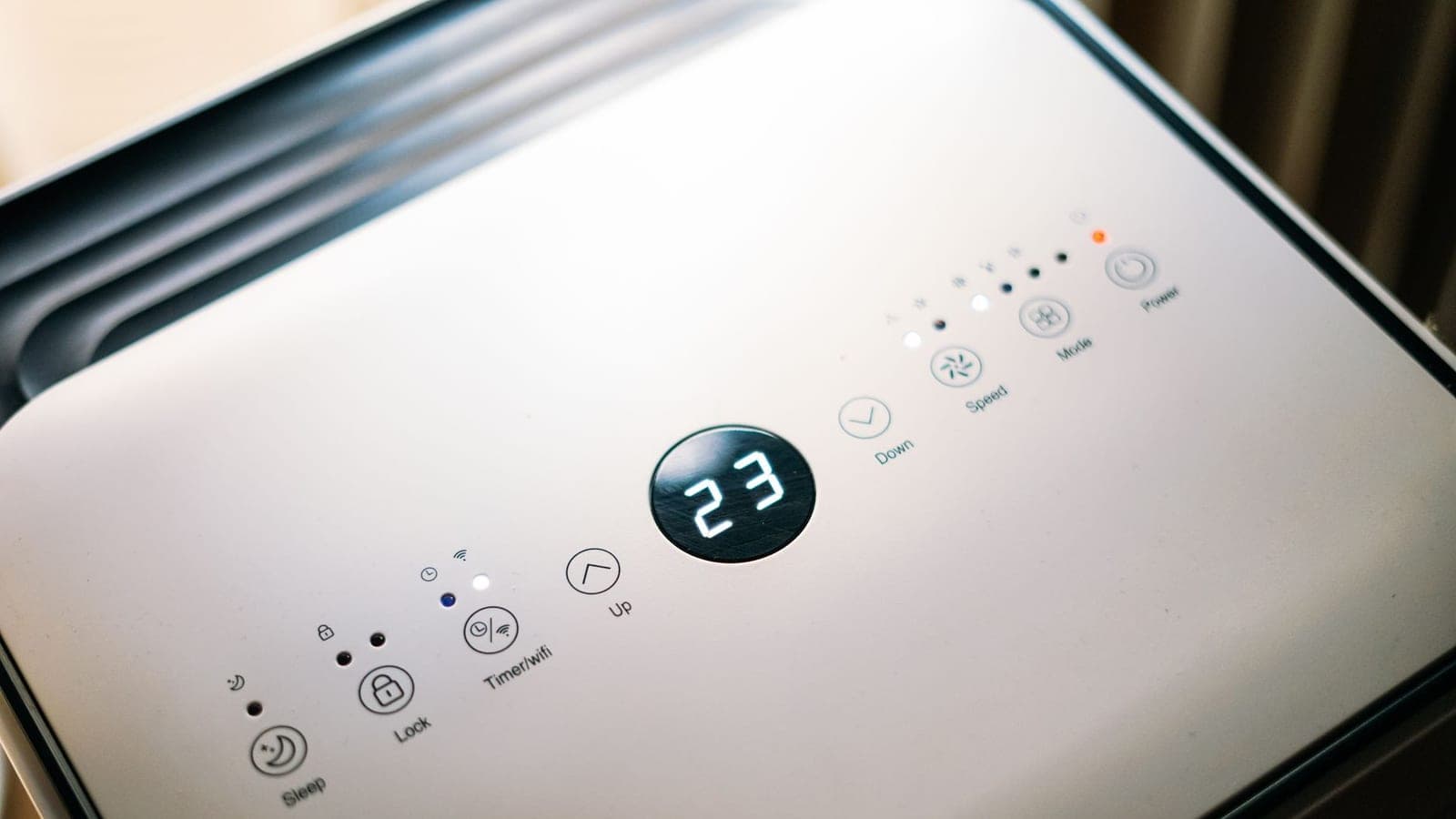
Four settings on the same remote, doing four unrelated things, none of them explained on the box.
By Sawyer V. · Published
The short answer
Eco usually cycles the fan off between compressor runs, which saves a little and hurts even temperature. Sleep raises the setpoint gradually overnight, which genuinely saves and is the most useful of the four. Dry dehumidifies at low fan speed without much cooling. Auto varies the fan against demand. A timer that switches off entirely can cost more than it saves, because the room reheats and the unit has to pull it back down.
Fan & Frost earns a commission when you buy through our links, at no cost to you. It never changes a ranking, and we say so when the right answer is the cheaper unit or nothing at all. Full disclosure · How we pick.
At a glance
The picks, ranked
Tap any row to jump to the full reasoning. Prices are live from Amazon where we have them, and read “check price” where we don’t — never a number we cannot verify today.
| # | Product | Best for | Price |
|---|---|---|---|
| 1 | 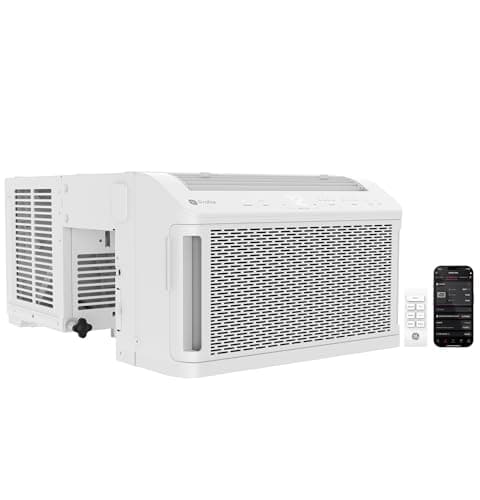 The compressor that makes modes less necessary GE Profile ClearView Window Air Conditioner, 8,000 BTU CEER 16 and 375 kWh a year with a variable-speed compressor — it modulates continuously rather than needing a mode to fake it. | A room where you want the machine to manage itself well | |
| 2 | Correct sizing beats any mode Midea Window Air Conditioner, 6,000 BTU 6,000 BTU at CEER 16 and 281.3 kWh — the lowest certified annual consumption, achieved by being the right size. | A small room, where the right capacity does the work software cannot | |
| 3 | 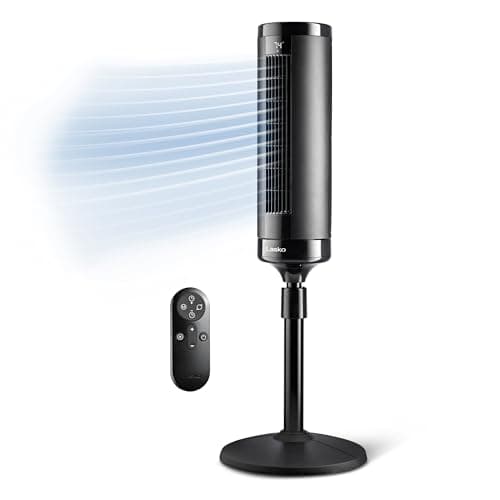 The setting that saves most Lasko EcoQuiet 42" DC Tower Fan 2.9 W on low at 23 dBA — airflow that lets you raise the thermostat without feeling worse. | Running alongside the air conditioner at a higher setpoint | |
| — | Where a mode cannot help you Whynter ARC-14S Dual Hose Portable Air Conditioner 1,300 W and 9,500 BTU SACC. No eco setting closes a gap that large. | A room with no usable window — modes will not fix the format |
Remotes carry four or five mode buttons with no explanation, and they do genuinely different things. Two of them save energy, one of them trades comfort for a small saving, and one is frequently misunderstood.
Decoded
What each mode actually changes
| Mode | What it does | Saves? |
|---|---|---|
| Eco / Energy Saver | Stops the fan between compressor cycles instead of running it continuously | A little |
| Sleep / Night | Raises the setpoint gradually over several hours | Yes — the most of any mode |
| Dry / Dehumidify | Runs the compressor at low fan speed to condense moisture with little cooling | Sometimes |
| Fan only | Circulates room air with the compressor off | Yes, dramatically — but no cooling |
| Auto | Varies fan speed against the gap to setpoint | Marginally |
| Turbo / Max | Full output regardless of setpoint | No — the opposite |
The misunderstood one
Eco mode has a real downside
“Energy Saver” on most room air conditioners means one specific thing: the fan stops when the compressor stops, rather than running continuously.
The saving is the fan’s own power during off cycles, which is small. The costs are less obvious and worth knowing:
- The thermostat reads worse. With no air moving, the sensor sits in still air near the unit rather than sampling the room, so it can satisfy early and leave the far side of the room warm.
- Temperature swings widen. Without circulation between cycles, the room stratifies and you feel the on-off pattern more.
- Moisture can return to the room. When the fan restarts over a still-wet coil, some condensate re-evaporates back into the air before it has drained.
Eco is worth using in a small room you are not sitting in for long stretches. In a room you occupy continuously, continuous fan usually feels better for a trivial difference in cost.
The useful one
Sleep mode is the one that saves
Sleep or night mode raises the setpoint gradually over several hours — commonly a degree after an hour, another after a second hour, then holding.
This works because your body does not need the same temperature asleep as awake, and because compressor run time falls sharply with each degree you give back.
It usually reduces fan speed too, which makes it quieter as well as cheaper. In practice it is the only mode on most remotes that reliably saves without a comfort cost.
Pair it with a fan and it gets better still. At 2.9 W on low, airflow across skin lets a higher setpoint feel the same.
The specific one
Dry mode is for humidity, not heat
Dry mode runs the compressor with the fan at low speed. Slower air over a cold coil means more of it reaches the coil temperature, so more moisture condenses out per unit of air — while the room temperature barely moves.
That is genuinely useful on a cool, humid day: the temperature is fine and the room still feels unpleasant, because humidity blocks the evaporation your body relies on.
It is not an energy-saving mode and it is not a substitute for cooling on a hot day. Used as one, it disappoints.
This one is not a DIY job
A timer that switches the unit off entirely can cost you money. This is counterintuitive and it depends on the gap.
While the unit is off, the room warms toward outdoor temperature — and so does the furniture, the floor and the walls, which hold far more heat than the air does. When it restarts, it has to remove all of that again, not just re-cool the air.
For a short absence, raising the setpoint beats switching off. For a long one — a working day, a weekend — switching off does win, because the reheat penalty is fixed while the savings keep accruing.
The genuinely useful timer is the one that starts the unit before you arrive, so it is not fighting a fully heated room while you sit in it.
Ranked
What actually saves, in order
- Correct sizing. A certified 6,000 BTU unit uses $52 a season against $155 for an 18,000 BTU one. No mode approaches that.
- A fan, and a higher setpoint. Adding 0.4¢ of fan to raise the thermostat a few degrees is the best trade available.
- Sleep mode overnight. Real, automatic, no comfort cost.
- Shade and sealing. Free, and reduces the load the unit works against.
- Eco mode — small, with a comfort cost.
Say the unwelcome thing
Do not set the thermostat lower to cool the room faster.
It is the most common misuse of an air conditioner control and it is based on a reasonable-sounding idea that is simply wrong.
An air conditioner has one cooling output at a given moment. Setting 65 instead of 72 does not make it work harder — it makes it work longer, because it now has a lower target to reach.
The room cools at exactly the same rate either way. The only difference is that at 65 it keeps going past the point you would have been comfortable, and then keeps holding that colder temperature.
Set the temperature you actually want, put a fan on, and use sleep mode overnight. That combination costs a fraction of a degree-chasing setpoint and feels better.
In full
Every pick, and what is wrong with it
Published specifications only, each linked to the page it came from. Where a manufacturer publishes nothing, the row says so — we do not fill blanks in.
1. The compressor that makes modes less necessary
GE Profile ClearView Window Air Conditioner, 8,000 BTU
GE Profile · model PWJV08W
CEER 16 and 375 kWh a year with a variable-speed compressor — it modulates continuously rather than needing a mode to fake it.
Most of what eco and auto modes do on a single-speed unit is approximate what a variable-speed compressor does natively.
A single-speed machine is either at full output or off, so software has to manage the gap by cycling. A modulating compressor simply runs at the output the room needs — steadier temperature, better dehumidification, and less need to fiddle with modes.
375 kWh a year, about $69 for a season, at CEER 16 and 47% below the federal standard.
Notably, all 485 certified room air conditioners now have variable-speed compressors — so this is the current baseline rather than a premium feature.
What’s wrong with it
46.2 lb, occupies the window for the season, and no certified unit publishes a noise rating to compare.
Running cost — PWJV08W
| Annual energy use | 375 kWh | ENERGY STAR certified figure |
|---|---|---|
| Annual cost | $69 | 375 × 18.34¢/kWh |
| Per cooling month | $17 | spread over a four-month season |
The annual figure is the certified value from the ENERGY STAR Certified Room Air Conditioners dataset, which models a standard cooling season rather than your actual summer. It is more useful than a nameplate wattage here, because a variable-speed compressor spends most of its life well below nameplate.
Rate: 18.34¢/kWh, the US average residential price for June 2026 (EIA Electric Power Monthly, Table 5.3). Yours will differ — swap it in: (watts ÷ 1000) × hours × your rate.
| Cooling capacity | 8,000 BTU/h |
|---|---|
| CEER | 16 |
| Annual energy use | 375 kWh/yr |
| vs federal standard | 47% less energy |
| Dimensions | 12.6 H x 18.6 W x 15.3 D in |
| Weight | 46.2 lb |
| Refrigerant | R-32 |
| Installation | Does not straddle the windowsill |
| Compressor | Variable speed |
| ENERGY STAR | Certified, and on the Most Efficient list |
Every figure above is from ENERGY STAR Certified Room Air Conditioners dataset. Blanks are shown as “not published” rather than filled in.
2. Correct sizing beats any mode
Midea Window Air Conditioner, 6,000 BTU
Midea · model MAW06S1KWT-A
6,000 BTU at CEER 16 and 281.3 kWh — the lowest certified annual consumption, achieved by being the right size.
281.3 kWh a year, about $52 for a whole season. No mode on any remote produces a saving on that scale.
The point is that sizing is the setting that matters. An oversized unit short-cycles regardless of what mode it is in, and short cycles remove little moisture — which is the complaint eco modes get blamed for.
CEER 16, 45% below the federal standard, Most Efficient listed, and 31.6 lb.
Size from the room first, then worry about settings.
What’s wrong with it
6,000 BTU will not hold a large or sunny room, and no eco mode compensates for being undersized.
Running cost — MAW06S1KWT-A
| Annual energy use | 281.3 kWh | ENERGY STAR certified figure |
|---|---|---|
| Annual cost | $52 | 281.3 × 18.34¢/kWh |
| Per cooling month | $13 | spread over a four-month season |
The annual figure is the certified value from the ENERGY STAR Certified Room Air Conditioners dataset, which models a standard cooling season rather than your actual summer. It is more useful than a nameplate wattage here, because a variable-speed compressor spends most of its life well below nameplate.
Rate: 18.34¢/kWh, the US average residential price for June 2026 (EIA Electric Power Monthly, Table 5.3). Yours will differ — swap it in: (watts ÷ 1000) × hours × your rate.
| Cooling capacity | 6,000 BTU/h |
|---|---|
| CEER | 16 |
| Annual energy use | 281.3 kWh/yr |
| vs federal standard | 45% less energy |
| Dimensions | 12.1 H x 16.0 W x 13.3 D in |
| Weight | 31.6 lb |
| Installation | Does not straddle the windowsill |
| Support bracket | Not required |
| Compressor | Variable speed |
| Refrigerant | R-32 |
| ENERGY STAR | Certified, and on the Most Efficient list |
Every figure above is from ENERGY STAR Certified Room Air Conditioners dataset. Blanks are shown as “not published” rather than filled in.
3. The setting that saves most
Lasko EcoQuiet 42" DC Tower Fan
Lasko · model T42710
2.9 W on low at 23 dBA — airflow that lets you raise the thermostat without feeling worse.
The largest saving available on this page is not a mode. It is running a fan so you can accept a higher setpoint.
Air moving across skin accelerates evaporative and convective heat loss, so the same room feels several degrees cooler with a fan running. Every degree you can raise the thermostat is compressor time you do not pay for.
2.9 W on low is about 0.4¢ for an eight-hour night — against $69 for a certified window unit’s entire season.
23 dBA is the quietest published figure on this site, and twelve DC speeds let you find the setting that is just enough.
What’s wrong with it
It changes no air temperature at all, so it supplements the air conditioner rather than replacing it.
Running cost — T42710
| Nameplate power | 2.9 W – 19 W | manufacturer's published figure |
|---|---|---|
| Energy, 8-hour night | 0.15 kWh | 19 ÷ 1000 × 8 |
| Cost per hour | 0.3¢ | at 18.34¢/kWh |
| Cost per 8-hour night | 2.8¢ | on the highest speed |
| Cost per 30 nights | 84¢ | 4.6 kWh |
| Same month, lowest speed | 13¢ | at 2.9 W |
Rate: 18.34¢/kWh, the US average residential price for June 2026 (EIA Electric Power Monthly, Table 5.3). Yours will differ — swap it in: (watts ÷ 1000) × hours × your rate.
| Power | 2.9 W - 19 W (0.06-0.303 A at 120 V) |
|---|---|
| Noise | 23 dBA low, 46 dBA high |
| Speeds | 12 |
| Height | 41.6 in |
| Footprint | 12.8 x 12.8 in |
| Weight | 7.8 lb |
| Timer | 8 hours |
| Air delivery (CFM) | Not published |
| Warranty | 2 years |
Every figure above is from Lasko product page, T42710. Blanks are shown as “not published” rather than filled in.
Skip this one
Whynter ARC-14S Dual Hose Portable Air Conditioner
Whynter · model ARC-14S
1,300 W and 9,500 BTU SACC. No eco setting closes a gap that large.
Included because eco modes get reached for hardest on the machines where they help least.
A portable’s losses are architectural: it exhausts room air outdoors, so hot outdoor air infiltrates to replace it, and the hot duct radiates back into the room. That is why the DOE-rated capacity is 9,500 BTU SACC against a 14,000 BTU headline — a 32.1% haircut before any setting is chosen.
1,300 W — $1.91 for an eight-hour day.
The settings that actually help a portable are physical: seal the window panel and insulate the hose.
What’s wrong with it
The inefficiency is structural — exhausting room air and pulling outdoor air in to replace it — not something software adjusts.
Running cost — ARC-14S
| Nameplate power | 1300 W | manufacturer's published figure |
|---|---|---|
| Energy, 8-hour night | 10.40 kWh | 1300 ÷ 1000 × 8 |
| Cost per hour | 24¢ | at 18.34¢/kWh |
| Cost per 8-hour night | $1.91 | on the highest speed |
| Cost per 30 nights | $57 | 312.0 kWh |
Rate: 18.34¢/kWh, the US average residential price for June 2026 (EIA Electric Power Monthly, Table 5.3). Yours will differ — swap it in: (watts ÷ 1000) × hours × your rate.
| Marketing capacity | 14,000 BTU (ASHRAE-128) |
|---|---|
| DOE-rated capacity | 9,500 BTU SACC |
| Hoses | Dual |
| Power | 1,300 W / 11.6 A at 115 V |
| Noise | Under 51 dBA low, under 56 dBA high |
| Dehumidification | 71 pints/day |
| Refrigerant | R-32 |
| Dimensions | 16 W x 19 D x 35.5 H in |
| Weight | 73 lb |
| Manufacturer coverage claim | 500 sq ft |
| Warranty | 1 year unit, 3 years compressor |
Every figure above is from Whynter product page, ARC-14S. Blanks are shown as “not published” rather than filled in.
We are not linking a buy button for this one. If you want to look at it anyway, it is easy enough to find — but we would rather send you to something that fits your room.
Questions people actually ask
Frequently asked
What does eco mode do on an air conditioner?
On most room units it stops the fan between compressor cycles instead of running it continuously. The saving is the fan's own power during off cycles — small — and the costs are wider temperature swings and a thermostat reading still air.
Does sleep mode on an air conditioner save money?
Yes, and it is the most reliable of the modes. It raises the setpoint gradually over several hours, and compressor run time falls sharply with each degree given back. It usually reduces fan speed too, so it is quieter as well.
What is dry mode for?
Removing humidity rather than heat. It runs the compressor with the fan slow, so more of the air reaches coil temperature and condenses more moisture while the temperature barely moves — useful on a cool, muggy day.
Should I use a timer to switch my air conditioner off?
For a long absence, yes. For a short one, raising the setpoint usually beats switching off — while the unit is off the furniture, floor and walls warm up too, and it has to remove all of that again on restart.
Does setting a lower temperature cool the room faster?
No. An air conditioner has one cooling output at a given moment, so a lower setpoint makes it run longer rather than harder. The room cools at the same rate; it simply keeps going past where you would have been comfortable.
What saves the most on air conditioning?
Correct sizing, then running a fan so you can raise the setpoint. A certified 6,000 BTU unit uses about a third the annual energy of an 18,000 BTU one, and a fan on low costs a fraction of a cent a night. No mode comes close to either. Everything ranked by saving.
Sources
Where these numbers came from
Read next
Where to go from here
Back to Air Conditioners, or read how we pick.