Guide and picks
How much does a whole house fan cost?
Three costs, and only one of them has a number on a box. The one that surprises people is the attic venting the fan needs to work at all.
By Sawyer V. · Published
The short answer
The fan itself is the part with a published price — live, dated prices for each unit are on the buttons below. Installation is quoted per job, because the work is cutting a ceiling, framing an opening and running a circuit, and no manufacturer publishes a figure for it. The cost nobody budgets for is attic venting: a 6,878 CFM fan’s own spec sheet asks for 9.18 square feet of net free vent area, and most attics do not have it. Several utilities pay $200 back on a qualifying install.
Fan & Frost earns a commission when you buy through our links, at no cost to you. It never changes a ranking, and we say so when the right answer is the cheaper unit or nothing at all. Full disclosure · How we pick.
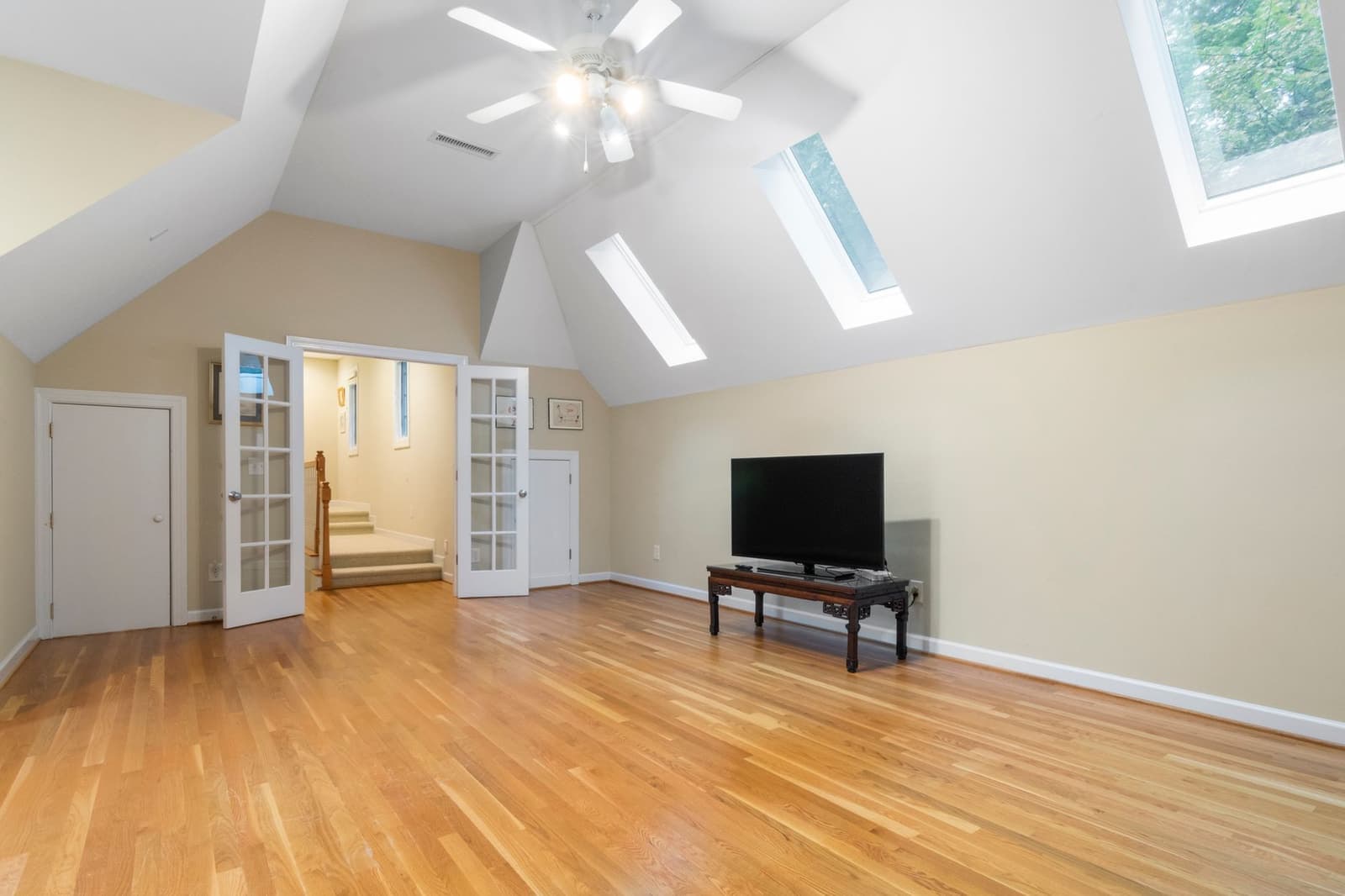
At a glance
The picks, ranked
Tap any row to jump to the full reasoning. Prices are live from Amazon where we have them, and read “check price” where we don’t — never a number we cannot verify today.
| # | Product | Best for | Price |
|---|---|---|---|
| 1 | 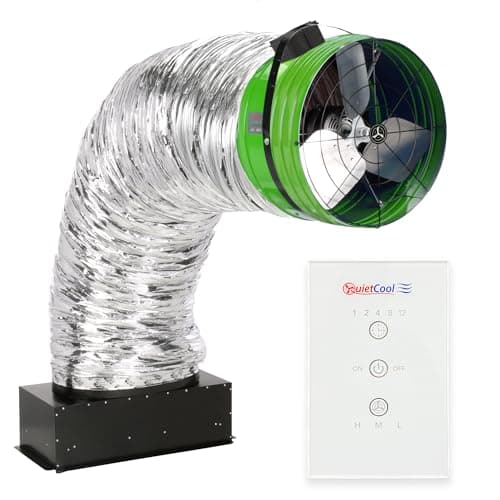 The unit cost, with a live price QuietCool QC ES-7000 RF Energy Saver Advanced Whole House Fan 6,878 CFM on 727 W, or 4,304 CFM on 164 W — and the only whole house fan here sold boxed at retail, so the unit price is a published number rather than a quote. | A 2,300 to 3,400 sq ft house with a vented attic | |
| 2 | The small-house option, and the cheaper install QuietCool Stealth Pro X Whole House Fan, 3,159 CFM 3,159 CFM on 264 W, down to 1,980 CFM on 74.6 W — a smaller fan, a smaller ceiling opening, and proportionally less attic venting to add. | A house of about 1,000 to 1,600 sq ft, single storey | |
| 3 | The big-house option, and the biggest venting bill QuietCool Stealth Pro X Whole House Fan, 6,996 CFM 6,996 CFM on 725 W with three speeds rather than two, and a 4,308 CFM low setting that beats most fans' high. | A 2,300 to 3,500 sq ft house where one fan has to do it all | |
| 4 | 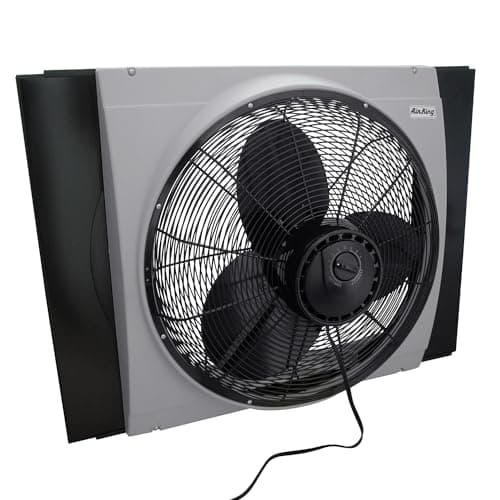 The way to test the idea for a tenth of the money Air King 20" Whole House Window Fan 3,560 CFM on 170 W in a window, with no installation, no permit, no attic venting and no hole. Half the airflow of a whole house fan, none of the commitment. | Finding out whether night-air cooling works in your climate before you cut a hole in a ceiling | |
| — | 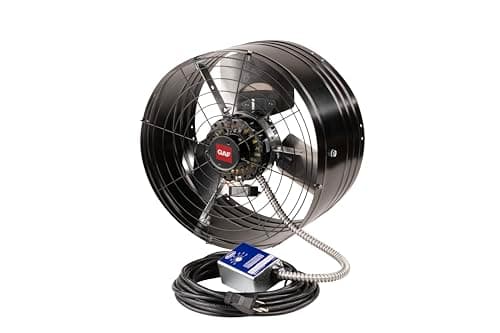 The one to skip if you wanted a whole house fan Maxx Air Premium 1,600 CFM Gable-Mount Power Attic Ventilator 1,600 CFM through a gable vent, moving attic air only. It is a tenth of the price and it does not cool the house. | Venting a hot attic — a different job, at a different price |
A whole house fan quote has three parts, and they behave completely differently. One has a published price, one is a per-job estimate no manufacturer will put a number on, and one is invisible until an installer looks in your attic.
The three parts
What you are actually paying for
- The unit. Published, and the live price for each fan on this page is on its own button with the date it was checked. Retail-boxed RF models carry a price; installer-channel ducted models generally do not.
- The installation. Cutting a ceiling opening, framing and heading off joists where the opening crosses them, mounting the unit and its ducting, and running a circuit to a switch or timer. Nobody publishes a figure because the job is different in every house. The variables that drive it are below.
- The attic venting. The line almost nobody budgets for, specified on the fan’s own data sheet, and the one that can exceed the cost of the fan in a tightly built attic.
The hidden line
The attic venting requirement, from the spec sheet
A whole house fan does not vent to outside. It pushes the air from your rooms into the attic, and the attic has to be able to let that air out faster than the fan pushes it in. If it cannot, the fan pressurises the attic, the airflow collapses to a fraction of the rating, and the system does not work.
Manufacturers publish the requirement: the 6,878 CFM model above asks for 9.18 square feet of net free vent area.
| Fan | CFM, high | Coverage claim | Vent area needed |
|---|---|---|---|
| QuietCool QC ES-7000 | 6,878 | 2,293-3,439 sq ft | 9.18 sq ft NFA |
| QuietCool Stealth Pro 70X | 6,996 | 2,332-3,498 sq ft | Scale with airflow |
| QuietCool Stealth Pro 48X | 4,280 | 1,427-2,140 sq ft | Scale with airflow |
| QuietCool Stealth Pro 33X | 3,159 | 1,053-1,580 sq ft | Scale with airflow |
Airflow and coverage from each model’s QuietCool specification sheet. The 9.18 sq ft figure is published; the others say to size venting to the fan, without a stated number.
Net free area is not the same as the size of the vent. A louvre with insect screen passes roughly half to 60 per cent of its physical opening, so a 12 by 12 inch gable vent is closer to 0.5 sq ft of net free area than 1.0. Adding several square feet of it means new gable vents, additional soffit vents or a longer ridge vent — real roofing work, on top of the fan. How to count what you already have.
The quote
What makes one installation cost more than another
- Whether the opening crosses a joist. A grille that fits between joists is a straightforward cut. One that does not means cutting a joist and framing a header, which is structural work.
- Single or two storey. A two-storey house usually wants the grille in an upstairs hallway, and getting a circuit there is a different job from a single-storey hallway.
- Attic access and headroom. A low-pitch roof or a crowded attic turns a half-day into a full day.
- Existing vent area, as above. This is the swing factor.
- Permit and inspection. Many jurisdictions require both for the electrical work, and several rebate programmes require proof of them.
- Insulated dampers. An uninsulated damper is a hole in your ceiling insulation for the eight months a year the fan is not running. R5 barometric dampers are worth specifying.
Offsets
Published rebates that come off the total
Several utilities pay for whole house fans because they shave summer peak demand. These are published programme figures rather than estimates.
| Programme | Rebate | Conditions published |
|---|---|---|
| Idaho Power, existing homes | $200 | Minimum 2,000 CFM, licensed contractor, home must already have AC, one per home |
| Roseville Electric, California | $200 | Residential customer, new equipment, invoice and model number required |
| Hawaii Energy | $100 | Residential, application with manufacturer specification sheet |
Published programme terms as of October 2026. Programmes change and are usually funded annually — check your own utility before budgeting on one.
Note the Idaho Power condition: the rebate requires the home to already have air conditioning, because the utility is paying to displace compressor runtime rather than to provide cooling.
This one is not a DIY job
Get the attic vent area measured before you get a quote. It is the line that varies most between houses and the one most likely to change the total after work has started. Count net free area, not vent dimensions, and have the number before anyone prices the job.
Running cost
What it costs after it is in
This is the part that is genuinely cheap, and it is why the fan pays back at all. Running the 6,878 CFM fan on its low setting for eight hours costs 24¢, or $22 across a 90-night summer. A 1,300 W portable air conditioner over the same hours is roughly $172.
Run it on low. Our arithmetic on the published figures puts low at 26.2 CFM per watt against 9.5 on high — a whole-house fan on high is for flushing a hot house quickly, not for running all night. The full running-cost arithmetic.
Say the unwelcome thing
Do not buy a whole house fan without counting your attic vents first.
The published requirement for a 6,878 CFM fan is 9.18 square feet of net free vent area. An attic that cannot supply it will pressurise instead of exhausting, the fan will deliver a fraction of its rating, and the money spent on the unit and the install is wasted.
In a tightly built or recently re-roofed attic, adding that vent area can cost more than the fan. Find out first.
In full
Every pick, and what is wrong with it
Published specifications only, each linked to the page it came from. Where a manufacturer publishes nothing, the row says so — we do not fill blanks in.
1. The unit cost, with a live price
QuietCool QC ES-7000 RF Energy Saver Advanced Whole House Fan
QuietCool · model QC ES-7000 RF
6,878 CFM on 727 W, or 4,304 CFM on 164 W — and the only whole house fan here sold boxed at retail, so the unit price is a published number rather than a quote.
6,878 CFM on 727 W on high, 4,304 CFM on 164 W on low. That low setting is the interesting one: our arithmetic puts it at 26.2 CFM per watt against 9.5 on high, so a whole-house fan run on low is nearly three times as efficient as the same fan on high.
24¢ for an eight-hour night on low at 18.34¢/kWh, against $1.07 on high. Over a 90-night summer on low that is $22 — against roughly $172 for a portable air conditioner doing the same hours.
9.18 sq ft of net free vent area is the published requirement and it is the line item that catches people. A standard 12 by 12 inch gable louvre with insect screen offers well under one square foot of net free area, so this fan needs the equivalent of a dozen of them. How to work out what your attic actually has.
Barometric R5 dampers matter for winter cost rather than summer: an uninsulated damper is a hole in your ceiling insulation for eight months of the year.
What’s wrong with it
Its own spec sheet asks for 9.18 sq ft of net free attic vent area, which most attics do not have. QuietCool publishes no sones or dBA figure despite the brand name.
Running cost — QC ES-7000 RF
| Nameplate power | 164 W – 727 W | manufacturer's published figure |
|---|---|---|
| Energy, 8-hour night | 5.82 kWh | 727 ÷ 1000 × 8 |
| Cost per hour | 13¢ | at 18.34¢/kWh |
| Cost per 8-hour night | $1.07 | on the highest speed |
| Cost per 30 nights | $32 | 174.5 kWh |
| Same month, lowest speed | $7.22 | at 164 W |
Rate: 18.34¢/kWh, the US average residential price for June 2026 (EIA Electric Power Monthly, Table 5.3). Yours will differ — swap it in: (watts ÷ 1000) × hours × your rate.
| Air delivery, high | 6,878 CFM |
|---|---|
| Air delivery, low | 4,304 CFM |
| Power, high | 727 W |
| Power, low | 164 W |
| Efficiency | 9.5 CFM per watt on high, 26.2 on low (our arithmetic) |
| Coverage claim | 2,293 - 3,439 sq ft |
| Attic venting required | 9.18 sq ft net free area, minimum suggested |
| Speeds | 2 |
| Duct | 24 in diameter, 9 ft long |
| Dampers | Barometric pressurized, R5 |
| Supply | 120 VAC, 60 Hz |
| Control | Wireless RF |
| Noise | Not published as sones or dBA |
| ENERGY STAR | No program exists for whole-house fans |
Every figure above is from QuietCool QC ES-7000 specification sheet. Blanks are shown as “not published” rather than filled in.
2. The small-house option, and the cheaper install
QuietCool Stealth Pro X Whole House Fan, 3,159 CFM
QuietCool · model QC STL PRO-3.3X
3,159 CFM on 264 W, down to 1,980 CFM on 74.6 W — a smaller fan, a smaller ceiling opening, and proportionally less attic venting to add.
Fan size drives installation cost more than anything else on the quote, because it drives the size of the hole.
3,159 CFM on 264 W on high, 1,980 CFM on 74.6 W on low, covering a published 1,053 to 1,580 sq ft. A smaller grille means a smaller ceiling opening, fewer joists to cut and head off, and less attic vent area to add.
11¢ a night on low, or $9.85 across a summer. That is comparable to running two box fans, for air exchange a box fan cannot touch.
1,980 CFM on low is below the 2,000 CFM floor that Idaho Power sets for its rebate — rebate programmes rate the fan on its maximum airflow, 3,159 CFM here, so it qualifies. Worth checking the wording of your own utility’s programme.
ECM motor and 15 years of warranty. The whole-house fan category in full.
What’s wrong with it
Sold through installers rather than boxed at retail, so there is no live unit price. Still needs enough net free vent area, just less of it.
Running cost — QC STL PRO-3.3X
| Nameplate power | 74.6 W – 264 W | manufacturer's published figure |
|---|---|---|
| Energy, 8-hour night | 2.11 kWh | 264 ÷ 1000 × 8 |
| Cost per hour | 4.8¢ | at 18.34¢/kWh |
| Cost per 8-hour night | 39¢ | on the highest speed |
| Cost per 30 nights | $12 | 63.4 kWh |
| Same month, lowest speed | $3.28 | at 74.6 W |
Rate: 18.34¢/kWh, the US average residential price for June 2026 (EIA Electric Power Monthly, Table 5.3). Yours will differ — swap it in: (watts ÷ 1000) × hours × your rate.
| Air delivery, high | 3,159 CFM |
|---|---|
| Air delivery, low | 1,980 CFM |
| Power, high | 264 W |
| Power, low | 74.6 W |
| Coverage claim | 1,053 - 1,580 sq ft |
| Motor | ECM |
| Warranty | 15 years |
| Noise | Not published as sones or dBA |
| ENERGY STAR | No program exists for whole-house fans |
Every figure above is from QuietCool Stealth Pro X specification sheet, QC STL PRO-3.3. Blanks are shown as “not published” rather than filled in.
3. The big-house option, and the biggest venting bill
QuietCool Stealth Pro X Whole House Fan, 6,996 CFM
QuietCool · model QC STL PRO-7.0X
6,996 CFM on 725 W with three speeds rather than two, and a 4,308 CFM low setting that beats most fans' high.
6,996 / 5,448 / 4,308 CFM on 725 / 319 / 166 W. Three speeds rather than two is the difference from the retail model, and it matters: the middle setting at 5,448 CFM on 319 W is 17.1 CFM per watt, a genuinely useful point between a quiet night and a fast flush.
24¢ a night on low, 47¢ on medium, $1.06 on high.
Everything about the install scales with the fan. A larger grille is a larger ceiling opening; a larger opening usually means cutting and heading off a ceiling joist, which is the step that turns a half-day job into a full one; and the vent area has to grow with the airflow or the fan simply cannot pull what it is rated for.
15 years of warranty and an ECM motor. What is not published, on a product line named for being quiet, is any sones or dBA figure. What is actually known about the noise.
What’s wrong with it
The largest fan carries the largest ceiling opening, the largest electrical load and the largest attic venting requirement. This is the most expensive version of every line on the quote.
Running cost — QC STL PRO-7.0X
| Nameplate power | 166 W – 725 W | manufacturer's published figure |
|---|---|---|
| Energy, 8-hour night | 5.80 kWh | 725 ÷ 1000 × 8 |
| Cost per hour | 13¢ | at 18.34¢/kWh |
| Cost per 8-hour night | $1.06 | on the highest speed |
| Cost per 30 nights | $32 | 174.0 kWh |
| Same month, lowest speed | $7.31 | at 166 W |
Rate: 18.34¢/kWh, the US average residential price for June 2026 (EIA Electric Power Monthly, Table 5.3). Yours will differ — swap it in: (watts ÷ 1000) × hours × your rate.
| Air delivery, high | 6,996 CFM |
|---|---|
| Air delivery, medium | 5,448 CFM |
| Air delivery, low | 4,308 CFM |
| Power, high | 725 W |
| Power, medium | 319 W |
| Power, low | 166 W |
| Coverage claim | 2,332 - 3,498 sq ft |
| Motor | ECM |
| Warranty | 15 years |
| Noise | Not published as sones or dBA |
| ENERGY STAR | No program exists for whole-house fans |
Every figure above is from QuietCool Stealth Pro X specification sheet, QC STL PRO-7.0. Blanks are shown as “not published” rather than filled in.
4. The way to test the idea for a tenth of the money
Air King 20" Whole House Window Fan
Air King · model 9166F
3,560 CFM on 170 W in a window, with no installation, no permit, no attic venting and no hole. Half the airflow of a whole house fan, none of the commitment.
A whole-house fan only works where the night air is genuinely cooler than the house. That is a climate question with a local answer, and it is worth answering before anyone cuts a ceiling.
3,560 / 3,120 / 2,510 CFM on 170 / 145 / 115 W, in an upstairs window blowing out with a downstairs window open for intake. That is the same mechanism as a whole-house fan at about half the airflow, with no installation cost at all.
17¢ a night on low, and 64 / 57 / 50 dB published — the only fan on this page with a stated noise figure, which tells you something about the category.
If a window fan running overnight drops your house by several degrees by morning, a whole-house fan will do the same thing far faster and you have tested the premise for the price of a fan you can keep using. If it does not, you have saved yourself the whole quote. Whole-house fan versus air conditioning.
What’s wrong with it
It only ventilates the rooms it can reach, it occupies a window all summer, and at 36.6 lb and 64 dB on high it is not subtle. It is a test, not a substitute.
Running cost — 9166F
| Nameplate power | 115 W – 170 W | manufacturer's published figure |
|---|---|---|
| Energy, 8-hour night | 1.36 kWh | 170 ÷ 1000 × 8 |
| Cost per hour | 3.1¢ | at 18.34¢/kWh |
| Cost per 8-hour night | 25¢ | on the highest speed |
| Cost per 30 nights | $7.48 | 40.8 kWh |
| Same month, lowest speed | $5.06 | at 115 W |
Rate: 18.34¢/kWh, the US average residential price for June 2026 (EIA Electric Power Monthly, Table 5.3). Yours will differ — swap it in: (watts ÷ 1000) × hours × your rate.
| Air delivery | 3,560 / 3,120 / 2,510 CFM (high / medium / low) |
|---|---|
| Power | 170 / 145 / 115 W (1.4 / 1.2 / 1.0 A) |
| Efficiency | 20.9 CFM per watt on high, 21.8 on low (our arithmetic) |
| Noise | 64 / 57 / 50 dB (high / medium / low) |
| Blade | 20 in |
| Speeds | 3 |
| Window required | 27 - 38 in wide x 26.25 in high |
| Dimensions | 26.75 W x 11.25 D x 26.25 H in |
| Weight | 36.6 lb |
| Storm Guard | Window can close behind the fan |
| Mounting | Hardware included |
| ENERGY STAR | No program exists for window fans |
Every figure above is from Air King whole house window fan product page, models 9155 and 9166F. Blanks are shown as “not published” rather than filled in.
Skip this one
Maxx Air Premium 1,600 CFM Gable-Mount Power Attic Ventilator
Maxx Air · model CX1600 BLU
1,600 CFM through a gable vent, moving attic air only. It is a tenth of the price and it does not cool the house.
These two products get compared constantly because both end up in an attic, and they do opposite things.
A whole house fan pulls air out of your living space through a ceiling grille and dumps it into the attic, which is why it needs the attic venting. An attic fan pulls air out of the attic only and never touches the air in your rooms.
1,600 CFM through a 14-inch gable-mount blade on a 1/10 HP motor at 3.3 A, with an adjustable 50 to 120°F thermostat pre-wired and a published coverage claim of attics up to 2,400 sq ft.
It is a legitimate product that reduces attic temperature and therefore ceiling heat gain. It is not a cheaper whole house fan. The two compared properly.
What’s wrong with it
An attic ventilator moves air in the attic, not in the rooms. It is frequently sold alongside whole house fans and the two solve different problems.
Running cost
Maxx Air does not publish a wattage for the CX1600 BLU, so we cannot calculate what it costs to run. We are not going to estimate one. If Maxx Air publishes a nameplate figure, this block will show the arithmetic.
| Air delivery | 1,600 CFM |
|---|---|
| Mount | Gable |
| Blade | 14 in |
| Motor | 1/10 HP, 3.3 A at 120 V, 60 Hz |
| Thermostat | Adjustable, 50 - 120 degrees F, pre-wired |
| Humidistat | Not included; XXDUOSTAT thermostat/humidistat sold separately |
| Coverage claim | Attics up to 2,400 sq ft |
| Dimensions | 15 H x 15 W x 5.875 D in |
| Weight | 12 lb |
| Warranty | 2 years, limited |
| Noise | Not published |
| ENERGY STAR | No program exists for attic ventilators |
Every figure above is from Maxx Air product page, CX1600 BLU premium gable-mount power attic ventilator. Blanks are shown as “not published” rather than filled in.
We are not linking a buy button for this one. If you want to look at it anyway, it is easy enough to find — but we would rather send you to something that fits your room.
Questions people actually ask
Frequently asked
How much does a whole house fan cost?
The unit has a published price — live, dated prices are on the buttons on this page. Installation is quoted per job because it involves cutting and framing a ceiling opening and running a circuit, and no manufacturer publishes a figure for it. The third cost is attic venting: a 6,878 CFM fan's spec sheet asks for 9.18 square feet of net free vent area.
How much does it cost to install a whole house fan?
There is no published figure, because the job varies by house. The things that move the quote are whether the ceiling opening crosses a joist (structural framing versus a simple cut), whether the house is one or two storeys, attic access and headroom, how much attic vent area has to be added, and whether a permit and inspection are required.
Are there rebates for whole house fans?
Yes, from several utilities. Idaho Power publishes $200 for existing homes with a minimum 2,000 CFM fan installed by a licensed contractor, Roseville Electric in California publishes $200, and Hawaii Energy publishes $100. Programmes are usually annually funded, so check yours before budgeting on one.
Do I need more attic vents for a whole house fan?
Almost certainly. The fan pushes your indoor air into the attic, and the attic has to let it out faster than the fan pushes it in. A 6,878 CFM model publishes a minimum of 9.18 square feet of net free vent area. Net free area is roughly half to 60 per cent of a screened louvre's physical opening, so a 12 by 12 inch gable vent is about 0.5 sq ft. Counting net free area.
How much does a whole house fan cost to run?
About 24¢ for an eight-hour night on low at 18.34¢/kWh, and about $22 over a 90-night summer. On high the same fan is $1.07 a night. Run it on low: our arithmetic on the published figures puts low at 26.2 CFM per watt against 9.5 on high. The full running-cost arithmetic.
Is there a cheap way to test whether a whole house fan would work in my house?
Yes. Put a 20-inch window fan in an upstairs window blowing out, with a downstairs window open on the opposite side for intake, and run it overnight. That is the same mechanism at about half the airflow, with no installation. If the house is several degrees cooler by morning, a whole house fan will do it faster; if it is not, you have saved the whole quote. Window fans.
Sources
Where these numbers came from
- QuietCool QC ES-7000 specification sheet — 6,878/4,304 CFM on 727/164 W, 9.18 sq ft net free attic vent area
- QuietCool Stealth Pro X 7.0 specification sheet — 6,996/5,448/4,308 CFM
- QuietCool Stealth Pro X 3.3 specification sheet — 3,159/1,980 CFM
- Idaho Power whole house fan rebate, existing homes — $200, minimum 2,000 CFM
- Roseville Electric Utility whole house fan rebate — $200
- Hawaii Energy whole house fan rebate application — $100
- Air King whole house window fan, 9166F — 3,560/3,120/2,510 CFM, 64/57/50 dB
- EIA Electric Power Monthly, Table 5.3 — electricity rate
Read next
Where to go from here
Back to Whole-House Airflow, or read how we pick.