Head to head
R-32 vs R-410A refrigerant
One category finished this transition and the other is halfway through it. The certified data shows exactly where each one stands.
By Sawyer V. · Published
The short answer
R-410A has a global warming potential of 2,088. R-32 is 675 and R-454B is 470. Every one of the 485 certified room air conditioners now uses R-32 — that category has completely converted. Mini-splits have not: 38.4% of 11,494 certified units are still R-410A, and the leading replacement there is R-454B rather than R-32. Efficiency is unaffected either way; this is an environmental change, not a performance one.
Fan & Frost earns a commission when you buy through our links, at no cost to you. It never changes a ranking, and we say so when the right answer is the cheaper unit or nothing at all. Full disclosure · How we pick.
At a glance
The picks, ranked
Tap any row to jump to the full reasoning. Prices are live from Amazon where we have them, and read “check price” where we don’t — never a number we cannot verify today.
| # | Product | Best for | Price |
|---|---|---|---|
| 1 | 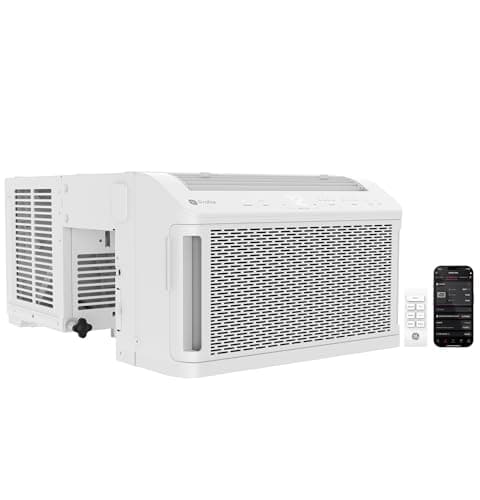 R-32, and the class efficiency leader GE Profile ClearView Window Air Conditioner, 8,000 BTU CEER 16 and 375 kWh a year on R-32 — proof that the lower-GWP refrigerant costs nothing in efficiency. | Anyone buying a window unit today | |
| 2 | The efficiency ceiling, on R-32 Midea Window Heat Pump Air Conditioner, 9,500 BTU CEER 17.6 and 404.8 kWh a year — the highest CEER in the certified dataset, on R-32 and 80% below the federal standard. | Seeing what the current refrigerant generation can reach | |
| 3 | R-32 through the wall Friedrich Through-the-Wall Air Conditioner, 10,100 BTU 10,100 BTU at CEER 14.2 and 533.5 kWh, R-32, and on the Most Efficient list despite the sleeve penalty. | A permanent install where the window is unusable | |
| — | 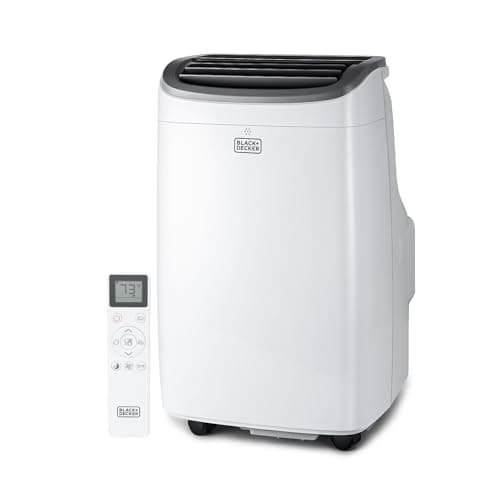 Still on R-410A, and unrated BLACK+DECKER BPACT08WT Portable Air Conditioner R-410A, GWP 2,088 — because portable air conditioners are not covered by any certification program. | Illustrating what falls outside the certified program |
Refrigerant type appears on spec sheets and almost nobody knows what to do with it. The short version is that it is an environmental specification rather than a performance one — and the certified data shows an industry-wide change already most of the way through.
The numbers
Global warming potential, and what it means
GWP measures how much a gas contributes to warming relative to carbon dioxide over a fixed period, with CO₂ set at 1. A refrigerant with GWP 2,088 released to atmosphere has roughly 2,088 times the effect of the same mass of CO₂.
The ENERGY STAR datasets publish both the refrigerant and its GWP:
| Refrigerant | GWP | vs R-410A |
|---|---|---|
| R-410A | 2,088 | — |
| R-32 | 675 | 3.1× lower |
| R-454B | 470 | 4.4× lower |
GWP values as published in the ENERGY STAR certified datasets, which label R-32 and R-454B as “Lower GWP”. Ratios are our arithmetic.
This only matters if refrigerant escapes. A sealed system is not supposed to lose any — which is why refrigerant is not a consumable and why a unit needing a top-up has a leak. More on that. Over a fleet and a product lifetime, some does.
Our analysis
Room air conditioners have finished. Mini-splits have not.
We pulled the complete certified datasets for both categories, and the contrast is sharp enough to be genuinely useful when shopping.
| Category | Records | Refrigerant split |
|---|---|---|
| Room air conditioners | 485 | R-32: 100% |
| Mini-split heat pumps | 11,494 | R-454B: 45.6% R-410A: 38.4% R-32: 16.1% |
Computed by us from the ENERGY STAR Certified Room Air Conditioners and Certified Mini-Split Heat Pumps datasets, US-market records.
Two findings worth acting on.
Every certified room air conditioner is R-32. Not most — all 485. Window units, through-the-wall units, cooling-only and reverse-cycle alike. If you buy a certified room air conditioner today, the refrigerant question is already answered and there is nothing to choose between.
Mini-splits are mid-transition, and 38.4% are still R-410A. Nearly four in ten certified units. So in that category the refrigerant line on the spec sheet is a real differentiator, and it is worth reading.
Also notable: the mini-split field went to R-454B rather than R-32 — 45.6% against 16.1%. Two categories facing the same regulatory pressure picked different replacements, and the mini-split choice has the lower GWP of the two.
This one is not a DIY job
R-32 and R-454B are classed A2L — mildly flammable. R-410A is A1, non-flammable. That is a genuine difference and it is why the equipment, the charging procedures and the service requirements changed alongside the refrigerant.
For an owner of a factory-sealed window or through-the-wall unit, this changes nothing you do. The system is charged and closed at the factory, the quantities are small, and the equipment is certified with the refrigerant in it.
It matters for service and installation. A technician working on an A2L system needs the right training, tools and handling procedures, and an installer used to R-410A cannot simply carry on. If you are having a mini-split installed, that is a fair question to ask.
Refrigerants are not interchangeable. You cannot put R-32 into an R-410A system. The pressures, the oils and the component specifications differ.
Does it cost efficiency?
No, and the data is unusually clean on this
The natural worry about an environmentally-driven change is that performance was traded for it. The certified figures do not support that.
In the room air conditioner category the evidence is about as direct as it gets: every unit is R-32, and the field contains the highest CEER figures the category has ever recorded — 17.6 at the top, 16 in the 8,000 BTU class, and 171 of 485 units on the Most Efficient list.
In mini-splits, where all three refrigerants coexist, the top of the field reaches SEER2 35.1 and EER2 19.1. Those maxima are not confined to one refrigerant.
The honest framing is that efficiency is driven by compressor and coil design, not by refrigerant choice. All 485 certified room units also have variable-speed compressors — another complete conversion, and one that does explain the efficiency figures.
Practical
What to do with this when buying
Buying a certified room air conditioner: nothing to decide. It is R-32, GWP 675, with a variable-speed compressor. Choose on capacity, CEER and format instead.
Buying a mini-split: read the refrigerant line. Nearly four in ten certified units are still R-410A at GWP 2,088, against 470 for R-454B. Given that efficiency does not track refrigerant, taking the lower-GWP option costs you nothing.
Buying a portable: you are outside the certified program entirely, and R-410A is still common there. That is one more item on a list that already includes no certified efficiency figure and a 14-to-50% capacity haircut.
Servicing an existing R-410A system: keep it. Replacing working equipment for refrigerant reasons alone means manufacturing a new machine and disposing of a functional one, and a well-maintained sealed system should not be releasing anything. Fix leaks promptly, and change the equipment when it is due.
Say the unwelcome thing
Do not replace a working air conditioner because of its refrigerant.
It is a tempting piece of reasoning and it does not survive contact with the whole picture.
A sealed system is designed to lose no refrigerant at all. The GWP figure is a measure of what would happen if it escaped, not of an ongoing emission. A well-maintained R-410A unit with no leak is emitting nothing.
Against that, replacing it means the manufacture of a new machine and the disposal of a functional one — and disposal is precisely when refrigerant recovery matters and is sometimes done badly.
The sensible position: fix leaks promptly, use a technician who recovers rather than vents, and choose the lower-GWP option when the unit is genuinely due for replacement. Which, for a certified room air conditioner, is now automatic.
In full
Every pick, and what is wrong with it
Published specifications only, each linked to the page it came from. Where a manufacturer publishes nothing, the row says so — we do not fill blanks in.
1. R-32, and the class efficiency leader
GE Profile ClearView Window Air Conditioner, 8,000 BTU
GE Profile · model PWJV08W
CEER 16 and 375 kWh a year on R-32 — proof that the lower-GWP refrigerant costs nothing in efficiency.
R-32, GWP 675. Like every other certified room air conditioner, because the category has finished its transition.
The useful thing about that completeness is what it settles: CEER 16 and 375 kWh a year, about $69 for a season, is the top of the 8,000 BTU class — achieved on R-32.
The highest CEER in the entire dataset, 17.6, is also R-32. If the refrigerant carried an efficiency penalty, it would show up at the top of the field, and it does not.
47% less energy than the federal standard, variable-speed compressor, 15.3 inches deep and 46.2 lb.
What’s wrong with it
There is no R-410A version to compare against, because the certified room AC field no longer contains one.
Running cost — PWJV08W
| Annual energy use | 375 kWh | ENERGY STAR certified figure |
|---|---|---|
| Annual cost | $69 | 375 × 18.34¢/kWh |
| Per cooling month | $17 | spread over a four-month season |
The annual figure is the certified value from the ENERGY STAR Certified Room Air Conditioners dataset, which models a standard cooling season rather than your actual summer. It is more useful than a nameplate wattage here, because a variable-speed compressor spends most of its life well below nameplate.
Rate: 18.34¢/kWh, the US average residential price for June 2026 (EIA Electric Power Monthly, Table 5.3). Yours will differ — swap it in: (watts ÷ 1000) × hours × your rate.
| Cooling capacity | 8,000 BTU/h |
|---|---|
| CEER | 16 |
| Annual energy use | 375 kWh/yr |
| vs federal standard | 47% less energy |
| Dimensions | 12.6 H x 18.6 W x 15.3 D in |
| Weight | 46.2 lb |
| Refrigerant | R-32 |
| Installation | Does not straddle the windowsill |
| Compressor | Variable speed |
| ENERGY STAR | Certified, and on the Most Efficient list |
Every figure above is from ENERGY STAR Certified Room Air Conditioners dataset. Blanks are shown as “not published” rather than filled in.
2. The efficiency ceiling, on R-32
Midea Window Heat Pump Air Conditioner, 9,500 BTU
Midea · model MAH09B1AGR
CEER 17.6 and 404.8 kWh a year — the highest CEER in the certified dataset, on R-32 and 80% below the federal standard.
CEER 17.6 across all 485 certified room air conditioners is the top figure, and 80% below the federal standard is the widest margin in the dataset.
It is worth being precise about attribution. The refrigerant is not why this unit is efficient. The saddle format, the large outdoor coil and the variable-speed compressor are. R-32 is simply what every current unit uses.
404.8 kWh a year, about $74, and it heats as well as cools. More on reverse-cycle room units.
What’s wrong with it
129 lb and 41.2 inches deep. The efficiency comes from a saddle format, not from the refrigerant.
Running cost — MAH09B1AGR
| Annual energy use | 404.8 kWh | ENERGY STAR certified figure |
|---|---|---|
| Annual cost | $74 | 404.8 × 18.34¢/kWh |
| Per cooling month | $19 | spread over a four-month season |
The annual figure is the certified value from the ENERGY STAR Certified Room Air Conditioners dataset, which models a standard cooling season rather than your actual summer. It is more useful than a nameplate wattage here, because a variable-speed compressor spends most of its life well below nameplate.
Rate: 18.34¢/kWh, the US average residential price for June 2026 (EIA Electric Power Monthly, Table 5.3). Yours will differ — swap it in: (watts ÷ 1000) × hours × your rate.
| Cooling capacity | 9,500 BTU/h |
|---|---|
| Heating mode | Yes, reverse cycle |
| CEER | 17.6 |
| Annual energy use | 404.8 kWh/yr |
| vs federal standard | 80% less energy |
| Dimensions | 20.9 H x 25.0 W x 41.2 D in |
| Weight | 129.0 lb |
| Installation | Straddles the windowsill (saddle style) |
| Support bracket | Not required |
| Compressor | Variable speed |
| Refrigerant | R-32 |
| ENERGY STAR | Certified, and on the Most Efficient list |
Every figure above is from ENERGY STAR Certified Room Air Conditioners dataset. Blanks are shown as “not published” rather than filled in.
3. R-32 through the wall
Friedrich Through-the-Wall Air Conditioner, 10,100 BTU
Friedrich · model WCVT10B10B
10,100 BTU at CEER 14.2 and 533.5 kWh, R-32, and on the Most Efficient list despite the sleeve penalty.
Included to show the conversion is complete across formats, not just window units. Through-the-wall units are 47 of the 485 certified records and every one of them is R-32.
533.5 kWh a year, about $98 for a season, and on the ENERGY STAR Most Efficient list.
CEER 14.2 is honestly below a good window unit, and the reason is airflow through a closed sleeve rather than anything chemical.
110 lb and an existing sleeve required. Full comparison.
What’s wrong with it
CEER 14.2 is below a good window unit — the closed sleeve restricts condenser airflow, not the refrigerant.
Running cost — WCVT10B10B
| Annual energy use | 533.5 kWh | ENERGY STAR certified figure |
|---|---|---|
| Annual cost | $98 | 533.5 × 18.34¢/kWh |
| Per cooling month | $24 | spread over a four-month season |
The annual figure is the certified value from the ENERGY STAR Certified Room Air Conditioners dataset, which models a standard cooling season rather than your actual summer. It is more useful than a nameplate wattage here, because a variable-speed compressor spends most of its life well below nameplate.
Rate: 18.34¢/kWh, the US average residential price for June 2026 (EIA Electric Power Monthly, Table 5.3). Yours will differ — swap it in: (watts ÷ 1000) × hours × your rate.
| Cooling capacity | 10,100 BTU/h |
|---|---|
| CEER | 14.2 |
| Annual energy use | 533.5 kWh/yr |
| Weight | 110.0 lb |
| Refrigerant | R-32 |
| Installation | Through the wall (existing sleeve required) |
| Compressor | Variable speed |
| ENERGY STAR | Certified, and on the Most Efficient list |
Every figure above is from ENERGY STAR Certified Room Air Conditioners dataset. Blanks are shown as “not published” rather than filled in.
Skip this one
BLACK+DECKER BPACT08WT Portable Air Conditioner
BLACK+DECKER · model BPACT08WT
R-410A, GWP 2,088 — because portable air conditioners are not covered by any certification program.
The instructive counter-example. R-410A, GWP 2,088 — roughly three times the global warming potential of the R-32 that every certified room unit now uses.
The reason is regulatory reach rather than technology. There is no ENERGY STAR program for portable air conditioners, so nothing about them appears in the dataset that shows the room AC transition completing.
The manufacturer publishes “4,000 BTU (8,000 BTU ASHRAE)”, R-410A, 52.9 lb, and no wattage, noise or coverage figure at all.
If refrigerant matters to you, that is another argument for a certified format — of which there are several.
What’s wrong with it
No published wattage, no efficiency figure, and a refrigerant with three times the GWP of what certified units now use.
Running cost
BLACK+DECKER does not publish a wattage for the BPACT08WT, so we cannot calculate what it costs to run. We are not going to estimate one. If BLACK+DECKER publishes a nameplate figure, this block will show the arithmetic.
| Manufacturer capacity | 4,000 BTU (8,000 BTU ASHRAE) |
|---|---|
| Hoses | Single |
| Refrigerant | R-410A |
| Dimensions | 15.3 W x 14.0 D x 25.0 H in |
| Weight | 52.9 lb |
| Power | Not published by the manufacturer |
| Noise | Not published |
| Coverage claim | Not published by the manufacturer |
| Warranty | 1 year parts and labor, 5 years compressor |
Every figure above is from BLACK+DECKER product page, BPACT08WT. Blanks are shown as “not published” rather than filled in.
We are not linking a buy button for this one. If you want to look at it anyway, it is easy enough to find — but we would rather send you to something that fits your room.
Questions people actually ask
Frequently asked
What is the difference between R-32 and R-410A?
Mainly environmental. R-410A has a global warming potential of 2,088; R-32 is 675, roughly three times lower. R-32 is also classed A2L, mildly flammable, where R-410A is A1 — which changes service requirements but not how a sealed factory-charged unit is used.
Do all new air conditioners use R-32?
All certified room air conditioners do — every one of the 485 records in the ENERGY STAR dataset. Mini-splits have not finished the transition: 38.4% are still R-410A, and the leading replacement there is R-454B at GWP 470 rather than R-32.
Is R-32 less efficient than R-410A?
No. The certified room air conditioner field is entirely R-32 and contains the highest CEER figures the category has recorded — 17.6 at the top, with 171 of 485 units on the Most Efficient list. Efficiency is driven by compressor and coil design, not refrigerant.
Is R-32 dangerous because it is flammable?
It is classed A2L, mildly flammable, against A1 for R-410A. For an owner of a factory-sealed window or through-the-wall unit this changes nothing — quantities are small and the equipment is certified with the refrigerant in it. It matters for service and installation training.
Can I convert my R-410A system to R-32?
No. Refrigerants are not interchangeable — operating pressures, compatible oils and component specifications all differ. A system is designed around the refrigerant it was charged with.
Should I replace my R-410A air conditioner?
Not for refrigerant reasons alone. A sealed system with no leak emits nothing, and replacing working equipment means manufacturing a new machine and disposing of a functional one. Fix leaks promptly and choose lower-GWP when it is genuinely due.
Sources
Where these numbers came from
- ENERGY STAR Certified Room Air Conditioners dataset — refrigerant type and GWP across all 485 records, plus CEER and Most Efficient flags
- ENERGY STAR Certified Mini-Split Heat Pumps dataset — refrigerant split across 11,494 US-market records, SEER2 and EER2 maxima
- BLACK+DECKER BPACT08WT product page — R-410A, 4,000 BTU (8,000 BTU ASHRAE)
- EIA Electric Power Monthly, Table 5.3 — electricity rate
Read next
Where to go from here
Back to Guides & Calculators, or read how we pick.